FREE WHITEWATER

Daily Bread for Whitewater, Wisconsin: 7-21-10

Good morning,

Today’s forecast for Whitewater calls for a sunny day, with a high of eighty-five degrees.

In Wisconsin history, the Wisconsin Historical Society recounts a battle near what’s now Sauk City —

1832 – Battle of Wisconsin Heights

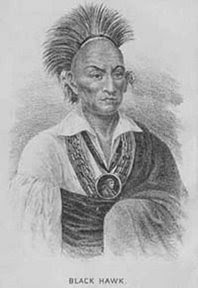
On July 21, 1832, soldiers led by Colonel Henry Dodge caught up with Black Hawk near the Wisconsin River, outside present-day Sauk City. Black Hawk commanded only a small group of warriors from atop a hill, while Dodge pursued with a much stronger force of militia. Although greatly outnumbered, Sauk warriors turned the attack on American troops, allowing the Indian women and children to flee across the Wisconsin River. Black Hawk and his men were forced to retreat to the river, but night was falling so Dodge decided to continue the battle in the morning. But when the American troops went after the Sauk Indians the next day, the Sauk had crossed the river and disappeared. One American was killed and eight wounded while at least 50 Indians were killed and another 80 wounded. You can read accounts of this battle by both Black Hawk and Henry Dodge at our site for teachers and students. [Source: Along the Black Hawk Trial by William F. Stark, p. 124-128]


Eleven Fifty-Nine for 7-20-10

Good evening,

Tonight’s forecast calls for a night of patchy fog, with a low overnight temperature of sixty-eight.

Stage Sixteen of the Tour de France is over, and in that stage Contador and Schleck declared a temporary truce, and Armstrong couldn’t find the stage win for which he was hoping.

Meanwhile, there’s no relief from doping allegations, as

Alessandro Petacchi (Lampre-Farnese Vini) has been issued with formal notification that he is under investigation as part of a widespread inquiry into doping practices being carried out in Italy by Padova-based prosecutor Benedetto Roberti. According to La Gazzetta dello Sport, the current wearer of the green jersey was issued with the notification that he has been placed under investigation for “the use of forbidden substances and practices” before the start of this year’s Tour de France.

Amazon reports that it sold more e-books than hardcovers in the second quarter:

…selling 143 e-books for every 100 hardcover books sold over the course of the second quarter. The rate is accelerating: For the past month, Amazon sold 180 e-books for every 100 hardcovers, and it sold three times as many e-books in the first six months of this year as it did in the first half of 2009.

Amazon’s Kindle bookstore now offers more than 630,000 books, Amazon says, plus 1.8 million free, out-of-copyright titles.

That’s merely hardcovers, rather than all print books, but it’s still impressive. A more skeptical assessment of Amazon’s announcement is available at CNET Reviews.

I don’t have a Kindle, but I have the Kindle app for my phone, and one for my desktop, and it’s an impressive service. (The two locations sync with each other, so what downloads to one location is available to be read at either location (with no additional charge for the synchronized copy).

I’ll end the day with Duke Ellington’s Take the A Train:


Link: http://www.youtube.com/watch?v=nrisYOEpADY. more >>

Walworth County Today: Walworth County Wants Public Input on Board Size (politicians complaining about a large workload)

Walworth County, where I Iive, voted to reduce the size of its county board of supervisors from 25 to 11, in 2007. I read today that at least one supervisor on the board now wants to talk about expanding the board again, because the smaller board size means more work for elected officials.

There’s a quick answer for politicians who claim that membership on a county board is too much work: don’t run again (or quit if you can’t wait until your term ends).

It’s not indentured servitude.


Really, it’s not.

Let’s make a quick comparison, using U.S. Census Bureau figures from 2009. In Wisconsin, there were about 5,654, 774 residents as of 2009, and the state had 99 legislators. In Walworth County, using those same population figures, there were 100,593 residents, and 11 supervisors.

For the state, that’s one legislator for each 57,118.93 residents, but for Walworth County it’s one supervisor for only 9,144.82 residents.

That’s not too many for a Walworth County supervisor to handle — it’s far less than a state legislator handles. Even if the number of residents is higher now than the 2009 estimate, it’s still a manageable number. The duties are more limited, too, than those of a state legislator. One ordinary person should be able to acquit himself or herself well.

Better still, if supervisors spent less time worrying about being overworked, and used that time actually to, well, work, they’d be even better off – and so would we.

See, Walworth County wants public input on board size — Walworth County Today.

Many Possibilities: “A city outsources everything. Sky doesn’t fall.”

I don’t believe that my small town, Whitewater, Wisconsin, needs to outsource everything. I do think that we have too many leaders in the city.

Reductions in number or compensation, if any, should begin at the very top.

It’s simply absurd for a small city’s principal bureaucrat to have his own bureaucrat to assist him. The municipal manager of a small town of only fourteen thousand should be able to manage the place on his own. It’s not, after all, a particularly big operation.

If the job’s that hard for someone, the problem lies with the job-holder and not the job. (That includes leaders’ sundry, wasteful preoccupations with big-ticket public projects.)

One of the problems in Whitewater is that bureaucrats and politicians grab headlines for themselves, while alternately ignoring and bullying frontline employees.

I’ll propose cuts to the municipal budget during budget season in the fall. For now, here’s a post about how Maywood, California was able to make cuts through outsourcing of tasks. (The article also links to an earlier story about Sandy Springs, Georgia.)

See, “A city outsources everything. Sky doesn’t fall.”

FoodConsumer.org: “The Despicable Reason Behind Raw Milk Bans”

Why is raw milk banned even in Amerca’s Dairyland? Over at Food Consumer, there’s a story that reveals The Despicable Reason Behind Raw Milk Bans. From the comments to the post, here’s a nice summary of what lies beneath the war against natural, unpasteurized milk:

The FDA and CDC have been particularly aggressive recently in their efforts to crack down on raw milk under the pretense of public health safety. But the truth remains that not only is raw milk a health-promoting food, it is oftentimes safer than the pasteurized varieties both state and federal governments are rallying behind.

David Gumpert, author of The Raw Milk Revolution, pointed out, for instance, that while no one has died in Massachusetts because of raw milk, three people died in 2007 from pasteurized milk tainted with Listeriosis.

And as In These Times reported, according to CDC data from 1993 to 2006 there were about 116 illnesses a year linked to raw milk — that amounts to less than .000002 percent of the 76 million people who contract a food-borne illness in the United States each year!

It is very apparent that the regulatory agencies have put blinders on to these statistics as they carry on with their ruthless crusade to ban raw milk and make it illegal for you to drink it.

Why?

Because they are looking out for the interests of Big Dairy produced in factory farms.

Yes, they are.

Regulate Google’s Search Algorithm?

In an editorial, the New York Times recently called for regulation of Google’s search results. See, The Google Algorithm.

Ryan Singel of Wired reponds, noting that the Times Case for Gov Regulation of Google Search Is Weak.

Singel lists several reasons that the NYT suggestion is wrong-headed, and observes that

While the secret [Google algorithm] sauce remains secret, there’s plenty known. Rich content, inbound links from reputable sites, well-formatted pages and urls, and even page speed are all proven factors in ranking high in search results.

More to the point, Google doesn’t make its money from referring traffic to websites the way that say the shopping search engine TheFind does. It makes money from the ads that surround the so-called organic search results. Think of it as “Come for the free information and check out these offers from our partners.”

….the Times editorial board should channel its Google anxiety elsewhere. No one would win if government regulators got access to Google’s algorithms, except maybe Bing. Hell, it’s not even clear if there was an agency that would be qualified to actually understand it, if they saw it.

And if you still aren’t convinced, try a dose of Search Engine Land’s Danny Sullivan turning the tables on the argument by calling on the government to oversee the New York Times news algorithm.

In a world where government seeks to intervene nearly everywhere, the NYT editorial board entertains regulatory ambitions better forgotten.

EPA’s Rulemaking Matters! Contest: Still Waiting for the Big Winner

In May and June, I posted about an EPA video contest called “Rulemaking Matters!” in which contestants could send in videos explaining why federal regulations are important.

The libertarians at Reason.tv submitted their own videos, explaining how burdensome federal regulations were, and now bureaucrats typically care little about ordinary Americans. See Reason.tv: Federal Regulations and You – Partners in Democracy and Reason.tv: Rulemaking Matters!

Here’s one of the videos from Reason:


The contest ended in June, and yet there’s still no winner announced. Instead, just this stale promise to pick a winner in June:

The E-Rulemaking Program and the U.S. Environmental Protection Agency’s Office of Regulatory and Policy Management (EPA) are reviewing entries now and plan to announce decisions in June. Should a winning video be selected, it will be posted on Regulations.gov as well as the EPA Web site. If eligible, the winners will be awarded $2,500, as well.

(The contest had, by the way, over twenty written rules.)

Did no one win? Couldn’t the EPA find enough dull, pinched, starched, crusty, regulation-loving toadies with a cinematic flair to craft a video? No one? Perhaps, they had no submissions that were not parodies (Reason) or self-parodies (dull, pinched, starched, crusty, regulation-loving toadies).

Government’s not even effective enough to find a few people to make propaganda films.

The EPA should have sent someone to Whitewater, Wisconsin — we’ve more than one apologist for the dull, regulatory status quo. more >>

Downtown Whitewater, Inc. Receives 2010 National Trust Main Street Accreditation

I received the following press release that I am happy to post:

Downtown Whitewater, Inc. Receives 2010 National Trust Main Street Accreditation

Downtown Whitewater, Inc. has been designated as an accredited National Main Street Program for meeting the commercial district revitalization performance standards set by the National Trust Main Street Center. Each year, the National Trust and its partners announce the list of accredited Main Street® programs that have built strong revitalization organizations and demonstrate their ability in using the Main Street Four-Point Approach® methodology for strengthening their local economy and protecting their historic buildings.
 
“We congratulate this year’s nationally accredited Main Street programs for meeting our established performance standards,” says Doug Loescher, director of the National Trust Main Street Center. “Accredited Main Street programs are meeting the challenges of the recession head on and are successfully using a focused, comprehensive revitalization strategy to keep their communities vibrant and sustainable.”
 
The organization’s performance is annually evaluated by Wisconsin Main Street, which works in partnership with the National Trust Main Street Center to identify the local programs that meet 10 performance standards. These standards set the benchmarks for measuring an individual Main Street program’s application of the Main Street Four-Point Approach® to commercial district revitalization. Evaluation criteria determines the communities that are building comprehensive and sustainable revitalization efforts and include standards such as developing a mission, fostering strong public-private partnerships, securing an operating budget, tracking economic progress, and preserving historic buildings. For more information on the national program accreditation program, visit www.mainstreet.org/nationalprograms.
 
“Receiving this national accreditation for downtown revitalization is a very big deal. Whitewater has been a designated Main Street Community for 4 years and has received national accreditation for 4 years. This is very impressive and having over 8 million dollars in private investment in the downtown in 4 years is certainly something to brag about, not every main street community receives this honor, well done Downtown Whitewater, Inc.” said Executive Director Tami Brodnicki. “If it wasn’t for all of the wonderful volunteers and the great public/private partnership, none of this would be possible”.

Downtown Whitewater was formed in 2006 and is here to preserve, improve and promote Whitewater’s quality of life by strengthening our historic downtown as the heartbeat of the community

The National Trust for Historic Preservation (www.PreservationNation.org) is a nonprofit membership organization bringing people together to protect, enhance and enjoy the places that matter to them. By saving the places where great moments from history – and the important moments of everyday life – took place, the National Trust for Historic Preservation helps revitalize neighborhoods and communities, spark economic development and promote environmental sustainability. With headquarters in Washington, D.C., eight regional and field offices, 29 historic sites, and partner organizations in 50 states, territories, and the District of Columbia, the National Trust for Historic Preservation provides leadership, education, advocacy and resources to a national network of people, organizations and local communities committed to saving places, connecting us to our history and collectively shaping the future of America’s stories.

Established in 1980, the National Trust Main Street Center® helps communities of all sizes revitalize their older and historic commercial districts. Working in more than 2,200 downtowns and urban neighborhoods over the last 30 years, the Main Street program has leveraged more than $48.9 billion in new public and private investment. Participating communities have created 417,919 net new jobs and 94,176 net new businesses, and rehabilitated more than 214,263 buildings, leveraging an average of $27 in new investment for every dollar spent on their Main Street district revitalization efforts.

Daily Bread for Whitewater, Wisconsin: 7-20-10

Good morning,

Whitewater’s forecast calls for a chance of thunderstorms with a high temperature of eighty-three degrees.

The City of Whitewater has two public meetings scheduled for today. At 6 p.m., the Alcohol LIcensing Committee will meet, and at 6:30 there will be a meeting of Whitewater’s Common Council.

The Wisconsin Historical Society recalls that, on this day in 1976, Hank Aaron hit his then-record 755th Home Run:

1976 – Hank Aaron Hits Record Home Run

On this date Hank Aaron hit his 755th and last home run at Milwaukee County Stadium against the California Angels. [Source: Milwaukee Brewers]

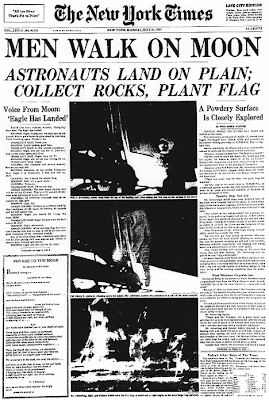
Today is also the day, in 1969, that Neil Armstrong became the first man to walk on the moon.


more >>

Eleven Fifty-Nine for 7-19-10

Good evening,

The day ends with patchy fog and an overnight low of sixty-seven degrees.

Hours earlier, and thousands of miles east, the day began with a surprise for Andy Schleck: Alberto Contador didn’t wait for yellow-jersey wearing Schleck, as many might have expected, when Schleck experienced mechanical problems on Stage 15 of the Tour de France. Now Contador’s the one in yellow.

Schleck expected Contador to hold back, since he, Schleck, had mechanical problems:

At the finish, Contador cruised in 39 seconds ahead of Schleck, enough to dispose the Luxembourg rider of the prized yellow shirt by a mere 8 seconds.

But as Contador pulled the yellow jersey over his shoulders on the victory podium, the debate simmered.

After the finish, Schleck was visibly unhappy. “I told Alberto, ‘how can you do that?’” he said. “Okay that’s racing. But I would not want to win like that. The thing is that he waited for me when I crashed in Spa and I really appreciated that. But then why attack me here?”

The answer, of course, is that Contador wants to win the Tour de France, and he’ll not let the custom of not exploiting a leader’s mechanical problem stand in the way. So what does Contador offer, after exploiting the then-leader’s mechanical failure?

He gives Schleck a YouTube apology; in exchange, Contador keeps his lead.


Link: http://www.youtube.com/watch?v=XdOJLuePexs

How’s that for a trade?

Why Schleck might have expected the coldly ambitious Contador to behave differently at the TdF I’ll not know. Schelck’s problem wasn’t just a mechanical failure; it was expecting more from Contador.

Leopards don’t change their spots.

I posted last night about the sighting of a Chinese UFO. I need not have looked so far afield. Over at Walworth County Today, there’s an interesting blog post about a UFO sighting over Delavan Lake. I’d like to think that if the sighting were of a UFO, meaning an extraterrestrial spacecraft, that it shows that voyagers from faraway had the good sense to visit America instead of, or after, China.

All those many miles traveled to reach this planet would deserve something more than a one-party state as a destination. more >>

Monday Music

In last Friday’s open comments forum, the topic was liberty-themed music. Here are the songs that readers of FREE WHITEWATER suggested, with one bonus song that I’ll add tonight.


Bonus song — Marilyn McCoo sings the words of the Declaration of Independence.


more >>

Reason.tv Interviews Author Joel Miller About Paul Revere

Reason.tv interviews Joel Miller about his book on Paul Revere, and asks —

Is Paul Revere still relevant in contemporary America?

Joel Miller, author of The Revolutionary Paul Revere, says he is. Miller sat down with Reason.tv Editor in Chief Nick Gillespie to discuss the man, his famous ride, and his relationship to the contemporary political landscape.

“There are an awful lot of corollaries to people today who are frustrated with government,” says Miller. And that’s nothing new: “You go back throughout English history you’ll find uprising after uprising about taxes…”

Approximately 10 minutes. Shot by Meredith Bragg, Josh Swain and Dan Hayes. Edited by Swain.

Link: http://www.reason.tv/video/show/joel-miller-interview.


more >>