FREE WHITEWATER

Eagle Historical Society Benefit with Ice Cream Social and Concert: Sunday July 11th

Eagle Ice Cream Social and Benefit Concert

The Eagle Historical Society and Palmyra-Eagle Community Band invite everyone to come out for a free Ice Cream Social on Sunday, July 11th from 1:30 pm – 3:30 pm at the Eagle Village Park located on Main Street and Markham Road in Eagle.

The cake and ice cream is free to all, with cakes baked and donated by members of the Eagle Historical Society and ice cream graciously donated by Tasty Z’s/Eagle BP.

Cash donations are welcome to help with clean-up efforts at the Historic Oak Ridge Cemetery in Eagle, which was heavily damaged by the tornado on Monday June 21st, and all money collected will go toward that effort.

The concert starts at 2 pm, featuring the Palmyra-Eagle Community Band, and will include the music of John Phillip Sousa, current movie and show hits, and polkas. Amazing soloists will thrill all with a “Dixieland Surprise” and you can join in the great Audience Sing-A-Long.

Come one, come all to this annual Eagle old-fashioned treat with a patriotic theme, providing wholesome and great family fun! Remember Sunday July 11th 1:30 pm – 3:30 pm.

For more information, please contact the Eagle Historical Society, 217 W. Main Street, Box 454, Eagle, Wisconsin, 53119, 262-594-8961, www.eagle historical society.org, curator@centurytel.net.

Wisconsin Supreme Court Deadlocks in the Gableman Ethics Case

Wisconsin’s newest Supreme Court justice, Michael Gableman, is embroiled in an ethics case, and Wednesday night (!) that court deadlocked on whether Gableman committed misconduct. See, Supreme Court Deadlocks in Gableman Ethics Case.

The issue before the court was. as Ryan Foley of the Associated Press notes, was “whether Justice Michael Gableman violated the judicial code of conduct when he ran a potentially misleading and race-baiting campaign ad in 2008.” The ad was directed against incumbent justice Louis Butler. Butler lost to Gableman in 2008.

Here’s what happened in the election, and afterward:

During his 2008 campaign for the court, Gableman approved the ad showing the face of his opponent, Louis Butler, the state’s first African American justice, next to the face of a black rapist he represented years earlier as a public defender. The ad said Butler found a “loophole” and the man went on to rape again. [The man served his sentence; he was not released because of a loophole that Butler supposedly found. He committed another crime only after serving the earlier sentence, not because Butler’s argument led to an early release.]

After Gableman narrowly defeated Butler, the Judicial Commission contended he violated a rule that says judges cannot knowingly misrepresent the background of their opponents and should be disciplined.

An appeals court ruled for Gableman, on free speech grounds, and the case went to the Wisconsin Supreme Court. Was what Gableman said protected as free speech, or was it a violation of judicial ethics, and punishable as misconduct for lying?

Before commenting, I wanted to read both decisions (each with three justices supporting). The Wisconsin State Journal posted links to both opinions. (There were two, each issued late Wednesday evening.)

Decision in favor of a misconduct trial and Decision against a misconduct trial for Gableman.

Obviously, Gableman didn’t participate in the deliberations, and through his attorneys sought a motion to have the ethics complaint dismissed.

Having read them, I’m not persuaded that Gableman — a sitting circuit court judge when he ran for a Supreme Court seat, was free from a judicial code of ethics as a layperson candidate, say, for the Wisconsin Assembly would be. I’m not convinced that he’s entitled to the same First Amendment defenses that an ordinary citizen would and should be.be. Having chosen the judicial role, and sought higher office in that same branch of government, Gableman (like a soldier under a military code of conduct) simply isn’t entitled to embrace the role but reject its ethical standards.

I also note that reading written opinions like this, from almost any court, can be tedious going. They’re poorly written, an littered with professional annotations that make the law distant and mysterious. The law should be more than a secular Gnosticism. As Gnosticism is a Christan heresy, so overly ornate and esoteric legal opinions are heretical to a simple, plain, useful rule of law.

Finally, what is one to say about Gableman? I’m neither conservative nor liberal, but if I were conservative, I’d be asking myself why I’d not found a candidate and a campaign not so inclined to skirt the boundaries of judicial ethics. Surely the right could have found a more established and weighty candidate. They didn’t, yet still we and they have Gableman, when they might have won with a deeper, more consequential man.

Friday Open Comments Forum

Here’s the Friday open comments post. Today’s suggested topic is ‘favorite scenes from film or television that illustrate and American right or principle.’ Speech, religion, association, mere liberty — any scenes that describe or illustrate fundamental American rights.

One site that I visit often for movie information, with information and quotations from films, is the popular Internet Movie Database.

The use of pseudonyms and anonymous postings will be fine.

Although the template has a space for a name, email address, and website, those who want to leave a field blank can do so. Comments will be moderated, against profanity or trolls. Otherwise, have at it.

I’ll keep the post open through Sunday afternoon.

Here’s my clip — from Amistad (1997).


Link: http://www.youtube.com/watch?v=tJwD5km_VrQ

Internet Movie Database Link: http://www.imdb.com/title/tt0118607/ more >>

Daily Bread for Whitewater, Wisconsin: 7-2-10

Good morning,

Today’s forecast for Whitewater calls for a sunny day with a high temperature of eighty-one degrees.

Whitewater’s Independence weekend events continue, and a full description is available at ww4th.com. Here’s what’s scheduled:

Festival Schedule

Friday, July 2nd


5:00 PM
Festival Opens
– Midway by Christman Amusement Opens
– American Legion Beer Tent Opens
– Food Vendors Open

Live Music Stage
6:00PM – Midnight – The Blue Olives w/ The Pipe Circus

10:00 PM
Fireworks

12 Midnight Festival Closes

Saturday, July 3rd (Kid’s Day)


12 Noon
Festival Opens
– Midway by Christman Amusement Opens (Arm Bands 12PM-4PM)
– American Legion Beer Tent Opens
– Food Vendors Open

12:00 noon – 4:00PMChildren’s petting zoo Sponsored by Dalee Water Conditioning

1:00 PM – Minneiska Ski Show on beautiful Cravath Lake

Live Music
Stage
Noon – 1:00PM – Cross Point Church Band
2:00PM – 3:00PM – EKiss O Musical
3:30PM – 5:00PM – Beyond Youth
5:30PM – 8:30PM – Saddle Brook

National Music Act!
9:00 PM
Heidi Newfield of Trick Ponywww.heidinewfield.com

12 Midnight Festival Closes

Sunday, July 4th


8:00 AM – 3:00 PM
26th Annual Car Show

10:50 AM

Whippet City Mile

11:00 AM
Whitewater’s 4th of July Parade

12 Noon
Festival Opens
– Midway by Christman Amusement Opens
– American Legion Beer Tent Opens
– Food Vendors Open


1:00 PM
Minneiska Ski Show on beautiful Cravath Lake

Live Music Stage
2:30PM – 5:00PM – Steve Meisner
5:00PM – 6:00PM – Shelley Faith
6:30PM – 7:30PM – Hours Left
8:00PM – Midnight – The Britins (Beatles Tribute Band)

10:00 PM

Fireworks

12 Midnight Festival Closes

On this day in Wisconsin history, Abraham Lincoln visited Wisconsin during the Black Hawk War. The Wisconsin Historical Society recounts his visit:

1832 – Abraham Lincoln Passes through Janesville
On this date Private Abraham Lincoln passed through the Janesville area as part of a mounted company of Illinois militia during the Black Hawk War. [Source: History Just Ahead: A Guide to Wisconsin’s Historical Markers edited by Sarah Davis McBride, p. 117]

Not merely the Janesville area — a Lincoln marker, describing his trip, is just outside Whitewater’s city limits. Here’s a link to others, entitled, LIncoln in the Black Hawk War. From that website, here are Lincoln’s remarks on his service:

Lincoln was 23 years old when the Black Hawk War broke out in 1832. He “…joined a volunteer company, and to his own surprise, was elected captain of it. He says he has not since had any success in life which gave him so much satisfaction.” [Autobiography for Campaign, 1860] Lincoln said that he didn’t see “…any live, fighting Indians…but I had a good many bloody struggles with mosquitoes…and I was often very hungry.” “… I bent a musket pretty badly on one occasion…I bent the musket by accident.” [Speech in Congress, July 27, 1848]

On this day in 1776, the Second Continental Congress voted for independence: “these United Colonies are, and of right, ought to be, Free and Independent States.”

Wired has a story about preserving the parchment paper on which the the Declaration, stating the justification for that July 2nd resolution, was written. In Preserving the Declaration, Tony Long writes that

During the Revolutionary War, the Declaration of Independence was rolled up and toted around like a Thomas Bros. map, although, given the vicissitudes of war, that’s perhaps understandable. Less understandable is what came later. Water was spilled on it while it was being copied in 1823. Then it was tacked up on the wall at the U.S. Patent Office for about 40 years, where it was subjected to a strong northern light.

Finally, the suggestion was made in 1903 that maybe it shouldn’t be exposed to sunlight and, oh, by the way, maybe it should be kept dry, too. The latter turned out to be a bad idea because the Declaration, which was written on parchment, actually needs a bit of moisture to keep from cracking

It wasn’t until 1951 that the first modern preservation efforts began. The document was sealed inside a bronze, bullet-proof glass case at the National Archives building in Washington, D.C. Humidified helium replaced oxygen to prevent further erosion, and the glass was filtered to cut down on light exposure.

Beginning in 1987, using camera equipment developed for the Hubble Space Telescope, preservationists were able to monitor the Declaration for even the most minute signs of fading or flaking ink.

The measures proved effective, so much so that the Declaration outlived its original protective case. After undergoing careful inspection for further erosion in 2003, the document was resealed in a titanium casement filled with inert argon gas. Similar preservation techniques are used to protect the Bill of Rights and Constitution.

Eleven Fifty-Nine for 7-1-10

Good evening,

It’s a clear night, with the overnight temperature expected to be fifty-six degrees. Perfect, just perfect.

There’s a story over at Walworth County Today about a planned reunion of former Playboy bunnies and staff at the Grand Geneva, formerly a Playboy Club, years ago. I wasn’t at the hotel when it was part of the Playboy chain. For those who were, I’m sure the story brings back memories of another era. (One can say that however odd the bunnies look in rabbit ears and puff-ball tails, it’s still more reserved (almost demure!) when contrasted with what one might see today on the cover of Rolling Stone or Sports Illustrated.)

I do have a story about the Grand Geneva, from the 1990s. The hotel had a hunting lodge feel, more so than it does now. They had a gift shop off the main lobby, and others who visited then will recall that the shop sold small, taxidermy squirrels in odd poses and clothing. These were stuffed squirrels as fishermen, hunters, etc., in doll’s clothing. Not toys, but a taxidermist’s work. They looked something like the photo I’ve embedded to the left.

It’s impossible to imagine the hotel selling something like that now. Animals lovers, animal rights activists, and other patrons would find gifts like that vulgar and disturbing. It just wouldn’t happen in today’s polite establishments. Yet, for all the tenderness that recoils at the sight of a stuffed squirrel, there’s not the least concern with guests dressed more immodestly than any Playboy bunny ever was. The concern for small rodents exceeds guests’ concern for respectable attire.

This hardly makes me wish that we should return to more conservative times; it reminds me that contemporary, self-declared arbiters of fashion, taste, and propriety, of the appropriate, are just middling men and women whose taste is, generally, tasteless. It’s one more reason that their judgment should not express itself through law and regulation over others.

On propriety and the acceptable and appropriate, one finds all sorts of contradictions. One scold or another will try to ban a practice or activity, as against supposed community values. Many of these same people have not the slightest humility or reticence about self-promotion at every turn. I would have thought that pride was a fault, and humility a virtue, but those who profess an obligation to advance regulations in the name of the community are often the first to boast, look for a camera, or expect notice. When in the Declaration the the patriots sought to explain why ” governments are instituted among men” they contended that it was “to secure these [unalienable] rights.” They never said, and never believed, that government was simply a public relations tool.

For those who are interested in a single volume of classics of liberty, the Liberty Fund’s Online Library of Liberty is also available as a DVD, free of charge. I have the 4th Edition, but there’s now a 5th. Readers can request a copy at this link: http://oll.libertyfund.org/index.php?option=com_content&task=view&id=1543&Itemid=352. The DVD “contains 1,002 full text titles in EBook PDF format, 36 hours of MP3 interviews with classical liberal political philosophers and economists (The Intellectual Portrait Series) and lectures on the thought of Friedrich Hayek (The Legacy of Friedrich Hayek), and a version of our collection of Quotations about Liberty and Power which is designed to run on a data DVD.”

I’m sure it’s a great collection, even better than the 4th Edition.

I’ll have an open forum topic tomorrow that’s suited to the Independence holiday weekend.

Reason‘s June 2010 Nanny of the Month: Banning Ladies’ Night in Minnesota

Reason has a “Nanny of the Month” feature highlighting an official’s inane and wrong-headed effort to regulate or restrict activity in a community. This month, the winner’s “Commissioner of the Minnesota Department of Human Rights James Kirkpatrick.”

How did he win? Well, Kirkpatrick is “the state bureaucrat who’s thumbing his nose at the great Kool & the Gang anthem by cracking down on bars and restaurants that offer ladies’ night (it discriminates against men, you see).”

One can — and should — believe in equality without engaging in a campaign to eliminate all the distinctiveness and uniqueness from private life. The quest for equality of experience isn’t a quest as much as a tyranny, whether petty (against ladies’ night) or grand (conformity in speech, faith, association). It’s still oppressive, and so it’s wrong.


Link: http://www.youtube.com/watch?v=ZX35UQf4FRU more >>

It’s Online for All: The City of Beloit’s Good Government Example

Yesterday, I posted on the use of paper documents rather than timely and easily accessible public ones, in places like my own town, Whitewater, Wisconsin. See, “It’s in Your Packet.”

The best part of publishing a website isn’t writing, but is reading the good ideas and information from generous readers. A fine example would be information on how the City of Beloit, Wisconsin has successfully and efficiently adopted an all-electronic documents policy. Here’s what a sharp reader had to say:

The City of Beloit makes all packets and agenda materials available online. You can even sign up for email updates to let you know when they are updated.

Beloit doesn’t even print them anymore. City Councilors have laptops and these are used to review agendas and packet materials before and during meetings. If a councilor doesn’t want to use his own laptop, the city issues them one while they are in office. IOW [in other words], it’s all electronic, all the time.

This reference link is from today’s email about agenda and packet change:

http://www.ci.beloit.wi.us/index.asp?Type=B_LIST&SEC={E7943B08-6186-433D-9E85-5886936EFA04}

That’s a solid practice: timely, complete, open, economical, and truly green, too. The Beloit area also has some of the highest unemployment in the state, but that hasn’t stopped them from moving toward a practice that all Wisconsin communities should (and will surely) adopt as part of our state’s promise of good and open government.

Forewarned is Forearmed: Facing the Tough Going Ahead

Dr. James Hussman, of the Hussman Funds wrote recently that he sees a possibility of a second recession in the offing. (I have no connection to the fund.) He writes that “[b]ased on evidence that has always and only been observed during or immediately prior to U.S. recessions, the U.S. economy appears headed into a second leg of an unusually challenging downturn.” (Hussman observes a correlation between the ISM Purchasing Managers Index and the ECRI Weekly Leading Index, and describes his conclusions at the article to which I’ve linked.)

I don’t know if Hussman’s right; there’s much debate among economists, politicians, and laymen about the direction of the economy. Should Hussman be right, his forecast is preferable to a recession without forewarning. To be forewarned is, often, to be forearmed.

A community needn’t sit passively while a recession (or a second one) approaches. I’ve proposed before the current recession a significant reduction in the size of local government, including an end to many regulations, fees, and permit costs. Combine with an end to wasteful, ineffectual tax incremental financing schemes, we’d be on a better footing to face come what may.

Even if we’ve no recession (immediately) ahead of us, we face slow growth and anemic job creation. A small town like Whitewater, Wisconsin can weather even hard times through a comprehensive reform, and by restructuring of the relationship of local government to the community. A return to the principle of truly limited and restrained local government will save taxpayers’ money, and keep earnings in the hands of working citizens who can spend and invest tat money more carefully and knowledgeably than presumptuous officials.

(Reform of government toward more openness, with better access to public documents and recordings of all public meetings, is part of a general reform effort, too. A local government that’s aligned truly with the best principles and practices of Wisconsin and America will be a more successful one.)

Reason.tv: “Citizenship and the Pursuit of Happiness”

Over an Independence Day holiday, I can think of no more inspiring story than that of people who have become American citizens.

Enjoy.


“Reason.tv caught up with immigrants to learn why they moved to a country that defines itself as a multicultural melting pot. Citizenship: The Pursuit of Happiness was produced and edited by Dan Hayes.”

Link: http://www.youtube.com/watch?v=mqQVG732gqg more >>

Daily Bread for Whitewater, Wisconsin: 7-1-10

Good morning,

It’s a sunny day with a predicted high of seventy-eight degrees forecast for Whitewater.

Today is also the beginning of Whitewater’s holiday events. A website describing the holiday in Whitewater is available at ww4th.com. Here’s what’s scheduled through the weekend:

Festival Schedule

Thursday, July 1st

5:00 PM
Festival Opens
– Midway by Christman Amusement Opens (Arm Bands 5PM-9PM)
– American Legion Beer Tent Opens
– Food Vendors Open

Live Music Stage

7:00PM – 8:00PM – Doctor Noize

10:00 PM Festival Closes

Friday, July 2nd


5:00 PM
Festival Opens
– Midway by Christman Amusement Opens
– American Legion Beer Tent Opens
– Food Vendors Open

Live Music Stage
6:00PM – Midnight – The Blue Olives w/ The Pipe Circus

10:00 PM
Fireworks

12 Midnight Festival Closes

Saturday, July 3rd (Kid’s Day)


12 Noon
Festival Opens
– Midway by Christman Amusement Opens (Arm Bands 12PM-4PM)
– American Legion Beer Tent Opens
– Food Vendors Open

12:00 noon – 4:00PMChildren’s petting zoo Sponsored by Dalee Water Conditioning

1:00 PM – Minneiska Ski Show on beautiful Cravath Lake

Live Music
Stage
Noon – 1:00PM – Cross Point Church Band
2:00PM – 3:00PM – EKiss O Musical
3:30PM – 5:00PM – Beyond Youth
5:30PM – 8:30PM – Saddle Brook

National Music Act!
9:00 PM
Heidi Newfield of Trick Ponywww.heidinewfield.com

12 Midnight Festival Closes

Sunday, July 4th


8:00 AM – 3:00 PM
26th Annual Car Show

10:50 AM

Whippet City Mile

11:00 AM
Whitewater’s 4th of July Parade

12 Noon
Festival Opens
– Midway by Christman Amusement Opens
– American Legion Beer Tent Opens
– Food Vendors Open


1:00 PM
Minneiska Ski Show on beautiful Cravath Lake

Live Music Stage
2:30PM – 5:00PM – Steve Meisner
5:00PM – 6:00PM – Shelley Faith
6:30PM – 7:30PM – Hours Left
8:00PM – Midnight – The Britins (Beatles Tribute Band)

10:00 PM

Fireworks

12 Midnight Festival Closes

In Wisconsin history on this date, the Wisconsin Historical Society recalls this as a day marking greater liberty for Wisconsin’s residents, since 1967. Here’s why —

1967 – Sale of Oleo Becomes Legal

On this date it became legal to purchase Oleomargarine in Wisconsin. For decades, margarine was considered a contraband spread. Sale of the butter imposter resulted in fines or possible jail terms. Oleomargarine was sold legally in Illinois and frequently smuggled into Wisconsin.

Now, at the House of Dissenting opinion, it’s butter all the way — natural, and better tasting. And yet, a state that bans margarine, of all things, is neither sensible, nor free, nor free of special interests. (The link above is to a 1981 Wisconsin Magazine of History story, entitled, “The Oleo Wars,” that’s descriptive of how controversial this issue was to some in Wisconsin.)

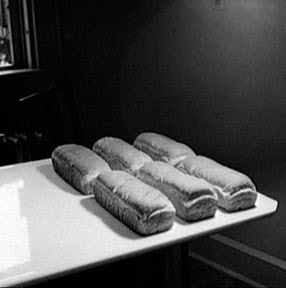
If butter, then bread: Wired has a story about automated bread-making entitled, “Give Us This Day Our Automated Bread,” about a 1910 innovation.

On July 1st, 1910, the “Ward Baking Company puts a fully automated bread factory into operation. The mechanized factory in Chicago churns out hundreds of perfect loaves a day, untouched by human hands.” Sliced bread came later….

Just one more ingredient needed….


Just right….

Photo of Ward Bakery from Library of Congress, Oleo from Wikipedia, and Coffee in Cup also from Wikipedia, courtesy of Julius Schorzman

“It’s in Your Packet”

Often, during a public meeting, one will hear a public employee tell members of a council, board, or commission that an item to be considered is available as part of a packet of documents provided to each member of the public body meeting that night. It’s all casual and blithe: “It’s in your packet,” someone will say.

One should keep in mind that your packet means their packet. Documents that could easily be scanned and placed on line at a city or school district website only occasionally appear there.

We’re an advanced, sophisticated country, and local officials in a place like Whitewater, Wisconsin are oh-so-quick to proclaim, declare, announce, and incessantly celebrate their progress and advanced achievements. Somehow, those achievements don’t include consistently and timely placement online of official, pertinent public documents.

Why would that be?

Are public officials unaware of how to place documents online? No, they know how to use simple online technologies to copy, scan, and upload documents if they wish. More importantly, they have even more skilled employees working for them, and at their service to answer questions about how to achieve these simple tasks.

Are public officials too dim to use these technologies? That is, not merely unaware, but somehow incapable? Again, the answer is surely that they’re all capable. Public officials’ problems do not stem from being dim, because they’re not dim. They are, in the words of former President George W. Bush, “plenty smart.” It’s not intellect that holds them back.

Most people are very clever, and if it were not so, we would not have been able to build a great and beautiful republic across this continent. The average person is amazingly talented; deficiencies are not of intellect.

Is it too expensive to put documents online? Of course not — these men will spend money for all sorts of press releases, publications, ceremonies, and marketing efforts. Those efforts are far more expensive (and less useful) that simply scanning and uploading public documents used in public meetings held at public expense and conducted under Wisconsin law.

Is it too hard to collect these documents for timely placement on the web? Of course not — if people are able to keep an ordinary schedule and routine in a city or town. If, for example, a town of only fourteen thousand (with not that many meetings) finds this too hard, then the problem isn’t the volume of meetings; it’s the caliber of bureaucrats. If keeping deadlines for collection and uploading of documents is presently too hard for the heads of municipal departments, then Whitewater should spring for an alarm clock, hour glass, or sundial for each principal bureaucrat, so they can better keep track of time.

Are these documents just for insiders? I’m sure there are some of that ilk who would like to think so. It’s wrong of course. Public documents belong to the public. In any event, government is not instituted among people to help a few vain and needy officials feel important, special, etc. Those who wish to feel important, special, or sought after should form a rock band.

The consequence of the lack of records is a kind of test: will you request routine public documents through an open records request, or will you go without? A community that talks about “excellent customer service” would put the documents online, before related meetings, for citizen review.

That some officials would consider doing so either odd or too much work shows how far government, including my own local government, falls from standards of good and open government.

Does Anyone Remember The Russians are Coming, The Russians are Coming?

I’ve asked the question, “Does anyone in America remember the The Russians Are Coming, The Russians Are Coming” because that reports that

A neighbor asked Ms. Murphy, who received her M.B.A. from Columbia Business School last month, if she was from Russia, after hearing her accent. Ms. Murphy said that no, she was from Belgium.

Belgium. That’s Belgium, a place nothing like Russia in any way. I’m not sure what’s worse: a Russian spy using that line, or an American falling for it.

In The Russians Are Coming, The Russians Are Coming, a Soviet submarine accidentally runs aground on a New England island, and the worried Soviet submariners send an officer and sailor (Alan Arkin, John Phillip Law) to find a motorboat to help free the sub before the United States Navy or Coast Guard spots them. Arkin and Law meet an American, his wife, and young son, and try to convince the family that they’re sailors from America’s NATO ally, Norway. Even that’s more plausible that thinking a Russian sounds like someone from Belgium.

Yet, the boy is suspicious of their claims. Here’s that scene, from a series of scenes from that fine, funny film. (The scene with the initial encounter between American citizens and Soviet sailors is at the very beginning of the clip. The father is Carl Reiner, mother is Eva Marie Saint, and son is Sheldon Collins.)

Enjoy.


Link: http://www.youtube.com/watch?v=pXXGep9RB34. more >>

Can Government Tell You What You Must Eat? Is There No Limit to Federal Power Under The Commerce Clause?

There’s a lot of commentary about the Kagan nomination, although public interest seems tepid. I’ve not mentioned anything about her nomination, mostly because I have no strong view. I believe she’s surely adequately qualified in education, experience, and intellect. She’s no one’s ideal nominee, but absent a showing of official misconduct, the president’s qualified nominees should routinely be confirmed.

There’s an exchange from the hearings, however, that shows how Kagan (and so many others in Washington) have gone in their efforts to justify the reach of federal law and power into people’s lives. They’ve gone so far, that they cannot see how terribly far some supposedly legitimate (if “dumb”) laws might reach.

It is impossible to have a free society in which government can tell citizens what to eat. That is, what they must eat each day. And yet, and yet, Kagan (and so many others) can’t bring themselves to say — that not under the Commerce Clause, nor any other provision of law, may government mandate an ordinary citizen’s diet in a free society.

See for yourself:

Here’s the Commerce Clause of the United States Constitution:

[Congress shall have power] To regulate Commerce with foreign Nations, and among the several States, and with the Indian Tribes

Article I, Section 8, Clause 3


Link: http://www.youtube.com/watch?v=DSoWGlyugTo

(h/t to Allahpundit at HotAir) more >>