
…to jump.
Oops.
…to jump.
Oops.
In Whitewater and communities far beyond, cities and public bodies are evaluating their administrators’ annual performance. That’s true for Whitewater’s municipal manager, and for the Innovation Center director, among others.
These evaluations are closed-session reviews, but (as I write) I have no particular interest in how they’re conducted or the substance of the evaluations, in any event. These respective supervisory bodies will (and should) evaluate however they wish.
Here are a few tips for the year ahead, unsolicited though they may be, that would benefit just about any official, regardless of any evaluation.
Pencil and paper. Start every plan, project, or initiative with one’s own calculations, and subject the calculations of others to rigorous examination. For goodness’ sake, don’t rely on others’ data without one’s own review.
Take a piece of paper, and make one’s own outline, with one’s own questions, asking about each point of the proposal.
Those institutional players. Whitewater’s a changing place. Yet, the town still pays too much attention to the lazy theories and flimsy claims of people from big organizations. The problem isn’t that leaders of those big players aren’t smart — they are.
The problem is that some – but certainly not all – of them are lazy, and produce junk for work. Relying on their shoddy efforts is a gamble: how soon until their schemes fall apart?
As for municipal officials from other towns, visiting hat in hand to this town, recognize the truth: they want what they want, and care nothing about anyone here. When it all falls apart, they’ll neither be there to buck locals up or able to do so (even if they did care).
The press. Feel good, back-patting stories are good for a scrapbook, but they’re no help in one’s position within the city. On the contrary, they make things worse for officials, because they’re so fawning, so flimsy, they’re laughable to sensible. One would be better with no copy than risible copy.
Bigger than you know. We may be a small town, but we’re not just one, monochrome place. We’re a diverse one. I know – and others know, too – that we’ve passed the point of being just one thing, a one-stop shop, and that we never really were just one thing. The tendency to overlook this, to pretend it’s not so, indeed to distort data and conceal a shifting landscape, will prove intoxicating.
I see this, but I see that it doesn’t matter: one makes one’s way more effectively on one’s own, and intentionally dodgy data and shoddy stats won’t change that.
Out and in, combined. Avoid a forest for the trees problem – Whitewater’s not just a small city, it’s a small city in a Midwestern state, in a beautiful, continental republic. Looking for solutions here means looking for solutions from across the state and country. Anything else sells residents short.
Diplomacy. Officials will have to be diplomatic about all this, in a way that bloggers don’t have to be. I’m sure that’s within their power.
In any event, within one’s power or not, these few tips still ring true and useful, I’d say.
Good morning.
We’ll have a breezy day, with a slight chance of snow showers, and a high of thirty-three, for the city’s midweek.
The Tech Park Board meets today at 8 AM.
Mostly, it’s people who catch fish. Mostly:
A person could catch fish this way, if he were bigger than the fish.
On this day in 1991, Operation Desert Storm began:
The United States and allied forces Wednesday night opened the long threatened war to drive President Saddam Hussein’s army from Kuwait, striking Baghdad and other targets in Iraq and Kuwait with waves of bombers and cruise missiles launched from naval vessels.
“The liberation of Kuwait has begun,” President Bush said in a three-sentence statement confirming the start of the attack that was read by his spokesman, Marlin Fitzwater, shortly after the raids began.
Later, in a televised address to the nation from the Oval Office a somber Mr. Bush said that after months of continuous diplomatic overtures had failed to produce movement by Iraq, the United States and its allies “have no choice but to force Saddam from Kuwait by force. We will not fail.”
Google-a-Day poses a pop-culture question: “Rihanna got a tattoo across her fingers while wearing a piece of clothing with the face of what rock star?”
It’s not only markets in capital and goods that should be free. It’s markets in labor, too. What’s immigration, at bottom? It’s a voluntary and peaceful transaction between employer and employee. Government interference in these many transactions is presumptuous, oppressive of individuals, and stifling of economic growth.
One hears, more often since Gov. Romney’s defeat, that the GOP regrets its recent, strident anti-immigration views. (Funny, too, that Reagan and Kemp, among others, would have rejected policies even half so restrictive as the ones that Romney and Santorum advocated in 2012.)
Whatever the motivation, it’s to America’s benefit if Republicans abandon their anti-market opposition to immigration.
For it all, libertarians can say that we were right a generation ago, right last year, and that we’re right now: free immigration is both morally and productively better than restrictive alternatives. If all the world were to declare otherwise tomorrow, we’d not be disproved.
We’d just have more work to do to show otherwise.
Posted also at Daily Adams.
It’s a simple question, although to some it may sound like a trick one. It’s not meant to be.
There’s also a simple answer: I don’t know – and neither does anyone else.
We know that settlers arrived here in 1837, but our part of the world had its name, and human inhabitants, long before those first families arrived here. Before English, Norwegian, and German-speaking settlers walked these prairies, this place saw generation after generation from among the original peoples on this continent. They were born, worked for sustenance, raised families, and died here. Those pre-Columbian inhabitants long preceded even the Potawatomi.
One could unpersuasively argue that Whitewater wasn’t Whitewater until someone spoke that name in English, or that it wasn’t Whitewater until settlers established American laws and institutions, but to do so is evasive quibbling. Our forefathers weren’t the first people here, any more than some of them were truly first people on the east coast, despite early settlement during colonial times.
The written accounts of Whitewater’s residents are a mere fraction of the full number lives, lived generation after generation, over at least thousand years.
We’ve a long past behind us, of so much time, and so many generations, and it is – as it should be – properly humbling.
Good morning.
Sometimes one is both motivated and diligent in one’s efforts –
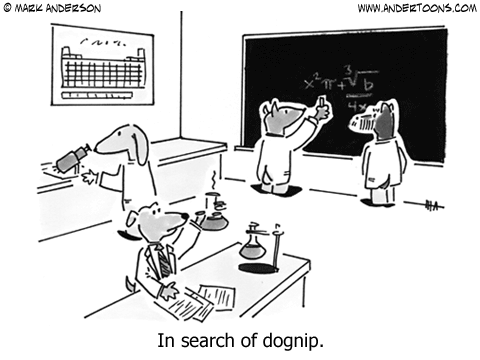
I’ve a few regular features at my sites, and am pleased to add another: cartoons from Mark Anderson, whose creations have been published in major magazines, for corporate communications, and as greeting cards. One of his cartoons will appear on its own at least weekly at my websites, and others will appear within posts.
Whitewater’s Tuesday will be mostly sunny, with a high of twenty-nine. We’ll have 9h 23m of sunlight, 10h 26m of daylight, with a waxing crescent moon.
Common Council meets tonight at 6:30 PM.
On this day in 1967, the Packers played and won their first Super Bowl:
LOS ANGLES, Jan. 15 — Bryan Bartlett (Bart) Starr, the quarterback for the Green Bay Packers, led his team to a 35-10 victory over the Kansas City Chiefs today in the first professional football game between the champions of the National and American Leagues.
Doubt about the outcome disappeared in the third quarter when Starr’s pretty passes made mere Indians out of the American League Chiefs and Green Bay scored twice.
Those 14 points stretched Green Bay’s lead to 28-10 and during the final quarter many of the spectators in the crowd of 63,036 left Memorial Coliseum which had been only two-thirds filled.
The outcome served to settle the curiosity of the customers, who paid from $6 to $12 for tickets, and a television audience estimated at 60 million….
Google-a-Day asks readers to field a baseball question: “What was the jersey number of the center-fielder who led the Phillies to their fifth National League pennant in 1993?”
Piers Morgan’s Gun-Control Freak Show Rounds Up the Crazies http://t.co/Bv7Z163f
— John Adams (@DailyAdams) January 12, 2013
Best decision of new year: “@jaketapper: No trillion dollar coin to be minted, @ezraklein reports: http://t.co/9EguY2e7”
— John Adams (@DailyAdams) January 12, 2013
Unstoppable: Social Security Administration takes back reprimand of flatulent worker http://t.co/rdHL5gGE
— John Adams (@DailyAdams) January 12, 2013
Understatement: A lot can go wrong with a platinum coin http://t.co/5jYmuP1j
— John Adams (@DailyAdams) January 12, 2013
U.S. Speeds Afghan Exit http://t.co/stPwuXCZ
— John Adams (@DailyAdams) January 11, 2013
Americans Prefer Genghis Khan to Congress http://t.co/K5V7cXZe
— John Adams (@DailyAdams) January 11, 2013
The Mysterious, Nefarious Japanese Hacker Cat http://t.co/yOiCs3zK
— John Adams (@DailyAdams) January 11, 2013
Boy's best friends: Dogs kept lost boy in Missouri warm until found (+video) http://t.co/whWyKkPA
— John Adams (@DailyAdams) January 10, 2013
Vast waste: “@CatoInstitute: #REALID–A Quarter of a Billion Dollars Gone http://t.co/Z7BAjbyi by @Jim_Harper”
— John Adams (@DailyAdams) January 10, 2013
Senator Wyden lays out “digital freedom” agenda | Ars Technica http://t.co/nr13kcEf #internet
— John Adams (@DailyAdams) January 10, 2013
The Happiest Animal in the World? #quokka http://t.co/uw2sdNiv
— John Adams (@DailyAdams) January 9, 2013
Will China end prison labor camps? http://t.co/kWMrP28T
— John Adams (@DailyAdams) January 9, 2013
Spirit, Opportunity mark nine years of Mars exploration (pictures) – CNET News http://t.co/1HNtOXVn
— John Adams (@DailyAdams) January 8, 2013
“@reason: New Allegations That Qaddafi Helped Fund Sarkozy’s 2007 French Presidential Campaign http://t.co/faQBf9rj”
— John Adams (@DailyAdams) January 8, 2013
“@asymmetricinfo: Should the President Mint a $1,000,000,000,000 Platinum Coin? http://t.co/adKiMkVp #badideas
— John Adams (@DailyAdams) January 7, 2013
“@sbauerAP: AP News – Wis. legislative session begins with mining push http://t.co/huxqEjub” #mining
— John Adams (@DailyAdams) January 7, 2013
Fructose Tied to Obesity as Study Shows It Doesn’t Cut Appetite – Bloomberg http://t.co/yT7Tpqwx
— John Adams (@DailyAdams) January 6, 2013
Cat caught sneaking saw, phone into Brazil prison – Yahoo! News http://t.co/rvcuQmHS #badkitty
— John Adams (@DailyAdams) January 6, 2013
Good morning.
Our week starts with sunny skies and a high of twenty. There will be 9h 22m of sunlight, and 10h 24m of daylight, for Whitewater today. Tomorrow will be one minute longer.
How big do sharks get? Really big:
The city’s Planning Commission meets tonight at 6 PM, and her Library Board at 6:30 PM.
On this day in 1784, a war formally ends:
….Continental Congress ratifies the Second Treaty of Paris, ending the War for Independence.
In the document, which was known as the Second Treaty of Paris because the Treaty of Paris was also the name of the agreement that had ended the Seven Years’ War in 1763, Britain officially agreed to recognize the independence of its 13 former colonies as the new United States of America.
In addition, the treaty settled the boundaries between the United States and what remained of British North America. U.S. fishermen won the right to fish in the Grand Banks, off the Newfoundland coast, and in the Gulf of Saint Lawrence. Both sides agreed to ensure payment to creditors in the other nation of debts incurred during the war and to release all prisoners of war. The United States promised to return land confiscated during the war to its British owners, to stop any further confiscation of British property and to honor the property left by the British army on U.S. shores, including Negroes or slaves. Both countries assumed perpetual rights to access the Mississippi River.
Despite the agreement, many of these issues remained points of contention between the two nations in the post-war years. The British did not abandon their western forts as promised and attempts by British merchants to collect outstanding debts from Americans were unsuccessful as American merchants were unable to collect from their customers, many of whom were struggling farmers.
Google-a-Day poses a question about art: “What American museum paid $6.9 million to exhibit artwork on loan from the Louvre from 2006-2009?”