
Monthly Archives: December 2014
Daily Bread
Daily Bread for 12.7.14
by JOHN ADAMS •
Good morning, Whitewater.
Sunday in town will be relatively mild, with a high of thirty-five and partly cloudy skies. Sunrise is 7:12 AM and sunset 4:20 PM, for 9h 08m 14s of daytime. The moon is a waning gibbous with 98.8% of its visible disk illuminated.
Friday’s FW poll asked if readers would go for peanut butter & jelly Pop Tarts. Fifty-two percent of respondents said that they would, with forty-eight percent saying no. A commenter suggested that grape jelly might be better than peanut butter & strawberry jelly. That seems right to me, too. As it turns out, Kellogg offers over a dozen kinds of Pop Tart, including some limited edition varieties, in response to market pressures.
Seventy-three years ago today, Japan attacked the U.S. naval base at Pearl Harbor (and British targets simultaneously), plunging America into the Pacific war, and less than four years later leading to the destruction of the Japanese Empire.
A Wisconsinite aboard the Arizona survives the Pearl Harbor attack:
1941 – Wisconsin Man Survives Pearl Harbor Attack
On this date Russ Warriner, a 25-year-old first class seaman on the USS Arizona, miraculously survived the Japanese attack on Pearl Harbor. The explosions ripped apart the Arizona and killed nearly all his mates.
At the time of the attack, Warriner was on the sky control platform, where his job was to spot enemy ships and planes. The bomb that struck the Arizona sliced through the steel deck and exploded into a fuel tank. Fire flared for seven seconds before it ignited 1.7 million pounds of explosives held in the ship’s magazine. More than 1,000 sailors died instantly, including many on the lookout platform with Warriner.
Warriner lost his balance and fell onto the platform. His hands swept through fiery magnesium remaining from incendiary bombs and were nearly burned off. He was knocked off the ship, pulled aboard a small motor boat, and eventually made his way to shore. Warriner was treated at Great Lakes Naval Base in Illinois, where plastic surgeons were able to repair his hands.
Warriner settled in Wisconsin, married and raised two children. In the late 90s, Warriner was a retired piano tuner living in Beloit Township. [Source: Janesville Gazette]
Animals, Nature
‘The Private Life of Deer’
by JOHN ADAMS •
Last night, I discovered a documentary entitled, ‘The Private Life of Deer,’ about the habits of deer that live close to people, sometimes in suburban areas. Having stumbled upon it by chance, the program held my attention from the start, and left further channel surfing unnecessary.
Here’s the full video, embedded below:
Enjoy.
City, Waste Digesters
Update on a Digester Project: ‘Wastewater Facility Poised for Upgrades: Memo 4’
by JOHN ADAMS •
On Thursday, I posted about a technical memo on the City of Whitewater’s website, entitled, ‘Wastewater Facility Poised for Upgrades: Memo 4.’ The memo concerned the digester at the wastewater facility, and contained one line of text: ‘Technical Memorandum #4 – Digestion Complex and Energy Production – In Progress.’
In my post, I said that I would send along an email to City Manager Clapper, inquiring about the status of that aspect of the broader wastewater facility upgrades. Yesterday, City Manager Clapper replied to my email, with an update about the overall project and the digester portion more particularly.
Appearing below I have the full text of City Manager Clapper’s email, which he offered both in reply and to pass along to readers. (It’s better to offer the full text rather than it would be to summarize it imperfectly.) Thereafter, I’ve added my original email from Thursday, so that one will be able to see both parts of this correspondence.
The next presentation on the wastewater facility (and the portion of it concerning the digester proposal) is now likely for 12.16.14 at Common Council (with other presentations thereafter).
Here are the two emails —
Reply from City Manager Clapper, Friday, December 5th:
John,
Thank you for the email and your question. Earlier this year, the City entered an agreement with an energy service company, Trane, for the completion of a feasibility study regarding a potential project related to the digester complex at our wastewater treatment facility. As a result of this study, it was anticipated that Technical Memorandum #4 (TM4) might not be necessary. However, as City staff continued to work both with Trane on the digester study and with Donahue & Associates on an update to the Wastewater Facility Plan, it became apparent that completion of TM4 was warranted. Donahue & Associates began work on TM4 in late September and will be able to complete it very soon.
In an effort to clarify the details of the proposed construction project, Donahue & Associates will likely present information to the Common Council on December 16. Donahue will discuss both the digester complex project (the subject of TM4) and the larger facility improvements project addressed in TM1-TM3 and TM5-TM8. Following the December 16 meeting, staff will also be providing multiple public information meetings to help explain the current need for facility improvements and the proposed project(s). Dates for these meetings will be scheduled and posted following Donahue’s presentation on December 16, 2014.
Hopefully this information is helpful for you and for your readers. Please feel free to email or call with any additional questions.
Respectfully,
Cameron Clapper
Email to City Manager Clapper, Thursday, December 4th:
Good morning, City Manager Clapper
I hope this note finds you well, and enjoying the beginning of December.
I’m writing about information posted on the City of Whitewater’s website, concerning upgrades to our city’s wastewater facility (http://www.whitewater-wi.gov/residents/recent-news/2803-wastewater-facility-poised-for-upgrades).
Among the items posted is Technical Memorandum #4 – Digestion Complex and Energy Production ((http://www.whitewater-wi.gov/images/stories/public_works/wastewater/Donohue_Technical_Memo_4_-_Digestion_Complex_and_Energy_Production.pdf). That memorandum is brief, stating only, “Technical Memorandum #4 – Digestion Complex and Energy Production – In Progress.”
This prompts an obvious question: When can Whitewater’s residents expect an update on the status of this ‘in progress’ Digestion Complex proposal?
Wastewater Superintendent Reel first mentioned this proposal just over a year ago; an update to this community would seem reasonable.
I’ve a post at FREE WHITEWATER this morning along these lines (https://freewhitewater.com/wastewater-facility-poised-for-upgrades-memo-4/), and will post for readers any information that I might receive in reply from you.
Yours,
JOHN ADAMS
adams@freewhitewater.com
www.freewhitewater.com
Daily Bread
Daily Bread for 12.6.14
by JOHN ADAMS •
Good morning, Whitewater.
Saturday in the Whippet City will be mostly sunny with a high of thirty-six. Sunrise today is 7:11 AM and sunset 4:20 PM, for 9h 09m 14s of daytime. We’ve a full moon today.
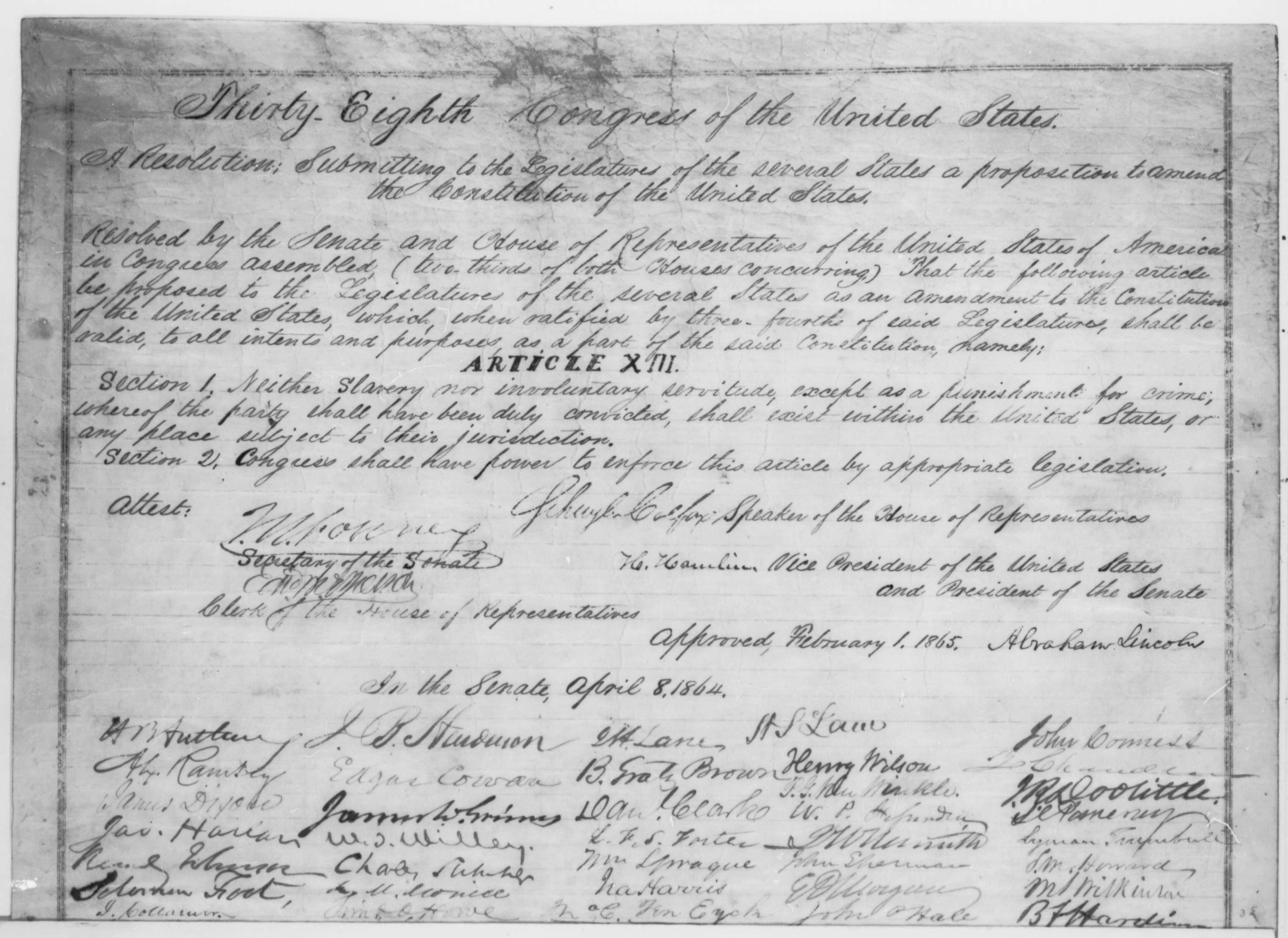
On this day in 1865, the Thirteenth Amendment is ratified by the states, having been passed by Congress about six months earlier on January 31st, and submitted to the sates on February 1st in a joint Congressional resolution that Pres. Lincoln signed.
How about “a sleek, solid metal, American-made mechanical pencil that will last you a lifetime”? The proposal has a Kickstarter page where you can learn more about the project. Creator Andrew Sanderson has already reached his funding goal, so this venture has a promising future. (The pencil also nicely fits in a Field Notes notebook’s spiral binding, a proof of thoughtful, useful design.)
Science/Nature, Technology
Orion Liftoff and Splashdown
by JOHN ADAMS •
This Friday morning, with video of the launch, a launch closeup, and splashdown —
Cats
Friday Catblogging: A Nike-Style Cat Treats Ad
by JOHN ADAMS •
Adweek reports that This Is How You Make an Ad for Cat Treats Look Like a Nike Commercial:
Food, Poll
Friday Poll: Peanut Butter & Jelly Pop Tarts?
by JOHN ADAMS •

Daily Bread
Daily Bread for 12.5.14
by JOHN ADAMS •
Good morning, Whitewater.
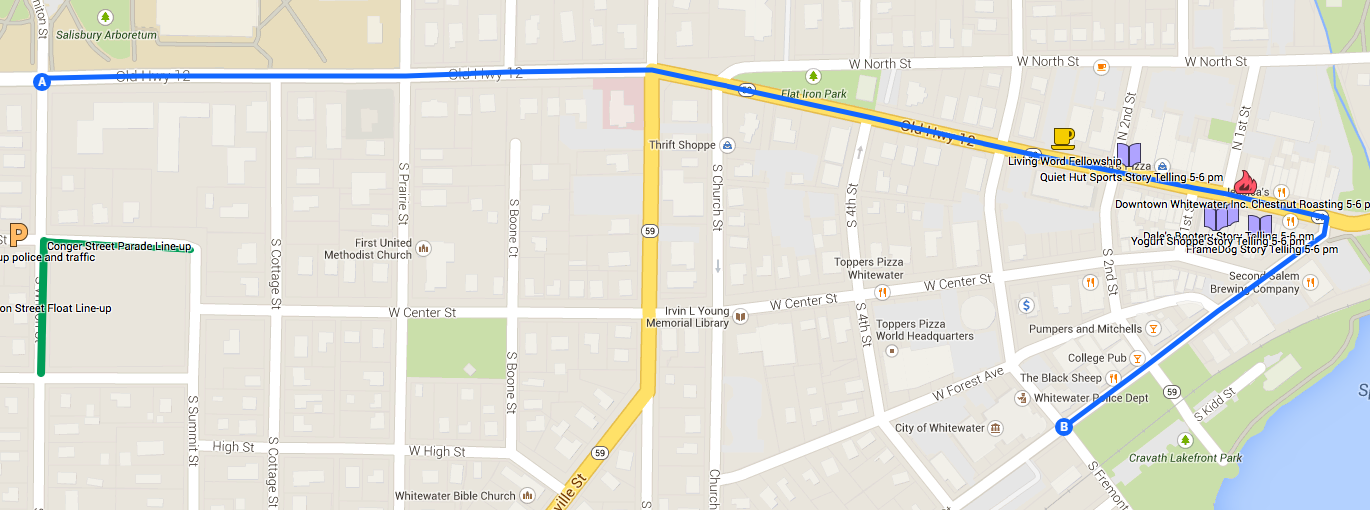
We’ll have a mostly cloudy but mild day for Whitewater’s 6 PM Christmas Parade of Lights (with pre-parade events beginning at 5 PM in our downtown).
The parade route runs from the intersection of Whiton & Main to Whitewater Street near Cravath and by the SweetSpot. Map below from DTWW (clicking the image produces a larger map):
On this day in 1933, America repeals Prohibition:
The repeal movement was initiated and financed by the Association Against the Prohibition Amendment, who worked to elect Congressmen who agreed to support repeal. The group’s wealthy supporters included John D. Rockefeller, Jr., S. S. Kresge, and the Du Pont family, among others, who had abandoned the dry cause.[24] Pauline Sabin, a wealthy Republican who founded the Women’s Organization for National Prohibition Reform (WONPR), argued that Prohibition should be repealed because it made the United States a nation of hypocrites and undermined its respect for the rule of law. This hypocrisy and the fact that women had initially led the prohibition movement convinced Sabin to establish the WNPR. Their efforts eventually led to the repeal of prohibition.[31][32]
When Sabin’s fellow Republicans would not support her efforts, she went to the Democrats, who switched their support of the dry cause to endorse repeal under the leadership of liberal politicians such as Fiorello La Guardia and Franklin D. Roosevelt. Sabin and her supporters emphasized that repeal would generate enormous sums of much-needed tax revenue, and weaken the base of organized crime.[citation needed]
Repeal of Prohibition was accomplished with the ratification of the Twenty-first Amendment on December 5, 1933. Under its terms, states were allowed to set their own laws for the control of alcohol. Following repeal, public interest in an organized prohibition movement dwindled. However, it survived for a while in a few southern and border states.[31][32] To this day, however, there are still counties and parishes within the US known as “dry”, where the sale of liquor (whiskey, wine) -not beer- is prohibited; several such municipalities have adopted liquor-by-the-drink, however in order to expand tax revenue.[33]
On this day in 1879, Wisconsin gets an animal-protection society:
1879 – Humane Society of Wisconsin Organized
On this date the Humane Society of Wisconsin was organized in Milwaukee. Inspired by Henry Bergh, a New York City philanthropist, and his Humane Movement, the state Humane Society was formed to protect both animals and children. However, with the formation of child protection laws in the early 1900s, the Humane Society of Wisconsin began to focus primarily on animal protection. [Source: Humane Society of Wisconsin]
Google-a-Day aska a question on literature:
What traffic circle with a “square” name is located just south of the site where the author lived while writing “The Seven Pillars”?
Nature
The December Sky
by JOHN ADAMS •
If we’ve clear skies this month, then the beauty of the created order awaits our gaze:
Business, Corporate Welfare, Government Spending, State Government
WEDC: Those Who Can’t Do, Lobby
by JOHN ADAMS •
One of the Wisconsin Economic Development Corporation’s many incompetent leaders, Ryan Murray, is leaving behind his controversial, failed role at the WEDC to become a lobbyist.
Jobs agency official becomes lobbyist @ JS All Politics Blog reports on Murray’s shabby move:
The No. 2 official at the state’s jobs agency has left the agency to join a lobbying firm.
Ryan Murray, a top lieutenant of GOP Gov. Scott Walker, stepped down recently as the chief operating officer of the Wisconsin Economic Development Corp.
Murray, a former deputy chief of staff to Walker, is becoming a partner at The Firm Consulting, which lobbies for top companies such as AT&T and Cessna Aircraft as well as some businesses aligned with startup companies such as gener8tor LLC.
Just about everything that could have gone wrong with the WEDC – an organization dedicated to insiders’ enrichment of a few at the expense of everyone else – has gone wrong.
See, a link to other posts about the WEDC @ FREE WHITEWATER.
City, Waste Digesters
‘Wastewater Facility Poised for Upgrades: Memo 4’
by JOHN ADAMS •
Over at the City of Whitewater’s website, there is an announcement entitled, Wastewater Facility Poised for Upgrades (http://www.whitewater-wi.gov/residents/recent-news/2803-wastewater-facility-poised-for-upgrades).
Among several memos about these upgrades, one finds Memo 4 – Digestion Complex and Energy Production.
The text of that memo (embedded below) is brief:
Technical Memorandum #4 – Digestion Complex and Energy Production – In Progress.
It’s been over a year, so it’s fair to ask: When can Whitewater’s residents expect an update on the status of this ‘in progress’ Digestion Complex proposal?
Following an orderly method for blogging on topics, I’ll send along an email to City Manager Clapper asking this question. I’ll post an update with any information received in reply, should there be a reply.
See, Technical Memorandum #4 – Digestion Complex and Energy Production:
Daily Bread
Daily Bread for 12.4.14
by JOHN ADAMS •
Good morning, Whitewater.
Thursday in Whitewater will be cloudy in the morning giving way to sunshine in the afternoon, with a high of thirty-four. Sunrise is 7:09 AM and sunset 4:21 PM, for 9h 11m 24s of daytime. The moon is a waxing gibbous with 95.5% of its visible disk illuminated.
Whitewater’s Landmarks Commission meets tonight at 6 PM.
On this day in 1780, America successfully tricks Britain during the Revolutionary War:
A force of Continental dragoons commanded by Colonel William Washington — General George Washington’s second cousin once removed — corners Loyalist Colonel Rowland Rugeley and his followers in Rugeley’s house and barn near Camden, South Carolina, on this day in 1780.
After nearly a year of brutal backcountry conflict between Washington and the fierce British commander Lieutenant Colonel Banastre Tarleton (who was infamous for Tarleton’s Quarter, the murder of colonial POWs on May 29, 1780 at Waxhaws), Washington had retreated to North Carolina the previous October. Commanded to return to the South Carolina theater by Brigadier General Daniel The Old Wagoner Morgan, Colonel Washington still lacked the proper artillery to dislodge the Loyalists. He told his cavalrymen to dismount and surround the barn. While out of Rugeley’s sight, Washington’s men fabricated a pine log to resemble a cannon.
This Quaker gun trick, named so because Quakers used it to be intimidating without breaching their pacifist vow of non-violence, worked beautifully. Washington faced the cannon toward the buildings in which the Loyalists had barricaded themselves and threatened bombardment if they did not surrender. Shortly after, Rugeley surrendered his entire force without a single shot being fired.
When informed of the pacifist victory, General Charles Cornwallis, commander of the British armies in America, informed Tarleton that Rugeley’s performance ensured he would never rise to the rank of brigadier. A few weeks later, Tarleton would himself face an even worse humiliation at the hands of General Morgan during the devastating Battle of Cowpens. The harrowing civil war for the hearts and minds of the Carolina backcountry had finally begun to favor the Patriots.
On this day in 1933, Janesville remains defiant:
1933 – Janesville Council Denies Prohibition End
On this date the Janesville Council drafted a “drastic liquor control law” that prohibited serving liquor. The law prohibited distilled spirits, but not beer, at bars, and limited liquor service to tables. Backrooms and “blinds” (closed booths) were also prohibited. The only place where packaged liquor was allowed to be sold was at municipal dispensaries. Further, bars were prohibited from selling packaged liquor. The next day, the city was uncommonly quiet as the 18th Amendment was repealed. For nearly 14 years, the 18th Amendment (the Prohibition Amendment), outlawed the manufacture, transportation, and sale of alcoholic beverages within the U.S. [Source: Janesville Gazette, December 5, 1933, p.1]]
Google-a-Day asks a question of geography and history:
In the Russian monument of the founder of Moscow, which hand is he holding out to the side?
City, Waste Digesters
One Year On
by JOHN ADAMS •
Some ideas, good or bad, are worth remarking on promptly.
Some, but not all: there are times when a proposal is so destructive of a community’s well-being, so terribly misguided, that a few remarks, or even many, would not be enough.
In those times, one meets a light, misplaced enthusiasm with diligent, well-placed work.
It was one year ago to this day, on December 3, 2013 at around 8 PM, that Whitewater’s Wastewater Superintendent cheerily broached another ignorant & destructive plan for a waste digester in Whitewater.
The idea, simply put, would be to make Whitewater the repository for other communities’ human and animal waste, and all manner of filth that could be trucked from cities that didn’t want it, to be delivered to our small, residential town.
I’ve written about it only briefly since. Better to spend the year in preparation, it seemed, than commentary. And so, that’s what I’ve done. For much of the last year, this has been my effort from this particular vantage: to research and to prepare for this subject.
Along the way, I’ve written a few posts that describe how the long work yet ahead seems to me, and thought of earlier posts that reminded me to work still harder.
In the end, one begins each day from The Better Approach of the Dark-Horse Underdog, recognizes that sugary promises contribute to Local Government’s Vendor Problem, that one can profit by Frédéric Bastiat’s Gift to Whitewater, believing that grandiose ideas deserve more scrutiny than The Peddler’s Egg, that Public Choice Theory Inoculates People from Poor Policy, and that there should be six clear and defined Steps for Blogging on a Policy or Proposal.
In all this, I am convinced yet again that the right standards for Whitewater eclipse giddy cheerleading.
It’s been a year well and truly spent.
For all the preparation, steady and thorough, I’ve also felt a deepening love and hope for our small and beautiful city, convinced as I am that a New Whitewater is inevitable, that there will be no going back.
One would prefer not to contend over this; far more, one would betray oneself, and all one believes, not to contend in opposition.
One year on, a decade, or even a generation from now: a few dark proposals require a diligent, zealous opposition whenever they should appear, to the very fullest of one’s ability.