FREE WHITEWATER

Author Archive for JOHN ADAMS

After Ineffective Spending, an Effective Comparative Advantage Solution

There are two recent stories that highlight the challenges facing the national economy, and that implicitly show the impossibility of a national solution to Whitewater, Wisconsin, or any other small town.

One has probably read that U.S. Representative Ryan of Wisconsin said that he thought of “the stimulus as a sugar high.” See, Top Republican: Obama’s stimulus little more than ‘sugar high’ for economy. It’s been that for us, in this small part of America.

In a different story, a commentator from the other side of the Atlantic suggests a solution for what ails America (and Europe and Asia). Looking at the problems of sluggish growth and high unemployment, Ambrose Evans-Pritchard suggests a solution:

Investors are starting to chew over the awful possibility that America’s recovery will stall just as Asia hits the buffers. China’s manufacturing index has been falling since January, with a downward lurch in June to 50.4, just above the break-even line of 50. Momentum seems to be flagging everywhere, whether in Australian building permits, Turkish exports, or Japanese industrial output.

On Friday, Jacques Cailloux from RBS put out a “double-dip alert” for Europe. “The risk is rising fast. Absent an effective policy intervention to tackle the debt crisis on the periphery over coming months, the European economy will double dip in 2011,” he said.

It is obvious what that policy should be for Europe, America, and Japan. If budgets are to shrink in an orderly fashion over several years – as they must, to avoid sovereign debt spirals – then central banks will have to cushion the blow keeping monetary policy ultra-loose for as long it takes.

The Fed is already eyeing the printing press again. “It’s appropriate to think about what we would do under a deflationary scenario,” said Dennis Lockhart for the Atlanta Fed.

I don’t know what federal fiscal policy will be after the November elections, and no one else knows, either. What’s clear, however, is that there’s no independent monetary solution for state or local governments to offset necessary budget tightening. (If the federal government has spent all she can spend, and must cut back to prevent disaster, there’s sure to be cuts for state and local governments with no local offset of a looser monetary policy that localities obviously don’t have.)

There’s still a way out, for Whitewater and other towns with too many public projects and too few private jobs: a change to a climate of low regulations. Low when compared to present levels, and lower than nearby communities. That comparative advantage will attract investment and bolster local businesses.

Evans-Pritchard’s article is dramatically entitled, “With the US trapped in depression, this really is starting to feel like 1932. Although he accurately notes grim statistics (“US workforce shrank by 652,000 in June, one of the sharpest contractions ever. The rate of hourly earnings fell 0.1pc. Wages are flirting with deflation.”), there are few who think a depression is possible.

If further budget cuts at the local level are necessary (and overdue), there’s still much to be done, by which we could boost the comparative attractiveness of the city. That boost will not — and finally cannot — come from more public projects, but from a significantly more limited and less bothersome local government.

“A Better Welcome for Our Nation’s Immigrants”

At the Washington Post, former Florida Governor Jeb Bush and Harvard professor of public policy Robert Putnam have an essay entitled, A Better Welcome for Our Nation’s Immigrants. It’s an historically sound reflection on immigrants in America, with recommendations for public policy:

Immigration has always caused frictions and controversies: “On our national birthday, and amid an angry debate about immigration, Americans should reflect on the lessons of our shared immigrant past. We must recall that the challenges facing our nation today were felt as far back as the Founders’ time. Immigrant assimilation has always been slow and contentious, with progress measured not in years but in decades.”

Immigrants adopt English as their language: “Yet learning a language as an adult is hard, so first-generation immigrants often use their native tongue. Historically, English has dominated by the second or third generation in all immigrant groups. Most recent immigrants recognize that they need to learn English, and about 90 percent of the second generation speak English, according to the Pew Hispanic Center. Research by sociologists Claude Fischer and Michael Hout published in 2008 suggests that English acquisition among immigrants today is faster than in previous waves.” (Emphasis added.)

There’s nothing unusual about immigrants living in enclaves of fellow immigrants upon arrival.: “Residential integration of immigrants is even more gradual. Half a century ago, sociologist Stanley Lieberson showed that most immigrants lived in segregated enclaves, “Little Italy” or “Chinatown,” for several generations. This segregation reflected discrimination by natives and the natural desire of “strangers in a strange land” to live among familiar faces with familiar customs.

Only with suburbanization, encouraged by government policy in the 1950s and 1960s, did the children and grandchildren of the immigrants of the 1890s and 1900s exit those enclaves. That many of today’s immigrants live in ethnic enclaves is thus entirely normal and reflects no ominous aim to separate themselves from the wider American community.”

Sadly, we’re less welcoming as a people than earlier American generations were: “One important difference, however, that separates immigration then and now: We native-born Americans are doing less than our great-grandparents did to welcome immigrants.

A century ago, religious, civic and business groups and government provided classes in English and citizenship. Historian Thomas P. Vadasz found that in Bethlehem, Pa., a thriving town of about 20,000, roughly two-thirds of whom were immigrants, the biggest employer, Bethlehem Steel, and the local YMCA offered free English instruction to thousands of immigrants in the early 20th century, even paying them to take classes. Today, immigrants face long waiting lists for English classes, even ones they pay for.”

There’s always the temptation — one well known to many communities, including Whitewater — to scapegoat immigrants or stay silent while others do so. It’s destructive and futile, but tempting. There’s no honorable capstone to a career to be had in victimizing immigrants, condoning others doing so, or staying silent.

H/T Radley Balko of Reason for the pointer.

Daily Bread for Whitewater, Wisconsin: 7-6-10

Good morning,

Today’s forecast calls for thunderstorms for Whitewater today, as the forecast has for the last few days. We’ve had less than forecast, and in this case less is more. The high temperature should be about 84.

It’s back to business, of sorts, for Whitewater’s city government, with an Urban Forestry Work Session from 9 a.m. to 11 a.m. For a prior post on the city’s tree care, see Whitewater’s Overreaction to Citizen Complaints: Trees, Tree Commission, and Urban Forestry Commission.

The Wisconsin Historical Society recalls a Wisconsin workers’ riot that took place on this day in 1934:

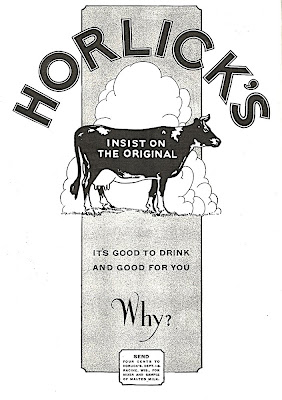
Seven injured in riot at Horlick plant

On this day three policemen and five office employees of the Horlick Malted Milk Corp. were injured when a crowd of strike sympathizers stormed a motorcade of employees entering the plant’s main gate. Emerging from a crowd of 500 striking employees, the rioters overpowered police escorts, shattered windshields and windows, and pelted officers with rocks. Police blamed Communist influence for the incident, and former Communist congressional candidate John Sekat was arrested in the incident. Employees of the plant were demanding wage increases and recognition of the Racine County Workers Committee as their collective bargaining agent. [Source: Capital Times 7/6/1934, p. 1]

More on Horlick’s history, in America and abroad, is available online.

Here’s a sound file of a Horlick’s Radio Commercial from 1935. Enjoy.

Eleven Fifty-Nine for 7-5-10

Good evening,

There’s a good chance of overnight thunderstorms for Whitewater, and a low temperature no better than seventy-one degrees. Hardly good weather for sleeping, but then I’m not asleep.

I was in Lake Geneva and Elkhorn, Wisconsin today, and if there’s a more depressing town in Walworth County than Elkhorn, if I’ve yet to visit it. Their downtown, such as it is, is drab and gray, and they’ve the exacerbating problem of being the county seat. For other towns that might be an advantage; I think it’s only an advantage for those officials in Elkhorn whose careers have eluded greater public awareness. They have thrived in gray; they’d be unsuited to a brighter place.

I’ve been watching the Tour de France on Versus, and reading coverage of it here and there. It’s a shame about the Tour, in one way, though — it’s just not enjoyable to most people, the popularity (I think unfairly earned) of Lance Armstrong not withstanding. Cycling is like the violin to most people — something for the rich, the stuffy, the pretentious. That’s too bad, because it’s not true. Most riders are hardly wealthy, and they should not be conflated with pretentious fans who over-buy and under-ride.

I think LeMond is the better man, and worthier athlete, but Lance is the story of the last decade. He may find, in unwelcome ways, that he’s the story of the new decade, too. America produced a three-time champion in LeMond, in whom all Americans can be proud. LeMond has been controversial to many, but when the current fashion fades, we’ll find that we always had a great cyclist, just from Minnesota, rather than Texas.

Cobblestones for stage three, but there was enough excitement today without them.

I’m not sure if it’s a snowball effect, or slippery slope, etc., but there’s a story about a consequence of World Naked Bike Day in Madison — World Naked Yoga Day. See, First there was the World Naked Bike Ride, and now get ready for Naked Yoga. (For a post on the bike day, see “Wisconsin State Journal: Naked Cyclists Put on a Show.”)

Inspired by the World Naked Bike Ride and hoping to draw attention to healthy body images, yoga instructor Natalia Hacerola is holding a World Naked Yoga Day.

World Naked Yoga Day is different from World Naked Bike Ride in that while the ride focused on public nudity — along with calling attention to oil independence and body acceptance — the yoga day focuses on private nudity, Hacerola said.

That’s quite a difference. I have doubts about effectiveness of the prior bike-riding protest, but it was a protest. I understand that the purpose of the nude yoga day is self-awareness, but I thought that yoga’s practitioners professed that it already brings awareness. If regular, clothed yoga still leaves people needing something more by way of wearing less, then perhaps regular yoga’s been over-sold all these years.

State Journal: Running for Governor (of WI) with Hope — but without much money or recognition

There’s a story at the Wisconsin State Journal about small-party candidates who are running for governor of Wisconsin. See, Running for Governor with Hope — but without much money or recognition.

It says much about our politics that although Wisconsin makes it easy for smaller-party candidates to get on the ballot, they’re unknowns.

The story also tacitly illustrates the difference between libertarians (of which there are many in Wisconsin) and candidates of the Libertarian Party proper (of which there’s not a single mention). Most libertarians vote with one of the two major parties, shifting between the two from season to season depending on the major parties’ positions.

The LP has done nothing these many years to change that, and this election year in Wisconsin proves no different.

Reason.tv: New Threats to Freedom

Over at Reason.tv, there’s a half-hour video of a panel discussion about a recently-published anthology, New Threats to Freedom. That title sounds ominous, but it needn’t be, as discussions about liberty forfend the prospect of a more restrictive and regulated society. The panel discussion makes me eager to read the book — available from Amazon, Barnes & Noble, Borders, and Templeton Press.

Here’s a link to an interview with Adam Bellow, editor of the anthology:

Link: http://www.youtube.com/watch?v=1Mh2EAQEkKs

Here’s the panel interview:

Link: http://www.reason.tv/video/show/threats-to-freedom-panel

“On May 17, 2010, Reason sponsored a panel discussion on the new collection New Threats to Freedom featuring editor Adam Bellow (“Where Have All the Grownups Gone?”), Reason’s Katherine Mangu-Ward, Stephen Schwartz (“Shariah in the West”), and Christine Rosen (“The New Behaviorists”).

New Threats (visit the book’s website here) includes contributions from figures such as Christopher Hitchens (“Multiculturalism and the Threat of Conformity”), David Mamet (“The Fairness Doctrine”), Glenn Reynolds (“Liberty and Complacency”), Anne Applebaum (“The Decline of American Press Freedom”), and Reason staffers Katherine Mangu-Ward (“The War on Negative Liberty”) and Michael C. Moynihan (“The Anticapitalists”).

In his introductory essay, Bellow calls for a reinvigorated debate about the meaning and necessity of freedom in a world that is a generation past the Cold War. Reflecting on figures such as Aleksandr Solzhenitsyn and his own father, the Nobel Prize winning novelist Saul Bellow, he writes,

Many of us assumed that there would always be such people on hand to make the case for freedom and democracy. The loss of many of these outsized intellectual and literary figures in the first decade of this century leaves one wondering whether there are still any grownups around.

But here is a sobering thought: merely to ask the question is to assume responsibility for embracing the task oneself. Resistance doesn’t come out of nowhere; it has to be fostered the old-fashioned way, word by word, through magazines and books, think-tank panels, conferences and seminars. We are the grownups now, and we owe it to the next generation to provide a model of how to be serious about ultimate questions.

Approximately 27 minutes. Shot and edited by Dan Hayes, Meredith Bragg, and Josh Swain.”
more >>

Daily Bread for Whitewater, Wisconsin: 7-5-10

Good morning,

Whitewater’s forecast for today calls for scattered thunderstorms with a high of eighty-four degrees.

The Wisconsin Historical Society recalls that on this date in 1832:

Atkinson enters the Trembling Lands

On this date, General Atkinson and his troops entered the area known by the Native Americans as “trembling lands” in their pursuit of Black Hawk. The area was some 10 square miles and contained a large bog. Although the land appeared safe, it would undulate or tremble for yards when pressure was applied. Many of the militiamen were on horses, which plunged to their bellies in the swamp. The “trembling lands” forced Atkinson to retrace his steps back toward the Rock River, in the process losing days in his pursuit of Black Hawk. [Source: Along the Black Hawk Trail by William G. Stark]

Wisconsin’s indoor smoking ban begins today. One might have allowed private establishments, and patrons, to decide for themselves: no-smoking, some in some areas, or smoking in all areas. The state, instead, now bans comprehensively and those choices aren’t available.

It’s the anniversary of the bikini, this date being attributed to the creations of a designer and an engineer in France. The Metropolitan Museum of Art has details on the development:

Fashion designer Jacques Heim and mechanical engineer Louis Reard both claim to be the first to launch the bikini on the French Riviera in Cannes in the summer of 1946. The design, two triangles on top, positioned to cover the bosom and two triangles, one front, one back, on the bottom, was basic. Though Reard patented his version and Heim is now remembered as a couturier and an early supporter of sportswear, there is much debate over who “invented” the bikini. A likely scenario is that both gentlemen had seen the local jeunes filles of Cannes sunning themselves in the most abbreviated beach costumes in order to achieve the bronze of the newly fashionable suntan. The bathers had pushed the fashion to the acceptable social limit, and both businessmen took advantage of this show of youthful daring. Officially, the first time the bikini appeared in a fashion event was at a poolside show at the Piscine Molitor in Paris on July 5, 1946.

Eleven Fifty-Nine for 7-4-10

Good evening,

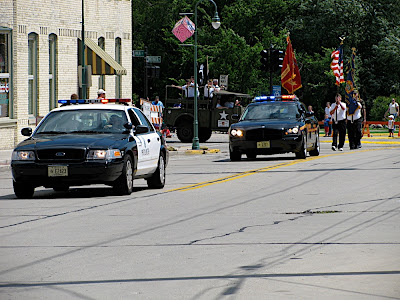
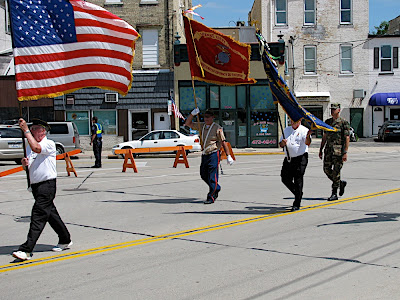
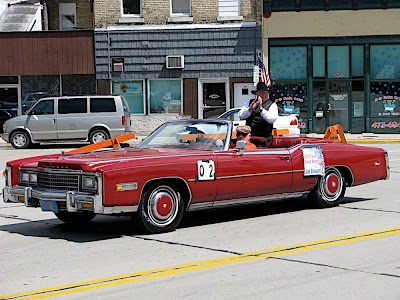
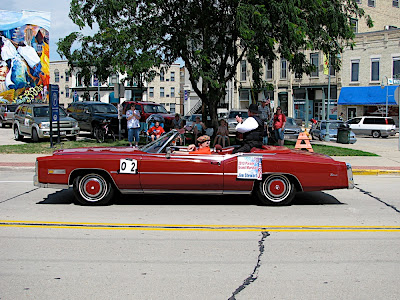
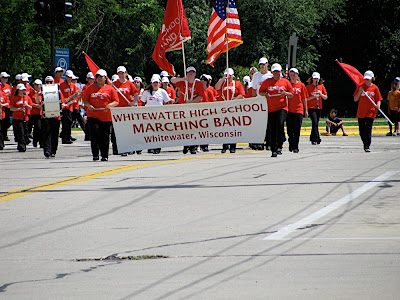
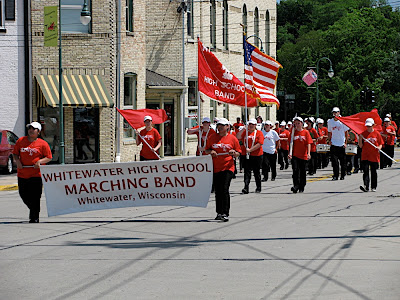
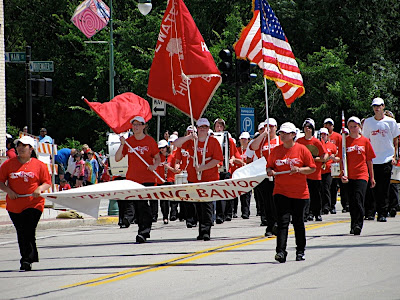
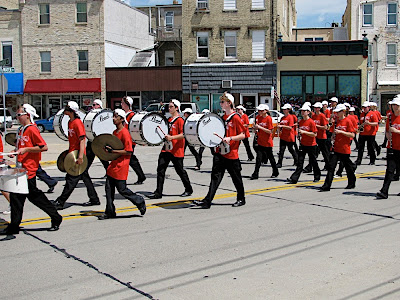
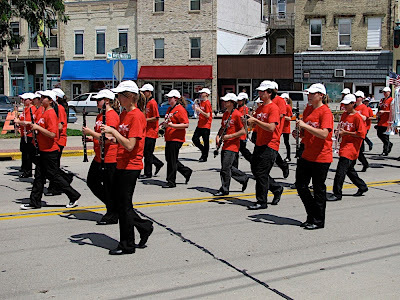
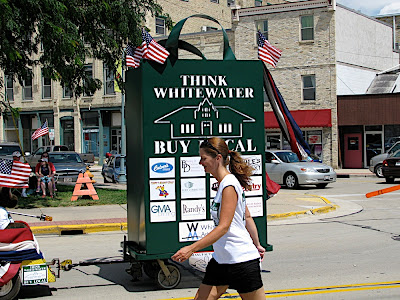
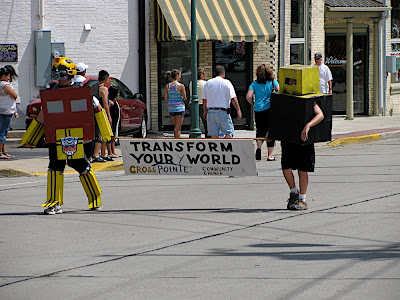
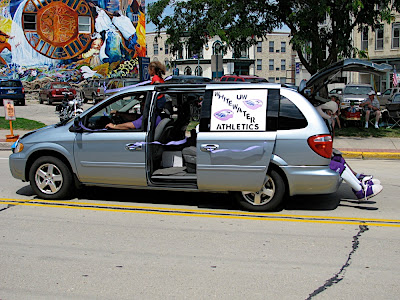
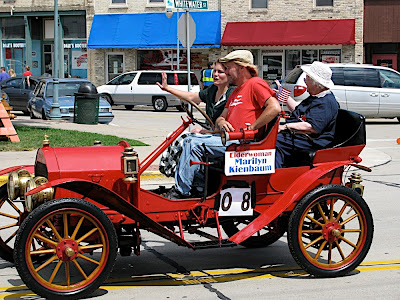
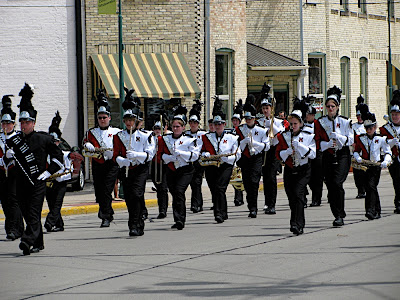
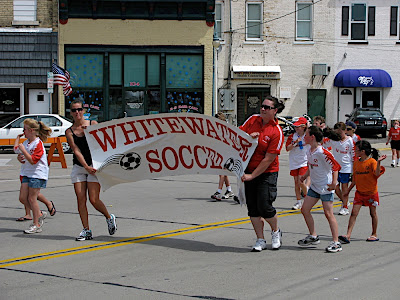
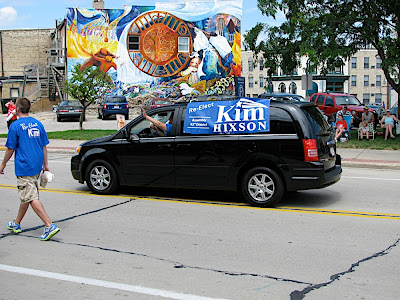
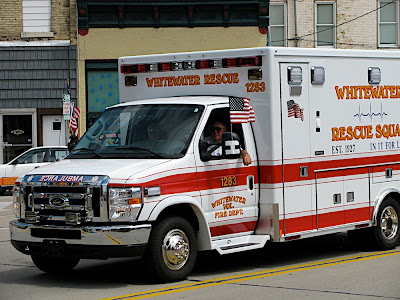
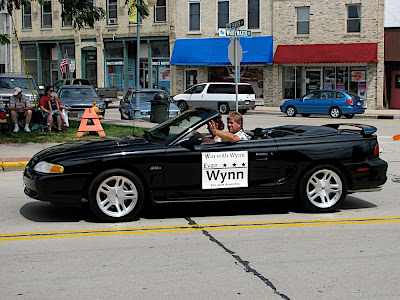
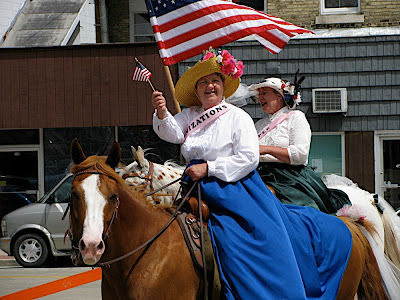
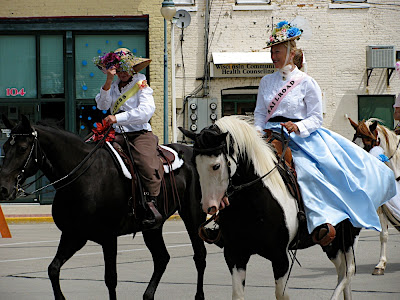
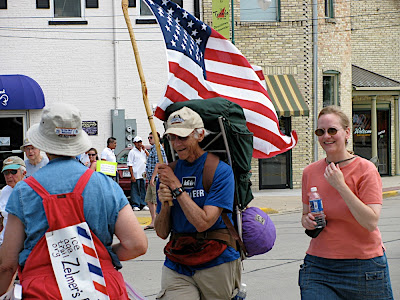
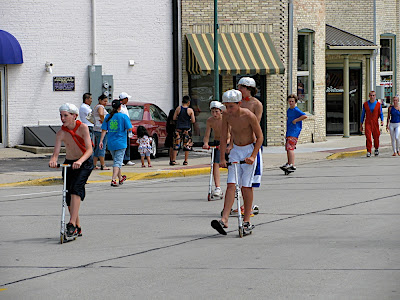
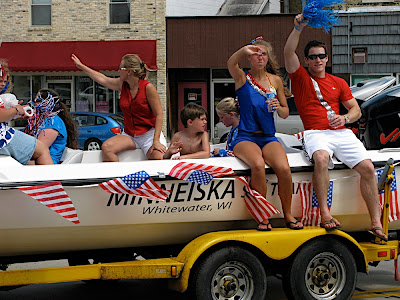
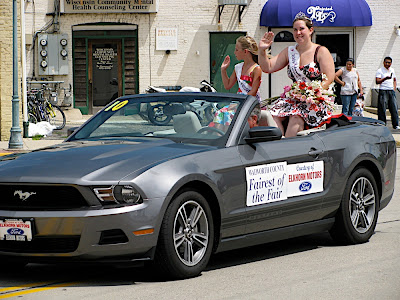
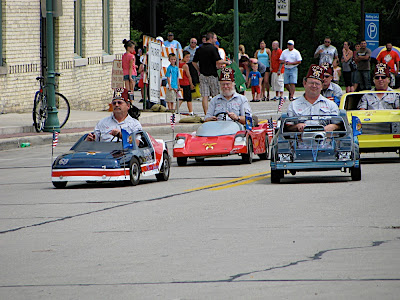
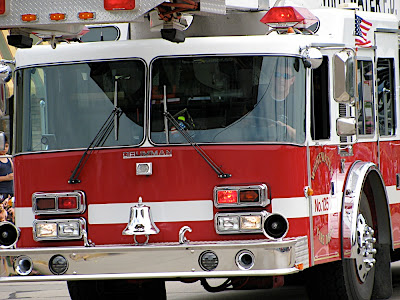
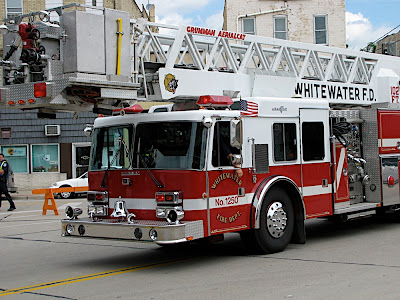
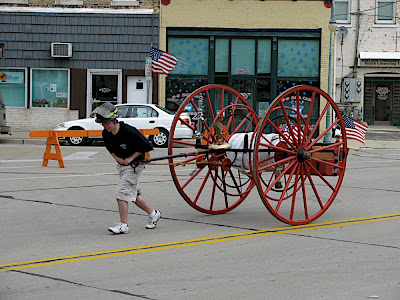
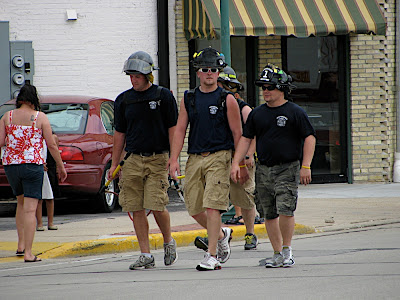
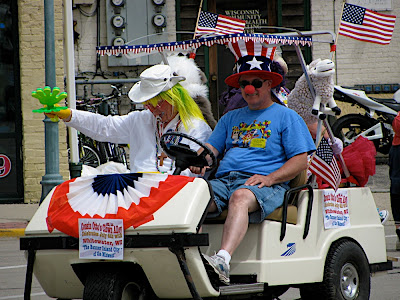
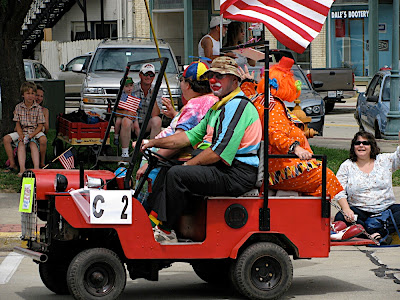
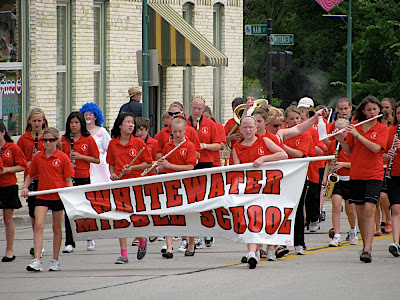
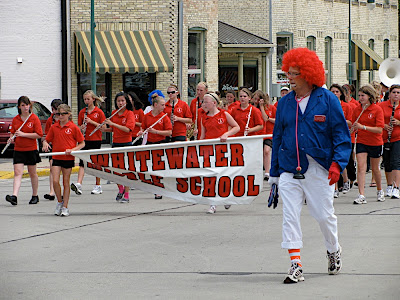
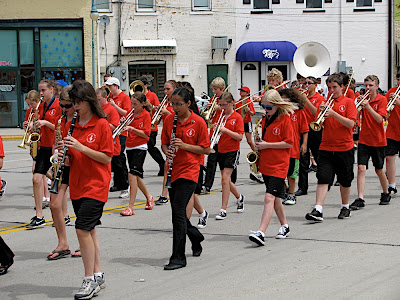
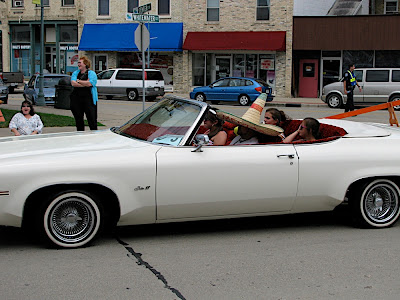
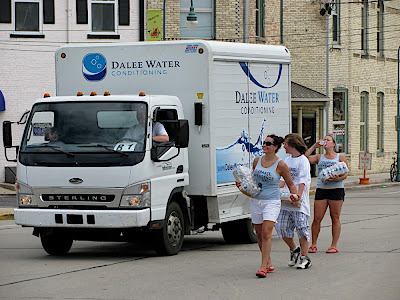
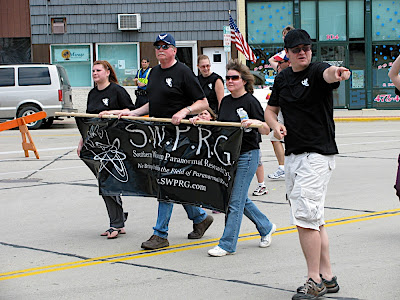
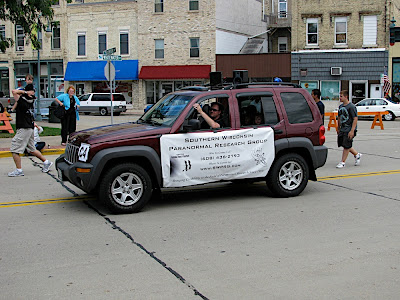
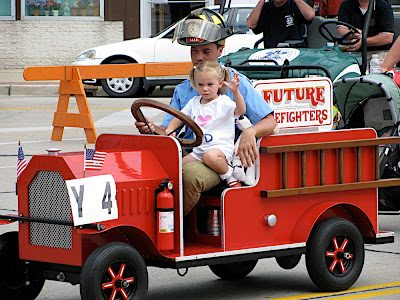
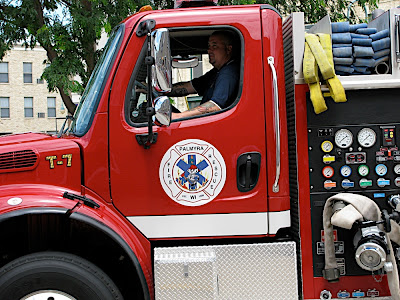
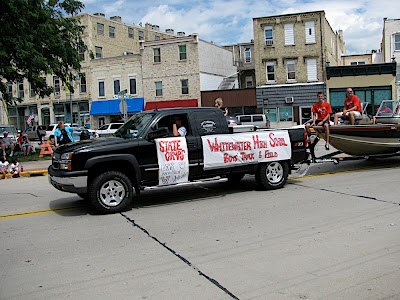
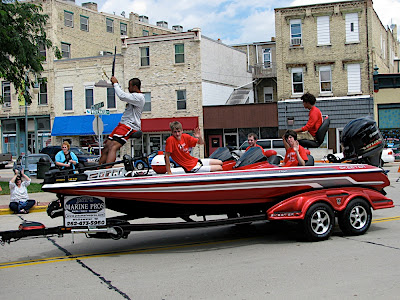
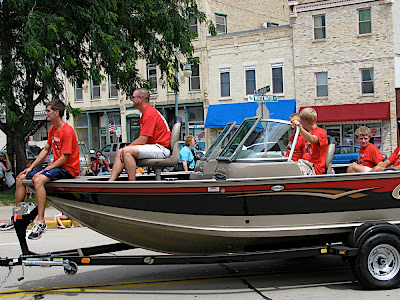
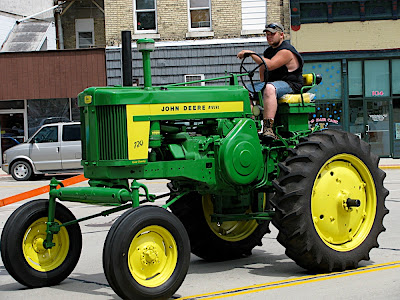
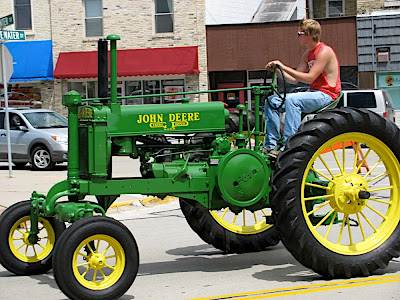
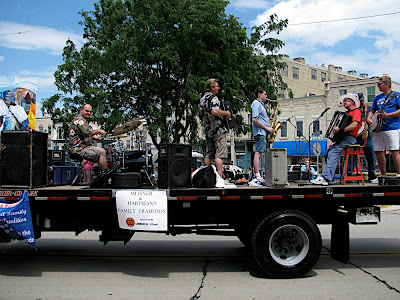
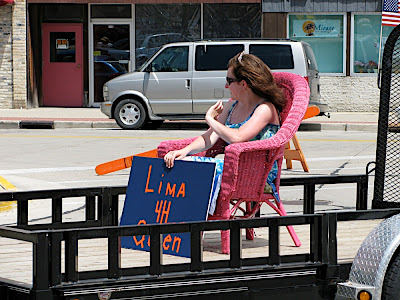
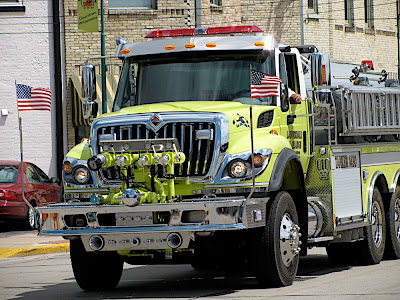
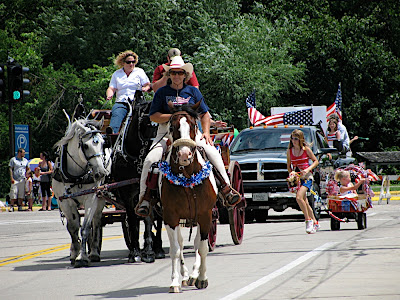
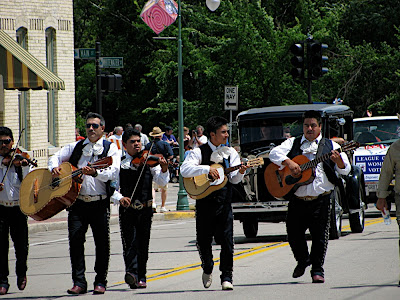
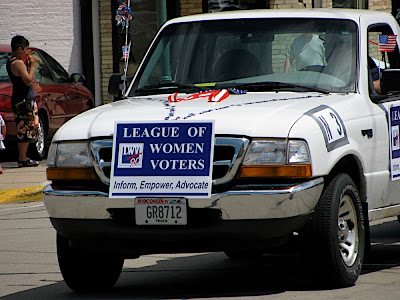
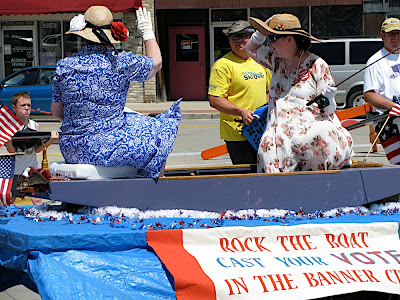
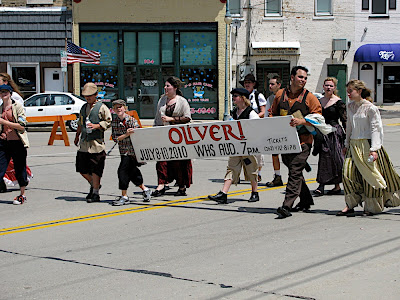
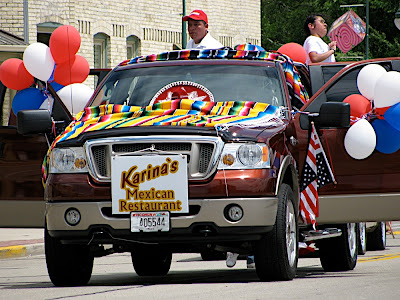
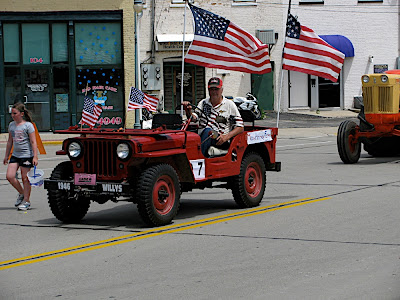
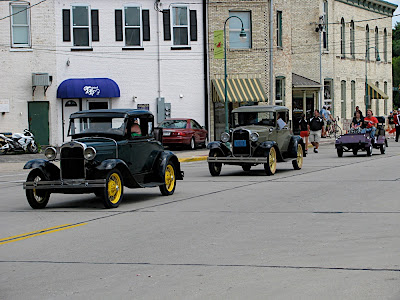
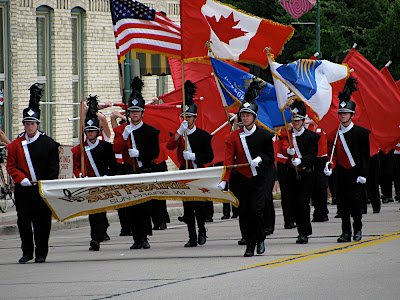
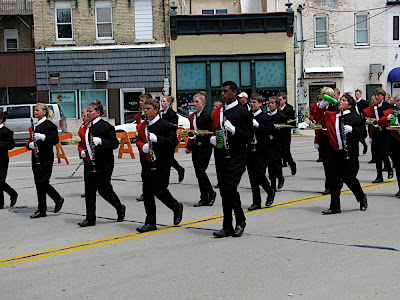
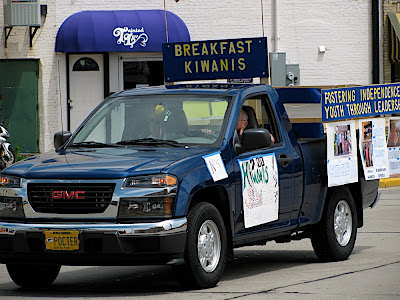
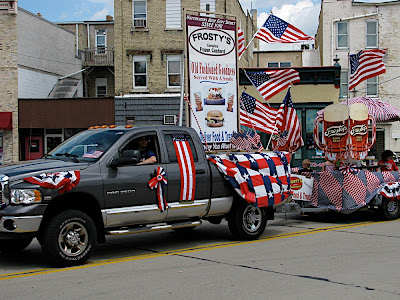
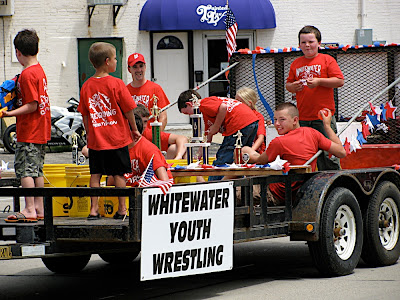
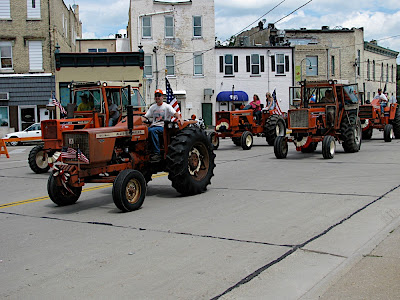
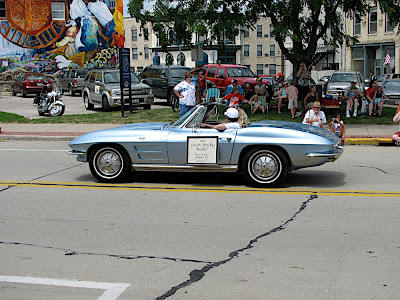
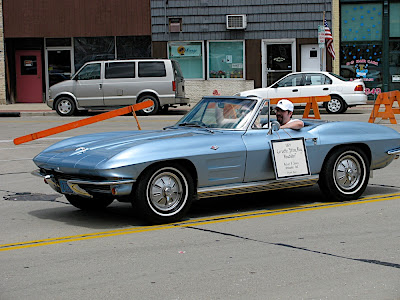
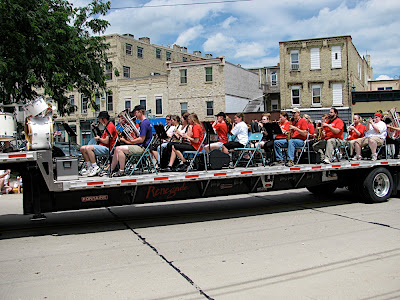
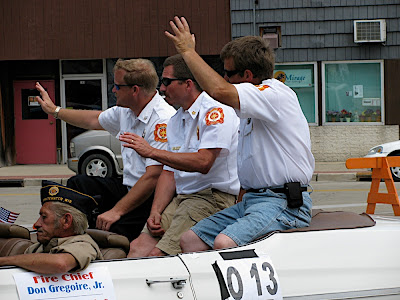
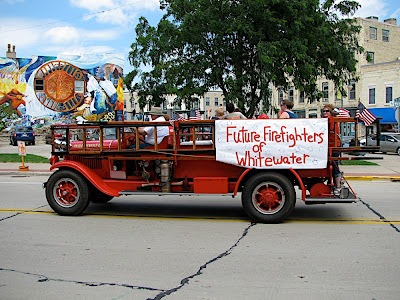
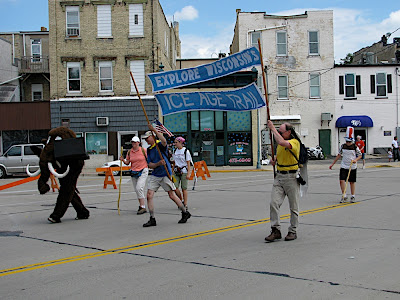
Whitewater’s Independence Day parade was among the biggest of recent memory, with local groups and out-of-city participants from as far as fifty miles away. I published some scenes from the parade, in an earlier post.

Just a bit ago, I watched the fireworks from across Cravath Lake, looking toward downtown Whitewater. Thousands of residents and visitors lined the sidewalks, parks, and streets near the lake. Others parked farther away, and watched the display from their cars.

The thunderstorms earlier forecast for tonight held off, and people brought blankets and chairs to watch the celebration. It was a lovely night, the conclusion to a very fine holiday for Whitewater.

Here are a few photographs of the show:

The crowd was happy and appreciative, but I thought subdued, too. The weekend was wonderful; their concerns were surely elsewhere. I took no surveys, and so I can offer only my own assessment. I’d guess there’s an underlying worry among many about the near future, a concern about the next few years, despite a justifiable pride and hope and fundamental optimism about America’s greater future. In that way, this time feels to me like nothing so much as the Bicentennial. Then, like now, people were justifiably proud of America’s heritage, but uncertain about what what might wait just ahead.
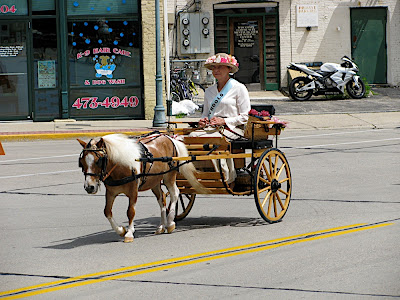
We came through that time, and we will come this one, too — difficult, with travel over hard ground, but well within the ability of Americans. Although one might have doubts about the road ahead, and legitimate skepticism about local politicians’ solutions, it’s impossible to be other than optimistic walking through tonight’s crowd.

They, above all others, are the ones who sustain the city, and support the country, that will yet see better days on their account.
Citizens, Not Subjects

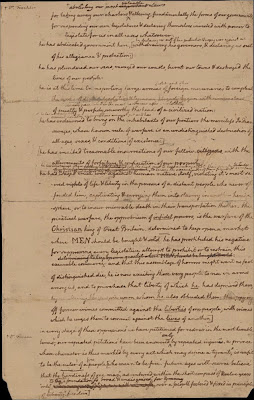
There’s a fine story at the Washington Post (free registration req’d) entitled, “Jefferson Changed ‘Subjects’ to ‘Citizens’ in Declaration of Independence.” It’s long been known that Jefferson made changes as he worked on his draft of the Declaration, as anyone would. ONly in one case, however, did he erase a word entirely, and substitute a different one. (In other cases, he merely scratched a word out, and wrote a new one beside it. For more on the science behind the discovery, see “Subjects of Attention.”)
Using advanced imaging technology, research chemist Dr. Fernella France and colleagues examined Jefferson’s actual written draft:
Scholars of the revolution have long speculated about the “citizens” smear — wondering whether the erased word was “patriots” or “residents” — but now the Library of Congress has determined that the change was far more dramatic.

Using a modified version of the kind of spectral imaging technology developed for the military and for monitoring agriculture, research scientists teased apart the mystery and reconstructed the word that Jefferson banished in 1776.

“Seldom can we re-create a moment in history in such a dramatic and living way,” Library of Congress preservation director Dianne van der Reyden said at Friday’s announcement of the discovery.

“It’s almost like we can see him write ‘subjects’ and then quickly decide that’s not what he wanted to say at all, that he didn’t even want a record of it,” she said. “Really, it sends chills down the spine.”

Yes, it very much does. Here a great man, who helped make us what we are, saw the looming truth of his, and of others’, efforts: that we would never again be merely subjects, but were from then onward citizens.

And so we are, proudly, to this day.


Jefferson’s rough draft of the Declaration, third page — Courtesy of the Library of Congress

Recent Tweets, 6-27 to 7-3

RT @CatoInstitute: Celebrate your independence (and educate a few friends) with 10 Pocket Constitutions for $10. http://bit.ly/93Rwam
1:24 PM Jul 2nd

Wisconsin Supreme Court Justice Gableman survives ethics charges by not perishing http://bit.ly/bac5KQ
11:53 AM Jul 1st

It’s about time – RT @reasonmag: British Health Secretary to Jamie Oliver: Shut Yer Pie Hole http://ow.ly/25iRh
12:28 PM Jun 30th

Perhaps detecting spies was easier in 1966 | From FreeWhitewater.com http://bit.ly/cuLqxg
12:25 PM Jun 30th

Public office, even in small town, should be for governing based on principle, not getting notice & plaudits to fill gaping emotional holes
1:44 PM Jun 29th

The downside of American prosperity is that the economy can tolerate jobs for white-collar, overly indulged, nutty people
12:07 PM Jun 29th via Seesmic

Geeks Rejoice! Amazon Kindle app now available in the Android Market | Android Central http://bit.ly/9MTt9N
6:44 PM Jun 28th

Hasn’t anyone in Whitewater, WI seen The Man Who Shot Liberty Valance? http://bit.ly/cTNNtR
3:02 PM Jun 28th

RT @IJ: VICTORY: Justice Thomas’ Writing Breathes Life Into Important Privileges or Immunities Clause: http://iam.ij.org/9tABzS
12:56 PM Jun 28th

Failed political culture of Whitewater, Wisconsin runs on personality as principle Confused officials cannot see they’re different things
12:55 PM Jun 28th