FREE WHITEWATER

Author Archive for JOHN ADAMS

WGTB: Sundry Points, September 2015

WGTB logo PNG 112x89 Post 33 in a series. When Green Turns Brown is an examination of a small town’s digester-energy project, in which Whitewater, Wisconsin would import other cities’ waste, claiming that the result would be both profitable and green.

I’ll offer a few updates in this post, one of a few posts in the WHEN FREEN TURNS BROWN series that I’ll publish this week.

This is a series about a digester-energy project.  It’s intended as an online, ongoing chronicle of a project of this kind.  Posts, questions, documents, presentations: all online, as an ongoing, open work.  It’s true that the project has local significance, but a chronicle of the project is useful for others, far beyond Whitewater.  If a volcanologist saw that a nearby mountain was showing signs of seismic activity, then he or she might wish to record observations about that activity.  That’s what this series is like.

One might prefer that volcanoes didn’t erupt, or tsunamis form, but for a naturalist eruptions and formations nearby would offer meaningful opportunities for observations, observations that might be useful for those nearby and those faraway facing similar circumstances.

Needless to say, I didn’t choose this project: Whitewater’s city manager, wastewater superintendent, and those encouraging them chose it.  They’re free to speak and act under the law; they’re not free to act and speak in conditions of others’ silence.

Writing about a project is writing about the history of it; it’s unpersuasive (and will prove unavailing) for officials to claim that public projects should be described only as they would wish, ignoring or distorting their own past (even recent) claims.

A few people have written me about the remarks of Whitewater’s City Manager Cameron Clapper at a state of the city presentation on 9.17.15.  I’ve mentioned those remarks in a post from last week, and will consider them in detail after going over public presentations that took place before 9.17.15.

Some quick points are in order.  I don’t know whether, as some have suggested, both the question Mr. Clapper received and his answer about the digester-energy project on 9.17 were staged or scripted; it doesn’t matter decisively.  I do agree that his latest description of the proposed energy-project is, well, truly odd in both its characterization of the project and attempt to deprecate risks from it.  (If the question and answer were canned – and I don’t know – then the answer is even less sensible for being practiced beforehand.)  That’s simply another reason to look at the many claims made for the project over the past year.

There’s a local problem in Whitewater, and other places no doubt, that involves contending that past claims were never made, and that events begin only with the latest statements made, as though officials could rewrite or simply erase the past.  (See, along these lines, Nietzsche and the Dark Hope Against a Better Local Politics.) Related to this is the problem, as in the 9.17.15 remarks, of answering seemingly immediate concerns at the price of making claims that bring greater questions than the immediate concerns.

I’m working on a standalone site for WHEN GREEN TURNS BROWN to be located at www.whengreenturnsbrown.com.  (The url now points to a page at FREE WHITEWATER.)  The new site needs (1) a blog, (2) a space to showcase a written work,  (3) a space to showcase a video work, with (4) supporting social media.  Steps 2, 3, and 4 will come later, but the format that I use should be designed to accommodate all four.  There are myriad options, and I’m sorting though many good choices one by one.

Even when the new site is published, Mondays will still feature WGTB content at FW.

A series like this should be methodical, looking at what’s been said, what hasn’t been said, seeking additional information, reviewing what one finds, and writing about those discoveries.

Projects have more than one possible outcome: (1) failure on their own terms, (2) success on their own terms with no material harms, or (3) success on their own terms with material harms that outweigh the claimed successes, to name three obvious outcomes.  Only the second outcome is favorable to a project; the first and third developments would be failures of varying kinds.

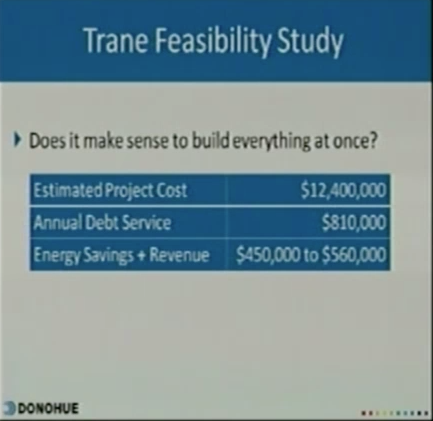
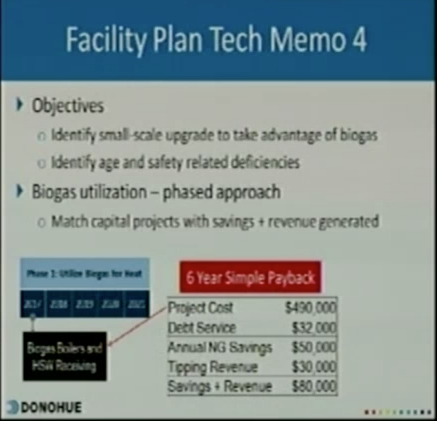
Tomorrow: The Donohue Firm’s First Presentation of 6.17.14.

WHEN GREEN TURNS BROWN: Mondays @ 10 AM (and other days at 10 AM this week), here on FREE WHITEWATER.

Daily Bread for 9.28.15

Good morning, Whitewater.

Our new work week begins with a Monday of partly cloudy skies and a high of eighty. Sunrise is 6:49 and sunset 8:41, for 11h 51m 38s of daytime. It’s a full moon today, with 99.8% of the moon’s visible disk illuminated.

We had a supermoon lunar eclipse last night, and despite cloudy skies in much of North America, skywatchers took some beautiful pictures and videos of the moon:

‘Supermoon’ Total Lunar Eclipse Thrills Skywatchers Around the World
Today, NASA plans an announcement about a discovery on Mars. There’s widespread speculation that the discovery is the presence of occasional, flowing water on the surface of the planet.

NASA will make its announcement at 10:30 CT, to be streamed live:

On this day in 1941, Ted Williams does something that hasn’t been done since:

On this day in 1941, the Boston Red Sox’s Ted Williams plays a double-header against the Philadelphia Athletics on the last day of the regular season and gets six hits in eight trips to the plate, to boost his batting average to .406 and become the first player since Bill Terry in 1930 to hit .400. Williams, who spent his entire career with the Sox, played his final game exactly 19 years later, on September 28, 1960, at Boston’s Fenway Park and hit a home run in his last time at bat, for a career total of 521 homeruns.

On this day in 1925, a renowned computer engineer is born:

1925 – Seymour R. Cray Born
On this date Seymour R. Cray was born in Chippewa Falls. Cray received a BS in Electrical Engineering from the University of Minnesota. He established himself in the field of large-scale computer design through his work for Engineering Associates, Remington Rand, UNIVAC, and Control Data Corporation. In 1957 Cray built the first computer to use radio transistors instead of vacuum tubes. This allowed for the miniaturization of components which enhanced the performance of desktop computers. In the 1960s he designed the world’s first supercomputer at Control Data. In 1972 he founded Cray Research in his hometown of Chippewa Falls where he established the standard for supercomputers with CRAY-1 (1976) and CRAY-2 (1985). He resigned from the company in 1981 to devote himself to computer design in the areas of vector register technology and cooling systems. Cray died in a automobile accident on October 5, 1996. [Source: MIT and Cray Company]

Puzzability‘s new weekly series is entitled, Blended Wines. Here’s Monday’s game:

This Week’s Game — September 28-October 2
Blended Wines
We have some lovely pairings this week. For each day, we’ve taken the name of a wine, added a letter, and scrambled all the letters to get a new word. The answer phrase, described by each day’s clue, is the wine followed by the longer word. The clue includes the lengths of the answer words in parentheses.
Example:
Person attending a party in honor of a dry red wine (8,9)
Answer:
Cabernet celebrant
What to Submit:
Submit the phrase, with the wine first (as “Cabernet celebrant” in the example), for your answer.
Monday, September 28
Magazine piece about a dry red wine (6,7)

Daily Bread for 9.27.15

Good morning, Whitewater.

Sunday in town will be mostly cloudy with a high of seventy-six. Sunrise is 6:48 and sunset 6:42, for 11h 54m 30s of daytime. We’ve a full moon this Sunday, with a supermoon lunar escape tonight. (There are stories that, unfoundedly, a small number of people are worried that this natural phenomenon of the created order somehow represents a sign of impending apocalypse. On the contrary, it’s evidence of the beauty of creation; claims to the contrary are wildly misplaced. If we’ve not too many clouds tonight, we’ll have something rare and beautiful to see.)

Rabbits are taking over a town in Washington, and most respondents (53.85%) to the Friday FW poll think that the result of their invasion will be a long, cold war between rabbits and humans.

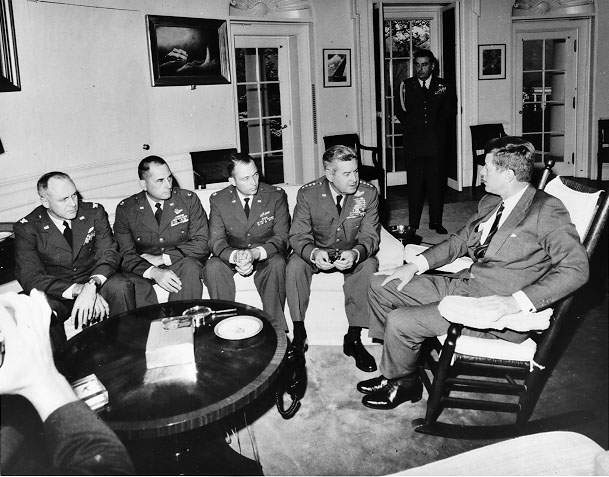
On this day in 1964, the Warren Commission issued a report concluding, as reporter Anthony Lewis wrote, that

[t]he assassination of President Kennedy was the work of one man, Lee Harvey Oswald. There was no conspiracy, foreign or domestic.

That was the central finding in the Warren Commission report, made public this evening. Chief Justice Earl Warren and the six other members of the President’s Commission on the Assassination of President John F. Kennedy were unanimous on this and all questions.

The commission found that Jack Ruby was on his own in killing Oswald. It rejected all theories that the two men were in some way connected. It said that neither rightists nor Communists bore responsibility for the murder of the President in Dallas last Nov. 22.

Why did Oswald to it? To this most important and most mysterious question the commission had no certain answer. It suggested that Oswald had no rational purpose, no motive adequate if “judged by the standards of reasonable men.”

On this day in 1862, the 29th readies to defend the Union:

1862 – (Civil War) 29th Wisconsin Infantry Musters In
The 29th Wisconsin Infantry mustered in. It would go on to participate in the battles of Port Gibson, Champion Hill, the Sieges of Vicksburg and Jackson, the Red River Campaign, the siege of Spanish Fort and the capture of Fort Blakely, Alabama.

more >>

Daily Bread for 9.26.15

Good morning, Whitewater.

We’ve a mild, autumn Saturday ahead, with partly sunny skies and a high of seventy-eight. Sunset is 6:47 and sunset 6:44, for 11h 57m 24s of daytime. Daytime is now less than half our full day.

On this day in 1960, Sen. Kennedy and Vice President Nixon participated in the first of four televised presidential debates:


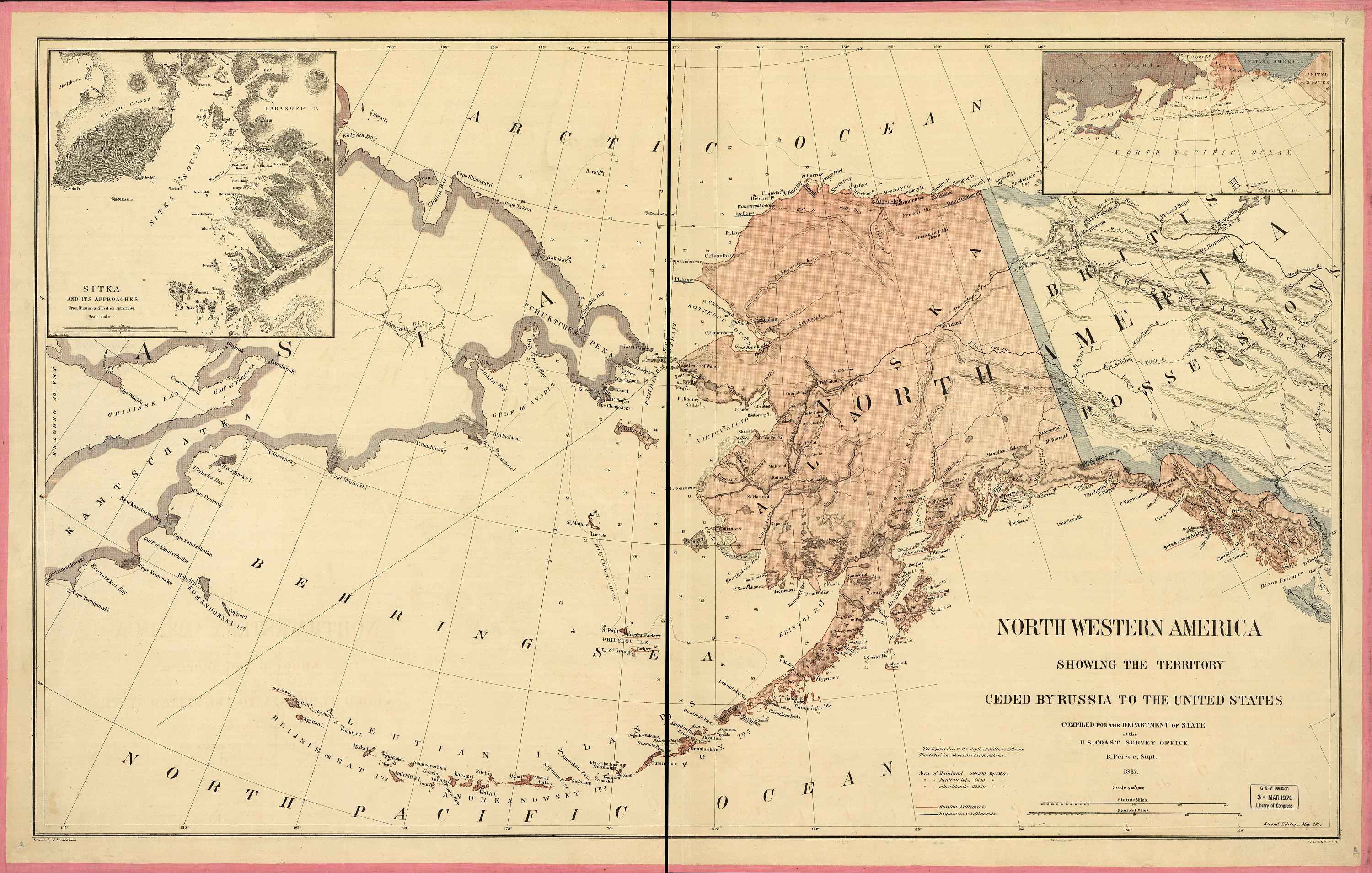
On this day in 1833, several tribes cede land to the United States government:

1833 – Indian Treaty Cedes to Government

On this date Indian tribes including the Ojibwe, Menominee, Potawatomi, Ho-Chunk, Ottawa and Sauk ceded land to the government, including areas around Milwaukee, especially to the south and east of the city. The ceded land included much of what is today John Michael Kohler and Terry Andrae State Parks. The Potawatomi continued to live along the Black River until the 1870s, despite the treaty. [Source:Wisconsin Department of Natural Resources]

Cold Fusion Research Wasn’t Bad Because It Was a Budget Buster

There’s a brief discussion at the end of Whitewater City Manager Clapper’s state of the city address from 9.17.15 that comes to mind this morning. (I’ll get to the substance of his specific remarks about a digester-energy project another time.)

For today, I’ve a different perspective to offer. Consider this question: was cold fusion a mistake because that kind of research was budgetarily expensive?

I don’t think so; expense wasn’t the key problem with thinking that one might be able to produce bountiful amounts of fusion-reaction energy at room temperatures. It’s a mistake to waste money, but there was a bigger problem than budget allocations – much bigger – with cold-fusion research.

The much bigger problem was that the supposed positive results were irreproducible – what Fleishmann and Pons did wasn’t sound science, as it could not be confirmed, and grand claims were the result of obvious errors and wishful thinking. (See, along these lines, The Cold Fusion Problem.)

That sort of error is far greater than wasting hundreds of thousands or even millions – it’s the error of inferior standards that cost more than any line-item allocation ever could. Continuing support for that research is support for magic, fairy tales, etc. There is an immediate budgetary waste, but there is a much bigger loss to rational policy and planning (and so, an expense that ripples beyond budgets to the whole society).

It’s also false – and oddly anachronistic – to contend that a community needs to ‘experiment’ with digester-energy projects, as though that has not been done for generations and found wanting. It’s not a new idea, just as leeches, tea leaves, bleeding patients, or cold fusion are not new ideas.

I’m sure we’ll hear again someday that cold fusion might solve all our energy needs, or leeches might be good for curing myriad maladies, but those are neither new ideas nor ideas whose principal deficiency is only one of dollars and cents.

Friday Poll: Rabbits v. Humans of Langley, Washington


In Langley, Washington, people are complaining that rabbits are overrunning the town:

Hundreds of bunnies are running wild around Langley, on Whidbey Island. They’re burrowing holes in school football fields, destroying the foundations of buildings and posing health risks to people and their pets, according to local officials.

“There is feces everywhere and there are some illnesses that can be carried and transmitted,” Brian Miller, facilities director for the South Whidbey School District, told NBC affiliate KING 5.

Countless wild rabbits are digging up a middle school football field in Langley, Wash. KING5
The bunnies are even digging up a middle school football field that the district just spent $80,000 to restore.

“Every day there are new holes, and the ones we’ve filled in are dug out, again,” Miller said.

In a battle between rabbits and the people of Langley, who wins?

Daily Bread for 9.25.15

Good morning, Whitewater.

Friday in town will be partly cloudy with a high of seventy-seven. Sunrise is 6:46 and sunset 6:46, for 12h 00m 17s of daytime. The moon is a waxing gibbous with 89.7% of its visible disk illuminated.

On this day in 1957, soldiers from the members of the U.S. Army’s 101st Airborne Division escort nine black school children who had earlier been forced to withdraw from Central High School in Little Rock, Arkansas because of angry white mobs:

Washington, Sept. 24–President Eisenhower sent Federal troops to Little Rock, Ark., today to open the way for the admission of nine Negro pupils to Central High School.

Earlier, the President federalized the Arkansas National Guard and authorized calling the Guard and regular Federal forces to remove obstructions to justice in Little Rock school integration.

His history-making action was based on a formal finding that his “cease and desist” proclamation, issued last night, had not been obeyed. Mobs of pro-segregationists still gathered in the vicinity of Central High School this morning.

Tonight, from the White House, President Eisenhower told the nation in a speech for radio and television that he had acted to prevent “mob rule” and “anarchy.”

On this day in 1961, Wisconsin first requires seatbelts:

1961 – Law Requires Seatbelts in Wisconsin Cars
On this date Wisconsin Governor Gaylord Nelson signed into law a bill that required all 1962 cars sold in Wisconsin to be equipped with seat belts. [Source: Janesville Gazette]

A Google a Day asks a sports question:

What NFL quarterback threw for over 3000 yards and got 21 touchdowns in the 2010 season, but still did not make it into the “Hall of Fame”?

What’s a Dollar-A-Week Subscription to a Print Newspaper?

What’s a dollar-a-week subscription to a print newspaper?

If you’ve received a direct mail solicitation to subscribe to a local, daily newspaper for just one dollar per week, then you’ve received a request to get the inserts that advertisers place inside the paper.

For a dollar-per-week, the paper is simply a delivery mechanism for advertisers’ inserts.

That means two things for readers.

First, when the inserts go the paper will fold.

Second, in the meantime, the quality of content in the paper will decline as publishers shave costs by printing anything, by anyone, to fill the pages that they wrap around the inserts.

Whitewater’s Advantage Over Copenhagen, Home to One of the Finest Restaurants on Earth

In Copenhagen (population 583,000), a famous chef (René Redzepi) plans to close temporarily his famous restaurant (Noma) and turn part of it into an urban farm:

Foraging superstar and chef René Redzepi is closing his famed Copenhagen restaurant Noma, which has been named the best restaurant in the world multiple times. According to the New York Times, he plans to reopen Noma in 2017 “with a new menu and a new mission.” A major pillar of the new business will be an urban farm with the restaurant at its center, much like chef Dan Barber’s Blue Hill at Stone Barns in New York. Redzepi notes, “It makes sense to have your own farm at a restaurant of this caliber.” The new Noma will relocate to Copenhagen’s “freewheeling Christiania neighborhood,” to an abandoned lot where empty warehouses and plenty of graffiti decorate the landscape.

Copenhagen’s big, and Whitewater is small, but we have this advantage that Chef Redzepi can only match at great expense and effort: we are even now surrounded by fresh, local produce of fine quality and variety. He can – and surely will – find the delicious ingredients he needs for his new establishment.

We, too, have delicious produce, suitable for fine meals, and it’s within our reach even now. Table after table, basket after basket, all around us. Fields, gardens, pastures, greenhouses: we’re brimming with what so many wish they could enjoy.

There’s a political slogan that’s something like ‘we are the change we’ve been looking for.’ Well, for ingredients, we’re the place we’ve been looking for.

Here, so very close, marvelous foods, available so often as we should like.

Daily Bread for 9.24.15

Good morning, Whitewater.

Whitewater’s Thursday will be mostly cloudy with a high of seventy-seven. Sunrise today is 6:45 and sunset 6:48, for 12h 03m 09s of daytime. The moon is a waxing gibbous with 81.9% of its visible disk illuminated.

Whitewater’s CDA Seed Capital Committee meets at 4 PM and CDA Board meets at 5 PM today.

On this day in 1968, the CBS News program 60 minutes first aired:

The program employed a magazine format, similar to that of the Canadian program W5, which premiered two years earlier. It pioneered many of the most important investigative journalism procedures and techniques, including re-editing interviews, hidden cameras, and “gotcha journalism” visits to the home or office of an investigative subject.[6] Similar programs sprang up in Australia and Canada during the 1970s, as well as on local television news.[6]

Initially, 60 Minutes aired as a bi-weekly show hosted by Harry Reasoner and Mike Wallace, debuting on September 24, 1968, and alternating weeks with other CBS News productions on Tuesday evenings at 10:00 p.m.Eastern Time. The first edition, described by Reasoner in the opening as a “kind of a magazine for television,” featured the following segments:

  1. A look inside the headquarters suites of presidential candidates Richard Nixon and Hubert Humphrey during their respective parties’ national conventions that summer;
  2. Commentary by European writers Malcolm Muggeridge, Peter von Zahn, and Luigi Barzini, Jr. on the American electoral system;
  3. A commentary by political columnist Art Buchwald;
  4. An interview with then-Attorney General Ramsey Clark about police brutality;
  5. “A Digression,” a brief, scripted piece in which two silhouetted men (one of them Andy Rooney) discuss the presidential campaign;
  6. An abbreviated version of an Academy Award-winning short film by Saul Bass, Why Man Creates; and
  7. A meditation by Wallace and Reasoner on the relation between perception and reality. Wallace said that the show aimed to “reflect reality”.

On this day in 1857, N.C. Harmon wins big:

On this date N.C. Harmon of Lyman was awarded the first premium prize for cheese made in Sheboygan County. The award was given at the Sheboygan Agricultural Society fair held in Sheboygan Falls. The next year saw John J. Smith procure the first cheese vat in Sheboygan County. He manufactured cheese on a cooperative plan, collecting curd from his neighbors. Both are early events in the long and important history of cheesemaking in Sheboygan. [Source: Sheboygan County, Wisconsin Genealogy and History]

A Google a Day asks a geography question:

What town, once a fishing mecca, is now a desert with a “cemetery of ships” due to the shrinking Aral Sea?