
Author Archive for JOHN ADAMS
Poll
Friday Poll: When to Buy Auto Insurance
by JOHN ADAMS •
Was a motorist committing an obvious fraud or simply confused about how accident insurance policies work?
In Pennsylvania, that state’s attorney general accuses motorist Michael Traveny of calling from an accident scene to buy auto insurance:
An Altoona man faces insurance fraud charges after he allegedly called to buy insurance from the scene of an accident that he was involved in.
The Pennsylvania State Attorney General’s Office contends Michael S. Traveny, 33, of 402 Sixth St., wrecked into the back of another driver at a red light at the intersection of Route 764 and Maple Hollow Road in Duncansville on Aug. 21.
Traveny is accused of then calling Safe Auto Insurance from the scene of the accident to buy insurance, then submitting a claim where Traveny lied about what time the accident occurred to make the insurance company believe he had bought insurance before he wrecked, according to investigators with the Attorney General’s insurance fraud section.
See, AG: Man tried buying insurance at scene of crash @ Altoona Mirror.
Daily Bread
Daily Bread for 3.6.15
by JOHN ADAMS •
Good morning, Whitewater.
We’ll have mostly sunny skies and a high of twenty-eight today. Sunrise is 6:20 and sunset is 5:50, for 11h 29m 59s of daytime. It’s a full moon.
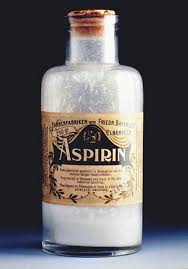
On this day in 1899, Bayer patents aspirin:
…the Imperial Patent Office in Berlin registers Aspirin, the brand name for acetylsalicylic acid, on behalf of the German pharmaceutical company Friedrich Bayer & Co.
Now the most common drug in household medicine cabinets, acetylsalicylic acid was originally made from a chemical found in the bark of willow trees. In its primitive form, the active ingredient, salicin, was used for centuries in folk medicine, beginning in ancient Greece when Hippocrates used it to relieve pain and fever. Known to doctors since the mid-19th century, it was used sparingly due to its unpleasant taste and tendency to damage the stomach.
In 1897, Bayer employee Felix Hoffman found a way to create a stable form of the drug that was easier and more pleasant to take. (Some evidence shows that Hoffman’s work was really done by a Jewish chemist, Arthur Eichengrun, whose contributions were covered up during the Nazi era.) After obtaining the patent rights, Bayer began distributing aspirin in powder form to physicians to give to their patients one gram at a time. The brand name came from “a” for acetyl, “spir” from the spirea plant (a source of salicin) and the suffix “in,” commonly used for medications. It quickly became the number-one drug worldwide.
Aspirin was made available in tablet form and without a prescription in 1915. Two years later, when Bayer’s patent expired during the First World War, the company lost the trademark rights to aspirin in various countries. After the United States entered the war against Germany in April 1917, the Alien Property Custodian, a government agency that administers foreign property, seized Bayer’s U.S. assets. Two years later, the Bayer company name and trademarks for the United States and Canada were auctioned off and purchased by Sterling Products Company, later Sterling Winthrop, for $5.3 million.
Bayer became part of IG Farben, the conglomerate of German chemical industries that formed the financial heart of the Nazi regime. After World War II, the Allies split apart IG Farben, and Bayer again emerged as an individual company. Its purchase of Miles Laboratories in 1978 gave it a product line including Alka-Seltzer and Flintstones and One-A-Day Vitamins. In 1994, Bayer bought Sterling Winthrop’s over-the-counter business, gaining back rights to the Bayer name and logo and allowing the company once again to profit from American sales of its most famous product.
Puzzability‘s Vegging In series ends today with Friday’s game:
|
This Week’s Game — March 2-6
|
|||||
|
Vegging In
|
|||||
|
We’re dishing up a healthy serving every day this week. For each day, we’ve taken the name of a vegetable, added a letter, and scrambled all the letters to get a new word. The answer phrase, described by each day’s clue, is the vegetable followed by the new word.
|
|||||
|
Example:
|
|||||
|
Deep-dish meal with a vegetable base
|
|||||
|
Answer:
|
|||||
|
Escarole casserole
|
|||||
|
What to Submit:
|
|||||
|
Submit the phrase, with the vegetable first (as “Escarole casserole” in the example), for your answer.
|
|||||
 |
|||||
|
Friday, March 6
|
|||||
|


Birds
Birds’ Flight
by JOHN ADAMS •
Assault Awareness & Prevention, Crime, Federal Government, Government Spending, Libertarians, Official Misconduct, University
If Universities Want Federal Money…
by JOHN ADAMS •
If universities want federal money (and they want as much as they can get), then it’s wrong for them to shirk federal legal standards for reporting assault and for proper treatment of those alleging assault.
(Make no mistake: I’d contend that universities have a duty to manage campuses well and fairly even if there were no federal laws. Ethical obligations of this kind are prior to law, and exist independently of it.)
Here, though, there’s a despicable hypocrisy: university officials gulp as much federal money as they can get, but of federal procedural standards for victims there may be not even a drop of support.
This libertarian has argued against any number of federal, state, or local governmental intrusions; I’ve argued against as many federal, state, and local expenditures.
It’s impossible to respect university administrators who seek federal money while simultaneously concealing & mishandling assault claims, or trivializing federal or state standards about assault reporting.
Administrators of that ilk want to promote themselves at taxpayers’ expense, and then hide their own misconduct from any and all.
No, and no again: no one’s entitled to that.
Assault Awareness & Prevention, Crime, Federal Government, Law, Official Misconduct, University
UW-Madison Now Joins UW-Whitewater Under Federal Title IX Investigation
by JOHN ADAMS •
In the Wisconsin State Journal this morning, one reads that a second Wisconsin school is under investigation for its handling of sexual assault complaints. Dan Simmons writes that
UW-Madison is now the second university in the state to be included in a growing probe of possible violations of federal law over the handling of sexual violence and harassment complaints, according to the U.S. Department of Education.
The investigation now targets 101 schools, including UW-Madison and UW-Whitewater. The initial investigation was launched last May and included 55 schools, Whitewater among them.
See, in full, UW-Madison under federal investigation for handling of sexual violence complaints @ State Journal.
Investigations of this sort can involve either how a university reports incidents of sexual assault, or how it treats those who are trying to report allegations of sexual assault.
One should be clear: federal law does not mandate – needless to say – that there will be no crimes on campus. Federal law simply requires that, following allegations of sexual assault, universities that receive federal money will process complaints thoroughly and treat those involved in complaints fairly.
One would hope for campuses without violence; these present laws simply require that institutions taking federal public money should address allegations of assault to the high standards of which America is capable.
There are thousands of four-year colleges in America; each one should be able to meet existing reporting and procedural requirements.
That’s not asking too much; it’s asking only for the fundamental fairness and thoroughness our society deserves.
Daily Bread
Daily Bread for 3.5.15
by JOHN ADAMS •
Good morning, Whitewater.
Thursday in Whitewater will be sunny with a high of thirteen. Sunrise is 6:22 and sunset is 5:49, for 11h 27m 05s of daytime. We’ve a full moon today.
Whitewater’s Landmarks Commission meets today at 6:30 PM.
Google has a doodle today in honor of Momofuku Ando, inventor of instant noodles:
On this day 1946, Winston Churchill delivers his ‘Iron Curtain’ Speech at Westminster College in Fulton, Missouri. (Churchill had entitled the speech Sinews of Peace, but it’s his reference to an iron curtain that stuck.) The New York Times reported on the speech:
Fulton, Mo., March 5 – A fraternal association between the British Empire and the United States was advocated here today by Winston Churchill to stem “the expansive and proselytizing tendencies” of the Soviet Union.
Introduced by President Truman at Westminster College, Great Britain’s wartime Prime Minister asserted that a mere balance of power in the world today would be too narrow a margin and would only offer “temptations to a trial of strength.”
On the contrary, he added that the English-speaking peoples must maintain an overwhelming preponderance of power on their side until “the highroads of the future will be clear, not only for our time but for a century to come.”
Says Curtain Divides Europe
Mr. Churchill painted a dark picture of post-war Europe, on which “an iron curtain has descended across the Continent” from Stettin in the Baltic to Trieste in the Adriatic.
Warsaw, Berlin, Prague, Vienna, Budapest, Belgrade, Sofia and Bucharest are all being subjected to increasing pressure and control from Moscow, he said, adding:
“This is certainly not the liberated Europe we fought to build up. Nor is it, one which contains the essentials of permanent peace.”
See, full text of Churchill’s speech to Westminster College.
On this day in 1935, a silver magnate dies:
1935 – Elizabeth “Baby Doe” McCourt Dies
On this date, the controversial wife of Horace (H.A.W.) Tabor, silver mine owner during the 19th century Colorado gold and silver booms, died. Born Elizabeth Bondeul McCourt in Oshkosh, Wisconsin in 1854, she was first married to Harvey Doe, Jr. of Oshkosh but in 1880 divorced him on the grounds of adultery. She then moved to Colorado where she married Leadville’s silver king, Horace Tabor. Despite great wealth, she died penniless and alone in Leadville: she froze to death in a cabin near the famous Matchless mine, which in its heyday had produced $10,000 worth of silver ore per day. Elizabeth and Horace are the subject of an American opera, “The Ballad of Baby Doe”….
Here’s today’s game in Puzzability‘s Vegging in series:
|
This Week’s Game — March 2-6
|
|||||
|
Vegging In
|
|||||
|
We’re dishing up a healthy serving every day this week. For each day, we’ve taken the name of a vegetable, added a letter, and scrambled all the letters to get a new word. The answer phrase, described by each day’s clue, is the vegetable followed by the new word.
|
|||||
|
Example:
|
|||||
|
Deep-dish meal with a vegetable base
|
|||||
|
Answer:
|
|||||
|
Escarole casserole
|
|||||
|
What to Submit:
|
|||||
|
Submit the phrase, with the vegetable first (as “Escarole casserole” in the example), for your answer.
|
|||||
|
|||||
|
Thursday, March 5
|
|||||
|

Birds
Hawk Cam
by JOHN ADAMS •
Assault Awareness & Prevention, Crime
What a Headline Says
by JOHN ADAMS •
When someone alleges a sexual assault, or other violent crime, the immediate significance of that claim affects the alleging victim, and one or more alleged assailants. Fundamentally, violent acts are about actual people, not headlines, policies, politics, etc.
Even if there were no criminal law, if there were no statutes criminalizing any kind of conduct, still there would be violent, immoral acts. Even if there were no publications, to report any news, still there would be wrongs and injuries.
There are, however, both criminal laws and reports about legal proceedings.
Not everyone will see these laws and reports, even the same laws and reports, in the same way.
Consider these headlines:
DA Will Not Prosecute in Alleged Sexual Assault Case
No charges filed against recruit in sexual assault case
For some, these headlines will suggest that there was no actual assault between a complainant and her alleged assailant. For others, the same headlines will suggest that there was insufficient evidence to prosecute an alleged assailant. For yet others, there will be concern that a prosecution might have been made, but wasn’t.
For it all, however, there will be others who will rush to another view: that because there was no prosecution over particular and specific allegations, there is no problem of assault at all. From one development (decided such as it was), these few will declare the absence of any problem.
Those few who seek to deny any problem, to absolve institutions, organizations, and officials of any wrongdoing – even any possible wrongdoing – will see these headlines differently from others. They’ll see them – and hope others see them – as a general exoneration.
It’s not, of course.
It’s just that they’ll hope others see it that way.
Anderson, Cartoons & Comics
Previous
by JOHN ADAMS •
Daily Bread
Daily Bread for 3.4.15
by JOHN ADAMS •
Good morning, Whitewater.
Wednesday in town will be mostly sunny with a high of sixteen. Sunrise is 6:24 and sunset 5:48, for 11h 24m 11s of daytime. The moon is a waxing gibbous with 98.6% of its visible disk illuminated.
On this day in 1789, government under the Constitution begins:
The first session of the U.S. Congress is held in New York City as the U.S. Constitution takes effect. However, of the 22 senators and 59 representatives called to represent the 11 states who had ratified the document, only nine senators and 13 representatives showed up to begin negotiations for its amendment….
As dictated by Article VII, the document would not become binding until it was ratified by nine of the 13 states. The Constitution was thus sent to the state legislatures, and beginning on December 7, five states–Delaware, Pennsylvania, New Jersey, Georgia, and Connecticut–ratified it in quick succession. However, other states, especially Massachusetts, opposed the document for its failure to reserve powers not delegated by the Constitution to the states and its lack of constitutional protection for such basic political rights as freedom of speech, religion, and the press, and the right to bear arms.
In February 1788, a compromise was reached in which Massachusetts and other states agreed to ratify the document with the assurance that amendments would immediately be adopted. The Constitution was thus narrowly ratified in Massachusetts, followed by Maryland and South Carolina. On June 21, 1788, New Hampshire became the ninth state to ratify the document, making it binding, and government under the U.S. Constitution was scheduled to begin on March 4, 1789.
On September 25, 1789, after several months of debate, the first Congress of the United States adopted 12 amendments to the U.S. Constitution–the Bill of Rights–and sent them to the states for ratification. This action led to the eventual ratification of the Constitution by the last of the 13 original colonies: North Carolina and Rhode Island.
Here’s the Wednesday game in Puzzability‘s Vegging In series:
|
This Week’s Game — March 2-6
|
|||||
|
Vegging In
|
|||||
|
We’re dishing up a healthy serving every day this week. For each day, we’ve taken the name of a vegetable, added a letter, and scrambled all the letters to get a new word. The answer phrase, described by each day’s clue, is the vegetable followed by the new word.
|
|||||
|
Example:
|
|||||
|
Deep-dish meal with a vegetable base
|
|||||
|
Answer:
|
|||||
|
Escarole casserole
|
|||||
|
What to Submit:
|
|||||
|
Submit the phrase, with the vegetable first (as “Escarole casserole” in the example), for your answer.
|
|||||
|
|||||
|
Wednesday, March 4
|
|||||
|

Birds
Bird Visits Webcam
by JOHN ADAMS •
A raven pays a visit to a webcam at the San Francisco 49ers’ Levi’s Stadium.
Assault Awareness & Prevention, Crime, Law, Laws/Regulations
SUNY Stony Brook Failed Sarah Tubbs
by JOHN ADAMS •
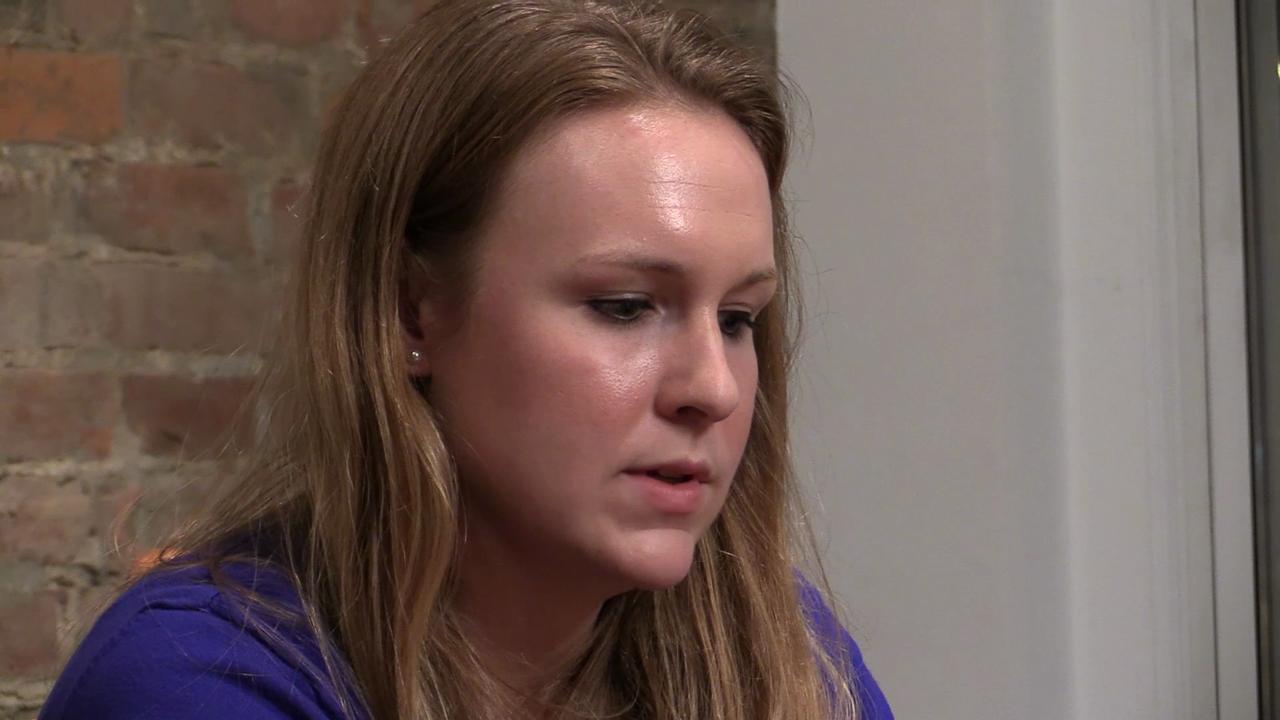
Video Link: Sarah Tubbs of Montrose talks about her ordeal after she says she was sexually assaulted at Stony Brook University, and then forced to prosecute her own attacker. Updated with video as link, 3.4.15.
Sarah Tubbs attended (and was graduated from) SUNY Stony Brook, part of New York’s state university system. It’s part of a public university system not unlike the UW System. (Commonly called just ‘Stony Book,’ the school is about twice as large as UW-Whitewater, but similar in many other respects.)
When Ms. Tubbs sought recourse under federal law after being sexually assaulted, she found that Stony Brook met her rights with an inadequate – indeed a perverse – remedy:
She’s had nightmares, flashbacks and panic attacks since being sexually assaulted last year at Stony Brook University.
Yet when Sarah Tubbs sought the university’s help to proceed with disciplinary charges against her alleged attacker, officials required her to personally prosecute him, she said. Tubbs has no legal training. Yet she had to question and be cross-examined by the man she claims sexually assaulted her in his dorm room.
Tubbs, 22, of Montrose, is suing Stony Brook, which is part of the State University of New York system, and her alleged attacker in violation of Title IX, the federal law that prohibits discrimination on the basis of gender at schools that receive federal funding. Under the law, such discrimination can include sexual harassment, rape and sexual assault.
Her lawsuit, filed last month in federal court in White Plains, seeks monetary damages and a court order abolishing the practice of having sexual-assault victims “prosecute their own cases and to cross-examine and be cross-examined by their assailants.”
The alleged attack occurred nearly a year before State University of New York campuses adopted a more comprehensive sexual assault policy in December 2014 at the urging of Gov. Andrew Cuomo. Tubbs wants the new policy broadened to specifically prohibit victims from having to prosecute their own attackers at student disciplinary hearings.
See, SUNY grad says school made her prosecute her own sex attacker @ Gannett’s Lower Hudson website.
When Ms. Tubbs submitted to a university hearing as was her right, that hearing did not even consider adequately – in a case about sexual assault – whether she had given consent:
Tubbs was granted an appeal by the university in August, based on a finding that the disciplinary board didn’t properly consider the definition of consent to weigh whether the sex was consensual.
A university official, Jay Souza, wrote in a letter to Tubbs that “he found no evidence that the Hearing Board considered the definition of consent” as spelled out in the university’s student conduct code or applied that definition to “the facts of this case,” the lawsuit says.
Souza said in the letter that Tubbs would be contacted by the university about the next steps, but Tubbs said she hasn’t heard anything, despite her own efforts to reach school officials….
There Sarah Tubbs found herself at a campus hearing – entitled by federal and state law, but by her university denied representation, and afforded a process so paltry that officials did not consider something as fundamental as lack of consent.
Sarah Tubbs has now filed a federal lawsuit against Stony Brook, but the school she attended – as a citizen with rights under state and federal law – compounded an assault with institutional indifference and further harm. For it all, she’s still resolute:
“I don’t think it’s the rape that makes the person a victim,” said Tubbs. “I think it’s the systemic failure that makes someone from a survivor to a victim. … I can honestly say I won’t stop fighting until those systems change.”