
Author Archive for JOHN ADAMS
Elections, Gubernatorial Race 2014, Politics, Poll
The Marquette Poll for 10.1.14
by JOHN ADAMS •
The latest Marquette Law School Poll is out today, with just over a month before the gubernatorial election. The last poll was 9.17.14.
The 10.1.14 poll has Walker 50, Burke 45 with likely voters, and 46-45 to Walker’s favor among registered voters.
The race is now just outside the poll’s statistical margin of error.
I’ve thought that the most important local issue in Whitewater will be, paradoxically, the statewide gubernatorial race; I still think so. The schools referendum – no matter how important as policy – isn’t nearly so attention-getting.
Still, even with limited local election data, one could construct a reasonable upper and lower limit for the referendum’s chances. Results from the district’s communities in statewide races over the last few years, checked against referendum voting in relation to party voting during the most recent spring referendum, would give (I think) the rough boundaries of a referendum’s high and low levels.
Hardly a model, but still a reasoned approach, let’s say.
Why would upper and lower limits matter?
There’s a good reason: although the referendum will sail on statewide currents, there will be an independent local influence, too. It’s not as though nothing said locally will matter.
If it should be true that the vote is likely to be close, and likely to be close because the November 4th statewide contests will limit a lopsided result one way or the other, then a remaining question is how persuadable local voters will be on the referendum question.
If it’s likely to be lopsided persuasion won’t matter; if it’s a fixed and decided electorate persuasion will matter little.
A close race and a persuadable electorate will make advocacy more important than it would be otherwise.
I’ll always favor high-quality, high-octane advocacy – more information of good quality benefits a community.
It’s worth crunching prior election results over the next week, to estimate the limits of the vote, and consequently the importance of solid advocacy.
Anderson, Cartoons & Comics
Vastly
by JOHN ADAMS •

Daily Bread
Daily Bread for 10.1.14
by JOHN ADAMS •
Good morning, Whitewater.
A new month begins, with partly cloudy skies and a high of seventy-one. Sunrise is 6:52 AM and sunset 6:36 PM. We’ll have a first quarter moon this afternoon.
On this day in 1890, an act of Congress creates Yosemite National Park:
Yosemite National Park … is a United States National Park spanning eastern portions of Tuolumne, Mariposa and Madera counties in the central eastern portion of the U.S. state of California. The park, which is managed by the National Park Service, covers an area of 747,956 acres (3,026.87 km2)[2] and reaches across the western slopes of the Sierra Nevada mountain chain.[5] Over 3.7 million people visit Yosemite each year:[3] most spend their time in the seven square miles (18 km2) of Yosemite Valley.[6] Designated a World Heritage Site in 1984, Yosemite is internationally recognized for its spectacular granite cliffs, waterfalls, clear streams, Giant Sequoia groves, and biological diversity.[6] Almost 95% of the park is designated wilderness.[7] Yosemite was central to the development of the national park idea. First, Galen Clark and others lobbied to protect Yosemite Valley from development, ultimately leading to President Abraham Lincoln’s signing the Yosemite Grant in 1864. Later, John Muir led a successful movement to establish a larger national park encompassing not just the valley, but surrounding mountains and forests as well – paving the way for the United States national park system.[8]
Yosemite is one of the largest and least fragmented habitat blocks in the Sierra Nevada, and the park supports a diversity of plants and animals. The park has an elevation range from 2,127 to 13,114 feet (648 to 3,997 m) and contains five major vegetation zones: chaparral/oak woodland, lower montane forest, upper montane forest, subalpine zone, and alpine. Of California’s 7,000 plant species, about 50% occur in the Sierra Nevada and more than 20% within Yosemite. There is suitable habitat or documentation for more than 160 rare plants in the park, with rare local geologic formations and unique soils characterizing the restricted ranges many of these plants occupy.[6]
The geology of the Yosemite area is characterized by granitic rocks and remnants of older rock. About 10 million years ago, the Sierra Nevada was uplifted and then tilted to form its relatively gentle western slopes and the more dramatic eastern slopes. The uplift increased the steepness of stream and river beds, resulting in formation of deep, narrow canyons. About 1 million years ago, snow and ice accumulated, forming glaciers at the higher alpine meadows that moved down the river valleys. Ice thickness in Yosemite Valley may have reached 4,000 feet (1,200 m) during the early glacial episode. The downslope movement of the ice masses cut and sculpted the U-shaped valley that attracts so many visitors to its scenic vistas today.[6]
Google-a-Day asks a baseball question:
One of the greatest baseball players of all time was banned from the game for life after he and seven other players accepted bribes to throw a game in what year?
Science/Nature
The Physics of Space Battles
by JOHN ADAMS •
They’d have a sort of nineteenth- century aspect to them –
University
Coach Fader’s Interview with WISC-TV (Channel 3000)
by JOHN ADAMS •
Update: Video interview embedded immediately below.
On Monday night, WISC-TV Madison broadcast an interview with UW-Whitewater’s former wresting coach, Tim Fader. Coach Fader was dismissed from his position in June 2014, two months after he reported an alleged sexual assault to the Whitewater Police Department. A story based on the broadcast interview is now online. See, Former UW-Whitewater wrestling coach seeks to clear name.
The interview provides significant new information about UW-Whitewater’s actions in Coach Fader’s dismissal, and more broadly the university’s evident misunderstanding of the difference between actual reporting and mere formalism.
Here’s the reported account of Fader’s actions:
But on Good Friday, April 18, he [Fader] said he received a phone call from the mother of a student he knew on campus. His reaction, he believes, cost him his job and has harmed his chances to continue his career.
“She was very emotional and she said, ‘You know that recruit you had here yesterday. (He) sexually assaulted my daughter,'” Fader said. “I called the police and said, ‘I’m Tim Fader. I’m the wrestling coach. I have a sexual assault allegation. What do I do?'”
Fader said the Whitewater police officer he spoke to suggested he get the recruit to the station for questioning. Fader did that, sending the recruit with an assistant coach to meet with detectives.
A spokesman for the Whitewater Police Department said officers are meeting with the Walworth County District Attorney’s Office this week to determine if charges will be filed. Whitewater police would not discuss how the department learned about the alleged incident, stating it remained an open investigation.
Fader believed that by reporting as he did, the Whitewater Police Department would notify the university, as it had in past incidents.
The interview also includes key information elicited from university officials Sara Kuhl and Mary Beth Mackin.
Of the April incident reported to the city’s police department, Dean of Students Mackin states that the “university responded appropriately in accordance with its obligations under Title IX and its own institutional policies and practices.”
It’s an empty response, three times over.
First, it was Fader, not the university, not an institution, that initially responded.
Second, an appropriate response would not have been to create the impression of punishing direct, initial communication to the police, as that is the very opposite of the goals of Title IX reporting. (It’s the opposite of any climate that correctly supports reporting and open discussion). Mackin obtusely conflates actual conduct with mere formalism, and rests on the latter rather than the former.
Third, if the university had wanted a more canned reply, it could not have picked a better one than Mackin’s defensive, organizational one; it’s as though she thumbed through a phrase book for institutional defenders and found something especially lifeless (‘Defenses, company men and women, Page 6…’).
The WISC-TV story also relates that UW-Whitewater press spokeswoman Sarah Kuhl “denied an open records request asking for documents related to the Title IX investigation into the alleged incident in April because she said its attorneys and the federal government advised the school to do so.”
Included is the reasoning behind the denial:
“Given that your request seeks information that has been or is likely to be requested by OCR as part of the investigation, the university believes that the release of information could compromise the integrity of the investigation, including the university’s ability to adequately represent its interests,” Kuhl said the records request response.
A refusal to release information now is temporary only, as Kuhl (or others) must know. Here’s why. A federal investigation may resolve administratively and if so records will be available via subsequent state and federal records requests to UW-W and the Department of Education, respectively. Alternatively, UW-Whitewater may also find itself in litigation with the 2-14-14 claimant or others in a necessarily public forum.
Either way, information about these matters will become public. There’s no avoiding a public airing – nor should there be such avoidance.
There’s no way to know, of course, whether Kuhl’s concern about protecting the university’s position is boilerplate or also an implicit admission of a true vulnerability concerning the claimant’s case from which the ongoing federal investigation derives.
One can be sure, however, that Chancellor Telfer was quick to issue a statement in May protecting his position in all this, but made no mention of Coach Fader’s actions. It was, after all, Fader and not Telfer who took practical action here.
Now that there’s investigative press coverage, Chancellor Telfer’s nowhere to be found, leaving the talking to a spokeswoman and subordinate.
And that, to be sure, is neither a positive climate nor even personal leadership at UW-Whitewater.
For prior posts about this matter, please see:
Questions on Assault Reporting, Formality, and Former UW-Whitewater Wresting Coach Fader
Assault Reporting, Formality, and Former UW-Whitewater Wresting Coach Fader
Daily Bread
Daily Bread for 9.30.14
by JOHN ADAMS •
Good morning, Whitewater.
Month’s end in Whitewater will be partly cloudy with a high of sixty-two.
On this day in 1954, America commissions the world’s first nuclear submarine:
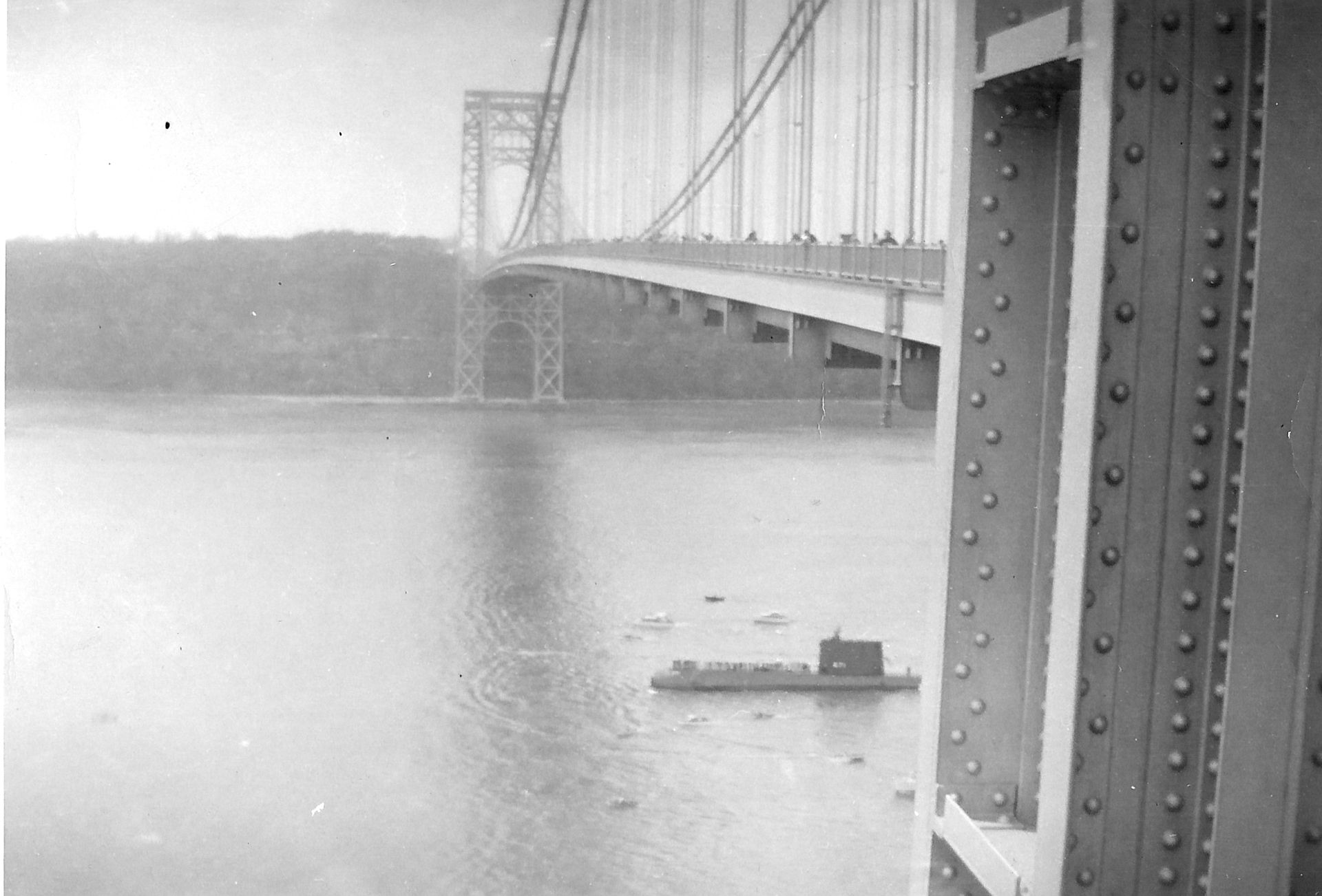
USS Nautilus (SSN-571) was the world’s first operational nuclear-powered submarine. The vessel was the first submarine to complete a submerged transit to the North Pole on 3 August 1958. Sharing names with the submarine in Jules Verne’s Twenty Thousand Leagues Under the Sea, and named after another USS Nautilus (SS-168) that served with distinction in World War II, Nautilus was authorized in 1951 and launched in 1954. Because her nuclear propulsion allowed her to remain submerged far longer than diesel-electric submarines, she broke many records in her first years of operation, and traveled to locations previously beyond the limits of submarines. In operation, she revealed a number of limitations in her design and construction. This information was used to improve subsequent submarines.
Nautilus was a component of SubRon Ten (Submarine Squadron Ten). The squadron commander was stationed aboard the USS Fulton (AS-11), a submarine tender stationed in New London, Connecticut at State Pier. Nautilus and other submarines in the squadron made their home tied up alongside the tender, where they received preventive maintenance and, if necessary, repairs, from the well-equipped Fulton and her crew of machinists, millwrights, and other crafts.
Nautilus was decommissioned in 1980 and designated a National Historic Landmark in 1982. The submarine has been preserved as a museum of submarine history in Groton, Connecticut, where the vessel receives some 250,000 visitors a year.
On this day in 1859, Abraham Lincoln speaks in Wisconsin:
1859 – Abraham Lincoln Speaks at State Fair
On this date Abraham Lincoln delivered an address at the Wisconsin State Fair. In his speech, he connected agriculture to education: “Every blade of grass is a study; and to produce two, where there was but one, is both a profit and a pleasure.” The rising political star (who was elected the following year), also stressed the importance of free labor. This was Lincoln’s last visit to Wisconsin. In 1861, after winning the presidential election, Lincoln signed the bill establishing the U.S. Department of Agriculture. [Source: AbrahamLincoln.org]
Google-a-Day asks about a poem:
What poem title did T. S. Eliot say he created by combining the titles of a romance by William Morris with the title of a Rudyard Kipling poem?
Business, Corporate Welfare, Government Spending, Uncategorized, WEDC
WEDC Claims Success by Writing Off Bad Loans
by JOHN ADAMS •
Wisconsin has had years of embarrassments from the Wisconsin Economic Development Corporation, of economic manipulation, of picking supposed winners as though party hacks would know better than markets. It was a method bound to disappoint.
These smarmy men at the WEDC have been trying to show progress on the millions of bad loans they’ve made. Lazy men that they are, they’re reducing millions in bad loans not by trying to salvage them, but simply by writing them off –
Friday’s audit [by the Legislative Audit Bureau] found that the troubled loans held by WEDC dropped from 49 loans totaling $13.2 million as of June 2013 to 30 loans totaling $5.5 million as of December 2013.
Of the $7.7 million decrease in troubled loans held by WEDC, the biggest chunk — $3.2 million — came from loans that were written off by WEDC because they were 90 days past due.
For the state to proceed with the collection process, those loans had to be transferred from WEDC to the Department of Administration. So by itself that change is just a bureaucratic shuffle, not a gain for taxpayers.
The audit didn’t examine what had happened to the loans after they went to the administration department.
The next biggest chunk of past due loans, worth $2.1 million, had their contracts rewritten by WEDC to delay repayment by the borrowers.
Another $1.3 million in loans were forgiven by WEDC in whole or in part….
See, Audit: jobs agency makes progress on bad loans by writing many off.
When Messrs. Telfer, Knight, and Clapper met for a second time at the Innovation Center with WEDC leader Reed Hall, to crow about what a great program the WEDC has been, it’s a shambling, stumbling, dishonest agency they were praising.
That’s what they dragged into Whitewater yet again. This agency is the embodiment of disrespect or ignorance of sound policy
That’s a problem of corporate welfare, of course, yet more: if one will overlook such obvious failure, loss, and disgrace to Wisconsin from the WEDC, perhaps one will overlook the risks, costs, and vital details of other bad ideas.
Previously, at FREE WHITEWATER on the WEDC:
- At WEDC-Sponsored Tech Festival, Local Company Announces a Move to Ohio
- WEDC Update (subsidizing the outsourcing of jobs to other countries)
- Local Crony Capitalism via the WEDC (and similar schemes)
- The Truth About the Wisconsin Economic Development Corporation
- WEDC Board Offers Millions to Subsidize Job Cuts
- WEDC Afflicted with Internal Strife
See, below, the Legislative Audit Bureau report and a reply from the WEDC’s Reed Hall:
Music
Monday Music: Green Hornet Theme
by JOHN ADAMS •
Daily Bread
Daily Bread for 9.29.14
by JOHN ADAMS •
Good morning, Whitewater.
Monday in town will be warm, with a high of eighty-one, accompanied by an even chance of late afternoon thundershowers.
There will be a meeting of the Urban Forestry Commission at 2:15 PM. Later, at 6:30 PM, there will be an informational meeting about construction at the intersection of Center and Whitewater Streets.
Reason prevails – when asked whether they’d perform CPR on a bear, 91.3% of respondents to FW’s Friday poll said, “No, I think I’d pass on that.” I’ve always been an optimist about our country’s future, and this is another small bit of information supporting a positive outlook.
On this day in 1957, the Packers get a new stadium:
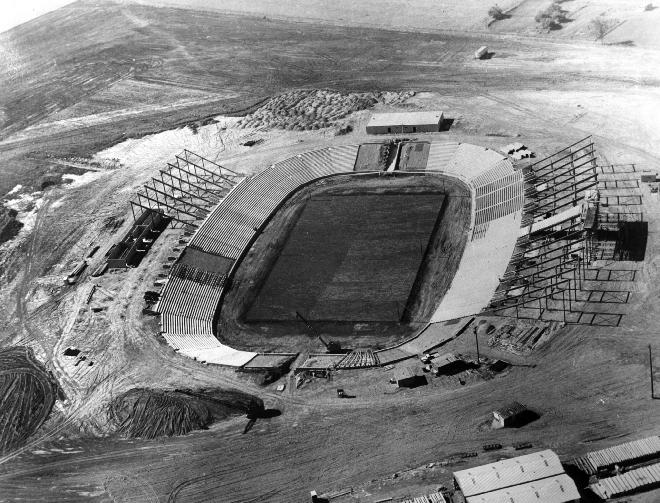
1957 – Packers Dedicate New Stadium
On this date the Green Bay Packers dedicated City Stadium, now known as Lambeau Field, and defeated the Chicago Bears, 21-17. In the capacity crowd of 32,132 was Vice president Richard Nixon. [Source: Milwaukee Journal Sentinel]
Google-a-Day asks a question about a book, about a band:
The Curatorial Director of the Rock and Roll Hall of Fame Museum authored a book describing 50 years of what rock band?
Animation, Film
Sunday Animation: Abiogenesis
by JOHN ADAMS •
Abiogenesis (Short Film) from Richard Mans on Vimeo.
Daily Bread
Daily Bread for 9.28.14
by JOHN ADAMS •
Good morning, Whitewater.
Sunday in Whitewater will be sunny with a high of eighty. Sunrise today is 6:49 AM and sunset 6:42 PM. The moon is a waxing crescent with nineteen percent of its visible disk illuminated.
Here’s one lucky cyclist from Russia, in the midst of accidents and chaos all around, but able to walk away —
On this day in 1781, as the Battle of Yorktown begins, Lord Cornwallis’s days as a British commander are numbered:
…General George Washington, commanding a force of 17,000 French and Continental troops, begins the siege known as the Battle of Yorktown against British General Lord Charles Cornwallis and a contingent of 9,000 British troops at Yorktown, Virginia, in the most important battle of the Revolutionary War.
Earlier, in a stroke of luck for the Patriots, the French fleet commanded by Francois, Count de Grasse, departed St. Domingue (the then-French colony that is now Haiti) for the Chesapeake Bay, just as Cornwallis chose Yorktown, at the mouth of the Chesapeake, as his base. Washington realized that it was time to act. He ordered Marquis de Lafayette and an American army of 5,000 troops to block Cornwallis’ escape from Yorktown by land while the French naval fleet blocked the British escape by sea. By September 28, Washington had completely encircled Cornwallis and Yorktown with the combined forces of Continental and French troops. After three weeks of non-stop bombardment, both day and night, from cannon and artillery, Cornwallis surrendered to Washington in the field at Yorktown on October 17, 1781, effectively ending the War for Independence.
Pleading illness, Cornwallis did not attend the formal surrender ceremony, held on October 19. Instead, his second in command, General Charles O’Hara, carried Cornwallis’ sword to the American and French commanders.
Although the war persisted on the high seas and in other theaters, the Patriot victory at Yorktown ended fighting in the American colonies. Peace negotiations began in 1782, and on September 3, 1783, the Treaty of Paris was signed, formally recognizing the United States as a free and independent nation after eight years of war.
On this day in 1925, one of America’s finest computer engineers is born:
1925 – Seymour R. Cray Born
On this date Seymour R. Cray was born in Chippewa Falls. Cray received a BS in Electrical Engineering from the University of Minnesota. He established himself in the field of large-scale computer design through his work for Engineering Associates, Remington Rand, UNIVAC, and Control Data Corporation. In 1957 Cray built the first computer to use radio transistors instead of vacuum tubes. This allowed for the miniaturization of components which enhanced the performance of desktop computers. In the 1960s he designed the world’s first supercomputer at Control Data. In 1972 he founded Cray Research in his hometown of Chippewa Falls where he established the standard for supercomputers with CRAY-1 (1976) and CRAY-2 (1985). He resigned from the company in 1981 to devote himself to computer design in the areas of vector register technology and cooling systems. Cray died in a automobile accident on October 5, 1996. [Source: MIT and Cray Company]
Daily Bread
Daily Bread for 9.27.14
by JOHN ADAMS •
Good morning, Whitewater.
Saturday in the Whippet City will be partly cloudy with a high of eighty. Sunrise is 6:48 AM and sunset 6:43 PM. The moon is a waxing crescent with eleven percent of its visible disk illuminated.
Tim Bell, while racing in the Circuit of the Americas, lost the brakes on his Nissan 370z and took evasive action — finally hitting a barrier at around one-hundred miles per hour. Amazingly, and fortunately, he walked away unharmed:
On this day in 1964, the Warren Commission report becomes public:
The President’s Commission on the Assassination of President Kennedy, known unofficially as the Warren Commission, was established by President Lyndon B. Johnson on November 29, 1963[1] to investigate the assassination of United States President John F. Kennedy that had taken place on November 22, 1963. Its 889-page final report was presented to President Johnson on September 24, 1964[2] and made public three days later.[3] It concluded that Lee Harvey Oswald acted alone in killing Kennedy and wounding Texas Governor John Connally[4] and that Jack Ruby also acted alone when he killed Oswald two days later.[5] The Commission’s findings have proven controversial and have been both challenged and supported by later studies.
The Commission took its unofficial name—the Warren Commission—from its chairman, Chief Justice Earl Warren.[6] According to published transcripts of Johnson’s presidential phone conversations, some major officials were opposed to forming such a commission and several commission members took part only reluctantly.[7] One of their chief reservations was that a commission would ultimately create more controversy than consensus, and those fears proved valid.[7]
Cats
Friday Catblogging: Cats Use a Windows Phone
by JOHN ADAMS •
I’ve never met anyone who had a Windows-based phone, but at least one family of cats has one:
They’re using a Nokia Lumia 930, by the way.