
Author Archive for JOHN ADAMS
Cats
Friday Catblogging: Mapping a Million Cats
by JOHN ADAMS •
Megan Garber reports on a cartography project:
I Know Where Your Cat Lives from Owen Mundy on Vimeo.
There are a lot of cats in the world, and there are a lot of cats on the Internet. These two facts—one a longstanding reality, the other a longstanding cliche—often collide with each other in predictable ways. And sometimes in less predictable ways. Did you ever think, for example, that someone would take the time to locate the many cats of the world on a digital map?
Well, someone has.
Owen Mundy, an artist, designer, and programmer who teaches at Florida State University, recently published “I Know Where Your Cat Lives,” a project that tracks the world’s cats—or, well, 1 million of those cats—on, yep, an interactive world map.
Via The Cats of the World, Mapped – The Atlantic.
Posted at FREE WHITEWATER and Daily Adams.
Poll, Weird Tales
Friday Poll: Extraterrestrials or German Kids?
by JOHN ADAMS •
So, extraterrestrial vistors to our planet or swarm der rotzlöffel?
The Associated Press reports on crop circles discovered in a German farmer’s field:

BERLIN (AP) — Thousands of people are trekking to a Bavarian farmer’s field to check out a mysterious set of crop circles.
The ornate design was discovered by a balloonist last week and news of the find quickly spread online.
Farmer Christoph Huttner, who owns the wheat field near Weilheim, couldn’t be reached for comment Wednesday but told the dpa news agency Tuesday he didn’t create the circle himself.
He suggests students on summer holiday may have cut the image with a 75-meter diameter (246 feet) into his field.
The news agency says thousands of visitors have come to sing, dance and even swing pendulums in the giant image.
Huttner says he’s not yet sure whether he will leave the circle in his field.
Daily Bread
Daily Bread for 8.1.14
by JOHN ADAMS •
Good morning, Whitewater.
A new month begins, with a mostly sunny day, a high of eighty-one, and a forty percent chance of afternoon showers. Sunrise is 5:46 AM and sunset 8:16 PM. The moon is a waxing crescent with twenty-seven percent of its visible disk illuminated.
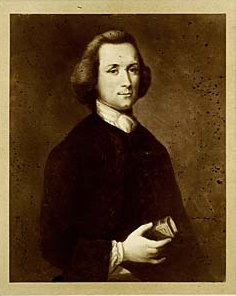
On this month in 1774, Joseph Priestly discovers oxygen (with other scientists having a role in its discovery, also):
In August 1774 he isolated an “air” that appeared to be completely new, but he did not have an opportunity to pursue the matter because he was about to tour Europe with Shelburne. While in Paris, however, Priestley managed to replicate the experiment for others, including French chemist Antoine Lavoisier. After returning to Britain in January 1775, he continued his experiments and discovered “vitriolic acid air” (sulphur dioxide, SO2).
In March he wrote to several people regarding the new “air” that he had discovered in August. One of these letters was read aloud to the Royal Society, and a paper outlining the discovery, titled “An Account of further Discoveries in Air”, was published in the Society’s journal Philosophical Transactions.[99] Priestley called the new substance “dephlogisticated air”, which he made in the famous experiment by focusing the sun’s rays on a sample of mercuric oxide. He first tested it on mice, who surprised him by surviving quite a while entrapped with the air, and then on himself, writing that it was “five or six times better than common air for the purpose of respiration, inflammation, and, I believe, every other use of common atmospherical air”.[100] He had discovered oxygen gas (O2).
Priestley assembled his oxygen paper and several others into a second volume of Experiments and Observations on Air, published in 1776. He did not emphasise his discovery of “dephlogisticated air” (leaving it to Part III of the volume) but instead argued in the preface how important such discoveries were to rational religion. His paper narrated the discovery chronologically, relating the long delays between experiments and his initial puzzlements; thus, it is difficult to determine when exactly Priestley “discovered” oxygen.[101] Such dating is significant as both Lavoisier and Swedish pharmacist Carl Wilhelm Scheele have strong claims to the discovery of oxygen as well, Scheele having been the first to isolate the gas (although he published after Priestley) and Lavoisier having been the first to describe it as purified “air itself entire without alteration” (that is, the first to explain oxygen without phlogiston theory).[102]
In his paper “Observations on Respiration and the Use of the Blood”, Priestley was the first to suggest a connection between blood and air, although he did so using phlogiston theory. In typical Priestley fashion, he prefaced the paper with a history of the study of respiration. A year later, clearly influenced by Priestley, Lavoisier was also discussing respiration at the Académie des sciences. Lavoisier’s work began the long train of discovery that produced papers on oxygen respiration and culminated in the overthrow of phlogiston theory and the establishment of modern chemistry.[103]
Google-a-Day presents a history question:
At the time of signing, what was the title of the man who is the first of the two names in the name of the 1901 treaty that nullified the Clayton-Bulwer Treaty?
Science/Nature, Technology
Mars 2020: Recorded presentation of NASA news conference on Mars 2020 rover
by JOHN ADAMS •
City, Law, Local Government
A Game It’s Not
by JOHN ADAMS •
There’s a story in the Gazette about a Janesville resident who’s looking for a litigation fund to support lawsuits against the City of Janesville. See, subscription req’d, Citizens group wants to mount legal offensive against City Hall.
The story’s too funny – it’s part overwrought idea, and (I would guess) part effort of the Gazette to troll readers over a bogus, straw-man threat to local government (to which that paper’s editorial board routinely grovels).
Litigation against a city – or anyone, really – isn’t a game or sport. It’s a serious undertaking that requires huge amounts of behind-the-scenes work for each pleading, each moment of speaking in court, or each moment advancing one’s position with the public.
There’s no sudden victory in something like this – there’s no point in counting on the supposed shock of a lawsuit, alone. Looking for a reaction is an immature, and likely ineffectual, approach.
(That’s why one should advance along a deliberate set of steps, and why it’s bad form to sue a city without that deliberate approach.)
One doesn’t sue a city or government agency to get a rise out of someone, for goodness’ sake.
One sues to protect one’s rights of liberty and safety, to redress injustices, or for broad policy reasons like a defense of one’s environment, for example.
Everything one does should be supportive of accomplishing that objective, with a practical, favorable, concrete outcome. Before one begins, one should say: I’ll commit fully and completely to this task, prepared not for today’s headlines, but years of effort ahead, each day, so much as might be needed.
Respite and momentary relent along the way would serve principally to bolster and refresh one’s energy for even more ahead.
An outlook like that is worthy of the seriousness of the effort, and has another advantage, too: a person who sees things this way is the sort of man or woman who will litigate with poise and sangfroid.
Only in this way, by approaching an effort seriously beforehand, can one be, as FDR once described Gov. Al Smith of New York, a ‘happy warrior.’ The best and most enjoyable expedition – with engaging, spirited moments for a good cause – comes with preparation and commitment.
Happy warriors, so to speak, begin as thoughtful ones.
Daily Bread
Daily Bread for 7.31.14
by JOHN ADAMS •
Good morning, Whitewater.
Our month ends with a mostly sunny day, a high of eighty, and just a thirty-percent chance of late afternoon thunderstorms.
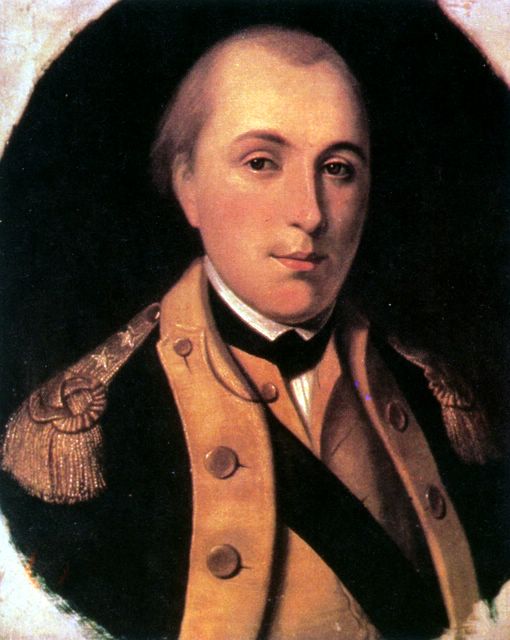
On this day in 1777, the Marquis de Lafayette commits to America:
…a 19-year-old French aristocrat, Marie-Joseph Paul Roch Yves Gilbert du Motier, Marquis de Lafayette, accepts a commission as a major-general in the Continental Army—without pay.
During his service as the Continental Congress’ secret envoy to France, Silas Deane had, on December 7, 1776, struck an agreement with French military expert, Baron Johann DeKalb, and his protege, the Marquis de Lafayette, to offer their military knowledge and experience to the American cause. However, Deane was replaced with Benjamin Franklin and Arthur Lee, who were unenthused by the proposal. Meanwhile, King Louis XVI feared angering Britain and prohibited Lafayette’s departure. The British ambassador to the French court at Versailles demanded the seizure of Lafayette’s ship, which resulted in Lafayette’s arrest. Lafayette, though, managed to escape, set sail and elude two British ships dispatched to recapture him. Following his safe arrival in South Carolina, Lafayette traveled to Philadelphia, expecting to be made General George Washington’s second-in-command. Although Lafayette’s youth made Congress reluctant to promote him over more experienced colonial officers, the young Frenchman’s willingness to volunteer his services without pay won their respect and Lafayette was commissioned as a major-general.
Lafayette served at Brandywine in 1777, as well as Barren Hill, Monmouth and Rhode Island in 1778. Following the formal treaty of alliance with Lafayette’s native France in February 1778 and Britain’s subsequent declaration of war, Lafayette asked to return to Paris and consult the king as to his future service. Washington was willing to spare Lafayette, who departed in January 1779. By March, Franklin reported from Paris that Lafayette had become an excellent advocate for the American cause at the French court. Following his six-month respite in France, Lafayette returned to aid the American war effort in Virginia, where he participated in the successful siege of Yorktown in 1781, before returning to France and the further service of his own country.
Google-a-Day asks a question about Germany’s economy:
What was Germany’s term for its amazing economic rebound in the 1950’s?
Art
The Power of Simple Drawings
by JOHN ADAMS •
Perhaps not so simple at all:
Long dismissed as a waste of time, doodling is getting new respect.
Recent research in neuroscience, psychology and design shows that doodling can help people stay focused, grasp new concepts and retain information. A blank page also can serve as an extended playing field for the brain, allowing people to revise and improve on creative thoughts and ideas.
Doodles are spontaneous marks that can take many forms, from abstract patterns or designs to images of objects, landscapes, people or faces. Some people doodle by retracing words or letters, but doodling doesnt include note-taking.
“Its a thinking tool,” says Sunni Brown, an Austin, Texas, author of a new book, “The Doodle Revolution.” It can affect how we process information and solve problems, she says….
Via The Power of the Doodle: Improve Your Focus and Memory @ Wall Street Journal.
City, Local Government, School District
The Bigger the Project, the Greater the Need for Substantive Justifications
by JOHN ADAMS •
It seems – to most people, I’d guess – that to say ‘the bigger the project, the greater the need for substantive justifications’ is simply reasonable and practical.
In almost all public efforts, municipalities, school districts, and other public bodies should Lead Substantively, and Support Fiscally.
The best way to win big is usually a detailed, well-expounded defense of big ideas.
There’s value in thinking tactically (and it’s interesting to ponder tactics), but big efforts either fail initially (or in hindsight they look absurd) if their adoption depends on mere tactics.
(Because ‘The Future Writes the History of the Present’, projects like expanded tax incremental districts without staggered, incremental, payments, the Innovation Center, WEDC, etc., although started, are doomed to obloquy. It’s not enough to win today; one has to secure a long-term success on a principled foundation. Everything else is just a “Nixon’s the One” Pyrrhic victory.)
Funny, though, that most local proponents concentrate on tactical wins, only to find thereafter that they’re stuck with bad deals that taint everyone connected to them. They want to win, but they’ve no idea what to do after an initial success, so they end up losing far more than they’ve gained.
It’s not the money & effort, but the money & effort based on the quality of the case for it, that matters. For the big and novel, it’s fair to ask of government, Show Your Work.
We likely have big requests ahead, including in the school district; they will require more than tactical moves and ill-defined justifications.
It’s fair that a request should begin with a detailed, thorough explanation.
Anderson, Cartoons & Comics
Blown
by JOHN ADAMS •

Daily Bread
Daily Bread for 7.30.14
by JOHN ADAMS •
Good morning, Whitewater.
Midweek in Whitewater will be mostly sunny, with a high of seventy-seven, and a one-third chance of showers in the late afternoon. In the city today, sunrise is 5:44 AM and sunset 8:18 PM. The moon is a waxing crescent with twelve percent of its visible disk illuminated.
Sometimes you get the elephant, and sometimes the elephant gets you:
On this day in 1857, a noted theorist is born in Wisconsin:
1857 – Thorstein Veblen Born
On this date economist and social commentator Thorstein Bunde Veblen was born in Cato, although some sources place his birth in Valders. He is best known for his book The Theory of The Leisure Class (1899), a classic of social theory that introduced the concept of “conspicuous consumption.” [Source: The Radical Academy]
Google-a-Day asks a question of art:
While lead architect of the new St. Peter’s project, what was Michelangelo’s design contribution to the project?
Technology
A Car-Parking Robot
by JOHN ADAMS •
Government Spending, Local Government, Press, Taxes/Taxation
What Steve Jobs Understood About People That Local ‘Movers and Shakers’ Don’t
by JOHN ADAMS •
It’s an easy – and false – pose to assume that people can’t understand a supposedly complicated project. There was some of this thinking in an editorial about which I commented yesterday, in the Gazette‘s contention that that “SWAG’s [Southern Wisconsin Agricultural Group’s] complex, though intriguing, always seemed grand and hard for average residents to picture.”
Steve Jobs knew better – he understood that ‘average’ customers could understand a plan if only it were set forth properly. Walter Isaacson relates, in Chapter 29 of his biography of Jobs, that for retail store design, Jobs felt that “it was important that customers intuitively grasped the layout of a store as soon as they entered.”
People are more than capable; they see something easily if it’s explained properly. Communications failures are, most often, leadership failures, where leaders write and reason weakly.
Forget categorizing people as average; there’s very little that’s average about the average person – most people are very clever.
Social and policymaking gains come from holding proud (but mostly dull, dim, and lazy) elites to a higher standard.
P.S. ‘Movers and shakers’ is an editorialist’s haughty term. I use it as a joke, because it’s so obviously absurd and unjustifiably proud.