
Author Archive for JOHN ADAMS
Daily Bread
Daily Bread for 6.23.14
by JOHN ADAMS •
Good morning, Whitewater.
A new week begins with a sixty percent chance of showers and a high of seventy-nine. Sunrise is 5:17 AM and sunset 8:37 PM. The moon is a waning crescent with thirteen of its visible disk illuminated.
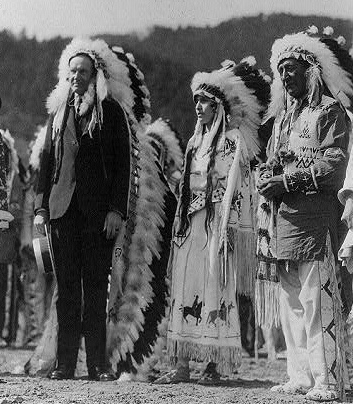
On this day in 1927, a newspaper reports on plans to adopt Pres. Coolidge into a Sioux tribe:
The Sioux County Pioneer newspaper of North Dakota reports on this day in 1927 that President Calvin Coolidge will be “adopted” into a Sioux tribe at Fort Yates on the south-central border of North Dakota.
In anticipation of the president’s upcoming visit to the Black Hills region of North Dakota, the Sioux County Pioneer reported that a Sioux elder named Chauncey Yellow Robe, a descendant of Sitting Bull and an Indian school administrator, suggested that Coolidge be inducted into the tribe. The article stated that Yellow Robe graciously offered the president a “most sincere and hearty welcome” and hoped that Coolidge and his wife would enjoy “rest, peace, quiet and friendship among us.”
Coolidge’s public policy toward Indians included the Indian Citizen Act of 1924, which granted automatic U.S. citizenship to all American tribes. On personal moral grounds, Coolidge sincerely regretted the state of poverty to which many Indian tribes had sunk after decades of legal persecution and forced assimilation. Throughout his two terms in office, Coolidge presented at least a public image as a strong proponent of tribal rights. However, U.S. government policies of forced assimilation remained in full swing during his administration. At this time, all Indian children were placed in federally funded boarding schools in an effort to familiarize them with white culture and train them in marketable skills. In the meantime, however, they were separated from their families and stripped of their native language and culture.
At the Sioux ceremony in 1927, photographers captured Coolidge, in suit and tie, as he was given a grand ceremonial feathered headdress by Sioux Chief Henry Standing Bear and officially declared an honorary tribal member.
Photographs of the actual event are truly odd –
On this day in 1911, an aviation first:
1911 – First Home-Built Airplane Flies
On this date Wausau native John Schwister became a pioneer in Wisconsin aviation by flying the state’s first home-built airplane. The plane, named the “Minnesota-Badger,” was constructed of wooden ribs covered with light cotton material. Powered by an early-model aircraft engine, the “Minnesota-Badger” flew several hundred feet and reached a maximum altitude of 20 feet. [Source: Wisconsin Aviation Hall of Fame]
Puzzability begins today a new week’s puzzle series, entitled, Camp Out:
|
This Week’s Game — June 23-27
|
|||||
|
Camp Out
|
|||||
|
Hey, take a hike! For each day this first week of summer, we started with a phrase, removed the four letters in CAMP, and rearranged all the letters to get a new word or phrase. Both pieces are described in each day’s clue, with the longer one first.
|
|||||
|
Example:
|
|||||
|
Automobile that your employer lets you use; preschool writing implement
|
|||||
|
Answer:
|
|||||
|
Company car; crayon
|
|||||
|
What to Submit:
|
|||||
|
Submit both pieces, with the longer one first (as “Company car; crayon” in the example), for your answer.
|
|||||
 |
|||||
|
Monday, June 23
|
|||||
|


Animals
Bullfrogs (in slow motion)
by JOHN ADAMS •
Actors: Frogs, mosquitos
Camera: Photron Fastcam BC2 HD / 2K high-speed camera
Lens: 300mm Tamron SP in OD Green with Nikon Adaptall 2 mount
Recorder: Sound Devices Pix 240i
Format recorded: 10-Bit 1080p to ProRes HQ
Tripod: Manfrotto
Slider: Kessler Crane Carbon Fiber Stealth
Lighting: None
AC, grip, gaffer, sound recordist, PA: None
Music is licensed via: Audio Jungle
Music Author: RalphSd
Licensee: Michael Sutton
Song: Death and Decay
Sound effects mixed by Michael Sutton
Thanks to:
Kessler Crane
Mike Cohen
Heather Sutton
Produced for: frozenprosperity.com
Mike at frozenprosperity dot com
Twitter: @MNS1974
Twitter: @frozenpros
Animation
Sunday Animation: La-Gar-To
by JOHN ADAMS •
LA-GAR-TO from Miguel Jiron on Vimeo.
Daily Bread
Daily Bread for 6.22.14
by JOHN ADAMS •
Good morning, Whitewater.
Sunday brings a mostly sunny day with a high of eighty-two. We’ll have south winds at around five mph.
Well, of respondents to the FW poll on World Cup viewership, a majority said they’d take a pass (58.62% not watching, with 41.38% watching).
For those who are watching, or as a way to tempt a few more to watch, it’s the United States against Portugal today at 5 PM CT on ESPN. Here’s a brief game preview from two British analysts:
On this day in 1944, Pres. Roosevelt signs the G.I. Bill:
…President Franklin D. Roosevelt signs the G.I. Bill, an unprecedented act of legislation designed to compensate returning members of the armed services–known as G.I.s–for their efforts in World War II.
As the last of its sweeping New Deal reforms, Roosevelt’s administration created the G.I. Bill–officially the Servicemen’s Readjustment Act of 1944–hoping to avoid a relapse into the Great Depression after the war ended. FDR particularly wanted to prevent a repeat of the Bonus March of 1932, when 20,000 unemployed veterans and their families flocked in protest to Washington. The American Legion, a veteran’s organization, successfully fought for many of the provisions included in the bill, which gave returning servicemen access to unemployment compensation, low-interest home and business loans, and–most importantly–funding for education.
By giving veterans money for tuition, living expenses, books, supplies and equipment, the G.I. Bill effectively transformed higher education in America. Before the war, college had been an option for only 10-15 percent of young Americans, and university campuses had become known as a haven for the most privileged classes. By 1947, in contrast, vets made up half of the nation’s college enrollment; three years later, nearly 500,000 Americans graduated from college, compared with 160,000 in 1939.
One may be a critic of most government spending, without being a critic of all; it seems wholly right that those who fought to defend this country (and the free, civilized peoples allied with us) were deserving of educational and other benefits at the war’s (blessedly victorious) end.
On this day in 1943, Joe McCarthy shows himself, not for the last time, to be a bum:
1943 – McCarthy Breaks Leg in Drunken Accident
On this date future senator Joseph McCarthy broke his leg during a drunken Marine Corps initiation ceremony, despite a press release and other claims that he was hurt in “military action.” Although nicknamed “Tail Gunner Joe”, McCarthy never was a tail gunner, but instead served at a desk as an intelligence officer. In 1951 he applied for medals, including the Distinguished Flying Cross, awarded to those who had flown at least 25 combat missions. The Marine Corps has records of only 11 combat flights McCarthy flew on, and those were described as local “milk run” flights. Many of McCarthy’s claims were disputed by political opponents as well as journalists.
Daily Bread
Daily Bread for 6.21.14
by JOHN ADAMS •
Good morning, Whitewater.
A new season begins. Sunrise is 5:16 AM and sunset 8:37 PM. The moon is a waning crescent with twenty-nine percent of its visible disk illuminated.
We’ll have a high of seventy-nine today and a one-third chance of afternoon thunderstorms.
Humanity played a role in the unfortunate extinction of the passenger pigeon, but Safya Khan-Ruf writes that perhaps we were not wholly responsible for their demise:
Once the most numerous bird species in North America, passenger pigeons went from numbering in the billions to being extinct in less than a century. Their decline has been mostly blamed on intensive hunting. But new research suggests that the human impact coincided with a natural decrease in population size, resulting in Martha, the last passenger pigeon, dying in 1914.
Robert Zink, from the University of Minnesota, describes the story of a billion passenger pigeons passing one spot during a migratory passage. He estimates that it meant “nearly 400,000 birds per minute, stretching across the sky.” Flocks could block the sunlight for hours as they moved in mind-boggling numbers. On the ground, the passenger pigeons ate acorns, beechnuts, and chestnuts but also soft fruits.
Regan Early, lecturer in conservation biology at the University of Exeter, said, “They were a keystone species that had incredible effects on the landscape. They came, dropped bird poo everywhere, and devoured the fruit crops in the forests. Their excrement was toxic to plants, and when a flock roosted on trees, they could break all the branches through the sheer numbers perching.”
On this day in 1788, New Hampshire ratifies the U.S. Constitution, and being the ninth state to do so, assures that a sufficient number of ratifications to bring the Constitution into effect.
On this day in 1949, southern Wisconsin gets her first drive-in theater:
1949 – Southern Wisconsin’s First Drive-in Movie
On this date Southern Wisconsin’s first outdoor, drive-in movie, the Hi-Way 26 Outdoor Theatre, opened on Milton Avenue in Janesville. The screen was 33- by 46-foot. [Source: Janesville Gazette]
Animals
Owl Whisperer
by JOHN ADAMS •
Caution: NSFW language as the homeowner accomplishes his task.
Business, CDA, City, Corporate Welfare, Innovation Center/Tech Park, Local Government, Politics, University
Local Crony Capitalism via the WEDC (and similar schemes)
by JOHN ADAMS •
Whitewater’s had a decades-long problem of a few town insiders manipulating government and public resources for their own private ends. That time is drawing to a close, but there are yet some years ahead in which aging, mediocre town figures will push their self-promoting lies.
As their chief motivation is personal vanity and pride, they’ll not let go. On the contrary, they’ll look for any impressionable bureaucrat or politician they can find to perpetuate and extend their manipulations for another generation.
(They’ll know whom to find; like confidence men searching for an easy mark, they’ll find those they can dupe, cajole, or intimidate.)
There are three reasons these efforts will fail. It’s not commentary or criticism that will make the difference, but broader social forces that will make Whitewater inhospitable to this kind of trickery.
Economics. First and foremost, when Reed Hall of the Wisconsin Economic Development Corporation peddles crony capitalism and white-collar welfare at taxpayer expense, he peddles a false economics, a greedy policy, and a gutter ideology.
It is impossible that any number of these men have somehow developed an economic scheme more productive and more efficient than free transactions in the marketplace among private, voluntary parties.
One would have to believe, against all reason, that Reed Hall, Chancellor Telfer, former City Manager Brunner, and CDA Chair Knight have established a set of relationships superior to the market, superior to the teachings of Nobel laureates Hayek, Friedman, and James Buchanan.
They’ve done nothing of the kind. They’ve simply adopted the practices of vulgar banana republics abroad, and sprinkled them with legitimate economic terms used in illegitimate ways.
Mr. Clapper, at the so-called ‘special meeting’ for round two of taxpayer-grants to white-collar recipients, declared that these distributions were akin to chemical reactions, as though this were a true science.
No, Mr. Clapper, it’s not chemistry, but alchemy, you were extolling.
Politics. The building coalition against these sort of projects, nationally and statewide, of small-government conservatives, liberals, and libertarians will overwhelm a few oily flacks and their few duped friends.
There’s a whole series that could be entitled, “How a Few Conservatives Ruined Conservatism in Whitewater.” No one has done more damage to the GOP brand in Whitewater than a few local, big-government Republicans, a couple of big landlords and real estate agents, and the few misguided liberals and bureaucrats they’ve collected along the way.
The Right is reduced to hoping on red waves elsewhere to win here. It didn’t need to be this way – they did it to themselves.
It’s impossibly sad that local insiders ruined a party’s reputation this way. A new generation will have huge local damage to repair.
Picking this as a stand for the future is politically misguided. If one wanted something persuasive for the community – rather than persuasive merely for a few who’d like to bigfoot the rest of the town – no one would pick this.
One of Wisconsin’s major parties is now slamming the WEDC, no one in the Tea Party believes in it, and libertarians have never supported these proposals.
If one had to pick a political consultant, I’d suggest someone other than the flacks behind these handouts to the well-fed.
Selfishness. Richard Telfer contends, predictably, that this selfishness is a virtue, does he? He did all this for you, you see, so it’s not selfishness at all, but altruism.
Where are his supposed gains, great successes, and jobs, and at what price? Let him enumerate each job, the work performed, the true public cost, whether these few already have jobs (including public ones), etc.
Not merely names of so-called startups, but an actual accounting, based on accepted national standards of accounting and evaluation.
Statewide, when looking at what the WEDC has really done, it’s lies, exaggerations, and shoddy work.
But Mr. Telfer claims that he did it all for you, Argentina Whitewater:
Oh, no. These few did it for their own self-aggrandizement on the backs of ordinary wage-earners.
And that, truly, is why all of these schemes are heading for the dustbin.
Cats
Friday Catblogging: Cat Walk
by JOHN ADAMS •
Poll, Sports
Friday Poll: World Cup Viewing
by JOHN ADAMS •
Are you watching any of the World Cup matches? I don’t follow soccer, but have to admit that these matches are great viewing, I think.
What do you think?
By the way, here’s an excerpt of explanatory article from the Atlantic on why Americans call soccer ‘soccer’:
In May, Stefan Szymanski, a sports economist at the University of Michigan, published a paper debunking the notion that “soccer” is a semantically bizarre American invention. In fact, it’s a British import. And the Brits used it often—until, that is, it became too much of an Americanism for British English to bear.
Below, a player-of-the-day clip featuring Luis Suárez:
Daily Bread
Daily Bread for 6.20.14
by JOHN ADAMS •
Good morning, Whitewater.
Morning rain, but otherwise a mostly sunny Friday awaits, with a high of eighty-three.
On this day in 1782, Congress adopted the design for the Great Seal of the United States.
On June 13, 1782, the Congress turned to its Secretary Charles Thomson, and provided all material submitted by the first three committees.[10] Thomson was 53 years old, and had been a Latin master at a Philadelphia academy.[27] Thomson took elements from all three previous committees, coming up with a new design which provided the basis for the final seal.[10]
Thomson used the eagle – this time specifying an American bald eagle – as the sole supporter on the shield. The shield had thirteen stripes, this time in achevron pattern, and the eagle’s claws held an olive branch and a bundle of thirteen arrows. For the crest, he used Hopkinson’s constellation of thirteen stars. The motto was E Pluribus Unum, taken from the first committee, and was on a scroll held in the eagle’s beak.[10][27]
An eagle holding symbols of war and peace has a long history, and also echoed the second committee’s themes. Franklin owned a 1702 emblem book, which included an eagle with olive branch and arrows near its talons, which may have been a source for Thomson.[18] The arrows also mirror those in the arms of the Dutch Republic, the only country in Europe with a representative government at the time, which depicted a lion holding seven arrows representing their seven provinces.[17][18] State currency may have provided further inspiration; a 1775 South Carolina bill showed a bundle of 13 arrows and a 1775 Maryland note depicted a hand with an olive branch of 13 leaves.[28]

Thomson’s drawing, the basis for the final seal
For the reverse, Thomson essentially kept Barton’s design, but re-added the triangle around the Eye of Providence and changed the mottos to Annuit Cœptisand Novus Ordo Seclorum.[27] Thomson sent his designs back to Barton, who made some final alterations. The stripes on the shield were changed again, this time to “palewise” (vertical), and the eagle’s wing position was changed to “displayed” (wingtips up) instead of “rising”. Barton also wrote a more properly heraldic blazon.[10]
The design was submitted to Congress on June 20, 1782 and was accepted the same day. Thomson included a page of explanatory notes, but no drawing was submitted. This remains the official definition of the Great Seal today.[10]

Puzzability‘s Game Boxes series concludes with Friday’s game:
|
This Week’s Game — June 16-20
|
||||||||||||||
|
Game Boxes
|
||||||||||||||
|
Playing around will work well for you this week. For each day, we’ll give a three-by-three letter grid in which we’ve hidden the name of a tabletop game. Each has 10 or more letters and any number of words. To find the game, start at any letter and move from letter to letter by traveling to any adjacent letter—across, up and down, or diagonally. You may come back to a letter you’ve used previously, but may not stay in the same spot twice in a row. You will not always need all nine letters in the grid.
|
||||||||||||||
|
Example:
|
||||||||||||||
|
||||||||||||||
|
Answer:
|
||||||||||||||
|
Connect Four
|
||||||||||||||
|
What to Submit:
|
||||||||||||||
|
Submit the game’s name (as “Connect Four” in the example) for your answer.
|
||||||||||||||
|
||||||||||||||
|
Friday, June 20
|
||||||||||||||
|


Drink, Good Ideas, Technology
Italians Create First Zero-Gravity Espresso Machine
by JOHN ADAMS •
The ISSpresso —
Corporate Welfare
Crony Capitalism: Wrong, Erroneous, and Laughable
by JOHN ADAMS •
Across America, from among left, small-government conservatives, and libertarians, a coalition now works to turn the tide against crony-capitalism and white-collar welfare. They will succeed, as America’s political tradition will reject the manipulation of the country’s political-economy for the selfish, rigged ends of well-fed men.
Sometimes, these critiques against crony capitalism will be deservedly severe; the ideological object of criticism is, after all, a false economics and an inferior ideology.
Other times, they’ll be light-hearted critiques that appeal against white-collar welfare with humor.
Above are two videos lampooning crony capitalism in the style of Saturday-morning cartoons or commercials for action figures.
The style is intentional; they’re made to appeal to middle-aged or younger viewers, who are either successful through their own efforts or aware of how a few scheming men take from others for their own gain.
The focus is meant, of course, to split an older group of pols [pols, that is, political operatives and long-term incumbents] (mostly over sixty) from a more successful, rightly more skeptical (of deal-making) demographic.
The result makes crony capitalists look conniving, laughably condescending, embarrassingly obvious in their lies, and shows them as the oily peddlers they are.
Far from being ‘successes,’ ‘innovators,’ or ‘visionaries,’ they’re simply manipulators working against an honest, fair, efficient, and productive way of life.
Videos posted previously @ Daily Adams.
Tomorrow: The local implications of it all.
Daily Bread
Daily Bread for 6.19.14
by JOHN ADAMS •
Good morning, Whitewater.
Thursday will open with morning thunderstorms, and then develop into a partly cloudy day with a high of seventy-eight.
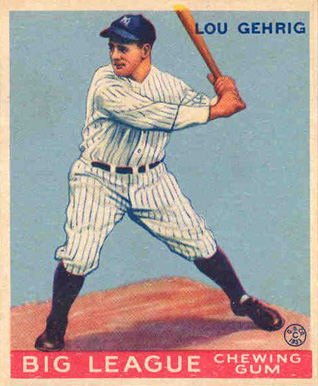
It’s Lou Gehrig’s birthday:
Henry Louis “Lou” or “Buster“[1] Gehrig (June 19, 1903 – June 2, 1941) was an American baseball first baseman who played 17 seasons in Major League Baseball (MLB) for the New York Yankees (1923–1939). Gehrig was renowned for his prowess as a hitter and for his durability, a trait which earned him his nickname “The Iron Horse“. He finished with a career batting average of .340, an on-base percentage of .447, and aslugging percentage of .632, and he tallied 493 home runs and 1,995 runs batted in (RBIs). A seven-time All-Star[2] and six-time World Series champion, Gehrig won the Triple Crown in 1934[3] and was twice named theAmerican League‘s (AL) Most Valuable Player. Gehrig was the first MLB player to have his uniform number retired, and he was elected to the Baseball Hall of Fame in 1939.
A native of New York City and attendee of Columbia University, Gehrig signed with the Yankees in 1923. He set several major league records during his career,[4] including the most career grand slams (23) (since broken)[5][6] and most consecutive games played (2,130), a record that stood for 56 years and was long considered unbreakable until surpassed by Cal Ripken, Jr. in 1995.[7] Gehrig’s streak ended in 1939 after he was stricken with amyotrophic lateral sclerosis (ALS), a disorder now commonly referred to as Lou Gehrig’s Disease in North America,[8] which forced him to retire at age 36 and claimed his life two years later. The pathos of his farewell from baseball was capped off by his iconic “Luckiest Man on the Face of the Earth” speech at the original Yankee Stadium.
Here’s Thursday’s Game Boxes puzzle from Puzzability:
|
This Week’s Game — June 16-20
|
||||||||||||||
|
Game Boxes
|
||||||||||||||
|
Playing around will work well for you this week. For each day, we’ll give a three-by-three letter grid in which we’ve hidden the name of a tabletop game. Each has 10 or more letters and any number of words. To find the game, start at any letter and move from letter to letter by traveling to any adjacent letter—across, up and down, or diagonally. You may come back to a letter you’ve used previously, but may not stay in the same spot twice in a row. You will not always need all nine letters in the grid.
|
||||||||||||||
|
Example:
|
||||||||||||||
|
||||||||||||||
|
Answer:
|
||||||||||||||
|
Connect Four
|
||||||||||||||
|
What to Submit:
|
||||||||||||||
|
Submit the game’s name (as “Connect Four” in the example) for your answer.
|
||||||||||||||
|
||||||||||||||
|
Thursday, June 19
|
||||||||||||||
|


