

Anderson, Cartoons & Comics
Civilization
by JOHN ADAMS •
Good morning.
It’s a Wednesday of rain in the Whippet City, with a high of forty.
Downtown Whitewater’s Board of Directors meets this morning at 8 AM.
It seems that France, a place Americans tease as the home of the beret, has a problem: her last indigenous beret-maker is at risk of collapse —
I’m not sure what to make of this, truly. At the very least, it places numerous jokes based on an overly-broad stereotype at risk.
On this day eleven years ago, the Iraq War begins.
Here’s Wednesday’s Puzzability game:
|
This Week’s Game — March 17-21
|
|||||
|
Irish Stew
|
|||||
|
We’re going for brogue this St. Patrick’s Day week. For each day, we started with a word or phrase, added the seven letters in IRELAND, and rearranged all the letters to get the name of a famous person. Both pieces are described in each day’s clue, with the shorter one first.
|
|||||
|
Example:
|
|||||
|
Affirmative answer; Rescue Me star
|
|||||
|
Answer:
|
|||||
|
Yes; Denis Leary
|
|||||
|
What to Submit:
|
|||||
|
Submit both pieces, with the shorter one first (as “Yes; Denis Leary” in the example), for your answer.
|
|||||
 |
|||||
|
Wednesday, March 19
|
|||||
|
Update, 3.19.14. Someone’s asked if the Common Core discussion at Monday’s school board meeting doesn’t undercut my argument about the need to lead every presentation with a substantive (academics, athletics, art) discussion.
On the contrary, I had it in mind, and it bolsters my contention. A discussion of curriculum at a board meeting, but not in presentations to the community elsewhere, is a half-heard discussion. Trying to separate fiscal and curriculum discussions (and present them singly to the audience one hopes will be most receptive) is a mistake. One can only pick one’s audience accurately for so long; a wrong choice only invites criticism that one has held back information, and cherry-picked one’s audiences.
Better to present both, as a set, everywhere one can, each and every time one can.
Original post —
A salesman knocks on one’s door, and when greeted, begins with this presentation:
Good morning, residents of this fine domicile. I’ve an offer that’s on discount today, down from the regular price of $100 to a new, low price of $75. We’re offering our same, tried-and-true product – no changes or substitutions, I promise – at a significantly lower rate.
So, how many would you like to buy?
Would you take his deal?
Perhaps, but likely not before asking one question: “What are you selling?”
The price means nothing if one doesn’t know the goods being offered, and their quality.
Not long ago at Common Council, and more recently to a community group, the Whitewater Schools’ district administrator and business manager presented on the fiscal condition of the district.
No doubt, it’s good that there are presentations like this – better to be forthright than to withhold information.
I’d offer a suggestion, though, and one that’s useful when one considers that there are statewide concerns about public school districts’ finances but also their curricula (the worry of some over Common Core, for example.)
In every presentation about the district, no matter how long or brief, the first part of the presentation should address substantive accomplishments (academic, athletic, artistic) before a discussion of expenditures.
I write this as a libertarian, who would prefer smaller government not merely as less expensive, but as less burdensome or regulatory. If we are to spend – and I know we sometimes must – then the first step should be a justification for that spending (that is, a list of accomplishments or goals yet to be met).
This uniform, two-step approach assures that neither of the major objections (on action or cost) to a project will ever go unaddressed. It’s not a libertarian’s purpose to assist government, but there are times when a simple method helps both government and its skeptics.
Many districts in this state focused on fiscal changes, but were quite plainly caught flat-footed when objections to a given curriculum emerged over the last year. Whitewater didn’t see much fuss, and I’m not wading into that topic today.
Those other districts, however, were short-sighted to believe that fiscal discipline (at least as they touted it) would insulate them from other political challenges, some of which have been curriculum-centered.
It’s insufficient (although necessary) to talk about mere cost – all expenditures require an explanation, so that one might measure their influence more broadly.
No presentations this district’s officials give will be as useful for them or for Whitewater as presentations that lead on substance and thereafter immediately follow on cost.

Long before they saw animals from faraway places, European artists imagined what they might look like, from tales they heard from others. Vincze Miklós writes about the art of the unfamiliar —
See, How Europeans Imagined Exotic Animals Centuries Ago, Based on Hearsay.
Nicely done —
Bird World from Alastair Mccoll on Vimeo.
Good morning.
Sunrise today is 7:02 AM and sunset 7:05 PM. The moon is in a washing gibbous phase with ninety-six percent of its visible disk illuminated. We’ll have a partly sunny day today with a high of forty-five.
Common Council and the Planning Commission meet jointly tonight at 6:30 PM on campus.
Yesterday, I kindly received some recommendations for music from the Celtic band The Pogues. I listed to, and liked, all of the recommended songs (Body of an American, Fairytale of New York, Misty Morning Albert Bridge, The Broad Majestic Shannon, Rainy Night in Soho, NW3).
Here’s The Body of an American —
On this day in 1953, the Braves announce that they’re moving to Wisconsin:
1953 – Braves Move to Milwaukee
On this date the Braves baseball team announced that they were moving from Boston to Milwaukee. [Source: The History Net]
Here’s Puzzability‘s Tuesday game:
|
This Week’s Game — March 17-21
|
|||||
|
Irish Stew
|
|||||
|
We’re going for brogue this St. Patrick’s Day week. For each day, we started with a word or phrase, added the seven letters in IRELAND, and rearranged all the letters to get the name of a famous person. Both pieces are described in each day’s clue, with the shorter one first.
|
|||||
|
Example:
|
|||||
|
Affirmative answer; Rescue Me star
|
|||||
|
Answer:
|
|||||
|
Yes; Denis Leary
|
|||||
|
What to Submit:
|
|||||
|
Submit both pieces, with the shorter one first (as “Yes; Denis Leary” in the example), for your answer.
|
|||||
|
|||||
|
Tuesday, March 18
|
|||||
|
A longtime reader wrote in this morning, and teased me over my post of the Cranberries’ Roses (on the theory that it was a melancholy song). I picked that song because Delores O’Riordan has a fine voice, and an Irish singer seemed fitting on St. Patrick’s Day.
Still, a sad song wasn’t meant to suggest that I’m sad. I’m not.
So, for someone who’d like something happier, here’s Pharrell Williams with Happy:
Dolores O’Riordan, back in 2012 after a six-year hiatus —
Good morning.
St. Patrick’s Day in Whitewater will be mostly cloudy with a high of thirty-three.

In Chicago, residents dyed part of the Chicago River green for the holiday. Embedded below is a time-lapse video of their work:
On this day in 1941, Milwaukee’s airport gets its name:
1941 – General Mitchell Field Named
On this date Milwaukee’s airport was named to honor the city’s famous air-power pioneer, General William Mitchell. [Source: History Just Ahead: A Guide to Wisconsin’s Historical Markers edited by Sarah Davis McBride]
This week’s Puzzability series is called Irish Stew. Here’s Monday’s game:
|
This Week’s Game — March 17-21
|
|||||
|
Irish Stew
|
|||||
|
We’re going for brogue this St. Patrick’s Day week. For each day, we started with a word or phrase, added the seven letters in IRELAND, and rearranged all the letters to get the name of a famous person. Both pieces are described in each day’s clue, with the shorter one first.
|
|||||
|
Example:
|
|||||
|
Affirmative answer; Rescue Me star
|
|||||
|
Answer:
|
|||||
|
Yes; Denis Leary
|
|||||
|
What to Submit:
|
|||||
|
Submit both pieces, with the shorter one first (as “Yes; Denis Leary” in the example), for your answer.
|
|||||
|
|||||
|
Monday, March 17
|
|||||
|
Plumb from caleb wood on Vimeo.
Good morning.
Sunday will see gradually sunnier skies and a high of twenty=three in Whitewater.
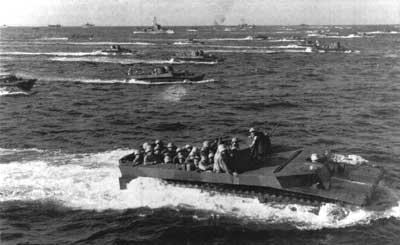
On this day in 1945, fighting on Iwo Jima ends, assuring that the island was wholly in American hands:
…the west Pacific volcanic island of Iwo Jima is declared secured by the U.S. military after months of fiercely fighting its Japanese defenders.
The Americans began applying pressure to the Japanese defense of Iwo Jima in February 1944, when B-24 and B-25 bombers raided the island for 74 days straight. It was the longest pre-invasion bombardment of the war, necessary because of the extent to which the Japanese–21,000 strong–fortified the island, above and below ground, including a network of caves. Underwater demolition teams (“frogmen”) were dispatched by the Americans just before the actual invasion to clear the shores of mines and any other obstacles that could obstruct an invading force. In fact, the Japanese mistook the frogmen for an invasion force and killed 170 of them.
The amphibious landings of Marines began the morning of February 19, 1945, as the secretary of the Navy, James Forrestal, accompanied by journalists, surveyed the scene from a command ship offshore. The Marines made their way onto the island–and seven Japanese battalions opened fire, obliterating them. By that evening, more than 550 Marines were dead and more than 1,800 were wounded.
In the face of such fierce counterattack, the Americans reconciled themselves to the fact that Iwo Jima could be taken only one yard at a time. A key position on the island was Mt. Suribachi, the center of the Japanese defense. The 28th Marine Regiment closed in and around the base of the volcanic mountain at the rate of 400 yards per day, employing flamethrowers, grenades, and demolition charges against the Japanese that were hidden in caves and pillboxes (low concrete emplacements for machine-gun nests). Approximately 40 Marines finally began a climb up the volcanic ash mountain, which was smoking from the constant bombardment, and at 10 a.m. on February 23, a half-dozen Marines raised an American flag at its peak, using a pipe as a flag post. Two photographers caught a restaging of the flag raising for posterity, creating one of the most reproduced images of the war. With Mt. Suribachi claimed, one-third of Iwo Jima was under American control.
On March 16, with a U.S. Navy military government established, Iwo Jima was declared secured and the fighting over. When all was done, more than 6,000 Marines died fighting for the island, along with almost all the 21,000 Japanese soldiers trying to defend it.
Good morning.
Sunrise this Saturday is 7:07 AM and sunset is 7:01 PM. The moon is in a waxing gibbous phase with 99% of its visible disk illuminated. Today’s high will be thirty-five.
Of Friday’s poll, over 80% of respondents thought that Rod Sommerville of Australia was sensible when he had a beer while waiting for medical assistance after receiving a snake bite.
We’re at the Ides of March, famous to us as an expression for a long-ago assassination:
“Beware the Ides of March,” the soothsayer urges Julius Caesar in Shakespeare’s Tragedy of Julius Caesar (act I, scene ii). Despite the forewarning, Caesar is stabbed in the back by his friend Marcus Brutus. Caesar falls and utters his famous last words, “Et tu, Brute?” (And you, Brutus?)
Shakespeare’s source for the play was Thomas North’s Lives of the Nobel Grecians and Romans, which detailed the murder of Caesar in 44 B.C. Caesar’s friends and associates feared his growing power and his recent self-comparison to Alexander the Great and felt he must die for the good of Rome. North’s work translated a French version of Plutarch, which itself had been translated from Latin. Shakespeare’s version was written about 1599 and performed at the newly built Globe Theater.
Ides, Kalends, Nones – simply terms of the Roman calendar that might have had no special meaning to us but for Shakespeare’s play about a certain act on a certain day.
On this day in 1862, more Wisconsinites do their part for the Union:
1862 – (Civil War) 17th and 18th Wisconsin Infantry Regiments Mustered In
The 17th and 18th Wisconsin Infantry regiments mustered in at Madison and Milwaukee, respectively. Both regiments would move from the lower Mississippi Valley into Tennessee and Georgia, participate in Sherman’s March to the Sea, and converge on Virginia at the end of the war. Before they mustered out, the 17th would lose 269 men and the 18th, 225.
Here’s one belligerent cat –


