
Author Archive for JOHN ADAMS
Public Meetings
Common Council
by JOHN ADAMS •
Public Meetings
Alcohol Licensing Committee
by JOHN ADAMS •
Daily Bread
Daily Bread for 1.18.14
by JOHN ADAMS •
Good morning.
We’ve a likelihood of snow today, of about an inch, with a high of nineteen. Sunrise this Saturday is 7:21 AM, sunset is 4:50 PM, and the moon is in a waning gibbous phase with 94% of its visible disk illuminated.
Every so often, while film makers are recording penguins, a bird of prey, such as striated caracara, will come along and steal a hidden egg-cam positioned to film the penguins. When that happens, here’s the view of the theft and afterward from the purloined egg-cam:
In the checkered history of public spending, at least this was a good expenditure:
On this day in 1803 [1.18.1803], Thomas Jefferson requests funding from Congress to finance the Lewis and Clark expedition.
Jefferson officially asked for $2,500 in funding from Congress, though some sources indicate the expedition ultimately cost closer to $50,000. Lewis was joined by his friend William Clark and 50 others on the journey, including an African-American slave and a female Indian guide named Sacagawea. The team, which Jefferson called the Corps of Discovery, first surveyed the territory that comprised the Louisiana Purchase, a vast expanse that reached as far north as present-day North Dakota, south to the Gulf of Mexico and stopped at the eastern border of Spanish territory in present-day Texas. The team then crossed the Rockies and navigated river routes to the Pacific coast of present-day Oregon. Upon their return, the duo’s reports of the exotic and awe-inspiring new lands they had encountered sparked a new wave of westward expansion….
Cats
Friday Catblogging: Cats in Sinks
by JOHN ADAMS •
Poll, Sports
Friday Poll: Four Teams Left
by JOHN ADAMS •
It’s four teams left: New England at Denver @ 2 PM (CBS), and San Francisco at Seattle @ 5:30 PM (FOX).
Who wins? I’ll say Denver and Seattle. What do you think?
Daily Bread
Daily Bread for 1.17.14
by JOHN ADAMS •
Good morning.
Friday brings a likelihood of snow to Whitewater, with less than an inch of accumulation, and a high of seventeen.
On this day in 1893, Hawaii loses its native government:
On the Hawaiian Islands, a group of American sugar planters under Sanford Ballard Dole overthrow Queen Liliuokalani, the Hawaiian monarch, and establish a new provincial government with Dole as president. The coup occurred with the foreknowledge of John L. Stevens, the U.S. minister to Hawaii, and 300 U.S. Marines from the U.S. cruiser Boston were called to Hawaii, allegedly to protect American lives….
a revolutionary “Committee of Safety,” organized by Sanford B. Dole, staged a coup against Queen Liliuokalani with the tacit support of the United States. On February 1, Minister John Stevens recognized Dole’s new government on his own authority and proclaimed Hawaii a U.S. protectorate. Dole submitted a treaty of annexation to the U.S. Senate, but most Democrats opposed it, especially after it was revealed that most Hawaiians did want annexation.
President Grover Cleveland sent a new U.S. minister to Hawaii to restore Queen Liliuokalani to the throne under the 1887 constitution, but Dole refused to step aside and instead proclaimed the independent Republic of Hawaii. Cleveland was unwilling to overthrow the government by force, and his successor, President William McKinley, negotiated a treaty with the Republic of Hawaii in 1897. In 1898, the Spanish-American War broke out, and the strategic use of the naval base at Pearl Harbor during the war convinced Congress to approve formal annexation. Two years later, Hawaii was organized into a formal U.S. territory and in 1959 entered the United States as the 50th state.
On 1.17.1900, women working in a Wisconsin cotton mill decide to strike:
1900 – Female Cotton Mill Workers Strike
On this date 100 female employees of the Monterey mill, affiliated with the Janesville Cotton Mills, went on strike for higher wages. According to local sources, a committee of four “good-looking young ladies” was appointed to negotiate with management. Doing piece work, the women earned only $40 a month.
The company said the women “don’t know how good they’ve got it…because they are paid more than at other local cotton mills and as well as some men with families.” The women argued their monthly pay only averaged $20. Within three days, all the women were hired to work by tobacco warehouses. The Monterey mill was one of three Janesville cotton mills in operation at the turn of the century. [Source: Janesville Gazette]
Puzzability‘s String Theory series concludes today:
|
This Week’s Game — January 13-17
|
|||||
|
String Theory
|
|||||
|
Are you a master of science? For each day this week, we’ll give you a series of clues, each of which leads to a word. You must drop one letter out of each of these answer words and put them together (in order), adding spaces as needed, to get a science-related phrase that starts with a possessive name.
|
|||||
|
Example:
|
|||||
|
Sentry’s “stop!” / impose, as a tax / barge-like boat / turn from solid to liquid
|
|||||
|
Answer:
|
|||||
|
Halley’s comet (halt / levy / scow / melt)
|
|||||
|
What to Submit:
|
|||||
|
Submit the phrase and the smaller words (as “Halley’s comet (halt / levy / scow / melt)” in the example) for your answer.
|
|||||
 |
|||||
|
Friday, January 17
|
|||||
|


Daily Bread
Daily Bread for 1.16.14
by JOHN ADAMS •
Good morning.
Whitewater will have about an inch of snow this afternoon, with a high just around freeing.
In the city today, there’s a scheduled Public Information Meeting on the Reconstruction of the Downtown East Gateway area at 4:30 PM, and there is a meeting of the Fire & Rescue Task Force at 7:30 PM.
On this day in 1919, Prohibition takes effect:
The 18th Amendment to the U.S. Constitution, prohibiting the “manufacture, sale, or transportation of intoxicating liquors for beverage purposes,” is ratified on this day in 1919 and becomes the law of the land.
The movement for the prohibition of alcohol began in the early 19th century, when Americans concerned about the adverse effects of drinking began forming temperance societies. By the late 19th century, these groups had become a powerful political force, campaigning on the state level and calling for total national abstinence. In December 1917, the 18th Amendment, also known as the Prohibition Amendment, was passed by Congress and sent to the states for ratification.
Prohibition took effect in January 1919. Nine months later, Congress passed the Volstead Act, or National Prohibition Act, over President Woodrow Wilson‘s veto. The Volstead Act provided for the enforcement of prohibition, including the creation of a special unit of the Treasury Department. Despite a vigorous effort by law-enforcement agencies, the Volstead Act failed to prevent the large-scale distribution of alcoholic beverages, and organized crime flourished in America. In 1933, the 21st Amendment to the Constitution was passed and ratified, repealing prohibition.
Puzzability has a new entry in this week’s String Theory series:
|
This Week’s Game — January 13-17
|
|
String Theory
|
|
Are you a master of science? For each day this week, we’ll give you a series of clues, each of which leads to a word. You must drop one letter out of each of these answer words and put them together (in order), adding spaces as needed, to get a science-related phrase that starts with a possessive name.
|
|
Example:
|
|
Sentry’s “stop!” / impose, as a tax / barge-like boat / turn from solid to liquid
|
|
Answer:
|
|
Halley’s comet (halt / levy / scow / melt)
|
|
What to Submit:
|
|
Submit the phrase and the smaller words (as “Halley’s comet (halt / levy / scow / melt)” in the example) for your answer.
|
|
|
Thursday, January 16
|
|
|
Reaction to danger / watery castle protector / reduce drastically / give money to the church regularly / rower’s need / diamond or ruby |

Anderson, Cartoons & Comics
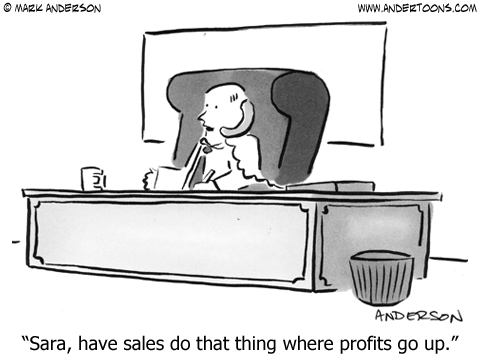
That Thing
by JOHN ADAMS •
Daily Bread
Daily Bread for 1.15.14
by JOHN ADAMS •
Good morning.
Today will be mostly sunny with a high of sixteen.
On this day in 1967, the Packers win the first Super Bowl:
….at the Los Angeles Coliseum, the Green Bay Packers beat the Kansas City Chiefs in the first-ever world championship game of American football.
In the mid-1960s, the intense competition for players and fans between the National Football League (NFL) and the upstart American Football League (AFL) led to talks of a possible merger. It was decided that the winners of each league’s championship would meet each year in a single game to determine the “world champion of football.”
In that historic first game–played before a non-sell-out crowd of 61,946 people–Green Bay scored three touchdowns in the second half to defeat Kansas City 35-10. Led by MVP quarterback Bart Starr, the Packers benefited from Max McGee’s stellar receiving and a key interception by safety Willie Wood. For their win, each member of the Packers collected $15,000: the largest single-game share in the history of team sports.
Here’s Puzzability‘s Wednesday game:
|
This Week’s Game — January 13-17
|
|||||
|
String Theory
|
|||||
|
Are you a master of science? For each day this week, we’ll give you a series of clues, each of which leads to a word. You must drop one letter out of each of these answer words and put them together (in order), adding spaces as needed, to get a science-related phrase that starts with a possessive name.
|
|||||
|
Example:
|
|||||
|
Sentry’s “stop!” / impose, as a tax / barge-like boat / turn from solid to liquid
|
|||||
|
Answer:
|
|||||
|
Halley’s comet (halt / levy / scow / melt)
|
|||||
|
What to Submit:
|
|||||
|
Submit the phrase and the smaller words (as “Halley’s comet (halt / levy / scow / melt)” in the example) for your answer.
|
|||||
|
|||||
|
Wednesday, January 15
|
|||||
|

Press
Local Printing-Press Consolidation
by JOHN ADAMS •
The Daily Union and Good Morning Advertiser will use the Bliss Communications press:
The change, effective Monday, Feb. 10, will end 131 years of printing the newspaper in Fort Atkinson and result in the layoff of approximately 20 employees….
Other changes will include a slight reduction in the page size, as well as an altered production schedule for the paper’s employees.
Approximately 20 employees, including the Daily Union and the Good Morning Advertiser inserting crew, received notification Monday that their jobs were to be eliminated effective Friday, Feb. 7.
The Good Morning Advertiser also will be printed at Bliss Communications.
Of course, printing-press consolidation isn’t just about technology, but about economics. Economics depends on readership. Readership is about interest. Interest is about content.
Content is paramount – being both means and ends – to success.
Film
Film: Recurrence
by JOHN ADAMS •
RECURRENCE from Vladislav Solovjov on Vimeo.
Daily Bread
Daily Bread for 1.14.14
by JOHN ADAMS •
Good morning.
We’ll have snow today in Whitewater, amounting to between one and three inches by evening.
Whitewater’s Parks & Rec Board is scheduled to meet at 5:30 PM today.
On this day in 1784, the Second Continental Congress makes it official:
….the Continental Congress ratifies the Second Treaty of Paris, ending the War for Independence.
In the document, which was known as the Second Treaty of Paris because the Treaty of Paris was also the name of the agreement that had ended the Seven Years’ War in 1763, Britain officially agreed to recognize the independence of its 13 former colonies as the new United States of America.
In addition, the treaty settled the boundaries between the United States and what remained of British North America. U.S. fishermen won the right to fish in the Grand Banks, off the Newfoundland coast, and in the Gulf of Saint Lawrence. Both sides agreed to ensure payment to creditors in the other nation of debts incurred during the war and to release all prisoners of war. The United States promised to return land confiscated during the war to its British owners, to stop any further confiscation of British property and to honor the property left by the British army on U.S. shores, including Negroes or slaves. Both countries assumed perpetual rights to access the Mississippi River….
Here’s Puzzability‘s Tuesday game:
|
This Week’s Game — January 13-17
|
|||||
|
String Theory
|
|||||
|
Are you a master of science? For each day this week, we’ll give you a series of clues, each of which leads to a word. You must drop one letter out of each of these answer words and put them together (in order), adding spaces as needed, to get a science-related phrase that starts with a possessive name.
|
|||||
|
Example:
|
|||||
|
Sentry’s “stop!” / impose, as a tax / barge-like boat / turn from solid to liquid
|
|||||
|
Answer:
|
|||||
|
Halley’s comet (halt / levy / scow / melt)
|
|||||
|
What to Submit:
|
|||||
|
Submit the phrase and the smaller words (as “Halley’s comet (halt / levy / scow / melt)” in the example) for your answer.
|
|||||
|
|||||
|
Tuesday, January 14
|
|||||
|
