Author Archive for JOHN ADAMS
Public Meetings
Common Council
by JOHN ADAMS •
Public Meetings
Alcohol Licensing Review Committee
by JOHN ADAMS •
Public Meetings
Library Board
by JOHN ADAMS •
Daily Bread
Daily Bread for 12.16.13
by JOHN ADAMS •
Good morning.
Monday brings snow, about an inch or two, and a high of seventeen.
There’s an overwhelming response to the question whether a market should be in the business of Reselling Stolen Meat? — 89.09% of respondents said no, the market should not resell.
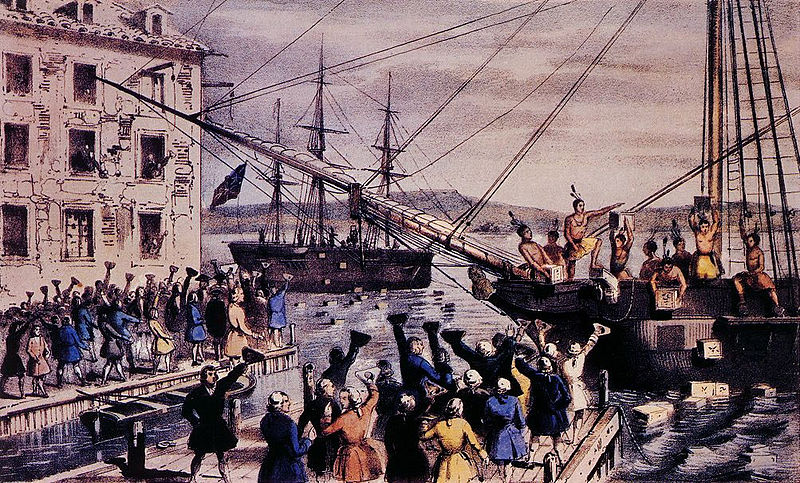
On this day in 1773, there’s a Boston Tea Party.
Puzzability begins a Christmas-themed series this week:
|
This Week’s Game — December 16-20
|
|||||
|
Do You Hear What I Hear?
|
|||||
|
Hark, the puzzling angels sing. For each day this week, we started with a well-known lyric from a Christmas carol. Then, for the day’s clue, we broke it down into a series of words that, when said in order, sounds like the original lyric. You’ll probably need to say the words out loud to get the answers.
|
|||||
|
Example:
|
|||||
|
Easy, shoe, veinier, cell, he, pink
|
|||||
|
Answer:
|
|||||
|
He sees you when you’re sleeping (from “Santa Claus Is Coming to Town”)
|
|||||
|
What to Submit:
|
|||||
|
Submit the lyric (as “He sees you when you’re sleeping” in the example) for your answer.
|
|||||
 |
|||||
|
Monday, December 16
|
|||||
|


Animation, Film
Sunday Animation: 108 years of Herman Miller in 108 seconds
by JOHN ADAMS •
Daily Bread
Daily Bread for 12.15.13
by JOHN ADAMS •
Good morning.
Sunday will be partly sunny with a high of fifteen. Northwest winds at 10 to 15 mph with lead to wind chill values of five to ten below.
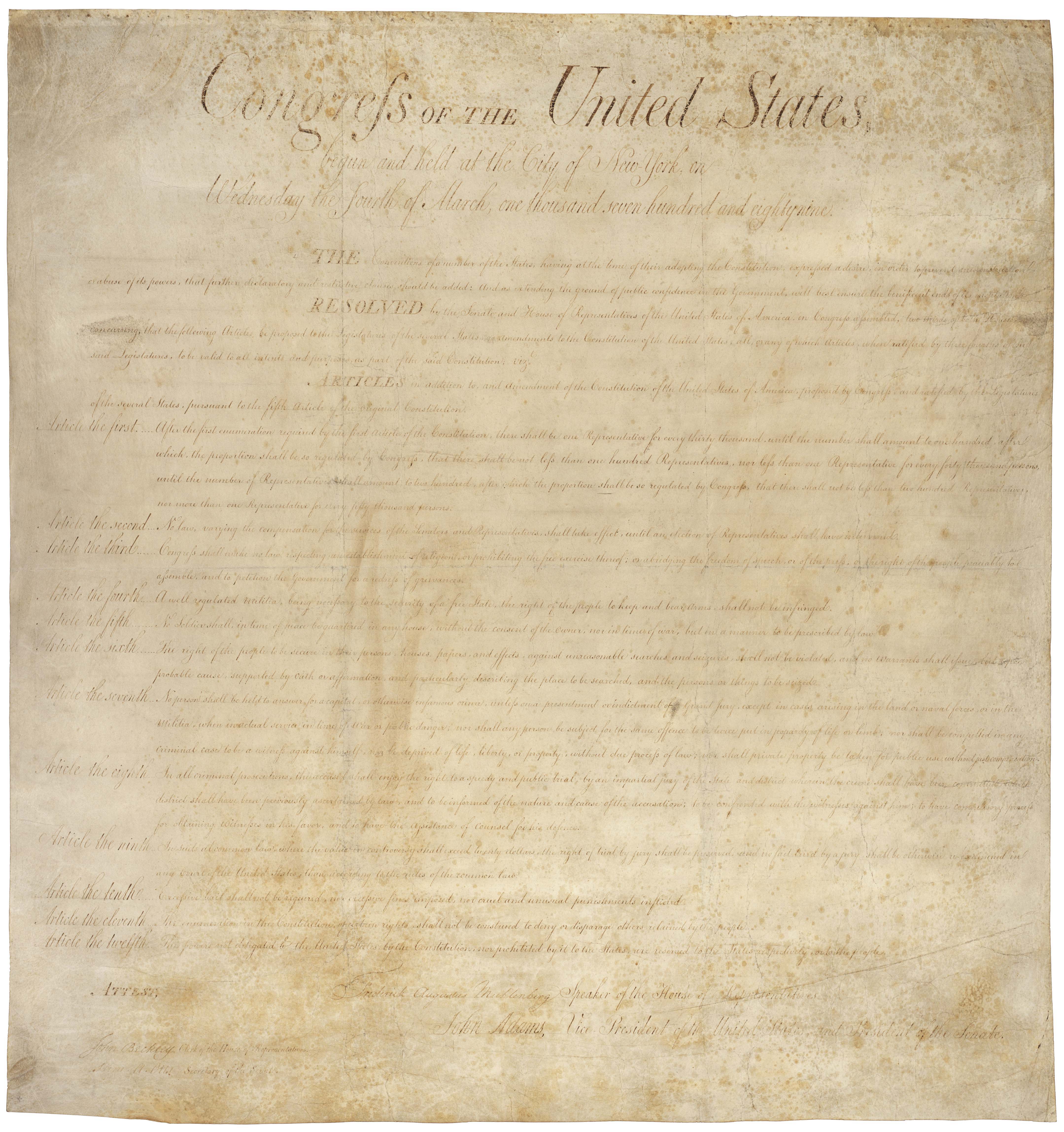
It’s Bill of Rights Day, as the Bill of Rights came into effect as the first ten amendments to the Constitution on 12.15.1791, following ratification by three-quarters of the states.
On 12.15.1847, Wisconsin’s Second Constitutional Convention convenes:
1847 – Wisconsin’s Second Constitutional Convention Convenes in Madison
On this date the first draft of the Wisconsin Constitution was rejected in 1846. As a result, Wisconsin representatives met again to draft a new constitution in 1847. New delegates were invited, and only five delegates attended both conventions. The second convention used the failed 1846 constitution as a springboard for their own, but left out controversial issues such as banking and property rights for women that the first constitution attempted to address. The second constitution included a proposal to let the people of Wisconsin vote on a referendum designed to approve black suffrage. [Source: Attainment of Statehood by Milo M. Quaife]
Daily Bread
Daily Bread for 12.14.13
by JOHN ADAMS •
Good morning.
Saturday brings a near-certainty of snow to Whitewater, with a high of twenty-seven. Accumulations may amount to two inches or so.
On this day in 1911, Norwegian Roald Amundsen becomes the first person to reach the South Pole:
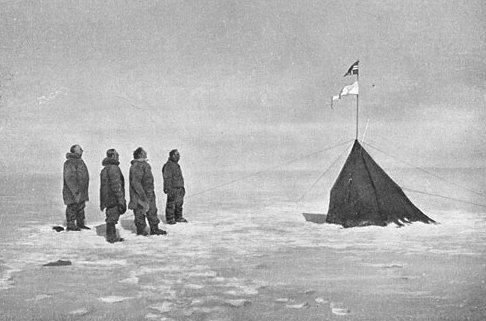
Amundsen, born in Borge, near Oslo, in 1872, was one of the great figures in polar exploration. In 1897, he was first mate on a Belgian expedition that was the first ever to winter in the Antarctic. In 1903, he guided the 47-ton sloop Gjöa through the Northwest Passage and around the Canadian coast, the first navigator to accomplish the treacherous journey. Amundsen planned to be the first man to the North Pole, and he was about to embark in 1909 when he learned that the American Robert Peary had achieved the feat.
Amundsen completed his preparations and in June 1910 sailed instead for Antarctica, where the English explorer Robert F. Scott was also headed with the aim of reaching the South Pole. In early 1911, Amundsen sailed his ship into Antarctica’s Bay of Whales and set up base camp 60 miles closer to the pole than Scott. In October, both explorers set off–Amundsen using sleigh dogs, and Scott employing Siberian motor sledges, Siberian ponies, and dogs. On December 14, 1911, Amundsen’s expedition won the race to the Pole and returned safely to base camp in late January.
On 12.14.1893, Frederick Jackson Turner delivers an historic – and in this case historical – address:
1893 – Frederick Jackson Turner Delivers Frontier Address
On this date Frederick Jackson Turner delivered the “Significance of the Frontier in American History” address at the forty-first annual meeting of the State Historical Society of Wisconsin. [Source: SHSW Proceedings, 1893, pg. 79-112]
Cats
Friday Catblogging: Cat High-Fives
by JOHN ADAMS •
Poll
Friday Poll: Reselling Stolen Meat?
by JOHN ADAMS •
In Canada’s Charlottetown, a man pled guilty to stealing high-priced chicken and steaks from a supermarket. The market, however, wasn’t about to take that loss:
Jeffery Arthur Feehan, 29, appeared before provincial court Chief Judge John Douglas in Charlottetown Tuesday, where he pleaded guilty to six charges, including stealing from two Superstore grocery stores in Charlottetown and failing to attend court.
Douglas sentenced him to a combined 94 days in jail on top of the 28 he already served while in custody awaiting sentencing.
During one incident, Feehan went to a Superstore where staff watched him put food in a basket, then take it into the bathroom where he stuck it down his pants.
The food included chicken breasts, bacon and steaks worth $71.32.
Crown attorney Valerie Moore said the store was able to recover the food for resale.
“That sounds strange. They must have been well wrapped in plastic given that they were down his pants,” she said.
So, should the market have resold the meat? Although it must have been wrapped in plastic, I’ll say no (if for no other reason than bad inevitable publicity about reselling it).
What do you think?
Daily Bread
Daily Bread for 12.13.13
by JOHN ADAMS •
Good morning.
We will have a slight chance of snow after 5 PM, but a likelihood after 9 PM, with a high of twenty-four for the day. Accumulations, if any, are forecast at around an inch.
On this day in 2000, Vice President Al Gore concedes defeat:
Vice President Al Gore reluctantly concedes defeat to Texas Governor George W. Bush in his bid for the presidency, following weeks of legal battles over the recounting of votes in Florida, on this day in 2000.
In a televised speech from his ceremonial office next to the White House, Gore said that while he was deeply disappointed and sharply disagreed with the Supreme Court verdict that ended his campaign, ”partisan rancor must now be put aside.”
“I accept the finality of the outcome, which will be ratified next Monday in the Electoral College” he said. “And tonight, for the sake of our unity as a people and the strength of our democracy, I offer my concession.”
Puzzability’s Bitter End series comes to an end today:
|
This Week’s Game — December 9-13
|
|||||
|
The Bitter End
|
|||||
|
It’s beginning to feel a lot like winter out there. For each day this week, we started with a word and added the sound “brrr” to the end to get a new word. The two-word answer phrase, described by each day’s clue, is the shorter word followed by the “brrr” word.
|
|||||
|
Example:
|
|||||
|
Saloon employee who cuts men’s hair
|
|||||
|
Answer:
|
|||||
|
Bar barber
|
|||||
|
What to Submit:
|
|||||
|
Submit the two-word phrase, with the “brrr” word second (as “Bar barber” in the example), for your answer.
|
|||||
|
|||||
|
Friday, December 13
|
|||||
|

Daily Bread
Daily Bread for 12.12.13
by JOHN ADAMS •
Good morning.
We’ll have a partly sunny Thursday with a high of seventeen. Southwest winds of ten to twenty miles per hour will produce windchill values well below zero.
People sometimes wonder what it would be like to fly. An eagle in Chamonix shares its bird’s-eye view:
On 12.12.1901, Guglielmo Marconi sends a radio transmission a long distance:
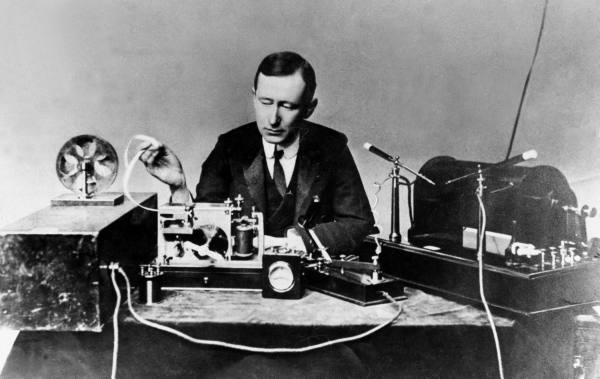
Italian physicist and radio pioneer Guglielmo Marconi succeeds in sending the first radio transmission across the Atlantic Ocean, disproving detractors who told him that the curvature of the earth would limit transmission to 200 miles or less. The message–simply the Morse-code signal for the letter “s”–traveled more than 2,000 miles from Poldhu in Cornwall, England, to Newfoundland, Canada.
Puzzability‘s series on cold weather has been surprisingly apt. Here’s Thursday’s puzzle:
|
This Week’s Game — December 9-13
|
|||||
|
The Bitter End
|
|||||
|
It’s beginning to feel a lot like winter out there. For each day this week, we started with a word and added the sound “brrr” to the end to get a new word. The two-word answer phrase, described by each day’s clue, is the shorter word followed by the “brrr” word.
|
|||||
|
Example:
|
|||||
|
Saloon employee who cuts men’s hair
|
|||||
|
Answer:
|
|||||
|
Bar barber
|
|||||
|
What to Submit:
|
|||||
|
Submit the two-word phrase, with the “brrr” word second (as “Bar barber” in the example), for your answer.
|
|||||
|
|||||
|
Thursday, December 12
|
|||||
|


City, Corporate Welfare, Local Government, Planning, Politics
Visualizing Bad Policy
by JOHN ADAMS •
One doesn’t experience the mistakes of bad policy or planning only for a moment.
Like a series of collisions, the harmful effects come one after another, each made more likely – and often worse – by those that came before.
What’s bad policy like?
One could, reasonably, think of it like this —
Anderson, Cartoons & Comics
Slack
by JOHN ADAMS •