
Yes. Good governance, and the instinct for it, transcend gender.
See, Amity Shlaes: Palin Mama Grizzly Shows Limit of Woman Wisdom.
I’ve written about poverty in Whitewater before, and the 2010 Census will offer fresh information on the state of Whitewater’s economy. It’s a subject that cheerleaders for the town probably wish would go away. An ordinary person would prefer economic arrangements that make poverty go away, but there you see the distinction between sensible & ordinary as against foolish & political.
I’ve emphasized three points (1) poverty is relatively higher in Whitewater than neighboring towns, (2) child poverty is terribly high here, and (3) all the grand public works projects we’ve undertaken haven’t brought those high figures down.
I emphasize our relatively greater poverty to show that as other towns do better, so we can, too. I emphasize child poverty both because it’s so damaging and because it puts lie to the contention that Whitewater’s economy looks worse because of non-working students in town. That’s not where Whitewater falls short — child per child, there’s greater economic hardship here than in other American towns, and excuse-making about this situation is unavailing.
Our grand public projects directed at the upper middle class are a waste of taxes and have not improved the conditions of those most in need. They’re merely monuments to bureaucrats’ pride and lines on officials’ resumes.
At the Wall Street Journal, there’s a Q&A about current poverty measurements, and how they’re changing. The changes in measurement are significant, but the extent of change from one measure to another can be tempered with a comparison of relative conditions between cities, using either measure.
Economist Bruce Meyer discusses the impending changes, and what he likes and doesn’t about them, in a story entitled, Q&A: Rethinking U.S. Poverty Measure.

It’s impossible to watch the Star Wars saga and not like Jedi Master Yoda. He’s one of the great science fiction characters of all time.
He’s not the only Jedi, however, and over at the Atlantic, Max Fisher asks of those guardians of the Old Republic: “Are Jedi Knights Libertarian or Socialist?”
Fisher notes that Canadian blogger P.M. Jaworski thinks that Jedi are libertarians, Jesse Kline thinks that they’re big government liberals, and Daniel Drezner thinks that they’re centrists. Here’s part of what Drezner has to say:
Are the Jedi big government advocates? That’s unclear. I think it would be more accurate to describe them as cartelistic — they refuse to permit a free market in learning the ways of the Force. After all, the Jedi Council’s initial inclination is not to train Anakin Skywalker despite his obvious talents, using some BS about fear as a cover.
Only when Qui-Gon threatens to go rogue do they relent. The Council does not inform the Senate that their ability to detect the force has been compromised.
They’re reluctant to expand their assigned tasks — they’re keepers of the peace, not soldiers. Just as clearly, their anti-competitive policies weakened their own productivity, given the fact that they were unable to detect a Sith Lord walking around right under their noses for over a decade.
I think Drezner’s right — not libertarians, and not socialists, either. I also think what he says about moderates would apply more nicely to so-called big government conservatives: they’re anti-market. The operate as a guild, and see the world that way. It’s a mostly closed order, no matter how cool it seems. (It does seem cool after all.)
One can see a version of this — although definitely not a cool version, in small-town government. A few people try to keep knowledge to themselves, for whatever reason (in town politics, these reasons are likely to be self-flattering and illegitimate).
As with other closed systems, the town grows unproductive over time, as uncompetitive systems always degenerate. Politicians’ husbanding of information and attempts to pick winners in the marketplace prove to be losing strategies when compared with system of free, private choices.
As for Yoda himself, however, I am quite certain of his views: deep down, he’s libertarian.
I’m just sure of it.
The very definition of incorrigible. He should be restricted only to walking, and then only along straight lines (although he might not be able to manage even that).
Good morning,
Whitewater’s forecast calls for a warm day, with a high of eighty-seven degrees, and a chance of scattered thunderstorms.
In Wisconsin history, the Wisconsin Historical Society recalls that on this day in 1894,
Forest Fire Destroys Phillips
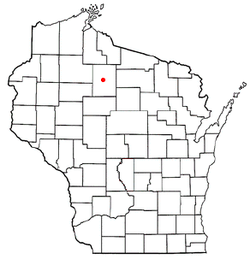
On the afternoon of this day, a forest fire swept over the Price Co. town of Phillips from the west, destroying nearly all the buildings and forcing 2,000 people to flee for their lives. When the sun came up the next morning, 13 people had been killed, the entire downtown was in ashes, and exhausted survivors were wandering through the ruins in a daze. The fire ultimately consumed more than 100,000 acres in Price County. Much of the town was rebuilt within a year.
Phillips is far north of Whitewater, in Price County:
What people saw is now officially confirmed. It was true before; confirmation is still welcome to answer objections from people who will ask, “But was it officially confirmed?”
See, Walworth County Today: Weather Service Confirms Thursday’s Tornado Near Whitewater .
There’s an odd story originally printed in the Idaho Mountain Express about a police dog named Dax that bit a schnauzer named Max.
(I have written before about a biting police dog from Edgerton, Wisconsin, but that case was about serious injuries the dog inflicted on two people, one of whom was a police officer.)
In Idaho, it was simply dog v. dog, but even then the dog was kept out of service pending retraining.
The battle over the right to drink natural, unpasteurized milk is a national one, as a story in the Los Angeles Times confirms.
If government can ban raw milk because of the supposed danger, why wouldn’t it ban the uncertain practice of potluck dinners at schools, churches, and workplaces? I wouldn’t support a ban on potlucks or raw milk; the question simply shows how arbitrary government seems.
(Seems, because only one of those two cases has Big Dairy clamoring for a ban on a competitive product.)
See, LA Times: Food Raid Raises Questions Over Existing Milk Laws…and the Safety of Potlucks
I don’t have a great knowledge of comic books, but I do know a bit, about some. I wish I knew more. We’re a creative country, and the art and stories of comic books have been part of our culture for generations. They’re so much a part of this culture, that successful comics can be wildly profitable, with large numbers of fans, and the chance for major films based on their characters. (Some of those geeks with large collections are now major forces in Hollywood.)
Comic-Con International went on this past weekend in San Diego. Over one-hundred thousand people attended during the three-day event.
Here’s a video to show what it was like:
Link: http://www.youtube.com/watch?v=ihWEXWzbnao.
Some of these attendees are out-of-the-ordinary, but this is one of the places a free, prosperous society leads: to individual creativity and fun that need not apologize for not fitting in. On Friday, one of the commenters to this website wrote something that reminded me of the words of the great English philosopher, Adam Ant:
We don’t follow fashion
That would be a joke
You know we’re gonna set them, set them
So ev’ryone can take note, take note
Some of the people at events like this will probably wind up setting fashions for others to take note. more >>
You just can’t keep a good economic system down. Despite three years of calumnies, three-quarters of Americans still support free markets.
See, Poll: Most Americans Pick Free Market Over Government-Run Economy.
Good morning,
Whitewater’s forecast calls for a sunny day, with a high of eighty-four degrees.
The Board of Directors of Whitewater’s Community Development Authority meets today, from 4:30 p.m. to 7 p.m. The agenda is available online.
The agenda’s a fine substitute for a crossword or other puzzle, but a deficient and embarrassing public agenda. Consider these items:
6. Discussion and Possible Action on Whitewater’s TIF District #4
a. Pro-forma
b. Project Plan
c. Timetable
What would that mean to a resident? He or she would have no idea what action was being considered. This is vague language that’s written as though it were code, not the public agenda for a public meeting of a public entity, conducting a meeting under Wisconsin law. One would know more about tax incremental district 4 if one were simply to say that the district is gasping for air, so many decisions already having been botched.
Read on still farther, and one finds this:
12. Adjourn to closed session at approximately 5:45PM to reconvene approximately 6:00PM per Wisconsin State Statutes 19.85 (1)(e). Deliberating or negotiating the purchasing of public properties, the
investing of public funds, or conducting other specified public business, whenever competitive or bargaining reasons require a closed session
a. Economic Development Loan 1421 W Main Street, Whitewater, WI
Closed sessions are a part of our law, but about what would this closed session be? One sees only that 1421 W Main Street is seeking an economic development loan.
This is surprising to me — in the history of the world, I know of no instance where a street address was able to ask for a loan. If this should be the first, one would think that Whitewater’s city manager, Kevin Brunner, would want to publicize the astonishing fact.
(Brunner, in addition to serving as city manager, also acts as head of the CDA. He is, I’d guess, compensated for both roles. This raises two points. First, there cannot be a truly independent CDA where a city manager runs both a city and a CDA. Second, current compensation must not be related to the performance of tax incremental district 4, because then Brunner would owe the city money.)
These are gentlemen who run public entities — legally obligated to the public — as though they were private clubs, speaking cagily, without true and normal candor, as though the public were a burden in the way of their vain dreams of ‘vision’ and ‘development.’
Where’s 1421 W Main Street, Whitewater, Wisconsin? It’s right here:
Good evening,
It’s a clear night tonight in Whitewater, with a full moon, and a low of fifty-eight degrees.
I spend a fair amount of time online, and I visit websites from left, center, and right. There’s nothing I enjoy more than a new find. Happily, I came across one recently, that I’d like to share. I had never before seen GritTV, but finding it was a real treat.
The website is not connected with the magazine called Grit; GritTV is a left-of-center website with public affairs programming. It’s also so cheesy that it makes the Grit newspaper look like the New York Times. (GritTV would do better to claim it was connected to the Grit newspaper, in the hope that the style of the latter — such as it is — might rub off on the former.)
Here’s a description of GritTV, from its website:
Launched on May 12, 2008, GRITtv reaches millions of viewers weekly on Free Speech TV on Dish network (9415) and DirecTV (340) on cable and public television stations nationwide, and anytime, anywhere online. Distributed in multiple platforms, GRITtv is a daily, 30-minute discussion for people who want to make a difference.
Incorporating viewer-submitted content, grassroots activism, and a positive, progressive message that aims to go beyond the one-way format of traditional media, GRITtv talks to the people commercial media ignore. Independent filmmakers and journalists, activists, and the smartest thinkers and doers of our time are part of the conversation, and you can be too.
I’m sure some of that’s true, but watching one of their programs is like watching a parody from Second City Television, except not as clever, well-produced, or intentionally funny.
Here’s a segment with two activists, talking about environmental policy. Consider, first, how GritTV describes the episode:
Our biological clock is ticking, and it’s ticking fast. Global temperature averages have risen by ten degrees, eliminating many species and drying up necessary water resources. When natural ecology changes, human ecology changes; while we might not have an apocalyptic Day After Tomorrow scenario, it may be a slow and more painful series of wars, refugees, and failed states brought on by slowing food production.
Heather Rogers, author of Green Gone Wrong and Gwynne Dyer, author of Climate Wars joined us in the studio to discuss the risks and environmental policy needs to postpone the inevitable, bleak consequences of overconsumption. While plenty of people are making personal choices to ride their bikes or be vegetarians, these will barely help without structural policy changes to curb the behavior of the unconverted.
I’m not sure what’s funnier — misuse of the expression ‘biological clock,’ the description of those who disagree as ‘unconverted,’ or set that’s as cheesy as anything I can recall.
See for yourself, and enjoy seventeen minutes of utter nonsense. You’ve probably not seen anything like this since you last hurried past a mumbling vagrant sitting on a bench near a local flop house.
Link: http://www.grittv.org/2010/07/10/heather-rogers-gwynne-dyer-environment-climate-change/. more >>
Contador wins, Schleck comes within 39 seconds, and Armstrong retires, again. A summary of Stage 20, and the Tour, is available at Cyclingnews.com and Bicycling.com. See, July 25, Stage 20: Longjumeau – Paris 102.5km (Tres victorias de Francia para Contador!) and Contador Wins 2010 Tour de France.
Versus offered the Tour in HD, and like so many other viewers, it was the first time I saw it that way. These were twenty interesting stages, televised in a compelling, beautiful format.
Contador’s won the TdF three times, and may have other victories yet ahead.
Cycling, too, has other events ahead, in competition and (perhaps) in the courtroom. For American fans of Lance Armstrong, as for the fans who once stood by Floyd Landis, these are likely to be frustrating months. Armstrong has had, to be sure, a high-flying and controversial career. See, Armstrong Could Never Leave Well Enough Alone.
Allegations have been leveled against Armstrong many times, but the standard of review will be more exacting than previous claims against him. I’ve read David Walsh’s book, From Lance to Landis: Inside the American Doping Controversy at the Tour de France, and it offers suspicions, but nothing like the sort of case that federal investigation would have to craft. By comparison with a federal investigation, Walsh’s book is just a piker.
(I’d guess that it will a hard to make a case against Armstrong, but that Jeff Novitzky of the U.S. Food and Drug Administration will do all he can, and a judge will likely have to remind him of those things he can’t).
I’m opposed to doping in sports, because I think it excessively unnatural, but also because athletes agree not to dope, and so to do so is dishonest. I’d dislike a sport that allowed doping, but at least it would be a candid competition — athletes would simply admit what they took.
Cycling doesn’t, so athletes should refrain. To do otherwise is to cheat and lie.
By the way, although cycling has long been a European sport, I’m not the sort of fan who favors European athletes because it seem more ‘sophisticated’ or ‘genuine.’ I love America, and I know that we’re capable of producing great athletes who triumph without illegal drugs. (I’d also like to note that many of the worst doping scandals have been European ones.)
America is so capable, that we have a great cyclist who won the Tour de France three times.

He won honestly; we can win that way again.