FREE WHITEWATER

Daily Bread for Whitewater, Wisconsin: 4-9-10

Good morning,

Today’s forecast calls for a sunny day, with a high of fifty-eight degrees.

At Lakeview School, it’s Caps for a Cure Day today.

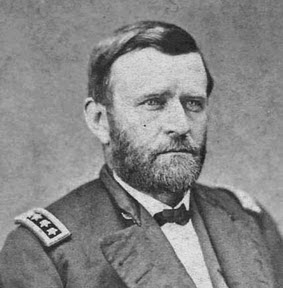
On this day in 1965, General Lee surrendered to General Grant at Appomattox Court House in Virginia. The New York Times website has the text of the correspondence between the two generals.

Over at Walworth County Today, there’s a story about Whitewater’s Indian Mounds, entitled, “Park name could change to honor history.” The story describes the site in Whitewater, and the efforts of a committee dedicated to its preservation:

In the 1920s, archaeologist Charles E. Brown identified 12 ancient American Indian burial mounds on the site; he also noted that there could be more mounds in a nearby farm field. In 1990, UW-Whitewater professor Frank Steckel found evidence of two burial mounds—lost to decades of agriculture—in the field.

The site became a city park in the mid-1970s and was added to the National Register of Historic Places in 1991.

The site contains conical and oblong mounds as well as effigy mounds shaped like birds, turtles and mink, said Mariann Scott, a member of the committee.

Conical mounds are difficult to date because Native Americans built them for hundreds of years, but the effigy mounds nearby date the group to the Late Woodland stage, from 700 to 1300 A.D., according to the Wisconsin Historical Society.

It’s a remarkable site, in the very midst of contemporary Whitewater, and well worth visiting.

Tonight on Fox Business Channel: Just What is a Libertarian? 7 PM Central

There’s a panel discussion tonight on John Stossel’s program on the topic, “Just what is a libertarian?” Prominent libertarians including P.J. O’Rourke and David Boaz of Cato will offer answers to that question.

My own quick answer would rely on the Cato Institute’s motto: advocacy of individual liberty, limited government, free markets and peace.

Still, tune in and see what the panelists have to say. Some of those who are critical of libertarians don’t really know what libertarians believe, and in any event, some critics are the same people who have wrecked our economy while regulating and meddling in others’ lives whenever possible.

For more, see Stossel.

Daily Bread for Whitewater, Wisconsin: 4-8-10

Good morning,

Today’s forecast for Whitewater calls for a chance of snow and drizzling rain, with a high of forty-one degrees.

There’s a Common Council meeting in Whitewater scheduled for tonight at 6:30 p.m. The agenda is available online.

I wrote recently about Wisconsin’s dairy industry, and there’s a story at Wired about a memorable advance in that industry: glass bottles. Randy Alfred writes about the use of glass bottles in a story entitled, “April 8, 1879: The Milkman Cometh … With Glass Bottles.”

1879: Milk is sold in glass bottles for the first time in the United States. It’s a clear improvement in hygiene and convenience.

Until that time, people bought milk as a bulk item, with the seller dispensing milk out of a keg or bucket into whatever jugs, pails or other containers the customers brought. That practice left a lot to be desired on the cleanliness front. Some dairies tried offering milk in fruit jars, perhaps because customers had started bringing the resealable containers to them to be filled.

Echo Farms Dairy introduced the first purpose-made milk bottles in New York City, delivering the milk from Litchfield, Connecticut. Other dealers initially feared the expense of breakage, and some customers didn’t like the drugstore look of the containers.

But the new method of delivery eventually caught on. By the first decade of the 20th century, some cities were legally requiring that milk be delivered in glass bottles.

Early bottles had many designs, including models with stoppers on wire loops, like the bottles still used today by some European and specialty breweries. Many had the name of the dairy embossed on the glass.

Because milk has a short shelf life, consumers used the contents quickly and returned them when they went to the market or when fresh milk was delivered to their doors by milkmen. The typical milk bottle made 22.5 round trips in the early 1900s before getting broken, lost or diverted by consumers to other purposes.

Looks delicious, doesn’t it?

Containers are most commonly plastic now, but I’m definitely one who thinks that milk tastes better in glass bottles.

On Whitewater’s Spring Election

Wisconsin’s spring election was yesterday, and there were few surprises in the races that involved the City of Whitewater.

Common Council. In Whitewater’s municipal election, both of the unopposed incumbents on the ballot were returned to office. The total votes for the at-large seat (Stewart) were in between the numbers for the winning and defeated candidates in last year’s contested at-large race; that’s probably about what one would expect for an uncontested seat. The total votes for the incumbent on the ballot for a district seat (Binnie) were higher than the typical number sufficient to win a district.

We had one council race with no one on the ballot. The incumbent (Taylor), running as a write-in, defeated two other write-in candidates.

County Boards. Two incumbents seeking re-election to their respective county boards (Grant, Torres) were returned to office, and one incumbent seeing a second term as a write-in (Bromley) was defeated.

Overall, though, a good day to be an incumbent, as not one of the races that I’ve mentioned had two candidates on the ballot.

Circuit Court. Walworth County had a contested race for circuit judge, the field of four candidates having been narrowed to two for the spring election. I wrote about the four candidates before the primary. See, The Walworth County Judicial Candidates’ Positions, and Understanding. David Reddy and Scott Letteney were the two primary candidates who showed, I thought, the best understanding of a judge’s role, and Reddy went on to win the general election last night, over David Danz.

More than a Referendum. Nearby, in the Town of Whitewater, there was a referendum on beer sales in the town. The referendum was narrowly defeated. There’s a bigger story out of the town than the defeat of the referendum. Following an earlier challenge from John Swaffer, this year Charles Hatchett challenged provisions of Wisconsin law requiring him to register and account for postcards sent in opposition to the referendum. Swaffer’s challenge was successful on appeal; Hatchett successfully won an injunction against enforcement of the Wisconsin campaign restrictions. For more on the cases, see Town of Whitewater Resident Challenges Wisconsin Campaign Finance Laws, Wins Federal Injunction.

Quick notes: (1) I live in the City of Whitewater, not the nearby Town of Whitewater, (2) I’m not opposed to beer sales, generally, but (3) I am convinced that Swaffer and Hatchett have done something good for all Wisconsin residents by challenging a law that makes dissent more difficult.

Years ago, in the City of Whitewater, I recall a school board member was cited in violation, I think, of the same law that Swaffer and Hatchett challenged. I wasn’t writing at the time, but I remember thinking, “They cited someone for a few flyers? That’s official use of resources? What an amazing, foolish, arrogant defense of the status quo…” I’m not sure how a legal challenge would have fared at that time, but Swaffer’s challenge came along at the right time.

It doesn’t take all that much to get referendum question on a ballot, but it’s often hard to challenge it through flyers or brochures if insiders are backing the referendum effort. (I’m not speaking specifically about the latest referendum, but generally.)

When someone wants to protest, to explain a position in opposition to a ballot question, suddenly he risks being asked to defend his very right to speak. It stops being an election question, and starts to become a social effort to pressure a dissenter into silence.

An initiative sometimes takes on an Andy Hardy quality, with a “let’s put on a show” momentum, and the insistence that everyone get on board, get with it, etc. No, and no again: citizens should not be constrained to speak out against an election question by campaign finance restrictions that operate to the benefit of a referendum’s proponents.

The contested circuit court race was an important one. The most important event of this election, though, was likely the acknowledged end of Wisconsin’s unconstitutional enforcement of some particular campaign finance restrictions on political speech.

Daily Bread for Whitewater, Wisconsin: 4-7-10

Good morning,

The forecast for Whitewater calls for another day of thunderstorms, with a high temperature of fifty degrees.

I’ll post comments on the spring elections later today.

Today is an famous anniversary in American cinema, as Wired recalls — April 7, 1933: King Kong Opens Wide:

1933: Depression-era moviegoers hungry for escape line up outside theaters for the first nationwide screenings of King Kong.

They emerged stunned by groundbreaking scenes crafted by visual effects wizard Willis O’Brien. The stop-motion pioneer transformed an 18-inch gorilla doll into a hulking monster that appears to swat airplanes atop the Empire State Building (brand new at the time) while cupping damsel in distress Ann Darrow (Fay Wray) in his paw.

King Kong opened on the day Prohibition was eased, and it enchanted an economy-battered audience with its fantastical tale: A giant gorilla roaming free on Skull Island in the Indian Ocean is captured by exploitation-minded filmmaker Carl Denham. He displays King Kong to New York as the Eighth Wonder of the World….

The King Kong character was created by American adventurer Merian C. Cooper. He co-wrote, co-directed and produced the movie after getting kicked out of the U.S. Naval Academy, chasing Pancho Villa in Mexico, and serving time in a Soviet prisoner-of-war camp following a stint in the Polish Air Force.

Cooper got the idea to make King Kong, he said, after waking up from a dream about a giant gibbon on the loose in New York City.

Ever the daredevil, Cooper and King Kong co-director Ernest B. Schoedsack piloted the plane that fires the final rounds into the mammoth primate.

I think that the original version, and the Peter Jackson remake, are among the best films that I have ever seen.

Here’s the trailer from the 1933 original — Enjoy —

Link: http://www.youtube.com/watch?v=yWb2r6QxYCE more >>

NBA to Start Charging Teams for Free Throws

From the Onion, America’s Finest News Source, comes word of an NBA rules change to increase league revenue:

NEW YORK—In an effort to increase the league’s revenue and offset the expensive cost of foul shots, commissioner David Stern announced Monday that the NBA would begin charging teams a $50 fee per free throw attempt. “We just can’t afford to keep them free anymore,” said Stern, adding that not charging for foul shots was causing the NBA to lose $25 million a year. “We believe this is a fair price. Now, if teams don’t want to pay the fee they can just take the ball out-of-bounds.” According to Stern, the NBA will now offer free throw insurance throughout the playoffs, allowing players to reshoot missed attempts for an additional $150.

Wisconsin Dairies and Immigrant Labor

Wisconsin’s automobile license plates proudly proclaim our state as America’s Dairyland. We are — ask people from all over the world about Wisconsin, and they’ll correctly tell you that we’re a powerhouse of dairy production. Rural Whitewater, Wisconsin has plenty of cows nearby (if not downtown, as some out-of-state readers sometimes ask).

Some nearby dairy farms have hundreds of cows, and those dairy cows don’t milk themselves. Manuel Quinones, of the Wisconsin Center for Investigative Journalism, has a published story about the value of immigrant labor to Wisconsin’s dairy farms, entitled, “Some state farmers concerned they’ll lose immigrant labor.” (The full story is available online.)

Tom and June McClellan run a Delavan-area dairy farm and say they’ve used migrant workers for the last 10 years or so to help with milking their herd of 475 cows. The workers have paperwork demonstrating they are in this country legally, she noted.

June McClellan said she and her husband have tried to hire local workers without much luck, and she thinks the long hours and type of labor are the reason.

“We’ve had much more success this way,” she said. “These workers are eager to get in 50-plus hours. They’re hungrier people, more appreciative of work. They’re also resourceful and knowledgeable about everything from concrete to cows.”

Lots of people talk about wanting to support dairy farmers; those who actually own dairy farms know that their businesses depend on immigrant labor.

I am reminded of something I once heard Senate majority leader George Mitchell say. Exasperated with his fellow Democrats, who were talking & quibbling, but not doing anything else, he asked, “Do you want to make a statement, or do you want to make a law?” Mitchell knew that practical results mattered.

In the same way, politicians who want to support dairy farming in Wisconsin can talk all they want about a dozen possibilities, but they’d do better to listen to honest-to-goodness, genuine, Wisconsin dairy owners to learn what’s important to preserve farms.

Those who believe that they can rise in popular acclaim at the expense of immigrant laborers are mistaken. There’s no doubt that politicians can pressure immigrant families. There’s even less doubt where that leads the community — acrimony and poverty, torn families and ruined businesses.

Labor restrictions don’t milk cows; laborers do. A free and efficient market is a free and efficient market in capital and labor. Our best chance to compete against dairy producers in other states, like California, is to reduce impediments to low-cost dairy farming.

That’s how we’ll remain, a generation from now, America’s Dairyland.

On the Medical Marijuana Debate at the University of Wisconsin-Whitewater

Last Wednesday, on the University of Wisconsin-Whitewater campus, there was a debate on a medical marijuana bill before the Wisconsin legislature. See, Assembly Bill 554. (There’s also a Senate companion bill.) The bill would make medical use of marijuana legal under specified and limited circumstances.

I attended the debate, along with – by my imperfect count — about ninety people. Held on the upper floor of the University Center, the room was packed, and a few extra chairs had to be brought in to accommodate the audience. The event was publicized beforehand (Whitewater forum to debate pros and cons of medical marijuana bill), and the large crowd did not surprise me.

The two debaters, Gary Storck of NORML (National Organization for the Reformation of Marijuana Law) spoke in favor of the bill, and Dr. David Nordstrom of the university, speaking in opposition. There were three aspects to the debate that stood out for me.

(Quick disclaimer: I favor Assembly Bill 554, for those who can establish that they have chronic and debilitating conditions. Those upest about current laws and regulations should seek legal change, as those backing AB 554 are doing. I would not encourage anyone to violate existing drug laws. Even following legal reform, patients would also be discussing these matters with their doctors.)

Rhetoric. First, the direct debate between Storck and Nordstrom was civil, and almost understated. As one could guess, Storck has probably given a similar presentation countless times, and his remarks were relaxed, and seemed familiar to him. Neither man was as young as the average person in attendance; a generation separated speakers and audience. They were the same presentations, though — Storck sought to appeal to a person’s natural desire to alleviate suffering, and much of his remarks depended on an appeal to the circumstances of those in chronic pain. Nordstrom acknowledged the personal circumstances of those with chronic pain, but he had no anecdote in reply, no story to offer in response to Storck’s emotional appeal (more about that appeal in a moment).

I posted to Twitter (‘tweeted’) a few times during the debate; my remarks were about atmosphere.

Points. From my notes, capturing the arguments of the debate — what one might know as flowing the debate, it was a much closer affair than the rhetorical contest between the debaters. Nordtstrom raised legitimate concerns about marijuana use — concerns about individual dosing — that I though Storck answered too glibly. (There’s a better answer to concerns about dosing than simply contending that people will stop when they feel better; licensed opinion should instruct on dosages, for medical marijuana as well as any other substance prescribed.

As I look over my notes, days after the debate, I can see how Nordstrom set out a better case than one might have felt while watching the debate.

There’s not a point that Storck might not have contested more soundly, but many arguments on both sides lacked a compelling and engaging reply. There was not, to use another debater’s term, a lot of clash between the debaters, over specific points to be directly refuted. (Clash like that can be subtle, too; it does not imply harshness.) There were counter-arguments, to be sure, but not as much grappling in reply to specific points as might have been the case.

The Context of It All. I know that the debaters wanted to confine themselves to the bills before our legislature, but that’s a futile effort. There’s a broader context to all this, about state and federal regulations on medicines, and about drug policy for illegal narcotics.

The college-aged students in the room — perhaps ninety percent of them — seem to favor AB 554. A show of hands after the debate suggested about this level of support, as best as I could quickly count it. It’s not just students, though, who have come to feel this way.

America’s not a radical place, and I’m convinced many Americans are right-of-center, with a libertarian streak. There are millions upon millions in America like this, and they’re skeptical of government claims, official pronouncements, and declarations that all is well-in-hand. All sensible Americans, surely, reject drug dependency and addiction, generally. It’s a fantasy to think Americans are tolerant of drug use, or that we’re a reckless people who’d risk health over drug use. We’re a people that admires productivity, energy, and vitality — we will never admire wasted misfits. (Note well: the legalization of medical marijuana isn’t about use for «em»healthy«/em» people, but for those few in chronic pain and suffering from debilitating, diagnosed illnesses. There’s nothing recreational about their need.)

If there are broader challenges to drug policy — and there are — the most potent of these are not coming from so-called radicals, or from the left. They’re coming from right-of-center Americans who have begun to doubt that official pronouncements on drug enforcement are believable. Some officials have lived too long in an echo chamber, and have become deaf to the growing skepticism of their claims outside of a small circle of back-patters. It’s not that America’s too far left; it’s that she has a large number of practical, right-of-center voters who’ve come to doubt proud declarations of victory. It was, after all, the conservative National Review, and William F. Buckley, who came out against current drug enforcement efforts in 1996. They didn’t favor drug use; they opposed an ineffective, expensive effort that wasn’t reducing dependency.

This must come as a shock to some, accustomed to support for longstanding drug policy. It must be doubly shocking when declines in support come in constituencies officials assumed would always be supportive. Always has run up against Americans’ practical tendencies and expectations of genuine reductions in dependency.

Storck, of NORML, surely sees this, too. Many of his arguments were libertarian-oriented, about individual, and not group, rights. (I’m not suggesting his arguments were a pose; I’ll assume that he presented his beliefs as they truly are.) Storck’s anecdotes weren’t about how groups (e.g., twenty-somethings) should have access to marijuana, but about how individuals, described specifically, who are in pain, should have an individual right to medical marijuana under Wisconsin law. I wish there’d been greater back-and-forth on these points, but the debate was a good introduction to the narrower issues in bills like AB 554.

This view found a receptive audience in the room last week. It also finds an increasingly receptive audience in cities and towns across America. The issue’s not likely to go away.

Whitewater-Area League of Women Voters — April 2010 Newsletter

The Whitewater-Area League of Women Voters’ April 2010 Newsletter is now available, and the latest issue includes a calendar of upcoming LWV events. The latest copy of the LWV newsletter is available as a link on my blogroll, and is embedded below, with coding through Google.

Here is a sampling of upcoming events mentioned in the April newsletter:

Calendar of Events

Date: April 10th (Saturday)
Event: LWV Board Meeting
Where: Public Library, White Memorial Room
10AM

Date: April 15th (Thursday)
Event: LWV Public Program Meeting
Where: City Hall Council Chambers 7PM

Date: May 22nd (Saturday)
Event: LWV Annual Meeting
Where: Fairhaven, Fellowship Hall 10AM

Date: June 18-19th (Friday/Saturday)
Event: LWV WI Annual Meeting
Where: La Crosse, WI

Fairhaven Lecture Series

All lectures are open to the public at no charge on Mondays at 3 p.m. at the Fellowship Hall, located at the Fairhaven, 435 West Starin Road, Whitewater, WI 53190. Sponsored by the UW-Whitewater Office of Continuing Ed.

April 12th – Works on Paper: Whitewater to Oaxaca, Mexico—A Cultural Narrative. Art Department Faculty Group Share the Story of Their Cultural Exchange with Exhibition Groupo 53.

Historical Society of Walworth and Big Foot Prairie Dinner Meeting, April 22

Please see a press release from the Historical Society of Walworth and Big Foot Prairie —

Jerry Apps, award-winning author, will present a program titled “One-Room Country Schools – History and Recollections From Wisconsin” at the dinner meeting of the Historical Society of Walworth and Big Foot Prairie and the Delavan Historical Society on Thursday, April 22.

The meeting is at The Village Supper Club, 1725 South Shore Dr., Delavan Township. The event starts at 6 p.m. for socializing, followed by dinner at 6:30.

Apps, professor emeritus at the University of Wisconsin-Madison, has written more than 25 books dealing mainly with rural history and country life. He also is former publication editor for UW-Extension, an acquisitions editor for McGraw-Hill Book Company and editor of a national professional journal.

He was born and raised on a Wisconsin farm and graduated from a one-room country school in Waushara County, Wis. His early work experience was as a county Extension agent for Green Lake and Brown counties, followed by a publications editor for the state 4-H office. Continuing with his education, he received a Ph.D. in education and rural sociology at the UW-Madison and went on to chair the Department of Continuing and Vocational Education in the 1970s.

Apps’ works include Barns of Wisconsin, Ringlingville USA, One-Room Country Schools, Teaching from the Heart, Every Farm Tells a Story and more recently Old Farm: A History. The last one has won numerous awards.

In addition to writing books, Apps has had more than 800 articles published, appeared on PBS, The History Channel and National Public Radio and has spoken several times in Walworth County.

The meal of beef and baked chicken will be served family style and complemented by a salad, relishes, mashed potatoes, fresh bread, beverage (coffee, tea, or milk) and dessert. The cost is $20 per person.

The public is invited to the meeting. To make a reservation, send a check (made out to Historical Society of Walworth and Big Foot Prairie) to the society at P.O. Box 336, Walworth, WI 53184. Reservations must be received by April 14.

For information, call society president Nancy Lehman at 262-275-2426.

Daily Bread for Whitewater, Wisconsin: 4-6-10

Good morning, Whitewater

Today’s forecast calls for a day of thunderstorms, with a high temperature of sixty-four.

It’s election day across Wisconsin. Whitewater will have city council and judicial races on the ballot.

The Indian Mounds Park Committee meets this afternoon, at 5 p.m. The agenda for the meeting is available online.

At Lakeview School tonight, there will be a meeting of the PTA at 6:30 p.m.

The Wisconsin Historical Society recalls an event in Wisconsin history from 1903, that sounds like a more recent one:

1903 – Legislature Considers Banning Sale of Cigarettes

On this date the Wisconsin Legislature considered a bill to ban sale or manufacture of cigarettes in the state. [Source: Janesville Gazette]

Other states considered and passed cigarette bans. Utah, for example, enacted a ban on cigarettes in 1921, and it remained on the books until it was repealed 1923.

Historical Society of Walworth and Big Foot Prairie

Dinner meeting of the Historical Society of Walworth and Big Foot Prairie and Delavan Historical Society, Thursday, April 22, 6 p.m. at The Village Supper Club, 1725 South Shore Dr., Delavan Township. Program “One-Room Country Schools – History and Recollections From Wisconsin” by award-winning Wisconsin writer Jerry Apps. $20 per person. For reservations and information, call Nancy Lehman at 262-275-2426.

Daily Bread for Whitewater, Wisconsin: 4-5-10

Good morning,

Whitewater’s forecast calls for an increasingly cloudy day, with a high of sixty-nine degrees.

The City of Whitewater will have a Parks & Recreation Board meeting today at 5 p.m. The Irvin Young Library will begin a book sale today, running through this week.

The Wisconsin Historical Society recalls that on this day in 1860,

Wisconsin Congressman Challenged to Duel

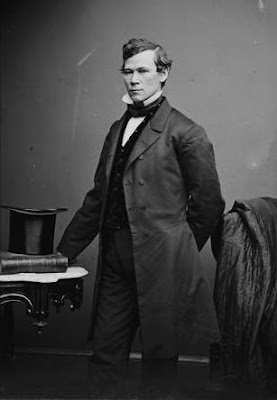
On this date, with the threat of civil war hanging in the air, John F. Potter, a Wisconsin representative in Congress, was challenged to a duel by Virginia representative Roger Pryor. Potter, a Northern Republican, had become a target of Southerners during heated debates over slavery. After one exchange, Pryor challenged Potter to a duel and Potter, as the one challenged, specified that bowie knives be used at a distance of four feet. Pryor refused and Potter became famous in the anti-slavery movement. Two years later, when Republicans convened in Chicago, Potter was given a seven foot blade as a tribute; the knife hung with pride during all the sessions of the convention. Before his death, Potter remembered the duel and proclaimed, “I felt it was a national matter – not any private quarrel – and I was willing to make sacrifices.” [Source: Badger Saints and Sinners, by Fred L. Holmes]


John Fox Potter