FREE WHITEWATER

Daily Bread for 10.5.16

Good morning, Whitewater.

Midweek in town will be partly cloudy, with a one-third chance of thunderstorms, and a high of seventy-four. Sunrise is 6:58 AM and sunset is 6:27 PM, for 11h 29m 20s of daytime. The moon is a waxing crescent with 16.9% of its visible disk illuminated.

On this day in 1813, Harrison defeats Tecumseh and the British:

During the War of 1812, a combined British and Indian force is defeated by General William Harrison’s American army at the Battle of the Thames near Ontario, Canada. The leader of the Indian forces was Tecumseh, the Shawnee chief who organized intertribal resistance to the encroachment of white settlers on Indian lands. He was killed in the fighting.

Tecumseh was born in an Indian village in present-day Ohio and early on witnessed the devastation wrought on tribal lands by white settlers. He fought against U.S. forces in the American Revolution and later raided white settlements, often in conjunction with other tribes. He became a great orator and a leader of intertribal councils. He traveled widely, attempting to organize a united Indian front against the United States. When the War of 1812 erupted, he joined the British, and with a large Indian force he marched on U.S.-held Fort Detroit with British General Isaac Brock. In August 1812, the fort surrendered without a fight when it saw the British and Indian show of force.

Tecumseh then traveled south to rally other tribes to his cause and in 1813 joined British General Henry Procter in his invasion of Ohio. The British-Indian force besieged Fort Meigs, and Tecumseh intercepted and destroyed a Kentucky brigade sent to relieve the fort. After the U.S. victory at the Battle of Lake Erie in September 1813, Procter and Tecumseh were forced to retreat to Canada. Pursued by an American force led by the future president William Harrison, the British-Indian force was defeated at the Battle of the Thames River on October 5.

The battle gave control of the western theater to the United States in the War of 1812. Tecumseh’s death marked the end of Indian resistance east of the Mississippi River, and soon after most of the depleted tribes were forced west.

On this day in 1846, Wisconsin’s first constitutional convention meets:

On this date Wisconsin’s first state Constitutional Convention met in Madison. The Convention sat until December 16,1846. The Convention was attended by 103 Democrats and 18 Whigs. The proposed constitution failed when voters refused to accept several controversial issues: an anti-banking article, a homestead exemption (which gave $1000 exemption to any debtor), providing women with property rights, and black suffrage. The following convention, the Second Constitutional Convention of Wisconsin in 1847-48, produced and passed a constitution that Wisconsin still very much follows today. [Source: The Convention of 1846 edited Milo M. Quaife]

JigZone‘s Wednesday puzzle is of jasmine:

Daily Bread for 10.4.16

Good morning, Whitewater.

Tuesday in town will be partly cloudy with a high of seventy-four. Sunrise is 6:57 AM and sunset 6:29 PM, for 11h 32m 12s of daytime. The moon is a waxing crescent with 10.4% of its visible disk illuminated.

Common Council meets tonight at 6:30 PM.

On this day in 1957, the Soviets launch Sputnik 1 into orbit:

Sputnik 1 … “Satellite-1”, or ??-1 [“PS-1″… “Elementary Satellite 1”])[3] was the first artificial Earth satellite. The Soviet Union launched it into an elliptical low Earth orbit on 4 October 1957. It was a 58 cm (23 in) diameter polished metal sphere, with four external radio antennae to broadcast radio pulses. It was visible all around the Earth and its radio pulses were detectable. This surprise success precipitated the American Sputnik crisis and triggered the Space Race, a part of the larger Cold War. The launch ushered in new political, military, technological, and scientific developments.[4][5]

Sputnik itself provided scientists with valuable information, even though it wasn’t equipped with sensors, by tracking and studying the satellite from Earth. The density of the upper atmosphere could be deduced from its drag on the orbit, and the propagation of its radio signals gave information about the ionosphere.

Sputnik 1 was launched during the International Geophysical Year from Site No.1/5, at the 5th Tyuratam range, in Kazakh SSR (now known as the Baikonur Cosmodrome). The satellite travelled at about 29,000 kilometres per hour (18,000 mph; 8,100 m/s), taking 96.2 minutes to complete each orbit. It transmitted on 20.005 and 40.002 MHz,[6] which were monitored by amateur radio operators throughout the world.[7] The signals continued for 21 days until the transmitter batteries ran out on 26 October 1957.[8] Sputnik 1 burned up on 4 January 1958, as it fell from orbit upon reentering Earth’s atmosphere, after travelling about 70 million km (43.5 million miles) and spending three months in orbit.[9]

JigZone‘s puzzle for Tuesday is of a chain and sprocket:

Daily Bread for 10.3.16

Good morning, Whitewater.

Morning fog gives way to partly cloudy skies and a high of seventy-one in town today. Sunrise is 6:55 AM and sunset 6:30 PM, for 11h 35m 04s of daytime. The moon is a waxing crescent with 5.3% of its visible disk illuminated.

Whitewater’s Lock Box Committee meets tonight at 6 PM.

On this day in 1990, East Germany becomes part of the Federal Republic of Germany, formally establishing the unification of the two states:

The German reunification (German: Deutsche Wiedervereinigung) was the process in 1990 in which the German Democratic Republic (GDR/East Germany) joined the Federal Republic of Germany (FRG/West Germany) to form the reunited nation of Germany, and when Berlin reunited into a single city, as provided by its then Grundgesetz constitution Article 23. The end of the unification process is officially referred to as German unity (German: Deutsche Einheit), celebrated on 3 October (German Unity Day) (German: Tag der deutschen Einheit).[1] Following German reunification, Berlin was once again designated as the capital of united Germany.

The East German regime started to falter in May 1989, when the removal of Hungary’s border fence with Austria opened a hole in the Iron Curtain. It caused an exodus of thousands of East Germans fleeing to West Germany and Austria via Hungary. The Peaceful Revolution, a series of protests by East Germans, led to the GDR’s first free elections on 18 March 1990, and to the negotiations between the GDR and FRG that culminated in a Unification Treaty.[1] Other negotiations between the GDR and FRG and the four occupying powers produced the so-called “Two Plus Four Treaty” (Treaty on the Final Settlement with Respect to Germany) granting full sovereignty to a unified German state, whose two parts had previously still been bound by a number of limitations stemming from their post-World War II status as occupied regions.

The united Germany is the enlarged continuation of the Federal Republic and not a successor state. As such, the Federal Republic of Germany retained all its memberships in international organizations including the European Community (later the European Union) and NATO, while relinquishing membership in the Warsaw Pact and other international organizations to which only East Germany belonged.

JigZone begins the week with a puzzle of a Golden Retriever:

Daily Bread for 10.2.16

Good morning, Whitewater.

Sunday in town will be cloudy with a high of sixty-four. Sunrise is 6:54 AM and sunset 6:32 PM for 11h 37m 56s of daytime. The moon is a waxing crescent with 2% of its visible disk illuminated.

Friday’s FW polls asked readers for the winner of the first presidential debate, whether they would watch the vice-presidential debate, and if they thought a candidate should release his or her tax returns. Respondents said that they thought Clinton won the debate (58.06%), that they would watch the vice-presidential debate (72.73%), and that a candidate should release his or her tax returns (76%).

Whitewater’s annual Crop Walk takes place this afternoon, with registration beginning at 12:30 PM and the walk starting at 1 PM at St Patrick’s Catholic Church, 1235 W Main Street.

Here’s a bit of information on the charitable effort behind the walk:

About the CROP Hunger Walk and CWS

CROP Hunger Walks are community-wide events sponsored by Church World Service and organized by local congregations or groups to raise funds to end hunger at home and around the world.

Background

With its inception in 1969, CROP Hunger Walks are “viewed by many as the granddaddy of charity walks,” notes the Los Angeles Times (Oct. 26, 2009).

On October 17, 1969, a thousand people in Bismarck, ND, walked in what may have been the start of the hunger walks related to CROP – and raised $25,000 to help stop hunger. As far as we know, York County, Penn., was the first walk officially called the CROP Walk for the Hungry – and that event has been continuous since 1970. Several other CROP Hunger Walks occurred soon thereafter, and before long there were hundreds of Walks each year in communities nationwide.

Currently, well over 2,000 communities across the U.S. join in more than 1,000 CROP Hunger Walks each year. More than five million CROP Hunger Walkers have participated in more than 36,000 CROP Hunger Walks in the last two decades alone.

What does CROP stand for?

When CROP began in 1947 (under the wing of Church World Service, which was founded in 1946), CROP was an acronym for the Christian Rural Overseas Program. Its primary mission was to help Midwest farm families to share their grain with hungry neighbors in post-World War II Europe and Asia.

Today, we’ve outgrown the acronym but we retain it as the historic name of the program.

Where do CROP Hunger Walk funds go?

CROP Hunger Walks help to support the overall ministry of Church World Service, especially grassroots development efforts around the world. In addition, each local CROP Hunger Walk can choose to return up to 25 percent of the funds it raises to hunger-fighting programs in its own community.

CROP Hunger Walks help to provide food and water, as well as resources that empower people to meet their own needs. From seeds and tools to wells and water systems, the key is people working together to identify their own development priorities, their strengths and their needs – something CWS has learned through 70 years of working in partnership around the world.

On this day in 1950, Peanuts begins publication:

peanuts_gang

Peanuts is a syndicated daily and Sunday American comic strip written and illustrated by Charles M. Schulz, which ran from October 2, 1950, to February 13, 2000, continuing in reruns afterward. The strip is the most popular and influential in the history of comic strips, with 17,897 strips published in all,[1] making it “arguably the longest story ever told by one human being”.[2] At its peak, Peanuts ran in over 2,600 newspapers, with a readership of 355 million in 75 countries, and was translated into 21 languages.[3] It helped to cement the four-panel gag strip as the standard in the United States,[4] and together with its merchandise earned Schulz more than $1 billion.[1] Reprints of the strip are still syndicated and run in almost every U.S. newspaper.

The strip focuses entirely on a miniature society of young children, with no shown adult characters. The main character, Charlie Brown, is meek, nervous, and lacks self-confidence. He is unable to fly a kite, win a baseball game, or kick a football.[5]

Peanuts is one of the literate strips with philosophical, psychological, and sociological overtones that flourished in the 1950s.[6] The strip’s humor (at least during its ’60s peak) is psychologically complex, and the characters’ interactions formed a tangle of relationships that drove the strip.

Peanuts achieved considerable success with its television specials, several of which, including A Charlie Brown Christmas[7] and It’s the Great Pumpkin, Charlie Brown,[8] won or were nominated for Emmy Awards. The holiday specials remain popular and are currently broadcast on ABC in the U.S. during the corresponding seasons. The Peanuts franchise met acclaim in theatre, with the stage musical You’re a Good Man, Charlie Brown being a successful and often-performed production.


Daily Bread for 10.1.16

Good morning, Whitewater.

A new month begins with an even chance of intermittent afternoon showers and a high of sixty-two. Sunrise is 6:53 AM and sunset 6:34 PM, for 11h 40m 48s of daytime. The moon is a new moon with .2% of its visible disk illuminated.

Twenty-three:

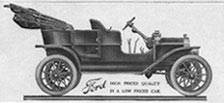
On this day in 1908, Ford Motor Company introduces a new car model:

1908_ford_model_tThe Ford Model T (colloquially known as the Tin Lizzie, T?Model Ford, Model T, T, Leaping Lena, or flivver) is anautomobile that was produced by Ford Motor Company from October 1, 1908, to May 26, 1927.[6][7] It is generally regarded as the first affordable automobile, the car that opened travel to the common middle-classAmerican; some of this was because of Ford’s efficient fabrication, including assembly line production instead of individual hand crafting.[8]

The Ford Model T was named the most influential car of the 20th century in the 1999 Car of the Century competition, ahead of the BMC Mini, Citroën DS, and Volkswagen Type 1.[9] With 16.5 million sold it stands eighth on the top ten list of most sold cars of all time as of 2012.[10]

Although automobiles had already existed for decades, they were still mostly scarce and expensive at the Model T’s introduction in 1908. Positioned as reliable, easily maintained mass market transportation, it was a runaway success. In a matter of days after the release, 15,000 orders were placed.[11] The first production Model T was produced on August 12, 1908[12] and left the factory on September 27, 1908, at the Ford Piquette Avenue Plant in Detroit, Michigan. On May 26, 1927, Henry Ford watched the 15 millionth Model T Ford roll off the assembly line at his factory in Highland Park, Michigan.[13]

On this day in 1859, Abraham Lincoln speaks in Beloit:

On this date Abraham Lincoln, who had been invited by the Beloit Republican Club, delivered a political address in Hanchett’s Hall. [Source: History Just Ahead: A Guide to Wisconsin’s Historical Markers edited by Sarah Davis McBride, p.117]

Friday Poll: Three Political Polls


Here are three polls on politics: the winner on the first presidential debate, the upcoming vice-presidential debate, and candidates’ releasing tax returns.

I’ve never run more than one poll at a time, but there are a few current worth pursing at the same time.

Obvious point: these polls are not – and have never been presented as – representative surveys of a community.

(Many of the polls that I publish are intentionally one-sided or simply fun, e.g., extraterrestrial visits, absurd behaviors, etc. That’s one reason the results are often so lopsided, but whatever the result, it’s not a representative sample of the community.

One serious remark: if the City of Whitewater intends to use polling to survey residents, as she is now paying to do, those methods and results are reasonably and legitimately the subjects of a serious critique.)

Daily Bread for 9.30.16

Good morning, Whitewater.

Friday in town will have a forty-precent chance of showers and a high of sixty-two. Sunrise is 6:52 AM and sunset is 6:36 PM [corrected from 8:36 PM as we’d never have that much daylight in September], for 11h 43m 41s of daytime. We’ve a new moon today, with just .3% of its visible disk illuminated.

On this day in 1954, the United States Navy commissions the USS Nautilus:

The Nautilus was constructed under the direction of U.S. Navy Captain Hyman G. Rickover, a brilliant Russian-born engineer who joined the U.S. atomic program in 1946. In 1947, he was put in charge of the navy’s nuclear-propulsion program and began work on an atomic submarine. Regarded as a fanatic by his detractors, Rickover succeeded in developing and delivering the world’s first nuclear submarine years ahead of schedule. In 1952, the Nautilus‘ keel was laid by President Harry S. Truman, and on January 21, 1954, first lady Mamie Eisenhower broke a bottle of champagne across its bow as it was launched into the Thames River at Groton, Connecticut. Commissioned on September 30, 1954, it first ran under nuclear power on the morning of January 17, 1955.

Much larger than the diesel-electric submarines that preceded it, the Nautilusstretched 319 feet and displaced 3,180 tons. It could remain submerged for almost unlimited periods because its atomic engine needed no air and only a very small quantity of nuclear fuel. The uranium-powered nuclear reactor produced steam that drove propulsion turbines, allowing the Nautilus to travel underwater at speeds in excess of 20 knots.

JigZone‘s puzzle for today is of a covered bridge: