FREE WHITEWATER

A Second Sex-Assault Survivor Files Federal Complaint Against UW-Whitewater

Raechel-liska-650-jpg
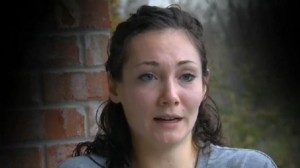
Raechel Liska, aged 22.  Photo from Channel 3000.

Link to Ms. Liska’s video interview, available online

Raechel Liska, aged 22, an honors student and Army ROTC candidate at UW-Whitewater, has filed a sexual discrimination action with the U.S. Department of Education, Civil Rights Division, against our local university.

This is the second federal action that a sexual assault survivor has filed against the University of Wisconsin-Whitewater in the last eighteen months.

At WISC-TV, investigative journalist Adam Schrager reports on Ms. Liska’s complaint, one that contends that the university’s conduct in her case is “reflective of a systemic gender-based (response) that favored [her] male assailant.” See, Sex assault survivor claims discrimination by university @ Channel 3000, WISC-TV.

Assaulted twice

Ms. Liska was violently assaulted, but when she sought recourse – as federal law (and mere humanity) – requires, she met with a further tragedy:

“I got assaulted twice,” Liska said. “Once by my attacker, which was the traumatic, horrific part, but again by the school, which was the betrayal.”

Liska said UWW Dean of Students Mary Beth Mackin violated her civil rights by refusing to interview two witnesses and by not accepting either the police report or her medical records stemming from the incident. She also asserts Mackin did not issue a no-contact order against her alleged attacker, even as he retaliated and intimidated her after she spoke to authorities. Further, it was the Army that stepped in and removed her assailant from her classes three months after the incident in question, even after she’d asked the university to do the same multiple times, only to be rebuffed.

“The reason I filed my complaint is because something here needs to change,” she said. “I thought the dean of students would be protecting the students, protecting me. She’s the dean of students. I thought I’d be her priority, but I walked out feeling like protecting the school was her top priority.”

Dean of Students Mary Beth Mackin’s gross misconduct

Ms. Liska accomplished much, and loved the university, but that university treated her injuriously and shamefully:

She also asserts that Mackin never informed her of her Title IX rights after she made her initial report and did not provide her with a sexual assault advocate on campus. Liska remains on campus now studying to become a high school history teacher. She said she’s coming forward now because she doesn’t want any other UWW students to experience what she’s gone through.

“It doesn’t matter to me specifically what their opinions are of the assault itself. What matters to me is how people feel I was treated by the institution I trusted most,” she said. “I want my face and my name attached to this story. I want it to be personal. I want people to take it personally and I want there to be change out of it.”

After Raechel Liska was assaulted, and after her mistreatment from one of the university’s leading administrators, the university still used Ms. Liska’s picture to promote UW-Whitewater as a safe and welcoming place:

The university is currently distributing a pamphlet to new and prospective students that prominently features Liska in uniform on a page titled, “Leaders and Mentors.”

“I am really bothered that the university still uses me as an exemplary image but is so resistant to helping me at my most vulnerable time,” she said.

Raped, ignored and mistreated by her university, and yet used as a public-relations pawn by that same university.

What would be worse: that this university media-relations team is so obtuse that they cannot see the injury use of Ms. Liska’s promotional picture represents, that they are so indifferent they simply do not care, that they are so parsimonious that they will use the picture rather than publish a new one, or that they manipulatively think use of the picture would somehow impress Ms. Liska?

So let us hope, Dieu aidant, that we should never become so contemptible as officials of this ilk.

Chancellor Beverly Kopper hides behind her spokeswoman

Astonishingly, Chancellor Beverly Kopper cannot be troubled to respond to these allegations in her own voice. Instead, she hides behind a spokeswoman’s dull, stale statement:

“UW-Whitewater Chancellor Beverly Kopper believes that providing a safe environment for students, faculty and staff is her first priority,” wrote Sara Kuhl, UWW’s director of marketing and media relations, in a statement to News 3. “UW-Whitewater has been and remains committed to raising awareness about the existence and impact of sexual violence and taking active steps toward preventing the occurrence of sexual violence on campus. UW-Whitewater takes all complaints very seriously and every complaint is handled with care and compassion for all parties involved.”

Scripture records that God spoke thorough Moses, and Moses spoke through Aaron, but I am quite convinced that Beverly Kopper is neither Creator nor Prophet – it is a measure of either profound ignorance or arrogance that Kopper would not speak in her own words.

This is the second accusation that directly and specifically names Mary Beth Mackin:

The first Title IX complaint against the school was filed in January 2014. The survivor in that case alleged that UWW administrators, specifically Mackin, missed appointments, hurried conversations and failed to interview key witnesses to her claims. Federal investigators have been on campus interviewing students and administrators about those allegations.

I would invite readers to read Mr. Schrager’s full account.  See, Sex assault survivor claims discrimination by university @ Channel 3000, WISC-TV.  The WISC-TV broadcast story is scheduled to air @ 10 PM Thursday evening, 11.5.15.

Previously, see How UW-Whitewater Treated a Sexual Assault Victim (referring to a story, also from Adam Schrager at WISC-TV, on another assault survivor’s gross mistreatment while at UW-Whitewater).

There will be more to publish on this matter, and updates as developments warrant.

One assault survivor abused was too many; two similarly abused are a grave offense against individual dignity, common morality, and American standards of justice and fairness.

See, also, the It’s On Us Campaign and Not Alone, a site for those who have experienced sexual assault with resources of support.
Daily Bread for 11.6.15

Good morning, Whitewater.

We’ll have a partly cloudy Friday in Whitewater, with a high of fifty-two.  Sunrise is 6:36 and sunset 4:40, for 10h 04m 38s of daytime.  The moon is a waning crescent with 22.9% of its visible disk illuminated.

A note on posting: I posted last night on a second sex assault survivor who has filed a federal complaint against UW-Whitewater, following a news report from WISC-TV, Channel 3000.  I’ll move that post forward, and it will become today’s main post.  There will be no Friday Poll and no Friday Catblogging this week. There’s not the slightest chance that I would make the mistake of publishing on a light subject rather than this serious one.

There will also be posts on Saturday and Sunday considering aspects of the UW-Whitewater administration’s ongoing, evident misconduct, and the role of a few in encouraging subject-changing through lightweight stories rather than addressing an ongoing, aberrant situation in this city.  UW-Whitewater’s situation is, sadly, far worse than many other campuses in Wisconsin or across America; few schools have a single federal complaint of this kind, let alone two pending ones.  Sexual assault is a crime and wrong anywhere, but local handling of complainants’ requests is  below any normal or average standard.

A reasonable person is, under these circumstances, called to greater scrutiny, not less; to more effort, not less.

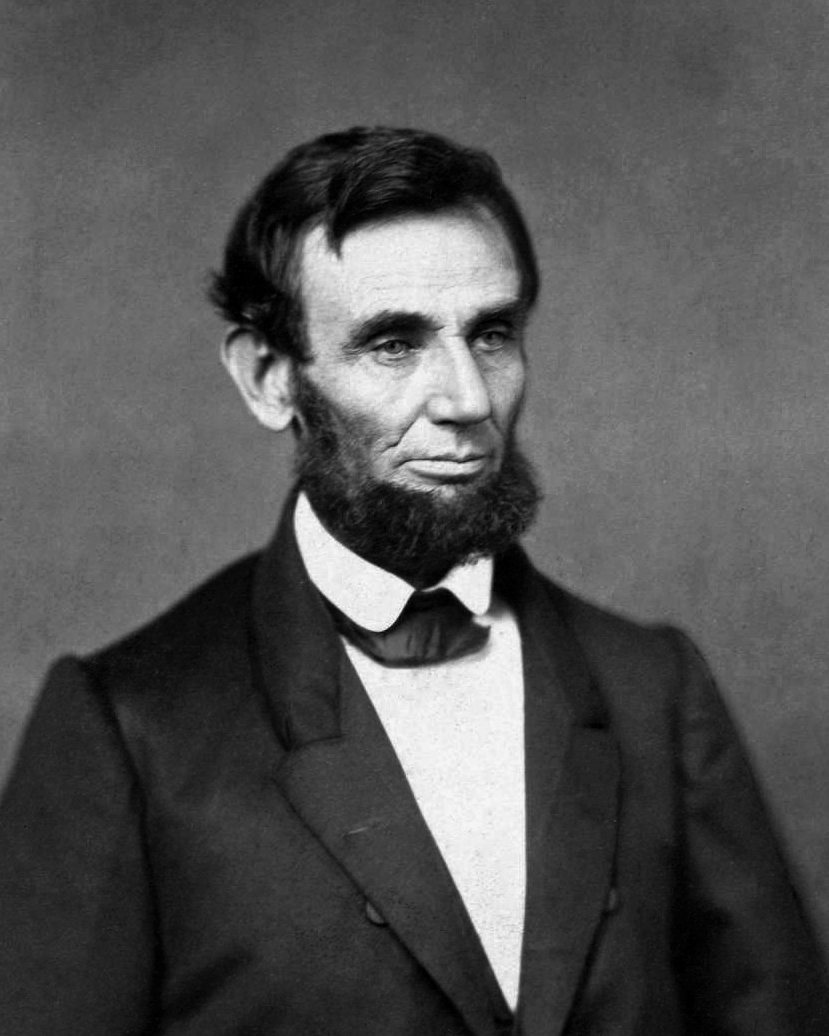
On this day in 1860, Abraham Lincoln wins election as to become president if the United States:

Abraham_Lincoln_O-55,_1861-cropOn November 6, 1860, Lincoln was elected the 16th president of the United States, beating Democrat Stephen A. Douglas, John C. Breckinridge of the Southern Democrats, and John Bell of the new Constitutional Union Party. He was the first president from the Republican Party. His victory was entirely due to the strength of his support in the North and West; no ballots were cast for him in 10 of the 15 Southern slave states, and he won only two of 996 counties in all the Southern states.[160]

Lincoln received 1,866,452 votes, Douglas 1,376,957 votes, Breckinridge 849,781 votes, and Bell 588,789 votes. Turnout was 82.2 percent, with Lincoln winning the free Northern states, as well as California and Oregon. Douglas won Missouri, and split New Jersey with Lincoln.[161] Bell won Virginia, Tennessee, and Kentucky, and Breckinridge won the rest of the South.[162]

Although Lincoln won only a plurality of the popular vote, his victory in the electoral college was decisive: Lincoln had 180 and his opponents added together had only 123. There were fusion tickets in which all of Lincoln’s opponents combined to support the same slate of Electors in New York, New Jersey, and Rhode Island, but even if the anti-Lincoln vote had been combined in every state, Lincoln still would have won a majority in the Electoral College.[163]


On this day in 1837, Wisconsin gets a capital in Iowa:

1837 – Burlington, Iowa Selected as Temporary Capital

On this date Burlington, Iowa was chosen as a temporary capital of the Wisconsin Territory. A year earlier, legislators offered a bill making Madison the capital with a temporary capital in Dubuque until which time a permanent building could be constructed in Madison. Legislators also proposed the City of Belmont as a temporary capital. One month later, on December 12th, a fire destroyed the two-story temporary capital in Burlington. The new legislature moved its headquarters to the Webber and Remey’s store in Burlington where they conducted government affairs until June 1838.[Source: State of Wisconsin Blue Book]

Here’s the final Puzzability game in this week’s All Is Lost series:

This Week’s Game — November 2-6
All Is Lost
This is a week of all or nothing. For each day, we started with a word containing the letter chunk ALL and removed that chunk to get a new word or phrase. The answer phrase, described by each day’s clue, is the longer ALL word followed by the shorter word.
Example:
Young, inexperienced Holstein
Answer:
Callow cow
What to Submit:
Submit the two-word phrase, with the longer one first (as “Callow cow” in the example), for your answer.
Friday, November 6
Green onion descendant


Daily Bread for 11.5.15

Good morning, Whitewater.

Thursday brings morning clouds, but afternoon sunshine, to the Whippet City.  We’ll have a high of sixty-eight.  Sunrise is 6:34 and sunset 4:41, for 10h 07m 05s of daytime.  The moon is a waning crescent with 31.2% of the its visible disk illuminated.

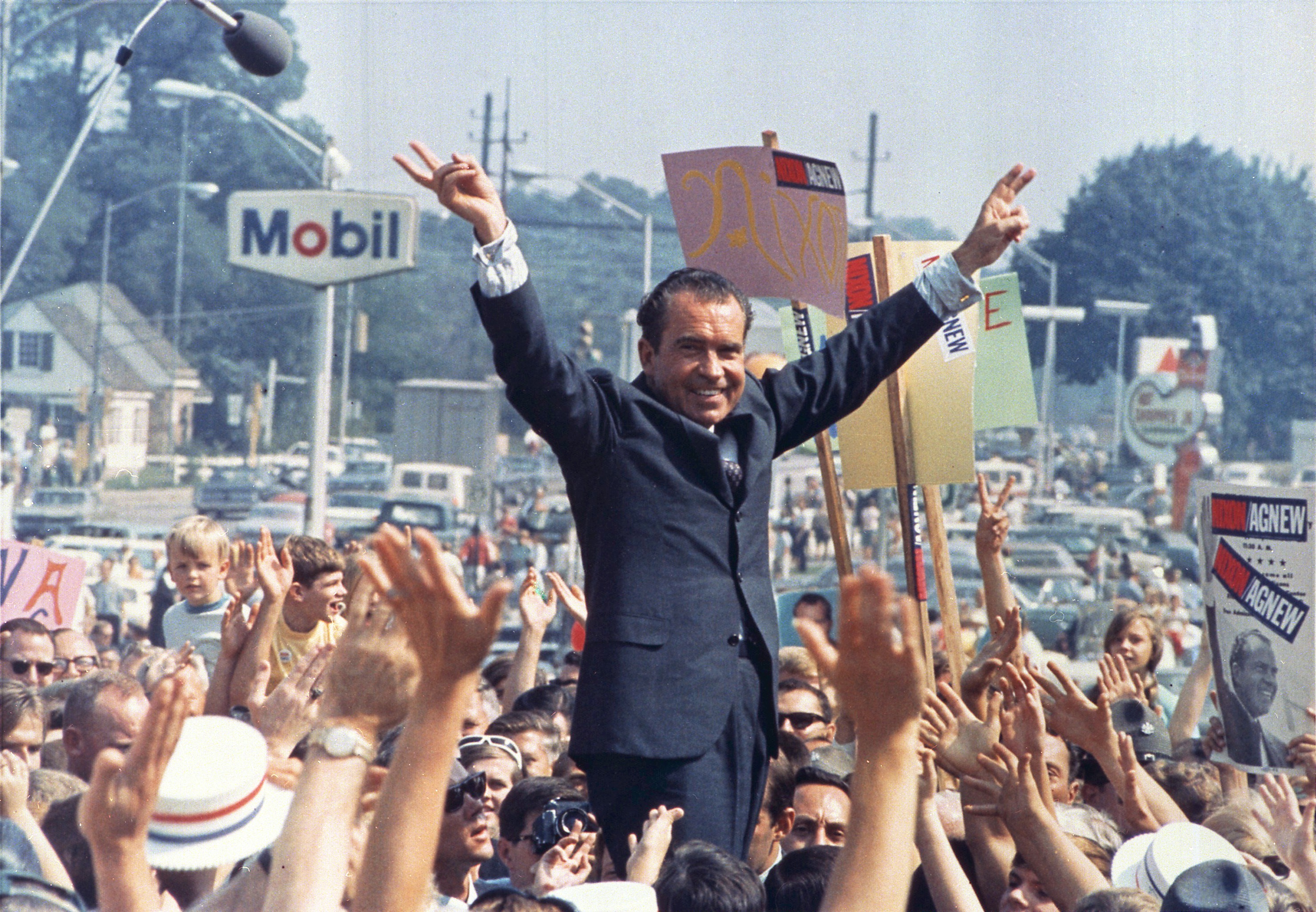
NIXONcampaigns

On this day in 1968, Richard Nixon is elected president of the United States.  The next day, the New York Times reported his victory:

Nixon Wins By A Thin Margin, Pleads For Reunited Nation


Elector Vote 287


Lead in Popular Tally May Be Smaller Than Kennedy’s in ’60


Nixon Wins Presidency by Margin Probably Smaller Than That of Kennedy in ’60


WALLACE’S EFFECT HARD TO PIN POINT


Alabamian Believed to Have Helped Humphrey in Some States, Nixon in Others

By MAX FRANKEL

Richard Milhous Nixon emerged the victor yesterday in one of the closest and most tumultuous Presidential campaigns in history and set himself the task of reuniting the nation.

Elected over Hubert H. Humphrey by the barest of margins–only four one-hundredths of a percentage point in the popular vote–and confronted by a Congress in control of the Democrats, the President-elect said it “will be the great objective of this Administration at the outset to bring the American people together.”

He pledged, as the 37th President, to form “an open Administration, open to new ideas, open to men and women of both parties, open to critics as well as those who support us” so as to bridge the gap between the generations and the races.

On this day in 1912, Wisconsin men reject giving Wisconsin women the right to vote:

1912 – Women’s Suffrage Referendum

On this date Wisconsin voters (all male) considered a proposal to allow women to vote. When the referendum was over, Wisconsin men voted women’s suffrage down by a margin of 63 to 37 percent. The referendum’s defeat could be traced to multiple causes, but the two most widely cited reasons were schisms within the women’s movement itself and a perceived link between suffragists and temperance that antagonized many German American voters. Although women were granted the vote in 1920 by the 19th Amendment to the U.S. Constitution, Wisconsin’s own constitution continued to define voters as male until 1934. [Source: Turning Points in Wisconsin History]

Here’s the Thursday game in this week’s Puzzability series, All is Lost:

This Week’s Game — November 2-6
All Is Lost
This is a week of all or nothing. For each day, we started with a word containing the letter chunk ALL and removed that chunk to get a new word or phrase. The answer phrase, described by each day’s clue, is the longer ALL word followed by the shorter word.
Example:
Young, inexperienced Holstein
Answer:
Callow cow
What to Submit:
Submit the two-word phrase, with the longer one first (as “Callow cow” in the example), for your answer.
Thursday, November 5
Tool for sweeping up after Cinderella and the other guests have left

A, B, and Wrong

Most choices for government, such as an option between Policy Choice A or Policy Choice B, involve choices of ordinary outcomes. One option may be more efficient than the other, or one more aesthetically pleasing than an alternative, but either would be considered a normal, reasonable policy outcome.

Preferences of the Right or Left, of Republican or Democrat, especially for local government, are mostly like this: people may prefer one outcome over another, but few think a community’s future will be damaged significantly and irremediably with the selection of either Choice A or Choice B.

In a well-ordered local politics, there should be few – if any – choices that are not like choices between A and B.

A policy choice that leads one to a wrong outcome – that is an outcome that’s unethical or injurious – should be almost unknown to a community.

There are dozens of ways to build a park, or design a public market, and not one of these would be wrong, not one that would be unethical or gravely injurious.

Most actions of Whitewater’s city government, school district, or university are like the ordinary choices between A and : perhaps offering advantages one way or another but involving nothing of ethics or injury.

Sadly, there are a small number of policy actions in Whitewater that are extraordinary, and simply wrong. We should not have any; an inferior local politics, beneath the standard that an American community deserves, afflicts us.

Some few actions start out conventionally, but descend into the wrong through exaggeration that becomes mendacity. Whitewater’s town squires have the habit of boosting the town in ways that begin as ordinary (if poorly expressed) public relations, slip into unjustified boasting, and end as outright lies.

There is a second, small class of actions that are, truly, far worse. In this small class, actions begin with indifference to individuals, often with an insistence that the reputations of institutions matter more than the lives of their ordinary members. Whitewater’s worst leaders have an act utilitarianism in them. (These leaders justify their actions as an institutional defense, but that defense against individual rights is objectionable as made, and mostly an effort at their own self-interest in any event.)

Like most communities, we have mostly conventional choices before us.  Sadly, unlike many communities, we have some policymakers who have slipped beneath the conventional, into actions that are both unethical and gravely injurious.

Most policy choices are conventional; a few are far less, and far worse, than that.

Those few are simply wrong.


Daily Bread for 11.4.15

Good morning, Whitewater.

Our midweek in town will be cloudy in the morning, but sunny in the afternoon, with a daytime high of sixty-eight. Sunrise is 6:33 and sunset 4:43, for 10h 09m 33s of daytime. The moon is a waning crescent with 40.1% of its visible disk illuminated.

Weird Al, one of America’s most perceptive artists, once again proves worthy of that praise, with his depiction of Every Post-Game Press Conference:

On this day in 1979, fanatical students storm the United States embassy in Tehran:

Student followers of the Ayatollah Khomeini send shock waves across America when they storm the U.S. embassy in Tehran. The radical Islamic fundamentalists took 90 hostages. The students were enraged that the deposed Shah had been allowed to enter the United States for medical treatment and they threatened to murder hostages if any rescue was attempted. Days later, Iran’s provincial leader resigned, and the Ayatollah Khomeini, the leader of Iran’s fundamentalist revolutionaries, took full control of the country—and the fate of the hostages.

Two weeks after the storming of the embassy, the Ayatollah began to release all non-U.S. captives, and all female and minority Americans, citing these groups as among the people oppressed by the United States government. The remaining 52 captives were left at the mercy of the Ayatollah for the next 14 months.

President Jimmy Carter was unable to diplomatically resolve the crisis, and on April 24, 1980, he ordered a disastrous rescue mission in which eight U.S. military personnel were killed and no hostages rescued. Three months later, the former shah died of cancer in Egypt, but the crisis continued. In November 1980, Carter lost the presidential election to Republican Ronald Reagan. Soon after, with the assistance of Algerian intermediaries, successful negotiations finally began between the United States and Iran.

On January 20, 1981—the day of Reagan’s inauguration—the United States freed almost $3 billion in frozen Iranian assets and promised $5 billion more in financial aid. Minutes after Reagan was sworn in, the hostages flew out of Iran on an Algerian airliner, ending their 444-day ordeal. The next day, Jimmy Carter flew to West Germany to greet them on their way home.

November 4, 1847 marked a first for Beloit College:

1847 – First Class at Beloit College

On this date the first class of Beloit College assembled. [Source: History Just Ahead: A Guide to Wisconsin’s Historical Markers edited by Sarah Davis McBride]

Here’s the midweek puzzle from Puzzability:

This Week’s Game — November 2-6
All Is Lost
This is a week of all or nothing. For each day, we started with a word containing the letter chunk ALL and removed that chunk to get a new word or phrase. The answer phrase, described by each day’s clue, is the longer ALL word followed by the shorter word.
Example:
Young, inexperienced Holstein
Answer:
Callow cow
What to Submit:
Submit the two-word phrase, with the longer one first (as “Callow cow” in the example), for your answer.
Wednesday, November 4
Stall for getting clean that’s not as deep as the next one

First-Ever Video of the Rare Omura’s Whale in the Wild

There are, even in the twenty-first century, new discoveries and observations to be made –

Dr. Salvatore Cerchio of the New England Aquarium and Woods Hole Oceanographic Institution (WHOI) and an international team of whale biologists have just released images and detailed descriptions on the first scientific observations in the wild ever of Omura’s whales, one of the least known species of whales in the world.

Via New England Aquarium’s YouTube Channel.

Daily Bread for 11.3.15

Good morning, Whitewater.

Tuesday in town will be sunny and warm, with a high of seventy. Sunrise is 6:32 and sunset 4:44, for 10h 12m 03s of daytime. The moon is in its third quarter, with 49.7% of its visible disk illuminated.

Whitewater’s Zoning Code Committee meets at 6 PM, and Common Council at 6:30 PM.

On this day in 1903, a photographer of American life, notably during the Great Depression, is born:

Walker Evans (November 3, 1903 – April 10, 1975) was an American photographer best known for his work for the Farm Security Administration (FSA) documenting the effects of the Great Depression. Much of Evans’s work from the FSA period uses the large-format, 8×10-inch camera. He said that his goal as a photographer was to make pictures that are “literate, authoritative, transcendent”.[1] Many of his works are in the permanent collections of museums and have been the subject of retrospectives at such institutions as The Metropolitan Museum of Art or George Eastman House.[2]

On this day in 1804, it’s millions of acres for a thousand dollars per year :

1804 – Treaty at St. Louis

On this date Fox and Sauk negotiators in St. Louis traded 50 million acres of land in southern Wisconsin and northern Illinois for an annuity of $1,000. The treaty allowed the tribes to remain on the land until it was sold to white settlers. However, Chief Black Hawk and others believed that the 1804 negotiators had no authority to speak for their nation, so the treaty was invalid. U.S. authorities, on the other hand, considered it binding and used it justify the Black Hawk War that occurred in the spring and summer of 1832. [Source: Along the Black Hawk Trail by William F. Stark, p. 32-33]

Here’s the Tuesday game from Puzzability:

This Week’s Game — November 2-6
All Is Lost
This is a week of all or nothing. For each day, we started with a word containing the letter chunk ALL and removed that chunk to get a new word or phrase. The answer phrase, described by each day’s clue, is the longer ALL word followed by the shorter word.
Example:
Young, inexperienced Holstein
Answer:
Callow cow
What to Submit:
Submit the two-word phrase, with the longer one first (as “Callow cow” in the example), for your answer.
Tuesday, November 3
Automated computer system for counting every vote

Kangaroo-Avoidance Technology

Only a matter of time —

2015-10-30_18_35_11.0

Stateside, as large mammals go, deer are probably the single biggest threat to cars traveling the highways. Now, imagine a smaller, “very unpredictable” deer that hops on two legs: that’s the hell of driving in Australia, where some 20,000 kangaroo collisions are said to happen annually….

There’s no word on when kangaroo avoidance will actually become a standard feature on new Volvos sold Down Under, but it may not be long: all the technology and sensors already exist, it’s mostly just a matter of calibrating the systems appropriately. Volvo conducted real-world research (hopefully without killing any live animals) near the Australian capital of Canberra last week.

Via Volvo is testing kangaroo avoidance technology for Australian drivers @ The Verge.

The 9.17.15 Remarks on Waste Importation

Official Remarks of 9.17.15 on Waste Importation from John Adams on Vimeo.

WGTB logo PNG 112x89 Post 43 in a series. When Green Turns Brown is an examination of a small town’s digester-energy project, in which Whitewater, Wisconsin would import other cities’ waste, claiming that the result would be both profitable and green.

Embedded above is a clip of a longer, 9.17.15 ‘State of the City’ address from Whitewater City Manager Cameron Clapper. The original, full address is online at https://vimeo.com/140321184.

In this clip, City Manager Clapper contends that the digester-energy project has been scaled back, and offers a claim about what that supposedly scaled-back program would look like.

I’ll not offer an assessment of these remarks, this week. Instead, it’s fair simply to embed the city manager’s discussion on waste importation. It’s true (if unsettling to a few) that more people will learn about the digester-energy project from this website than from every city presentation, video, or local news account combined.

One should use that reach fairly (although other publications, in a similar position, certainly would not): here is City Manager Clapper’s uninterrupted, recent account of the project.

Next Week: Assessing the 9.17.15 description of the project.

WHEN GREEN TURNS BROWN: Mondays @ 10 AM, here on FREE WHITEWATER.