FREE WHITEWATER

Daily Bread for 3.5.15

Good morning, Whitewater.

Thursday in Whitewater will be sunny with a high of thirteen. Sunrise is 6:22 and sunset is 5:49, for 11h 27m 05s of daytime. We’ve a full moon today.

Whitewater’s Landmarks Commission meets today at 6:30 PM.

Google has a doodle today in honor of Momofuku Ando, inventor of instant noodles:

On this day 1946, Winston Churchill delivers his ‘Iron Curtain’ Speech at Westminster College in Fulton, Missouri. (Churchill had entitled the speech Sinews of Peace, but it’s his reference to an iron curtain that stuck.) The New York Times reported on the speech:

Fulton, Mo., March 5 – A fraternal association between the British Empire and the United States was advocated here today by Winston Churchill to stem “the expansive and proselytizing tendencies” of the Soviet Union.

Introduced by President Truman at Westminster College, Great Britain’s wartime Prime Minister asserted that a mere balance of power in the world today would be too narrow a margin and would only offer “temptations to a trial of strength.”

On the contrary, he added that the English-speaking peoples must maintain an overwhelming preponderance of power on their side until “the highroads of the future will be clear, not only for our time but for a century to come.”

Says Curtain Divides Europe

Mr. Churchill painted a dark picture of post-war Europe, on which “an iron curtain has descended across the Continent” from Stettin in the Baltic to Trieste in the Adriatic.

Warsaw, Berlin, Prague, Vienna, Budapest, Belgrade, Sofia and Bucharest are all being subjected to increasing pressure and control from Moscow, he said, adding:

“This is certainly not the liberated Europe we fought to build up. Nor is it, one which contains the essentials of permanent peace.”

See, full text of Churchill’s speech to Westminster College.

On this day in 1935, a silver magnate dies:

1935 – Elizabeth “Baby Doe” McCourt Dies
On this date, the controversial wife of Horace (H.A.W.) Tabor, silver mine owner during the 19th century Colorado gold and silver booms, died. Born Elizabeth Bondeul McCourt in Oshkosh, Wisconsin in 1854, she was first married to Harvey Doe, Jr. of Oshkosh but in 1880 divorced him on the grounds of adultery. She then moved to Colorado where she married Leadville’s silver king, Horace Tabor. Despite great wealth, she died penniless and alone in Leadville: she froze to death in a cabin near the famous Matchless mine, which in its heyday had produced $10,000 worth of silver ore per day. Elizabeth and Horace are the subject of an American opera, “The Ballad of Baby Doe”….

Here’s today’s game in Puzzability‘s Vegging in series:

This Week’s Game — March 2-6
Vegging In
We’re dishing up a healthy serving every day this week. For each day, we’ve taken the name of a vegetable, added a letter, and scrambled all the letters to get a new word. The answer phrase, described by each day’s clue, is the vegetable followed by the new word.
Example:
Deep-dish meal with a vegetable base
Answer:
Escarole casserole
What to Submit:
Submit the phrase, with the vegetable first (as “Escarole casserole” in the example), for your answer.
Thursday, March 5
One of a group of 17th-century Englishmen who were strictly religious about their choice of vegetable

What a Headline Says

When someone alleges a sexual assault, or other violent crime, the immediate significance of that claim affects the alleging victim, and one or more alleged assailants.   Fundamentally, violent acts are about actual people, not headlines, policies, politics, etc. 

Even if there were no criminal law, if there were no statutes criminalizing any kind of conduct, still there would be violent, immoral acts.  Even if there were no publications, to report any news, still there would be wrongs and injuries.

There are, however, both criminal laws and reports about legal proceedings. 

Not everyone will see these laws and reports, even the same laws and reports, in the same way.

Consider these headlines:

DA Will Not Prosecute in Alleged Sexual Assault Case

No charges filed against recruit in sexual assault case

For some, these headlines will suggest that there was no actual assault between a complainant and her alleged assailant.  For others, the same headlines will suggest that there was insufficient evidence to prosecute an alleged assailant.  For yet others, there will be concern that a prosecution might have been made, but wasn’t.

For it all, however, there will be others who will rush to another view: that because there was no prosecution over particular and specific allegations, there is no problem of assault at all.  From one development (decided such as it was), these few will declare the absence of any problem.

Those few who seek to deny any problem, to absolve institutions, organizations, and officials of any wrongdoing – even any possible wrongdoing – will see these headlines differently from others.  They’ll see them – and hope others see them – as a general exoneration. 

It’s not, of course. 

It’s just that they’ll hope others see it that way. 

Daily Bread for 3.4.15

Good morning, Whitewater.

Wednesday in town will be mostly sunny with a high of sixteen. Sunrise is 6:24 and sunset 5:48, for 11h 24m 11s of daytime. The moon is a waxing gibbous with 98.6% of its visible disk illuminated.

On this day in 1789, government under the Constitution begins:

The first session of the U.S. Congress is held in New York City as the U.S. Constitution takes effect. However, of the 22 senators and 59 representatives called to represent the 11 states who had ratified the document, only nine senators and 13 representatives showed up to begin negotiations for its amendment….

As dictated by Article VII, the document would not become binding until it was ratified by nine of the 13 states. The Constitution was thus sent to the state legislatures, and beginning on December 7, five states–Delaware, Pennsylvania, New Jersey, Georgia, and Connecticut–ratified it in quick succession. However, other states, especially Massachusetts, opposed the document for its failure to reserve powers not delegated by the Constitution to the states and its lack of constitutional protection for such basic political rights as freedom of speech, religion, and the press, and the right to bear arms.

In February 1788, a compromise was reached in which Massachusetts and other states agreed to ratify the document with the assurance that amendments would immediately be adopted. The Constitution was thus narrowly ratified in Massachusetts, followed by Maryland and South Carolina. On June 21, 1788, New Hampshire became the ninth state to ratify the document, making it binding, and government under the U.S. Constitution was scheduled to begin on March 4, 1789.

On September 25, 1789, after several months of debate, the first Congress of the United States adopted 12 amendments to the U.S. Constitution–the Bill of Rights–and sent them to the states for ratification. This action led to the eventual ratification of the Constitution by the last of the 13 original colonies: North Carolina and Rhode Island.

Here’s the Wednesday game in Puzzability‘s Vegging In series:

This Week’s Game — March 2-6
Vegging In
We’re dishing up a healthy serving every day this week. For each day, we’ve taken the name of a vegetable, added a letter, and scrambled all the letters to get a new word. The answer phrase, described by each day’s clue, is the vegetable followed by the new word.
Example:
Deep-dish meal with a vegetable base
Answer:
Escarole casserole
What to Submit:
Submit the phrase, with the vegetable first (as “Escarole casserole” in the example), for your answer.
Wednesday, March 4
Coiffures featuring vegetable adornments

SUNY Stony Brook Failed Sarah Tubbs

37861007001_4034773400001_JL-2-5-15-SEXUAL-ASSAULT-vs

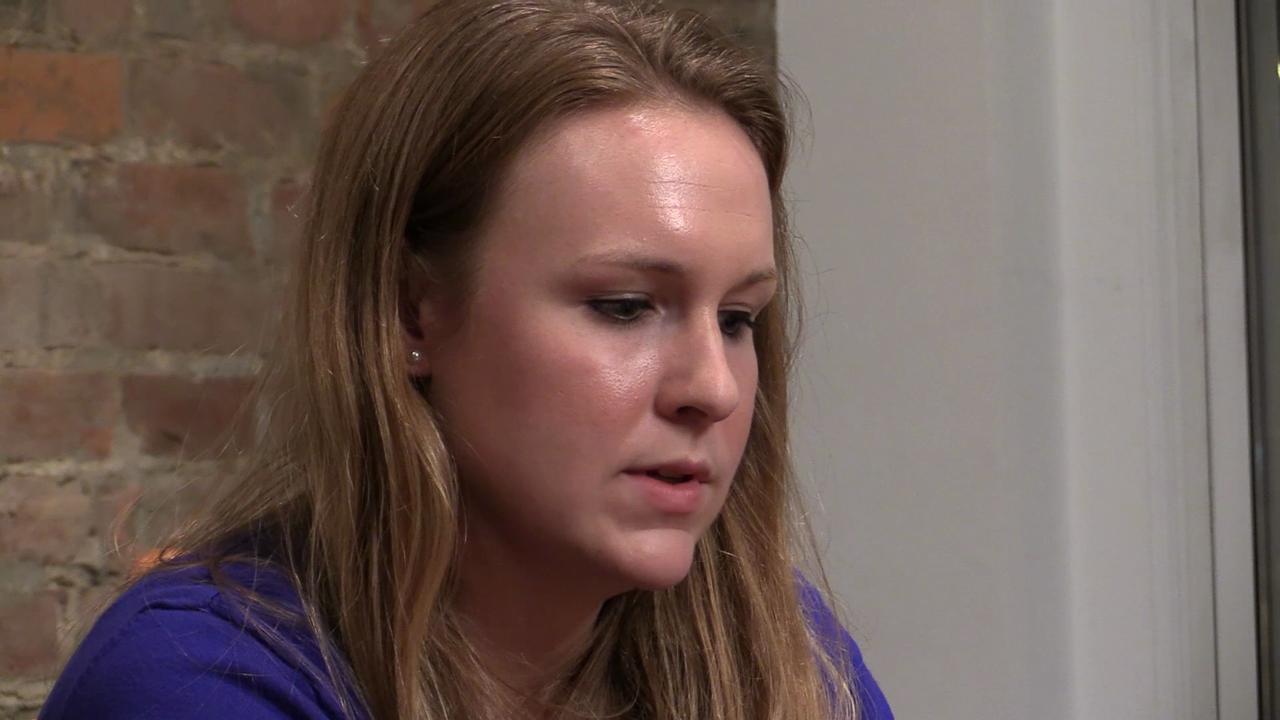
Video Link: Sarah Tubbs of Montrose talks about her ordeal after she says she was sexually assaulted at Stony Brook University, and then forced to prosecute her own attacker. Updated with video as link, 3.4.15.

Sarah Tubbs attended (and was graduated from) SUNY Stony Brook, part of New York’s state university system. It’s part of a public university system not unlike the UW System. (Commonly called just ‘Stony Book,’ the school is about twice as large as UW-Whitewater, but similar in many other respects.)

When Ms. Tubbs sought recourse under federal law after being sexually assaulted, she found that Stony Brook met her rights with an inadequate – indeed a perverse – remedy:

She’s had nightmares, flashbacks and panic attacks since being sexually assaulted last year at Stony Brook University.

Yet when Sarah Tubbs sought the university’s help to proceed with disciplinary charges against her alleged attacker, officials required her to personally prosecute him, she said. Tubbs has no legal training. Yet she had to question and be cross-examined by the man she claims sexually assaulted her in his dorm room.

Tubbs, 22, of Montrose, is suing Stony Brook, which is part of the State University of New York system, and her alleged attacker in violation of Title IX, the federal law that prohibits discrimination on the basis of gender at schools that receive federal funding. Under the law, such discrimination can include sexual harassment, rape and sexual assault.

Her lawsuit, filed last month in federal court in White Plains, seeks monetary damages and a court order abolishing the practice of having sexual-assault victims “prosecute their own cases and to cross-examine and be cross-examined by their assailants.”

The alleged attack occurred nearly a year before State University of New York campuses adopted a more comprehensive sexual assault policy in December 2014 at the urging of Gov. Andrew Cuomo. Tubbs wants the new policy broadened to specifically prohibit victims from having to prosecute their own attackers at student disciplinary hearings.

See, SUNY grad says school made her prosecute her own sex attacker @ Gannett’s Lower Hudson website.

When Ms. Tubbs submitted to a university hearing as was her right, that hearing did not even consider adequately – in a case about sexual assault – whether she had given consent:

Tubbs was granted an appeal by the university in August, based on a finding that the disciplinary board didn’t properly consider the definition of consent to weigh whether the sex was consensual.

A university official, Jay Souza, wrote in a letter to Tubbs that “he found no evidence that the Hearing Board considered the definition of consent” as spelled out in the university’s student conduct code or applied that definition to “the facts of this case,” the lawsuit says.

Souza said in the letter that Tubbs would be contacted by the university about the next steps, but Tubbs said she hasn’t heard anything, despite her own efforts to reach school officials….

There Sarah Tubbs found herself at a campus hearing – entitled by federal and state law, but by her university denied representation, and afforded a process so paltry that officials did not consider something as fundamental as lack of consent.

Sarah Tubbs has now filed a federal lawsuit against Stony Brook, but the school she attended – as a citizen with rights under state and federal law – compounded an assault with institutional indifference and further harm. For it all, she’s still resolute:

“I don’t think it’s the rape that makes the person a victim,” said Tubbs. “I think it’s the systemic failure that makes someone from a survivor to a victim. … I can honestly say I won’t stop fighting until those systems change.”

Daily Bread for 3.3.15

Good morning, Whitewater.

We may have our last snowfall of the season today. We will likely get about an inch of snow, mixed with sleet and freezing rain. The high for today will be thirty-five. Sunrise is 6:25 and sunset 5:47, for 11h 21m 17s of daytime. The moon is a waxing gibbous with 95.5% of its visible disk illuminated.

Common Council meets tonight at 6:30 PM.

Jordan Shelton of Arvada, Colo., grand-prize winner of the Smithsonian and USA Weekend Star-Spangled Banner Singing Contest.

On this day in 1931, Pres. Hoover signs a bill about a particular song:

President Herbert Hoover signs a congressional act making “The Star-Spangled Banner” the official national anthem of the United States.

On September 14, 1814, Francis Scott Key composed the lyrics to “The Star-Spangled Banner” after witnessing the massive overnight British bombardment of Fort McHenry in Maryland during the War of 1812. Key, an American lawyer, watched the siege while under detainment on a British ship and penned the famous words after observing with awe that Fort McHenry’s flag survived the 1,800-bomb assault.

After circulating as a handbill, the patriotic lyrics were published in a Baltimore newspaper on September 20, 1814. Key’s words were later set to the tune of “To Anacreon in Heaven,” a popular English song. Throughout the 19th century, “The Star-Spangled Banner” was regarded as the national anthem by most branches of the U.S. armed forces and other groups, but it was not until 1916, and the signing of an executive order by President Woodrow Wilson, that it was formally designated as such. In March 1931, Congress passed an act confirming Wilson’s presidential order, and on March 3 President Hoover signed it into law.

Here’s the Tuesday, vegetable-themed game from Puzzability:

This Week’s Game — March 2-6
Vegging In
We’re dishing up a healthy serving every day this week. For each day, we’ve taken the name of a vegetable, added a letter, and scrambled all the letters to get a new word. The answer phrase, described by each day’s clue, is the vegetable followed by the new word.
Example:
Deep-dish meal with a vegetable base
Answer:
Escarole casserole
What to Submit:
Submit the phrase, with the vegetable first (as “Escarole casserole” in the example), for your answer.
Tuesday, March 3
Vegetable-shaped clothing patch applied using heat

The Hunting Ground


Academy-award nominated filmmakers Kirby Dick and Amy Ziering have a new film now in limited-release, entitled, The Hunting Ground, about campus sexual assault.  The film addresses violence, institutional cover-ups, and the damage done to victims & families from both assault and subsequent, institutional misconduct. 

The official trailer for the film is embedded above. 

(The same filmmakers received an Oscar nomination for their 2012 film, The Invisible War, about sexual assault in the military. The Invisible War earned widespread professional acclaim, having received eleven professional nominations and having won nine.)

Related links:

Review: ‘The Hunting Ground’ Documentary, a Searing Look at Campus Rape @ New York Times.

Taking the Pledge.  “Take the Pledge: commit to holding your college accountable. It’s not only survivors jobs to hold their schools accountable, it’s everybody’s job – students, parents, alumni, teachers. Pledge here and we’ll keep you informed of news and actions taking place on college campuses across the US. We’ll also ask you to take a stand and show your support as our campaign heats up and we solidify screenings of THE HUNTING GROUND on more college campuses.”

It’s On Us Campaign.

Not Alone, a site with supportive resources for those who have experienced sexual assault.

Daily Bread for 3.2.15

Good morning, Whitewater.

Monday in town will be increasingly cloudy with a high of twenty-five. Sunrise is 6:27 and sunset is 5:46, for 11h 18m 25s of daytime. The moon is a waxing gibbous with 90.7% of its visible disk illuminated.

It’s Dr. Seuss’s birthday:

Theodor Seuss Geisel (…March 2, 1904 – September 24, 1991) was an American writer and cartoonist. He was most widely known for his children’s books, which he wrote and illustrated under the pseudonym Dr. Seuss (/su?s/).[2] He had used the pen name Dr. Theophrastus Seuss in college and later used Theo LeSieg and Rosetta Stone.[3]

Geisel published 46 children’s books, often characterized by imaginative characters, rhyme, and frequent use of anapestic meter. His most-celebrated books include the bestselling Green Eggs and Ham, The Cat in the Hat, The Lorax, One Fish Two Fish Red Fish Blue Fish, The 500 Hats of Bartholomew Cubbins, Fox in Socks, The King’s Stilts, Hop on Pop, Thidwick the Big-Hearted Moose, Horton Hatches the Egg, Horton Hears a Who!, and How the Grinch Stole Christmas!. His works have spawned numerous adaptations, including 11 television specials, four feature films, a Broadway musical and four television series. He won the Lewis Carroll Shelf Award in 1958 for Horton Hatches the Egg and again in 1961 for And to Think That I Saw It on Mulberry Street. Geisel also worked as an illustrator for advertising campaigns, most notably for Flit and Standard Oil, and as a political cartoonist for PM, a New York City newspaper. During World War II, he worked in an animation department of the United States Army, where he wrote Design for Death, a film that later won the 1947 Academy Award for Documentary Feature.

He was a perfectionist in his work and would sometimes spend up to a year on a book. It was not uncommon for him to throw out 95% of his material until he settled on a theme for his book. For a writer he was unusual in that he preferred to be paid only after he finished his work rather than in advance.[4]

Geisel’s birthday, March 2, has been adopted as the annual date for National Read Across America Day, an initiative on reading created by the National Education Association.

Puzzability begins a new, vegetable-related series:

This Week’s Game — March 2-6
Vegging In
We’re dishing up a healthy serving every day this week. For each day, we’ve taken the name of a vegetable, added a letter, and scrambled all the letters to get a new word. The answer phrase, described by each day’s clue, is the vegetable followed by the new word.
Example:
Deep-dish meal with a vegetable base
Answer:
Escarole casserole
What to Submit:
Submit the phrase, with the vegetable first (as “Escarole casserole” in the example), for your answer.
Monday, March 2
Farm vehicle for use on just one kind of vegetable crop