
Daily Bread
Daily Bread for 9.30.13
by JOHN ADAMS •
Good morning.
As September ends, we’ll have a bit of fog in the morning, and then a sunny day with a high of seventy-three. The moon is a waning crescent with 19% of the its visible disk illuminated.
Private spaceflight took a step forward this weekend, as SpaceX’s upgraded Falcon 9 rocket saw a successful test:
On this day in 1954, America commissions the world’s first nuclear submarine:
Much larger than the diesel-electric submarines that preceded it, the Nautilus stretched 319 feet and displaced 3,180 tons. It could remain submerged for almost unlimited periods because its atomic engine needed no air and only a very small quantity of nuclear fuel. The uranium-powered nuclear reactor produced steam that drove propulsion turbines, allowing the Nautilus to travel underwater at speeds in excess of 20 knots.
In its early years of service, the USS Nautilus broke numerous submarine travel records and in August 1958 accomplished the first voyage under the geographic North Pole. After a career spanning 25 years and almost 500,000 miles steamed, the Nautilus was decommissioned on March 3, 1980. Designated a National Historic Landmark in 1982, the world’s first nuclear submarine went on exhibit in 1986 as the Historic Ship Nautilus at the Submarine Force Museum in Groton, Connecticut.
On this day in 1859, Abraham Lincoln speaks at a Wisconsin agricultural fair:
1859 – Abraham Lincoln Speaks at State Fair
On this date Abraham Lincoln delivered an address at the Wisconsin State Fair. In his speech, he connected agriculture to education: “Every blade of grass is a study; and to produce two, where there was but one, is both a profit and a pleasure.” The rising political star (who was elected the following year), also stressed the importance of free labor. This was Lincoln’s last visit to Wisconsin. In 1861, after winning the presidential election, Lincoln signed the bill establishing the U.S. Department of Agriculture. [Source: AbrahamLincoln.org]
The text of Lincoln’s speech is available online.
Scientific American‘s daily trivia question asks about early space exploration. (Clicking on the question leads to its answer.)
Daily Bread
Daily Bread for 9.29.13
by JOHN ADAMS •
Good morning.
Sunday in Whitewater looks to be a lovely fall day: sunny, a high of seventy, and light northwest winds around 5 mph becoming calm in the afternoon.
The results of my latest poll are in, and they’re decisive: 87.1% of respondents felt that convicted animal-abuser Patricia Ritz met her deserved fate when her mistreated wolf-dogs consumed her after she died. They (apparently) didn’t kill her, but they cadged a meal after she expired. I was with a majority on this one.
On this day in 1758, Horatio Nelson, an unsurpassed naval hero, is born:
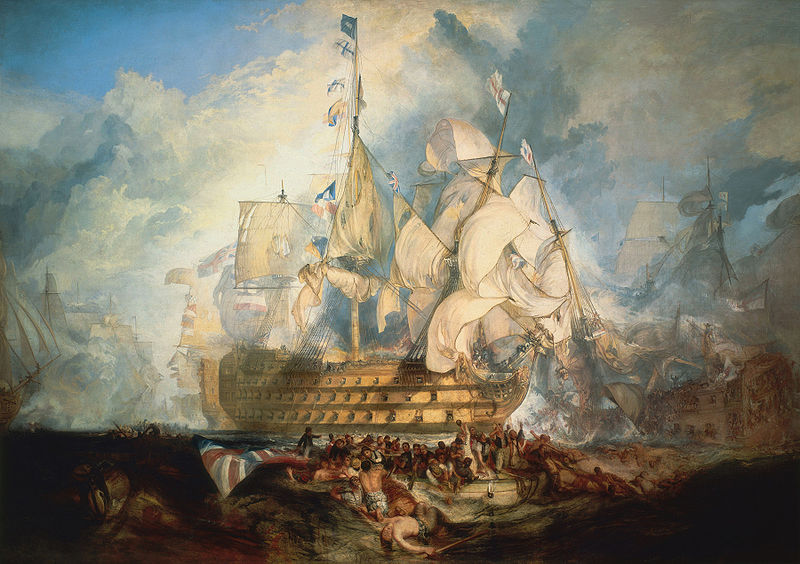
Horatio Nelson, Britain’s most celebrated naval hero, is born in Burnham Thorpe, England. In the French Revolutionary and Napoleonic wars, he won a series of crucial victories and saved England from possible invasion by France….
In October [1805], Napoleon ordered Villeneuve to run the blockade and sail to Italy to assist a French campaign. On October 19, Villeneuve slipped out of Cadiz with a Franco-Spanish force of 33 ships, but Nelson caught him off Cape Trafalgar on October 21. Nelson divided his 27 ships into two divisions and signaled a famous message from the flagship Victory: “England expects that every man will do his duty.” In five hours of fighting, the British devastated the enemy fleet, destroying 19 enemy ships and capturing Villeneuve. No British ships were lost, but 1,500 British seamen were killed or wounded in the heavy fighting. The battle raged at its fiercest around the Victory, and a French sniper shot Nelson in the shoulder and chest. The admiral was taken below and died about 30 minutes before the end of the battle. Nelson’s last words, after being informed that victory was imminent, were “Now I am satisfied. Thank God I have done my duty.”
Victory at the Battle of Trafalgar ensured that Napoleon would never invade Britain. Nelson, hailed as the savior of his nation, was given a magnificent funeral in St. Paul’s Cathedral in London. A column was erected to his memory in the newly named Trafalgar Square, and numerous streets were renamed in his honor. The HMS Victory, where Nelson won his most spectacular victory and drew his last breath, sits preserved in dry-dock at Portsmouth.
Daily Bread
Daiy Bread for 9.28.13
by JOHN ADAMS •
Good morning.
Today will be warm and mostly sunny, with a one-third chance of afternoon showers, and a high of eighty.
On this day in 1941, Ted Williams becomes the last player to hit .400 in a season:
…the Boston Red Sox’s Ted Williams plays a double-header against the Philadelphia Athletics on the last day of the regular season and gets six hits in eight trips to the plate, to boost his batting average to .406 and become the first player since Bill Terry in 1930 to hit .400. Williams, who spent his entire career with the Sox, played his final game exactly 19 years later, on September 28, 1960, at Boston’s Fenway Park and hit a home run in his last time at bat, for a career total of 521 homeruns….
Impressive, wholly impressive.
Cats
Friday Catblogging: Pool-Shark Cat
by JOHN ADAMS •
Poll
Friday Poll: The Animal-Abuser’s Fate
by JOHN ADAMS •
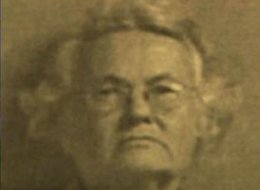
Patricia Ritz, a notorious and convicted animal-abuser, died at her own home, only to be devoured after death by her own mistreated wolf-dogs.
Here’s the obvious question: Did Ritz meet the fate she deserved when she became, quite literally, a limited-edition brand of dog food? I’ll say yes, these were her just desserts: the dogs didn’t kill her, but they did help themselves to a bit of protein after years of injury and malnutrition at Ritz’s hands.
What do you think?
Daily Bread
Daily Bread for 9.27.13
by JOHN ADAMS •
Good morning.
The work week ends with sunny skies and a high of seventy-eight. The moon’s a waning crescent with 45% of its visible disk illuminated.
On this day in 1964, the Warren Commission concludes that Lee Harvey Oswald acted alone in assassinating President John F. Kennedy:
Washington, Sept. 27–The assassination of President Kennedy was the work of one man, Lee Harvey Oswald. There was no conspiracy, foreign or domestic.
That was the central finding in the Warren Commission report, made public this evening. Chief Justice Earl Warren and the six other members of the President’s Commission on the Assassination of President John F. Kennedy were unanimous on this and all questions.
The commission found that Jack Ruby was on his own in killing Oswald. It rejected all theories that the two men were in some way connected. It said that neither rightists nor Communists bore responsibility for the murder of the President in Dallas last Nov. 22.
Why did Oswald to it? To this most important and most mysterious question the commission had no certain answer. It suggested that Oswald had no rational purpose, no motive adequate if “judged by the standards of reasonable men”….
Rather, the commission saw Oswald’s terrible act as the product of his entire life–a life “characterized by isolation, frustration and failure.” He was just 24 years old at the time of the assassination.
“Oswald was profoundly alienated from the world in which he lived,” the report said. “He had very few, if any, close relationships with other people and he appeared to have had great difficulty in finding a meaningful place in the world.
“He was never satisfied with anything.
“When he was in the United States, he resented the capitalist system. When he was in the Soviet Union, he apparently resented the Communist party members, who were accorded special privileges and who he thought were betraying Communism, and he spoke well of the United States.”
Scientific American‘s daily trivia question asks about cells. (Clicking on the question leads to its answer.)
Anderson, Cartoons & Comics
Not that far, really
by JOHN ADAMS •

Daily Bread
Daily Bread for 9.26.13
by JOHN ADAMS •
Good morning.
Morning fog will lift, giving way to sunny skies and a high of seventy-five.
You may recall the February premiere of local filmmaker Sean Williamson’s Heavy Hands. (See, The Whitewater Premiere of Heavy Hands: Sunday, 2.10.13 @ 7 PM.) The film will soon reach a British audience, as it will be part of the Raindance film festival in London this Sunday, September 30th. Raindance, by the way, has premiered such films as What’s Eating Gilbert Grape and Cannibal the Musical as well as the UK premiers of Pulp Fiction, Memento, and The Pusher Trilogy. Best wishes for a successful showing.
On this day in 1960, America saw her first televised presidential debate.
On September 26, 1833, a tribal treaty gives land to the government:
1833 – Indian Treaty Cedes to Government
On this date Indian tribes including the Ojibwe, Menominee, Potawatomi, Ho-Chunk, Ottawa, and Sauk ceded land to the government, including areas around Milwaukee, especially to the south and east of the city. The ceded land included much of what is today John Michael Kohler and Terry Andrae State Parks. The Potawatomi continued to live along the Black River until the 1870’s, despite the treaty. [Source: Wisconsin Department of Natural Resources]
Scientific American‘s daily trivia question needs a number. (Clicking on the question leads to its answer.)
Food, Restaurant, Review
Restaurant Review: China House
by JOHN ADAMS •
View Larger Map
China House, along West Main Street in Whitewater, sits in the city’s most visible retail district. It’s a restaurant with both take-out service and eat-in seating.
It’s not an easy establishment to review, and part of the reason is that China House is really only one kind of establishment – a take-out restaurant. The menu accurately describes China House as offering “TAKE OUT & EAT IN” fare, but the dining room is secondary.
If I were reviewing only the take-out service, I would have rated China House more than three of four stars: it offers a full menu of well-prepared Chinese cuisine. There’s a rule that good restaurant have limited menus, but that guideline doesn’t apply to Chinese take-out: the menu is supposed to be large, as many of the items are easily and quickly prepared.
That’s true with China House: you’ll find several selections from among each of the expected categories (Appetizers, Soup, Fried Rice, Chow Mein, Chop Suey, Lo Mein, Egg Foo Young, Moo Shu, Pork, Chicken, Beef, Seafood, House Specialities, Combination Plates, and Lunch Specialities).
There are, I’d guess, about one-hundred menu fifty items in all.
They’re well made, by this key requirement: there’s not too much sauce. The easiest way to disguise a meal of meat and vegetables is with too much sauce, slathered over the ingredients to obscure underlying deficiencies. At China House, meat and fish are tender and flavorful, and vegetables are soft without being limp.
That’s just as it should be. Nothing overpowers, nothing conceals: one can taste each ingredient, in the proper combination of each. Portions are generous, too, by the way.
Near the kitchen window, to the right, there are all the take-out items one might like (extra sauces, chop sticks, napkins, plastic forks). I don’t think you’ll need or benefit from extra sauces, but they’re there if you’d like.
My favorites – Beef with Broccoli and Moo Goo Gai Pan.
As a take-out place, it’s a good one. As an eat-in restaurant, I’ll suggest plainly that the dining room, in design, furnishings, and atmosphere is simply an afterthought. Although the menu proclaims both take-out and eat-in options, the eat-in experience is disappointing, in a plain and dining room with no table service.
But, really, I don’t think China House is an eat-in establishment, despite what the menu proclaims. I’d guess most people see it as a take-out place,a and so they don’t care about the dining room – for them it’s a waiting room. Fair enough, I’d say.
There are two suggestions that would help China House.
First, why not start taking cards – they’ve a no credit/bank cards policy that’s silly. Any merchant should be able to set up an account with something like Square, after all. That card-processing company offers a “[a] card reader, simple pricing, and smarter business tools [that] make it easy for merchants to do what they love and get paid.” Square can even process credit cards while attached to a merchant’s smart phone.
I brought cash for the occasion of my visits, but like others I’d rather not carry cash except for emergencies, as it’s easier to keep track of electronic transactions.
Second, why not deliver? Pizza shops do so easily; China House could do the same.
Still, as a take-out establishment, where food matters and atmosphere simply doesn’t, I like China House.
Recommended.
Enjoy.
LOCATION: 1128 W Main St, Whitewater, WI 53190. See, Google Map and directions embedded at the beginning of this review.
(262) 473-9788.
OPEN: Monday – Saturday 10:30 AM – 10:30 PM, Sunday 10:30 AM – 10:00 PM.
PRICES: Meal & soda for under $10.
RESERVATIONS: Unnecessary.
DRINKS: Coffee, tea, juice, sodas.
SOUND: Light – no background music.
SERVICE: No table service.
VISITS: Two (both supper, as takeout and seated dining).
RATING: Recommended.

RATING SCALE: From one to four stars, representing
the full experience of food, atmosphere, service, and pricing.
INDEPENDENCE: This review is delivered without
financial or other connection to the establishment or its owner. The
dining experience was that of an ordinary patron, without notice to
the staff or requests for special consideration.
Daily Bread
Daily Bread for 9.25.13
by JOHN ADAMS •
Good morning.
We’ll have areas of fog in the morning, but thereafter sunny skies and a high of seventy.
On this day in 1957, Pres. Eisenhower orders federal soldiers to prevent obstruction of justice and assure lawful integration of Central High in Little Rock, Arkansas. On September 25, 1897, William Faulkner is born.
On this day in 1961, Wisconsin passes a law on seatbelts:
1961 – Law Requires Seatbelts in Wisconsin Cars
On this date Wisconsin Governor Gaylord Nelson signed into law a bill that required all 1962 cars sold in Wisconsin to be equipped with seat belts. [Source: Janesville Gazette]
Scientific American‘s trivia question asks about unfair labor. (Clicking on the question leads to its answer.)
How many people are forced to labor without wages worldwide?
Art
Film: Portrait of a Metal Worker
by JOHN ADAMS •
School District
Truths that the Whitewater Schools’ Composite Stats Don’t Show
by JOHN ADAMS •
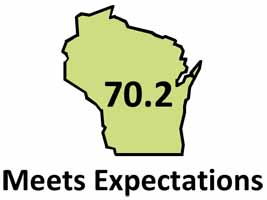
Wisconsin, like too much of America, now pushes at each turn for measurement, quantification, and numerical assessment of student performance. There should be measures – I merely have my doubts that displaying a top-line score describes meaningfully Wisconsin’s or Whitewater’s academic performance.
(Truly, the craze for measurement strikes me as half-clever person’s attempt to sound scientific and especially clever. It’s all over the country now, but when actual accomplishment among graduates proves lacking despite these scores upon scores, people will abandon confidence in these measurements. I believe in true scholastic achievement; cramming for – and later skimming over – these numbers won’t get America there.)
Looking deeper – and isn’t that the least one can expect of true scholastic accomplishments? – a few things about Whitewater (and nearby towns in the district) stand out.
(The Wisconsin Department of Public Instruction report card for Whitewater is available online, and it’s more detailed than a single score or single sheet per school.)
Whitewater’s Economy. We are an economically struggling community, where forty-four percent (44%) of Whitewater’s students are economically disadvantaged.
That’s not a school district problem – it’s a community problem of the highest order.
We are the most prosperous and accomplished country on earth, but the American dream has not reached vast numbers of children in Whitewater. Until it does, arrogance, glad-handing, self-promotion, and crowing are disgraceful.
The champions of the status quo cannot win this argument; they’ll either try to conceal the truth or hope to change the subject as quickly as possible. Both tactics will prove fruitless: this is the genuine condition of the town in which they live.
I am confident that we can and will fix this problem in the years ahead. I am an optimist for a better future in Whitewater, for all her people. What’s been tried before has failed and will fail – a wholly different approach is needed: fewer big projects, fewer regulations, lower taxes, an emphasis on small businesses, and a shift to assistance for the needy that’s far less costly than the empty schemes of our self-important town squires.
Whitewater’s Increasing Diversity. What are the Whitewater Schools like?
They’re diverse and multicultural – there is no homogeneous student population. Just over sixty-seven percent (67.1%) of her students are white, almost twenty-six percent (25.9%) are Hispanic, three percent each Asian (3.2%) or black (3.3%), with under a percent (0.5%) being American Indian or Alaskan Native.
Whitewater’s looking more like America each day. That’s all to the good – America truly is exceptional and truly is admirable.
Comparing Schools. It’s almost too funny that even DPI urges readers that “[r]eport cards for different types of schools or districts should not be directly compared” but that a direct comparison between schools is the very thing one does by listing the top-line scores in bold font for each of our schools.
Lincoln Inquiry Charter School isn’t like the other schools in our district, but in displaying the data as a single number and picture for each school, one inevitably does exactly what DPI says should not be done. That school’s strengths and weakness won’t show properly in the same measure as conventional schools. Charter schools deserve a more specific (to their method) measurement.
There’s my point, from my initial paragraph, of course: it’s a none-too-clever approach to try to compare schools in such a simplistic way. It’s hardly the measure of a worthy education to do so.
Wisconsin shouldn’t be hawking reports on educational performance that fall below the standards of a suitably educated person.
There’s the only simple thing that DPI should be thinking about.
Daily Bread
Daily Bread for 9.24.13
by JOHN ADAMS •
Good morning.
Tuesday brings a sunny day with a high near seventy to Whitewater, with winds of 5 to 10 mph.
Whitewater’s Urban Forestry Commission meets today at 4:30 PM, and her Bicycle & Pedestrian Master Plan Steering Committee at 6 PM.
On this day in 1789, America gets her first Supreme Court:
The Judiciary Act of 1789 is passed by Congress and signed by President George Washington, establishing the Supreme Court of the United States as a tribunal made up of six justices who were to serve on the court until death or retirement. That day, President Washington nominated John Jay to preside as chief justice, and John Rutledge, William Cushing, John Blair, Robert Harrison, and James Wilson to be associate justices. On September 26, all six appointments were confirmed by the U.S. Senate….
The U.S. Supreme Court grew into the most important judicial body in the world in terms of its central place in the American political order. According to the Constitution, the size of the court is set by Congress, and the number of justices varied during the 19th century before stabilizing in 1869 at nine. In times of constitutional crisis, the nation’s highest court has always played a definitive role in resolving, for better or worse, the great issues of the time.
Scientific American‘s trivia question asks about an inventor. (Clicking on the question leads to its answer.)
The question should really ask who was the first human to invent the hologram, as this one was designed even earlier, a long time ago, in a galaxy far, far away: