FREE WHITEWATER

Daily Bread for 6.21.13

Good morning.

Summer comes to Whitewater on a partly sunny day, with a high of eighty-five, and a likelihood of afternoon thundershowers.

On this day in 1788, the U.S. Constitution receives ratification from a ninth state:

New Hampshire becomes the ninth and last necessary state to ratify the Constitution of the United States, thereby making the document the law of the land.

By 1786, defects in the post-Revolutionary War Articles of Confederation were apparent, such as the lack of central authority over foreign and domestic commerce. Congress endorsed a plan to draft a new constitution, and on May 25, 1787, the Constitutional Convention convened at Independence Hall in Philadelphia. On September 17, 1787, after three months of debate moderated by convention president George Washington, the new U.S. constitution, which created a strong federal government with an intricate system of checks and balances, was signed by 38 of the 41 delegates present at the conclusion of the convention. As dictated by Article VII, the document would not become binding until it was ratified by nine of the 13 states.

Beginning on December 7, five states–Delaware, Pennsylvania, New Jersey, Georgia, and Connecticut–ratified it in quick succession. However, other states, especially Massachusetts, opposed the document, as it failed to reserve undelegated powers to the states and lacked constitutional protection of basic political rights, such as freedom of speech, religion, and the press. In February 1788, a compromise was reached under which Massachusetts and other states would agree to ratify the document with the assurance that amendments would be immediately proposed. The Constitution was thus narrowly ratified in Massachusetts, followed by Maryland and South Carolina. On June 21, 1788, New Hampshire became the ninth state to ratify the document, and it was subsequently agreed that government under the U.S. Constitution would begin on March 4, 1789. In June, Virginia ratified the Constitution, followed by New York in July.

On 6.21.1921, Wisconsin leads the nation:

1921 – Nation’s First Women’s Rights Bill Passed
On this day, the Wisconsin legislature passed the nation’s first bill ensuring that women have the same legal rights as men. Section 6.015 opened, “Women shall have the same rights and privileges under the law as men…” It was signed into law on July 11. [Source: Chicago Tribune, June 21, 1921, p. 12]

Puzzability has the final puzzle in its weekday series about summer, running from 6.17 to 6.21:

Summer Is a-Comin’ In
We’ll be welcoming in the new season every day this week. For each day, we started with a word, added the six letters in the word SUMMER, and rearranged all the letters to get a new phrase. Both pieces are described in each day’s clue, with the shorter one first.

Example:
Fish tank scum; church basement flea market-style event

Answer:
Algae; rummage sale

Here’s the puzzle for today:

Utterly disinterested; abstract, as opposed to applied, study of numbers.

Daily Bread for 6.20.13

Good morning.

Thursday in Whitewater will be mostly sunny with a high of eighty-four. Sunrise today was at 5:16 AM, and sunset will be at 8:37 AM. It’s a waxing gibbous moon with 89% of the its visible disk illuminated.

Multiply all the pizza sales in Russia by all the deliverymen and all the ways to observe them and one’s bound to learn of at least one incident like this:

On this day in 1975, a summer blockbuster debuts:

…Jaws, a film directed by Steven Spielberg that made countless viewers afraid to go into the water, opens in theaters. The story of a great white shark that terrorizes a New England resort town became an instant blockbuster and the highest-grossing film in movie history until it was bested by 1977’s Star Wars. Jaws was nominated for an Academy Award in the Best Picture category and took home three Oscars, for Best Film Editing, Best Original Score and Best Sound. The film, a breakthrough for director Spielberg, then 27 years old, spawned three sequels.

The film starred Roy Scheider as principled police chief Martin Brody, Richard Dreyfuss as a marine biologist named Matt Hooper and Robert Shaw as a grizzled fisherman called Quint. It was set in the fictional beach town of Amity, and based on a best-selling novel, released in 1973, by Peter Benchley. Subsequent water-themed Benchley bestsellers also made it to the big screen, including The Deep (1977).

On 6.20.1911, a Wisconsin labor strike:

1911 – Italian Working Men Strike
On this date Italian working men, employed by Andrus Asphalt Company in Madison, went on strike and threatened to kill their foreman if they did not receive an increase in wages for laying pavement. The men demanded a 25-cent (a day) raise, from $1.75 to $2.00. To learn more about strikes and the labor movement visit our Birth of the Labor Movement page in Turning Points. [Source: Bishops to Bootleggers: A Biographical Guide to Resurrection Cemetery, pg. 184]

Puzzability has a series about summer, running from 6.17 to 6.21:

Summer Is a-Comin’ In
We’ll be welcoming in the new season every day this week. For each day, we started with a word, added the six letters in the word SUMMER, and rearranged all the letters to get a new phrase. Both pieces are described in each day’s clue, with the shorter one first.

Example:
Fish tank scum; church basement flea market-style event

Answer:
Algae; rummage sale

Here’s the puzzle for Thursday:

Pertaining to plants; 1 for hydrogen, 2 for helium, and so on.

Daily Bread for 6.19.13

Good morning.

Mid-week in Whitewater will be sunny and mild, with a high of seventy-five.

Whitewater’s Tech Park Board meets this morning at 8 AM.

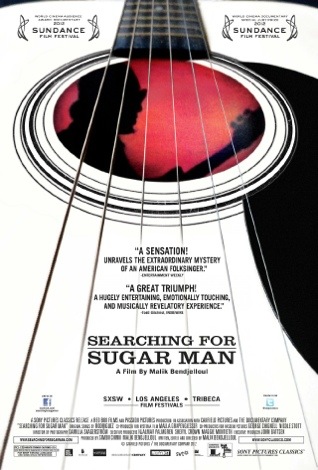
Seniors in the Park offers a free showing of Searching for Sugar Man today at 12:30 PM at Starin Park’s Community Building.

On this day in 1917, a change of name for the British royal family:

…during the third year of World War I, Britain’s King George V orders the British royal family to dispense with the use of German titles and surnames, changing the surname of his own family, the decidedly Germanic Saxe-Coburg-Gotha, to Windsor….

With the outbreak of World War I in the summer of 1914, strong anti-German feeling within Britain caused sensitivity among the royal family about its German roots. Kaiser Wilhelm II of Germany, also a grandson of Queen Victoria, was the king’s cousin; the queen herself was German. As a result, on June 19, 1917, the king decreed that the royal surname was thereby changed from Saxe-Coburg-Gotha to Windsor….

Puzzability has a new series about summer, running from 6.17 to 6.21:

Summer Is a-Comin’ In
We’ll be welcoming in the new season every day this week. For each day, we started with a word, added the six letters in the word SUMMER, and rearranged all the letters to get a new phrase. Both pieces are described in each day’s clue, with the shorter one first.

Example:
Fish tank scum; church basement flea market-style event

Answer:
Algae; rummage sale

Here’s the puzzle for Wednesday:

Attractive, as a wench; ability to perform a familiar movement without conscious thought.

Part 2: Hey, Walworth County, How About Buying Over-Priced, Half-Unsuitable Parkland with Taxpayer Money!

I posted last week against a proposal for Walworth County to purchase nearly two hundred acres of overpriced, half-unsuitable parkland. Four days later, on Saturday, June 15th, the Janesville Gazette‘s editorialist wrote in support of the proposed purchase.

For my original post, see Hey, Walworth County, How About Buying Over-Priced, Half-Unsuitable Parkland with Taxpayer Money!

(The Gazette doesn’t post its editorials online, but I’ll reproduce and reply to their principal contentions, below. )

I’ll briefly summarize my previous position, and then group the newspaper editorialist’s arguments into one of three categories: those that concede my contentions, those that repeat unthinking basic fallacies, or those that actually make the case for the purchase weaker, and the case against purchase even stronger.

Unexpected, but I think demonstrable: the Gazette‘s editorial actually undermines the position it attempts to bolster.

Initial case against the purchase.

I offered seven arguments against a public purchase of supposed parkland at a cost of $1.9-million dollars: (1) the cost is high, nearly two-million dollars, (2) the land is likely over-priced, (3) it’s a purchase for the low-priority goal of additional recreational land, (4) there’s already the 22,000-acre Kettle Moraine State Forest, Southern Unit nearby, (5) the purchase would deplete the park fund and require additional borrowing, (6) there are greater needs for this taxpayer money, and (7) it’s wholly false to contend that the purchase would truly have ‘zero tax impact.’

What the editorialist concedes.

The Gazette’s editorial makes no attempt – since there’s no attempt that could succeed – to contend that this is the best use of millions in public money, of all uses.

One reads, unconvincingly, that the land’s supposedly pretty as a postcard, as though there were no other land in the county already and equally as beautiful. There’s not the slightest attempt to explain why Walworth County should consider this small, expensive parcel more beautiful – or attractive to tourists – than the vast Kettle Moraine State Forest.

Simply asserting that it will somehow draw incremental tourists – as against all the other natural and created attractions in the county – isn’t a policy position – it’s an unsupported declaration.

If the Gazette wishes to assert the value of a $1.9-million-dollar public purchase, it owes readers more than a tired cliché about something being ‘pretty as a postcard.’

There’s no independent, credible assessment offered that the land is even accurately priced.

The canard the editorialist repeats.

One reads repeatedly of an impossibility – that there would be zero tax impact from this purchase. There is, of course, a way in which this is seemingly – but only seemingly – correct: as an appeal to local selfishness. Presumably, what Mr. Brunner (Walworth County Central Services Director) and others mean when they so contend is that there would be zero local impact – an appeal to Walworth County taxpayers’ hopes that their taxes won’t go up.

20130618-090337.jpg

It’s a pigs-to-the-trough call, the profligate policymaker’s contention that one can take public money from the state or federal government and it will have no local tax impact. It’s also deeply condescending, treating people falsely as gluttons, as though they’re greedily seeking any local advantage.

It’s not true of the overwhelming majority in Walworth County – not at all. This patronizing, false view of people as greedy and selfish reflects poorly only on Walworth County’s officials.

All public spending either increases taxes or public debt – there is no free money. Unless the Gazette‘s editorialist or Mr. Brunner operate a printing press, they cannot escape this fundamental truth. (In fact, even if they have a press, any amount of money they print would have an impact all its own, and negative on the community, state, and nation.)

Significantly, as Walworth County taxpayers are also state taxpayers, they’ll inescapably pay a price in taxes for taking state money for this over-priced land.

This selfish thinking, in which public men insist that they can confer local benefits without local costs, is ignorant chicanery. It belongs alongside perpetual motion machines, cold fusion, and tea leaves as too-good-to-be-true ideas.

How the editorialist makes the case for the parkland weaker, and the case against it stronger.

One learns three additional points about the possible purchase. First, the county didn’t budget for this land properly last year – and so it’s a rushed, cobbled-together proposal now. It’s a grant-grab, one imagines, a hurry-up fire drill to take tax money that officials falsely contend is free grant money.

If new parkland were so important, Messrs. Brunner and Bretl (County Administrator David Bretl) should have budgeted properly last year for this year’s expenses.

If they cared so very much for this professed need, they would have tried to satisfy it sooner, and more deliberately.

Absurdly, one learns from the Gazette‘s editorial that “absent a budgetary change in direction, that money [$50,000 per year to pay off parkland borrowing] wouldn’t be available to maintain roads.”

Is the editorialist joking? That’s a prime reason to oppose this unnecessary parkland purchase.

Funny, too, that Mr. Brunner was described when he took his current job as Central Services Director and Highway Commissioner. That’s quite the highway commissioner, whose hankering for unnecessary parkland would leave the county’s roads at a disadvantage.

Finally, one reads the contention that – as half the parkland isn’t really useful at all but for farming – that Walworth County could rent it out as farmland.

This is the final absurdity – that a public entity would buy parkland half unsuited and then lease it as farmland.

Walworth County would thus become a public competitor to existing private landowners, leasing land as they might wish to do.

It’s not the place of county government to buy a thing and use half of it for another purpose in competition with private farmers.

The case against this purchase is stronger, and the case for it even weaker, after the Gazette‘s editorial.

Thanks, gentlemen, you’ve unwittingly helped the good cause of prudent public policy by talking still more about this foolish proposal.

Wednesday @ 12:30, Seniors in the Park Film: Searching for Sugar Man

20130618-063859.jpg

At Starin Park’s community building on Wednesday at 12:30, there will be a free showing of the Academy Award winning Best Documentary for 2012, Searching for Sugar Man. It’s the story of two “South Africans who set out to discover what happened to their unlikely musical hero, the mysterious 1970s rock ‘n’ roller, Rodriguez.”

More on the highly-praised documentary is available online at the Internet Movie Database.

Daily Bread for 6.18.13

Good morning.

Tuesday in Whitewater will be mostly sunny with a high of seventy-two.

Common Council meets tonight at 6:30 PM.

On 6.18.1812, America goes to war:

The day after the Senate followed the House of Representatives in voting to declare war against Great Britain, President James Madison signs the declaration into law–and the War of 1812 begins. The American war declaration, opposed by a sizable minority in Congress, had been called in response to the British economic blockade of France, the induction of American seaman into the British Royal Navy against their will, and the British support of hostile Indian tribes along the Great Lakes frontier. A faction of Congress known as the “War Hawks” had been advocating war with Britain for several years and had not hidden their hopes that a U.S. invasion of Canada might result in significant territorial land gains for the United States….

Puzzability has a new series about summer, running from 6.17 to 6.21:

Summer Is a-Comin’ In
We’ll be welcoming in the new season every day this week. For each day, we started with a word, added the six letters in the word SUMMER, and rearranged all the letters to get a new phrase. Both pieces are described in each day’s clue, with the shorter one first.

Example:
Fish tank scum; church basement flea market-style event

Answer:
Algae; rummage sale

Here’s the puzzle for Tuesday:

Dense Italian ice cream that’s a summer treat; repasts featuring only the finest ingredients.

The Disgrace that is the Wisconsin Economic Development Corporation

Sometimes one would prefer to be wrong, rather than right. The waste, errors, exaggerations, and lies of the Wisconsin Economic Development Corporation are such a case:

Madison — Three Senate Democrats asked Wednesday [6.12] for a criminal investigation of Gov. Scott Walker’s signature job creation agency.

The request comes after an audit last month found the Wisconsin Economic Development Corp. didn’t require financial statements from companies receiving incentives, gave awards to ineligible businesses and awarded nearly $1 million in tax credits to companies for actions taken before they had signed their contracts with the state. The agency didn’t adequately follow up to see if jobs were being created and didn’t clearly report the jobs numbers that it did have, the report by the non-partisan Legislative Audit Bureau found.

For every official of Whitewater’s municipal government, Community Development Authority, or the University of Wisconsin-Whitewater who ever boasted of ties with the WEDC, here’s an inescapable truth: you’ve sought an alliance with a corrupt, dishonest agency, a crony-capitalist disgrace to all Wisconsin.

The price of self-promotion, flimsy claims, and wasted resources has been too high for our state’s people. Having ignored sound economics and others’ genuine & pressing needs, each and every official who’s sought advantage through the Wisconsin Economic Development Authority has a share in that selfish disaster.

The people of our small city, and our whole state, have always deserved better.

(For prior criticism of the WEDC at this website, please see 1, 2, 3, 4, 5, 6, 7.)

Tomorrow: An update about Walworth County’s proposed purchase of so-called parkland.

Daily Bread for 6.17.13

Good morning.

Whitewater’s week begins with a sunny day with a high of eighty-six, and a one-in-five chance of isolated thunderstorms in the afternoon.

Whitewater’s LIbrary Board meets tonight at 6:30 PM.

On this day in 1972, five burglars – but not just any five – were arrested:

In the early morning of June 17, 1972, five men are arrested for breaking into the Democratic National Committee headquarters at the Watergate, an office-hotel-apartment complex in Washington, D.C. In their possession were burglary tools, cameras and film, and three pen-size tear gas guns. At the scene of the crime, and in rooms the men rented at the Watergate, sophisticated electronic bugging equipment was found. Three of the men were Cuban exiles, one was a Cuban American, and the fifth was James W. McCord, Jr., a former CIA agent. That day, the suspects, who said they were “anti-communists,” were charged with felonious burglary and possession of implements of crime.

On June 18, however, it was revealed that James McCord was the salaried security coordinator for President Richard Nixon’s reelection committee. The next day, E. Howard Hunt, Jr., a former White House aide, was linked to the five suspects. In July, G. Gordon Liddy, finance counsel for the Committee for the Re-election of the President, was also implicated as an accomplice. In August, President Nixon announced that a White House investigation of the Watergate break-in had concluded that administration officials were not involved. In September, Liddy, Hunt, McCord, and the four Cubans were indicted by a federal grand jury on eight counts of breaking into and illegally bugging the Democratic National Committee headquarters.

In September and October, reporters Carl Bernstein and Bob Woodward of The Washington Post uncovered evidence of illegal political espionage carried out by the White House and the Committee for the Re-election of the President, including the existence of a secret fund kept for the purpose and the existence of political spies hired by the committee. Despite these reports, and a growing call for a Watergate investigation on Capitol Hill, Richard Nixon was reelected president in November 1972 in a landslide victory.

Puzzability has a new series for us, running from 6.17 to 6.21:

Summer Is a-Comin’ In
We’ll be welcoming in the new season every day this week. For each day, we started with a word, added the six letters in the word SUMMER, and rearranged all the letters to get a new phrase. Both pieces are described in each day’s clue, with the shorter one first.

Example:
Fish tank scum; church basement flea market-style event

Answer:
Algae; rummage sale

Here’s the puzzle for Monday:

Preserving with a VCR; classic Wrigley’s product.

Recent Tweets, 6.9 to 6.15