
FREE WHITEWATER

A Review of Whitewater’s Economy is Like Peeling an Artichoke

20130802-121746.jpg

Artichokes, of course, symbolize the idea of multi-layered things, of peeling back an exterior to discover an interior truth.

Whitewater’s economy is like that – one needs to peel away layer upon layer of happy-talk headlines to address the truth of our present condition. (In a way, the only indubitable success those headlines assure is the continued employment of press-agent reporters and incumbent bureaucrats.)

A traditional presentation in town might start with how wonderful something might be, but place costs, difficulties, etc., only deeper inside, where those critical facts would be obscured and (it might be hoped) forever ignored.

There’s a more reasonable order through which to consider policy in town: begin with our actual conditions, assess previous policies designed to address those conditions, assess whether those policies have been effective, thereafter suggesting either more of the same or, if necessary, something different.

It’s quite the task, both because a good amount of policy in Whitewater seems to end with headlines themselves, deeper and disappointing layers of the municipal artichoke being obscured, and because actual policies are less often self-contradictory or jumbled in odd ways.

It’s a worthwhile project this August to consider (1) the economy of the city, (2) the policies meant to advance that economy, (3) a how those policies have fared (a comparison of claims and results), and (4) what that comparison suggests about effective future policies.

Working though an outline for a series of posts along these lines, one point seems to stand out: major municipal projects in this city often depend on the fiscal account rather than as truly shared public-private ventures.

(An approach like this might seem to be the same as the principle behind tax incremental financing, but it differs in relative public-private share, guarantees of private investment, and suitability for areas outside of those truly blighted parts of the city. If anything, I think one can show that it’s a misunderstanding writ large of the supposed principles underlying tax incremental financing).

This underlying misunderstanding also explains the operative motivation behind a land sale from the city to the Community Development Authority.

Lots to consider, but easily worth pondering. I’m an optimist about the longterm future of the city, and am convinced that looking closely advances good policy.

Friday Poll – Restaurant Whistleblowing: Good or Bad Tactic?

Yesterday I posted about a worker at a Golden Corral who recorded and published to YouTube a video with accusations about conditions at his Florida employer’s restaurant. I wrote that videos of this kind were a force for good. The video and a poll appear below. What do you think?

Two quick notes: 1. I’ve never eaten at a Golden Corral and wouldn’t have been inclined to do so, even before the video. 2. Today’s poll is simply about this incidents like this, generally – I neither have nor would expect a similar video to appear about a local establishment. Today’s poll doesn’t imply a local revelation.


Daily Bread for 8.2.13

Good morning.

Whitewater will have a partly cloudy day with a slight chance of thunderstorms and a high of eighty.

On this day in 1990, Iraq invades Kuwait:

At about 2 a.m. local time, Iraqi forces invade Kuwait, Iraq’s tiny, oil-rich neighbor. Kuwait’s defense forces were rapidly overwhelmed, and those that were not destroyed retreated to Saudi Arabia. The emir of Kuwait, his family, and other government leaders fled to Saudi Arabia, and within hours Kuwait City had been captured and the Iraqis had established a provincial government. By annexing Kuwait, Iraq gained control of 20 percent of the world’s oil reserves and, for the first time, a substantial coastline on the Persian Gulf. The same day, the United Nations Security Council unanimously denounced the invasion and demanded Iraq’s immediate withdrawal from Kuwait. On August 6, the Security Council imposed a worldwide ban on trade with Iraq.

On this day in 1832, the Black Hawk War ends:

1832 – Black Hawk War Ends
On this date the defeat of Black Hawk and his followers at the Battle of Bad Axe, ended the Black Hawk War. Black Hawk led the American troops northward while the rest of the Indians constructed rafts and canoes to facilitate an escape over the Mississippi river. The plan was successful initially but eventually General Atkinson realized the ruse. In the battle, women, children and the elderly hid behind rocks and logs and American soldiers often could not or did not differentiate between warriors and the women and children. Atkinson sent Wabasha and his Sioux warriors, enemies of the Sauk, after the approximately 150 members of the British Band that made it to the Western bank of the Mississippi. The Sauk, “escaped the best they could, and dispersed”, but only 22 women and childern were spared. Black Hawk escaped, but the Battle of Bad Axe marked the end of the war. [Source: Along the Black Hawk Trail by William F. Stark, p.142-153]

Puzzability‘s Last Laughs series ends today:

Last Laughs

For your amusement this week, we started each day with the name of a TV star who won an Emmy for his or her lead performance in a comedy series. Then we replaced all the letters in each word—except the last letter—with asterisks.

Example:
***Y ****R ****E

Answer:
Mary Tyler Moore

Here’s Friday’s puzzle:

******Y ***G

A Different Kind of (Restaurant) Review

Earlier this month, an employee of a Florida Golden Corral named Brandon Huber posted a video in which he contends that his restaurant was improperly storing food. (The restaurant owner, Eric Holm, has disputed many of the contentions against his establishment, and derided Huber’s motivation as a mercenary one.)

Huber’s video (one of several he recorded) appears below. Setting aside the veracity of his claims, one is still left with a question about these means: one can use YouTube to take a complaint, literally, to millions of viewers.

Whistleblower tactics have this advantage: more people learn of a contention, arguably more quickly, without the need to trust that a health inspector will act or act quickly on the public’s behalf.

Disappointment over public officials’ laziness, indifference, or coziness toward the vendors to whom they should be impartial matters less when one can bypass those unworthy officials and take one’s case directly to a community.

Foul establishments cannot assume that simply hiding misconduct from patrons, or greasing a health inspector’s palm, will conceal their misconduct when any of the employees on whom the business depends may become a whistleblower.

Daily Bread for 8.1.13

Good morning.

We’ll have a sunny Thursday in Whitewater, with a high of eighty.

Whitewater’s Landmarks Commission meets this evening at 6 PM.

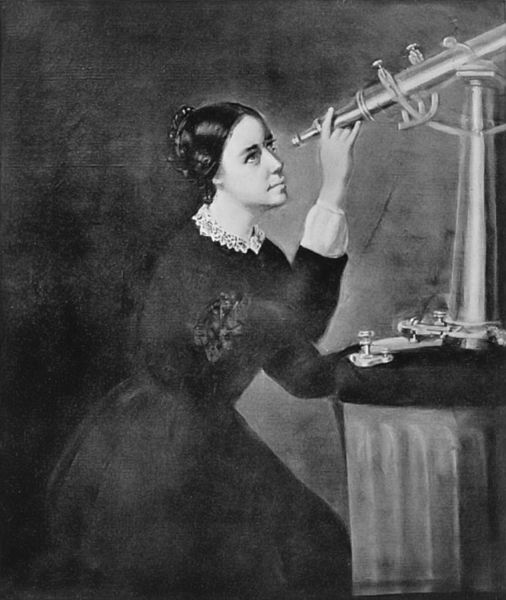
506px-Maria_Mitchell

Maria Mitchell, painting by H. Dasell, 1851

It’s the anniversary today, from 1818, of the birthday of America’s first professional woman in astronomy, Maria Mitchell:

Maria Mitchell (August 1, 1818 – June 28, 1889)…was an American astronomer, who in 1847, by using a telescope, discovered a comet which as a result became known as “Miss Mitchell’s Comet”. She won a gold medal prize for her discovery which was presented to her by King Frederick VII of Denmark. The medal said “Not in vain do we watch the setting and rising of the stars”. Mitchell was the first American woman to work as a professional astronomer.

On this day in 1832, Black Hawk’s escape fails:

1832 – Black Hawk’s Escape Across Mississippi Blocked
On this date the armed steamboat the Warrior reached the British Band on the Mississippi where they hoped to cross the river and escape the American troops. After being guided by a Sioux Indian, the ship which held an artillery piece, dropped anchor, making the Sauk escape virtually impossible. Black Hawk attempted to surrender to the Warrior, waving a white cloth, but the crew either did not understand or did not accept the message. The ship and its men opened fire, killing a number of unprepared Indians. [Source: Along the Black Hawk Trail by William F. Stark, p. 140-141]

Puzzability has a series this week, from 7.29 to 8.2, entitled Last Laughs:

Last Laughs

For your amusement this week, we started each day with the name of a TV star who won an Emmy for his or her lead performance in a comedy series. Then we replaced all the letters in each word—except the last letter—with asterisks.

Example:
***Y ****R ****E

Answer:
Mary Tyler Moore

Here’s Thursday’s puzzle:

**A *****R

Daily Bread for 7.31.13

Good morning.

We’ll have a one-third chance of afternoon thunderstorms this Wednesday, and a high of seventy-seven.

July 31, 1777, a young French aristocrat begins serving America without compensation:

On this day in 1777, a 19-year-old French aristocrat, Marie-Joseph Paul Roch Yves Gilbert du Motier, Marquis de Lafayette, accepts a commission as a major-general in the Continental Army—without pay.

Lafayette served at Brandywine in 1777, as well as Barren Hill, Monmouth and Rhode Island in 1778. Following the formal treaty of alliance with Lafayette’s native France in February 1778 and Britain’s subsequent declaration of war, Lafayette asked to return to Paris and consult the king as to his future service. Washington was willing to spare Lafayette, who departed in January 1779. By March, Franklin reported from Paris that Lafayette had become an excellent advocate for the American cause at the French court. Following his six-month respite in France, Lafayette returned to aid the American war effort in Virginia, where he participated in the successful siege of Yorktown in 1781, before returning to France and the further service of his own country.

On this day in 1967, Lake Geneva’s local government, having no more immediate work before them, decided to strike a blow in defense of Western Civilization:

1967 – Lake Geneva Bans Go-Go Girls
On this date the Lake Geneva city government passed an ordinance banning go-go girls, dancers in bikinis, and swimsuit-clad waitresses from working in establishments that served alcohol. [Source: Janesville Gazette]

Puzzability has a series this week, from 7.29 to 8.2, entitled Last Laughs:

Last Laughs

For your amusement this week, we started each day with the name of a TV star who won an Emmy for his or her lead performance in a comedy series. Then we replaced all the letters in each word—except the last letter—with asterisks.

Example:
***Y ****R ****E

Answer:
Mary Tyler Moore

Here’s Wednesday’s puzzle:

***N ***A

Local News

There’s a paywall up at Janesville’s GazetteXtra.com, with some content available for free, but much more local news now behind a paywall. I’ve no idea whether their effort will be a success, and the best one can say is that it will be tough going. Everyone at the paper surely sees that.

In the end, though, it’s not ‘local news,’ but local news in which the press scrutinizes local government, that truly matters. Print’s dying, and is so ill that it believes itself even too weak to reach for restorative medicine.

That medicine, of course, is news that scrutinizes politics and politicians, that speaks truth to political power.

News should mean more than reworked press releases, government-drafted announcements, dull recitations of facts, and obituaries.

Perhaps someone from print will summon the strength and will to extend an atrophied arm toward the nightstand, and grasp the medicine that offers, as it always has during centuries of liberty on this continent, a dependable cure.

But if not, and if every established print publication (and similar online ones) should succumb to the malady of servility, then the rest of us will go on, using new media to express and defend that centuries-long heritage (each in our own small, but sincere, way).

America will be just fine, with her best yet ahead.

Daily Bread for 7.30.13

Good morning.

We’ll have a high of seventy-four with a thirty percent chance of showers today.

On this day in 1863, Henry Ford is born. Upon his death eighty-three years later, the New York Times wrote of him that

Henry Ford was the founder of modern American industrial mass production methods, built on the assembly line and the belt conveyor system, which no less an authority than Marshal Josef Stalin testified were the indispensable foundation for an Allied military victory in the Second World War.

Mr. Ford had many other distinctions. As the founder and unchallenged master of an industrial empire with assets of more than a billion dollars, he was one of the richest men in the world. He was the apostle of an economic philosophy of high wages and short hours that had immense repercussions on American thinking. He was a patron of American folkways and in later years acquired a reputation as a shrewd, kindly sage. But these were all relatively minor compared with the revolutionary importance of his contribution to modern productive processes.

In Wisconsin history, economist Thorstein Veblen is born:

1857 – Thorstein Veblen Born
On this date economist and social commentator Thorstein Bunde Veblen was born in Cato, although some sources place his birth in Valders. He is best known for his book The Theory of The Leisure Class (1899), a classic of social theory that introduced the concept of “conspicuous consumption.” [Source: The Radical Academy]

Puzzability has a series this week, from 7.29 to 8.2, entitled Last Laughs:

Last Laughs

For your amusement this week, we started each day with the name of a TV star who won an Emmy for his or her lead performance in a comedy series. Then we replaced all the letters in each word—except the last letter—with asterisks.

Example:
***Y ****R ****E

Answer:
Mary Tyler Moore

Here’s Tuesday’s puzzle:

***A **Y

The Rolled-Up Newspaper

I was in a Whitewater establishment on Saturday, one that has hundreds of customers a day. On a counter easily visible to patrons sat a two-day-old newspaper, still unrolled and fastened with a rubber band just as when it had been first delivered.

Perhaps someone only delivered Thursday’s paper on Saturday, or – alternatively – no one cared to open Thursday’s paper as it sat unread for two days’ time.

Neither possibility is comforting for print publishing, but I’d guess the worse one is true: the paper sat ignored for forty-eight hours.

There’s the state of print journalism (particularly for an afternoon daily).

Whatever the reason, this is where we are.