
FREE WHITEWATER

Daily Bread for 7.3.13

Good morning.

There’s a chance of thunderstorms today (about 40%), but Whitewater will have mild temperatures in the 70s and light winds. Sunrise was at 5:21 a.m., and sunset will be at 8:37 p.m.

Whitewater’s July 4th events begin today at 5 PM. Tonight features the Miss Whitewater Pageant at 5, the opening of midway amusements, and live music beginning at 8 from The Now.

On this day in 1863, the Union line holds, forcing Lee to clear the field a day later, at Gettysburg:

On July 3, Lee, having failed on the right and the left, planned an assault on Meade’s center. A 15,000-man strong column under General George Pickett was organized, and Lee ordered a massive bombardment of the Union positions. The 10,000 Federals answered the Confederate artillery onslaught, and for more than an hour the guns raged in the heaviest cannonade of the Civil War. At 3 p.m., Pickett led his force into no-man’s-land and found that Lee’s bombardment had failed. As Pickett’s force attempted to cross the mile distance to Cemetery Ridge, Union artillery blew great holes in their lines. Meanwhile, Yankee infantry flanked the main body of “Pickett’s charge” and began cutting down the Confederates. Only a few hundred Virginians reached the Union line, and within minutes they all were dead, dying, or captured. In less than an hour, more than 7,000 Confederate troops had been killed or wounded.

Both armies, exhausted, held their positions until the night of July 4, when Lee withdrew.

Google’s posted a doodle today for Franz Kafka’s birthday:
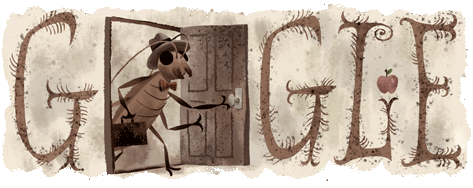
franz_kafkas_130th_birthday-1976005-hp

Puzzability‘s current series, running this week, is called Key Words:

Key Words
We’ve got a parade of patriotic trivia this Independence Day week. The answer to each day’s question is a name or title that contains one of the main words in the well-known first verse of our national anthem.

Example:
What super-sweet cereal is Calvin’s favorite in “Calvin and Hobbes”?

Answer:
Chocolate Frosted Sugar Bombs

Here’s the puzzle for Wednesday:

What competition TV show’s champions have included Kristi Yamaguchi, Emmitt Smith, and Jennifer Grey?

Here’s a link to the lyrics for the first verse of the Star-Spangled Banner.
Daily Bread for 7.2.13

Good morning.

It’s a mild and sunny day ahead: a high of seventy-four with light, morning winds at 5 to 10 mph in the morning.

On this day in 1937, “aviator Amelia Earhart and navigator Fred Noonan disappeared over the Pacific Ocean while attempting to make the first round-the-world flight at the equator.”

On this day in 1832, Lincoln passes through our area:

1832 – Abraham Lincoln Passes through Janesville
On this date Private Abraham Lincoln passed through the Janesville area as part of a mounted company of Illinois militia during the Black Hawk War. [Source: History Just Ahead: A Guide to Wisconsin’s Historical Markers edited by Sarah Davis McBride, p. 117]

Today is also the second day, in 1863, of fighting at Gettysburg:

1863 – (Civil War) Second day at Gettysburg, Pennsylvania
Fighting at Gettysburg began in the afternoon on July 2 and lasted until after dark as Union forces repulsed a series of attacks. That night, Union Major General George Meade held a council of leaders to decide what to do next. Lieutenant Frank Haskell, of Madison, was present when they voted to “allow the Rebel to come up and smash his head against [their position] to any reasonable extent he desired, as he had to-day. After some two hours the council dissolved, and the officers went their several ways.”

Puzzability‘s current series, running this week, is called Key Words:

Key Words
We’ve got a parade of patriotic trivia this Independence Day week. The answer to each day’s question is a name or title that contains one of the main words in the well-known first verse of our national anthem.

Example:
What super-sweet cereal is Calvin’s favorite in “Calvin and Hobbes”?

Answer:
Chocolate Frosted Sugar Bombs

Here’s the puzzle for Tuesday:

What fictional scientist, when exposed inadvertently to the blast of his own gamma bomb, gained the ability to transform into a large superhero?

Here’s a link to the lyrics for the first verse of the Star-Spangled Banner.

Daily Bread for 7.1.13

Good morning.

A new month begins, with sunny skies and a high of seventy-eight.

One hundred fifty years ago, the Battle of Gettysburg begins:

The largest military conflict in North American history begins this day when Union and Confederate forces collide at Gettysburg, Pennsylvania. The epic battle lasted three days and resulted in a retreat to Virginia by Robert E. Lee’s Army of Northern Virginia.

Two months prior to Gettysburg, Lee had dealt a stunning defeat to the Army of the Potomac at Chancellorsville, Virginia. He then made plans for a Northern invasion in order to relieve pressure on war-weary Virginia and to seize the initiative from the Yankees. His army, numbering about 80,000, began moving on June 3. The Army of the Potomac, commanded by Joseph Hooker and numbering just under 100,000, began moving shortly thereafter, staying between Lee and Washington, D.C. But on June 28, frustrated by the Lincoln administration’s restrictions on his autonomy as commander, Hooker resigned and was replaced by George G. Meade.

Meade took command of the Army of the Potomac as Lee’s army moved into Pennsylvania. On the morning of July 1, advance units of the forces came into contact with one another just outside of Gettysburg. The sound of battle attracted other units, and by noon the conflict was raging. During the first hours of battle, Union General John Reynolds was killed, and the Yankees found that they were outnumbered. The battle lines ran around the northwestern rim of Gettysburg. The Confederates applied pressure all along the Union front, and they slowly drove the Yankees through the town.

By evening, the Federal troops rallied on high ground on the southeastern edge of Gettysburg. As more troops arrived, Meade’s army formed a three-mile long, fishhook-shaped line running from Culp’s Hill on the right flank, along Cemetery Hill and Cemetery Ridge, to the base of Little Round Top. The Confederates held Gettysburg, and stretched along a six-mile arc around the Union position….

On July 1st, 1967 (yes, 1967), margarine finally becomes legal in Wisconsin:

1967 – Sale of Oleo Becomes Legal
On this date it became legal to purchase Oleomargarine in Wisconsin. For decades, margarine was considered a contraband spread. Sale of the butter imposter resulted in fines or possible jail terms. Oleomargarine was sold legally in Illinois and frequently smuggled into Wisconsin.

Puzzability has a new series, running from 7.1 to 7.5, entitled, Key Words:

Key Words
We’ve got a parade of patriotic trivia this Independence Day week. The answer to each day’s question is a name or title that contains one of the main words in the well-known first verse of our national anthem.

Example:
What super-sweet cereal is Calvin’s favorite in “Calvin and Hobbes”?

Answer:
Chocolate Frosted Sugar Bombs

Here’s the puzzle for Monday:

What 1932 dystopian novel envisions a society based on the principles of Henry Ford’s assembly line?

Here’s a link to the lyrics for the first verse of the Star-Spangled Banner.

Recent Tweets, 6.23 to 6.29

Daily Bread for 6.30.13

Good morning.

Sunday brings mostly sunny skies and a high of seventy-six to Whitewater. Sunrise this morning was at 5:20 a.m., and sunset will be at 8:37 p.m. The moon is a waning crescent with 45% of the its visible disk illuminated.

Margaret Mitchell’s Gone with the Wind arrives on this day in 1936:

In 1926, Mitchell was forced to quit her job as a reporter at the Atlanta Journal to recover from a series of physical injuries. With too much time on her hands, Mitchell soon grew restless. Working on a Remington typewriter, a gift from her second husband, John R. Marsh, in their cramped one-bedroom apartment, Mitchell began telling the story of an Atlanta belle named Pansy O’Hara.

In tracing Pansy’s tumultuous life from the antebellum South through the Civil War and into the Reconstruction era, Mitchell drew on the tales she had heard from her parents and other relatives, as well as from Confederate war veterans she had met as a young girl. While she was extremely secretive about her work, Mitchell eventually gave the manuscript to Harold Latham, an editor from New York’s MacMillan Publishing. Latham encouraged Mitchell to complete the novel, with one important change: the heroine’s name. Mitchell agreed to change it to Scarlett, now one of the most memorable names in the history of literature.

Published in 1936, Gone with the Wind caused a sensation in Atlanta and went on to sell millions of copies in the United States and throughout the world. While the book drew some criticism for its romanticized view of the Old South and its slaveholding elite, its epic tale of war, passion and loss captivated readers far and wide. By the time Mitchell won the Pulitzer Prize for Fiction in 1937, a movie project was already in the works. The film was produced by Hollywood giant David O. Selznick, who paid Mitchell a record-high $50,000 for the film rights to her book.

Here are scenes from the 1939 film, famous but certainly dated, too:

Daily Bread for 6.29.13

Good morning.

We’ve a day of showers and thunderstorms for Whitewater today, with a high of seventy.

Perhaps you’ve had coffee this morning, as I have. You may have wondered: what’s really in that cup? Wonder no more:

Daily Bread for 6.28.13

Good morning.

Whitewater’s week ends with an eighty percent chance of showers and a high of seventy-six.

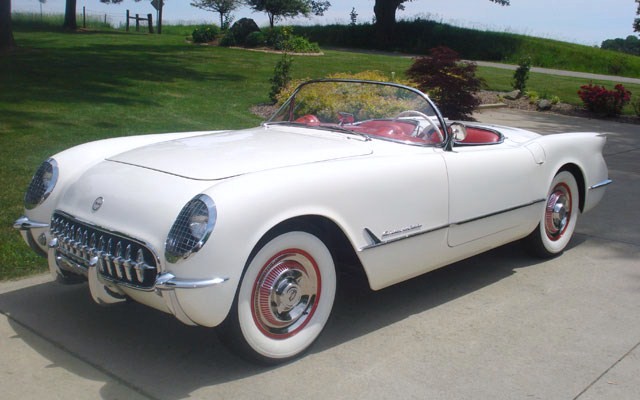
53_Corvette

On this day in 1953, an automotive beginning:

…workers at a Chevrolet plant in Flint, Michigan, assemble the first Corvette, a two-seater sports car that would become an American icon. The first completed production car rolled off the assembly line two days later, one of just 300 Corvettes made that year.

The idea for the Corvette originated with General Motors’ pioneering designer Harley J. Earl, who in 1951 began developing plans for a low-cost American sports car that could compete with Europe’s MGs, Jaguars and Ferraris. The project was eventually code-named “Opel.” In January 1953, GM debuted the Corvette concept car at its Motorama auto show at the Waldorf-Astoria Hotel in New York City. It featured a fiberglass body and a six-cylinder engine and according to GM, was named for the “trim, fleet naval vessel that performed heroic escort and patrol duties during World War II.” The Corvette was a big hit with the public at Motorama and GM soon put the roadster into production.

Today’s anniversary of the Corvette is just the lead-in for the final day of Puzzability’s Assembly Line series.

Puzzability concludes its series about cars:

Assembly Line
This week—summer road trip! For each day, we’ll give you a series of clues, each of which leads to a word. You must drop one letter out of each of these answer words and put them together (in order), adding spaces as needed, to get the make and model of an old car.

Example:
Body’s energy important in acupuncture / penultimate word in many fairy tales / Hogwarts mail carrier / scraped into, as a pattern in glass / compete / large often-canvas bag

Answer:
Chevrolet Chevette (chi / ever / owl / etched / vie / tote)

Here’s the puzzle for Friday:

Work by O’Neill or Simon / lip-synched / large area of Northern Ireland that gave its name to an overcoat.

About that story on Whitewater’s East Gateway Proposal: What’s Missing?

On Tuesday afternoon, Whitewater’s officials held an informational meeting about a proposed public-works beautification project on the east side of the city. It’s not a new idea; those following politics in town for more than a few years would have heard about earlier discussions along these lines.

On Wednesday, the Daily Union published a thousand-word story about the project, and Whitewater’s news and sports website linked to that story in a hundred-word pointer.

I’ve one question about descriptions of the project:

For all these many words, how is it possible that the estimated, public cost of the project has been omitted?

The omission isn’t just odd, it’s absurd: the fundamental, reasonably inescapable questions about projects include (1) what one plans to do, (2) how one will do it, and (3) what it will cost.

Without knowing the estimated cost of a project, one cannot determine adequately its value to a community when compared against alternative uses for that money.

A proper newspaper could omit this information on only one of two bases: (1) gross negligence in reporting on public policy, or (2) an intentional desire to conceal information. Either someone didn’t even ask, or someone didn’t print the answer he received.

I’ve no idea which explanation applies here, but the result’s astonishingly inadequate either way.

(Even 1950s singer Patti Page knew to ask: How Much is that Doggie in the Window? If she could sing a song asking about the price of a dog, a newspaper should be able to ask and print an answer to a question about how much a municipal project might cost.)

Publications may cover public policy as they wish, but one would hope that they’d make at least a fair effort when doing so.

I’ll write more about the merits of this proposal – on its own and weighed against alternative uses for the money – before Council meets on 7.16.13 to consider the project.

My best guess right now, based on prior municipal projects such as the North Street Bridge, is that this must be a seven-figure project: at least a million dollars, and likely significantly more. I’m entirely comfortable asserting that it’s a multiple of a million dollars, depending on design alternatives.

Look around: our small community is filled many thousands of smart, knowledgeable people.

They deserve better coverage of municipal projects than the newspaper coverage of this proposal.

Here’s a bonus video of Patti Page singing her (fourth!) Number 1 hit. Enjoy.