FREE WHITEWATER

Daily Bread for 2.15.13

Good morning.

Whitewater’s week ends with a chance of scattered flurries and a high of twenty-four. We’ll have 10h 34m of sunlight, 11h 32m of daylight, with a waxing crescent moon.

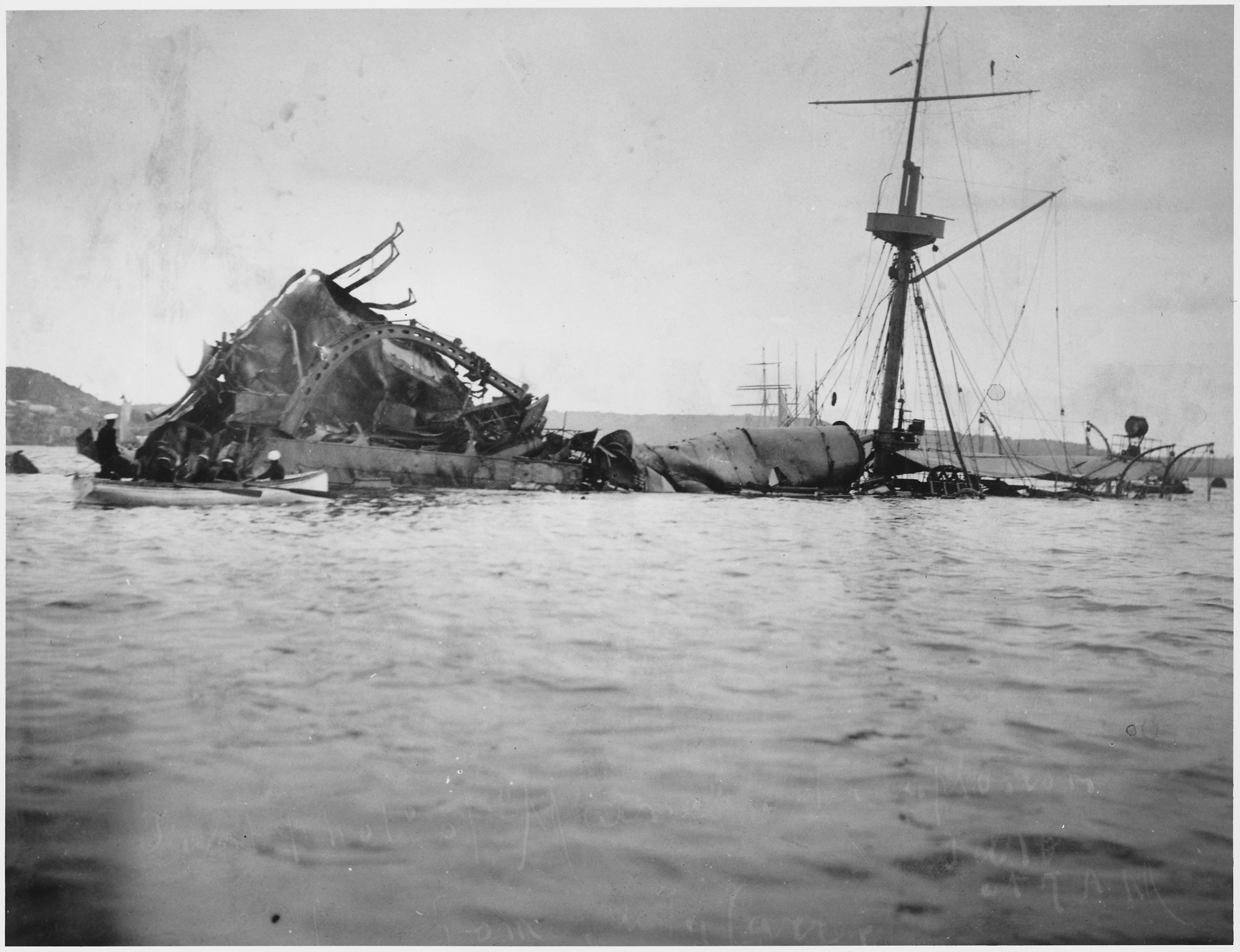
On 2.15.1898, a explosion still remembered today, as a prelude to war:
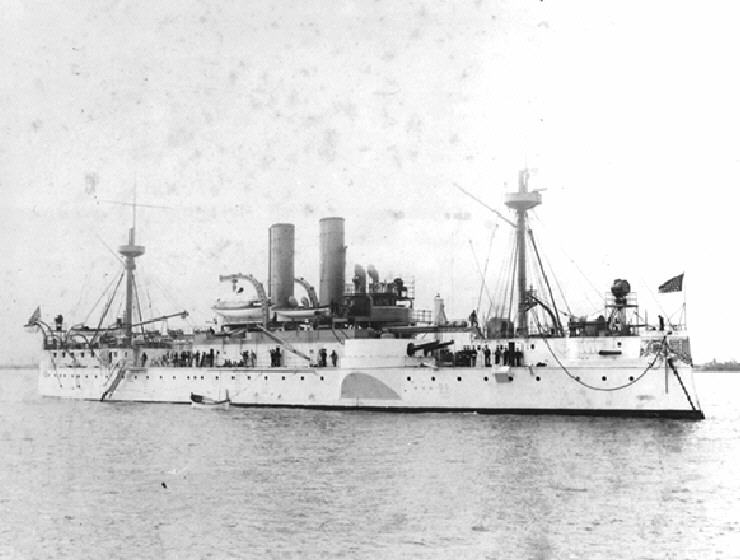
USS_Maine_h60255a

url

A massive explosion of unknown origin sinks the battleship USS Maine in Cuba’s Havana harbor, killing 260 of the fewer than 400 American crew members aboard.

One of the first American battleships, the Maine weighed more than 6,000 tons and was built at a cost of more than $2 million. Ostensibly on a friendly visit, theMaine had been sent to Cuba to protect the interests of Americans there after a rebellion against Spanish rule broke out in Havana in January.

An official U.S. Naval Court of Inquiry ruled in March that the ship was blown up by a mine, without directly placing the blame on Spain. Much of Congress and a majority of the American public expressed little doubt that Spain was responsible and called for a declaration of war.

Subsequent diplomatic failures to resolve the Maine matter, coupled with United States indignation over Spain’s brutal suppression of the Cuban rebellion and continued losses to American investment, led to the outbreak of the Spanish-American War in April 1898.

Within three months, the United States had decisively defeated Spanish forces on land and sea, and in August an armistice halted the fighting. On December 12, 1898, the Treaty of Paris was signed between the United States and Spain, officially ending the Spanish-American War and granting the United States its first overseas empire with the ceding of such former Spanish possessions as Puerto Rico, Guam, and the Philippines.

In 1976, a team of American naval investigators concluded that the Maineexplosion was likely caused by a fire that ignited its ammunition stocks, not by a Spanish mine or act of sabotage.

Google-a-Day poses a geography question: “In the Russian monument of the founder of Moscow, which hand is he holding out to the side?”

Daily Bread for 2.14.13

Good morning.

Valentine’s Day in Whitewater will be mostly cloudy, with a chance of afternoon snow, and a high of thirty-seven.

Whitewater’s Police & Fire Commission meets at 6 PM tonight.

On this day in 1929, a shocking Prohibition-related crime:

7 Chicago Gangsters Slain by Firing Squad of Rivals, Some in Police Uniforms

Chicago, Feb. 14 — Chicago gangland leaders observed Valentine’s Day with machine guns and a stream of bullets and as a result seven members of the George (Bugs) Moran-Dean O’Banion, North Side Gang are dead in the most cold-blooded gang massacre in the history of this city’s underworld.

The seven gang warriors were trapped in a beer-distributors’ rendezvous at 2,122 North Clark Street, lined up against the wall by four men, two of whom were in police uniforms, and executed with the precision of a firing squad.

The killings have stunned the citizenry of Chicago as well as the Police Department, and while tonight there was no solution, the one outstanding cause was illicit liquor traffic.

On this day in 1819, a famous inventor and longtime Wisconsin resident was born:

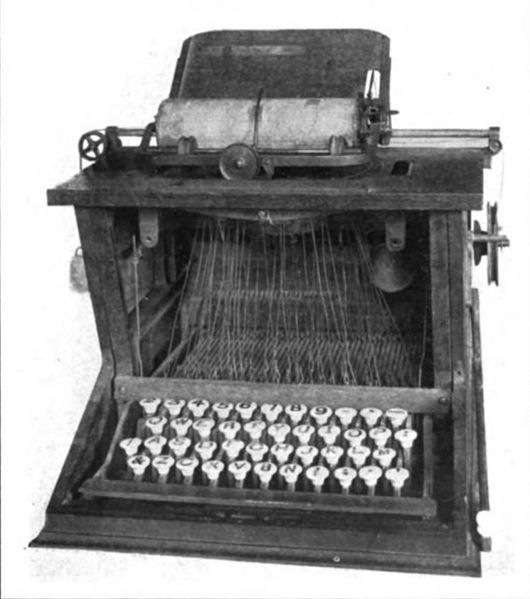
Sholes_typewriter

1819 – Typewriter Inventor Born
On this date the inventor of the modern typewriter, C. Latham Sholes, was born. Sholes moved to Wisconsin as a child and lived in Green Bay, Kenosha, and Milwaukee. In 1867, in Milwaukee, he presented his first model for the modern typewriter and patents for the device were taken out in 1868. Sholes took the advice of many mechanical experts, including Thomas Edison, and so claims that he was the sole inventor of the typewriter have often been disputed. [Source: Badger Saints and Sinners by Fred L. Homes, pg 316-328]

Google-a-Day asks about art: What was the profession of the father of the artist who created the portrait entitled “A Young Hare”?

Restaurant Reviews

I’ve started reviewing restaurants, in the city and nearby, with the first review to be published next week (as part of a Wednesday feature).

It’s a longstanding project, about which I’ve been thinking for over a year. (To the readers who’ve encouraged me: thank you, kindly.)

We’ve a small but growing restaurant culture here in Whitewater, and that’s all to the good.

Here are a few introductory remarks about reviews.

How does one review something? One takes what one knows and understands, visits and experiences the subject of one’s review, and writes about it afterward. Someone could tell you it’s more complicated than that, but it isn’t. A hundred new men could tell you it’s more complicated, intricate, and difficult than that, but then (having said so) all of them would be wrong.

Readers may consider these reviews as they wish, delivered simply as they surely will be. I’ve every confidence that readers – sensible and knowledgeable as people typically are – can decide whether they consider whether what others write is persuasive.

I will neither accept requests to review a restaurant, nor consider requests to avoid one. A good and genuine review – rather than a thinly-veiled promotional announcement – requires true independence and rests securely on a fundamental right of expression.

Just as much, it’s wrong to announce oneself as a reviewer, ask for special seating or conditions, or make a great show and fuss during a meal. A restaurant review is meant to describe the experience of ordinary patrons, for prospective ones, rather than a special & favored situation. (People who go into restaurants and try to intimidate the staff by declaring that they’ll be publishing their reviews on Yelp show particularly bad form.)

I’ve selected a format, and will visit each restaurant at least twice before posting a review.

Reviews about nearby restaurants will appear here at FREE WHITEWATER. Reviews of establishments farther away will appear at all my sites.

There’s a New Whitewater, a more hip and prosperous place, ahead not too far away.

Hope you’ll check back on 2.20.13 for the first review.

Daily Bread for 2.13.13

Good morning.

It’s a mostly sunny day, with a high of thirty-seven, ahead for Whitewater.

Whitewater’s Tech Park Board meets today at 8 AM.

The agenda posted at the City of Whitewater website for that Tech Park Board meeting is unprofessional and sloppy at best, and legally deficient at worst. Here’s the full text:

MEETING NOTICE
Whitewater University Technology Park Board Meeting Wednesday, Feb 13, 2013 at 8:00 a.m.
Whitewater Innovation Center
1221 Innovation Drive
Whitewater, WI 53190

Agenda
1. Call to Order
2. Approval of Minutes from Jan. 16, 2013 Meeting
3. Review/Acceptance of Jan. 2013 Financial Reports – Clapper
4. WUTP Architectural Review Committee Discussion – Telfer & Clapper
5. Innovation Center Facility / Security Discussion – Ehlen
6. City of Whitewater Seed Capital Fund Update – Knight
7. Whitewater Incubation Program (WhIP) Updates – Ehlen
8. Strategic Priorities and Development and Plan
9. Reconvene into Open Session
10. Future Agenda Items
11. Future Meeting Dates Mar. 20, Apr. 10, May 8, June 19
12. Adjournment

Did anyone bother to review and proofread this notice? At best, there’s a stray entry at item 9: “9. Reconvene into Open Session.” At worst, there’s a missing entry for a closed session, somewhere before item 9, that’s been wholly omitted.

The law requires that a closed session be expressly noticed, and that its purpose be expressly stated, under one of 13 possible purposes. Wis. Stat. § 19.84(2), § 19.85(1).

The notice looks like it was dashed off hastily, but there’s no exception for this public body under Wisconsin law for “I didn’t feel like complying,” “I can’t do any better,” or “I’ll tell the public only what I feel like telling them.”

These are clear and simple provisions, and in any event, gentlemen who’ve taken millions in others’ money should be expected to do a bit of proofreading for their publicly-financed undertaking.

If the minimum standards of law and professionalism are too hard, one may always quit the project.

On this day in 1861, America awards the first Medal of Honor to a soldier:

The earliest military action to be revered with a Medal of Honor award is performed by Colonel Bernard J.D. Irwin, an assistant army surgeon serving in the first major U.S.-Apache conflict. Near Apache Pass, in southeastern Arizona, Irwin, an Irish-born doctor, volunteered to go to the rescue of Second Lieutenant George N. Bascom, who was trapped with 60 men of the U.S. Seventh Infantry by the Chiricahua Apaches. Irwin and 14 men, initially without horses, began the 100-mile trek to Bascom’s forces riding on mules. After fighting and capturing Apaches along the way and recovering stolen horses and cattle, they reached Bascom’s forces on February 14 and proved instrumental in breaking the siege.

Also on this day, in 1935, Wisconsin rejects a true market in gasoline for a fixed and arbitrary price:

1935 – Gasoline Price Wars Quelled
On this date, in an effort to stop gasoline price wars, the state of Wisconsin established a minimum price of 16 cents per gallon for gasoline. [Source: Janesville Gazette]

Google-a-Day offers a geography question: “What’s the southernmost province of the country that occupies approximately one sixth of the Iberian Peninsula?”

The Failure of Inside-Out (Thanks in Part to Governor Walker)

It’s never been sensible to believe that the center of civilization is 312 W. Whitewater Street, with people and events beyond shrinking markedly in significance as one gets farther from that supposed center. Under that theory, by the time one reaches Palmyra, one might as well be in the unexplored Amazon.

Exaggerating the significance of local – becoming obsessively hyper-local – exaggerates the near and unreasonably diminishes the far. It elevates local customs no matter how backward, and denies a fair consideration of beneficial practices that could be adopted from across the state or country.

I’d say it’s Gov. Walker, of all people, how has made the hyper-local in Wisconsin politically impossible. By raising the ideological stakes between left and right – as matter of state policy that alters former legal, political, and economic relationships within small communities – Walker has made state politics more important. He has simultaneously and necessarily (in this case) made local politics less important.

In effect, he’s Wisconsinized politics away from cities and towns through sweeping legislation from Madison. (The irony is that he’s of a political party that insists it stands for local control.)

Although I’m not a Republican, it’s one of the consequences of his policies that I think is beneficial: one is more powerfully confronted with the question of where one stands. As I’ve always favored an approach that produces local policies only after considering state and national trends, a political approach that looks beyond the town line isn’t a bad idea.

Gov. Walker’s not looking in a libertarian direction (not at all), but he is looking past the idea that only what’s within a hundred yards is what matters.

Hyper-local approaches would have faded anyway, as new media have made connecting to national news and trends as easy – or easier – than walking across the street.

Yet, Walker’s ideological zeal has accelerated the decline of local. It’s a more divided state, no doubt, but at least it’s one that cannot credibly pretend that a city or town is an island. More than ever, state government influences local policy.

The statewide fight over alternative courses of action is worth waging, in itself and for its broadened horizon.

One should use the best ingredients from across all America; anything less is a recipe for mediocrity.

Looking at state (and federal) actions, and shaping local policy only after that examination, is all too the good.

We’ll have a better, less provincial, politics.

Daily Bread for 2.121.3

Good morning.

Today brings mostly sunny skies and a high of thirty-two to Whitewater.

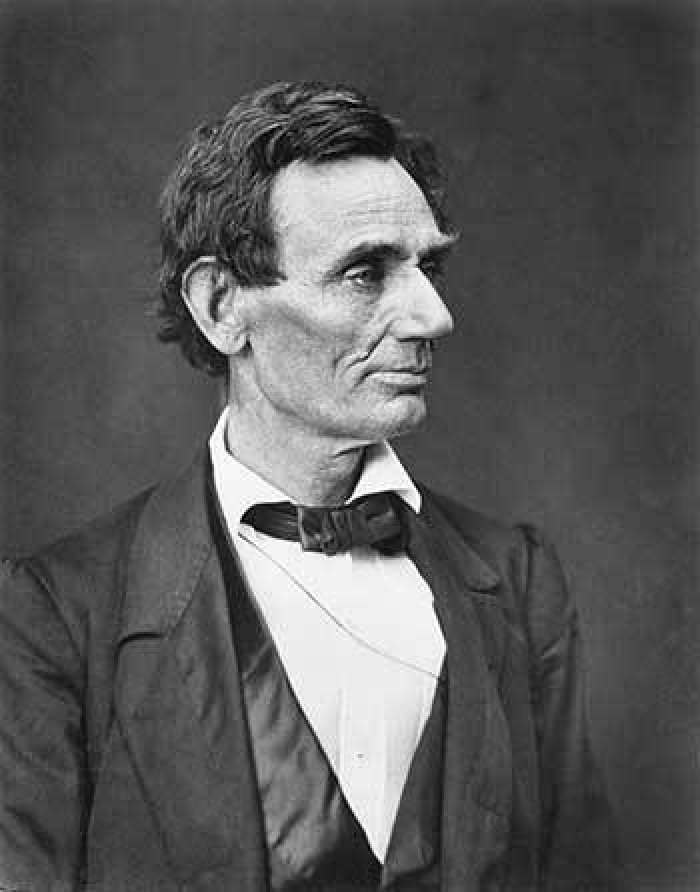
It’s Lincoln’s birthday, and in 1859, while a presidential candidate, he spoke in Milwaukee at the Wisconsin State Fair.  Here’s a part of the text of that address, ostensibly about agriculture (but truly about even more):

url

The world is agreed that labor is the source from which human wants are mainly supplied. There is no dispute upon this point. From this point, however, men immediately diverge. Much disputation is maintained as to the best way of applying and controlling the labor element. By some it is assumed that labor is available only in connection with capital — that nobody labors, unless somebody else, owning capital, somehow, by the use of that capital, induces him to do it. Having assumed this, they proceed to consider whether it is best that capital shall hire laborers, and thus induce them to work by their own consent; or buy them, and drive them to it without their consent. Having proceeded so far they naturally conclude that all laborers are necessarily either hired laborers, or slaves. They further assume that whoever is once a hired laborer, is fatally fixed in that condition for life; and thence again that his condition is as bad as, or worse than that of a slave. This is the “mud-sill” theory.

But another class of reasoners hold the opinion that there is no such relation between capital and labor, as assumed; and that there is no such thing as a freeman being fatally fixed for life, in the condition of a hired laborer, that both these assumptions are false, and all inferences from them groundless. They hold that labor is prior to, and independent of, capital; that, in fact, capital is the fruit of labor, and could never have existed if labor had not first existed — that labor can exist without capital, but that capital could never have existed without labor. Hence they hold that labor is the superior — greatly the superior — of capital.

They do not deny that there is, and probably always will be, a relation between labor and capital. The error, as they hold, is in assuming that the whole labor of the world exists within that relation. A few men own capital; and that few avoid labor themselves, and with their capital, hire, or buy, another few to labor for them. A large majority belong to neither class — neither work for others, nor have others working for them. Even in all our slave States, except South Carolina, a majority of the whole people of all colors, are neither slaves nor masters. In these Free States, a large majority are neither hirers or hired. Men, with their families — wives, sons and daughters — work for themselves, on their farms, in their houses and in their shops, taking the whole product to themselves, and asking no favors of capital on the one hand, nor of hirelings or slaves on the other. It is not forgotten that a considerable number of persons mingle their own labor with capital; that is, labor with their own hands, and also buy slaves or hire freemen to labor for them; but this is only a mixed, and not a distinct class. No principle stated is disturbed by the existence of this mixed class. Again, as has already been said, the opponents of the “mud-sill” theory insist that there is not, of necessity, any such thing as the free hired laborer being fixed to that condition for life. There is demonstration for saying this. Many independent men, in this assembly, doubtless a few years ago were hired laborers. And their case is almost if not quite the general rule….

It is said an Eastern monarch once charged his wise men to invent him a sentence, to be ever in view, and which should be true and appropriate in all times and situations. They presented him the words: “And this, too, shall pass away.” How much it expresses! How chastening in the hour of pride! — how consoling in the depths of affliction! “And this, too, shall pass away.” And yet let us hope it is not quite true. Let us hope, rather, that by the best cultivation of the physical world, beneath and around us; and the intellectual and moral world within us, we shall secure an individual, social, and political prosperity and happiness, whose course shall be onward and upward, and which, while the earth endures, shall not pass away.

Downtown Whitewater 2013/2014 Board of Directors Nomination Form

Please see a Downtown Whitewater 2013/2014 Board of Directors Nomination Form:

The Downtown Whitewater, Inc. Board of Directors is the legal entity responsible for overseeing Whitewater’s downtown revitalization program under the guidance of the Wisconsin Main Street Program, including the budget, staff, and program effectiveness.

We are currently seeking nominations to fill five seats of the eleven-seat board.

What you should know

The board is a decisive, action-oriented group of individuals that recognizes that each Whitewater community member is a stakeholder in the downtown revitalization process. Board members must be willing to:

  • Understand and promote the Downtown Whitewater mission and goals.
  • Contribute knowledge, effort, time, and/or labor to downtown revitalization.
  • Attend board meetings on a regular basis and commit to a two-year term.
  • Actively participate and be member in one of the standing committees: Promotions, Economic Restructuring, Design or Organization.
  • Promote unity within the group and seek to resolve internal conflict.
  • Support board decisions even when he or she disagrees with the majority.
  • Offer opinions honestly, constructively, and without reservation.
  • Help the board stay focused on the “Action Plan” and discourage it from being distracted by secondary issues or projects not included in the plan.
  • Actively seek additional participation of all forms; encourage new members and input in the downtown revitalization process; recruit new board members.

Nominations and election process

Nominations: Any Whitewater community member, business owner, or property owner may nominate a qualified individual (see details) by Thursday, February 14, 2013 at 5 PM.

Elections: Individuals nominated will be contacted and asked to submit a brief bio listing their interest in the downtown and possible resources and talents they have to contribute by Monday, February 25, 2013. This information will be sent via email to eligible voters and also available at the Downtown Whitewater office the week of March 4 – March 8, 2013. Ballots must be cast Thursday, March 14 between 6 PM & 9 PM during the Annual Member Meeting at Jessica’s Family Restaurant. Our new board members will be announced after all ballots are counted and verified and all new members notified. The first meeting for new board members will be on April 24, 2013.

Eligible voters include donors to Downtown Whitewater, active committee and board members, and those who sign an indication of interest form, available at Downtown Whitewater, Inc. or online at www.downtownwhitewater.com.

Nominations due Thursday, February 14, at 5 PM. Return this form to Downtown Whitewater, send it to PO Box 688, or email it to director@downtownwhitewater.com.

Nominations form

Please indicate your nominations for the following positions.

Two Downtown Business Owners

Nominees must own a business in the downtown district (see website for map).

name: _________________________ contact info: ______________________

name: _________________________ contact info: ______________________

Two Members-at-Large

Nominee must provide a point of view or experience not necessarily represented by other stakeholders.
name: _________________________ contact info: ______________________

name: _________________________ contact info: ______________________

One Downtown Property Owner

Nominee must be a local property owner
name:_________________________ contact info:______________________

2012 Downtown Whitewater, Inc. Board of Directors

Downtown Business Owner
Dennis Salverson (Coyote Grill)
Open (term expires: 03/2013)

Downtown Business Owner
Open (term expires: 03/2013)

Downtown Property Owner
Geoff Hale (Home Lumber)
Open (term expires: 03/2013)

Member-at-Large
Roni Telfer
Open (term expires: 3/2013)

Member-at-Large
Tyler Sailsbery (The Black Sheep)
Open (term expires: 03/2013)

Downtown Business Owner
Dave Saalsaa (Quiet Hut Sports)
(term expires: 03/2014)

Member-at-Large
Pete Hill
(term expires: 03/2014)

Member-at-Large
Glen Gebauer (Associated Bank)
(term expires: 03/2014)

Financial Representative
Nate Parrish (First Citizens State Bank)
(term expires: 03/2014)

UW-W Representative
Rob Boostrom (Asst. Professor)
(term expires: 03/2014)

Ex-Officio Cameron Clapper (Whitewater City Manager) 

Please see a printable or downloadable (in full size) version of the Nomination Form:

Monday Music: Valentine’s Holiday Edition

Monday Music is a weekly feature at my websites, and here are a few songs with a Valentine’s Day connection, with choices suitable for those in love, those hoping for love, and those who are now (but I would hope only temporarily) broken-hearted.

For those falling in love: Something in the Air Between Us

For those in now in love: Nobody’s Baby Now

For those who’d like a consolation song: So Long, You Fool

For those who’d like to try again: Let’s Try This Again

Bonus — for a song with one of the worst pickup lines of all time (‘I aint the worst that you’ve seen’): Jump