
Great fun, and reportedly one of the few times Bugs addresses Elmer Fudd by name….
Cats
Friday Catblogging: The perils of being (literally) a fat cat
by JOHN ADAMS •
Poll
Friday poll: Ban non-rescue pets?
by JOHN ADAMS •
In Los Angeles, there’s a proposal to ban non-rescue pet sales. See, L.A. Council Proposes Ban on Non-Rescue Pet Sales from the Palos Verdes Patch.
(“The Los Angeles City Council moved Tuesday to ban stores in the city from selling dogs, cats and rabbits that are not from shelters, humane societies or registered rescue organizations.
The council voted 11-1 to ask the City Attorney’s Office to draft an ordinance banning the pet sales. Councilman Bill Rosendahl cast the dissenting vote.”)
One can guess that I’d be opposed (I can see encouraging rescue sales, but I would oppose banning non-rescue sales). What do you think?
Daily Bread
Daily Bread for 4.20.12
by JOHN ADAMS •
Good morning.
It’s rainy day for Whitewater with a high temperature of forty-seven.
The Wisconsin Historical Society marks today as the anniversary of a first-in-state-history event, from 1836:
1836 – Oldest Library in the State Founded
On this date an Act of Congress created the Territory of Wisconsin and in the sixteenth and final section of that Act appropriated funds for the Wisconsin State Library to support the needs of the fledgling government. The library is still functioning but has been renamed as the Wisconsin State Law Library [Source: Wisconsin State Law Library]
Google has a question about a very small animal for its daily puzzle: “One type of hydrozoa has figured out how to live forever. What cell conversion process does it use to achieve immortality?”
Daily Bread
Daily Bread for 4.19.12
by JOHN ADAMS •
Good morning.
It’s a rainy Thursday with a high of fifty-five ahead for Whitewater.
The Wisconsin Historical Society marks today as one with an unexpected death during wartime:
1862 – Governor Harvey Drowns in the Tennessee River
On this date Governor Louis Harvey died while leading an expedition to relieve Wisconsin troops after the battle of Shiloh. The expedition was bringing doctors, nurses, and much-needed medical supplies to soldiers when Harvey, crossing from one steamboat to another, slipped, fell into the swift currents of the Tennessee River, and never re-surfaced. His body was recovered ten days later, nearly sixty miles downstream. When news reached Madison, Lieutenant Governor Edward Salomon was sworn in as Wisconsin’s first German-American governor. [Source: Wisconsin in the Civil War, by Frank L. Klement]
Google’s daily puzzle asks about a place: “You’re watching a man make a telephone call. He tells the operator, “Connect me to Klondike-5.” Where are you?”
City, Innovation Center/Tech Park
Amps, Business, and the Innovation Center
by JOHN ADAMS •
There was a story recently about a tenant at the Whitewater Innovation Center that makes a device for controlling a guitar amplifier.
The story’s notable for four reasons: (1) it under-reports the actual cost of the Innovation Center and Tech Park by about half, (2) the current uses of the Innovation Center are so different from the stated purposes of the main federal grant that those uses are wildly odd, (3) the tenant’s product is similar to one that Neil Young created years ago without subsequent market interest, (4) the rent-free deal that the tenant received is a bad idea.
The Innovation Center is a ‘business incubator’ with few actual businesses.
The Cost of the Innovation Center and Tech Park so far.
The story reports this public cost as “$5.7 million,” but that’s nowhere close the cost of a project that received a $4.7 million-dollar-grant and then additional millions in local municipal bonds (debt) to which the City of Whitewater is now obligated. The total cost is over eleven million in public money, not $5.7 million. Reporting of costs in the story conceals the true public expense.
What was this Center for, anyway?
It’s been described along the way variously, as public relations needs have shifted. This was a slapdash effort, where officials took grant money as soon as they could, and then thought up uses (tenants, descriptions, etc.) only afterward. Here’s what the Economic Development Administration proudly declared when the Tech Park Board took a multi-million-dollar grant:
September 7-September 11, 2009
….$4,740,809 to the Whitewater Community Development Authority, the University of Wisconsin Whitewater, and the City of Whitewater, Wisconsin, to fund construction of the new Innovation Center and infrastructure to serve the technology industrial park, including a road linking the project with the University of Wisconsin’s Whitewater campus. The goal of the project is to create jobs to replace those lost in the floods of 2008 and those lost from recent automotive plant closures. The Innovation Center will serve as both a training center and technology business incubator and will be constructed to meet Leadership in Energy and Environmental Design (LEED) green building certification standards. A portion of the project’s cost will be funded through EDA’s Global Climate Change Mitigation Incentive Fund.This investment is part of an $11,051,728 project which grantees estimate will help create 1,000 jobs and generate $60 million in private investment.
The goal: “….to create jobs to replace those lost in the floods of 2008 and those lost from recent automotive plant closures.”
Here’s what tenant Renwig wants to do:
The founders of Renwig have added robotics to a tube amplifier that allows guitar, bass and piano players to change the volume, tone, gain and equalization of their amps with the press of a foot switch. An initial design features four switches allowing four preset sounds to be used. Future designs could allow for dozens of preset sound changes.
One wishes Renwig well – sincerely — but there are reasonable questions to ask about their venture and their tenancy at the Innovation Center.
Neil Young’s Whizzer.
It was Twain, I think, who famously quipped that the Ancients stole all our ideas from us. If not the same ideas, then perhaps similar ones.
Guitarist Neil Young created something for amps, called the Whizzer, that’s similar to Renwig’s described design. My point is not that Renwig copied the idea, but merely that Neil Young’s idea seems similar — and there’s a market implication to that similarity.
See, from an article that originally appeared in Guitar Player magazine, a description of Neil Young’s Whizzer:
On top of the amp is a Whizzer, a device that physically turns the amp’s knobs. Neil came up with the idea, and Sal Trentino, his amp tech, made the first one. This was a 2 position Whizzer that he used starting on Rust never Sleeps in 1978. The new one was made by Rick Davis in 1991. It’s got four presets that completely control the three knobs on the top of the amp. He locks in the preset he wants, and it will always go back to that particular spot. We find that when you have the volume and tone all the way up, by turning that second volume knob up to about 10, it starts to fade away. But right before it starts to fade away, something else happens, and that has to be in exactly the right position. You can’t breathe on it, or it fucks it all up.
Here are Neil’s Whizzer settings: For the highest volume, we have both the tone and the main volume on 12 and the second volume knob is at about 9.9. When it really compressed and breathing and screaming, that’s whats going on. You can hear it on “Cortez”. If we push it past 9.9 the sound goes away. The next button down moves his volume to 10, which just cleans it up. It’s still broken up but its less garbled. The third button sets his volume on 6 with his that other volume still at 9.9 and the tone just down a little. The fourth preset moves one volume to 3,the other volume to 0, and backs the tone off a bit, its really bright and clean, almost country sounding.
He activates the settings via foot switches on the red box that’s always in front of him. Across the slanted part that’s always closest to him are five buttons: Four for buttons control the volume on the Whizzer, and one for the reverb kill. Inside the box are all these relays and the actual effects devices. There are seven buttons on the top plateau of the box. The one on the left hand side is mute and tune: You step on that and no sound comes out of the amplifier. We have 5 Strobe-O-Tuners up there, one for each note in standard tuning. The next one is for a green, AC powered MXR analog delay that’s mainly used in conjunction with the next button, an ancient Mutron octave divider. That’s used for ” Out of the Blue”, when we really want to fatten up the octave divider. The next button is for a master loop that switches any of the top devices in and out, except the tube reverb. The next one is for a real strange unit, a large very old Boss flanger in a blue cast metal box. He hits that only when he wants to get totally crazy.
Other guitarists have remarked on the Whizzer (dating it from decades ago) and one has remarked that the Renwig device seems similar.
There’s mention of robotics with Renwig’s device, but this may be a distinction without a difference.
These similarities to Young’s Whizzer — a device dating back decades — are significant because it’s a good way to measure market demand for Young’s device, or similar devices.
Quite candidly, the Whizzer is known to guitarists, yet decades after it was first described, there’s still no robust production of a device like that.
There are two principal possibilities: (1) the time wasn’t right until now, or (2) the time’s still not (and may never be) right for commercial production of the kind Renwig contemplates.
That doesn’t make Renwig’s idea inauthentic (I am sure they arrived at it on their own). It does make it commercially questionable. Had demand been greater these many years, there would likely have been an earlier Renwig by now, so to speak.
That’s a reasonable– in fact almost obligatory — observation when thinking about their prospects.
Rent and Equity.
One reads that Renwig has three years’ free rent at the Innovation Center in exchange for a 5% equity stake in their business. I’m opposed on principle to a deal like this: government should not be taking equity in private business ventures. Private funding should support private deals.
There’s vast private investment money in America (the wealthiest and most technologically-advanced nation on earth). Businesses should not rely on taxpayer subsidies in a society where banks and private investors can back ideas like this.
In any event, I think that any equity stake in lieu of rent reduces the Center’s immediate revenue on the highly speculative hope that there’ll be something valuable years from now.
Officials make these deals with only limited accountability. They offer public officials the shiver of excitement from wheeling and dealing without private accountability.
One can easily understand public money for public safety, the administration of justice, or emergency needs for the poor.
Commercial speculation should sit beyond those uses, in the realm of private risks and private rewards.
Daily Bread
Daily Bread for 4.18.12
by JOHN ADAMS •
Good morning.
Whitewater’s Wednesday will be warm, with a high of sixty-nine, and a chance of thunderstorms.
The city’s Landmarks Commission meets this morning at 8 AM.
The Wisconsin Historical Society notes today as an anniversary along our path to statehood:
1818 – Wisconsin Becomes Part of Michigan Territory
On this date, the land encompassing current-day Wisconsin was made part of the Michigan Territory, representing one step in Wisconsin’s path to statehood. Wisconsin was a part of the Northwest Territory from July 13, 1787-May 11, 1800; the Indiana Territory from May 1800-February 3, 1809; and the Illinois Territory from February 3, 1809-April 18, 1818. The Territory of Wisconsin was formed July 4, 1836.
Someone knowledgeable about Indonesia (I’m certainly not one of those people) would have a leg up on today’s Google puzzle: “In the Indonesian town famous for the dish “soto banjar,” there is also a famous market that is humanly impossible to walk over. What substance makes it impossible to walk over?”
With a hat tip to the Huffington Post, how ’bout the best view in the solar system? —
The Best View in the Solar System. from AJRCLIPS on Vimeo.
City, Development, Economy, Government Spending, Planning
Distressed TID 4
by JOHN ADAMS •
There’s an observation from 2011 from Whitewater’s city manager to consider about the distressed status of tax incremental district 4. (I came on the observation while reading this week about Generac.)
Before going further, I’ll observe that when one talks about distressed tax incremental districts, one’s talking about rare birds.
By the assessment of the Wisconsin Department of Revenue, the number of distressed districts in the state is exceedingly small — in fact, as of April 2011, of over 1,050 tax incremental districts, only 13 were distressed (or severely distressed).
That’s only 1.2% of the statewide total. The overwhelming majority — the other 98.8% of districts — were not similarly ailing.
If the economy or changes in the state’s formula for property valuation simply made a district distressed, then more would have been equally ill. They weren’t.
The next time someone tries to tell you how common distressed districts are (“It should be noted that many other municipalities are seeking distressed designation for TIDs…”), you’ll know that’s an exaggeration– it’s very rare for a city to have a distressed district.
(So rare, that the WI Dept. of Revenue concluded that the state would have few additional distressed designations: “However, since the ability to declare a TIF district as “distressed” or “severely distressed” must be done before October 1, 2011, the bill [SB-55] is not expected to significantly affect the number of TIF districts that will be designated as “distressed” or “severely distressed.”)
Many more filings just weren’t in the offing.
Tax incremental districts use expected, future tax receipts to justify present-day infrastructure spending — on the theory that current public spending will bring additional tax receipts (the incremental amount) to the designated district. So a city might, for example, spend for a new a road in the belief that the road will bring new development (and taxes from that development) to pay for the public cost of the paving.
If these are not true, there’s scant reason to build the road. (The public spending would exceed additional tax revenues, and the development would have happened even without the road.)
This is really an ‘if you build it, they will come’ tactic, with the added assumption that they won’t come unless you build it.
How much a municipality can and should spend, of course, depends on how much the district’s property is worth, and how much the municipality can expect in incremental development and taxes from what they’ll spend.
What if, for years, municipalities were justifying incremental public spending based on inflated, unrealistic values? That was part of Whitewater’s problem, by the city manager’s own admission:
Whitewater City Manager Kevin Brunner said the district had suffered development setbacks because of an inactive real estate market.
The Department of Revenue formula [to calculate the actual worth of property] change played a role, too. It reduced the value of Generac Power Systems, costing the district $50,000 annually in increment, Brunner said.
In 2010, District No. 4 fell $128,000 short in tax collections. In a controversial move, Whitewater declared the loss as a special assessment it could not collect and passed the debt along to the county.
In doing so, the county had to reimburse Whitewater for the special assessment. It’s now up to the county to collect the debt.
Got that? When the WI Dept. of Revenue adjusted the formula for property values — to make the formula more accurate and realistic — communities that gambled using unrealistic values were caught up short.
The values on which these officials justified public expenditures were too high. That’s either because (1) officials didn’t see that the valuations were inflated, (2) didn’t want to see as much, or (3) didn’t care.
How to avoid problems like this?
(1) Discourage unvetted TID spending,
(2) alternatively, find those who can manage TID projects skilfully,
(3) require beforehand from any prospective developer specific financial compensation should he or she fail to build,
(4) put major spending projects to a transparent community process,
(5) emphasize basic open governance over closed backroom development schemes,
(6) commit necessary money to truly needy people rather than to pave the way — figuratively and literally — for developers, and
(7) reduce overall city spending and regulation to encourage private businesses to establish here without specific public subsidies or expenditures.
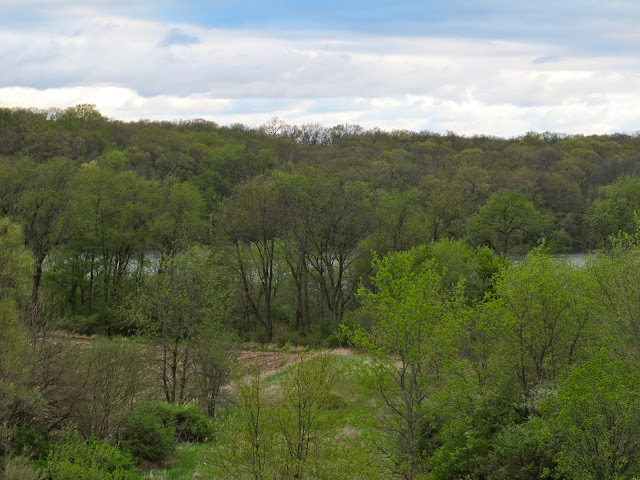
Beautiful Whitewater
Beautiful Whitewater
by JOHN ADAMS •
Daily Bread
Daily Bread for 4.17.12
by JOHN ADAMS •
Good morning.
Whitewater looks forward to a mostly sunny day with a high temperature of fifty-seven.
Whitewater’s Common Council meets tonight at 6:30 PM.
On this day in 1897, playwright Thornton Wilder was born in Madison:
1897 – Thornton Wilder Born
On this date Thornton Wilder was born in Madison. A renowned author and playwright, he taught at the University of Chicago from 1930 to 1937. His playsOur Town (1938) and The Skin of our Teeth (1942) won Pulitzer Prizes and have been performed countless times by school and amateur theatrical companies in the decades since.You can read a 1928 article about his Wisconsin roots in our Wisconsin Local History & Biographies collection. [Source: Thornton Wilder Society]
Via Wisconsin Historical Society.
Google tests knowledge of American history today: “I established the first White House library, and was the first president’s wife to have earned a salary before marriage. What was my occupation?”
NASA was once more ambitious than commonly believed, as the agency had a plan for a Mars expedition decades ago: NASA’s 1966 plan for a mission to Mars. The flights imagined in the 1966 plan would have taken place between 1976 and 1986:
[Paul] Swan’s team proposed two manned Mars mission scenarios designed to explore these spheres of scientific interest. The first, the “minimal” missions, would occur between 1976 and 1986 and would use Apollo-level (that is, 1970) technology. The second, the “extended” mission, which was tentatively scheduled to occur in the 1982-1986 time period, would require technologies beyond the Apollo state of the art.The four minimal-mission surface crewmembers would explore a landing site within 30° of the martian equator for 21 days during a period when the biosphere at the site was at “peak growth.” While the four surface astronaut-scientists did their best to keep up with “a very active schedule” of wide-ranging data-gathering, two men would orbit Mars on board the mission “mothership,” the command module. Among other tasks, they would deploy automated probes to investigate the martian moons and any dust belts. Time near Mars for the minimal mission would total 40 days.
Even now, this seems ambitious beyond our abilities, but somehow admirably ambitious, too.
Business, City, Corporate Welfare, Government Spending, Taxes/Taxation
A little consistency would be in order
by JOHN ADAMS •
Around two years ago, the Wisconsin Department of Revenue changed the method by which municipalities valued private properties. The state concluded — correctly — that municipalities were often over-valuing and thus over-taxing private properties. For businesses, a correct, lower assessment meant less in taxes; for municipalities, an over-valuation was useful to extract as much in tax revenue as possible.
(I’ll write more tomorrow about what this meant for Whitewater’s failed tax incremental district 4. In brief: it was a convenient excuse for poor city planning.)
One of the businesses that benefitted from a correct assemement – rather than an inflated one — was Generac. As their assessment went down, so did their taxes owed.
An accurate assessment was the right decision — Generac shouldn’t have to pay on an inflated value.
And yet — and yet — consider what this means by consequence: Generac plays less into the public coffers in taxes, but now wants more from the public coffers in subsidies for a bus line to suit its own business needs.
Businesses that don’t want to pay more in taxes shouldn’t take more in taxes.
Whitewater’s municipal administration should have told Generac – or any other big business — exactly that.
Beautiful Whitewater, Nature
Beautiful Whitewater
by JOHN ADAMS •

Music
Monday Music: Ben Sommer — Party Rock Anthem (prog metal version)
by JOHN ADAMS •
A treat this morning – Ben Sommer’s cover (LMFAO) of Party Rock Anthem.
As longtime readers know, Ben’s a fine musician, composer in his own right, and great friend of liberty.
Always a pleasure – Enjoy.
Daily Bread
Daily Bread for 4.16.12
by JOHN ADAMS •
Good morning.
It’s a rainy day in Whitewater, with a high temperature of fifty-five.
Whitewater’s Parks & Rec Board meets today at 5 PM.
The Wisconsin Historical Society recalls that on this day in 1916:
Wisconsin governor and comic author George W. Peck died. Peck was born in New York in 1840, but lived in Wisconsin from 1843 until his death in 1916. He was connected with newspapers in Whitewater, Jefferson, and founded the La Crosse Sun in 1874, which he later moved to Milwaukee. At one time he was the best-known Wisconsin writer in the nation, for his sketches titled “Peck’s Bad Boy.” He was also the author of Peck’s Compendium of Fun, and Peck’s Sunshine, as well as many other stories in some way connected with the mischief-loving, mirth-provoking “Bad Boy.” One of his books, Peck’s Bad Boy With the Cowboys, is online at Project Gutenberg. Peck served in the Union Army during the Civil War and was elected mayor of Milwaukee in 1890. He served as Governor of Wisconsin from 1891 to 1895 but was defeated for re-election. Peck is buried at Forest Home Cemetery in Milwaukee. [Source: Wisconsin Electronic Reader].
There were later films based on Gov. Peck’s characters.
Google’s daily puzzle asks about an animal: “What animal is nature’s only daily drinker, searching out naturally-occuring alcohol each night?” I wouldn’t have thought that there were any such animals, but there’s at least one.