FREE WHITEWATER

Recent Tweets, 6.3 to 6.9

8 Jun
@FREEWHITEWATER
Nate Silver’s Election Forecast: Obama Begins with Tenuous Advantage – http://nyti.ms/LC9h6s

6 Jun
@FREEWHITEWATER
The (Red) State, the (Blue) City « FREE WHITEWATER http://bit.ly/NhRlEd

6 Jun
@DailyAdams
Geoff Neale: The Embarrassing New Libertarian Chairman | Daily Adams http://bit.ly/NhOxa6 #bigmistake

4 Jun
@dailywisconsin
ACLU of Wisconsin: Election protection hotline will be live on election day 1-866-OUR-VOTE http://bit.ly/MrUJ0j

3 Jun
@dailywisconsin
Bizarre: Weekend before recall election, State Journal’s top story is about a 78-year-old juggler http://bit.ly/L5wfEd

Task List: Local Implications of the Gubernatorial Election

There are dozens of possibilities for what the recall election means for Wisconsin, but I’m curious about three local implications, that I’ll write about after looking at precinct-by-precinct gubernatorial results.

(Quick admission: in January, I thought Gov. Walker would lose a close recall election. That prediction was considerably off – he won comfortably. The advantage about writing after an election is that one has actual results on which to base an assessment for the fall.)

Topics of interest:

(1) What do the 6.5.12 results say, if anything, about how the race in the 43rd Assembly District will finish? (Here, I’m referring to the newly-redistricted 43rd.) The old 43rd has been a seat with small margins (mostly) for the winning party. How’s the new 43rd likely to go this November?

(2) What do the 6.5.12 results say about politics within the entire Whitewater Unified School District? (Those results, and prior ones, suggest that the City of Whitewater is now mostly blue, and over time I’d guess will become culturally bluer.) What about the whole district?

(3) Will the 13th Senate District race between Fitzgerald and Compas have any lasting significance for politics in that area (whether in the new or old 13th District)? On this topic, I think the answer is yes, and I’ll explain why.

All topics to research, and then post about, next week.

Daily Bread for 6.8.12

Good morning.

A warmer and mostly sunny Friday’s in store for Whitewater, with a high temperature of eighty-six.

The Wisconsin Historical Society records that on this day in 1867, Frank Lloyd Wright was born:

On this date Frank Lincoln Wright (he changed his middle name after his parents divorced) was born in Richland Center. An architect, author, and social critic, Wright’s artistic genius demonstrated an extraordinary capacity to create architectural space and vocabulary that drew inspiration from both nature and technology. The son of William Cary Wright, a lawyer and music teacher, and Anna Lloyd Jones, a school teacher, Frank Lloyd Wright’s family moved to Madison in 1877 to be near Anna’s family in Spring Green.

Wright briefly studied civil engineering at the University of Wisconsin in Madison, after which he moved to Chicago to pursue a career in architecture. Wright started his own firm in 1893 and between 1893 and 1901, 49 buildings designed by Wright were built. Some notable Frank Lloyd Wright structures in Wisconsin includeS.C. Johnson and Son, Inc. Administration Building in Racine, the A.D. German Warehouse in Richland Center, and Taliesin and Hillside in Spring Green. The Monona Terrace Community and Convention Center in Madison was also based on Wright’s design. Frank Lloyd Wright died on April 9, 1959, in Phoenix, Arizona. [Source: American National Biography, Vol. 24, 1999, p.15]

It’s breakfast time, not just for people, or even ordinary animals, but for Hamlet the Mini Pig, famous on the Internet, and seen here eating a breakfast of oatmeal (wait ’til the end and you’ll see how he digs in):

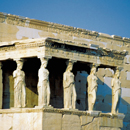
Google’s daily puzzle asks about ancient architecture: “What is the first building in Greece known to use draped, female-shaped columns like the ones pictured?”

The 6.11.12 Joint City Council and Plan Commission Zoning Rewrite Workshop

There’s a combined meeting of Whitewater’s City Council and her Planning Commission scheduled for Monday, June 11th at 6 PM. The agenda for the meeting includes a packet describing the work of the Zoning Rewrite members, proposals they are considering, and a timeline for the zoning rewrite effort (extending from this year into next).

I have embedded that packet below. The work and proposals are more ambitious than one would have expected, and include both commercial and residential neighborhood rewrite proposals.

(From my own point of view, it’s the business area changes that matter most; many did not expect, candidly, any residential changes from this project. The review has been more comprehensive than one would have supposed, but then a review like this would be the occasion for a city-wide look.)

In any event, here’s that packet, sixty-two pages in length, available for printing or download. (The sideways orientation of the document is from the original.)

Daily Bread for 6.7.12

Good morning.

Whitewater’s Thursday will be sunny, with a high of eighty-two.

Whitewater’s Landmarks Commission meets at 6 PM, and Common Council meets tonight at 6:30 PM.

On this day in 1913, America saw the first successful assent of Mt. McKinley (Denali):

In March 1913, the adventure-seeking [Hudson] Stuck set out from Fairbanks for Mt. McKinley with three companions, Harry Karstens, co-leader of the expedition, Walter Harper, whose mother was a Native Indian, and Robert Tatum, a theology student. Their arduous journey was made more challenging by difficult weather and a fire at one of their camps, which destroyed food and supplies. However, the group persevered and on June 7, Harper, followed by the rest of the party, was the first person to set foot on McKinley’s south peak, considered the mountain’s true summit. (In 1910, a group of climbers had reached the lower north peak.)

The Wisconsin Historical Society writes about recognition for an extraordinary inventor:

1924 – Monument to Wisconsin Inventor Unveiled

On this date the bronze tablet memorializing C. Latham Sholes was unveiled. Sholes, who lived in Milwaukee, invented the typewriter in 1867. The plaque gives thanks to the “one who materially aided in the world’s progress,” and can be seen at the Forest Home Cemetery, Milwaukee, where Sholes rests. [Source: Badger Saints and Sinners by Fred L. Homes]

Google’s daily puzzle‘s right up the alley of a materials scientist: “What material is your fork made of if it contains the same polysaccharides (C6H10O5)n as the corn that you’re eating?”

The (Red) State, the (Blue) City

A few remarks on the recall elections:

There are thousands of happy and thousands of disappointed Wisconsinites today.

A third-party voter looks at elections differently, because in many cases he or she doesn’t have a partisan candidate in the race; one votes for or against the candidates of other parties. This places a certain distance between the third-party voter and the candidates – there’s just not the same ardor or abhorrence. The legitimate appeal of a major party’s chance to form an administration isn’t present (or isn’t appealing enough to entice membership in either leading party).

One goes on, to the next debate, the next elections, with neither the hope nor the worry that one’s own party members will win or lose.

Although control of the state senate may change hands, this is for now a predominantly red state. How long that will last I’ve no idea, but at the state level Gov. Walker has a comfortable base: 1,331,076 to 1,158,337, 53-46%. That’s more than adequate.

The City of Whitewater’s moved in the opposite direction: without campus being in session, Whitewater still chose Barrett over Walker, by about 1,988 to 1,460. There may be some adjustment to these totals, from Jefferson and Walworth Counties, but that’s a greater margin than I would have expected. (Walworth County – now with a much better, much needed election details pdf – and Jefferson County results are online. Walworth County chose Walker 26,201 to 14,330; Jefferson County went for Walker 22,461 to 14,678.)

Barrett carried each of the precincts in the city, in either county. Whitewater’s progressives have typically done better in bigger elections, not as well in smaller, spring elections. (See, Why Whitewater Isn’t a Progressive City; Why Whitewater’s ‘Conservatives’ Hold the City Tenuously.)

What they haven’t been able, or wanted, to do is to remake the city as a blue town, so to speak. A recall election won’t change any of this, and the town fathers remain principally conservative. Over time, however, there is likely to be a generational change to a blue(r) city within red or redder Jefferson and Walworth counties. That’s not simply because of how people in the city and counties will be voting; it’s because I’d guess the next generation of voters will be assertive about shaping their communities’ institutions along more ideological lines.

That kind of transformation has already happened in other parts of the state, in communities dominated, respectively, by the left or right.

It’s likely to come to our area, too.