
FREE WHITEWATER

Whitewater Has No Reason to Worry About ‘No Child Left Behind’ Results

There’s a story at the Gazette, that nicely summarizes area schools’ performance on the federal government’s ‘No Child Left Behind’ (NCLB) standards. Although one school in Whitewater appears on the list, there’s no reason for concern: the challenge is so limited that it holds no overall meaning or statistical significance for our schools. Whitewater shows on the report only because of the appearance of one small group of special education students’ performance in one subject area.

(For the state’s overall results on ‘adequate’ yearly progress, see  Wisconsin Schools and Districts that Missed AYP, with data for one special education population in one school in Whitewater.)

The NCLB flag for Whitewater is merely for one year’s result, in one school, in the tiniest and most vulnerable population in that school, in a single subject area.

1. The result is statistically insignificant — the population is too small as a part of the whole district, and by its definition is the one population with special needs that makes comparison to the rest of the district foolish. Candidly, anyone looking at these results — and thinking carefully about education — should see that one will know very little about the thousands of students in the district from special education students’ performance in one school, on one subject, in one year.

2. The problem isn’t that standards have increased this year — it’s that the results for the small group of special ed students in the middle school is a reed too slender on which to pile conclusions. Even if testing standards were the same as every other year, the data are slight and unpersuasive.

3. Stigmatizing the vulnerable. If there are problems in this community, they will not be solved through a crude reliance on inadequate data to further stigmatize a fragile population. Of all the challenges to highlight as a problem of education, or of the community, or of Wisconsin, this one would be on the very bottom of any sensible person’s list. Flagging this issue belies a claim of understanding of it.

One can see that I have been willing to criticize any number of policies in this community; yet that criticism, and all criticism, depends on discerning big problems from petty concerns. Worry about our schools because of these NCLB results is a petty concern.

4. Generally, for all America, No Child Left Behind is bad legislation. Nationalizing these standards has been a mistake for America — we need diverse and competitive local standards, not a one-size-fits-all federal standard. The scholarship against No Child Left Behind is compelling, and nearly overwhelming. Here are a few good starting points, from the fine education analysts and scholars at Cato:

See, also, Neal McCluskey, No Federal Failure Left Behind and End, Don’t Mend, No Child Left Behind.

5. A challenge: I will debate anyone in this community — anyone at all — on this issue, or the general NCLB policy. Readers many reach me at adams@freewhitewater.com. I’ll devote as much space at this website as needed for a debate of these results or of NCLB.

We’ve no reason to be concerned about these results — the real work of teaching special needs students goes on just as well as before — and limited federal data do not change that truth.
Weekend Poll and Comment Forum: Eagerly-Awaited Summer Films

Summer offers all sorts of outdoor adventures, but also the indoor adventure found in watching blockbuster films. Fall may be the season for harvesting crops, but summer is the season for reaping big films. (It’s been this way for a generation, at least since the mid-seventies. One often hears that Jaws started this trend, and that seems about right to me. )

So what looks promising to you?

Here are trailers for films that have attracted lots of attention. Readers can vote in the poll (multiple selections possible for this poll), or add comments to the post.

Super 8

Green Lantern

Captain America

Cars 2

Smurfs 3D

Transformers: Dark of the Moon


The use of pseudonyms and anonymous postings is, of course, fine. Although the comments template has a space for a name, email address, and website, those who want to leave a field blank can do so. Comments will be moderated, against profanity or trolls. Otherwise, have at it.

The forum will be open until Sunday morning, and this post will stay at the top of the website during that time. Other posts will be up during that time; they’ll just appear below this one until Sunday. more >>

Eight Steps for Responding to Political Wrongs

There are political decisions of all kinds, but few are truly wrong. Most are simply efficient or inefficient, practical or impractical. There are times, however, when a politician offers a proposal that works a great wrong, and stands against America’s fundamental principles. When a politician takes that course, what is to be done?

First, speak or write in opposition to the proposal. Silence is acquiescence.

Second, encourage others to speak, write, and organize against the proposal. Contribute to their efforts in time and money, and for an opposing candidate in an election, contribute to the maximum allowed by law. If there are other adults in your household, encourage them to contribute to the maximum, too.

Third, be supportive of those who share your views, and friendly to their efforts, whatever those efforts may be. Any help is good help, and deserves praise. Any amount in support of a good cause — in time or money — deserves a grateful thanks. Every hour and every dollar makes a difference.

Fourth, remain resolute, watchful, tenacious. One should neither forget the risk the community faces, nor flag in one’s efforts against the proposal. Some days will be longer than others, and one will arrive home, or awaken the next day, tired. Praise others for any and all that they do, but as for oneself — one should do all one possibly can.

Fifth, have confidence in one’s community. Americans are a fair and compassionate people. From among the community, many will speak against a wrong.

Sixth, if a wrongful proposal is defeated, be grateful for success against it. Remember, though, that the man or woman who proposed it is unsuited to political office, and lacks the understanding of fairness and liberty to merit re-election. A wrongful proposal is different from a mistaken one. Those who are in the wrong do not deserve re-election, and should be replaced by a man or woman of better judgment.

Seventh, if a terrible proposal becomes law, one’s obligation is both to oppose the candidate who sponsored the proposal, and to resist the proposal’s implementation through legal challenge at each and every opportunity. A wrong — unlike a mistake — should not work its way through a community without a lawful response. One should be prepared to seek legal redress against each and every exercise of a wrongful law in one’s community. Time for this effort, and the cost of that time, however much may be needed, should be offered without charge or expectation.

Eighth, be disappointed for the necessity, but grateful for the opportunity, to defend America’s deepest traditions against unjust, harsh, and extreme proposals.

Daily Bread for 6.10.11

Good morning.

It’s a cool and rainy day ahead for Whitewater, with a high temperature of sixty-four degrees.

School’s out, and for countless thousands across Wisconsin, summer begins.

J.J. Abrams has a new movie, Super 8, out today.  It’s both homage to film-making and suspense film.  One of the great pleasures of summer is the number of big, exciting films, and Super 8 looks to be among this summer’s crop.

Enjoy.


more >>

Local Bookstores Support E-Book Effort

The Phantom Stranger, a defender of sound principles and good literature, kindly passed along a link to a Journal Sentinel story about local bookstore support for ebooks.

From June 9 to 11, three bookstores (Boswell, Next Chapter, and Books & Company) will sell ebooks from Unbridled on their store websites for only 25 cents. That’s both a great deal and a step toward a local store-online hybrid that may bolster independent sellers.

Many thanks to the cloaked avenger for sending the story.

See, The Unbridled 25-cent ebook experiment.

Wisconsin Assembly Bill 173

Yesterday, Rep. Don Pridemore’s Arizona-syle immigration legislation received a numerical designation: Assembly Bill 173. The full text of the bill is online at the Legislature’s website.

The bill has the following initial sponsors: “Representatives Pridemore, Wynn, LeMahieu, Kleefisch, Steineke and Jacque; Cosponsored by Senator Lasee.”

One could have expected Wynn to support this measure. His earlier support for the elimination of association rights for workers, and a photo ID requirement that disenfranchises thousands of citizens (students, minorities, the elderly)– along with sponsorship of AB 173 — makes Wynn among the most extreme politicians in the state.

Each of these measures is contrary to America’s broad and generous tradition of liberty and fairness. Collectively they are a greater wrong.

A majority will reject this approach. Conservatives, moderates, liberals, and libertarians will come to see in this harsh, bitter agenda a dead-end for Whitewater, for the 43rd District, and for all Wisconsin.

Sen. Scott Fitzgerald’s Nixonian Plan

There’s fuss — but there shouldn’t be surprise — that the WISGOP and Sen. Majority leader Fitzgerald have schemed to run fake Democrats against real Democrats in recall races. Their goal is to force recall primaries, before recall general elections against GOP senators, to buy the GOP candidates an additional month to fund raise, etc.

The Milwaukee Journal Sentinel — a paper that endorsed Gov. Walker, and opposes recall elections — sees the brazen Fitzgerald plan for what it is:

Wisconsin Republicans acknowledge that they are recruiting other Republicans to run as phony Democrats in upcoming recall elections so that GOP senators facing recall have more time to prepare. If more than one Democrat runs, there will be a primary election and the general election would be pushed back four weeks to Aug. 9.

Senate Majority Leader Scott Fitzgerald wholeheartedly endorses the plan: “It gives us another month to campaign,” the Republican from Juneau crowed.

What Fitzgerald doesn’t tell you is that his party’s high jinks will cost taxpayerstens of thousands of dollars. La Crosse County Clerk Ginny Dankmeyer estimated costs to the county and various municipalities would total $50,000 for a primary in Republican state Sen. Dan Kapanke’s recall election alone.

To see Fitzgerald in action, here’s a clip of him talking about his prospects, and those of his younger brother (Assembly Speaker) Jeff Fitzgerald, to run next year for Senator Kohl’s office. It’s a cringe-worthy performance: if there’s ever been a man unsuited for a Wisconsin federal senate seat, since Joe McCarthy, it would be Scott Fitzgerald.

He goes on about himself, as though he had a significant statewide following, all the while insulting the reporter in a failed attempt at humor. The Wisconsin Reporter‘s a right-of-center publication, but in publishing this clip they’ve done Fitzgerald no favors.


more >>

Daily Bread for 6.9.11

Good morning.

It’s a cooler, but still humid, day awaiting Whitewater: the predicted high temperature is 67, with a chance of showers.

It’s the last day of school for the Whitewater Unified School District. Congratulations on a year well and successfully finished.

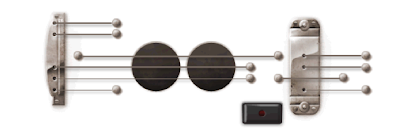
Google commemorates the birthday of Wisconsin-born Les Paul today with a Google Doodle:

For more on Paul’s life and career, see?Les Paul – Wikipedia, the free encyclopedia.

Feldstein: The Economy is Worse Than You Think

Economist Martin Feldstein writes in the Wall Street Journal about the sluggish economy, with a recommendation to spur a true recovery:

The economy will continue to suffer until there is a coherent and favorable economic policy. That means bringing long-term deficits under control without raising marginal tax rates – by cutting government outlays and by limiting the tax expenditures that substitute for direct government spending. It means lower tax rates on businesses and individuals to spur entrepreneurship and investment.

And it means reforming Social Security and Medicare to protect the living standards of future retirees while limiting the cost to future taxpayers.

See, The Economy Is Worse Than You Think

Common Council: Synthetic Marijuana

Update: There’s a solid follow-up from Walworth County Today about the reach of the ban — it won’t apply to our campus, as that jurisdiction is under the authority of the state and university system. See, City of Whitewater can’t ban synthetic pot on campus.

At last night’s council meeting, a clear majority of the council voted (on first reading) to ban on the possession, sale, or consumption of so-called synthetic marijuana.

No ban will solve an issue not of supply, but of demand. There’s no surprise that a ban passed the first reading; it will eventually become law.

One shouldn’t be surprised later when consumption of real or synthetic marijuana in Whitewater is unchanged.

The War on Drugs has the challenge that General Westmoreland’s effort in Vietnam had: a numbers count, of whatever measure (enemy causalities then, arrests or bans now), will prove ineffective.

Lots of funding, lots of headlines, no overall progress.

Common Council: Crime Prevention

Property crimes, although not as reprehensible as crimes of violence, are yet significant wrongs. Theft injures its victims, and undermines civil society. One has no reason to be sympathetic to thieves. Individuals and society benefit from strong private property rights.

Whitewater, perhaps more than other towns nearby, has a problem with property crimes, including car break ins. Last night’s council meeting included a discussion of a police leadership plan to combat these crimes. Although the discussion was an honest acknowledgment of a growing problem, there are risks, too.

In general, Whitewater’s interim chief proposes a plan to distribute a Crime Prevention Security Notice checklist that field officers or community service officers would place on cars or at homes, alerting recipients to having left cars, for example, unlocked, valuable items visible, etc.

The idea’s not unique to Whitewater, and it’s not the idea but implementation and context that make all the difference. Of implementation, there’s risk of over-reach, over residents’ rights (even residents who foolishly leave their doors unlocked). It should give Whitewater’s Common Council pause that in the discussion whether to lock a car’s doors for a resident, the interim chief described the impediment to that approach as inadvertently locking the owner’s keys in his car.

The impediment isn’t accidentally locking a person’s car door, but failing to see that police forces have no legitimate right cause to enter a person’s property, without permission, and lock a door for him or her. It’s true that an officer might, in locking a car door, accidentally lock the keys inside, but that’s not the principal reason it’s a mistaken idea. The principal reason is that police officers — no matter how well-intentioned — are not the lawful managers of citizens’ private property.

Under Coan’s tenure, for its size Whitewater probably attracted more attention for mistakes, errors of judgment, and bad leadership decisions than any other city in the state. That’s not because of a blogger here or there; Whitewater’s bad publicity includes disastrous press in 2006, after the Star Packaging raid.

Ironic, about Coan — he likely prided himself on his public relation skills, but he had so little feel for ordinary life that he blundered time and again, drawing ridicule from Madison and Milwaukee reporters.

No matter how well-intentioned, these notices are a step that should include another one — one involving more foot patrols into neighbors, day in day out, simply to meet people, to walk through. (Not showy efforts like Coan’s ephemeral declaration that he was starting a foot patrol to save gas, but real and lasting efforts.)

Leaving these notices without closer contact with people (in person, noticeably, during the day) is a mistake; this force should discard Coan’s bad habit of not having leaders mix consistently with ordinary people.

There’s a misunderstanding of psychology in leaving a notice before building this level of contact with the broader community. It may seem like that level of contact is already present, but that’s not true; only those in the small echo chamber of this small town would think it were yet so.

That was Chief Coan’s problem, among others problems, in spades. He showed a poor feel for ordinary people, and led (such as he did) from a distance. There was so much talk about administration, about administrative layers, etc., but what this small city really needs is someone who’ll walk a beat with his or her officers, as part of routine duties. Coan would have considered, I’d guess, the very idea absurd.

He understood different theories of policing, but he jumbled them together in awkward, ineffective, self-serving ways. Community policing, such as he instituted it, was far from the real thing.

It’s a measure of how out-of-touch he was, and how mistaken his defenders were — that it would seem absurd to them. Unfortunately, there are civilian leaders in the municipal building who share that same outlook, and are no more adept at understanding ordinary people than Coan was.

It’s sworn officers, too, who have to execute daily, matter-of-fact contact with the public, in routine settings. Residents will always, and rightly, see sworn officers as the heart of a force; community service officers lack the same authority, and will never been seen in the same light (although they work well and diligently).

These checklists will be of greatest effectiveness in a community that embraces a different posture toward the public from Coan’s defensive, reactionary, distant, and dismissive one.

Public Funding of the Arts

Libertarians oppose government funding of art, and there’s a new video from Reason that advances arguments against public funding. Publicly-funded art is easily censored, forces people to pay for ideas they find objectionable, is expensive, and unnecessary.


more >>