FREE WHITEWATER

Whitewater’s Job Gains and Losses

Whitewater has had an announcement of layoffs at Trostel, hiring at Husco, and now more layoffs at Sallie Mae (formerly Arrow Financial). The numbers, favorable and unfavorable, mean a net employment loss for Whitewater.

(A question is why the State of Wisconsin had time before the election to announce job gains at Husco, but didn’t update — let alone announce — the state’s company closing list with Sallie Mae’s layoffs before the election. It was last updated October 26th, despite layoffs of over one-hundred people decided on before the election.)

There’s much risk in crowing about a gain here or there (however fortunate); there’s a larger terrain that’s still hard and unsuitable for growth.

Why Whitewater Isn’t a Progressive City; Why Whitewater’s ‘Conservatives’ Hold the City Tenuously

Yesterday, I posted on the election in Wisconsin’s 43rd Assembly district, of which [the City of] Whitewater is only a part. The race wasn’t decided in Whitewater; the winning margin came from other parts of the district. My remarks below are not about that race, but are general, apart from those candidates.

Whitewater’s politics are an odd and ineffective stalemate because the composition of her electorate shifts significantly depending on the type of election. This happens far less in other places. The consistently and frequently shifting electorate is bad for the city, as I’ll explain below.

First, though, the cause of those shifts: in times when national or state elections are compelling to voters from the local university, progressive issues and candidates do very well. In presidential election years, or in years with a controversial ballot measure, the left does well, and carries the city. Gore (and Nader), Kerry, and Obama all did very well in the city. In off years, or years without an issue that grips progressives, the right does far better.

Yet, these big elections are all fall contests, with state or national candidates on the ballot. Those are the races, in November, where the left in Whitewater has a good chance to carry the city.

That’s not the time when local elections for Common Council are held — they take place in the winter and spring. That’s great for conservatives, and not-so-great for progressives. (I’m teasing; it’s bad for progressives.) Enough of the city that does vote votes toward the right in the spring to assure, for example, that both at-large council seats are held by conservatives. Facing a friendlier, smaller electorate in the spring, the right does better.

If the at-large seats were traditionally up in the fall, or if the races became higher profile as a mayoral race would be, I doubt either conservative would win. They batten on a smaller electorate, one that discourages more energetic, progressive candidates. It also discourages more energetic, ‘opportunity’ conservatives. (These are the kind of conservatives who would do well even in a larger fall electorate.)

Right.

The left has trouble telling one kind of conservative, one kind of Republican, from another. I’m not a member of either major party, and maybe that distance makes classifying strains within a party easier.

In a place like Whitewater, there are few ‘opportunity’ conservatives, like the late Jack Kemp. Here, there’s much more of a traditional, status-quo kind of right, one that’s often willing to commit to a kind of big-government conservatism. It’s project loving — heavy on building new things with public money in the name of greatness, etc. Still, it tends toward traditionalism rather than dynamism, and favors specific businesses (especially ones of friends) over markets. It’s heavy on order, with a lot of rationalizations along the way. Sadly, it also has a Panglossian quality, insisting that this is the ‘best of all possible worlds,’ and that there are no problems.

Thought like this damages politicians, even idealistic ones who start out with high hopes for reform. It’s more Nixon, and less Goldwater or Reagan, so to speak.

These status-quo conservatives get elected, but in a city that’s not what they pretend it is, and that they’re ill-suited (sometimes astonishingly so) to oversee. They win, but they’re an awkward fit. That’s why, when they make pronouncements, they seem out-of-touch, sometimes infuriatingly and sometimes comically so.

When they seek municipal officials for appointed jobs in city all, they favor those who espouse an all-is-well approach. Even if those officials lean to the left, they wind up serving a stodgy, status-quo agenda. The last thing that status-quo conservatives want is an admission of problems in town.

Left.

The progressives that manage to win locally, then, do so in a community whose local institutions and elections favor a status-quo posture. They’re probably closer to the views of all possible voters, but they’re less secure with the electorate that shows up in the spring. They may win, but never with the mandate that they’d need, or that they’d get, in the fall.

Progressives in Whitewater haven’t found a way to expand the spring electorate to look more like the Whitewater electorate in presidential or controversial-issues elections. If they did, they’d run the city. They haven’t, so the status-quo defenders who’d lose in most big elections win in the spring, and coexist with progressives who manage to get by with that smaller electorate.

Bad for the City.

It’s bad for the city because the quality of status-quo conservatives is so much less than opportunity-conservatives, that they’re different political species. It’s bad for the city because the progressives who win do so out of a spring electorate that leans farther-right than the total electorate of the city. It keeps them cautious.

Spring elections produce a less dynamic variety of conservative, and a more electorally-constrained progressive.

I’m of neither group, but I’d welcome the most capable, or least constrained, of either. We don’t have that, and in its absence, there’s considerable drift.

Reason.tv: 3 Reasons This Election Didn’t Change A Thing

For those feeling disappointed with the election results, Reason.tv offers a bit of solace; for those feeling confident, they offers words of caution —


Here’s the description accompanying the video:

There’s no question that the Republicans painted the map red during the 2010 midterm elections, picking up control of the House of Representatives, gaining share in the Senate, and picking up a good chunk of statehouses seemingly all over the place.

The Republicans won big due to huge voter displeasure with the state of the economy, President Obama’s policies of the past two years, and (especially) the Democrat-controlled Congress. But does the shift in power matter? Here’s three Reasons the GOP wave won’t change a goddamn thing:

1. We’re still on the fast track to the poor house. When the GOP ran the show with George W. Bush, they spent like drunken sailors (apologies to drunken sailors). Things have only gotten worse since 2008 but the GOP’s much-ballyhooed (at least by themselves) Pledge to America only pledges to spend the least bit less than the Dems. The Pledge conspicuously exempted defense and entitlements from spending cuts, thereby taking more than 60 percent of outlays off the table and making it impossible to seriously cut spending. Triumphant GOP spokespeople sounded the same message on Election Day, generally refusing to offer up specifics about spending cuts.

2. Nobody’s talking about foreign policy and ending the warfare state. In constant dollars, defense spending has basically doubled since 2000 and is projected to stay at levels hundreds of billions of dollars above what it was before the Cold War ended. Perhaps more important, neither President Obama nor his party’s leadership has even begun a meaningful conversation about foreign policy. The same goes for the Republicans, who constantly exempt defense spending, one of the very largest annual items in the federal budget, from serious scrutiny, much less significant cuts. President Obama is following George W. Bush’s painfully slow withdrawal plan from Iraq and has tripled down in Afghanistan without clarifying U.S. goals and leaving lots of wiggle room when it comes to supposed deadlines for leaving. The only folks more hellbent on maintaining an unexamined status quo than the president are the Republicans.

3. The only people worse than liberals on social issues are conservatives. President Obama and the Democrats spent more time hectoring Americans to eat our vegetables than they did repealing “Don’t Ask, Don’t Tell,” pushing immigration reform, or ending drug prohibition. But don’t look for the new crew in D.C. or your state capitol to push social tolerance anytime soon. If anything – and despite all the limited-government rhetoric – they’ll be even worse when it comes to expanding individual autonomy and increasing lifestyle choice.

The one up side to the midterms? Only that we don’t have to worry about another election for two woefully short years.

“3 Reasons This Election Didn’t Change a Thing!” is written and produced by Meredith Bragg and Nick Gillespie (who also hosts).
more >>

Daily Bread for Whitewater, Wisconsin: 11-4-10

Good morning,

Whitewater’s forecast calls for a chance of rain or snow (that’s what the National Weather Service says), with a high temperature of forty-six degrees.

There will be a Common Council session tonight in Whitewater, at 6:30 p.m. The session will include a resolution on a moratorium for building permits in the TID 4 area, consideration of ordinances on natural landscaping, transient merchant licenses, and additional consideration of parts of the 2011 municipal budget proposal.

The full agenda is available online.

A moratorium on permits is a particularly good idea. As for the budget, I’ll comment on the full budget, with suggestions, when presentations conclude.

Over at Sciencenews.org, there’s a story entitled, “Trading places: Researchers find optimal locations for doing business in multiple markets,” about how (near) speed-of-light transactions may change where trading takes place. Rachel Ehrenberg reports that

Forget the trading floor — in the future, an empty lot in Uzbekistan or a barge anchored miles off Chile’s southern coast may be the most lucrative spot for playing the market. A new analysis that takes a particular kind of trading to its theoretical limit finds the precise locations between the world’s major securities exchanges for gaming the speed of light….

But to exploit the 50-odd milliseconds it takes for information to cross the Atlantic, it turns out that the sweet spot isn’t always at the exchange’s door. For some assets sold on more than one market, such as the New York and London stock exchanges, the money-making spot is in the middle of the Atlantic Ocean, researchers report in a paper to appear in Physical Review E.


On the Wisconsin 43rd District Assembly Race

I’ll offer a few remarks on the 43rd Wisconsin Assembly race, a contest in which Evan Wynn defeated incumbent Kim Hixson. At the bottom of the post, I’ve listed results of prior races, from the Wisconsin Blue Book. (The major candidates’ percentages don’t always add to 100 because of write-ins, etc.) The results of last night’s race are provisional, from the website of the Wisconsin Board of Elections. The incumbents candidate has an asterisk next to his or her name.

I have no connection to either candidate in the 2010 campaign, but know both candidates are solid, dedicated citizens. One wishes the best to both, for our small city, whether in the Assembly or at the university.

One sees first that these races were all close, with the exception of the 2004 contest. There’s only one double-digit win among the lot of them, when Towns defeated McIntyre in ’04. Assuming the district’s boundaries stay the same, future contests are likely to be close, also. (This assembly district looks nothing like nearby 31st district that Rep. Steve Nass holds comfortably.) I recall, perhaps imperfectly, reading that former representative Debi Towns once said that the district would be hard for a Republican to hold. I think she was right, but only in part: it may prove hard for anyone to hold.

Second, the race veered unexpectedly (to me, anyway) into a discussion of kinds of public service. That’s not a bad topic, but I wonder if the race would have been closer if that had not become a topic. We’ll never know, but it seems possible. A more conventional list of topics — without a discussion that involved careers of the two candidates — might have produced a race different in margin, if not result.

Third, the district’s not merely changed parties, but so has the governor’s mansion, the state assembly, and the state senate. I’m neither a Republican nor a Democrat, so my party won none of these bodies last night. Having won so much, individual state representatives and senators will be part of a much bigger story, that will decide the fates of their future candidacies. Wynn was sensible to commit only to a single term, leaving the rest to a future decision — there’s no way to know how this will turn out for the new majority.

Fourth, I do know this: some new Republican officeholders will take office committed to their ideas, only the meet old incumbents and party officials who are old-style pols in every way. There will be all kinds of tempting suggestions to ‘see how the game is played’ or to ‘be pratical,’ etc. These temptations, delivered sotto voce, will come from Big Government Republicans who just want to do what they did the last time they were in power.

Fifth, a word about endorsements in this race. If a politician, with a website he holds out as a news site, is listed as a supporter of one of the candidates on that candidate’s website, then he should make that clear when he writes about the candidate on the news site.

Simply listing the endorsements of others (when the number favor his choice by 3-1) isn’t neutrality, and isn’t proper disclosure. It operates as a quasi-campaign ad.

Disclosure should come prominently on the website of the politician/news publisher.

Here are those results —

State Assembly 43rd District

2010
Kim Hixson* 9,448 47.5%
Evan Wynn 10,449 52.5%

2008
Kim Hixson* 15,303 51.2%
Debi Towns 14,581 48.8%

2006
Kim Hixson 10,330 50.02%
Debi Towns* 10,292 49.83%

2004
Matt McIntyre* 12,796 44.4%
Debi Towns 15,960 55.4%

Daily Bread for Whitewater, Wisconsin: 11-3-10

Good morning,

Today’s post-election forecast calls for a partly sunny day, with a high temperature of fifty-eight degrees.

There’s much to consider about America’s, Wisconsin’s, and Whitewater’s elections. I’ll write about them over the next two days or so. As a third-party voter, who splits a ticket every which way most elections, some of my preferred candidates won, but others lost. The happiness at seeing a preferred candidate win is often tempered by seeing one’s other preferences defeated.

The Wisconsin Historical Society recalls that on this November 3rd in 1936 (that year a Tuesday):

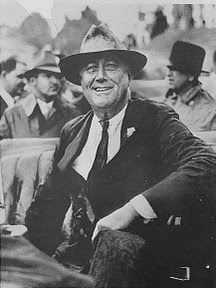
1936 – Roosevelt Wins in Rock County

On this date Rock County voted Democratic in a presidential election for the first time in 74 years. The county’s 17,987 votes for FDR eclipsed 14,689 for Republican Alf Landon. Janesville and Beloit both voted for Roosevelt, who won in the largest national election landslide in history. [Source: Janesville Gazette]

Although I’m convinced that Roosevelt’s New Deal failed to achieve the economic improvement often falsely credited to it, how can one not admire Roosevelt’s zeal and commitment, love of America, and his concern for ordinary people? He was not merely tenacious, but often caustic and acerbic toward his political opponents, and that rhetoric was much to his (and his party’s) advantage.

He was, so to speak, a man willing to break an egg to make an omelet.


Daily Bread for Whitewater, Wisconsin: 11-2-10

Good morning,

Today’s forecast calls for a sunny day with a high temperature of fifty-two degrees.

At Lakeview School tonight, there’s a PTA meeting at 6 p.m.


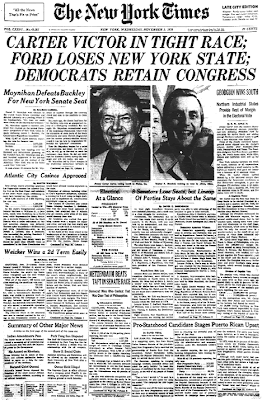
It’s election day in America, but the New York Times recalls another election day, from 1976: Carter Victor In Tight Race; Ford Loses New York State; Democrats Retain Congress.

Jimmy Carter won the nation’s Bicentennial Presidential election yesterday, narrowly defeating President Ford by sweeping his native South and adding enough Northern industrial states to give him a bare electoral vote majority.

Three of the closely contested battleground states slipped into Mr. Carter’s column shortly after midnight–New York, Pennsylvania and Texas. The President-designate lost New Jersey and Michigan, Mr. Ford’s home state, while Ohio, Illinois and California were still up for grabs.

New York teetered between the rivals for hours, contrary to all expectations, before delivering a small majority to Mr. Carter–a majority that gave the Democrat a bonanza of 41 electoral votes.

All that seems far more than a generation ago.

The Utter Foolishness of Jim Coan’s Prohibition

There’s a story at the Gazette that’s both fine in its information, and revealing in how predictable Whitewater’s police chief, Jim Coan, is. He’s as unthinking and foolish as ever.

Recently, Whitewater’s police broke up a drinking party at a house in Whitewater, and cited over one-hundred partygoers for underage drinking. As I’ve mentioned, I’m no fan of a drinking culture. I see nothing appealing in it. (See, Citations and Drinking.)

Yet, I’ve been waiting for the story that would explain how the party was identified. That account is now published, at the GazetteXtra. See, Undercover students used to bust beer parties. (The print version uses the headline, “UW-W’s Party Snoopers.”)

The story’s come out over homecoming weekend, and Coan probably thinks that’s a clever deterrent against additional underage drinking. I’d use the expression that Coan’s ‘too clever by half’ in this regard, but the simpler expression is that he’s half-clever.

Consider Coan’s explanation for using undercover students:

To get a better view of large-scale and illegal beer bashes, police are sending undercover students to the parties, according to a search warrant recently returned to Walworth County Court.

The search warrant was used to gather evidence of beer barrels, beer bottles, cups, taps, money and other alcoholic beverages from a large-scale drinking party Oct. 21 at 928 W. Highland St., a few blocks from campus. Police issued 132 citations to partygoers on the night of the event….

Coan was reluctant to elaborate on his agency’s use of undercover students, but he warned that police would be on the hunt for illegal drinking parties.

“I think it’s safe to point out that young people never know who’s at their parties, and it might be undercover students,” Coan said.

That’s not safe to point out, and that’s the problem. A serious man would have said, “No comment.” Instead, Coan acknowledges the practice, one that apparently used young students, to gather information for law enforcement, in a situation that might have been dangerous for them.

Note the irony: Coan’s sure that young people shouldn’t drink, and that police resources should be used to stop that underage drinking, but he’s willing to use young people to collect evidence and offer testimony in those dangerous matters. If the dangers are so great, then surely so is placing them — rather than trained law enforcement officers — in the business of information gathering.

Coan just can’t see that, and rather than realize that he’s said something stupid — and done something stupid — he think’s he’s said and done something clever.

Wanting all the honor and deference in the world, Coan should at least do a bit of the serious and dangerous work he asks of others (including young civilians, rather than young-looking officers).

This is vigilance and courage on the cheap. There’s no surprise in this: leopards don’t change their spots, and Coan is as utterly foolish as he ever was.

Oct. 30, 1938: ‘War of the Worlds’ Induces Panic — Wired.com

Oct. 30, 2008, marked the 70th anniversary of Orson Welles’ legendary radio broadcast of “The War of the Worlds,” which sparked a nationwide panic, causing many Americans to believe an actual Martian invasion was under way.

Directed and narrated by Welles, the hour-long broadcast aired Oct. 30, 1938, as a Halloween-themed episode of CBS’ radio series, Mercury Theatre on the Air.

The performance was an adaptation of H.G. Wells’ sci-fi novel The War of the Worlds, and was delivered in such a ways as to simulate a live news report of a Martian invasion.

Wikipedia has an article about the broadcast and historians’ differing views of the reaction to it:

http://en.wikipedia.org/wiki/The_War_of_the_Worlds_(radio).

The the full, original broadcast is available online.

Via Oct. 30, 1938: ‘War of the Worlds’ Induces Panic | Underwire | Wired.com.

‘Brainssss’ Teasers: 4 Decades of Zombie Trailers — Wired.com

In anticipation of The Walking Dead’s Sunday premiere on AMC, Wired.com takes a look at the most influential zombie films of the last 40-plus years.

From George A. Romero’s groundbreaking Living Dead series [to] modern twists like Shaun of the Dead and Zombieland, ghouls have been chowing down on guts and brains — and taking shotgun blasts to the face — for four decades.

Here’s a trailer for AMC’s Walking Dead series —


Via Brainssss Teasers: 4 Decades of Zombie Trailers | Underwire | Wired.com. more >>

Nitty Gritty Numbers Suggest Downward Spiral – Forbes.com

In unemployment, emergency benefits to extend 99 weeks (almost two years) of unemployment benefits are running out or for some 4 million to 5 million people from December through April. This is proof positive that we are on the cusp of a deepening poverty at the very moment of political stalemate.

Rosenberg [David Rosenberg of Gluskin-Sheff] says government handouts are responsible for 20% of disposable income in the country, so pray for the stability of the Social Security system. In personal Income, this loss of unemployment benefits means a loss of income equal to about $300 a week, or about $80 billion totted up, unavailable for consumption.

There’s a way out — an end to big projects in small towns, an overall reduction in government spending, a return of most savings as lower taxes, with other reductions reallocated to genuine need rather than showy efforts and bureaucrats’ positions and salaries.

Via Nitty Gritty Numbers Suggest Downward Spiral – Forbes.com.

Boo! Scariest Things in Whitewater, 2010


Here’s the FREE WHITEWATER list of the scariest things in Whitewater for 2010. The 2007, 2008, and 2009 editions are available for comparison.

The list runs in reverse order, from mildly frightening to super scary. (Before I begin, I’ll note that I think this last year was the worst in recent memory, a time of hardship and loss, often ignored or rationalized, for so many.)

10. Apartment Buildings (Big Ones). We’re fine at building grand things we don’t need, but opposed to building large practical things of which there’s great need. We have a campus, and so many homeowners next to it who are just shocked, shocked that students might want to live nearby their university. Who knew? Oh dearie me — there’s a university next to this house I’ve bought!

That we must not have — it’s an historic neighborhood after all, with signs that declare as much to all the rest of the city.

So be it. Save your embarrassingly dramatic speeches about how you live here, you live here — they do, too.

If you’ll keep renters out, through every restrictive, intrusive approach, they’ll have to live somewhere. A large and well-designed apartment building would be just the thing. Yet, for some, that’s the last thing we should have. Worse, the restrictions were a first option, and a large and attractive apartment building, well, let me see, we’re working on that

For all the talk about planning, comprehensive plans, provisional plans, plans for nighttime, plans for daytime, plans for twilight, plans for days when it’s just kinda cloudy, etc., even a simple sequence of events is too hard.

9. Responsibility. Did something go well today, in Whitewater? If so, then that accomplishment is the sole achievement of a longtime local resident, an honest, decent, hardworking descendant of Whitewater’s very founders. He or she sprang from the soil, a son or daughter of the pure and noble settlers who built this town, and achieved what he or she did owing to that lineage, and the genius consequently and necessarily inherited.

Did something go poorly today, in Whitewater? Damn it! Those filthy outsiders, those out-of-town reporters, outspoken residents, and those leftwing fanatics from Madison, they’re coming down on us, hammering us, again and again!

Besides, we wouldn’t have problems if people didn’t point them out, for goodness’ sake. We shouldn’t be held to the standard of other, normal towns; we should be able to establish our local standard.

Stop trying to hold us to the standards of Wisconsin, America, and the rest of the civilized world; we don’t deserve that kind of abuse.

8. Drink specials. In a town with economic problems, and problems in the fair enforcement of rules and regulations, here’s an idea: Ignore all that, and regulate all-you-can drink specials.

Sure, the regulation would use regulatory authority to favor some merchants over others, but why not hide that fact behind a laundry list of supposed harms that you would speciously prevent. Just list all the possible problems from alcohol — absolutely anything — with no need for a solid link between drink specials and any of the harms. Science, schmience — why solve a problem like over-consumption through education when one can offer a parade of horribles? After the regulation, the same problems will still take place, but grandstanding officials will have scored their victory, and fawning reporters will take their leads from those officials: Move along, nothing to see here.

7. Conflicts of Interest. Who cares how many different roles, often contradictory to each other, someone plays? If the man playing them insists he can set aside one role, and decide from another, based on his unquestionably exquisite judgment, who are you to doubt him? It’s true that in the rest of Wisconsin, or the rest of America, those conflicts would be obvious and prohibited.

This isn’t the rest of Wisconsin, or the rest of America — this is Whitewater! Shucks, son, that’s the way we do things around here.

6. Criticism. You know, and I know, that outspoken citizens and pesky bloggers in Whitewater aren’t supposed to call for a better standard. They’re supposed to shut up and sing.

If they offer any criticism, it needs to be appropriate, acceptable, approved, and proper. Tone must be watched very carefully, lest you criticize anyone in town with the same vigor that normal Americans criticize their officials elsewhere.

Well, that idea is an infringement on one’s rights as a citizen, and requires obeisance to mediocre officials. Americans are a robust and vigorous people — we need not live the frail and obsequious lives that a third-tier bureaucrat or his few remaining sycophants might want. Not having been born a rabbit, there’s no reason to live like one.

In any event, there will be no going back for Whitewater — on the contrary, there’s so much more yet to write.

5. Time. There’s a line from the series the Tudors, where Henry tells a nobleman that the most precious commodity is time, as it’s the “most irrecuperable.” That’s true. Every day we spend on silly projects and puffery takes away from the real needs of the city.

4. Chocolate Pouring. It’s been a long time since I’ve read Dickens, but I distinctly recall a scene from A Tale of Two Cities, book 2, chapter VII:

Monseigneur, one of the great lords in power at the Court, held his fortnightly reception in his grand hotel in Paris. Monseigneur was in his inner room, his sanctuary of sanctuaries, the Holiest of Holiests to the crowd of worshippers in the suite of rooms without. Monseigneur was about to take his chocolate. Monseigneur could swallow a great many things with ease, and was by some few sullen minds supposed to be rather rapidly swallowing France; but, his morning’s chocolate could not so much as get into the throat of Monseigneur, without the aid of four strong men besides the Cook.

Yes. It took four men, all four ablaze with gorgeous decoration, and the Chief of them unable to exist with fewer than two gold watches in his pocket, emulative of the noble and chaste fashion set by Monseigneur, to conduct the happy chocolate to Monseigneur’s lips. One lacquey carried the chocolate-pot into the sacred presence; a second, milled and frothed the chocolate with the little instrument he bore for that function; a third, presented the favoured napkin; a fourth (he of the two gold watches), poured the chocolate out. It was impossible for Monseigneur to dispense with one of these attendants on the chocolate and hold his high place under the admiring Heavens. Deep would have been the blot upon his escutcheon if his chocolate had been ignobly waited on by only three men; he must have died of two.

Here, in our time and place, an American man or woman should be more than some asinine, third-tier official who expects the world of others in deference and supplication. No one should seek, and no one should be sought, to pour another’s chocolate.

3. Tax Incremental Districts. Oh, what a mess tax incremental financing has been for Whitewater. Predictably, one hears that failures here were the result of a bad economy.

That’s nonsense, and just excuse-making. All Wisconsin felt a bad economy these last few years, but only a small minority of Wisconsin communities have had problems with TID districts as we’ve had. It’s well-past time to except that the fault is a local one, of official bungling and blame-shifting.

2. Big Projects in Small Places. Our so-called Innovation Center is just corporate welfare for the upper-middle class, helping no one — no one — truly in need. All those millions in grants and bonds are misspent on this effort. Other communities would have used this money to a better end.

The lies and emptiness of this project are exceeded only by the vanity of the undertaking.

1. Poverty. We’re a small town with extraordinary poverty among families and children. That’s the real “Banner Inland City of the Midwest,” and all the cheerleading and self-congratulatory rhetoric on earth won’t change that grim truth — that a few officials put their pride ahead of others’ needs.

There’s a way out, and it will come to Whitewater, in time — a smaller government, with good leaders, fewer burdens & regulations to encourage private investment, and an end to cheerleading bureaucrats.

What we have now will be set aside, in favor of a better politics, and our present leaders will be recalled mainly as cautionary examples, of what one should not do.

That better day draws closer, every day.