FREE WHITEWATER

Friday Comments Forum — Comments or Questions

Here’s the Friday open comments post.

Today’s suggested topic is no single topic at all — just a forum for your comments or questions. I’ll try to answer questions as quickly as I can.

The use of pseudonyms and anonymous postings are, of course, fine.

Although the comments template has a space for a name, email address, and website, those who want to leave a field blank can do so. Comments will be moderated, against profanity or trolls. Otherwise, have at it.

I’ll keep the post open through Monday afternoon.

Foreclosures creep higher – JSOnline

A preliminary count by Madison-based ForeclosureAlarm.com showed 2,511 filings in courts around the state last month, compared with 2,484 in August 2009….

Russell Kashian, a University of Wisconsin-Whitewater professor who tracks foreclosures in the state, put the blame on the job situation.

“You aren’t going to see a real improvement in foreclosures unless you see a real improvement in employment,” Kashian said.

Therein lies the truth and predicament before us.

See, Foreclosures creep higher – JSOnline.

Daily Bread for Whitewater, Wisconsin: 9-3-10

Good morning,

Whitewater’s forecast for today calls for a day of scattered showers and a high of sixty-four degrees.

It’s Spirit Day at Whitewater Middle School today.

The Wisconsin Historical Society recalls that on this date in 1783

Paris Peace Treaty Signed

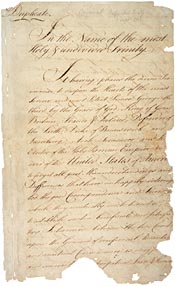
On this date the Paris Peace Treaty was signed. The treaty demanded land, including Wisconsin, be ceded from Britain to the United States. Two years after the conclusion of the Revolutionary War, American and British delegations met in Paris to formalize Britain’s recognition of the United States of America. The treaty articles were drawn up on November 30, 1782 and formally agreed upon on September 3, 1783. [Source: University of Oklahoma, College of Law]

Only in Japan, Real Men Go to a Hotel With Virtual Girlfriends – WSJ.com

Perhaps the consequence of a decade of economic stagnation

In the first month of the city’s [Atami] promotional campaign launched July 10, more than 1,500 male fans of the Japanese dating-simulation game LovePlus+ have flocked to Atami for a romantic date with their videogame character girlfriends.

The men are real. The girls are cartoon characters on a screen. The trips are actual, can be expensive and aim to re-create the virtual weekend outing featured in the game, a product of Konami Corp. played on Nintendo Co.’s DS videogame system.

See, Only in Japan, Real Men Go to a Hotel With Virtual Girlfriends – WSJ.com.

Daily Bread for Whitewater, Wisconsin: 9-2-10

Good morning,

Whitewater’s forecast for Thursday calls for thunderstorms with a high of eighty-one degrees.

The History Channel reports that on this day in 1969, a major convenience for American consumers made its appearance:

On this day in 1969, America’s first automatic teller machine (ATM) makes its public debut, dispensing cash to customers at Chemical Bank in Rockville Center, New York. ATMs went on to revolutionize the banking industry, eliminating the need to visit a bank to conduct basic financial transactions. By the 1980s, these money machines had become widely popular and handled many of the functions previously performed by human tellers, such as check deposits and money transfers between accounts. Today, ATMs are as indispensable to most people as cell phones and e-mail.

There was, however, an even earlier version, pulled for unpopularity:

In the USA, Luther George Simjian has been credited with developing and building the first cash dispenser machine. There is strong evidence to suggest that Simjian worked on this device before 1959 while his 132nd patent (US3079603) was first filed on 30 June 1960 (and granted 26 February 1963). The rollout of this machine, called Bankograph, was delayed a couple of years. This was due in part to Simjian’s Reflectone Electronics Inc. being acquired by Universal Match Corporation. An experimental Bankograph was installed in New York City in 1961 by the City Bank of New York, but removed after 6 months due to the lack of customer acceptance. The Bankograph was an automated envelope deposit machine (accepting coins, cash and cheques) and it did not have cash dispensing features. The Bankograph, however, embodied the preoccupation by US banks in finding alternative means to capture core deposits, while the concern of European and Asian banks was cash distribution.

Senate Upsets Threaten Chamber’s Comity – WSJ.com

Mr. Lee, the Utah Republican outsider who defeated incumbent GOP Sen. Robert Bennett, said collegiality for collegiality’s sake has contributed to the nations problems. Earmarks, or special-interest provisions attached to spending bills, have traditionally passed because senators haven’t wanted to offend their colleagues.

Yes, that’s true, and comity for those ends shouldn’t be missed. There’s no political species more repulsive than the big-government Republican — fat, bloated abercrombies if ever there were any, and their political demise is good for America.

See, Senate Upsets Threaten Chamber’s Comity – WSJ.com.

Community Surveys and Popularity Real and Imagined

In December 2009, the City of Whitewater announced the results of a “2009 Comprehensive Plan Community Survey.” Whitewater’s City Manager, Kevin Brunner, predictably touted the results as proof of satisfaction with his municipal administration. Around that time, I saw the survey results online, but I’m sorry to say I didn’t comment on the survey or the city manager’s characterization of the results.

One key note: the City of Whitewater created this survey, sent it out, and thereafter turned it over to academics to try sort it all out. Those academics who received these results for review received a mess.

There’s a story, perhaps apocryphal, that comes to mind.

Aides to Franklin Roosevelt asked him if he might consider appointing Herbert Hoover to a commission, as they knew former President Hoover was intelligent (albeit unpopular).

Roosevelt knew that Hoover was highly intelligent, but also knew that Hoover was political poison, the benefits of bipartisanship notwithstanding.

So, Roosevelt replied that he could not appoint Hoover. “Gentlemen,” Roosevelt said, “I’m not Jesus Christ, and I cannot raise the dead.”

Similarly, no matter how skilled an academic, no one could make the city’s method good.

I have embedded that public document, below, and have a few remarks to offer.

A Skewed, Unrepresentative Sample. A survey with a poor sample is representative of nothing except the unrepresentative. The ‘Introduction’ to the study is misleading, as it contends that

This report summarizes residents’ perceptions of the overall quality of life in Whitewater, their evaluation of facilities, services, and safety in Whitewater, and their preferences for future development in Whitewater.

Perhaps, the City of Whitewater’s administration did not suppose that readers could remember words from one page to the next, because only one page later it’s clear that this was not a survey of residents’ views. In the discussion of ‘Sampling Method’ under ‘Methodology’ one learns the true subjects of the survey:

The City of Whitewater Comprehensive Plan Community Survey was designed and administered by City personnel. Questionnaires were mailed at the end of June, 2009, to all property owners and business owners who received water bills. Access to the survey was also made available on the City’s website, and residents who did not receive utility bills could complete the survey by coming to the municipal building, or to the public library and filling one out in person.

Not a representative sample of actual residents, but property and business owners, even if they lived outside in the City of Whitewater. For those not property or business owners, there was a wholly different method of outreach, making the survey data even less reliable. Not a different, secondary collection, but a different primary collection for vast numbers of actual residents.

Needless to say, under a discussion of ‘Demographics’ there’s an acknowledgment of the unrepresentative nature of the survey:

The method for mailing the instrument as well as the timing of the survey completion (mid-Summer), likely affected the demographic profile of respondents. For example, five percent of the survey respondents were between the ages of 18-24, 20 percent were between the ages of 25-44,38 percent were between the ages of 45-64, and 37 percent were age 65 or older. As such, the data are skewed toward a much older age group within the actual population of the City.

So, was this a residents’ survey? No. Was this a community survey? Well, if one is willing to accept an inaccurate representation of the community instead of an accurate one, then I suppose it would be.

Sadly, our current municipal manager would rather tout anything than produce something credible.

Rationalizing the Unrepresentative. Although the City of Whitewater published a sample in a report that acknowledges fatal flaws, there’s still an attempt to rationalize other glaring problems. Consider how the study’s section on ‘Demographics’ describes the ethnic background of respondents:

With respect to race and ethnicity, the data were less skewed and fairly representative when compared with U.S. Census data with 94 percent of the respondents identifying as White/Caucasian and the remaining six percent of the respondents fairly evenly distributed across the other five racial/ethnic response categories.

First, the Census data to which these remarks refer is from 2000, not 2009. The contention that the 2009 survey is ‘less skewed’ depends on stale, 2000 data. There is no one — no one sensible — who believes that in 2009 Whitewater had a population that was 94% white. Candidly, the 2000 Census data were probably over-stating whites, but in 2009, it’s just embarrassing to rely on the 2000 data for accurate demographics on ethnicity. The newer, 2009 survey should have shown a significant difference from 2000, to be in any reasonable way representative of Whitewater’s population.

This is yet another sign of how bad this survey’s sample is.

Second, it’s more than telling that the remaining non-white population (erroneously listed as 6%) is spread across all five non-white population groups. That’s additional proof of how bad the 2009 sample was. The City of Whitewater does not have an equal distribution of non-white ethnic groups, and no one thinks so.

In any event, since people list ethnicity as self-identifiers, perhaps Whitewater’s municipal administration could consider if, in fact, these respondents see no difference between one group of non-whites (the city’s term) and another? One would guess that can’t be true, as people choose a specific ethnicity for all sorts of reasons deeply meaningful to themselves.

Consider an old story about another attempt to make something ill-fitting into something fitting:

Next morning, he [the prince] went with it to the father, and said to him, “No one shall be my wife but she whose foot this golden slipper fits.” Then were the two sisters glad, for they had pretty feet. The eldest went with the shoe into her room and wanted to try it on, and her mother stood by. But she could not get her big toe into it, and the shoe was too small for her. Then her mother gave her a knife and said, “Cut the toe off; when thou art Queen thou wilt have no more need to go on foot.” The maiden cut the toe off, forced the foot into the shoe, swallowed the pain, and went out to the King’s son….Then he looked at her foot and saw how the blood was streaming from it. He turned his horse round and took the false bride home again, and said she was not the true one….

Even a Unrepresentative Sample Shows the Municipal Administration’s Unpopularity. Consider the answers to Table 2, Figure 3’s question, “As you think about the City as a whole compared to five years ago, do you think that things have stayed about the same, improved, or worsened?”

Here are the responses:

Same 24%
Improved 44%
Worsened 16%
Did Not Live in Whitewater [!] 16%

The City of Whitewater touted this as proof of satisfaction with life in town. That’s absurd — fewer than half of the respondents felt life had improved.

That’s not positive — over the years 2004-2009 (coinciding with the tenure of our current administration), one would hope that a significant majority would see conditions positively — as improving.

That’s not what happened — even a skewed sample shows that only a minority of respondents see actual improvement.

These paltry results come despite years of crowing, cheerleading, boosterism, puffery, grandiose claims, and skewed survey data. For it all, still only a minority of feels that conditions have improved in Whitewater.

True Popularity. When Whitewater’s town squires held a meeting for a new school administrator, by their own count about fifty people showed up. When the municipal manager held a meeting in a retirement home about the 2010 budget, only one person — a retiree living in the home — attended.

These efforts produced slight turnout, but it would be false to say that Whitewater’s residents are apathetic. (Although one could have guessed that the city manager — in print — would whine about low attendance at his first budget meeting, as though it could be anyone’s fault but his own. See, Come On, Whitewater! Stop Disappointing Your Politicians and Bureaucrats (Part 2).)

When Whitewater has something worth seeing, people pour out to attend and support the event. For our science fair, there were several hundred, for our Independence Day parade, over a thousand, for graduation, nearly a similar number.

And more important still, in parishes across the city, thousands attend worship each week.

Low attendance only occurs when the same tired bureaucratic class puts on a gathering for itself — then, the seats are mostly empty. A man or woman can see easily through the sophistry of our city’s announcements and declarations. The fault lies not with Whitewater’s residents, but with the bureaucrats who have alienated and condescended to people.

(I have a standing, yet unanswered, challenge to Whitewater’s city manager: where are the crowd shots of the taxpayer-funded Innovation Center’s ground breaking, where are all the pictures of residents turning out in support? I’ve yet to see anything other than pictures of a few fancy people and bureaucrats, standing around and mugging for the camera. I’d guess that I haven’t seen any crowd shots because they’re aren’t any. Outside of a small circle of back-patters, there’s no one who’s eager to turn out for a white-elephant in the making.)

A study like the 2009 Survey, designed and distributed so poorly, and producing such unrepresentative results, should never have been distributed, and never touted as a valid survey of Whitewater, Wisconsin. Any city official who cared about accuracy and proper survey techniques would have done a better job, and would have rejected results like these. The municipal administration’s reliance on these results is unpersuasive.

There’s popular support for many things in Whitewater; one will not find our municipal administration, and its bureaucrats, among those many things.

The 2010 Walworth County Fair

The Walworth County Fair is a big event in this part of the world, and it’s a great treat to visit each year. The fair takes place through Labor Day weekend, and marks the end of summer.

At WalworthCountyToday.com, there’s a blog that will keep track of the fair.

A schedule of events is also available.

Here’s an embeddable video that WalworthCountyToday.com’s prepared, to give a taste of what the fair’s like.

Enjoy.


more >>

Daily Bread for Whitewater, Wisconsin: 9-1-10

Good morning,

Whitewater’s forecast for today calls for a day of thunderstorms with a high of eighty-one degrees.

Whitewater’s Landmarks Commission will meet tonight at 5 p.m. The agenda is available online.

On this day in 1974, a milestone in aviation: an American SR-71 made the trip from New York to London in less than two hours. Wired describes the event and plane —

On a flight to the Farnborough Air Show outside London, Maj. James Sullivan and Maj. Noel Widdifield fly the Lockheed SR-71 Blackbird from New York to London in 1 hour, 54 minutes, 56.4 seconds. The 1,806-mph flight still holds the transatlantic speed record between the two cities.

Developed during the middle of the cold war, the Lockheed SR-71 was designed as a reconnaissance aircraft that could fly fast enough to avoid being shot down by Russian aircraft or missiles. Initially developed as the A-12 for the CIA, the aircraft evolved and adapted many times in its more than 30 years of flying.


Regular Blackbird


Faster Version

Reason.tv‘s Nanny of the Month (Aug 2010): Police Chief Busts Guy Who Keeps Drunks Off the Street

Reason.tv has announced the Nanny of the Month for August 2010 — Quincy, Illinois Police Chief Rob Copely. Copely set up –wait for it — a sting operation to catch a driver who took tips to keep drunk drivers off the street.

A video like this shows the divide between current leaders like Copely and the public. Copely, and most of those with whom he surrounds himself, probably consider his explanation for the arrest a sensible one, and deserving of deference. It’s all so rational, you see, and spelled out in his state’s statutes and city’s ordinances.

Still, ever-greater numbers of people have come to see charges in cases like this as both wasteful of resources and hypocritical. It’s wasteful because people understand that policing is expensive, and so officers and equipment are at a premium, and should be directed toward serious offenses. (The ever-greater cost of policing has brought new equipment to police forces, but also made it harder for communities to tolerate a leader whose initiatives bring taxpayer ire. News travels faster than ever, to more people than ever, and the price of foolishness is high.)

It’s also hypocritical to say that this charge had to be brought. Ordinary people have come to see that leaders exercise discretion in charging — for their friends — too often. No one had to charge this man, and any sensible person in his town knows as much.

What’s funny is that older leaders like Copley talk to others like themselves, along with a few office toadies, and so have no idea how a story like this sounds to most normal people. They’re told by those around them that their actions make sense, and that, truly, they’re the victims when bad publicity hits. (“Oh, Chief, those ungrateful complainers, misfits, anarchists, pyromaniacs, whatever, etc. just don’t deserve a great man like you.”)


Link: http://www.youtube.com/watch?v=jJldSvf7X8Q.

Here’s the description accompanying the video:


Did you hear about the Oregon health inspector who shut down a seven-year-old girl’s lemonade stand? How about the California mayor who put the kibosh on a three-year-old’s vegetable stand?.

Sure they’re both big-time buttinskys, but this month top honors go to the top cop who busted a guy who was offering free rides to keep drunk drivers off the road.

Presenting Reason.tv’s Nanny of the Month for August 2010: Quincy, Illinois Police Chief Rob Copely!

“Nanny of the Month” is written and produced by Ted Balaker. Associate Producer: Alex Manning; Animation: Meredith Bragg.

Approximately one minute.
more >>

Municipal Openness and Transparency, and Their Alternatives

Whitewater, Wisconsin’s last Common Council meeting was held on August 17th. Part of that meeting concerned a proposal for transparency in government, with improved standards for posting meeting notices and agendas online, recording those meetings, and making the records conveniently available online for residents of Whitewater. I’ve written on this topic before. (See, for example, Beyond Paper Packets for Only a Few.)

I’ll consider only the discussion on transparency. That discussion begins at 45:55 on the recording, and continues through 1:05:45. I have embedded a video from that meeting, immediately below.


Here’s a link: http://blip.tv/file/4023240.

This video is a fine start – we can and should expand recording to other public meetings. Transparency and openness in government is valuable for many reasons, but consider just this one:

Transparency in government is about keeping citizens informed about public meetings of public officials at public expense with accurate and reliable readings. Does a community want to rely on what officials recall happened at a meeting, through mere notes, or should a community use the accurate and commonplace media of audio and video recording to assure that what was said is preserved accurately and reliably as a reference?

If people watch and record every experience of their children, relatives, and even friends, should government not record the actual words and positions of public officials in public meetings, supposedly held for the benefit of all residents?

From Whitewater’s Common Council, one heard several objections, however indirect, to the prompt adoption of the main transparency proposal.

What’s the rush? It’s all around us — in a city whose municipal administration would have made better decisions had there been a more transparent government years ago. I am convinced that this is true: that widespread awareness of the content of proposals would first have elicited more public comment, and those comments would have prevented so many closed-group decisions that plague us now.

No matter how intoxicating it may be for a small group of career managers to hear only their own voices, their decisions cannot be as sound as those informed by the opinions from among the thousands in this city.

No one person, no group of a dozen or so, is a match for the collective understanding of our city’s residents. Centuries of experience shows this, time and again, in place after place, and on this point one could successfully contend against any number of objections.

That’s the rush, and that would be the improvement in our quality of life — that we’ll be a more honest and practical city — than we are now. Every day delayed is a day we’re less than we could be, both in our principles and in the prudent gathering of community insight.

Committee Support. Saying that transparency depends on what committee members will prefer, as some at council did, is a gross misunderstanding. Those who who advocate inquiring of committee members think they’re being sensible, considerate, whatever. In fact, it only shows how confused they are about governance. These are not private committees and private topics, but public ones. Those who have volunteered for a public body, organized under law, shouldn’t be in a position to object, ‘we’d like a less transparent and less accurate way to memorialize our proceedings, please.’

Note, also, that any citizen may record open session public meetings, in audio or video. Wisconsin law allows, and encourages, the practice:

Use of equipment in open session. Whenever a governmental body holds a meeting in open session, the body shall make a reasonable effort to accommodate any person desiring to record, film or photograph the meeting. This section does not permit recording, filming or photographing such a meeting in a manner that interferes with the conduct of the meeting or the rights of the participants.

Wis. Stat. sec. 19.90.

A person who sought, using conventional means, to record an open session meeting would be within his or her rights under our law. That’s not just true for Council meetings, but for those of committees and commissions, too. Attempts to prevent conventional recording would be a violation of Wisconsin law, and would justify legal action against a Wisconsin municipality.

Members of a committee may have an opinion on what they’d like, but as they have no veto against private citizens’ recording of open session meetings, so they would have no legal recourse should the City of Whitewater choose to adopt a more open and honest approach. (Whitewater is not required to adopt a more accurate means of memorializing a meeting; she may not, however, prevent a resident from doing so.)

Public Support. Asking a community that’s been denied a more open politics if it’s clamoring for one is like asking a horse you’ve starved if he feels like galloping around. You might expect that it will take a while for interest to return. An at-large council member in Whitewater can win city-wide office with only several hundred votes in a city of fourteen-thousand. It’s lawful to govern this way, but hardly evidence of popular support. A small clique of a few hundred insiders is not — and never will be — the whole city.

It’s just an expression of temerity for those who have so wearied and exhausted this community to contend that they need to measure popular support. Our leading bureaucrats have so alienated this community than they can only get a retiree or two to show up — at a retirement house — for a community budget meeting.

When they say ‘popular support’ they may be thinking about a few, but they cannot plausibly mean the community.

(This is an opportunity to consider the last so-called community survey that Whitewater’s municipal administration trumpeted as evidence of popular support. I’ll address that flawed survey tomorrow, on Wednesday morning, September 1st, and demonstrate that it shows not popular support, but false bureaucratic claims.)

Cost. I am sure that it’s fair to know the cost of preserving public meetings. Two points are worth making. First, it should not require the very best equipment, but only what’s adequate. Nothing need be gold-plated. Ordinary equipment can produce fine results.

Second, if this proposal is found too costly for the city’s budget, then it’s fair to ask: will it have been less worthy than each and every item that the city does fund? One would be right to list every larger approved expenditure, or smaller ones combined, and say: Was each worth more than transparency?

Soon enough, transparency like this will be the standard across Wisconsin. We’ve much to gain by adopting these measures at the earliest opportunity. more >>