FREE WHITEWATER

Milwaukee County’s Immoral Utilitarianism: Update 14 (Trying to Hide the Truth Until After the Election)

There’s a new story at the Journal Sentinel entitled, “Review of Patient Safety at Mental Health Complex to Take Year: Board will issue recommendation in the interim for consideration in county’s 2011 budget.” The story offers new and vital information:

Waiting until after the November elections: Milwaukee County has already tried to quell controversy with a self-produced study (from the same people now the subject of a federal lawsuit) suggesting that problems at the Mental Health Complex were minimal. That was incredible, and one could guess easily that a more credible county report would not be forthcoming until…after the November elections.

Officials dribble the truth when there are no more excuses left to speak:

A federal inspection found multiple instances of assault and improper sex between patients during the last half of 2009. One case involved a 22-year-old who became pregnant after consensual and non-consensual sex with another patient. The Journal Sentinel reported the findings in February.

The subject came up only briefly during Tuesday’s meeting, when one of the 14 advisory board members asked how the county’s Behavioral Health Division deals with complaints of patient sexual assaults.

John Chianelli, the county’s behavioral health administrator, declined to discuss the issue until later. He said the issue would be reviewed in detail with a subcommittee on patient safety that meets July 14.

Chianelli said steps had been taken to prevent patient assaults and improve handling of assault complaints, in the aftermath of the federal inspection. The hospital’s policy banning sex between patients has been communicated to all hospital staff, signs have been posted outlining the policy and patients are advised they may take concerns about sexual harassment or assault to hospital officials or to Disability Rights Wisconsin, a state-designated patient advocacy group, Chianelli said.

The hospital also is installing video surveillance cameras in hallways to better monitor patients, he said.

Multiple instances, but only now, after a federal inspection, is Chianelli acting to fulfill obligations that were his responsibility from the day he took his post.

Consensus, etc.: There’s always talk of a need for community consensus, for recognizing that these problems happen everywhere, that it’s everyone’s responsibility. That’s nonsense: assaults like this don’t happen everywhere, abuses like this don’t take place everywhere, and officials’ attempts to claim the problems are universal are just attempts to evade personal responsibility and culpability for their many direct and immediate failures.

Admitting the lie of so called sexual self-expression: When these allegations first emerged, some contended that these patients were just ‘expressing themselves’ sexually. Assault is not, and cannot ever be, a matter of self-expression. It’s also worth noting that the overwhelming majority of these patients are admitted involuntarily and are both seriously ill and consequently vulnerable. It was impossible to contend credibly that this was a matter of healthful self-expression. Finally, an official yields to the truth:

“Sex is a treatment-interfering behavior,” said Thomas Harding, medical director of the Mental Health Complex. “We will not allow sex in that environment.”

Chianelli should have been fired long ago. His many mistakes have led to injury and abuse, and have disgraced Milwaukee County, and all Wisconsin.

I’ve posted about Chianelli’s policy, and the tragedy that is conduct at the MHC, before. See, A Milwaukee County Bureaucrat’s Immoral Utilitarianism, Update: A Milwaukee County Bureaucrat’s Immoral Utilitarianism, Update 2, Update 3, Update 4, Update 5, Update 6, Update 7, Update 8, Update 9, Update 10, Update 11, Update 12, and Update 13.

Update: The Outgoing Wisconsin Administration’s Cronyism

I posted last week about the cushy job that a Doyle Administration official, Michael Morgan, got with the University of Wisconsin-Madison. See, The Outgoing Wisconsin Administration’s Cronyism. Morgan didn’t even need to submit a resume before he got the six-figure job! (A public records request from the Wisconsin State Journal revealed that he emailed it only after he got the offer.)

State Representative Nass, representing Whitewater, has called for the Wisconsin Attorney General to investigate:

The appointment has become controversial because Morgan’s salary is going up by $108,000 per year, and UW System President Kevin Reilly did not post the position or conduct any kind of formal search. E-mails revealed that Reilly offered Morgan the job without looking at his resume or conducting a criminal background check.

In a letter to Attorney General J.B. Van Hollen, Nass noted that Board of Regents policy says Reilly “shall appoint” a committee to search for and recommend candidates for high-level administrative jobs such as Morgan’s.

He noted that another UW policy statement commits the administration to following equal employment and affirmative action principles in the hiring of all positions. Morgan is black.

“In this case, President Reilly appointed no advisory committee, considered no other candidates for this position and has refused to publicly discuss this matter,” Nass wrote. “All of these actions are highly unusual and President Reilly must be held to account for any inappropriate conduct in this matter.”

A spokesman for Van Hollen said his office is reviewing the request.

See, Lawmaker Asks for Review of UW-System Appointment.

Nass is right — this appointment deserves scrutiny on its own. It should also be a reminder to the incumbent administration that political appointees are not entitled simply to take state posts as part of a last-year-in-office job placement strategy.

Daily Bread for Whitewater, Wisconsin: 6-30-10

Good morning,

The weather forecast for Whitewater calls for a sunny day, with a high of seventy-seven degrees.

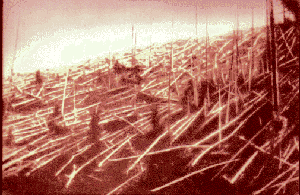
On this day in 1908, there was a “A Very Close Encounter of the Second Kind” in Siberia. Although there have been wild theories about what caused the damage on that date and place (alien craft, a tiny black hole) it was surely a meteorite that produced a powerful impact:

The Tunguska event flattened 80 million trees covering 830 square miles of sparsely populated (but not unpopulated) Russian outback in the region of the Tunguska River northwest of Lake Baikal.

Whatever it was — an exploding fragment from a disintegrating meteorite seems the likeliest explanation — scientists concluded there was no actual impact. The explosion appears to have been caused by an air burst similar to that of an artillery round detonating in midair, rather than on impact with the ground. In this case, the fragment, which is believed to have measured perhaps 100 feet across (although new research suggests it may have been even smaller), was probably traveling at around 21,000 miles per hour when it exploded anywhere from 4 to 6 miles above the Earth’s surface.

Based on later assessments of the damage, the force of the blast was estimated to be between 10 and 15 megatons of TNT, roughly a thousand times more powerful than the atomic bomb that destroyed Hiroshima….

Here’s something to consider: In its 1966 edition, The Guinness Book of Records concluded that, based on the Earth’s rotation, had the Tunguska meteorite struck 4 hours, 47 minutes later, it would have obliterated St. Petersburg, then the capital of imperial Russia. Given the events that would shortly torment that nation — and all of Europe — for the better part of the 20th century, one is left to wonder how history might have changed in those circumstances.

“Trees knocked over by the Tunguska blast. Photograph from the Soviet Academy of Science 1927 expedition led by Leonid Kulik.” Photo from Wikipedia’s Wikimedia Commons

There’s more information related to a FW post on Monday about a dog class held at our local campus. See, Wisconsin State Journal: Dogs Sharpen Sniffing Skills at UW-Whitewater. At Walworth County Today, there’s a story entitled, “Class Teaches Dogs Techniques to Help Find Missing People.” The story describes how many challenges the dogs face when trying to track a scent:

Ed Presnall of Walworth, a longtime dog trainer, this week is teaching eight dogs and their handlers how to find elderly people, autistic children and others who might wander away from home.

Presnall is an expert on a technique called variable surface tracking in which dogs follow a scent through an urban environment.

He teaches dogs to navigate over dirt, through grass and across pavement and to overcome distractions.

“The dogs have to work through contamination, not chemical contamination, people contamination—their footprints, their scent, whatever they might leave behind,” he said.

He also teaches handlers to guide their dogs and to respond to their dogs’ natural instincts.

“They have to know their dog. They have to encourage their dog,” he said. “They have to watch for cars and people and other things because the dog is too focused on tracking to watch out for its safety.”

Best wishes and good luck to all the canines and their owners.

Iron Sky: Attack of the Space Nazis

Over at Wired, there’s a story about the making of the animated film, Iron Sky. It’s the story of Nazis who escape Europe in 1945, before the collapse of the Third Reich, and take refuge on the dark side of the moon. They plan to return and conquer earth in 2018. See, Space Nazi Trailers Draw Crowd Funding for Iron Sky.

The story and film are not simply interesting because of the odd, implausible, bizarre plot. It’s interesting because of the way that it’s funded: the trailers came first, and based on donations from them, the film is being funded. (Funding is now, reportedly, about 90% completed. Filming should begin this fall.)

Here’s what visual effects supervisor Samuli Torssonen has to say about funding a film this way:

As a hybrid model blending conventional business cash with microdonations from sci-fi zealots, Iron Sky is emerging as the most expensive fan-curated movie to date. As such, it points the way toward a future in which audience and investor become one and the same.

“I think it’s great that the audience can, in some terms, ‘order’ a film that they find cool by investing, participating in the production or donating money,” Torssonen said. “They can give ideas and feedback, become part of the whole process, and finally see a film in theaters that has been tailored for their needs.”

I don’t know if they’ll get all the funding they need, if the film will be produced, or when it will hit theaters (if at all). (Producers have a 2011 target for release of their sci-fi creation.) They’ve made two trailers, and I’ve embedded each below. Their approach is clever, as it’s based on what’s intriguing to viewers, what they’re willing to fund (even if through small amounts).

Trailer One


Link: http://www.youtube.com/watch?v=4KEueJnsu80.

Trailer Two


Link: http://www.youtube.com/watch?v=DeAfoiN5SDw. more >>

Good, Open Government and Email

Wisconsin has both a Public Records Law (Wis. Stat. ss. 19.31-19.39 (2003)), and an Open Meetings Law (Wis. Stat. ss. 19.81-19.98. Both are designed to ensure that citizens will have access to government actions in communication and deliberation. These laws represent the goal of an open Wisconsin, committed to good and open, limited and responsible government.

Here are their respective Declarations of Policy:

Public Records Law:

In recognition of the fact that a representative government is dependent upon an informed electorate, it is declared to be the public policy of this state that all persons are entitled to the greatest possible information regarding the affairs of government and the official acts of those officers and employees who represent them. Further, providing persons with such information is declared to be an essential function of a representative government and an integral part of the routine duties of officers and employees whose responsibility it is to provide such information. To that end, ss. 19.32 to 19.37 shall be construed in every instance with a presumption of complete public access, consistent with the conduct of governmental business. The denial of public access generally is contrary to the public interest, and only in an exceptional case may access be denied.

Open Meetings Law:

(1) In recognition of the fact that a representative government of the American type is dependent upon an informed electorate, it is declared to be the policy of this state that the public is entitled to the fullest and most complete information regarding the affairs of government as is compatible with the conduct of governmental business.
(2) To implement and ensure the public policy herein expressed, all meetings of all state and local governmental bodies shall be publicly held in places reasonably accessible to members of the public and shall be open to all citizens at all times unless otherwise expressly provided by law.
(3) In conformance with article IV, section 10, of the constitution, which states that the doors of each house shall remain open, except when the public welfare requires secrecy, it is declared to be the intent of the legislature to comply to the fullest extent with this subchapter.
(4) This subchapter shall be liberally construed to achieve the purposes set forth in this section, and the rule that penal statutes must be strictly construed shall be limited to the enforcement of forfeitures and shall not otherwise apply to actions brought under this subchapter or to interpretations thereof.

Unfortunately, both laws may be circumvented, intentionally or accidentally, through the use of e-mail. In some cases, officials may try to conduct business through e-mail in a way that contravenes the likely limits of the Open Meetings Law. That’s a point that Greg Peck makes in post from this June, entitled, When will officials heed warnings about e-mails?.

Peck writes that

It didn’t have to be this way.

I checked my files. I’ve served as the Gazette’s Opinion page editor for more than 7 years, and I’ve written repeatedly about the risks government officials take when they discuss city business by e-mail.

One city council member discussing business with one other person wouldn’t violate the state’s open meetings law. A series of such e-mails or use of a forwarding function that means a majority of council members are discussing governmental business could break the law because they’re creating a so-called “walking quorum,” essentially a public meeting that requires public notice and the chance for residents to attend.

Yet if anyone in Lake Geneva was paying attention to warnings about e-mails, you sure wouldn’t know it from the countless e-mails between elected officials and groups opposed to Robert Hummel’s 710-acre development plan.

The e-mails have become central to a $99.8 million federal lawsuit that Hummel and his development group have filed against the city. It claims the defendants “conspired among themselves and with others to orchestrate and carry out a fraudulent plan or scheme to prevent the orderly and permissible development of the property….”

It will be up to a court to decide if these e-mails broke the law and/or the Hummel group deserves monetary damages.

He’s right. It’s one way that officials may use new technology like email or instant messaging to achieve old ends — concealing activities that are truly meetings in scope from citizens’ participation under the Open Meetings Law. (As Peck, a court will have to sort out the issues the the Lake Geneva case.)

There’s another way to use email, to circumvent Wisconsin’s Public Records law: use private email to conduct official business, and keep those private accounts aways from a designated custodian of record. Although many municipalities have ways to retrieve all of the emails and other electronic discussing a certain topic, a private Yahoo! or AT&T or Charter account, for example, cannot similarly be archived and search by a custodian of record.

The best one can do is merely to trust — without sound means of verification — that an official will keep and provide such email on request. There’s no safeguard against either intentional or accidental withholding or deletion of email involving public policy (as there would be through a city’s own email archiving devices).

That’s why a community that allows private email for public business departs from sound policy.

Our Robust Heritage: “The Feuding Founding Fathers”

I’ve contended consistently that robust, polemical commentary is part of the American political tradition, and that it always has been. (On the left side of FREE WHITEWATER, there’s a link to a few examples from different times in our long history.)

Ron Chernow, author of Alexander Hamilton and Titan: The Life of John D. Rockefeller, Sr. writes about our polemical tradition at the Wall Street Journal in an essay entitled, The Feuding Founding Fathers.

Chernow writes that

In the American imagination, the founding era shimmers as the golden age of political discourse, a time when philosopher-kings strode the public stage, dispensing wisdom with gentle civility. We prefer to believe that these courtly figures, with their powdered hair and buckled shoes, showed impeccable manners in their political dealings. The appeal of this image seems obvious at a time when many Americans lament the partisan venom and character assassination that have permeated the political process.

Unfortunately, this anodyne image of the early republic can be quite misleading. However hard it may be to picture the founders resorting to rough-and-tumble tactics, there was nothing genteel about politics at the nation’s outset. For sheer verbal savagery, the founding era may have surpassed anything seen today. Despite their erudition, integrity, and philosophical genius, the founders were fiery men who expressed their beliefs with unusual vehemence.

They inhabited a combative world in which the rabble-rousing Thomas Paine, an early admirer of George Washington, could denounce the first president in an open letter as “treacherous in private friendship and a hypocrite in public life.” Paine even wondered aloud whether Washington was “an apostate or an imposter; whether you have abandoned good principles, or whether you ever had any.”

True, indeed, and well-understood before Chernow’s essay. Even a faint understanding of the Founders’ letters and pamphlets would reveal as much.

We’ve grown weak in our understanding of the breadth and depth of our political tradition, and have substituted for vigorous, lawful commentary only empty cheerleading. Officials and their sycophants assume that their words will go unexamined and unchallenged. Even silly contentions for which one would rebuke a child are still offered. (Worse, some reporters do little more than officials’ bidding.)

These days of declarations as though delivered from Olympus are over, even in stodgy and stultifying places that would fight mightily to prevent the return of a more energetic, robust American way of life.

Daily Bread for Whitewater, Wisconsin: 6-29-10

Good morning,

The forecast for Whitewater calls a mostly sunny day, with a high of seventy-four.

There are no municipal, public meetings scheduled for today, at least of which I’m aware. That’s probably because (1) there are no meetings scheduled, and (2) the insiders of the Community Development Authority are taking a well-deserved break after yesterday’s diligent work turning the city into an over-regulated, over-planned tar pit.

FORMERLY TOP-SECRET ARTIST’S CONCEPTION

Over at Walworth County Today, there’s an announcement about a noted genealogist who will be speaking on July 10th at our college campus. See, Noted German Genealogist Featured at Whitewater Event:

Noted genealogist and author, James M. Beidler, will be the guest speaker July 10 at the Hamilton Auditorium, University of Wisconsin- Whitewater, for the annual workshop sponsored by the German Interest Group Wisconsin.

Beidler is a columnist for “Roots & Branches” and German Life magazine. He is also editor of Der Kurier, the quarterly journal of the Mid-Atlantic Germanic Society.

In the morning, Beidler will contrast the two major waves of German migrations to the United States:?the 18th century Pennsylvania Germans versus the 19th century German Americans.

His second topic will be a case study of how properly-utilized scraps of evidence can lead to successfully finding a European village of origin.

In the afternoon, Beidler will review the region of the Palatinate and explain why it has been a hotbed of emigration for three centuries. In conclusion, he will show researchers how whole data sets, rather than individual records, can be used to blast open genealogical roadblocks.

Registration Details: “Registration begins at 8:30 a.m., and the program starts at 9 a.m. Morning coffee and lunch are provided for those registered prior to the day of the workshop. For those who register before July 1, the cost, including lunch, is $35 for GIG members and $40 for non-members. After July 1, registration is $40 for GIG members and $45 for non-members. Registration forms can be obtained at www.rootsweb.com/~wigig/index.html. The Hamilton Auditorium is in the James R. Connor University Center, located at 228 Wyman Mall, Whitewater. On-site, free parking is available, and the center is handicapped accessible. On-line maps are available at www.uww.edu/maps.”

These are troubled economic times, but even in times of hardship, Americans are charitable by nature. There’s no better example than a story in the Wisconsin State Journal, entitled, “St. Vincent de Paul Reaches $4M Fundraising Goal.” (“The Society of St. Vincent de Paul’s “Help Build Hope” campaign, which concludes this month, surpassed its $4 million fundraising goal to build a town of Madison charity center, officials with the organization announced Monday.”)

Even under times of stress and strain, private charity remains a fundamental, effective part of our way of life.

Wisconsin State Journal: Dogs Sharpen Sniffing Skills at UW-Whitewater

Here’s a story about dogs learning to improve their tracking skills, and possibly do lifesaving work, after completing a training course at our local campus:

This week, [Ed] Presnall, of Walworth, is on the UW-Whitewater campus teaching dogs and their handlers how to find Alzheimer’s victims and other people who may wander away from home. Presnall’s an expert on training dogs in a technique called variable surface tracking.

Eight dogs and their handlers came from all over the country to attend Camp Pawmark. The three instructors have used their skills to find missing people, but most of the students are just here for sport.

See, Dogs Sharpen Sniffing Skills at UW-Whitewater.

Ilya Shapiro on McDonald v. City of Chicago: “The Court Restores a Fundamental Right”

Over at Cato@Liberty, Ilya Shapiro offers his early assessment of a United States Supreme Court case correctly applying the Second Amendment to the states. See, Ilya Shapiro on McDonald v. City of Chicago: “The Court Restores a Fundamental Right.”

He’s right to note how close this decision was, and how unfortunate and unsettling it is that four justices would decline to apply one of the amendments of the Bill of Rights to state and local governments.

All the Bill of Rights, to all the states, should be the commitment of all those supporting the rule of law.

The City of Whitewater’s Test of Impartiality and Fairness

I wrote last week about the City of Whitewater’s survey for information about a community calendar on the municipal website. See, Community Calendars.

FREE WHITEWATER’s not really a community calendar, but there are private ones already available, so the city’s suggestion that it might produce its own version is odd.

There’s no insuperable impediment to a municipal calendar, but there is a clear requirement that will be almost impossible for Whitewater’s administration to fulfill: a calendar will have to be content-neutral. The City of Whitewater will not be able to select groups’ events for display based on a preference for some creeds, points of view, or ideologies. There’s no lawful way around the requirement that Whiteater would have to display calendar events from all church groups, all civic groups, groups that disagree with each other, or ones that are objectionable to some residents.

This requirement is so obvious that it must have occurred to the city’s employees and others in town. It’s also hard to see how a public calendar like this will happen in Whitewater. (Private publications are not similarly constrained.)

Expecting this municipal administration to have the strength of will and principle to be impartial, in the face of complaints from irate residents, is like expecting tiny pigs to fly. They sometimes do so in cyberspace, but nowhere else.

The gentlemen who now run Whitewater will find the going hard, and will have to show greater impartiality and strength of will than they’ve ever shown before.

Wall Street Journal: The Keynesian Dead End

There’s an editorial from last week’s Wall Street Journal entitled, The Keynesian Dead End: Spending our way to prosperity is going out of style. (In fairness, many plans implemented as “Keynesian” would probably shock Keynes, himself. To reflect this truth, the WSJ refers to recent policies Neo-Keynesian. Emphasis on the “neo,” I wouldn’t wonder.)

The Journal writes that

For going on three years, the developed world’s economic policy has been dominated by the revival of the old idea that vast amounts of public spending could prevent deflation, cure a recession, and ignite a new era of government-led prosperity. It hasn’t turned out that way….

Like many bad ideas, the current Keynesian revival began under George W. Bush. Larry Summers, then a private economist, told Congress that a “timely, targeted and temporary” spending program of $150 billion was urgently needed to boost consumer “demand.” Democrats who had retaken Congress adopted the idea?they love an excuse to spend?and the politically tapped-out Mr. Bush went along with $168 billion in spending and one-time tax rebates.

The cash did produce a statistical blip in GDP growth in mid-2008, but it didn’t stop the financial panic and second phase of recession. So enter Stimulus II, with Mr. Summers again leading the intellectual charge, this time as President Obama’s adviser and this time suggesting upwards of $500 billion. When Congress was done two months later, in February 2009, the amount was $862 billion. A pair of White House economists famously promised that this spending would keep the unemployment rate below 8%.

Seventeen months later, and despite historically easy monetary policy for that entire period, the jobless rate is still 9.7%. Yesterday, the Bureau of Economic Analysis once again reduced the GDP estimate for first quarter growth, this time to 2.7%, while economic indicators in the second quarter have been mediocre…. this is a far cry from the snappy recovery that typically follows a steep recession, most recently in 1983-84 after the Reagan tax cuts.

There’s a local version of this idea, in Whitewater, Wisconsin: commit to public spending programs to “partner” with business and create jobs. It’s been a failure, however heady the ride for politicians and bureaucrats who’ve played with millions of taxpayer dollars along the way. Gentlemen who would not have access to such large sums in a private occupation have had quite a run at the expense of productive, private residents.

There’s almost nothing to show for our municipal administration’s efforts, these several years. More and more of the City of Whitewater’s time over the next few years will be spent rationalizing blunders in tax incremental spending (blunders the vast majority of Wisconsin communities have not made), or looking for the Next Big Thing to obscure and divert attention from previous, disappointing projects.

Whitewater has three principal choices: admit this was a mistake and chart a new course, muddle along trying to explain away current mistakes, or double down on even more absurd and wasteful projects. There are so few honest, introspective men among Whitewater’s politicians and bureaucrats that there will be no change of course, toward reform. The city will either muddle along, or foolishly gamble on riskier projects.

We were not the place for the vain ambitions of small-town bureaucrats, anymore than any place should be, and less than other towns could be. We lag similar towns in prosperity and well-being, and we will only fall father behind on our present path. A clean and decisive break, to a significantly smaller municipal government, is our way out. Whitewater won’t take that course soon today, but one day she’ll have no choice.

Dairy Prices: The Federal and Wisconsin Governments are Part of the Problem

There was a forum in Madison on Friday, at which dairy farmers gathered to complain about low milk prices. Many of them called for a probe of low prices for milk. See, At Madison Forum, Farmers Call for Federal Probe of Dairy Industry.

At the meeting, participants tried to determine how, in the words of U.S. Senator Russ Feingold, “Farmers were losing $100 per cow per month while consumers were not seeing a drop in price,” Feingold said. “Some in the middle of the supply chain were posting record profits. Something is amiss.”

Feingold’s right, something is amiss. The solution, however, doesn’t rest with the federal government, or state government; they’re part of the problem. Special interests have kept profitable raw milk off the market, leaving small farmers at the mercy of big cooperatives and dairy industry lobbyists. (There’s a high demand for raw milk, and so it sells for more than pasteurized milk.)

Farmers don’t need a federal investigation; they need an end to federal and state regulations that favor big players over small dairies.