FREE WHITEWATER

Author Archive for JOHN ADAMS

Spear, Coan, and Brunner

First, Spear. Our recently-resigned municipal judge, Steven Spear, was charged in March with disorderly conduct, following a criminal investigation as recounted in The Week:

Whitewater Municipal Judge Steven Spear was found guilty Wednesday of disorderly conduct, a civil violation stemming from allegations he forcibly tried to kiss a female secretary and masturbated in front of her inside his office in early 2006….It appeared Spear was masturbating under his desk, the woman told police. Spear told her he masturbates in his office every day, according to the complaint. The woman left the office and Spear later called her to apologize, according to the complaint. A search warrant conducted at Spear’s former law office at the Soffa and Devitt firm, 332 W. Whitewater St., Whitewater, uncovered semen samples from his keyboard, computer, desk, chair and carpet.
Spear is no longer with the firm.

Spear ran for office, in April, while the charges were pending, and defeated a last-minute write-in candidate. He had a fair amount of support in the community, from among those I have previously described as

blue collar, with high school or tech school educations, and works in supporting jobs, either for the city or in town businesses. They gain their influence through occasional favoritism in their municipal jobs, through selection as pushovers on municipal committees, or through any number of predominantly blue-collar social organizations. Among these groups are most police officers, municipal workers, clerks in many town businesses, and the volunteers of the Whitewater Fire Department. (The police and fire departments are blue collar organizations, and they think and behave like working class organizations. The fire department includes many working class residents who would otherwise have little status or authority except through membership in its fraternity.)

I listed Spear — a vulgar, shameless, disgusting buffoon — as one of the significant challenges facing Whitewater when I first started writing as JOHN ADAMS:

We have a municipal judge who is a vulgar laughingstock (and what Whitewater High School student does not have a repertoire of jokes about him?). He was re-elected because some short-sighted local residents would rather defend someone they perceive as one of their own than admit that his reputation is one of embarrassment and disgrace to our community.

It should come as no surprise that he was mute at his initial hearing, and did not bother to appear (he did not have to do so) at his plea and sentencing hearing. He had no similar reluctance to appear in public on election day, when he paraded his wife and infant daughter through the Old Armory. Spear’s reticence is inversely proportional to his selfishness.

Spear had no shame — not at all — about making this community smaller, and dirtier, and expecting all of us to suffer his conduct. A small, vulgar man. (When his layer, Frank Lettenbereger, is quoted in The Week as saying of Spear that he “has got a very good reputation as an attorney and as a person in the community,” he does his client no favors. Why not just be humble, and move on? )

Spear’s many low friends felt as Spear did — that he was entitled, that this town belonged to him, and to them — that that it always should. A few might have voted for Spear as a joke, but others who supported him surely did so because they felt that it’s their town, and their people should be supported, first and foremost. These are the same people who tell lies in defense of police misconduct, have made the fire department working class fraternity, or who staff any number of gray and blue collar municipal positions.

People who would voted for Spear –and against decency and fairness — cannot be trusted to protect your rights. It’s a crude, piggish sense of entitlement that motivates them.

Consider, then, Jim Coan. Coan’s force investigated Spear’s crime, and Spear was charged long before the Police Day ceremony in May, during which Coan listed Steve Spear — yes, Spear — as one one the people he wanted to thank.

I was sitting there when Coan included Spear in his thanks on that day, and it confirmed all the worst that I have ever known about Jim Coan — an empty flack for a third-rate force, often substituting his own words for the simple truth of something. He might have done the right and proper thing, and omitted Spear from his list of thanks, but that would have been beyond Coan. His own force investigated Spear, and Spear was charged on the basis of that investigation, but still Coan had to offer thanks to that dirty, odd man. That’s Coan — he’ll say something over and over again, or support an absurd, false proposition, but will advance that proposition with such consistency that you’ll hear nothing else. Coan’s position works on (1) the gullible , (2) the timid, (3) the stupid, or (4) the enervated and apathetic.

Finally, what of Kevin Brunner, City Manager, and transplant to this troubled city? Brunner’s not of this place, but he’s been appointed to be for it, so to speak. Although not a part of the town-bred elite, he’s more like the polished half of that elite, that I described in an earlier post as

“established, white-collar long-term residents. They’ve either been here a longtime, or forever, except for time away at UW Madison or Marquette, perhaps. They’re established, if bit stodgy. Many consider themselves a true elite, but actually know little about the world outside, and are suspicious of change, and newcomers.”

Business casual dress, a manner like a contemporary manager, etc., etc. Brunner’s kindred group is no match in force of will, piggish behavior, or sheer assertiveness as the working class town group of police, fire, and low level city workers.

Just a few days before Spear’s lawyer entered a plea, The Week quoted City Manager Brunner on the situation of Spear’s impending resignation. Here’s what Brunner had to say:

“I’m kind of anxious to see what the court will decide on the case and what action he’s going to take…It’s certainly been a very awkward situation because of the fact he’s an elected official,” he said. “If this was an appointed person, I assume we would have taken action long ago. Since it’s beholden to voters and to the court system, that’s why nothing has happened up to this point in time.”

I have no reason to doubt that Brunner was quoted accurately, but every reason to doubt Brunner’s overly-cautious approach. He spoke out publicly once he knew that Spear would plead. Spear disgraced this town, but Brunner — with all the look and authority of the City manager, was quiet for too long. Of course he could have said something — nothing stopped him from denouncing Spear far earlier. Nothing. He chose not to do so, and describes his timidity and reticence as the only possible policy. Nonsense. Brunner might have defended the appearance of justice, by publicly asking Spear to resign, without disclaiming on Spear’s actual guilt or innocence.

I can guess what Brunner thinks of this website, but if he wouldn’t venture a strong public opinion on Spear earlier on, his opinion of this website is of no consequence. If even a few words are so hard for him that he’s rendered mute, or forced to avert his eyes, how does he expect to reform this town? Reticent and fragile publicly when he should be courageous. Perhaps someone would remind Kevin Brunner that there is a significant difference between defending the good, being good, and looking good. Our city needs more.


CDA Website, Revisited

Faithful readers will recall that I published on May 31st a post entitled, “White, Non-Minority” in which I wrote of the Community Development Authority’s website

more than a bit troubling is how they describe our potential workforce, on the Community Development page entitled, “Work Force.” Here’s what it says, as of this evening, May 31st:

Our workforce is listed as “white, non-minority 95%.”

Later, on June 4th, I wrote that

I received a reply from the Community Development Authority to my open letter, and the reply related that the CDA website is in transition. There will always be some positive achievements from the past that should be continued, but other perspectives and legacies should be relegated only to distant memory.

Looking for the CDA website as of July 17th, one finds (1) a developer info link on the City of Whitewater website that leads to a parked page on GoDaddy.com, and (2) a downtownwhitewater.org site that leads to a page under construction link from Yahoo! AT&T.

It’s ambitious that they’re working on new sites, but why not just remove the odd, sad, vulgar parts of the old website? (Those would be the parts that flagged ‘white, non-minority’ as a positive feature of the community’s labor pool, as though it should ever matter.)

I have no idea what runs through the someone else’s mind, but there is one clever consequence of pulling everything down (at the risk of cutting off one’s nose to spite one’s face). By pulling the whole site down, it’s possible to remove offensive passages without having to acknowledge that their were specific, offensive passages ripe for removal. There was never a need to remove something vulgar; it was just a general remodel.

In a reform-minded community, the offensive passages would be removed, the rest of the site would be up until a remodel was finished, and there would be a consequent willingness to acknowledge that some passages represented a past best abandoned. Why is that so hard? Because if your primary goal is to look good, you’ll not tackle problems squarely.

Is that why the site’s down? I’ll never know. Something to think about, though.

Inbox: Reader Mail

I’ll take a moment on this excellent and fair day to catch up on some reader mail. (As I publish pseudonymously, I’ll not publish the names of any readers, either.) Here are the paraphrases of questions or comments that I’ve been asked, and my replies.

Comment: …finally some one who tells it like it is!!!!!
Reply: Well, that’s it’s really not hard at all, but merely a recitation of what some some of the police, and others, have themselves said and written. It may sting the ears of some, but only because they’re so vain and imperious that that they feel themselves above ordinary public criticism and discourse. Having spent years heaping false praise on themselves, it seems almost unimaginable to them that someone would question their conduct in any regard. They lack even the smallest measure of humility or even, apparently, self-reflection. These are very ordinary people, who wish to be regarded as extraordinary, and will browbeat anyone who’ll listen into distorted versions of events.

Comment, from a member of the Common Council, whose name I will not disclose: I have recently had the chance to read over your website. Although I do not agree with a lot of what you have written, I think that you bring up some good, well-written points.
Reply: Thanks.

Comment, continued, from the same member of the Common Council: That Marilyn Kienbaum was not president of the Common Council at the time of the Milwaukee Journal Sentinel article from which I quoted.
Reply: Yes, I know, as I have met her countless times over the years. I don’t think any readers would be confused by my reference to her as Council President, as my readers likely know of her, too, and know that she became president after she gave the interview.

Comment, continued, from the same member of the Common Council: it is easy to make these outrageous claims when you choose to remain anonymous.
Reply: They’re not outrageous; they’re ordinary comments in cities across America, about public officials, the community, etc. They’re points that are no less true for being anonymous, and no more true for being easily attributed. If my comments are truly outrageous, they’ll not resonate with others, and will be quickly forgotten.

Why have I not identified you as a Council member? Because many of the people that you and I see each day would be shocked that you’d write to me at all, so thin-skinned are they, and so weak that they shy away from mere words.

They live in a world where simple criticism is beyond the pale, a shocking breach of their own exaggerated –but strongly felt — sense of entitlement. That’s no way to live, but it’s how they live — and how they expect others to live, too.

Comment: Keep of the good work.
Reply: Thanks very much, I will.

The (False) Theory of Central Relativity.

In many cities, of disparate sizes, there is a strong theory that if one fixes the downtown – makes it look nicer, improves streets, lighting, and building facades, etc., then the town will undergo a more thorough renaissance. If you build it, or rehabilitate it, they will come…

In measures small and moderate, Whitewater has tried this approach. We’ve improved the look of the lakefront, moved the Fourth of July celebrations to the lakefront, restored murals, and added paddle-boats. The city has established a contact with a local hot-dog vendor, Dapper Dogs, to supply food.

And yet, and yet…nearby Center Street is still a partially vacant mess, and we have vacancies throughout the nearby area. (My post from a few days ago, Vacant Whitewater, offered only a smattering.) Downtown public development and expenditure along the Cravath Lake cannot replace, and has trouble attracting, private investment. Private capital and investment available so greatly outstrips public expenditures possible for our small town that no amount of additional downtown public renovations could replace private initiative.

Aggregate additional private investment has avoided Whitewater, however. Additional commercial, retail real estate to the east of the city comes at the expense of the west. If we were growing more soundly, expansion eastward (a new set of shops, the long-awaited Red Onion, and so forth) would not come in an environment of significant, visible vacancies merely a mile away. Some areas of the city have become more desirable, but an overall gain to the community is lacking.

Our improved lakefront is a benefit less powerful than it would have been where (1) there were many more people nearby, (2) the downtown was larger, (3) public expenditures attracted new businesses beyond existing commercial capacity, and (4) new private expenditures were diverse, and dwarfed public expenditures.
Our lakefront efforts have been attractive, but have not produced what we might have hoped. Starting with public efforts, from the center, and hoping to entice private ones, has not been a sound model.

Vacant Whitewater

Homecoming is over, and this small city did all it could to emphasize progress and success. Along Main Street, during Homecoming, there was, if I recall correctly, a white banner that read, “How Does Whitewater Look to You?” I may not have the question just right, but the essence is clear enough.

Not everyone who lives in Whitewater would have answered that question the way the festival organizers might have hoped. I well understand the need for promoting the best of the city, but considering some of our many economic challenges, there’s irony in that question. Whitewater looked good during Homecoming, unless you traveled around all of Whitewater.

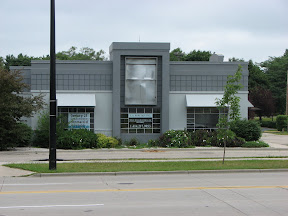
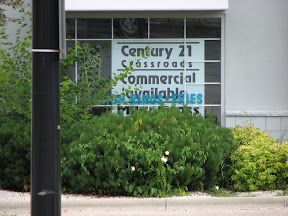
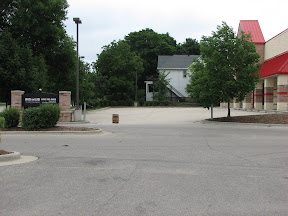
Here’s what people on trolley rides through the downtown might have missed. (Some of these locations have been empty for years.)

Jim Coan and Larry Meyer’s Shameful Legacy

The Star Packaging raid is nearly eleven months on, but the damage that Police Chief Jim Coan and now-retired detective and Larry Meyer did in the false name of ‘identity theft’ endures. (See my earlier post, “The Identity Theft Excuse”, for an explanation of how the raid on Star Packaging was falsely justified.)

It’s a holiday for us — citizens, residents, propertied — but not so easy for many of those who were previously employed in one of our local businesses, as reported in The Week:

Immigration attorney Erich Straub said the 10 employees he represents in their deportation battles are ones who were able to post bail and get out of jail. He thinks at least one other worker, represented by another attorney, remains in the country, fighting to stay here. Most of the other 14 employees, Straub thinks, were deported back to Mexico. “You can challenge (a deportation) order, but if you’re not able to post bond, you’re challenging it from jail,” Straub said. “The process is not fast. You could end up in jail from six to 24 months. A lot of people decide it’s not worth it and they decide it’s best to go home (to their native country)….”

The 10 people Straub represents are seven women and three men, most of whom are in their 20s and 30s, with a few in their 40s, Straub said. “As far as I’ve seen, I don’t think one of my clients has a criminal record,” Straub said. “They are mothers and fathers. They have children. They have families. They are hard working. They’re hard-working families that are trying to make a living here in the United States of America and they’re law abiding. But for the immigration allegations against them, they are not criminals. They’re not out there creating havoc and preying on society.”

The IT Dead End in Our Schools

Charlie Barr, the Technology Coordinator for the Whitewater Schools, recently presented at the school board meeting on the status and goals for computer technology in the district. Where to begin? Barr has done more to tie the district to a single operating system (any possible iteration of the Microsoft OS) and single hardware vendor (a local vendor of conventional products). In a market of innovation and extraordinary development, Barr has shut students off from Apple, the Mac OS, Linux, open source, and any number of other good, innovative, market choices. See, for example, the link to the WUDS’s current, tired, conventional, dull inventory.

When Barr pushes for high speed internet, ask him: high speeds from what, to what? Students at home will experiment more, and their parents will purchase better equipment, than Barr will ever advocate or purchase for them with public money. When they leave the district, they will experiment more, and use better equipment, than Barr advocated or purchased with public money.

Our district deserves more than a Windows-only approach. How do I know? Because countless businesses, and millions of people — many of whom earn far less than Charlie Barr is paid as a Technology Coordinator — know that there are better alternatives in the Mac OS, Linux, other open source clients, and diversified hardware. Barr has left students with fewer and poorer choices than America offers, and that’s an embarrassing, unworthy legacy, indeed.

What Does Driving into Whitewater from Highway 12 Suggest about the City?

If a person saw what I described yesterday – a small sign, a ramshackle cluster of dull yellow motel buildings, a small cluster of private, single family homes, etc. – what should he reasonably conclude? First, he might see all of this as a failure of public development, a lack of sidewalks, street lights, directional signs, and other public improvements. If only Whitewater would spend more, then there would be more; public spending as an incentive to private property.

Alternatively, there might seem to be too few private homes, and someone might suggest to replace the old motel with another housing development. The theory goes like this: if more people lived here, our community would
have more money, so what we need to do is encourage private housing.

A third suggestion would look like the idea of more private homes. If only we had more, and more lucrative, businesses, our workers would earn more, and they could buy better homes, and shop for more goods in our retail stores, and also have more tax revenue.

Here are two useful, general principles: private growth is better than public spending, and public regulation and planning should exist only to establish the rules by which private growth and investment take place.
Public works, however, are more than planning: they are expenditures for supposed improvements in the place of private investment. There’s no exception to the truth that a public expenditure, for example, on boat dock prevents a private developer from building on that same space. They’re won’t be two docks, one on top of the other. Either a private dock was not built because it was not profitable, or the public dock was constructed at a lower level of efficiency when a private builder saw no value in competing.

In a small city, most public works outside of sewers, streets, or municipal buildings, are small – flags on lampposts, flower baskets (and ornamental birdhouses, chairs, and fish). They’re also usually ineffective and futile substitutes for new shops, stores, and factories. That’s why I quoted blogger James Lileks of the Bleat on the inadequacy of these public works gestures. (They may also come as private contributions from several businesses, but with likely the same results.)

Arriving into the Whitewater from the West.

It’s bracing to enter Whitewater from Highway 12: the initial sights are non-descript, with little to distinguish Whitewater from a smaller town. We are a city of fourteen thousand, with a university campus, but our problems become apparent when entering the city from the west. Here’s what a traveler would find, as conditions are now:

• A small sign indicating the direction along Highway 12 to the University of Wisconsin-Whitewater. So small, it might be the sign of the same size and type as that of a nearby creek, or roadway. It’s a small matter, but it says something of neglect that some, but not other, roadways prominently identify UWW.

• A cluster of decaying yellow motel buildings, with a cracked parking lot. Nothing says decline like an abandoned or ramshackle commercial property. It’s irrefutable evidence that there is no marketable, higher-value use for the property. An idiosyncratic owner might refuse an offer here or there, but most commercial property owners will sell for the right price. Unwillingness to deal in the market indicates either ignorance, sentimental attachment, or a soft market and declining market where sellers are unsatisfied with current offers (and hope for an upturn, or are aware that a current sale will result in a loss).


• A faded advertisement for McDonald’s painted on the side of a silo.

• A few new homes on a lot. The homes are variously modest or large, but the surrounding area is undeveloped and undistinguished. It’s neither developed with sidewalks and other commonplace improvements, nor possessing a true natural beauty, as wooded surrounding might.

• A Taco Bell and a Movie Theater.

• Beyond lies a large medical office, a lot for U-Haul trucks, an auto dealership, Mound Park Acres, and the community-famous, but unsightly, Hawk Bowl.

The question for someone thinking about Whitewater’s economic health is what this all means. Is it an invitation to public works (larger signs, sidewalks, tree-plantings, parks), evidence of a need for more private residences, or a need for more businesses (service, retail, light industrial)?

Next: What does the scene driving into Whitewater from Highway 12 suggest?

Community Prosperity: Introduction

We hear much about community development in Whitewater, now more than ever. We depend on our fellow residents; their success or failure affects us greatly. It was Aristotle who famously remarked that one who freely lives outside a city is either a beast or a god. Americans are not so convinced of town, let alone city, life as Aristotle — many of us spend happy moments in nature, beyond our small, beautiful town. (I cannot resist the temptation to note that Aristotle’s view would never apply to the City of Whitewater, where there are those within the city who behave as beasts, and yet think of themselves as gods.)

There are countless terms of art for efforts to improve a community: civic improvement, community development, pro-growth, fair growth, sustainable growth, etc. etc. A more comprehensive definition of community development may be found elsewhere. Many of these social and intellectual movements depend on some plan to limit or channel growth.

I will begin with a more basic idea, and branch out from there. I will exclude a discussion of the geography or natural characteristics of the city. They are generally fixed, not of our doing, and hardly a matter of credit or blame in a town of our size. What man-made things do you see when you walk about Whitewater? Other than personal property, you see principally one of three things: private residences, private businesses, or public works. Each is not exclusive of the others, but together they describe the practical artificial development of a city, including a small city like ours.

The occupants of our private residences may be owners or tenants. Our private businesses may be industrial, service, or retail. Our public works may include streets, utilities, parks, boat landings, public buildings, public housing, and any other developed public property.

When we think about our city, and walk about it in the days ahead, it’s worthwhile to ask: is what I see residential or commercial, public or private? They are not of the same value, generally, and are of shifting values as the proportions of each change.

I’ll leave this introduction with the following observation, from James Lileks, who wrote recently about the foolishness of superficial community beautification efforts in Minneapolis:

If you’ve ever visited one of those sad deindustrialized cities with a moribund core, you know how they tried to bring the downtown back: banners and trees. If not trees, then flower baskets hanging from ornamental light fixtures. But certainly banners. If you hang something from every block that says History District or Pennsylvania’s Culture: On the Grow or Home of the 2003 Upper West New York Jazz Festival people will come back.

But they don’t. I wince when I read about beautification programs, like this one. Downtown Minneapolis isn’t dead – but when they start talking banners and trees, I can hear the mortician rummaging through the drawers for the right shade of lipstick.

I wrote something similar, earlier: “Our economic development is less about a free market economy than about any number of empty municipal gestures. We could hang birdhouses, or painted chairs and wooden fish, from our lampposts forever and still businesses would close and go elsewhere.”

There’s more to Whitewater’s recent development than that, but sadly less than meets the eye.

More tomorrow.

Inbox: Reader Mail

This small website has been publishing for less than a month, but in that time it’s seen steady readership growth, and a fair amount of reader e-mail. I thought that I would take a moment to answer some of the questions that I’ve been asked. (As I publish pseudonymously, I ‘ll not publish the names of any readers.) Here are the paraphrases of questions that I’ve been asked, and my replies.

Q: Do you really live in Whitewater?
A: Yes, I am a long-time resident. I have been here long enough that, by any conventional reckoning, I have been here forever.

Q: Why do you want to embarrass/criticize the town?
A: Reform and growth begin with honesty, not whitewash and Potemkin villages. We have some great possibilities before us, but some of our fellow residents have been treated with outrageous cruelty and official indifference, lies, and excuses. All the birdhouses hanging from lampposts will not undo the damage that, for example, our police force has recently inflicted on hardworking people.

Q: You seem to ‘have it good,’ so why would you complain?
A: It’s no way to live, silent while others are injured. Thanks for noticing — I am citizen, resident, property owner, white, and educated. By the distorted view of some in this town, I should be contented, and quiet.

Q: What do you mean ‘toward a free and honest city?’ We’re free now.
A: We’re not the municipality and society that we should, could, and one day will, be. The lack of honesty takes a few forms: (1) officials disguise their real motivations, (2) use their offices to enforce ordinary regulations selectively, for friends and against enemies, (3) refuse to accept accountability for unconscionable or revolting actions, and (4) spread the message that this town belongs to a select, mostly town-bred group, not all residents.

Q: We’re growing, and you’re just ignoring our new construction.
A: The coming week’s posts will focus on an overview of development in Whitewater — some of it is positive, some not.

Q: What do you mean by ‘town elite?’
A: That’s a good question, because even in our small town, there’s more than one person who’s part of the town elite, or town faction. Many of them, in fact, would hardly be considered elite at all, but they do have a significant influence here. Some are established, white-collar long-term residents. They’ve either been here a longtime, or forever, except for time away at UW Madison or Marquette, perhaps. They’re established, if bit stodgy. Many consider themselves a true elite, but actually know little about the world outside, and are suspicious of change, and newcomers.

The second principal group is blue collar, with high school or tech school educations, and works in supporting jobs, either for the city or in town businesses. They gain their influence through occasional favoritism in their municipal jobs, through selection as pushovers on municipal committees, or through any number of predominantly blue-collar social organizations. Among these groups are most police officers, municipal workers, clerks in many town businesses, and the volunteers of the Whitewater Fire Department. (The police and fire departments are blue collar organizations, and they think and behave like working class organizations. The fire department includes many working class residents who would otherwise have little status or authority except through membership in its fraternity.)

These two groups are not alike, except in the broad particulars that ultimately unite them: white, clannish, suspicious of others, ignorant of economics and business-standard practices, ill-disposed toward minorities, and determined that their views should prevail here perpetually.

Q: Do you work at the university?
A: No, I have no connection to UWW.

Q: Why don’t you leave?
A: This is my home as much as anyone’s home, and I will never leave. I have written truthfully about our city, and I have only begun to do so. I’ve had solid growth in readership (although some may not admit that they’re readers, which tells you how close-minded others in town are), and I will begin a significant publicity campaign beginning this fall. (At this rate, though, I may not need one.)

Q: It makes me feel better that someone understands how I feel. How can I thank you for what you’ve written?
A: You just did, although you owe me nothing. I’ll keep typing.

Whitewater’s Economy

I’ll write over the next few posts about the state of the economy in Whitewater. I mentioned economic problems as one of the challenges facing Whitewater when I wrote that

Our municipal government is narrow-minded, with a poor grasp of economics, and clings to burdensome regulations that make Whitewater unattractive to businesses. We gain housing, but lose industry: a recipe for perpetual second-class status. Our economic development is less about a free market economy than about any number of empty municipal gestures. We could hang birdhouses, or painted chairs and wooden fish, from our lampposts forever and still businesses would close and go elsewhere.

The recent completion of a roadway Bypass (could it have been any more aptly but ominously named than ‘bypass?’) around Whitewater diverts customers from our merchants. (A special note to every resident who looked forward to the competition of the Bypass to reduce traffic along Main Street: you got what you wanted, but lost traffic doesn’t put food on anyone’s table.)

I will consider the demographics and economic metrics of our city, as part of my analysis. Still and all, sometimes the best way to understand a community is to walk around and see what it looks like. That’s where I’ll begin, starting Monday.

The Smaller Pie

Many years ago, I read an interview in which the now-disgraced Assembly Speaker, Scott Jensen, gave advice for those aspiring to politics. He said that one of the most important advantages for a politician was to be a third generation Wisconsin resident. He spoke both practically and approvingly: what he felt was necessary, and what he believed was right and proper. (Whatever he felt and believed, it did not keep him from abuse of his office, betrayal of the public trust, and a criminal conviction.)

Jensen was wrong to believe that long-term family history was right and proper for a politician. We have that advantage, but what does it say to our Mexican neighbors? Even if citizens, it says that they should wait nearly a century before playing a political role in our community. The three generations are of no advantage, because we have been here for that long, and still we have made a mess of the city. When Jensen — and those among us like him — asks others to wait, they really ask to be able to continue to make a mess of things for another hundred years.

I did not realize, in the Declaration of Independence, the Constitution, and its Bill of Rights, that we were to be a people of hereditary succession, of ethnic entitlement. There has never been an hereditary elite that did not decline with each generation, and grow duller and more dissipated with each link in the family chain.
Look around: we are no exception. We insist on principal honor for ourselves, and bend rules to award ourselves the best prizes, while the community deteriorates.

(Go to a school program, and see that some of the best awards go to the academically-mediocre children of our long-standing townspeople, and ask yourself whether their parents really believe their children worthy. Why do they? Is it because the parents delude themselves into believing that their children are talented because they’re prize-winners, or because they don’t care about talent, but expect being an entrenched townsperson’s child is worthiness enough?)

Many Mexican-Americans live here, and our economy would collapse without them. (There are some of us who think we’d be fine following their departure, but I will address that error in another post. For now, a brief reply: those who believe that our city could prosper without its Mexican-American workforce are either ignorant or self-deluded.) All Whitewater depends on their labor, but many in Whitewater also resent their presence.

When we take the best for ourselves, to the imperious exclusion of others, we take from an ever staler, ever smaller pie.

The Identity Theft Excuse

The Whitewater police tell us, repeatedly, that the Star Packaging raid, and their former requests of motorists for Social Security numbers, were efforts to prevent identity theft. There are three reasons that Whitewater’s identity theft investigations are wolves in sheep’s clothing:

1. WPD identity theft investigations target groups where there are a disproportionate number of immigrants. (I know of no white collar, professional identity theft investigations in Whitewater, unless our police department has recently conjured one into existence.)
2. WPD’s award-winning, recently-honored, retiree Larry Meyer acknowledged under judicial examination that in his Star Packaging ‘identity theft’ investigation, the only names he selected for follow-up were Hispanic-sounding surnames. Previously, Meyer had been accused of harassing the Mexican-American workers at a local landscaping business (and is named in a lawsuit that the businessman filed).
3. Real identity theft — not the odd, distorted definition that the Whitewater police use — involves theft of consumer credit cards, access to bank accounts to pilfer funds, etc. Responsible departments do not apply identity theft the way it’s used in our small city, where it was a prelude to a call to the Immigration and Customs Enforcement agency. That’s what the attorney for the owner of Star Packaging explained recently, as quoted in The Week:

“This is one of these situations in which the state is using a statute that, I think, probably wasn’t too much to be used in this fashion,” Glynn said. “The typical use of identity theft (law) is somebody getting a copy of someone else’s charge card and securing property or goods or services on the bases of using it. That’s what most people have in mind. They don’t have in mind someone getting a job that the other’s aren’t seeking.”

Truly responsible and truly professional police forces, unlike our police department, know that identity theft is a serious matter of consumer fraud, not an opening wedge to an immigration action. See, for example, the identity theft prevention websites of the UW Milwaukee Police, the Michigan State Police, New Jersey State Police, or the Police Chief magazine. They do not describe identity theft actions remotely like what Jim Coan has done in our city. (Note also, that Coan did not take the article in Police Chief magazine to heart, perhaps because he’s not a subscriber, or let his subscription lapse, or just skipped reading an issue here or there.)

That’s why I’ve previously described Coan this way:

I have been asked why Coan is an arch-apologist for just about any police conduct, when so many who listen to him find him unconvincing and overly-defensive of the Whitewater police. The answer is that he’s not speaking to persuade the whole town, or even a large part of it; his words are reassurance for a small, mostly town-bred, elite. They want — and expect — that he will never yield or admit fault on any significant matter. Second, his simple, ceaseless defense of the Whitewater force has the consequence of dissuading common, thoughtful residents from the hope of correcting the problems within the force, and of making it truly professional. Finally, Coan may believe — perhaps correctly, too — that if he repeats the same contentions long enough, others will believe them….Coan is a Mynah bird of excuses, rationalizations, and self-praise, of himself, and the Whitewater police.