
For The Revenant, about which more information is available @ the IMDb.
Author Archive for JOHN ADAMS
Daily Bread
Daily Bread for 1.13.16
by JOHN ADAMS •
Good morning, Whitewater.
Midweek in Whitewater will be cloudy, with a one-in-five chance of light snow in the afternoon, and a daytime high of twenty-one. Sunrise is 7:32 and sunset 4:44, for 9h 20m 52s of daytime. The moon is a waxing crescent with 14.4% of its visible disk illuminated.
For some, cold and flu season is a bothersome time, but if one had a dog like Gordy the Corgi, one would be well-prepared:
On this day in 1922, it’s a beginning for what would later become the ‘oldest station in the nation’:
1922 – WHA Radio Station Founded
On this date the call letters of experimental station 9XM in Madison were replaced by WHA. This station dates back to 1917, making it “The oldest station in the nation.” [Source: History Just Ahead: A Guide to Wisconsin’s Historical Markers, edited by Sarah Davis McBride]
Here’s the Puzzability game for Wednesday:
|
This Week’s Game — January 11-15
|
|||||
|
Band Mates
|
|||||
|
Glad you’ve joined us for this week’s musical pieces. For each day, we started with the name of a famous rock band that contains at least one repeated letter. Each day’s clue is the chunk of letters between such a pair, with any spaces removed.
|
|||||
|
Example:
|
|||||
|
GSTO
|
|||||
|
Answer:
|
|||||
|
The Rolling Stones
|
|||||
|
What to Submit:
|
|||||
|
Submit the band’s name (as “The Rolling Stones” in the example) for your answer.
|
|||||
 |
|||||
|
Wednesday, January 13
|
|||||
|


Animals, Science/Nature
The Insects on a Faraway Island
by JOHN ADAMS •
Education, School District
A New Weekly Series: The Education Post
by JOHN ADAMS •
 Post 1 in weekly series. I promised recently that I would begin a new, weekly feature. This is the first installment in fulfillment of that promise: a weekly education post.
These are not easy times for education. Perhaps the truest statement is that there are no easy times: school can be difficult even in comfortable conditions (much to learn, and a small society within one’s school to navigate). We do not have even comfortable conditions, as we’ve limited fiscal resources in a community where many families, sadly, have limited private resources. To say that they have private limited resources is to avoid the hard words that many in our community are children of poverty.
Denial of this truth does nothing to make it less true.
Here we are – the fortunate and unfortunate, the prosperous and impoverished, all in the same community, all hoping for as much and better for our children as we have today.
The condition of education weighs on me, although I have been mostly quiet on the subject of K12 schooling. To be quiet is not to be indifferent, to be distant is not to be unconcerned.
That’s what inspires a weekly series: to write about topics one has considered carefully without yet writing.
Now, there are likely to be some who would prefer that I did not write. Of this I will say two things: they presume too much to know what I’ll write, and in any event others’ preferences and unfounded presumptions will not constrain my remarks.
My forefathers (here I write of my actual forefathers, not those of my pseudonym) came to this continent before the Revolution, and in the generations since my family has always believed in learning for its sake and for what it makes possible for oneself and others.
Easy for them to believe so – many of those generations enjoyed a consensus in support of learning and how to achieve great things (both for individuals no matter how small and for a society so very large).
Americans are an ambitious and accomplished people: our many achievements in the humanities, natural & social sciences, and technology are at the forefront of global accomplishment. Much of our success owes to our liberties: our freedoms attract other talented peoples, and allow our own talented people to cooperate easily with others abroad.
But people don’t achieve as a nationality – they achieve as individuals, with all the particular, immediate, specific teaching and interaction achievement requires.
For children, especially ones whose mornings and evenings are hard, individual attention in the afternoon may make all the difference.
THE EDUCATION POST: Tuesdays @ 10 AM, here on FREE WHITEWATER.
(About the graphic for this series – it’s a screenshot of a calculator app for Android phones that emulates a Hewlett Packard 33C. I used an HP calculator in school, and they were amazing machines. My phone’s calculator app pays tribute to a fine machine of yore.)
Daily Bread
Daily Bread for 1.12.16
by JOHN ADAMS •
Good morning, Whitewater.
Tuesday in town will be partly cloudy with a high of eight degrees. Sunrise is 7:23 and sunset 4:42 for 9h 19m 20s of daytime. The moon is a waxing crescent with 7.4% of its visible disk illuminated.
Whitewater’s Parks and Recreation Board meets today at 5:30 PM.
On this day in 1888, a blizzard in the Plains kills hundreds:
…the so-called “Schoolchildren’s Blizzard” kills 235 people, many of whom were children on their way home from school, across the Northwest Plains region of the United States. The storm came with no warning, and some accounts say that the temperature fell nearly 100 degrees in just 24 hours.
It was a Thursday afternoon and there had been unseasonably warm weather the previous day from Montana east to the Dakotas and south to Texas. Suddenly, within a matter of hours, Arctic air from Canada rapidly pushed south. Temperatures plunged to 40 below zero in much of North Dakota. Along with the cool air, the storm brought high winds and heavy snows. The combination created blinding conditions.
Most victims of the blizzard were children making their way home from school in rural areas and adults working on large farms. Both had difficulty reaching their destinations in the awful conditions. In some places, though, caution prevailed. Schoolteacher Seymour Dopp in Pawnee City, Nebraska, kept his 17 students at school when the storm began at 2 p.m. They stayed overnight, burning stockpiled wood to keep warm. The next day, parents made their way over five-foot snow drifts to rescue their children. In Great Plains, South Dakota, two men rescued the children in a schoolhouse by tying a rope from the school to the nearest shelter to lead them to safety. Minnie Freeman, a teacher in Nebraska, successfully led her children to shelter after the storm tore the roof off of her one-room schoolhouse. In other cases, though, people were less lucky. Teacher Loie Royce tried to lead three children to the safety of her home, less than 90 yards from their school in Plainfield, Nebraska. They became lost, and the children died of hypothermia. Royce lost her feet to frostbite.
In total, an estimated 235 people across the plains died on January 12. The storm is still considered one of the worst blizzards in the history of the area.
On this day in 1864, during the Civil War, the 20th Wisconsin undertakes a rescue in Mexico:
1864 – (Civil War) Engagement at Matamoras, Mexico
The 20th Wisconsin Infantry took part in a battle in Matamoras, Mexico. They crossed from Brownsville, Texas, to rescue the American consul in Matamoras when he was caught in a local uprising between two opposing Mexican forces.
Here’s Tuesday’s game from Puzzability:
|
This Week’s Game — January 11-15
|
|||||
|
Band Mates
|
|||||
|
Glad you’ve joined us for this week’s musical pieces. For each day, we started with the name of a famous rock band that contains at least one repeated letter. Each day’s clue is the chunk of letters between such a pair, with any spaces removed.
|
|||||
|
Example:
|
|||||
|
GSTO
|
|||||
|
Answer:
|
|||||
|
The Rolling Stones
|
|||||
|
What to Submit:
|
|||||
|
Submit the band’s name (as “The Rolling Stones” in the example) for your answer.
|
|||||
|
|||||
|
Tuesday, January 12
|
|||||
|

Technology
Calculatorology
by JOHN ADAMS •
Why are calculators from Texas Instruments relatively expensive?
Environment, Waste Digesters, WGTB, WHEN GREEN TURNS BROWN
A Bit More About Methane
by JOHN ADAMS •
 Post 55 in a series. When Green Turns Brown is an examination of a small town’s digester-energy project, in which Whitewater, Wisconsin would import other cities’ waste, claiming that the result would be both profitable and green.
I’ve posted before about methane, but only as a foretaste of more on the subject (Methane on 11.23.15 and What’s a Greenhouse Gas? last week on 1.4.16).
Here’s another appetizer along those same lines. My point is not that Whitewater, Wisconsin would see huge methane leaks, but that touting methane gas as clean and green is an effort grounded in either ignorance or chicanery.
Consider the scene from the Pacific west, now afflicting the unfortunate residents of Porter Ranch, California, with an honest assessment of methane:
The single biggest contributor to climate change in California is a blown-out natural gas well more than 8,700ft underground, state authorities and campaign groups said Monday.
The broken well at the Aliso Canyon natural gas storage site has released more than 77,000 metric tons of the powerful climate pollutant methane since the rupture was first detected on 23 October, according to a counter created by the Environmental Defense Fund.
Methane is a fast-acting climate pollutant – more than 80 times more powerful than carbon dioxide over a 20-year time frame.
Experts believe the breach, which has forced the evacuation of hundreds of residents from the town of Porter Ranch, is the largest ever in the US.
Locals have complained of headaches, sore throats, nosebleeds and nausea, caused by the rotten-egg smell of the odorant added to the gas to aid leak detection by SoCalGas, the utility that operates the natural gas storage site.
About 1,000 people are suing the company. There are also concerns about the leak’s effect on smog and ozone. The company said it was monitoring air quality….
See, A single gas well leak is California’s biggest contributor to climate change @ The Guardian.
Methane may be found or recovered: it’s deleterious either way.
WHEN GREEN TURNS BROWN: Appearing at whengreenturnsbrown.com and re-posted Mondays @ 10 AM here on FREE WHITEWATER.
Music
Monday Music: Poker Face
by JOHN ADAMS •
One can guess that I don’t have much familiarity with the music of Lady Gaga. The loss, no doubt, is mine. At the Golden Globes last night, afternoon noticing that Leonardo DiCaprio was laughing at something (perhaps at her), Lady Gaga decided to give him a taste of her displeasure as she walked to the stage to receive her award. (Embedded below is a Vine as she glances past DiCaprio, and his reaction.)
It’s not that one dislikes DiCaprio (he’s a fine actor, and seems personable); it’s that Ms. Germanotta manages the encounter so very well.
Daily Bread
Daily Bread for 1.11.16
by JOHN ADAMS •
Good morning, Whitewater.
Monday starts the week off with a high of sixteen and a probability of late afternoon or evening snow showers. Sunrise is 7:24 and sunset 4:41, for 9h 17m 50s of daytime. The moon is a waxing crescent with 2.6% of its visible disk illuminated.
Whitewater’s Planning Commission is scheduled to meet tonight at 6:30 PM.
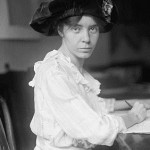
It’s Alice Paul’s birthday:
Alice Paul (January 11, 1885 – July 9, 1977) was an American suffragist, feminist, and women’s rights activist, and the main leader and strategist of the 1910s campaign for the Nineteenth Amendment to the U.S. Constitution which prohibits sex discrimination in the right to vote. Along with Lucy Burns and others, Paul strategized the events, such as the Silent Sentinels, which led the successful campaign that resulted in its passage in 1920.[1]
After 1920 Paul spent a half century as leader of the National Woman’s Party, which fought for her Equal Rights Amendment to secure constitutional equality for women. She won a large degree of success with the inclusion of women as a group protected against discrimination by the Civil Rights Act of 1964….
It’s also conservationist Aldo Leopold’s birthday –
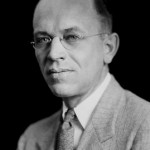 On this date Aldo Leopold, a major player in the modern environmental movement, was born. A conservationist, professor, and author, Leopold graduated from Yale University and worked for the U.S. Forest Service in the Southwest. He rose to the rank of chief of operations. In 1924 he became associate director of the Forest Products Laboratory at Madison. In 1933 he was appointed chair of game management at the University of Wisconsin. In 1943, Leopold was instrumental in establishing the first U.S. soil conservation demonstration area, in Coon Valley in 1934. As a member of the state Conservation Commission, he was influential in the acquisition of natural areas by the state. His reflections on nature and conservation appear in A Sand County Almanac (1949). [Source: Dictionary of Wisconsin Biography, p.227]
Puzzability‘s Monday game begins a new week-long series entitled, Band Mates:
|
This Week’s Game — January 11-15
|
|||||
|
Band Mates
|
|||||
|
Glad you’ve joined us for this week’s musical pieces. For each day, we started with the name of a famous rock band that contains at least one repeated letter. Each day’s clue is the chunk of letters between such a pair, with any spaces removed.
|
|||||
|
Example:
|
|||||
|
GSTO
|
|||||
|
Answer:
|
|||||
|
The Rolling Stones
|
|||||
|
What to Submit:
|
|||||
|
Submit the band’s name (as “The Rolling Stones” in the example) for your answer.
|
|||||
|
|||||
|
Monday, January 11
|
|||||
|

Animation
Sunday Animation: The Wire
by JOHN ADAMS •
An animation from Elliot Lim about his favorite show, HBO’s The Wire –
The Wire from Elliot Lim on Vimeo.
Uncategorized
Daily Bread for 1.10.16
by JOHN ADAMS •
Good morning, Whitewater.
Sunday will be cold, but with increasing sunshine on a day with a high of nine degrees. Sunrise is 7:24 and sunset 4:40, for 9h 16m 24s of daytime. It’s a new moon, with just .4% of that natural satellite’s visible disk illuminated.
Clemson or Alabama tomorrow? That was the FW poll question for Friday, and most respondents (68.18%) picked Alabama to win.
Here’s schedule of posts for the week ahead (if there are changes I’ll explain why):
- Today: DB, weekly Animation
- Monday: DB, weekly Music post, WHEN GREEN TURNS BROWN post, evening post
- Tuesday: DB, new weekly feature launched, evening post
- Wednesday: DB, weekly Film post moves to Wednesday, what accreditation means for UW-Whitewater, evening post
- Thursday: DB, weekly Food or Restaurant post, brief remarks on Downtown Whitewater, Inc., evening post
- Friday: DB, weekly Poll, weekly Catblogging, remarks on a sports financial-impact study
- Saturday: DB, evening post
On this day in 1941, Pres. Roosevelt submits Lend-Lease:
On this day, President Franklin D. Roosevelt’s Lend-Lease program is brought before the U.S. Congress for consideration.
Roosevelt devised the Lend-Lease program as a means of aiding Great Britain in its war effort against the Germans. The program gave the chief executive the power to “sell, transfer title to, exchange, lease, lend, or otherwise dispose of” any military resources he deemed in the ultimate interest of the defense of the United States. The idea was that if Britain were better able to defend itself, the security of the U.S. would be enhanced. The program also served to bolster British morale, as they would no longer feel alone in their struggle against Hitler.
Congress authorized the program on March 11. By November, after much heated debate, Congress extended the terms of Lend-Lease to the Soviet Union, even though Stalin’s USSR had already been the recipient of American military weapons and had been promised $1 billion in financial aid.
By the end of the war, more than $50 billion in funds, weapons, aircraft, and ships were distributed to 44 countries through the program. After the war, the Lend-Lease program morphed into the Marshall Plan…
On this day in 1883, a fire kills scores in Milwaukee:
1883 – Newhall House Fire
On this date in 1883, one of America’s worst hotel fires claimed more than seventy lives when the Newhall House burned at the northwest corner of Broadway and Michigan Streets in Milwaukee. Rescued from the fire were The P.T. Barnum Lilliputian Show performers Tom Thumb and Commodore Nutt. The fire, shown here, was discovered at 4:00 a.m. on the 10th, but sources give the date variously as 1/9/1883 or 1/10/1883. [Sources: The History of Wisconsin, Vol. 3, p.452; WLHBA]
Daily Bread
Daily Bread for 1.9.16
by JOHN ADAMS •
Good morning, Whitewater.
We’ll have a cloudy Saturday with a high of thirty-four. Updated: Sunrise is 7:24 and sunset is 4:39, for 9h 15m 02s of daytime. We’ve a new moon today.
On this day in 1975, scientists made a discovery previously-known only to residents near the Sierra Madre Mountains, in eastern Mexico: the discovery of the Mountain of Butterflies, where monarchs in North America migrate.
On this day in 1863, the 23rd Wisconsin sees action:
1863 – (Civil War) Battle of Arkansas Post begins
The Battle of Arkansas Post, also called Fort Hindman, began on this day near the mouth of the Arkansas River. The 23rd Wisconsin Infantry was in the thick of the action all three days.
Cats
Friday Catblogging: Relaxed Cat
by JOHN ADAMS •
Poll, Sports
Friday Poll: Clemson v. Alabama
by JOHN ADAMS •


Oddsmakers say Bama by 6.5.
Never mind that – who do you think will win?