
Author Archive for JOHN ADAMS
WGTB, WHEN GREEN TURNS BROWN
Local Isn’t Local
by JOHN ADAMS •
 Post 44 in a series. When Green Turns Brown is an examination of a small town’s digester-energy project, in which Whitewater, Wisconsin would import other cities’ waste, claiming that the result would be both profitable and green.
Last week I posted a video explanation from Whitewater City Manager Cameron Clapper about a digester-energy project. At the end of that post, I mentioned that I’d write about his remarks, more particularly today. Needless to say, I will write about those remarks in detail, but not today.
Over the last two weeks, there have been developments elsewhere in the state worth mentioning, about factory farms, water quality, and efforts of Wisconsinites to protect their homes from environmental risk (and consequently declining property values).
In both comments and email that I have received over the last week, people have asked questions about the goals of the WHEN GREEN TURNS BROWN series. Events in other parts of the state help explain some of the goals of the series.
First, what’s happening elsewhere? There are, and have been, large protests in other parts of the state against factory farms (concentrated animal feeding operations, called CAFOs for short), dumping of manure, aerial spraying of manure, and collapsing water quality from waste dumping.
Many of these issues are universal, no matter the (highly unconvincing) efforts to recast local plans.
In Whitewater, almost none of this has been mentioned. For other parts of the state, it’s a significant, growing concern. I have watched and followed these developments for the last few years, from around the time that former City Manager Brunner, and then Acting City Manager Clapper, unsuccessfully sought to bring an additional digester to Whitewater.
WHEN GREEN TURNS BROWN will lead to an ebook and a video documentary, and will describe Whitewater’s project not only on its own terms, but in comparison and contrast to how other communities are approaching these issues. Messrs. Reel, Clapper, the Whitewater Council, the Whitewater CDA, etc., are not acting in a vacuum, or on a distant island – this is a much bigger topic than locally described.
(So much bigger, in fact, that failure to address matters contextually looks like willful ignorance.)
The posts so far in this series are notes along the way to those other works.
Those works will describe this city’s approach and the (very different) approaches of other Wisconsin and other beyond-Wisconsin communities.
People choose, but not all similarly; people choose, but not all wisely.
Below are just two links to accounts from other communities, of their response to many of these issues. (I’ve written on one of these communities – Lexington, Massachusetts – briefly before.) These concerns from other communities are the telling and unmentioned background of all what’s happening closer to home.
See, Central Wisconsin Wants Golf Resort; Opposes Industrialized, Polluting Dairy, and previously in the WHEN GREEN TURNS BROWN series, The View from Lexington, Massachusetts.
Next Week: Assessing the 9.17.15 description of the project.
WHEN GREEN TURNS BROWN: Mondays @ 10 AM, here on FREE WHITEWATER.
Music
Monday Music: Ike Quebec, Loie
by JOHN ADAMS •
Daily Bread
Daily Bread for 11.9.15
by JOHN ADAMS •
Good morning, Whitewater.
Monday in town will be sunny with a high of fifty-six. Sunrise is 6:39 and sunset 6:37, for 9h 57m 27s of daytime. The moon is a waning crescent with 4.4% of its visible disk illuminated.
Whitewater’s Planning Commission meets this evening at 6:30 PM.
On this day in 1938, coordinated attacks target Jews in Nazi Germany:
Kristallnacht (German pronunciation:…English: “Crystal Night“) or Reichskristallnacht…, also referred to as the Night of Broken Glass, Reichspogromnacht… or simply Pogromnacht… and Novemberpogrome…was a pogrom (a series of coordinated deadly attacks) against Jews throughout Nazi Germany and Austria on 9–10 November 1938, carried out by SA paramilitary forces and non-Jewish civilians. German authorities looked on without intervening.[1][2] The name Kristallnacht comes from the shards of broken glass that littered the streets after Jewish-owned stores, buildings, and synagogues had their windows smashed.[3]
On this day in 1863, conscription resumes in Wisconsin:
1863 – (Civil War) Conscription reinstated
Another draft was instituted in the State of Wisconsin. Unlike the 1862 conscription, it did not have a set quota. 14,933 men received draft notices, but the vast majority were exempted on medical or other grounds, paid a legal fee to be exempted, or simply failed to show up. Another 262 paid someone else to go in their place. Just 628 who were drafted actually served. [Schoonover, Lynn. History of the Civil War Draft in Wisconsin, page 56].
On 11.9.1968, an earthquake shakes the Badger State:
1968 – Earthquake Shakes Wisconsin
On this date one of the strongest earthquakes in the central United States occurred in south-central Illinois. Measured at a magnitude of 5.3, press reports from LaCrosse, Milwaukee, Port Washington, Portage, Prairie Du Chien, and Sheboygan indicated that the shock was felt in these cities. [Source:United States Geological Survey]
Puzzability begins a new weekly series entitled Chinese Takeout, with Monday’s game:
|
This Week’s Game — November 9-13
|
|||||
|
Chinese Takeout
|
|||||
|
May we take your reorder? For each day this week, we started with a phrase, removed the seven letters in CHINESE, and rearranged the remaining letters to get a new word or phrase. Both pieces are described in each day’s clue, with the longer one first.
|
|||||
|
Example:
|
|||||
|
Google or Bing, for example; wrath
|
|||||
|
Answer:
|
|||||
|
Search engine; anger
|
|||||
|
What to Submit:
|
|||||
|
Submit both pieces, with the longer one first (as “Search engine; anger” in the example), for your answer.
|
|||||
 |
|||||
|
Monday, November 9
|
|||||
|


Animation
Sunday Animation: David Gilmour,
The Girl in the Yellow Dress
by JOHN ADAMS •
Daily Bread
Daily Bread for 11.8.15
by JOHN ADAMS •
Good morning, Whitewater.
Sunday in town will be sunny with a high of fifty-four. Sunrise is 6:38 and sunset 4:38, for 9h 59m 49s of daytime. The moon is a waning crescent with 8.9% of its visible disk illuminated.
On this day in 1864, Pres. Lincoln is re-elected:
The United States presidential election of 1864 was the 20th quadrennial presidential election, held on Tuesday, November 8, 1864. Incumbent president, Republican Abraham Lincoln, was running for re-election against Democratic candidate George B. McClellan, who ran as the “peace candidate” without personally believing in his party’s platform.
Lincoln was re-elected president by a landslide in the Electoral College. Since the election of 1860, the Electoral College had expanded with the admission of Kansas, West Virginia, and Nevada as free-soil states. As the American Civil War was still raging, no electoral votes were counted from any of the eleven Southern states.[2] Lincoln won by more than 400,000 popular votes in part due to the Union’s victory at the Battle of Atlanta.[3] Lincoln was the first president to be re-elected since Democrat Andrew Jackson in 1832. Lincoln was inaugurated for his second term on March 4, 1865, but he was assassinated on April 15, 1865, one month after his term began.
Presidential election results map. Red denotes states won by Lincoln/Johnson, blue denotes those won by McClellan/Pendleton, andbrown denotes Confederate states; two Confederate states were controlled by the Union by 1864 and held elections (although their electors were not ultimately counted). Numbers indicate the number of electoral votes allotted to each state.

On this day in 1870, a published first:
1870 – First National Weather Forecast Published
On this date Increase Lapham recorded the first published national weather forecast, calling for “high winds and falling temperatures for Chicago, Detroit and the Eastern cities.” [Source: History Just Ahead: A Guide to Wisconsin’s Historical Markers edited by Sarah Davis McBride]
Health
The Doctor Who Saved 100,000 Eyes
by JOHN ADAMS •
University
UW-Whitewater dean of students dies of natural causes, chancellor says
by JOHN ADAMS •
At WISC-TV Channel 3000 there is a published report this afternoon on the death of UW-Whitewater’s dean of students, Mary Beth Mackin. The story includes a statement from UW-Whitewater’s chancellor.
Readers will find the story at UWW dean of students dies of natural causes, chancellor says @ WISC-TV Channel3000.com.
Assault Awareness & Prevention, City, Law, University
The Nature of the Federal Title IX Complaints Against UW-Whitewater
by JOHN ADAMS •
The two, separate federal complaints that sexual assault survivors have filed against UW-Whitewater are complaints against that institution for the failure to comply with lawful requirements for handling these alleged survivors’ claims (regardless of the underlying facts in any given claimant’s case).
(That’s why, when Title IX complainants seek federal recourse, they say that they have been assaulted twice – once from an assailant, and a second time when they feel they have been denied the required Title IX support from their own campuses. A federal Title IX complaint is against a school for failing to respond as required to the request for local assistance.)
These complainants allege that, apart from the underlying facts of each assault, UW-Whitewater and one of her principal administrators failed to provide the standard of care and responsiveness that the law requires. Both women allege not merely that UW-Whitewater’s Dean of Students, Mary Beth Mackin, was deficient in her response, but that she was unlawfully so. The second complaint, pointedly, claims that UW-Whitewater acted in a sexually discriminatory way, itself an additional violation of the law.
More seriously, these two women allege that UW-Whitewater has actually and effectually obstructed the required processing of their complaints.
The inescapable legal issue here is how UW-Whitewater processes complaints, and whether that institution has done so as the law requires. The practical issue is that failure to treat all complaints as the law requires will dissuade future sexual assault survivors from coming forward.
If officials oppose applicable federal laws, the legitimate response is to petition for an amendment or repeal of those laws.
No one employed at the University of Wisconsin-Whitewater, regardless of his or her role, has a right to disregard existing legal requirements. It does not matter how much those in the administration might wish to balance the law against other (often self-interested and self-protective) reputational considerations.
The law does not allow that balancing. No official is above – nor any individual below – the law. It does not matter how important officials believe they are, how much other work they feel has gone well, etc.
The legal question is how public officials, receiving public funds, bound by federal law, complied with that federal law (regardless of the underlying facts in any given claimant’s case). There is neither a legal (nor an ethical) escape from this fundamental question.
Practically, the most important question is what actually happened to sexual assault survivors, and the well-being of those survivors and future ones.
The nature of these Title IX complaints, as matters under law, concerns how an institution has addressed the requests for assistance that it received from those within its care.
See, concerning these two claims:
How UW-Whitewater Treated a Sexual Assault Victim
A Second Sex-Assault Survivor Files Federal Complaint Against UW-Whitewater
Daily Bread
Daily Bread for 11.7.15
by JOHN ADAMS •
Good morning, Whitewater.
Saturday in Whitewater will be mostly sunny with a high of forty-eight. Sunrise is 6:37 and sunset 6:39, for 10h 02m 12s of daytime. The moon is a waning crescent with 15.2% of its visible disk illuminated.
So a squirrel climbs twenty-one floors up a building, and then leaps…
On this day in 1917 (on the Gregorian calendar), the Bolsheviks overthrow the Russian provisional government, and begin Russia’s long descent into dictatorship, collectivization, and mass murder:
The October Revolution … officially known as the Great October Socialist Revolution … tr.Velikaya Oktyabr’skaya sotsialisticheskaya revolyutsiya), and commonly referred to as Red October, the October Uprising or the Bolshevik Revolution, was a seizure of state power instrumental in the larger Russian Revolution of 1917. It took place with an armed insurrection in Petrograd traditionally dated to 25 October 1917 (by the Julian or Old Stylecalendar, which corresponds to 7 November 1917 in the Gregorian or New Style calendar).
It followed and capitalized on the February Revolution of the same year, which overthrew the Tsarist autocracy and established a provisional governmentcomposed predominantly of former nobles and aristocrats.[citation needed] During this time, urban workers began to organize into councils (Russian: Soviet) wherein revolutionaries criticized the provisional government and its actions. The October Revolution in Petrograd overthrew the provisional government and gave the power to the local soviets. The Bolshevik party was heavily supported by the soviets. After the Congress of Soviets, now the governing body, had its second session, it elected members of the Bolsheviks and other leftist groups such as the Left Socialist Revolutionaries to key positions within the new state of affairs. This immediately initiated the establishment of the Russian Socialist Federative Soviet Republic, the world’s first self-proclaimed socialist state.
On this day in 1863, the 5th Wisconsin fights in Virginia:
1863 – (Civil War) Second Battle of Rappahannock Station, Virginia
The 5th Wisconsin Infantry fought in the Second Battle of Rappahannock Station, Virginia.
Assault Awareness & Prevention, Crime, Official Misconduct, University
Chancellor Kopper’s Belated Statement on Another Federal Complaint
by JOHN ADAMS •
Today, only after publication of an account of a second Title IX complaint against UW-Whitewater from a second sexual assault survivor, Chancellor Kopper finally chose to issue a statement in her own words (assuming that she wrote it). I have published that statement in full, at the bottom of this post. (For the story on this second complaint, see, Sex assault survivor claims discrimination by university @ Channel 3000, WISC-TV.)
There is no reasonable person who contends that being “committed” is a statement. It’s an action.
And yet, and yet, even the statement finally issued under Chancellor Kopper’s own name reveals the indifference of her prior efforts – she now feels it necessary to begin her second paragraph with the tired phrase, “let me be clear…”
If Kopper had been clear, even in prior words alone, she would not need to remind readers of her self-professed clarity of views.
To those in the university’s Media Relations group – either your chancellor cannot issue a statement without revealing her past indifference, or you cannot draft one for her.
There should be – and so there will be – no end of effort until the institutional misconduct that has failed two women (and perhaps more men and women) ends.
One sees, also, that Kopper falsely professes to avoid speaking about this pending complaint, but simultaneously declares that “[a]ll complaints are reviewed with respect and compassion for all involved.”
No, and no again: that’s the very question at issue here. By asserting that all complaints have been reviewed with “respect and compassion” Kopper most certainly does address the allegations in this pending investigation, by categorically denying their possibility of being true.
A future assault survivor will read Kopper’s words and recognize that past survivors’ claims have been categorically denied. This is an assurance of a chilling effect against future reporting.
Why can she not see this? Honest to goodness, is there no one in her office who can think matters through?
Thus she hides behind a pending investigation selectively, contending that she cannot speak only when it suits her.
In any event, a statement will not suffice. A change of institutional conduct – and removal of those culpable of misconduct – is needed here.
See, please, the It’s On Us Campaign and Not Alone, a site for those who have experienced sexual assault with resources of support.
Chancellor Kopper’s statement immediately follows —
Message regarding recent Title IX complaint
Dear Campus Community,
You may be aware through media reports that a second complaint has been filed with the Department of Education’s Office for Civil Rights alleging that UW-Whitewater may have violated Title IX. Because of the ongoing investigation, I am not in a position to discuss specifics. Our campus will cooperate fully with the Office for Civil Rights as it investigates.
Let me be clear, UW-Whitewater has been and remains committed to raising awareness about the impact of sexual violence and taking steps toward preventing any occurrence of sexual violence on our campus. All complaints are reviewed with respect and compassion for all involved.
I know that all across campus there are faculty, staff and students who are engaged in efforts to help promote a campus climate that is free from violence and discrimination, and I applaud those efforts. As a community, we pride ourselves on being a safe and welcoming place for all.
Please understand that if you have been the victim of a sexual assault, you are not alone. There are people within the UW-Whitewater community here to support you. Retaliation for reporting is strictly prohibited. We encourage you to report sexual assault to UW-Whitewater Police at 262-472-4660 or the Dean of Students office at 262-472-1533.
The campus website offers many resources to help keep you safe: http://www.uww.edu/sexual-misconduct-information/keeping-safe
Sincerely,
Beverly Kopper
Chancellor
https://announcements.uww.edu/Details/12523
Assault Awareness & Prevention, Crime, Official Misconduct, University
A Second Sex-Assault Survivor Files Federal Complaint Against UW-Whitewater
by JOHN ADAMS •
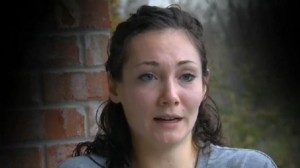
Raechel Liska, aged 22. Photo from Channel 3000.
Link to Ms. Liska’s video interview, available online.
Raechel Liska, aged 22, an honors student and Army ROTC candidate at UW-Whitewater, has filed a sexual discrimination action with the U.S. Department of Education, Civil Rights Division, against our local university.
This is the second federal action that a sexual assault survivor has filed against the University of Wisconsin-Whitewater in the last eighteen months.
At WISC-TV, investigative journalist Adam Schrager reports on Ms. Liska’s complaint, one that contends that the university’s conduct in her case is “reflective of a systemic gender-based (response) that favored [her] male assailant.” See, Sex assault survivor claims discrimination by university @ Channel 3000, WISC-TV.
Assaulted twice
Ms. Liska was violently assaulted, but when she sought recourse – as federal law (and mere humanity) – requires, she met with a further tragedy:
“I got assaulted twice,” Liska said. “Once by my attacker, which was the traumatic, horrific part, but again by the school, which was the betrayal.”
Liska said UWW Dean of Students Mary Beth Mackin violated her civil rights by refusing to interview two witnesses and by not accepting either the police report or her medical records stemming from the incident. She also asserts Mackin did not issue a no-contact order against her alleged attacker, even as he retaliated and intimidated her after she spoke to authorities. Further, it was the Army that stepped in and removed her assailant from her classes three months after the incident in question, even after she’d asked the university to do the same multiple times, only to be rebuffed.
“The reason I filed my complaint is because something here needs to change,” she said. “I thought the dean of students would be protecting the students, protecting me. She’s the dean of students. I thought I’d be her priority, but I walked out feeling like protecting the school was her top priority.”
Dean of Students Mary Beth Mackin’s gross misconduct
Ms. Liska accomplished much, and loved the university, but that university treated her injuriously and shamefully:
She also asserts that Mackin never informed her of her Title IX rights after she made her initial report and did not provide her with a sexual assault advocate on campus. Liska remains on campus now studying to become a high school history teacher. She said she’s coming forward now because she doesn’t want any other UWW students to experience what she’s gone through.
“It doesn’t matter to me specifically what their opinions are of the assault itself. What matters to me is how people feel I was treated by the institution I trusted most,” she said. “I want my face and my name attached to this story. I want it to be personal. I want people to take it personally and I want there to be change out of it.”
After Raechel Liska was assaulted, and after her mistreatment from one of the university’s leading administrators, the university still used Ms. Liska’s picture to promote UW-Whitewater as a safe and welcoming place:
The university is currently distributing a pamphlet to new and prospective students that prominently features Liska in uniform on a page titled, “Leaders and Mentors.”
“I am really bothered that the university still uses me as an exemplary image but is so resistant to helping me at my most vulnerable time,” she said.
Raped, ignored and mistreated by her university, and yet used as a public-relations pawn by that same university.
What would be worse: that this university media-relations team is so obtuse that they cannot see the injury use of Ms. Liska’s promotional picture represents, that they are so indifferent they simply do not care, that they are so parsimonious that they will use the picture rather than publish a new one, or that they manipulatively think use of the picture would somehow impress Ms. Liska?
So let us hope, Dieu aidant, that we should never become so contemptible as officials of this ilk.
Chancellor Beverly Kopper hides behind her spokeswoman
Astonishingly, Chancellor Beverly Kopper cannot be troubled to respond to these allegations in her own voice. Instead, she hides behind a spokeswoman’s dull, stale statement:
“UW-Whitewater Chancellor Beverly Kopper believes that providing a safe environment for students, faculty and staff is her first priority,” wrote Sara Kuhl, UWW’s director of marketing and media relations, in a statement to News 3. “UW-Whitewater has been and remains committed to raising awareness about the existence and impact of sexual violence and taking active steps toward preventing the occurrence of sexual violence on campus. UW-Whitewater takes all complaints very seriously and every complaint is handled with care and compassion for all parties involved.”
Scripture records that God spoke thorough Moses, and Moses spoke through Aaron, but I am quite convinced that Beverly Kopper is neither Creator nor Prophet – it is a measure of either profound ignorance or arrogance that Kopper would not speak in her own words.
This is the second accusation that directly and specifically names Mary Beth Mackin:
The first Title IX complaint against the school was filed in January 2014. The survivor in that case alleged that UWW administrators, specifically Mackin, missed appointments, hurried conversations and failed to interview key witnesses to her claims. Federal investigators have been on campus interviewing students and administrators about those allegations.
I would invite readers to read Mr. Schrager’s full account. See, Sex assault survivor claims discrimination by university @ Channel 3000, WISC-TV. The WISC-TV broadcast story is scheduled to air @ 10 PM Thursday evening, 11.5.15.
Previously, see How UW-Whitewater Treated a Sexual Assault Victim (referring to a story, also from Adam Schrager at WISC-TV, on another assault survivor’s gross mistreatment while at UW-Whitewater).
There will be more to publish on this matter, and updates as developments warrant.
One assault survivor abused was too many; two similarly abused are a grave offense against individual dignity, common morality, and American standards of justice and fairness.
See, also, the It’s On Us Campaign and Not Alone, a site for those who have experienced sexual assault with resources of support.
Daily Bread
Daily Bread for 11.6.15
by JOHN ADAMS •
Good morning, Whitewater.
We’ll have a partly cloudy Friday in Whitewater, with a high of fifty-two. Sunrise is 6:36 and sunset 4:40, for 10h 04m 38s of daytime. The moon is a waning crescent with 22.9% of its visible disk illuminated.
A note on posting: I posted last night on a second sex assault survivor who has filed a federal complaint against UW-Whitewater, following a news report from WISC-TV, Channel 3000. I’ll move that post forward, and it will become today’s main post. There will be no Friday Poll and no Friday Catblogging this week. There’s not the slightest chance that I would make the mistake of publishing on a light subject rather than this serious one.
There will also be posts on Saturday and Sunday considering aspects of the UW-Whitewater administration’s ongoing, evident misconduct, and the role of a few in encouraging subject-changing through lightweight stories rather than addressing an ongoing, aberrant situation in this city. UW-Whitewater’s situation is, sadly, far worse than many other campuses in Wisconsin or across America; few schools have a single federal complaint of this kind, let alone two pending ones. Sexual assault is a crime and wrong anywhere, but local handling of complainants’ requests is below any normal or average standard.
A reasonable person is, under these circumstances, called to greater scrutiny, not less; to more effort, not less.
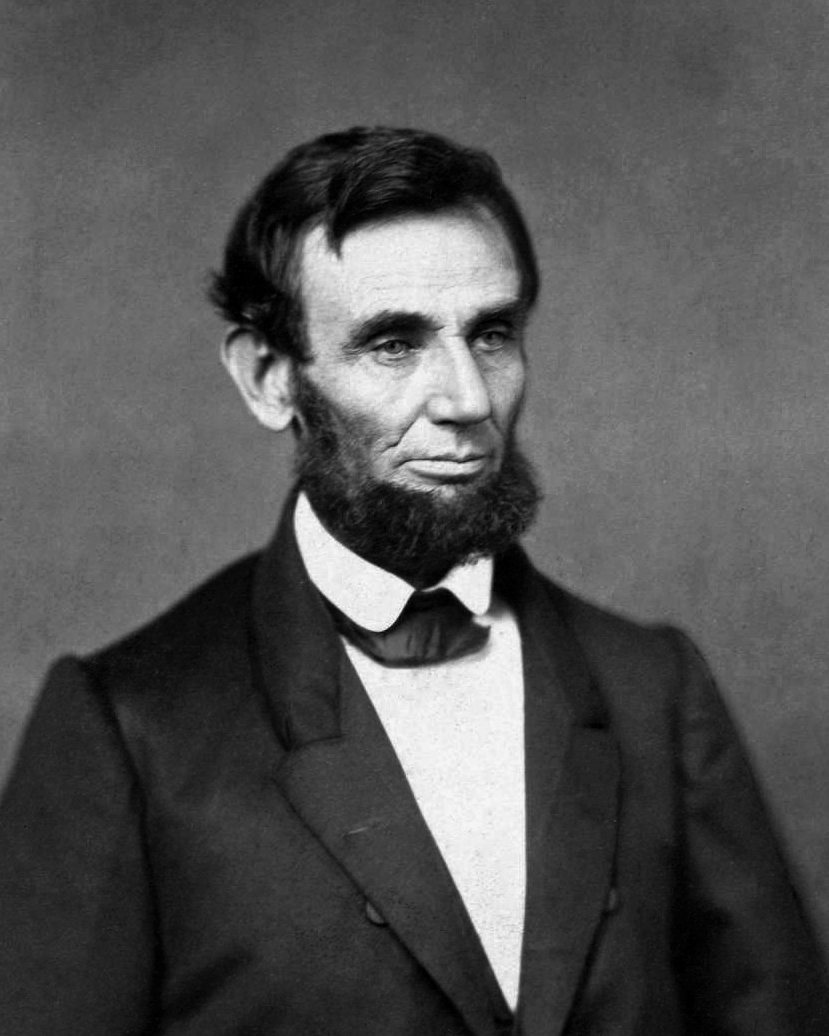
On this day in 1860, Abraham Lincoln wins election as to become president if the United States:
On November 6, 1860, Lincoln was elected the 16th president of the United States, beating Democrat Stephen A. Douglas, John C. Breckinridge of the Southern Democrats, and John Bell of the new Constitutional Union Party. He was the first president from the Republican Party. His victory was entirely due to the strength of his support in the North and West; no ballots were cast for him in 10 of the 15 Southern slave states, and he won only two of 996 counties in all the Southern states.[160]
Lincoln received 1,866,452 votes, Douglas 1,376,957 votes, Breckinridge 849,781 votes, and Bell 588,789 votes. Turnout was 82.2 percent, with Lincoln winning the free Northern states, as well as California and Oregon. Douglas won Missouri, and split New Jersey with Lincoln.[161] Bell won Virginia, Tennessee, and Kentucky, and Breckinridge won the rest of the South.[162]
Although Lincoln won only a plurality of the popular vote, his victory in the electoral college was decisive: Lincoln had 180 and his opponents added together had only 123. There were fusion tickets in which all of Lincoln’s opponents combined to support the same slate of Electors in New York, New Jersey, and Rhode Island, but even if the anti-Lincoln vote had been combined in every state, Lincoln still would have won a majority in the Electoral College.[163]
On this day in 1837, Wisconsin gets a capital in Iowa:
1837 – Burlington, Iowa Selected as Temporary Capital
On this date Burlington, Iowa was chosen as a temporary capital of the Wisconsin Territory. A year earlier, legislators offered a bill making Madison the capital with a temporary capital in Dubuque until which time a permanent building could be constructed in Madison. Legislators also proposed the City of Belmont as a temporary capital. One month later, on December 12th, a fire destroyed the two-story temporary capital in Burlington. The new legislature moved its headquarters to the Webber and Remey’s store in Burlington where they conducted government affairs until June 1838.[Source: State of Wisconsin Blue Book]
Here’s the final Puzzability game in this week’s All Is Lost series:
|
This Week’s Game — November 2-6
|
|||||
|
All Is Lost
|
|||||
|
This is a week of all or nothing. For each day, we started with a word containing the letter chunk ALL and removed that chunk to get a new word or phrase. The answer phrase, described by each day’s clue, is the longer ALL word followed by the shorter word.
|
|||||
|
Example:
|
|||||
|
Young, inexperienced Holstein
|
|||||
|
Answer:
|
|||||
|
Callow cow
|
|||||
|
What to Submit:
|
|||||
|
Submit the two-word phrase, with the longer one first (as “Callow cow” in the example), for your answer.
|
|||||
|
|||||
|
Friday, November 6
|
|||||
|

Food
How to Cook the Perfect Turkey
by JOHN ADAMS •
Thanksgiving isn’t far away – just three weeks’ time from now. In the video below, Chef Alex Guarnaschelli offers turkey-cooking tips: