
The Duplicators – Cartoon Network ID shortie from Meindbender on Vimeo.
Author Archive for JOHN ADAMS
Daily Bread
Daily Bread for 6.28.15
by JOHN ADAMS •
Good morning, Whitewater.
Sunday will be sunny in the morning, but increasingly cloudy as the day goes on, with an even chance of thunderstorms in the late afternoon, and a high of seventy-six. Sunrise is 5:19 and sunset is 8:37, for 15h 18m 23s of daytime. The moon is a waxing gibbous with 85.6% of its visible disk illuminated.
An overwhelming majority of respondents to the FW Friday Poll, a poll that asked whether kangaroos should be permitted as service animals, said that they should not be allowed.
Whatever the merits of kangaroos as service animals for people, they’re not always accommodating to others of their own species:
On this day in 1919, the First World War formally ends with the principal warring nations’ signing of the Treaty of Versailles. German representatives were without a spirit of conciliation to that treaty’s stringent terms:
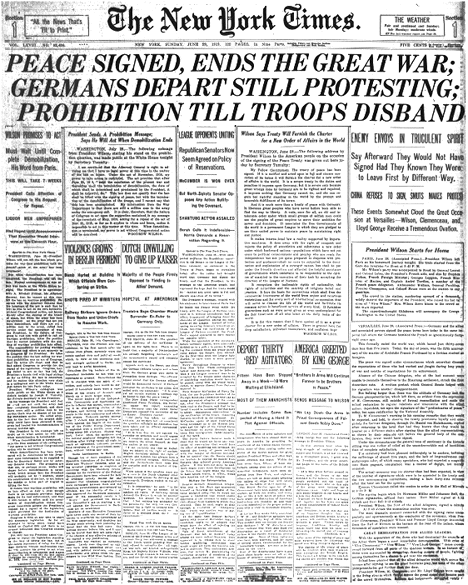
Versailles, June 28, (Associated Press.)–Germany and the allied and associated powers signed the peace terms here today in the same imperial hall where the Germans humbled the French so ignominiously forty-eight years ago.
This formally ended the world war, which lasted just thirty-seven days less than five years. Today, the day of peace, was the fifth anniversary of the murder of Archduke Francis Ferdinand by a Serbian student at Serajevo.
The peace was signed under circumstances which somewhat dimmed the expectations of those who had worked and fought during long years of war and months of negotiations for its achievement.
Absence of the Chinese delegates, who at the last moment were unable to reconcile themselves to the Shantung settlement, struck the first discordant note. A written protest which General Smuts lodged with his signature was another disappointment.
But bulking larger than these was the attitude of Germany and the German plenipotentiaries, which left them, as evident from the expression of M. Clemenceau, still outside of formal reconciliation and made the actual restoration to regular relations and intercourse with the allied nations dependent, not upon the signature of the “preliminaries of peace” today, but upon ratification by the National Assembly….
On this day in 1832, Gen. Atkinson leads thousands in the Black Hawk War:
1832 – Atkinson starts up Rock River in Black Hawk War
On this date General Henry Atkinson and the Second Army began its trip into the Wisconsin wilderness in a major effort against Black Hawk. The “Army of the Frontier” was formed of 400 U.S. Army Regulars and 2,100 volunteer militiamen in order to participate in the Black Hawk War. The troops were headed toward the Lake Koshkonong area where the main camp of the British Band was rumored to be located. [Source: Along the Black Hawk Trail by William F. Stark, p. 93-94]
Daily Bread
Daily Bread for 6.27.15
by JOHN ADAMS •
Good morning, Whitewater.
Saturday in town will be partly cloudy with a high of seventy-nine. Sunrise is 5:18 and sunset 8:37, for 15h 18m 52s of daytime. The moon is a waxing gibbous with 77.8% of its visible disk illuminated.
On this day in 1972, Nolan Bushnell incorporated Atari:
Atari (from a Japanese verb meaning “to hit the target” or “a success”) is a corporate and brand name owned by several entities since its inception in 1972, currently by Atari Interactive, a subsidiary of the French publisher Atari, SA(ASA).[1][2][3] The original Atari, Inc. founded in 1972 by Nolan Bushnell and Ted Dabney was a pioneer in arcade games, home video game consoles, and home computers. The company’s products, such as Pong and the Atari 2600, helped define the electronic entertainment industry from the 1970s to the mid-1980s.
In 1984, the original Atari Inc. was split due to its role in the video game crash of 1983, and the arcade division was turned into Atari Games Inc.[4] Atari Games received the rights to use the logo and brand name with appended text “Games” on arcade games, as well as rights to the original 1972–1984 arcade hardware properties. The Atari Consumer Electronics Division properties were in turn sold to Jack Tramiel’s Tramel Technology Ltd., which then renamed itself to Atari Corporation.[5][6] In 1996, Atari Corporation reverse-merged with disk-drive manufacturer JT Storage (JTS),[7] becoming a division within the company.
In 1998, Hasbro Interactive acquired all Atari Corporation related properties from JTS,[8] creating a new subsidiary, Atari Interactive.[9] Infogrames Entertainment (IESA) bought Hasbro Interactive in 2001 and renamed it to Infogrames Interactive, later Atari Interactive in 2003, when Infogrames Inc. licensed the Atari name and logo from the latter and changed its name to Atari Inc.,[2][10][11] a name used for a company founded in 1993 as GT Interactive, which IESA also renamed to Infogrames, Inc. and acquired a 62% controlling interest in by 1999.[12] After IESA’s acquisition of Hasbro Interactive, Infogrames, Inc. intermittently published Atari branded titles for Infogrames Interactive. On October 11, 2008, Infogrames completed its acquisition of Atari, Inc., making it a wholly owned subsidiary.[13]
On this day in 1837, Wisconsin’s now-oldest newspaper begins publishing:
1837 – The Milwaukee Sentinel Founded
On this date the Milwaukee Sentinel, the oldest newspaper in the state, was founded as a weekly publication by Solomon Juneau, who also was Milwaukee’s first mayor. [Source: History Just Ahead: A Guide to Wisconsin’s Historical Markers edited by Sarah Davis McBride, p. 19]
Corporate Welfare, Gluttony, Government Spending, WEDC
WEDC Backed Use of Public Funds to Pay Off Luxury Cars
by JOHN ADAMS •
There is more than one person in this town who has insisted, more than once, that the Wisconsin Economic Development Corporation has been good for Wisconsin, and good for Whitewater.
It’s been, instead, a failure and a disgrace.
At a time when many communities did not have enough money for vital needs, WEDC was trying to find money for a firm to pay off its Maserati lease.
All the talk from a few local men and women describing WEDC as a positive force has been evidence of poor judgment and contempt for sound reasoning. All the plaques and certificates that a few local men and women have received from WEDC are, themselves, pitiful badges of poor judgment and contempt for sound reasoning.
Consider the latest on the Wisconsin Economic Development Corporation:
Madison — Officials at Wisconsin’s top jobs agency sought federal tax incentives for a failing Milwaukee business for a year after being told that the owner was seeking the money to pay off business debts such as the leases on luxury cars.
Officials at the Wisconsin Economic Development Corp. worked to get that federal help for Building Committee Inc. even though a $500,000 loan it had given to the company had gone sour within months and the owner of the firm had provided false information to the state.
Top officials in Gov. Scott Walker’s administration pushed to get Building Committee the initial loan and worked to get more for the company. But the jobs agency had to pass on giving the company more funding from state taxpayers after finding numerous problems with the firm and being told that owner Bill Minahan was promising some of this second proposed loan to pay a leasing debt on cars such as a 2010 Maserati and a 2011 Nissan 370Z luxury sports car.
Information about state officials’ long-running attempts to find help for the troubled company are coming to light just as the Republican governor prepares to announce his bid for the presidency next month. Walker said he didn’t think his jobs agency had cut any corners.
WEDC officials’ alarm didn’t stop them from persuading three counties to allocate $4.5 million for Building Committee from a federal program meant to spur energy conservation, according to hundreds of pages of emails and other documents recently released under the state’s open records law. Those federal incentives were never used because, even with the subsidies in hand, Building Committee was unable to get the financial backing it needed to proceed with its project.
WEDC officials never told those counties about the concerns that had made them email each other with statements like “Yikes!” and “I can’t believe we are actually going to do this” about earlier proposed help for Building Committee….
See, WEDC backed firm after learning state money was for luxury car debts @ JSOnline.
Cats
Friday Catblogging: Cat Wins ‘Hero Dog’ Award from Los Angeles SPCA
by JOHN ADAMS •
Well done, loyal feline —
Previously, at FW, Heroic Cat Saves Boy from Vicious Dog.
Poll
Friday Poll: Kangaroos as Service Animals?
by JOHN ADAMS •
In Beaver Dam, a woman was evicted from a McDonald’s restaurant after employees rejected her contention that the kangaroo accompanying her into the establishment was a service animal. Beaver Dam subsequently banned the use of kangaroos as service animals.
What do you think: Should kangaroos be considered service animals?
Daily Bread
Daily Bread for 6.26.15
by JOHN ADAMS •
Good morning, Whitewater.
Friday in town will be cloudy with a high of seventy-two. Sunrise is 5:18 and sunset is 20:37, for 15h 19m 17s of daytime. The moon is a waxing gibbous, with 69.1% of its visible disk illuminated.
On this day in 1948, Americans and others begin transporting vital goods to West Berlin following a Soviet blockade:
The Berlin Blockade (1 April 1948 – 12 May 1949) was one of the first major international crises of the Cold War. During the multinational occupation of post–World War II Germany, the Soviet Union blocked the Western Allies‘ railway, road, and canal access to the sectors of Berlin under Western control. The Soviets offered to drop the blockade if the Western Allies withdrew the newly introduced Deutschmark from West Berlin. In response, the Western Allies organized the Berlin airlift to carry supplies to the people of West Berlin, a difficult feat given the city’s population.[1][2] Aircrews from the United States Air Force, the British Royal Air Force, the Royal Canadian Air Force, the Royal Australian Air Force, the Royal New Zealand Air Force, and the South African Air Force[3]:338 flew over 200,000 flights in one year, providing to the Berliners up to 8,893 tons of necessities each day, such as fuel and food.[4] As neither side wanted a war, the Soviets did not disrupt the airlift.[5]
By the spring of 1949 the airlift was clearly succeeding, and by April it was delivering more cargo than had previously been transported into the city by rail. On 12 May 1949, the USSR lifted the blockade of West Berlin. The Berlin Crisis of 1948–1949 served to highlight the competing ideological and economic visions for postwar Europe….
On 24 June 1948 LeMay appointed Brigadier General Joseph Smith, headquarters commandant for USAFE at Camp Lindsey, as the Provisional Task Force Commander of the airlift. Smith had been chief of staff in LeMay’s B-29 command in India during World War II and had no airlift experience. On 25 June 1948 Clay gave the order to launch Operation Vittles. The next day 32 C-47s lifted off for Berlin hauling 80 tons of cargo, including milk, flour, and medicine.
Here’s the last game in this week’s Puzzability series, Colorful Characters:
|
This Week’s Game — June 22-26
|
|||||
|
Colorful Characters
|
|||||
|
Would you like to join our rainbow coalition? For each day this week, we started with the name of a color and formed a new word that’s a type of person that has “consonantcy” with the color—a word with all the same consonants, in the same order, but a different set of vowels, which can appear anywhere in the word. (The letter Y is not used in any words here.) The resulting two-word phrase, with the color first, is described in each day’s clue.
|
|||||
|
Example:
|
|||||
|
Dark red leatherneck
|
|||||
|
Answer:
|
|||||
|
Maroon marine
|
|||||
|
What to Submit:
|
|||||
|
Submit the two-word phrase (as “Maroon marine” in the example) for your answer.
|
|||||
 |
|||||
|
Friday, June 26
|
|||||
|


Food
A No-Frills Cheeseburger
by JOHN ADAMS •
Simplicity —
Daily Bread
Daily Bread for 6.25.15
by JOHN ADAMS •
Good morning, Whitewater.
Thursday in Whitewater will be cloudy, with rain in the morning, and a high of seventy-eight. Sunrise is 5:17 and sunset 8:37, for 15h 19m 38s of daytime. The moon is a waxing gibbous with 59.7% of its visible disk illuminated.
Downtown Whitewater’s board meets today at 8 AM.
On this day in 1876, Gen. Custer and those under his immediate command are killed at the Battle of the Little Big Horn. The New York Times shortly thereafter reported the defeat:
The dispatches giving an account of the slaughter of Gen. Custer’s command, published by The Times of yesterday, are confirmed and supplemented by official reports from Gen. A.H. Terry, commanding the expedition. On June 25 Gen. Custer’s command came upon the main camp of Sitting Bull, and at once attacked it, charging the thickest part of it with five companies, Major Reno, with seven companies attacking on the other side. The soldiers were repulsed and a wholesale slaughter ensued. Gen. Custer, his brother, his nephew, and his brother-in-law were killed, and not one of his detachment escaped. The Indians surrounded Major Reno’s command and held them in the hills during a whole day, but Gibbon’s command came up and the Indians left. The number of killed is stated at 300 and the wounded at 31. Two hundred and seven men are said to have been buried in one place. The list of killed includes seventeen commissioned officers.
It is the opinion of Army officers in Chicago, Washington, and Philadelphia, including Gens. Sherman and Sheridan, that Gen. Custer was rashly imprudent to attack such a large number of Indians, Sitting Bull’s force being 4,000 strong….
These generations later, it seems impossible to argue against the view that Custer was, truly, ‘rashly imprudent.’
On this day in 1950, North Korea’s Communists start the Korean War:
On this date Communist North Korea invaded the Republic of Korea. The Korean War, often called the “forgotten war,” involved more than 132,000 Wisconsinites. [Source: History Just Ahead: A Guide to Wisconsin’s Historical Markers edited by Sarah Davis McBride, p. 112]
Here’s the Thursday game in Puzzability‘s Colorful Characters series:
|
This Week’s Game — June 22-26
|
|||||
|
Colorful Characters
|
|||||
|
Would you like to join our rainbow coalition? For each day this week, we started with the name of a color and formed a new word that’s a type of person that has “consonantcy” with the color—a word with all the same consonants, in the same order, but a different set of vowels, which can appear anywhere in the word. (The letter Y is not used in any words here.) The resulting two-word phrase, with the color first, is described in each day’s clue.
|
|||||
|
Example:
|
|||||
|
Dark red leatherneck
|
|||||
|
Answer:
|
|||||
|
Maroon marine
|
|||||
|
What to Submit:
|
|||||
|
Submit the two-word phrase (as “Maroon marine” in the example) for your answer.
|
|||||
|
|||||
|
Thursday, June 25
|
|||||
|

Sports, Technology
Pitstops
by JOHN ADAMS •
WGTB, WHEN GREEN TURNS BROWN
The View from Lexington, Massachusetts
by JOHN ADAMS •
 Post 17 in a series. When Green Turns Brown is an examination of a small town’s digester-energy project, in which Whitewater, Wisconsin would import other cities’ waste, claiming that the result would be both profitable and green.
Whitewater’s had a series of small meetings with designated groups, and two meetings with invitations to the public, about its wastewater plant upgrades (a part of which involves a plan of waste importation into the city).
More information is better than less, all considered. There’s much more infomation that Whitewater might have made public, but has not.
I would have been surprised, however, if any of these sort of meetings were particularly well-attended. Whitewater city government sought and received days of publicity in the Banner, but yet that publicity amounted to few people attending the most recent meeting, from last night.
These meetings, though, are only one way to address a proposal like this. In Lexington, Massachusetts, the city spent years preparing for a digester (just as Whitewater has done), and for most of that time government and vendor work proceeded without much public discussion.
A change in how Lexington solicited input on the project led to a different response, years of former quiet notwithstanding.
See, Lexington selectmen won’t seek developers for anaerobic digester.
It’s not likely that the medium of comment alone made the difference. It’s probable that Lexington residents had a perspective that made them (as the linked article suggests) particularly motivated later in the process.
Still, I don’t think the significant aspect of this project is whether City Manager Clapper can get four votes out of seven for this plan. I’m sure that he can get more than that (“If City Manager Clapper wanted a vote on this project tomorrow, including importing as much waste into Whitewater as he could shovel, he’d receive easy political approval for that idea”).
I would not have sought this idea (that is, waste importation under the claim of green energy), but here it returns, and having returned, I see it as far more than a vote: this is a chance to write and film separate works about a small town’s digester-energy project, in which Whitewater, Wisconsin would import other cities’ waste, claiming that the result would be both profitable and green.
Here in outline and later elsewhere more fully, I want to consider the fiscal, economic, environmental, health, and business cultural changes that waste importation will present for Whitewater.
In this respect, it’s not what happens now, but what happens later, that’s significant.
WHEN GREEN TURNS BROWN: Mondays @ 10 AM, here on FREE WHITEWATER.
Anderson, Cartoons & Comics
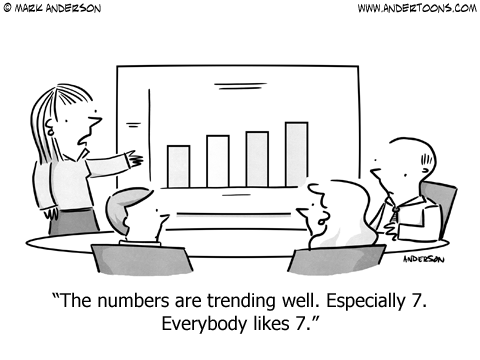
7
by JOHN ADAMS •
Daily Bread
Daily Bread for 6.24.15
by JOHN ADAMS •
Good morning, Whitewater.
Wednesday in town will be partly cloudy with a high of eighty-two. Sunrise is 5:17 and sunset 8:37, for 15h 19m 56s of daytime. The moon is in its first quarter, with 49.9% of its visible disk illuminated.
The Whitewater CDA Seed Capital Committee meets today at 4 PM, and the CDA Board at 5 PM.
On this day in 1997, the Air Force releases a report about the Roswell incident of 1947:
In mid 1947, a military Air Force surveillance balloon crashed at a ranch near Roswell, New Mexico prompting claims alleging the crash was of an extraterrestrial spaceship.[1]
After an initial spike of interest, the military reported that the crash was merely of a conventional weather balloon.[2] Interest subsequently waned until the late 1970s when ufologists began promulgating a variety of increasingly elaborate conspiracy theories claiming that one or more alien spacecraft had crash-landed and that the extraterrestrial occupants had been recovered by the military who then engaged in a cover-up.
In the 1990s the US military published reports disclosing the true nature of the crashed Project Mogul balloon. Nevertheless, the Roswell incident continues to be of interest in popular media, and conspiracy theories surrounding the event persist. Roswell has been called “the world’s most famous, most exhaustively investigated, and most thoroughly debunked UFO claim”.[3]
….In response to these reports, and after United States congressional inquiries, the General Accounting Office launched an inquiry and directed the Office of the United States Secretary of the Air Force to conduct an internal investigation. The result was summarized in two reports. The first, released in 1994, concluded that the reported recovered material in 1947 was likely debris from Project Mogul. The second report, released in 1997, concluded reports of recovered alien bodies were likely a combination of innocently transformed memories of military accidents involving injured or killed personnel, innocently transformed memories of the recovery of anthropomorphic dummies in military programs like Operation High Dive conducted in the 1950s, and hoaxes perpetrated by various witnesses and UFO proponents. The psychological effects of time compression and confusion about when events occurred explained the discrepancy with the years in question.[44]
The Air Force reports were dismissed by UFO proponents as being either disinformation or simply implausible, though skeptical researchers such as Philip J. Klass[45] and Robert Todd, who had been expressing doubts regarding accounts of aliens for several years, used the reports as the basis for skeptical responses to claims by UFO proponents. After the release of the Air Force reports, several books, such as Kal Korff’s The Roswell UFO Crash: What They Don’t Want You To Know (1997), built on the evidence presented in the reports to conclude “there is no credible evidence that the remains of an extraterrestrial spacecraft was involved.”[15] In the 1990s, skeptics and even some social anthropologists[46] saw the increasingly elaborate accounts of alien crash landings and government cover ups as evidence of a myth being constructed.
On this day in 1946, Wisconsin sets a record for rain:
On this date Mellen, Wisconsin received 11.72 inches of rain within a single day. This set a record for Wisconsin for precipitation received within 24 hours. [Source: National Weather Service]
Here’s the Wednesday game in Puzzability‘s Colorful Characters series:
|
This Week’s Game — June 22-26
|
|||||
|
Colorful Characters
|
|||||
|
Would you like to join our rainbow coalition? For each day this week, we started with the name of a color and formed a new word that’s a type of person that has “consonantcy” with the color—a word with all the same consonants, in the same order, but a different set of vowels, which can appear anywhere in the word. (The letter Y is not used in any words here.) The resulting two-word phrase, with the color first, is described in each day’s clue.
|
|||||
|
Example:
|
|||||
|
Dark red leatherneck
|
|||||
|
Answer:
|
|||||
|
Maroon marine
|
|||||
|
What to Submit:
|
|||||
|
Submit the two-word phrase (as “Maroon marine” in the example) for your answer.
|
|||||
|
|||||
|
Wednesday, June 24
|
|||||
|
