Tuesday in the Whippet City will be sunny with a high of sixty-three. Sunrise is 5:52 and sunset 7:52, for 14h 00m 14s of daytime. The moon is a waxing gibbous with 72.6% of its visible disk illuminated.
Whitewater’s Urban Forestry Commission meets this afternoon at 4:30 PM.
Heyerdahl believed that people from South America could have settled Polynesia in pre-Columbian times. Although most anthropologists as of 2010 had come to the conclusion they did not,[1][2][3] in 2011, new genetic evidence was uncovered by Erik Thorsby that Easter Island inhabitants do have some South American DNA,[4] lending credence to at least some of Heyerdahl’s theses. His aim in mounting the Kon-Tiki expedition was to show, by using only the materials and technologies available to those people at the time, that there were no technical reasons to prevent them from having done so. Although the expedition carried some modern equipment, such as a radio, watches, charts, sextant, and metal knives, Heyerdahl argued they were incidental to the purpose of proving that the raft itself could make the journey.
The Kon-Tiki expedition was funded by private loans, along with donations of equipment from the United States Army. Heyerdahl and a small team went to Peru, where, with the help of dockyard facilities provided by the Peruvian authorities, they constructed the raft out of balsa logs and other native materials in an indigenous style as recorded in illustrations by Spanish conquistadores. The trip began on April 28, 1947. Heyerdahl and five companions sailed the raft for 101 days over 6900 km (4,300 miles) across the Pacific Ocean before smashing into a reef at Raroia in the Tuamotu Islands on August 7, 1947. The crew made successful landfall and all returned safely.
Thor Heyerdahl’s book about his experience became a bestseller. It was published in Norwegian in 1948 as The Kon-Tiki Expedition: By Raft Across the South Seas, later reprinted as Kon-Tiki: Across the Pacific in a Raft. It appeared with great success in English in 1950, also in many other languages. A documentary motion picture about the expedition, also called Kon-Tiki was produced from a write-up and expansion of the crew’s filmstrip notes and won an Academy Award in 1951. It was directed by Thor Heyerdahl and edited by Olle Nordemar. The voyage was also chronicled in the documentary TV-series The Kon-Tiki Man: The Life and Adventures of Thor Heyerdahl, directed by Bengt Jonson.[5]
The original Kon-Tiki raft is now on display in the Kon-Tiki Museum in Bygdøy, near Oslo.
Here’s Puzzability‘s Tuesday game in this week’s Giving Away the Ending Series:
This Week’s Game — April 27-May 1
Giving Away the Ending
You’ll need to do a little detective work this week. For each day, we started with the title of a well-known mystery book and replaced all the letters in each word—except the last letter—with asterisks.
Example:
A ****Y *N ******T
Answer:
A Study in Scarlet
What to Submit:
Submit the book title (as “A Study in Scarlet” in the example) for your answer.
Last week I promised a working bibliography (one that’s a work in progress, subject to updates) of what the City of Whitewater has published or said about a digester project. That bibliography appears below.
I’ll offer a few remarks about it:
Each presentation below raises numerous questions about the project, and I will list them in subsequent posts. Some of the remarks at one meeting contradict those made later, some of the claims (even significant ones) are without information or evidence, and there’s almost no discussion of environmental or health consequences from a plan that would increase the amount of waste Whitewater imports and exports to a volume well beyond our city’s resident population.
These questions have not been asked at any stage of the project, despite more than one discussion about it. (On the contrary, some of the responses to presentations are little more than cheerleading.)
Anyone reading or listening to these documents and meetings will quickly see that there is obviously a great deal of information that hasn’t been published, but that falls within Wisconsin’s Public Records Law, Wis. Stat. §§ 19.31-19.39.
Although I begin with a 12.3.13 presentation to Whitewater’s Common Council, that’s almost like opening a book halfway through: that presentation makes clear that much discussion had already taken place by the time Wastewater Superintendent Tim Reel spoke to Council.
Through these meetings, there are references to other meetings for which the City of Whitewater has yet to publish any information.
I’ve added meetings concerning Trane, a vendor in this discussion, although they’ve disappeared from current discussions about the digester. Their former presence and current absence are relevant and material to this project.
No meetings listed below concern lobbying for trucking into the city, although a local business lobby’s interest in protecting truck routes into and out of Whitewater is relevant to any plan, like this digester plan, that depends on the importation of waste from other cities into Whitewater.
Descriptions of this digester plan, as part of a waste wastewater upgrade amounting to $20.7 million dollars, make clear how much the city has yet to do after that expenditure – there are near-term, government-mandated requirements that the wastewater upgrade will not address.
I’ve read and reviewed these documents previously, but checking and posting a list of them is a useful tool for future posts. I’ll update this list as needed.
A list like this may not be particularly exciting to read, but it’s like a geode: the most interesting things lie inside.
Council Common Presentation, 12.3.13
Agenda http://www.whitewater-wi.gov/images/stories/agendas/common_council/2013/Complete_Packet_2013-1203d.pdf
Minutes http://www.whitewater-wi.gov/images/stories/minutes/common_council/2013/2013-1203.pdf
Video https://vimeo.com/81042136
Common Council Vendor Presentation, 1.21.14
Agenda http://www.whitewater-wi.gov/images/stories/agendas/common_council/2014/2014_1-21a__Complete_Council_Packet.pdf (link broken)
Minutes http://www.whitewater-wi.gov/images/stories/minutes/common_council/2014/2014_01-21.pdf
Video https://vimeo.com/86074358
Common Council Discussion, 2.4.14 (Trane Contract)
Agenda http://www.whitewater-wi.gov/images/stories/agendas/common_council/2014/2014_2-4_Full_Packet_a.pdf
Minutes http://www.whitewater-wi.gov/images/stories/minutes/common_council/2014/2014-02-04.pdf
Video https://vimeo.com/86074358
Common Council Discussion, 2.20.14 (Trane)
Agenda: http://www.whitewater-wi.gov/images/stories/agendas/common_council/2014/2-20-2014_Full_Packet_C.pdf
Minutes: Unpublished.
Video: https://vimeo.com/87518039
Council Discussion, 3.4.14 (Trane)
Agenda: http://www.whitewater-wi.gov/images/stories/agendas/common_council/2014/2013_3-4_Full_Packet.pdf
Minutes: http://www.whitewater-wi.gov/images/stories/minutes/common_council/2014/ccmin_2014-03-04.doc
Video: https://vimeo.com/88385707
Council Presentation, 4.15.14 (Trane)
Agenda: http://www.whitewater-wi.gov/images/stories/agendas/common_council/2014/2014-0415a_entire_packet.pdf
Minutes: http://www.whitewater-wi.gov/images/stories/2014-0415.pdf
Video: https://vimeo.com/92172012
Council Resolution, 5.6.14 (including borrowing for Trane)
Agenda: http://www.whitewater-wi.gov/images/stories/agendas/common_council/2014/2014_-_05-06_Complete_Packet_c_2_reduced_size.pdf
Minutes:Unpublished.
Video: https://vimeo.com/94519080
Council Presentation, 5.20.14
Agenda: http://www.whitewater-wi.gov/images/stories/agendas/common_council/2014/2014-05-20_Complete_packet.pdf
Minutes: http://www.whitewater-wi.gov/images/stories/2014-0520.pdf
Video: https://vimeo.com/96032772
Council Presentation, 6.17.14 (Donohue)
Agenda: http://www.whitewater-wi.gov/images/stories/agendas/common_council/2014/2014-0617complete_packet.pdf
Minutes: http://www.whitewater-wi.gov/images/stories/2014-0617.pdf
Video: https://vimeo.com/98591644
Council Strategic Planning Session, 7/1/14
Agenda: http://www.whitewater-wi.gov/images/stories/agendas/common_council/2014/2014_0701_Council_Complete.pdf
Minutes: Not published at City of Whitewater website as of 4.27.15.
Video: https://vimeo.com/99763597
Council Discussion, 7.15.14 (Donohue)
Agenda: http://www.whitewater-wi.gov/images/stories/agendas/common_council/2014/2014-0715_Council_Complete.pdf
Minutes: http://www.whitewater-wi.gov/images/stories/2014-0715.pdf
Video: https://vimeo.com/101042555
Monday in town will be sunny with a high of fifty-nine. Sunrise is 5:53 and sunset 7:51, for 13h 57m 40s of daytime. The moon is a waxing gibbous with 64.4% of its visible disk illuminated.
Blind poet John Milton sells the copyright to his masterpiece Paradise Lost (1667) for a mere 10 pounds.
Milton was born and raised the indulged son of a prosperous London businessman. He excelled at languages in grammar school and at Christ’s College, Cambridge, where he took a bachelor’s and a master’s, which he completed in 1632. He then decided to continue his own education, spending six years reading every major work of literature in several languages. He published an elegy for a college classmate, Lycidas, in 1637 and went abroad in 1638 to continue his studies.
In 1642, Milton married 17-year-old Mary Powell, who left him just weeks later. Milton wrote a series of pamphlets arguing for the institution of divorce based on incompatibility. The idea, however mild it seems today, was scandalous at the time, and Milton experienced a vehement backlash for his writing.
Milton’s wife returned to him in 1645, and the pair had three daughters. However, he continued espousing controversial views. He supported the execution of Charles I, he railed against the control of the church by bishops, and he upheld the institution of Cromwell’s commonwealth, for which he became secretary of foreign languages.
In 1651, he lost his sight but fulfilled his government duties with the help of assistants, including poet Andrew Marvell. His wife died the following year. He remarried in 1656, but his second wife died in childbirth. Four years later, the commonwealth was overturned, and Milton was thrown in jail, saved only by the intervention of friends. The blind man lost his position and property.
He remarried in 1663. Blind, impoverished, and jobless, he began to dictate his poem Paradise Lost to his family. When the poem was ready for publication, he sold it for 10 pounds. Once printed, the poem was immediately hailed as a masterpiece of the English language. In 1671, he wrote Paradise Regained, followed by Samson Agonistes. He died in 1674.
Here’s the Monday game in Puzzability‘s new weekly series, Giving Away the Ending:
This Week’s Game — April 27-May 1
Giving Away the Ending
You’ll need to do a little detective work this week. For each day, we started with the title of a well-known mystery book and replaced all the letters in each word—except the last letter—with asterisks.
Example:
A ****Y *N ******T
Answer:
A Study in Scarlet
What to Submit:
Submit the book title (as “A Study in Scarlet” in the example) for your answer.
Sunday in the Whippet City will be pretty, with a high of fifty-nine and sunny skies. Sunrise is 5:54 and sunset 7:50, for 13h 55m 04s of daytime. The moon is a waxing gibbous with 54.8% of its visible disk illuminated.
Recent weather events color our perception of trends, and television hysteria over single events does, too:
The Chernobyl disaster … Chornobylska Katastrofa – Chornobyl Catastrophe; also referred to as Chernobyl or the Chornobyl accident) was a catastrophic nuclear accident that occurred on 26 April 1986 at the Chernobyl Nuclear Power Plant in Ukraine (then officially the Ukrainian SSR), which was under the direct jurisdiction of the central authorities of the Soviet Union. An explosion and fire released large quantities of radioactive particles into the atmosphere, which spread over much of the western USSR and Europe.
The Chernobyl disaster was the worst nuclear power plant accident in history in terms of cost and casualties.[1] It is one of only two classified as a level 7 event (the maximum classification) on the International Nuclear Event Scale, the other being the Fukushima Daiichi nuclear disaster in 2011.[2] The battle to contain the contamination and avert a greater catastrophe ultimately involved over 500,000 workers and cost an estimated 18 billion rubles.[3] During the accident itself, 31 people died, and long-term effects such as cancers are still being investigated….
The disaster began during a systems test on Saturday, 26 April 1986 at reactor number four of the Chernobyl plant, which is near the city of Pripyat and in proximity to the administrative border with Belarus and the Dnieper River. There was a sudden and unexpected power surge, and when an emergency shutdown was attempted, an exponentially larger spike in power output occurred, which led to a reactor vessel rupture and a series of steam explosions. These events exposed the graphite moderator of the reactor to air, causing it to ignite.[4] The resulting fire sent a plume of highly radioactive fallout into the atmosphere and over an extensive geographical area, including Pripyat. The plume drifted over large parts of the western Soviet Union and Europe. From 1986 to 2000, 350,400 people were evacuated and resettled from the most severely contaminated areas of Belarus, Russia, and Ukraine.[5][6] According to official post-Soviet data,[7][8] about 60% of the fallout landed in Belarus.
Saturday in Whitewater will be cloudy, with an even chance of rain during the day, and a high of forty-eight. Sunrise is 5:56 and sunset is 7:48, for 13h 52m 29s of daytime. The moon is a waxing crescent with 45.1% of its visible disk illuminated.
On this date Governor Tommy Thompson signed the W-2 (Wisconsin Works) program into law, making Wisconsin the first U.S. state to replace a benefits-based welfare system with a requirement that recipients work to get aid. W-2 formed the basis for national welfare reform.[Source: W-2, Wisconsin Works.]
Friday in town will be sunny, but with a forty-percent chance of late afternoon showers. Sunrise is 5:57 and sunset 7:47, for 13h 49m 51s of daytime. The moon is a waxing crescent with 35.1% of its visible disk illuminated.
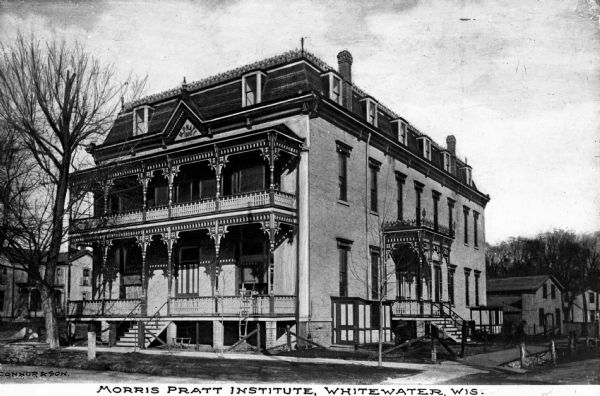
Today, April 24th, is probably one of the best days of Whitewater’s year. On this day in 1977, the Pratt Institute leaves the city:
1977 – Morris Pratt Institute of Spiritualism Moves to Waukesha
On this date the Morris Pratt Insititute, dedicated to the study of Spiritualism and Mediumship, moved from Whitewater to Waukesha. Founded in 1888 and incorporated in 1901, it was one of the few institutes in the world that instructed spiritualists. These were people “who believe as the basis of his or her religion, in the communication between this and the Spirit World by means of mediumship and who endeavors to mould his or her character and conduct in accordance with the highest teachings derived from such communication.” [Source: Morris Pratt Institute]
An affront to both traditional theology and secular thinking, the loss of the private Pratt Institute meant that the core of nutty ideas for the city would no longer be found in the leaders of a private institution, but mostly thereafter among the proposals from leaders and hangers-on of our public ones.
Here’s the final game in Puzzability‘s Breaking the Monopoly series:
This Week’s Game — April 20-24
Breaking the Monopoly
Go to solve. Go directly to solve. For each day this week, we’ll give you a series of clues, each of which leads to a word. You must drop one letter out of each of these answer words and put them together (in order), adding spaces as needed, to get the name of a space on a classic Monopoly board.
Example:
Square footage / home run, in slang / bad space in Monopoly / children’s author Dahl
Answer:
Reading Railroad (area / dinger / jail / Roald)
What to Submit:
Submit the space name and the smaller words (as “Reading Railroad (area / dinger / jail / Roald)” in the example) for your answer.
Friday, April 24
Higher than / Apollo mission destination / alehouse / take advantage of
Thursday in the Whippet City will be sunny with a high of fifty-two. Sunrise is 5:59 and sunset 7:46, for 13h 47m 12s of daytime. The moon is a waxing crescent with 25.6% of its visible disk illuminated.
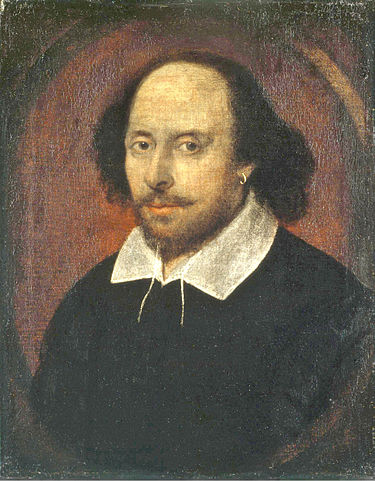
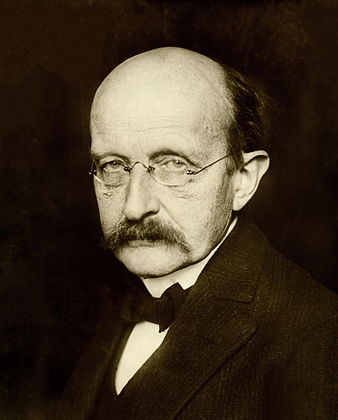
A canonical playwright and an esteemed physicist are both born on this day (in Shakespeare’s case, this is his traditionally-observed birthday):
William Shakespeare … 26 April 1564 (baptised) – 23 April 1616)[nb 1] was an English poet, playwright, and actor, widely regarded as the greatest writer in the English language and the world’s pre-eminent dramatist.[2] He is often called England’s national poet and the “Bard of Avon”.[3][nb 2] His extant works, including some collaborations, consist of about 38 plays,[nb 3] 154 sonnets, two long narrative poems, and a few other verses, of which the authorship of some is uncertain. His plays have been translated into every major living language and are performed more often than those of any other playwright.[4]
Shakespeare was born and brought up in Stratford-upon-Avon. At the age of 18, he married Anne Hathaway, with whom he had three children: Susanna, and twins Hamnet and Judith. Between 1585 and 1592, he began a successful career in London as an actor, writer, and part-owner of a playing company called the Lord Chamberlain’s Men, later known as the King’s Men. He appears to have retired to Stratford around 1613 at age 49, where he died three years later. Few records of Shakespeare’s private life survive, and there has been considerable speculation about such matters as his physical appearance, sexuality, religious beliefs, and whether the works attributed to him were written by others.[5]
Shakespeare produced most of his known work between 1589 and 1613.[6][nb 4] His early plays were mainly comedies and histories and these works remain regarded as some of the best work produced in these genres. He then wrote mainly tragedies until about 1608, including Hamlet, Othello, King Lear, and Macbeth, considered some of the finest works in the English language. In his last phase, he wrote tragicomedies, also known as romances, and collaborated with other playwrights.
Max Karl Ernst Ludwig Planck…. April 23, 1858 – October 4, 1947) was a German theoretical physicist who originated quantum theory, which won him the Nobel Prize in Physics in 1918.[3]
Planck made many contributions to theoretical physics, but his fame as a physicist rests primarily on his role as an originator of the quantum theory. However, his name is also known on a broader academic basis, through the renaming in 1948 of the German scientific institution, the Kaiser Wilhelm Society (of which he was twice president), as the Max Planck Society (MPS). The MPS now includes 83 institutions representing a wide range of scientific directions.
Max Planck’s quantum theory revolutionized human understanding of atomic and subatomic processes, just as Albert Einstein’s theory of relativity revolutionized the understanding of space and time.
Here’s the Thursday game in Puzzability‘s Breaking the Monopoly series:
This Week’s Game — April 20-24
Breaking the Monopoly
Go to solve. Go directly to solve. For each day this week, we’ll give you a series of clues, each of which leads to a word. You must drop one letter out of each of these answer words and put them together (in order), adding spaces as needed, to get the name of a space on a classic Monopoly board.
Example:
Square footage / home run, in slang / bad space in Monopoly / children’s author Dahl
Answer:
Reading Railroad (area / dinger / jail / Roald)
What to Submit:
Submit the space name and the smaller words (as “Reading Railroad (area / dinger / jail / Roald)” in the example) for your answer.
Thursday, April 23
Insane / shouting insanely / Noah’s vessel / thick, as fog