It’s a rainy day, of thunderstorms, ahead for Whitewater. The high temperature for the day should be in the upper eighties.
From the Wisconsin Historical Society, a reminder of a late-nineteenth-century tragedy, but also of resiliency:
1894 – Forest Fire Destroys Phillips
On the afternoon of this day, a forest fire swept over the Price Co. town of Phillips from the west, destroying nearly all the buildings and forcing 2,000 people to flee for their lives. When the sun came up the next morning, 13 people had been killed, the entire downtown was in ashes, and exhausted survivors were wandering through the ruins in a daze. The fire ultimately consumed more than 100,000 acres in Price County. Much of the town was rebuilt within a year.
Wondering where all this heat came from? Brian Keim at Wired Science has the answer in a post entitled, How the Heat Wave Started. (Image courtesy of NOAA.)
Concealed carry legislation went to the governor, and he signed it, about a month ago. (For an overview of that legislation, see Mary Spicuzza’s Concealed carry bill heads to Walker for signature. A provision of the bill allows communities to place restrictions on the presence of otherwise lawfully-concealed weapons, beyond the restrictions (police stations, court houses, schools, and places that post notices against their presence) already in the law.
This leaves cities like Whitewater with a choice: add additional limitations on the presence of concealed weapons, or rely solely on the prohibitions now part of state law. For a discussion of this issue in Whitewater, see Kevin Hoffman’s Whitewater council looking at limits on concealed carry.
Many towns will have this debate. A video of Whitewater’s preliminary discussion appears below. A few remarks:
Limits on the right. There’s both a federal and a state constitutional right to bear arms. (For the state right, see, in a pdf file, Article I, Sec. 25, Wisconsin Constitution.) And yet, for it all, it’s lawful to place restrictions on the right – including restrictions on concealed carry. Not only does our state statute allow communities to impose additional restrictions, but it’s also certain that some additional concealed-carry restrictions, as they statute allows, some are constitutional.
So, what limits should be imposed? I don’t know. The reason it’s a hard question is because one tries to weight a right against an uncertain and unknown risk – that harm will come from the presence of a concealed weapon in a public building. In weighing that way, under the state statute, one tries to define the right: how expansive, or narrow, should it be?
There is risk from a concealed weapon, as there is from the absence of a defensive weapon in a crisis, but how much risk is unknown, and unknowable. We cannot know, as Providence does, what our choices will mean. I’ve been opposed consistently to the idea simply because a parade of horribles might result from a thing, that one should ban the thing. Much intrusive and restrictive legislation depends on scaring people into action with a list of shocking, awful, and terrible possibilities, with no assessment of likelihood.
In this case, it’s a question for which I have no answer, except to suggest that guns should be kept away from meetings of the Common Council. If there’s a concern about safety at a council meeting, then our community should provide a police presence. (Although the state statute does not prohibit concealed guns in the Capitol, it gives Whitewater the right to limit guns at council sessions.) Our political meetings should be free of weapons, concealed or otherwise, except those of a police officer.
Even then, I don’t have a firm reason for limitations in one place case over others.
A right – however defined – is not limited by a politician or bureaucrat’s imagination. Whatever one decides, that decision should depend on more than a council member declaring that he or she just can’t grasp, grok, or get something.
That’s not the measure of anyone’s rights – they do not cease simply because a politician is unable to grasp their existence, or the possibility of their exercise. No citizen owes his liberty to a bureaucrat’s or politician’s cleverness, creativity, or powers of imagination.
So much of stodgy Whitewater thinks this way: How can it be? Can you imagine that? I don’t appreciate that! I’m offended by that! Shouldn’t there be a law?
This tired attitude is contrary to America’s respect for individual liberty, and her open, tolerant character.
Daily life goes on. For people in the city – whether public or private workers – whatever risks they face today are similar to the ones they faced without incident yesterday. That doesn’t mean there may not be problems or tragedies, but that risks may not have fluctuated much, up or down. In general, since the governor signed the concealed-carry law, life will prove unchanged for most people. There’s a powerful difference between prudence and worry.
It’s enough – and all there can be, really – for a representative merely to vote his conscience after having considered this right thoughtfully.
I’ve no idea what your day will be like, but if you’re in Whitewater today, you’ll be experiencing that day under mostly sunny skies, with a high temperature of eighty-five degrees.
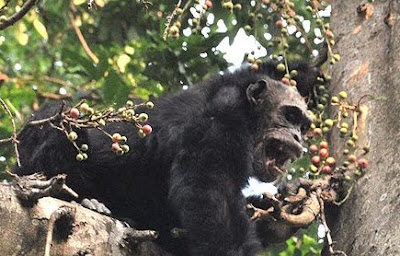
I’ve written before about how dangerous chimpanzees are (Chimpanzees: Cuddly Primates or Vicious Killers? Vicious Killers!), but it’s worse than I thought — they’re not just vicious, they’re selfish even when non-violent. Over at ScienceNews, there’s more solid science putting chimps in their proper place: Kids share, chimps stash. Here’s the awful truth:
Young kids have no problem saying mine and gimme. Yet even greedy rug rats go out of their way to share cool stuff equally if they’ve worked together to get it, a new study finds.
Adult chimpanzees, on the other hand, show no affinity for meting out fair shares after cooperative projects, say psychologist Katharina Hamann of the Max Planck Institute for Evolutionary Anthropology in Leipzig, Germany, and her colleagues.
Chimpanzees: when they’re not busy killing people, they’re hoarding from each other. They’re not suitable pets, no matter what some people want to believe, and when people treat them as such (dressed in ties, riding tricycles, etc.), it’s a foolish and risky misunderstanding.
It’s beautiful weather in store for Whitewater, with sunny skies and a high temperature of eighty-eight.
In Whitewater, there’s a meeting of the Landmarks Commission, including training for commissioners on the landmarks nomination process, at 5 p.m. The meeting agenda is available online.
Today’s a memorable anniversary for the Brewers, as the Wisconsin Historical Society explains:
1999 – First Brewer Inducted into Hall of Fame
On this date Robin Yount became the first player inducted to the Baseball Hall of Fame in a Brewer’s jersey. Yount entered the major leagues at the age of eighteen and spent his entire career with the Milwaukee Brewers as number 19 at short stop and center field. His awards are numerous, including being selected as an all-star three times as well as American league MVP twice. [Source: Milwaukee Brewers]
Here’s your chance to comment on your choice of legendary beast: What do you think we should do? There’s a poll, and space for comments, below, too.
The use of pseudonyms and anonymous postings is, of course, fine. Although the comments template has a space for a name, email address, and website, those who want to leave a field blank can do so. Comments will be moderated, against profanity or trolls. Otherwise, have at it.
The forum will be open until Sunday morning, and this post will stay at the top of the website during that time. Other posts may be up during that time; they’ll just appear below this one until Sunday.
There’s no need to milk taxpayers — either in Whitewater or elsewhere — of millions, when a profitable venture in mythological animals might be started for peanuts. For decades, the screwball Pratt Institute conducted all sorts of nutty, theologically-unsound seances, and Whitewater got nothing good out of it. For a fraction of price of time and energy on excuses about TID 4’s sorry state, we could have our own version of the Loch Ness legend.
We’d clean up if only we’d spread carefully publicize a few harmless stories about mysterious hounds, bipedal amphibians, or skunk apes.
Last night, I came home from a wonderful evening, and what did I see on the news? I saw this headline at Channel 3000:
Damnit! Juneau County’s already ahead of us. They wasted no time, no time at all, jumping on a mysterious animal craze, now in full swing after a supposed chupacabra discovery in Texas. I cannot describe how abraded, affronted aggravated, annoyed, bothered, bugged, burned, chafed, disturbed, driven up the wall, enraged, exasperated, galled,grated, incensed, inflamed, infuriated, irked, maddened, needled, nettled, offended, pained, peeved, pestered, piqued, provoked, put out, rankled, riled, roiled, rubbed the wrong way, ruffled, soured, tried, and vexed I am.
More, even, than usual.
And look at this — there’s a news video about this Juneau County creature:
Did they ever get a jump on Whitewater. Sure, it looks like a sickly possum, or a crappy raccoon, but it’s news. Now this guy will pull it out of his freezer, have it stuffed, and charge for tourists from across America, Europe, and Japan (probably especially Japan, as they love this sort of thing) to see it.
There’s still time, but no time to waste, leaving discovering giant ape footprints along the Cravath Lakefront, or the trail of an aquatic beast that emerged from Trippe Lake.
Oh, Whitewater, let’s not allow this golden opportunity to pass. If Juneau County can do it, so can we. more >>
In truth, the shuttle’s retirement could actually make the U.S. space program stronger, by finally allowing the shuttle’s two users – NASA and the Pentagon – to go their separate ways in space, each adopting space vehicles best suited to their respective missions.
Axe writes about some of the options that America will now use for space launches:
For routine sorties placing satellites and other space vehicles into orbit, NASA will use unmanned rockets, from the 1.6-million-pound Delta IV to the 1,300-pound Minotaur. That’s the Pentagon’s preferred approach, as well. NASA is trying a more commercial approach for resupplying the space station. For example, they’ve agreed to 12 resupply missions with SpaceX worth at least $1.6 billion.
Not a bad set of choices, among others that the story mentions. We’ll be fine.
In Texas, a thirteen-year-old boy believes he’s shot a chupacabra, a legendary animal that supposedly sucks the blood from its prey. Looking at the video, the dead animal looks like nothing so much as an emaciated, partly hairless coyote. (It looks a coyote that because that’s what it surely is.) Yet, even this readily-identifiable creature’s spurring national news, with videos and stories about what it might be.
Whitewater’s missing out on a real chance here. There have been stories about the nearby Beast of Bray Road, so our area’s already primed for more spooky, amazing tales of bizarre creatures. We’ve had our work done for us.
Trippe Lake’s closed temporarily because of E. coli, but who knows what monster that bacterium might conjure from the depths? Perhaps something like this –
There’s no need to milk taxpayers — either in Whitewater or elsewhere — of millions, when a profitable venture in mythological animals might be started for peanuts. For decades, the screwball Pratt Institute conducted all sorts of nutty, theologically-unsound seances, and Whitewater got nothing good out of it. For a fraction of price of time and energy on excuses about TID 4’s sorry state, we could have our own version of the Loch Ness legend.
We’d clean up if only we’d spread carefully publicize a few harmless stories about mysterious hounds, bipedal amphibians, or skunk apes.
By the way, here’s a news account of that Texas animal – see what you think –
It’s a sunny day in the forecast for Whitewater, with a high of about ninety-four.
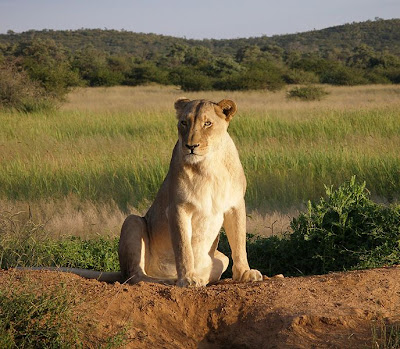
Perhaps, after all, a full moon does bring dangers, including (for those who happen to be in Africa) lion attacks. At ScienceNews, Nadia Drake writes that
Beware the full moon, for as it fades, hungry lions emerge to reclaim the night — and prowl for human flesh. Scientists studying lion attack trends in Tanzania found that predation peaks in the evenings after a full moon. The finding is the first to link lunar cycles with predation on humans, long a source of superstition and lore.
The study, led by Craig Packer of the University of Minnesota Twin Cities campus, looked at the relationship between lunar cycles, lion attacks and lion feeding behavior. Researchers used records of more than 1,000 lion attacks on Tanzanian villagers that occurred between 1988 and 2009. Of these, nearly two-thirds were fatal, and most occurred after dark. Researchers were able to pinpoint a precise time of day for 474 attacks, and found that attacks clustered between 6 p.m. and 9:45 p.m.
They also found that attack rates were two to four times higher in the 10 days after a full moon….