
Good morning.

Saturday in Whitewater will be partly sunny with a high of 71. Sunrise is 7:19 and sunset is 5:58 for 10 hours 39 minutes of daylight. The moon is a waxing gibbous with 96.9 percent of its visible disk illuminated.
On this day in 1929, “Black Thursday” on the New York Stock Exchange marks the first day of a market panic that later contributes to the Great Depression.
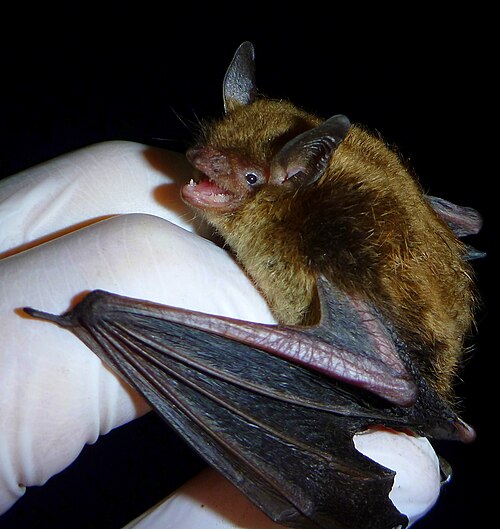
Something lighter, natural, and environmental for today (suitable not merely for Halloween season but all year round): tracking Wisconsin’s bats. Sara Gabler reports on the state’s annual bat count:
Over 150 scientists and volunteers participated in the Wisconsin Department of Natural Resources’ 12th annual Great Wisconsin Bat Count, tallying 120 roosts and more than 20,000 bats in June and July. Wisconsin is home to eight bat species, four of which remain threatened after this year’s count.
The bats were counted as they took flight from their roosts in bat houses and barns across the state. In the summer months, bats roost in large maternity colonies that are easy to observe. They’re being tracked because ecologists are monitoring the effects of white-nose syndrome, a fatal disease that arrived in the state in 2014.
The bat count results come just in time to raise awareness of international Bat Week, which runs Oct. 24-31. The international festival highlights the critical role that bats play in healthy ecosystems through insect control, pollination and seed dispersal.
[…]
There’s still reason to worry about Wisconsin’s bat population after this year’s count. Numbers for both big brown bats and little brown bats were down. Compared to last year, there were about 3,000 fewer little brown bats and 750 fewer big brown bats, [David Drake of the University of Wisconsin-Madison’s Department of Forest and Wildlife Ecology] said.
[…]
“The DNR is not quite sure if that count is lower because when the count was going on, weather conditions were not terribly favorable for the count,” Drake said.
See Sara Gabler, Annual Wisconsin bat count shows some species remain threatened, Wisconsin Public Radio, October 24, 2026.
I’ve argued before for recognition of Bats, the Other Pollinator:
Many insects are pollinators, and among those invertebrates honey bees receive the most attention. (Indeed, they receive so much attention that one often hears nothing except honey bee, honey bee, honey bee. That repetition doesn’t capture the diversity of pollinators — it simply repeats the common name of one insect three times.)
How welcome it is to read that bats — who work at night while we’re all sleeping — are a subject of this state’s ecological care and inventory.
From this summer’s 12th Annual Great Wisconsin Bat Count: