
Elections, Poll, Presidential race 2016
Marquette Law Poll Results (Final 2016 Election Edition)
by JOHN ADAMS •
The final 2016 Marquette Law School poll results are out, and here key findings from the 10.26.16 to 10.31.16 poll (the full results are available online).
Clinton-Trump, Among LV:
New Marquette Law School Poll finds Clinton leading Trump among likely voters in WI 46% to 40%. #mulawpoll
— MULawPoll (@MULawPoll) November 2, 2016
Johnson-Stein, Among LV:
Libertarian Gary Johnson supported by 4%, Green Party candidate Jill Stein 3%. Johnson support down as election nears. #mulawpoll
— MULawPoll (@MULawPoll) November 2, 2016
Feingold-Johnson, Among LV:
US Senate race in WI: New Marquette Law School Poll finds 45% for Russ Feingold, 44% for Ron Johnson. #mulawpoll
— MULawPoll (@MULawPoll) November 2, 2016
Anderson for Senate, Among LV:
In Senate race, Libertarian Phil Anderson now supported by 3%. He was at 4% earlier in Oct. #mulawpoll
— MULawPoll (@MULawPoll) November 2, 2016
Pres. Obama Approval:
President Obama job approval now at 52% favorable, 44% unfavorable. In early Oct., it was 52% and 43%. #mulawpoll
— MULawPoll (@MULawPoll) November 2, 2016
Gov. Walker Approval:
We reversed numbers here: approve is 42, disapprove 51. Last time was 44-51. Sorry for the slip up. https://t.co/GOOAgkIIQl
— MULawPoll (@MULawPoll) November 3, 2016
Key Takeaway:
Key takeaways, @PollsAndVotes says: Prez race been stable, Senate race has tightened. Modest shifts in views of candidates. #mulawpoll
— MULawPoll (@MULawPoll) November 2, 2016
A few quick points:
- The Marquette Poll has been reliable these last few elections.
- The key takeaways seem reasonable to me (regarding Wisconsin).
- Third party candidates typically fade, and this poll reflects that development.
- Finally, the presidential race is so divisive, and coverage of it so impossible to avoid, that one finds local matters (even important ones) relatively unnoticed by comparison.
- There are important local races, including a school referendum for Whitewater, but I’ve come to think that in this presidential year, downballot contests will be a matter of (1) level turnout driven by the national race, and (2) the particular composition of that turnout. That’s caused me to put off until after the election some discussions that I wanted (and originally planned) to post before November 8th.
- Intense national coverage seems, to me, to obsure everything else. Better an extended analysis in a quieter time. One can be patient; there’s all the time in the world.
Daily Bread
Daily Bread for 11.3.16
by JOHN ADAMS •
Good morning, Whitewater.
Thursday will be cloudy in the morning, sunny in the afternoon, with a daytime high of sixty-three. Sunrise is 7:33 AM and sunset 5:43 PM, for 10h 10m 16s of daytime. The moon is a waxing crescent with 12% of its visible disk illuminated.
Whitewater’s Landmarks Commission is scheduled to meet at 6 PM, and there’s a scheduled Fire Department Business Meeting at 7 PM.
On this day in 1957, the Soviets launch a dog named Laika into space. It did not end well for the dog:
Laika (Russian: … c. 1954 – November 3, 1957) was a Soviet space dog who became one of the first animals in space, and the first animal to orbit the Earth. Laika, a stray dog from the streets of Moscow, was selected to be the occupant of the Soviet spacecraft Sputnik 2 that was launched into outer space on November 3, 1957.
Little was known about the impact of spaceflight on living creatures at the time of Laika’s mission, and the technology to de-orbit had not yet been developed, and therefore Laika’s survival was not expected. Some scientists believed humans would be unable to survive the launch or the conditions of outer space, so engineers viewed flights by animals as a necessary precursor to human missions.[1] The experiment aimed to prove that a living passenger could survive being launched into orbit and endure micro-gravity, paving the way for human spaceflight and providing scientists with some of the first data on how living organisms react to spaceflight environments.
Laika died within hours from overheating, possibly caused by a failure of the central R-7 sustainer to separate from the payload. The true cause and time of her death were not made public until 2002; instead, it was widely reported that she died when her oxygen ran out on day six or, as the Soviet government initially claimed, she was euthanised prior to oxygen depletion.
On April 11, 2008, Russian officials unveiled a monument to Laika. A small monument in her honour was built near the military research facility in Moscow that prepared Laika’s flight to space. It features a dog standing on top of a rocket. She also appears on the Monument to the Conquerors of Space in Moscow.
On this in 1804, the Fox and Sauk sign a treaty that Black Hawk later rejects:
1804 – Treaty at St. Louis
On this date Fox and Sauk negotiators in St. Louis traded 50 million acres of land in southern Wisconsin and northern Illinois for an annuity of $1,000. The treaty allowed the tribes to remain on the land until it was sold to white settlers. However, Chief Black Hawk and others believed that the 1804 negotiators had no authority to speak for their nation, so the treaty was invalid. U.S. authorities, on the other hand, considered it binding and used it justify the Black Hawk War that occurred in the spring and summer of 1832. [Source: Along the Black Hawk Trail by William F. Stark, p. 32-33]
JigZone‘s daily puzzle for Thursday is of movable type:
Planning, Science/Nature, Weather
The Plan to Drain the Mediterranean: Atlantropa
by JOHN ADAMS •
For more about the idea, see the Atlantropa entry @ Wikipedia.
Daily Bread
Daily Bread for 11.2.16
by JOHN ADAMS •
Good morning, Whitewater.
Wednesday will bring scattered thunderstorms and a high of fifty-nine to Whitewater. Sunrise is 7:32 AM and sunset 5:44 PM, for 10h 12m 46s of daytime. The moon is a waxing crescent with 6.6% of its visible disk illuminated.
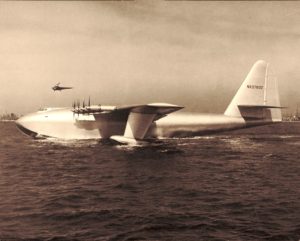
On this day in 1947, the Spruce Goose makes its only flight:
The Hughes H-4 Hercules (also known as the “Spruce Goose“; registration NX37602) is a prototype strategic airliftflying boat designed and built by the Hughes Aircraft Company. Intended as a transatlantic flight transport for use during World War II, it was not completed in time to be used in the war. The aircraft made only one brief flight on November 2, 1947, and the project never advanced beyond the single example produced. Built from wood because of wartime restrictions on the use of aluminium and concerns about weight, it was nicknamed by critics the “Spruce Goose”, although it was made almost entirely of birch.[2][3] The Hercules is the largest flying boat ever built and has the largest wingspan of any aircraft in history.[4] It remains in good condition and is on display at the Evergreen Aviation & Space Museum in McMinnville, Oregon, United States.[5]
….On November 2, 1947, the taxi tests began with Hughes at the controls. His crew included Dave Grant as copilot, two flight engineers, Don Smith and Joe Petrali, 16 mechanics, and two other flight crew. The H-4 also carried seven invited guests from the press corps and an additional seven industry representatives. Thirty-six were on board.[19]
Four reporters left to file stories after the first two taxi runs while the remaining press stayed for the final test run of the day.[20] After picking up speed on the channel facing Cabrillo Beach the Hercules lifted off, remaining airborne at 70 ft (21 m) off the water at a speed of 135 miles per hour (217 km/h) for about one mile (1.6 km).[21] At this altitude the aircraft still experienced ground effect.[22] The brief flight proved to detractors that Hughes’ (now unneeded) masterpiece was flight-worthy—thus vindicating the use of government funds.[23] The Spruce Goose, however, never flew again. Its lifting capacity and ceiling were never tested. A full-time crew of 300 workers, all sworn to secrecy, maintained the aircraft in flying condition in a climate-controlled hangar. The company reduced the crew to 50 workers in 1962 and then disbanded it after Hughes’ death in 1976.[24]
On this day in 1911, Wisconsin’s first vocational school opens.
Here’s JigZone‘s daily puzzle for Wednesday:
Architecture, Faraway Places, History
A Medieval Abbey Trapped by Tides and Time
by JOHN ADAMS •
Daily Bread
Daily Bread for 11.1.16
by JOHN ADAMS •
Good morning, Whitewater.
A new month begins, on a partly cloudy day with a high of seventy-one. Sunrise is 7:30 AM and sunset 5:46 PM, for 10h 15m 18s of daytime. The moon is a waxing crescent with 2.6% of its visible disk illuminated.
Whitewater’s Common Council meets tonight at 6:30 PM.
On this day in 1765, Parliament’s Stamp Act becomes effective:
The Stamp Act of 1765 (short title Duties in American Colonies Act 1765; 5 George III, c. 12) was an Act of the Parliament of Great Britain that imposed a direct tax on the colonies of British America and required that many printed materials in the colonies be produced on stamped paper produced in London, carrying an embossed revenue stamp.[1][2] Printed materials included legal documents, magazines, playing cards, newspapers, and many other types of paper used throughout the colonies. Like previous taxes, the stamp tax had to be paid in valid British currency, not in colonial paper money.[3] The purpose of the tax was to help pay for troops stationed in North America after the British victory in the Seven Years’ War and its North American theater of the French and Indian War. The Americans said that there was no military need for the soldiers because there were no foreign enemies on the continent, and the Americans had always protected themselves against Indians. They suggested that it was actually a matter of British patronage to surplus British officers and career soldiers who should be paid by London.
The Stamp Act was very unpopular among colonists. A consensus considered it a violation of their rights as Englishmen to be taxed without their consent—consent that only the colonial legislatures could grant. Their slogan was “No taxation without representation.” Colonial assemblies sent petitions and protests. The Stamp Act Congressheld in New York City was the first significant joint colonial response to any British measure; it petitioned Parliament and the King. Local protest groups led by colonial merchants and landowners established connections through Committees of Correspondence, creating a loose coalition that extended from New England to Maryland. Protests and demonstrations initiated by a new secret organization called the Sons of Liberty often turned violent and destructive as the masses became involved. Very soon, all stamp tax distributors were intimidated into resigning their commissions, and the tax was never effectively collected.[4]
Opposition to the Stamp Act was not limited to the colonies. British merchants and manufacturers, whose exports to the colonies were threatened by colonial boycotts, pressured Parliament. The Act was repealed on March 18, 1766 as a matter of expedience, but Parliament affirmed its power to legislate for the colonies “in all cases whatsoever” by also passing the Declaratory Act. There followed a series of new taxes and regulations, likewise opposed by the colonists.
On this day in 1863, a penmaker is born:
1863 – George Safford Parker Born
On this date George Safford Parker was born in Shullsburg. While studying telegraphy in Janesville, he developed an interest in fountain pens. In 1891 he organized the Parker Pen Company in Janesville. The company gained world-wide acclaim for innovations like the duo-fold pen and pencil. Parker served as president of the company until 1933. Parker died on July 19, 1937. [Source: Dictionary of Wisconsin Biography, p.280]
Here’s JigZone‘s daily puzzle for Tuesday:
City, Holiday
Boo! Scariest Things in Whitewater, 2016
by JOHN ADAMS •

The list runs in reverse order, from mildly frightening to truly scary.
10. It’s Gremlins. Ordinarily, people assume that the success or failure of government policy rests with government officials. That makes sense, and follows thousands of years in which history has assigned responsibility and accountability to those who hold power.
Listen in Whitewater, however, and you’ll hear that our several challenges come from the location of the city, the people in the city, the people outside the city, the people who might once have heard about the city, or capitalists, socialists, Methodists, whatever…
None of that is true.
The truth is that things go wrong in Whitewater because tiny gremlins interfere with otherwise self-promoting noble efforts of taxpayer-supported bureaucrats public servants to advance this community.
The existence of these creatures has been known for over seventy years, but seldom publicized to avoid widespread panic in the city.
I’ve obtained documentary footage that Warner Bros. produced in 1943 for the United States Government, so that Pres. Roosevelt and leading figures in the nation might better understand the gremlin threat. They’re devious little creatures, to be sure.
9. Potholes. Back again as a problem, and at this rate it might as well become a perennial. Whitewater’s spending often looks like that of a fashion model, who purchases clothes to look good but forgets (or doesn’t care) to eat properly. A building here, a building there, but few jobs from them and few good roads from place to place.
It screams to visitors: the fundamentals aren’t right.
8. Opinion. It’s as though officials were too fearful to find it on their own. In a small Midwestern town, it somehow takes a survey company, or a polling company, to let officials know what residents would like. No one can ask on his or her own? What’s the point of being an insider – a sophisticated, highly-connected, smooth-talking swell – if one does not know in one’s very bones what the community wants?
The Founders didn’t have School Perceptions or Polco for their towns, let alone their colonies, but they were able to gauge community sentiment well enough. We don’t need a knock-off version of Gallup to get the job done.
For a small amount per person, full-time leaders in this city should be outfitted with a pair of stylish and comfortable Hush Puppies, and told to walk about and see the town in which most of them live.
All it takes is a willingness to walk around – unobtrusively – and listen to what people are saying, and to watch how residents and visitors shop in town.
If one’s working (assuming one is working) at the Municipal Building and cannot for tell for days that oil is leaking into Cravath Lake, a bit of walking around might be the answer.
7. Tenure. It must not be what it’s cracked up to be, because leaders are heading for the door as soon as they can. The big question in Whitewater used to be ‘how long have you lived here?’ The new questions might as well be ‘do you live here at all?’ and ‘if so, how long do you plan on staying?’
I love this small town, and cannot imagine being anywhere else. It’s coldly disappointing that others don’t see the same.
6. Department Heads. Department heads must be scary, because they get just about anything they want, whatever the cost. They may receive a few questions, but the check arrives for the requested amount, just the same.
5. Vendors. Even scarier than department heads. A consultant or vendor shows up, talks down to everyone in the room as though the audience were drunk or deranged, and people scamper around (including department leaders) to give the vendor whatever he wants.
4. Cannibalism. Rather than work together, internal strife divides municipal departments. It’s not always outsiders they’re concerned about – it’s often each other. Problems don’t come from conflicts outside the Municipal Building – they often come from within it. It’s like a B-movie about protein-seeking natives filmed on set at 312 W. Whitewater Street.
3. Memory. One is only supposed to remember events the way, and for as long, as leaders wish them to be remembered. The future will write the history of the present, at a length and in a detail different from insiders’ wishes.
2. Revenue. This city administration now finds itself on a search for revenue, hunting for it wherever it can be found, from residents who already pay taxes. Each dollar of government-acquired revenue is money taken from the private economy in fees, taxes, or through sketchy government-run ventures.
This leads to efforts like the proposal to bring trash into the city. The city is bigger than its government; it rests on private citizens, the foundation of whose prosperity is private enterprise. No one owes an acquisitive few their mediocre and destructive proposals.
1. Stagnation. Our risk isn’t collapse, as once happened to Whitewater. It’s a lengthy stagnation, where longterm stagnation means (inevitability in a country that’s growing) relative decline. We’re awash in public money but it’s not sparked the private economy adequately. There are some impressive green shoots in this city, but they’ll risk withering if we’ve only an arid climate of stagnation.
Presenting the city to the entire area as though it were a vast enterprise zone, with few if any regulations, would be a committed effort to align us more closely with communities enjoying solid growth.
There’s the 2016 list.
Best wishes to all for a Happy Halloween.
Music
Monday Music: Nina Simone, I Put a Spell on You
by JOHN ADAMS •
Daily Bread
Daily Bread for 10.31.16
by JOHN ADAMS •
Good morning, Whitewater.
Halloween in town will be partly cloudy with a high of fifty-nine. Sunrise is 7:29 AM and sunset 5:47 PM, for 10h 17m 50s of daytime. The moon is new today, with just .4% of its visible disk illuminated.
On this day in 1861, Winfield Scott steps down:
Citing failing health, General Winfield Scott, commander of the Union forces, retires from service on this day in 1861. The hero of the Mexican War recognized early in the Civil War that his health and advancing years were a liability in the daunting task of directing the Federal war effort. Scott was born in Virginia in 1786. He graduated from William and Mary College and joined the military in 1808; he had become the youngest general in the army by the end of the War of 1812.Scott was an important figure in the development of the U.S. Army after that war, having designed a system of regulations and tactical manuals that defined the institution for most of the 19th century. Although Scott’s tactics, many of which were borrowed from the French, were of little use in the irregular warfare the army waged against the Seminoles and Creek in the southeast, his methods worked brilliantly during the war with Mexico in 1846 and 1847.
His campaign against Mexico City, in particular, is remembered for the strength of its planning and execution. During the secession crisis of 1861, Scott remained at his post, refusing to join his native state in abandoning the union. Scott was asked by U.S. President Abraham Lincoln to devise a comprehensive plan to defeat the Confederacy.
The strategy Scott developed called for the blockading of ports to isolate the South economically, to be followed by an offensive down the Mississippi River. In the optimistic early days of the war, this strategy seemed hopelessly sluggish—in fact, critics dubbed it the “Anaconda Plan” after the giant Amazonian snake that slowly strangles its prey. Despite this initial criticism, it was the basic strategy that eventually won the war for the Union.
Scott also drew criticism for ordering the advance of General Irwin McDowell’s army into Virginia, which resulted in the disastrous Union defeat at the First Battle of Bull Run on July 21, 1861. With the arrival of George McClellan as commander of the Army of the Potomac shortly after, Scott’s influence waned. He weighed over 300 pounds, suffered from gout and rheumatism, and was unable to mount a horse.
His resignation on October 31 did not end his influence on the war, however. Lincoln occasionally sought his counsel, and many of his former officers commanded forces and executed the same maneuvers that he had used in Mexico. Scott retired to West Point to write his memoirs and died in 1866.
On this day in 1968, the Bucks win their first game:
On this date the Milwaukee Bucks claimed their first victory, a 134-118 win over the Detroit Pistons in the Milwaukee Arena. The Bucks were 0-5 at the time, and Wayne Embry led Milwaukee with 30 points. Embry became the first player in Bucks history to score 30 or more points in a regular season game. [Source: Milwaukee Bucks]
JigZone‘s puzzle for today is of a buckle:
Film, Holiday
Film: The Green Ruby Pumpkin
by JOHN ADAMS •
Daily Bread
Daily Bread for 10.30.16
by JOHN ADAMS •
Good morning, Whitewater.
Sunday in town will be cloudy with a high of fifty-five. Sunrise is 7:28 AM and sunset 5:48 PM, for 10h 20m 25s of daytime. The moon is new today, with just .1% of its visible disk illuminated.
Friday’s FW poll asked readers which team they thought would win the World Series. With the series then tied 1-1, majority of respondents thought that the Cubs would win (I thought so, too.) It’s now 3-1 in favor of the Indians, with game 5 tonight in Chicago. Games 6 and 7, if necessary, will be played in Cleveland.
Like so many others, I’ll be sorry to see baseball end, however the series turns out.
“The War of the Worlds” is an episode of the American radio drama anthology series The Mercury Theatre on the Air. It was performed as a Halloween episode of the series on Sunday, October 30, 1938, and aired over the Columbia Broadcasting System radio network. Directed and narrated by actor and future filmmaker Orson Welles, the episode was an adaptation of H. G. Wells‘ novel The War of the Worlds (1898). It became famous for allegedly causing mass panic, although the reality of the panic is disputed as the program had relatively few listeners.[3]
The first two-thirds of the one-hour broadcast was presented as a series of simulated news bulletins, which suggested an actual alien invasion by Martians was currently in progress. The illusion of realism was furthered because the Mercury Theatre on the Air was a sustaining show without commercial interruptions, and the first break in the program came almost 30 minutes into the broadcast. Popular legend holds that some of the radio audience may have been listening to Edgar Bergen and tuned in to “The War of the Worlds” during a musical interlude, thereby missing the clear introduction that the show was a drama, but recent research suggests this only happened in rare instances.[4]:67–69
In the days following the adaptation, widespread outrage was expressed in the media. The program’s news-bulletin format was described as deceptive by some newspapers and public figures, leading to an outcry against the perpetrators of the broadcast and calls for regulation by the Federal Communications Commission.[3] The episode secured Welles’s fame as a dramatist.
On this day in 1914, Wisconsin gets her first 4-H Club:
1914 – First 4-H Club in Wisconsin Organized
On this date the Linn Junior Farmers Club in Walworth County was organized. This club was started five months after Congress passed the Smith-Lever Act which created the Cooperative Extension Service whereby federal, state, and county governments participate in the county agent system. [Source: History Just Ahead: A Guide to Wisconsin’s Historical Markers]
Documentary, History, Technology
And the Internet was Born: The Creation of the ARPANET
by JOHN ADAMS •
Bridget Galaty has produced a fine documentary on the ARPANET, an early packet-switching network. Ms. Galaty is a 12th grade Video Cinema Arts (VCA) student at Denver School of the Arts (DSA) – a public, magnet, arts school within Denver Public Schools (DPS). Her work here, and her other videography on her YouTube channel, is excellent.
Cats
Happy National Cat Day
by JOHN ADAMS •
I’m not much for a endless string of ‘national’ days, but then there’s National Cat Day, and suddenly the concept doesn’t seem so excessive…