FREE WHITEWATER

Film: Wednesday, 12:30 PM @ Seniors in the Park, Mr. Turner

On Wednesday at 12:30 PM, there will be a showing of Mr. Turner @ Seniors in the Park, in the Starin community building.

Mr. Turner depicts the mature years of British painter J.M.W. Turner.  

The 2014 film received four Academy Award nominations, among nearly fifty major film nominations, and won at Cannes for Best Actor (Timothy Spall).  

Embedded above is the trailer for the film.

Enjoy.  

A Technical Project

WGTB logo PNG 112x89 Post 28 in a series. When Green Turns Brown is an examination of a small town’s digester-energy project, in which Whitewater, Wisconsin would import other cities’ waste, claiming that the result would be both profitable and green.

In the clip above, Whitewater’s city manager mentions briefly the process through which Whitewater selected the engineering firm now advising on both wastewater upgrades and a waste-importation program.

The clip illustrates both the strength and weakness of local government’s position: reliance on an established firm, but a narrow, technocratic reliance.  

There’s power is an assessment of what can be built (that is, literally, what can be constructed).  Alone, it’s a power without context or sound foundation: it’s not remotely enough to say that waste-importation, for example, can be engineered.

It probably can – distant communities and haulers will want to truck their unwanted, high-strength industrial waste to Whitewater.  

In the same way, one could build a pipeline or a dam but those projects are more than technical projects; they’re plans with fiscal, economic, environmental, health, and business-culture implications.   

Ticking off a list of for-profit firms that will receive compensation when a project goes forward isn’t vetting the project; it’s vetting those who want to sell a project.  (Just as Councilmember Ken Kidd’s consistent boosterism doesn’t rest on anything like a truly independent study.)

I’d guess that City Manager Clapper, educated and intelligent, has a narrow focus, and is relying mostly or exclusively on what may be technically possible.  (This reliance is even more evident with Wastewater Superintendent Reel, albeit without evidence of Clapper’s other attributes.)  

Hayek described a similar, singular focus on design planning as a fatal conceit; he even wrote a book about it.  

I’d guess that, in his remarks, City Manager Clapper means to reassure; considering his words carefully, however, is to see how narrowly-considered this project truly is.  

The full video from the City of Whitewater is available at https://vimeo.com/131892711.

WHEN GREEN TURNS BROWN: Mondays @ 10 AM, here on FREE WHITEWATER.

Daily Bread for 8.31.15

Good morning, Whitewater.

Monday in town will be partly cloudy with a high of eighty-five. Sunrise is 6:19 and sunset 7:30, for 13h 11m 36s of daytime. The moon is a waning gibbous with 95.5% of its visible disk illuminated.

Google has a doodle on its main search page to mark the beginning of the U.S. Open. The doodle shows an intense match between o and g:

start-of-the-2015-us-open-tennis-championship-5723562658758656-hp
On this day in 1864, Gen. Sherman moves to take Atlanta for the Union:

…at the Battle of Jonesboro, Georgia, General William T. Sherman launches the attack that finally secures Atlanta, Georgia, for the Union, and seals the fate of Confederate General John Bell Hood’s army, which is forced to evacuate the area.

The Battle of Jonesboro was the culmination of a four-month campaign by Sherman to capture Atlanta. He had spent the summer driving his army down the 100-mile corridor from Chattanooga, Tennessee, against a Confederate force led by General Joseph Johnston. General Hood, who replaced Johnston in July on the outskirts of Atlanta, proceeded to attack Sherman in an attempt to drive him northward. However, these attacks failed, and by August 1 the armies had settled into a siege.

In late August, Sherman swung his army south of Atlanta to cut the main rail line supplying the Rebel army. Confederate General William Hardee’s corps moved to block Sherman at Jonesboro, and attacked the Union troops on August 31, but the Rebels were thrown back with staggering losses. The entrenched Yankees lost just 178 men, while the Confederates lost nearly 2,000.

On September 1, Sherman attacked Hardee. Though the Confederates held, Sherman successfully cut the rail line and effectively trapped the Rebels. Hardee had to abandon his position, and Hood had no choice but to withdraw from Atlanta. The fall of Atlanta was instrumental in securing the reelection of Abraham Lincoln in the fall.

Puzzability has a new series this week, entitled Sound Bites. Here’s Monday’s game:

This Week’s Game — August 31-September 4
Sound Bites
We’ve gone to pieces over this one. For each day this week, we started with two rhyming one-syllable words. The day’s clue gives, for each of those words, a shorter word that appears as a chunk within it. Please note that for the two words to rhyme, every sound from the first vowel sound onward must be identical, as the “-ime” sound in the example below.
Example:
LIMB, THY
Answer:
Climb, thyme
What to Submit:
Submit both words, in the same order as the clue (as “Climb, thyme” in the example) for your answer.
Monday, August 31
ACE, GEE

The WEDC Taints Walker (and local officials even more)

The WEDC is a state and national story that has local implications.

Some of the toughest political battles are intra-party ones: Republicans or Democrats fighting against fellow party members for their respective primary nominations.  For rival Republicans, Gov. Walker’s creation of the Wisconsin Economic Development Corporation will offer a legitimate and compelling line of attack against his candidacy.  (The former Wisconsin Department of Commerce was no great shakes; the WEDC is worse. )

Republicans like Gov. Walker, but there’s more than one national GOP candidate who is well-liked within the party.  In fact, they’ve a large field of candidates who, regardless of relative standing in the polls, are well-regarded among the party faithful.    That’s Gov. Walker’s self-created problem with the WEDC: it’s a bad idea that other Republicans will legitimately use as a point against his candidacy.

Peter Suderman (himself a libertarian, not a Republican) makes the argument that, if necessary, others will make along the way to the GOP national convention next year:

Walker’s jobs agency is better understood as a model of what not to do. The persistent struggles of his perpetually mismanaged, publicly funded business development facilitator highlight just how inept government-designed agencies can be at spending taxpayer money to create jobs, and the perils of a politically driven, get-something-done approach to economic growth. And, in combination with his flawed arguments for the stadium deal, they offer a stark reminder of the sort of dismal results that can occur when politically connected corporate interests team up with politicians under the banner of happy economic boosterism: Businesses benefit, and so do politicians—but only at taxpayers’ expense. Despite Walker’s campaign-trail claims to be a champion for the little guy, what he’s inadvertently shown in Wisconsin is how the special interests win.

SeeScott Walker, Crony Capitalist: The Wisconsin governor has a long record of doling out corporate welfare to political allies @ Politico.

The WEDC is also a local story, as so many political officials, moribund print publications, and the self-described ‘Greater Whitewater Committee,’ a 501(c)(6) business lobby entwined with the CDA, erroneously believe that WEDC-like projects and spending will uplift the community and advance the reputations of those involved.

It’s hard to believe that these few local men could have been so ignorant and foolish, but they have been. They’ve committed to a selfish and sham policy that has not the slightest chance of genuine local gains. This banana-republic economics has nothing behind it.

Gov. Walker is far more capable that any local official in the city; our town squires have no chance whatever of achieving what he has (and indeed, could) not.

The full measure of cheerleading from Whitewater’s reflexive flacks, and their dutiful friends in the press or online, is useless to rehabilitate, let alone justify, years of economic error.

On neither Left nor Right, from among the many fine American economists designated Nobel laureates, for example, there’s not one – not one – who would defend the white-collar cronyism of the Whitewater CDA, Tech Park Board, city manager, or like-minded print & online publications.

By contrast, the most insightful thinkers (among them, Hayek, Friedman, Coase, Buchanan, Krugman, Stiglitz) – of whatever ideological position – would be united in rejecting anything like these local efforts.

A critic of cronyism has centuries of learning in support of his or her criticism; a defender, however crafty or insatiable in self-promotion, has not a single, worthy argument on which to rely.

That’s why efforts in support of these development schemes are destined only to rust, rot, and ruin.

The case against this cronyism, by contrast, is incomparably stronger and imperishable.

Daily Bread for 8.30.15

Good morning, Whitewater.

Our Sunday begins with fog, lifting for sunny, afternoon skies and a high of eighty. Sunrise is 6:18 and sunset 7:32, for 13h 14m 22s of daytime. It’s a full moon, with 99.1% of the moon’s visible disk illuminated.

When someone receives a municipal fine, should she be allowed to pay in amount due in coins? Friday’s FW poll asked that question, and 89.66% of respondents felt that payment in coin should be permissible.

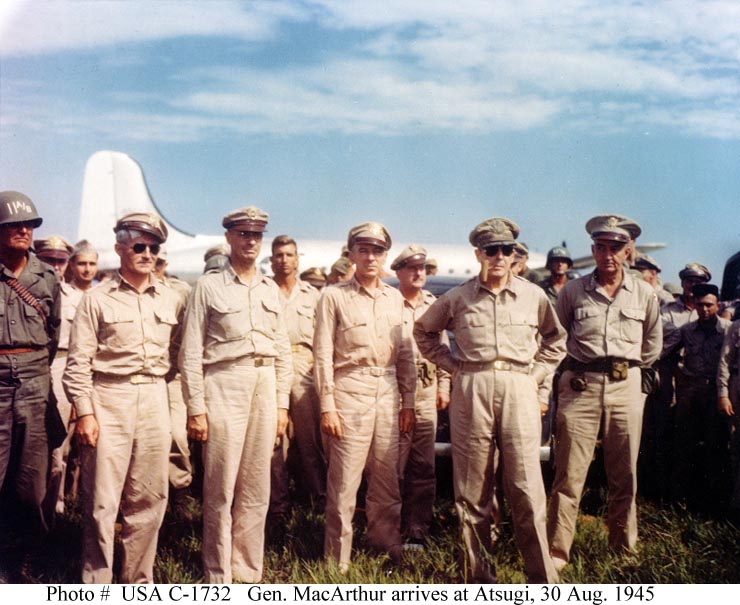
ac01732

On this day in 1945, Gen. MacArthur arrives in Japan:

Japanese officials left for Manila on August 19 to meet Supreme Commander of the Allied PowersDouglas MacArthur, and to be briefed on his plans for the occupation. On August 28, 150 U.S. personnel flew to Atsugi, Kanagawa Prefecture, and the occupation of Japan began. They were followed by USS Missouri, whose accompanying vessels landed the 4th Marines on the southern coast of Kanagawa. Other Allied personnel followed.[citation needed]

MacArthur arrived in Tokyo on August 30, and immediately decreed several laws: No Allied personnel were to assault Japanese people. No Allied personnel were to eat the scarce Japanese food. Flying the Hinomaru or “Rising Sun” flag was severely restricted.[143]

On this day in 1862, Pres. Lincoln meets Wisconsinites on the White House lawn:

The 2nd, 3rd, 5th, 6th and 7th Wisconsin Infantry regiments fought in the Second Battle of Bull Run. By the end of this third day, more than 18,000 soldiers had been killed or wounded and Union forces had been pushed back to Washington, D.C. When the Wisconsin regiments arrived in Washington, they rested on the White House lawn. According to historian Frank Klement, “President Lincoln came out with a pail of water in one hand and a dipper in the other. He moved among the men, offering water to the tired and thirsty. Some Wisconsin soldiers drank from the common dipper and thanked the President for his kindness.”

Daily Bread for 8.29.15

Good morning, Whitewater.

We’ll have showers this morning with a daytime high of seventy-two. Sunrise is 6:16 and sunset is 7:34, for 3h 17m 09s of daytime. We’ve a full moon today.

It’s the tenth anniversary of Hurricane Katrina’s second, and far more destructive, landfall along southeast Louisiana:

Hurricane Katrina was the eleventh named storm and fifth hurricane of the 2005 Atlantic hurricane season. It was the costliest natural disaster, as well as one of the five deadliesthurricanes, in the history of the United States. The storm is currently ranked as the third most intense United States landfalling tropical cyclone, behind only the 1935 Labor Day hurricane and Hurricane Camille in 1969. Overall, at least 1,245 people died in the hurricane and subsequent floods, making it the deadliest United States hurricane since the 1928 Okeechobee hurricane. Total property damage was estimated at $108 billion (2005 USD),[1] roughly four times the damage wrought by Hurricane Andrew in 1992.[3] Later, Hurricane Ike in 2008 and Hurricane Sandy in 2012 caused more damage than Hurricane Andrew, but both were far less destructive than Katrina.

Katrina originated over the Bahamas on August 23 from the interaction between a tropical wave and the remnants of Tropical Depression Ten. Early the following day, the new depression intensified into Tropical Storm Katrina. The cyclone headed generally westward toward Florida and strengthened into a hurricane only two hours before making landfall Hallandale Beach andAventura on August 25. After very briefly weakening to a tropical storm, Katrina emerged into the Gulf of Mexico on August 26 and began to rapidly deepen. The storm strengthened to aCategory 5 hurricane over the warm waters of the Gulf of Mexico, but weakened before making its second landfall as a Category 3 hurricane on August 29 in southeast Louisiana.

Embedded below, from Alexandra Garcia, Margaret Cheatham Williams, and Andrew Blackwell, is a documentary describing New Orleans ten years on:

On this day in 1991, the Soviet Parliament, following a coup attempt, suspends the Communist Party:

Moscow, Aug. 29 — After three hours of anguished debate, the Soviet Parliament voted today to suspend all activities of the Communist Party pending an investigation of its role in the coup. It was an action that confirmed the demise of the old regime even as the search quickened for new forms of association and order.

The fate of the party was already sealed before Parliament’s vote. Individual republics had closed its offices and seized its vast properties and funds and President Mikhail S. Gorbachev had quit as its General Secretary and had called on the leadership to step down.

But Parliament was the only national institution with the formal powers to act against the entire organization, and its decision served to confirm the indictment already passed by the people.

Friday Poll: Paying a Fine with Coins

<


Pennsylvania handyman Justin Greene recently tried to pay a $25 municipal fine in pennies. Local officials in Chambersburg, Pennsylvania refused to accept his payment in 2,500 coins, erroneously contending federal law barred that form of payment for a fine. (They’ve now acknowledged that there is no current federal law that prohibits payment in coins.)

Apart from any applicable laws, now or in the future, do you think Greene or others should be allowed to pay a fine in the legal tender of their choice (pennies, nickels, dimes, etc.).

Daily Bread for 8.28.15

Good morning, Whitewater.

The end of the work week in Whitewater will bring a likelihood of afternoon showers and a high of seventy-four. Sunrise is 6:15 and sunset 7:35, for 13h 19m 55s of daytime. The moon is a waxing gibbous with 97.5% of its visible disk illuminated.

On this day in 1963, Dr. King speaks at the Lincoln Memorial. The New York Times reported on the speech and large number in attendance:

Washington, Aug. 28 — More than 200,000 Americans, most of them black but many of them white, demonstrated here today for a full and speedy program of civil rights and equal job opportunities.

It was the greatest assembly for a redress of grievances that this capital has ever seen.

One hundred years and 240 days after Abraham Lincoln enjoined the emancipated slaves to “abstain from all violence” and “labor faithfully for reasonable wages,” this vast throng proclaimed in march and song and through the speeches of their leaders that they were still waiting for the freedom and the jobs.

Text of the speech is available online.

On this day in 1928, Babe Ruth demonstrates his hitting power in Milwaukee:

1928 – Babe Ruth Cracks Homer in Milwaukee

On this date Babe Ruth hit a towering game-winning home run in the ninth inning to give his team a 5-4 victory in a baseball exhibition at Borchert Field in Milwaukee. Lou Gehrig also played at this event. [Source: Milwaukee Journal Sentinel]

A Google a Day asks a geography question:

What mountain in Switzerland includes three types of glacial erosion, and resembles an ancient Egyptian structure with four specific sides?

How Many Visits for a Restaurant Review?

How many trips should a reviewer make before publishing a review?  I think at least two, if not three.(Exceptions would apply when one is revisiting an establishment that one has reviewed previously, or when one is traveling and a second visit is impractical.)

One can review after one evening, but a single, first-visit review just doesn’t seem fair to me.  

Published reviews like that should be deprecated accordingly.  They’re more filler for a publication than thoughtful appreciation of food, ambiance, and service.  

While I’m at it, I’d suggest that food or drink deserve primary consideration, even above service or ambiance.  

That’s certainly true for me: I’d travel far for good food, but wouldn’t visit even nearby for ambiance without enjoyable food or drink.  

Design and demeanor matter, but a proper meal or good brew matter more, at least to me.

One last point on this, from a trip to see some of my friends from school (that is, from among those at university during the late Pleistocene).  We had a great time having breakfast, lunch, and dinner over an extended weekend, and never once fussed over small matters.  

This is true because our time with each other mattered vastly more than quibbling over tiny details, etc., and because we made good food a priority.  One should have the equanimity to meet glitches calmly, and even with a bit of fun.  

A plate, a glass, and good conversation should be one’s goals, and so, one’s focus.  

Daily Bread for 8.27.15

Good morning, Whitewater.

Thursday in town will be mostly sunny with a high of seventy-seven. Sunrise is 6:14 and sunset 7:37, for 13h 22m 39s of daytime. The moon is a waxing gibbous with 92.6% of its visible disk illuminated.

Downtown Whitewater’s Board meets this morning at 8 AM.

Owing to the decades-long embargo, Cubans have kept older American cars running as best they could. Here are some of the classic cars still running on the streets of Havana:

On this day in 1883, a devastating volcanic explosion takes places:

The most powerful volcanic eruption in recorded history occurs on Krakatau (also called Krakatoa), a small, uninhabited volcanic island located west of Sumatra in Indonesia, on this day in 1883. Heard 3,000 miles away, the explosions threw five cubic miles of earth 50 miles into the air, created 120-foot tsunamis and killed 36,000 people.

Krakatau exhibited its first stirrings in more than 200 years on May 20, 1883. A German warship passing by reported a seven-mile high cloud of ash and dust over Krakatau. For the next two months, similar explosions would be witnessed by commercial liners and natives on nearby Java and Sumatra. With little to no idea of the impending catastrophe, the local inhabitants greeted the volcanic activity with festive excitement.

On August 26 and August 27, excitement turned to horror as Krakatau literally blew itself apart, setting off a chain of natural disasters that would be felt around the world for years to come. An enormous blast on the afternoon of August 26 destroyed the northern two-thirds of the island; as it plunged into the Sunda Strait, between the Java Sea and Indian Ocean, the gushing mountain generated a series of pyroclastic flows (fast-moving fluid bodies of molten gas, ash and rock) and monstrous tsunamis that swept over nearby coastlines. Four more eruptions beginning at 5:30 a.m. the following day proved cataclysmic. The explosions could be heard as far as 3,000 miles away, and ash was propelled to a height of 50 miles. Fine dust from the explosion drifted around the earth, causing spectacular sunsets and forming an atmospheric veil that lowered temperatures worldwide by several degrees.

Of the estimated 36,000 deaths resulting from the eruption, at least 31,000 were caused by the tsunamis created when much of the island fell into the water. The greatest of these waves measured 120 feet high, and washed over nearby islands, stripping away vegetation and carrying people out to sea. Another 4,500 people were scorched to death from the pyroclastic flows that rolled over the sea, stretching as far as 40 miles, according to some sources.

In addition to Krakatau, which is still active, Indonesia has another 130 active volcanoes, the most of any country in the world.

On this day in 1878, a patent for a true innovation in writing and communication:

On this date Christopher Latham Sholes patented the typewriter. The idea for this invention began at Kleinsteuber’s Machine Shop in Milwaukee in the late 1860s. A mechanical engineer by training, Sholes, along with associates Carlos Glidden and Samuel Soulé, spent hours tinkering with the idea. They mounted the key of an old telegraph instrument on a base and tapped down on it to hit carbon & paper against a glass plate. This idea was simple, but in 1868 the mere idea that type striking against paper might produce an image was a novelty. Sholes proceeded to construct a machine to reproduce the entire alphabet. The prototype was sent to Washington as the required Patent Model. This original model still exists at the Smithsonian. Investor James Densmore provided the marketing impetus which eventually brought the machine to the Remington Arms Company. Although Remington mass-marketed his typewriter beginning in 1874, it was not an instant success. A few years later, improvements made by Remington engineers gave the machine its market appeal and sales skyrocketed. [Source: Wisconsin Lore and Legends, p.41]

A Google a Day asks a question about literature:

What poem title did T. S. Eliot say he created by combining the titles of a romance by William Morris with the title of a Rudyard Kipling poem?