
Anderson, Cartoons & Comics
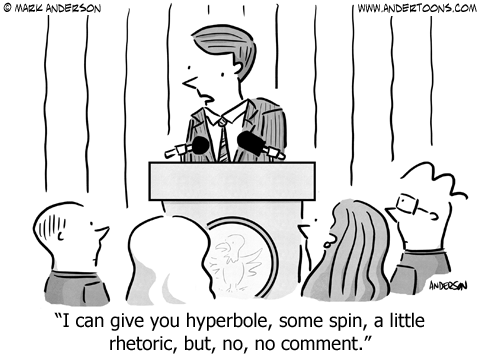
No Comment
by JOHN ADAMS •
Good morning, Whitewater.
Midweek in Whitewater will be partly cloudy with a high of eighty. Sunrise is 5:15 and sunset 8:35, for 15h 20m 04s of daytime. It’s a near new moon, with only .9% of the moon’s visible disk illuminated.
Today in Whitewater, the Tech Park Board meets at 8 AM.
On June 17, 1885, America receives something extraordinary:
On this day in 1885, the dismantled State of Liberty, a gift of friendship from the people of France to the people of America, arrives in New York Harbor after being shipped across the Atlantic Ocean in 350 individual pieces packed in more than 200 cases. The copper and iron statue, which was reassembled and dedicated the following year in a ceremony presided over by U.S. President Grover Cleveland, became known around the world as an enduring symbol of freedom and democracy.
Over two-hundred years earlier, on this same day, intrepid explorers see something extraordinary:
“Here we are, then, on this so renowned river, all of whose peculiar features I have endeavored to note carefully.” It’s important to recall that Marquette and Joliet did not discover the Mississippi: Indians had been using it for 10,000 years, Spanish conquistador Hernan De Soto had crossed it in 1541, and fur traders Groseilliers and Radisson may have reached it in the 1650s. But Marquette and Joliet left the first detailed reports and proved that the Mississippi flowed into the Gulf of Mexico, which opened the heart of the continent to French traders, missionaries, and soldiers. View a Map of Marquette & Joliet’s route.
Here’s Puzzability‘s midweek game in its Make Room for Dad series:
|
This Week’s Game — June 15-19
|
|||||
|
Make Room for Dad
|
|||||
|
We’re mixing it up with pop this Father’s Day. For each day this week, we started with a word or phrase, added the three letters in DAD, and rearranged all the letters to get a new phrase. Both pieces are described in each day’s clue, with the shorter one first.
|
|||||
|
Example:
|
|||||
|
Overweight; heroically turned the tide from bad to good
|
|||||
|
Answer:
|
|||||
|
Heavyset; saved the day
|
|||||
|
What to Submit:
|
|||||
|
Submit both pieces, with the shorter one first (as “Heavyset; saved the day” in the example), for your answer.
|
|||||
 |
|||||
|
Wednesday, June 17
|
|||||
|
Earlier this spring, the public editor of the New York Times, Margaret Sullivan, wrote a post on how the printed newspaper would continue to be important to the Times. In reply, Professor Clay Shirky of NYU wrote with what he called a “darker narrative’ of print’s prospects.
(See, at Sullivan’s blog, A ‘Darker Narrative’ of Print’s Future From Clay Shirky.)
When Shirky wrote to Sullivan, she published some of his remarks. Longtime readers know that I’m an admirer of Shirky’s work, and his reply is, I think, not merely darker, but more realistic, than Sullivan’s views.
Here’s a portion of Shirky’s perspective on print’s future:
I’d like to offer a considerably darker narrative: I think the pattern of print revenue decay will be fast, slow, fast.
The original, fast decline was 2007-9, where two overlapping events — the Great Recession and the sudden shift to mobile consumption — created a vicious cycle, where your most adventurous readers and least committed advertisers both moved rapidly to digital-only, amid a period of general contraction in ad revenues. These were the years of double-digit decline in revenues.
By 2010, most of the early abandoners had left and the economy recovered, leaving you with only secular decline in readership (down 5-6 percent a year) and only proportional decreases in advertising revenue. This is the slow period of print decay.
The people you quote — Baquet, Caputo — seem to be betting that the current dynamics of slow decline form the predictable future for your paper. I doubt this, and the alternate story I’d like to suggest is that print declines will become fast again by the end of the decade, bringing about the end of print (by which I mean a New York Times that does not produce a print product seven days a week) sooner than Baquet’s 40-year horizon, and possibly sooner than Caputo’s 10-year one. (Public editor note: Mr. Baquet said “no one thinks there will be a lot of print around in 40 years.” Mr. Caputo predicted that a printed Times would be around in 10 years, but did not specify seven-day-a-week production.)
You observed that print is responsible for the majority of ad revenues at the paper, but the disproportionate importance of print is not a signal of the robustness of the medium, it is a signal that advertisers have not found a way to replace print ads with anything as effective in other media.
The problem with print is that the advantageous returns to scale from physical distribution of newspapers become disadvantageous when scale shrinks. The ad revenue from a print run of 500,000 would be 16 percent less than for 600,000 at best, but the costs wouldn’t fall by anything like 16%, eroding print margins. There is some threshold, well above 100,000 copies and probably closer to 250,000, where nightly print runs stop making economic sense. This risk is increased by The New York Times’s cross-subsidy of print, with its print+digital bundle. This bundle creates the risk of rapid future readjustment, when advertisers reconsider print CPM in light of reduced consumption and pass-around of print by all-access subscribers. (Public editor note: C.P.M. is the cost to the advertiser per thousand readers or viewers, a common measurement in advertising.)
Both your Sunday and weekday readerships are already near important psychological thresholds for advertisers — one million and 500,000. When no advertiser can reach a million readers in any print ad in the Times (2017, on present evidence) and weekday advertising reaches less than half a million (2018, using the 6 percent decline figure you quoted), there will be downward pressure on C.P.M.s. This makes no sense, of course, since pricing ads per thousand should make advertisers indifferent to overall circulation, but marketing departments have never been run terribly logically.
So it seems likely to me that after the early, rapid decline, we are now in a period of shallow, secular decay, which will give way to a late-stage period of rapid decline. You can see something like this has happened already in your delivery business, when you read the comments on your piece. Several commenters would like a print copy, but don’t live in an area where it’s cost-effective to deliver the paper. This happened to my mother, in western Virginia; she is now digital-only because after years of gradual decay, the Roanoke, Va., market simply crossed a threshold where it became unprofitable, and all the remaining print subscribers disappeared all at once.
Those dynamics, in miniature, characterize print as a whole — below some threshold, the decay stops being incremental and starts being systemic.
Shirky’s talking about a large paper in this discussion, but his observations have value for smaller ones, too. Significantly, any slowdown in print’s decline is temporary, and advertisers’ alternatives and print’s own huge costs will erode print circulation significantly.
For an expression of Shirky’s views on papers, see Last Call: The end of the printed newspaper.
Tomorrow: On Trends in Whitewater’s Media.
Good morning, Whitewater.
Tuesday in Whitewater will be mostly sunny with a high of seventy-seven. Sunrise is 5:15 and sunset 8:35, for 15h 19m 48s of daytime. We’ve a new moon.
Common Council meets tonight at 6:30 PM.
On this day in 1832, during the Black Hawk War, troops under Henry Dodge win their first victory:
1832 – Battle of the Pecatonica
On this date the Battle of Pecatonica took place between a band of Kickapoo Indians and troops led by Henry Dodge. Dodge, along with two others were on their way to Fort Hamilton in Wiota, WI when they passed a white settler named Henry Appel. As the men reached the fort, rifle shots rang; the settler had been ambushed and killed by a group of Indians. Dodge and 29 men went in pursuit of the Kickapoo Indians who concealed themselves under the river bank of the Pecatonica. As Dodge and his men approached, the Indians opened fire, injuring four and killing three. Dodge ordered his men to attack. The Indians, unable to reload quickly enough, were fired at point-blank. Nine died immediately and two others were shot as they tried to escape. This battle was the military’s first victory in the Black Hawk War. [Source: The Black Hawk War by Frank E. Stevens and Along the Black Hawk Trail by William F. Stark]
Here’s Tuesday’s game in Puzzability‘s Make Room for Dad series:
|
This Week’s Game — June 15-19
|
|||||
|
Make Room for Dad
|
|||||
|
We’re mixing it up with pop this Father’s Day. For each day this week, we started with a word or phrase, added the three letters in DAD, and rearranged all the letters to get a new phrase. Both pieces are described in each day’s clue, with the shorter one first.
|
|||||
|
Example:
|
|||||
|
Overweight; heroically turned the tide from bad to good
|
|||||
|
Answer:
|
|||||
|
Heavyset; saved the day
|
|||||
|
What to Submit:
|
|||||
|
Submit both pieces, with the shorter one first (as “Heavyset; saved the day” in the example), for your answer.
|
|||||
|
|||||
|
Tuesday, June 16
|
|||||
|
 Post 12 in a series. When Green Turns Brown is an examination of a small town’s digester-energy project, in which Whitewater, Wisconsin would import other cities’ waste, claiming that the result would be both profitable and green.
Recap: On 11.5.13, city officials in Whitewater met privately with three construction or engineering vendors (Trane, Black & Veatch, Donohue) and at least one major waste-hauler to discuss importing waste from other cities into Whitewater for a digester energy project. On 12.3.13, Whitewater’s Wastewater Superintendent Reel and City Manager Clapper presented a brief slideshow about the project. On 1.21.14, Trane and Black & Veatch presented to Whitewater’s Common Council on the project. On 2.4.14, the City of Whitewater, at the enthusiastic recommendation of Reel and Clapper, agreed to fund Trane’s ‘study’ on the feasibility of the project, in an amount up to $150,000. On 2.20.14, Trane presented on a separate proposal for an energy-savings contract for Whitewater (proposals to save money by reducing energy consumption at city buildings). On 3.4.14, Trane returned to discuss the energy-savings plan.
Trane’s role in the energy-savings proposal is material and relevant to its work on a digester plan requiring waste importation into Whitewater: it’s the same vendor, including some of the same vendor-representatives, advancing a seven-figure plan to the same city officials, as in the digester plan. (Later, we’ll see that Whitewater will switch to another vendor, Donohue, but in March 2014, Trane was the vendor for more than one city project.) The quality of the Trane’s work, and the quality of municipal diligence in evaluating Trane’s work, is on display here.
(Every question in this series has a unique number, assigned chronologically based on when it was asked. All the questions from When Green Turns Brown can be found in the Question Bin. Today’s questions begin with No. 119.)
119. In September 2013, six months before this meeting, the City of Whitewater proposed a letter of intent for an energy-savings agreement. Half a year later, there’s still uncertainty about the scope of the project. Why is that?
120. The Trane proposal discussed at this meeting includes approximately $750,000 in work apart from energy-savings efforts. City Manager Clapper (Clapper) says that the additional work was for a ‘broader scope’ than mere energy conservation. Wouldn’t a ‘broader scope’ be a justification for countless additional public expenditures?
121. In response to a question about that ‘broader scope,’ Clapper responds that “if there’s any concern about any the items [the additional $750,000] to exhaust those concerns or remove them from the list.” Why doesn’t Clapper think that it’s his role, as the publicly-paid city manager of Whitewater, to apply his own judgment to remove unnecessary items?
122. Does Clapper believe that his role as the publicly-paid city manager of Whitewater is merely to present in full what vendors want to sell to Whitewater?
123. Alternatively, does Clapper believe that each and every one of Trane’s proposals has equal merit (that is, is he unable or unwilling to distinguish priorities between a vendor’s various items for sale)?
124. Listening to Rachel’s sales presentation in this clip, with references to ‘holistic’ needs, etc., would anyone have confidence in the specifics of her work? Why can’t (or won’t) she supply a direct answer to Trane’s expertise even when pressed multiple times?
125. How is it possible that the vendor’s representatives know less about the dates for regulatory compliance times than a councilmember who, like all councilmembers, serves only part-time on Whitewater’s Common Council?
126. Did City Manager Clapper review Trane’s presentation prior to delivery at this 3.4.14 meeting? If he did, was he confident of Trane’s work? If he didn’t, then why didn’t he?
127. As a policy matter, why would a full-time manager (City Manager Clapper) ask fewer questions, or no questions, of a project than elected representatives with full-time duties elsewhere?
Council Discussion, 3.4.14 (Trane)
Agenda: http://www.whitewater-wi.gov/images/stories/agendas/common_council/2014/2013_3-4_Full_Packet.pdf
Minutes: http://www.whitewater-wi.gov/images/stories/minutes/common_council/2014/ccmin_2014-03-04.doc
Video: https://vimeo.com/88385707
WHEN GREEN TURNS BROWN: Mondays @ 10 AM, here on FREE WHITEWATER.
The Seniors in the Park Best Foreign Film Series will begin Wednesday, June 17th @ 12:30 PM in the Starin Park Community Building.
The films in the series will all be award-winning foreign features. This Wednesday’s showing will be Ida, director Pawel Pawlikowski‘s 2015 Oscar-winning account of “Anna, a young novitiate nun in 1960s Poland, is on the verge of taking her vows when she discovers a dark family secret dating back to the years of the Nazi occupation.” The film is in black & white, with English subtitles.
Embedded below is the trailer for the film.
Upcoming films in the Seniors in the Park series, in the weeks ahead, include Leviathan (Russia) and Mr. Turner (England).
Good morning, Whitewater.
Monday will bring thunderstorms and a high of seventy-eight to Whitewater. Sunrise is 5:15 and sunset 8:35, for 15h 19m 29s of daytime. The moon is a waning crescent with 1.5% of its visible disk illuminated.
On this day in 1902, what was to become one of the most famous rail lines in the world began service:
The 20th Century Limited was an express passenger train on the New York Central Railroad from 1902 to 1967, advertised as “The Most Famous Train in the World”.[1] In the year of its last run, The New York Times said that it “…was known to railroad buffs for 65 years as the world’s greatest train”.[2] The train traveled between Grand Central Terminal (GCT) in New York City and LaSalle Street Station in Chicago, Illinois along the railroad’s “Water Level Route”.
The NYC inaugurated this train as competition to the Pennsylvania Railroad, aimed at upper class and business travelers. It made few station stops along the way and used track pans to take water at speed. Beginning on June 15, 1938, when it got streamlined equipment, it ran the 958 miles in 16 hours, departing New York City at 6:00 P.M. Eastern Time and arriving at Chicago’s LaSalle Street Station the following morning at 9:00 A.M. Central Time, averaging 60 miles per hour (97 km/h)[3] For a few years after World War II the eastward schedule was shortened to 15½ hours.
Its style was described as “spectacularly understated … suggesting exclusivity and sophistication”.[4]:48-49 Passengers walked to the train on a crimson carpet which was rolled out in New York and Chicago and was designed for the 20th Century Limited. “Getting the red carpet treatment” passed into the language from this memorable practice.[5] “Transportation historians”, said the writers of The Art of the Streamliner, “consistently rate the 1938 edition of the Century to be the world’s ultimate passenger conveyance—at least on the ground”.[4]:46
On this day in 1832, Gen. Scott is appointed to command United States forces during the Black Hawk War:
On this date General Winfield Scott was ordered by President Andrew Jackson to take command at the frontier of the Black Hawk War. Scott was to succeed General Henry Atkinson, thought to be unable to end the war quickly. General Scott moved rapidly to recruit troops and obtain equipment for his army. However, while in New York, the troops were exposed to an Asiatic cholera. Just outside of Buffalo, the first cases on the ships were reported and death often followed infection. By the time the ships reached Chicago, the number of soldiers had dropped dramatically from 800 to 150, due to disease and desertion. Rather than going on to the front, Scott remained with his troops in Chicago, giving Atkinson a brief reprieve. [Source: Along the Black Hawk Trail, by William F. Stark, p. 90-91]
Puzzability begins a new weekly series today. Here’s Monday’s game:
|
This Week’s Game — June 15-19
|
|||||
|
Make Room for Dad
|
|||||
|
We’re mixing it up with pop this Father’s Day. For each day this week, we started with a word or phrase, added the three letters in DAD, and rearranged all the letters to get a new phrase. Both pieces are described in each day’s clue, with the shorter one first.
|
|||||
|
Example:
|
|||||
|
Overweight; heroically turned the tide from bad to good
|
|||||
|
Answer:
|
|||||
|
Heavyset; saved the day
|
|||||
|
What to Submit:
|
|||||
|
Submit both pieces, with the shorter one first (as “Heavyset; saved the day” in the example), for your answer.
|
|||||
|
|||||
|
Monday, June 15
|
|||||
|
Good morning, Whitewater.
Sunday in Whitewater will have a high of eighty-two, with scattered thunderstorms. Sunrise is 5:15 and sunset 8:34, for 15h 19m 06s of daytime. The moon is a waning crescent with 5.1% of its visible disk illuminated.
Friday’s FW poll asked whether readers would wear a coat of honey bees if, by wearing enough, they’d have a chance for a Guinness World Record. An overwhelming number of respondents (86.36%) said no thanks.
On this day in 1777, Congress adopts the flag of the United States:
In the United States, Flag Day is celebrated on June 14. It commemorates the adoption of the flag of the United States, which happened on that day in 1777 by resolution of the Second Continental Congress.[1] The United States Armyalso celebrates the Army Birthday on this date; Congress adopted “the American continental army” after reaching a consensus position in the Committee of the Whole on June 14, 1775.[2][3]
In 1916, President Woodrow Wilson issued a proclamation that officially established June 14 as Flag Day; in August 1949, National Flag Day was established by an Act of Congress. Flag Day is not an official federal holiday. Title 36 of the United States Code, Subtitle I, Part A, CHAPTER 1, § 110[4] is the official statute on Flag Day; however, it is at the President’s discretion to officially proclaim the observance. On June 14, 1937, Pennsylvania became the first U.S. state to celebrate Flag Day as a state holiday, beginning in the town of Rennerdale.[1] New York Statutes designate the second Sunday in June as Flag Day, a state holiday.[5]
Perhaps the oldest continuing Flag Day parade is at Fairfield, Washington.[6] Beginning in 1909 or 1910, Fairfield has held a parade every year since, with the possible exception of 1918, and celebrated the “Centennial” parade in 2010, along with some other commemorative events.
Quincy, Massachusetts has had an annual Flag Day parade since 1952 and claims it “is the longest-running parade of its kind in the nation.”[7] The largest Flag Day parade is held annually in Troy, New York, which bases its parade on the Quincy parade and typically draws 50,000 spectators.[1][8] In addition, the Three Oaks, MI Flag Day Parade is held annually on the weekend of Flag Day and is a three-day event and they claim to have the largest flag day parade in the nation as well as the oldest.[9]
Today is also Fighting Bob’s birthday:
On this date Robert M. La Follette was born in Primrose, Dane County. A renowned lawyer, politician, governor, and U.S. Senator, La Follette was the son of a prosperous, politically active Republican farmer who died eight months after Robert was born. Robert grew up on his family’s farm and entered the UW in 1874.
While a student at UW, he edited the campus newspaper and was strongly influenced by the teachings of John Bascom. After receiving a B.A. in 1879, he studied law and was admitted to the bar in 1880. The same year, he was nominated and elected district attorney over the opposition of local political boss Elisha W. Keyes. On December 31, 1881 he married his college sweetheart, Belle Case. I
n 1884 he was elected to Congress, again defeating Keyes. Known as “Fighting Bob”, he actively advocated conservation, preservation of public lands, and conservative public spending. Defeated in the 1890 election, he returned to his Madison law practice but remained active in state politics. He served as governor from 1900 to 1906, where he pushed a broad reform agenda which became known as “the Wisconsin Idea.” As governor, he enacted a program that included direct primaries, more equitable taxation, a more effective railroad commission, civil service reform, conservation, control of lobbyists, a legislative reference library, and bank reform.
In 1905 the Wisconsin legislature elected La Follette to the U.S. Senate. He was a controversial senator almost from the beginning. After William Howard Taft became president, La Follette forged the progressive Republican opposition to the Payne-Aldrich Tariff and became a persistent critic of the administration. In 1909, he founded La Follette’s Weekly Magazine (later known as The Progressive) to promote his ideology. In 1911 he was chosen as the progressive Republican candidate to displace Taft, but he was superseded by Theodore Roosevelt in 1912.
La Follette supported most of the policies of Democratic President Woodrow Wilson until the question of U.S. entry into World War I arose. Vigorously opposed to entry, he was the victim of an unsuccessful attempt to expel him from the Senate for an antiwar speech. In the postwar period La Follette resisted the anti-Communist scare and fought for the interests of workers and farmers against the business-oriented Republican administrations. He initiated the investigation into the Teapot Dome scandal in 1922. In 1924, he ran for president on the Progressive Party ticket but lost to Calvin Coolidge. He died on June 18, 1925, still a fervent believer in democracy.
Both of La Follette’s sons, Robert Jr. and Philip, carried on his political ideals after his death. La Follette was one of the most eloquent orators of his time, consistently speaking out in favor of popular democracy and in opposition to government by special interests. He is regarded as one of the most important Progressives in American history. [Source: Dictionary of Wisconsin Biography, SHSW 1960, pg. 217]
Good morning, Whitewater.
Saturday will be cloudy, with a high of seventy-eight, and a probability of afternoon thunderstorms. Sunrise is 5:15 and sunset 8:34, for 15h 18m 39s of daytime. The moon is a waning crescent, with 11% of its visible disk illuminated.
If one were confident of safety, who wouldn’t want to pet a great white?
Miranda v. Arizona, 384 U.S. 436 (1966), was a landmark decision of the United States Supreme Court. In a 5–4 majority, the Court held that both inculpatory and exculpatory statements made in response to interrogation by a defendant in police custody will be admissible at trial only if the prosecution can show that the defendant was informed of the right to consult with an attorney before and during questioning and of the right against self-incrimination before police questioning, and that the defendant not only understood these rights, but voluntarily waived them.
This had a significant impact on law enforcement in the United States, by making what became known as the Miranda rights part of routine police procedure to ensure that suspects were informed of their rights. The Supreme Court decided Miranda with three other consolidated cases: Westover v. United States, Vignera v. New York, and California v. Stewart.
The Miranda warning (often abbreviated to “Miranda,” or “Mirandizing” a suspect) is the name of the formal warning that is required to be given by police in the United States to criminal suspects in police custody (or in a custodial situation) before they are interrogated, in accordance with the Miranda ruling. Its purpose is to ensure the accused are aware of, and reminded of, these rights under the U.S. Constitution, and that they know they can invoke them at any time during the interview. The circumstances triggering the Miranda safeguards i.e. Miranda rights are “custody” and “interrogation.” Custody means formal arrest or the deprivation of freedom to an extent associated with formal arrest. Interrogation means explicit questioning or actions that are reasonably likely to elicit an incriminating response.
Per the U.S. Supreme Court decision Berghuis v. Thompkins (June 1, 2010), criminal suspects who are aware of their right to silence and to an attorney, but choose not to “unambiguously” invoke them, may find any subsequent voluntary statements treated as an implied waiver of their rights, and which may be used in evidence.


