
Poll
Friday Poll: A Bee-Coat for a Guinness World Record?
by JOHN ADAMS •
Last month, in China, a man covered himself with a vast number of bees, to set a Guinness World Record:
A Chinese man set a new world record on Monday for the amount of bees covering a human.
An astounding 109.05 kg of bees clung onto Gao Bingguo, who has been a beekeeper for more than 30 years.
The brave record-holder from China’s Shandong province asked his colleagues to pour the bees over him. They attached a dozen queen bees to help attract even more buzzy beings….
It’s estimated Mr Goa was covered in 1.1 million bees.
Would you wear a bee-coat to earn a Guinness World Record?
Daily Bread
Daily Bread for 6.12.15
by JOHN ADAMS •
Good morning, Whitewater.
Friday will bring early showers but then a cloudy-but-dry afternoon to Whitewater, with a high of sixty-nine. Sunrise today is 5:15 and sunset 8:33, for 15h 18m 08s of daytime. The moon is a waning crescent with 19.7% of its visible disk illuminated.
WEST BERLIN, June 12 — President Reagan sought today to undercut Europe’s perception of Mikhail S. Gorbachev as a leader of peace, bluntly challenging the Soviet leader to tear down the Berlin wall.
Speaking 100 yards from the wall that was thrown up in 1961 to thwart an exodus to the West, Mr. Reagan made the wall a metaphor for ideological and economic differences separating East and West.
”There is one sign the Soviets can make that would be unmistakable, that would advance dramatically the cause of freedom and peace,” the President said.
”Secretary General Gorbachev, if you seek peace – if you seek prosperity for the Soviet Union and Eastern Europe – if you seek liberalization: come here, to this gate. ”Mr. Gorbachev, open this gate. ”Mr. Gorbachev, tear down this wall.”
Mr. Reagan made the remarks with the Brandenburg Gate in East Berlin in the background. An East Berlin security post was in view….
On this day in 1899, Wisconsin experiences her most deadly tornado, claiming over one-hundred lives:
1899 – New Richmond Tornado
On this date the worst tornado disaster in Wisconsin history occurred. The storm virtually leveled New Richmond on the day the Gollmar Brothers Circus came to town. At the time, New Richmond was a prosperous town of 2500 people and one of the most scenic places in Wisconsin. On the day of the storm, the streets were filled with residents and tourists waiting for the afternoon circus parade. Shortly after the circus ended, the tornado passed through the very center of town, completely leveling buildings. Over 300 buildings were damaged or destroyed. Massive amounts of flying debris resulted in multiple deaths in at least 26 different families. In all, the storm claimed 117 lives and caused 150 injuries. [Source: National Weather Service]
Nature
Pluto and Charon from the New Horizons Probe
by JOHN ADAMS •
The New Horizons probe will zoom past, rather than move into orbit around Pluto. See, Here’s Why The New Horizons Spacecraft Won’t Be Stopping At Pluto @ io9.
Restaurant, Review
Restaurant Review: Fratelli’s Ristorante Italiano
by JOHN ADAMS •
Italian cuisine is among the most celebrated of offerings, yet there aren’t many Italian restaurants in Whitewater’s part of the state. Despite many choices, Whitewater hasn’t had a full, primary Italian menu.
Fratelli’s Ristorante Italiano adds something lacking in our restaurant scene; I’m happy to recommend what it adds.
This review comprises two dinner visits, separated by over a month. During the first, campus was in session; during the second, more recently, Whitewater was a sleepier place. I dined in a full room on the first occasion; patronage was less (as would be true across Whitewater) during the second.
Fratelli’s is a storefront restaurant along Main, the location formerly having been café. Whitewater’s had more than one light, American eatery; Italian is a nice addition to the city’s offerings. (If anything, it’s surprising that we’ve been without one these recent years.)
They’ve a full Italian menu, for lunch and dinner. One finds a half dozen appetizers (incl., calamari, bruschetta, zucchini or mozzarella sticks), three salads & a soup of the day, a half dozen pasta entrées, and about three each of chicken and of seafood.
You’ll find dishes you know well among these entrées, including penne alla vodka, penne primavera, spaghetti pomodora or puttanesca, chicken marsala or piccata, farfalle mare e monti, and two steaks including a porterhouse.
Patrons needn’t recall all the names to recognize the dishes easily.
Fratelli’s menu, and the experience, is something like attending a Rolling Stones concert: one goes expecting a good time, with familiar songs, and is pleased to hear again those now-venerable hits that made one a fan so many years earlier. (For Fratelli’s, both literally and by genre, it’s more likely to be Sinatra.)
That’s to the good.
I enjoyed the chicken piccata, a dish of sautéed chicken breast, in a white-wine sauce, with capers. The farfalle mare e monti (calamari, shrimp) was equally enjoyable. The dishes are balanced by elements and attractively presented on one’s plate.
Portions are ample; I think you’ll find there’s something to take home, if you’d like.
They’ve wine and beer, and you might try a Peroni, if you’ve not yet tried one, or any of the wines served that might match well with your selection. Over time, I’ll think most patrons would choose wine; Peroni is likely to be in the middle of one’s experience with beer.
Your server will offer breadsticks, with olive oil, and olive oil makes almost any bread better. The breadsticks arrived warm, moderately infused with garlic. I would have happily enjoyed warm Italian bread with the olive oil alone.
Now, I will admit my own dislikes, and how they might shape a review. Many people enjoy iceberg lettuce, including as a wedge, but where iceberg lettuce dwells on a plate, I’ll not venture. It’s something like a do-not-enter sign for me. Just about any other kind of lettuce suits me well. Knowing that many people like iceberg lettuce, I see that my own tastes are a minority view.
As Fratelli’s was once a café, still some signs of that former life linger (although I think they needn’t). Cream comes in small individual servings rather than a creamer, and the establishment places community notices on the glass entry door. A creamer would be preferable; the notices detract from the décor and ambiance inside.
You’ll find about a dozen or so tables inside, and a few outside, for those who would prefer a sunny venue. (I was inside on both my visits; the dining room is just dark enough for a soothing evening.)
Service was prompt and friendly on both my visits. In particular, I thought my server on the second visit was knowledgeable, attentive, and genuinely interested in my experience. She showed pride in Fratelli’s, and she was evidently pleased when I told her, in response to her question, that I was happy with my meal.
There’s also a lunch menu, serving some of the selections of the dinner menu, but adding other fare, including wraps, and a children’s menu.
I think you’ll enjoy your visit.
Happily recommended.
LOCATION:162 W. Main St, Whitewater, WI 53190. (262) 472-0747.
Online:
http://fratelliswhitewater.com/
https://www.facebook.com/FratellisItalianRestaurant
OPEN:
Closed Monday
Tuesday 11-9 pm
Wednesday 11-9 pm
Thursday 11-9 pm
Friday 11-10 pm
Saturday 11-10 pm
Sunday 11-8 pm
PRICES: Main dish and a drink for about $15-20, depending on selection.
RESERVATIONS: Available.
DRINKS: Wine, beer soda, water.
SOUND: Light music.
SERVICE: Attentive, friendly, knowledgeable.
VISITS: Two (dinner).
RATING: Recommended 3.25 of 4.


RATING SCALE: From one to four stars, representing the full experience of food, atmosphere, service, and pricing.
INDEPENDENCE: This review is delivered without financial or other connection to the establishment or its owner. The dining experience was that of an ordinary patron, without notice to the staff or requests for special consideration.
Daily Bread
Daily Bread for 6.11.15
by JOHN ADAMS •
Good morning, Whitewater.
Thursday will bring thunderstorms to Whitewater, on a day with a high of seventy-one. Sunrise is 5:15 and sunset 8:33, for 15h 17m 33s of daytime. The moon is a waning crescent with 29.8% of its visible disk illuminated.
On this day in 1982, Universal Pictures releases E.T. the Extra-Terrestrial.
On this date Gene Wilder (aka Jerome Silberman) was born in Milwaukee. Wilder graduated from Washington High School in Milwaukee in 1951. He graduated with a Bachelor of Arts degree from the University of Iowa in 1955. and studied judo, fencing, gymnastics and voice at the Old Vic Theatre School in Bristol, England. Wilder won the Clarence Derwent award for the Broadway play “The Complaisant Lover” in 1962. He continued to perform on Broadway in One Flew Over the Cuckoo’s Nest (1963), Dynamite Tonight (1964), and The White House (1964). Wilder made his film debut in Bonnie and Clyde (1967), then earned an Oscar nomination the following year as the accountant Leo Bloom in The Producers, the first of three films he made for writer-director Mel Brooks. Wilder is known for his work in such films as Willy Wonka and the Chocolate Factory (1971), Everything You Always Wanted to Know About Sex (But Were Afraid to Ask) (1972), Blazing Saddles (1973), and Young Frankenstein (1974).
After his second wife Gilda Radner died of ovarian cancer, Wilder co-founded Gilda’s Club, a support group to raise awareness of the disease. [Source: Internet Movie Database]
Here’s Puzzability‘s Thursday game in this week’s Disappearing Acts series:
|
This Week’s Game — June 8-12
|
|||||
|
Disappearing Acts
|
|||||
|
They’re all trick questions this week. For each day, we started with the name of a magic or mentalist act as it would be billed. We removed all the letters that appear more than once, leaving just the singly occurring letters. Each day’s clue gives the unique letters in order (with any spaces removed), along with the word lengths of the act’s name in parentheses.
|
|||||
|
Example:
|
|||||
|
AYOUDN (5,7)
|
|||||
|
Answer:
|
|||||
|
Harry Houdini
|
|||||
|
What to Submit:
|
|||||
|
Submit the name (as “Harry Houdini” in the example) for your answer.
|
|||||
 |
|||||
|
Thursday, June 11
|
|||||
|


Anderson, Cartoons & Comics
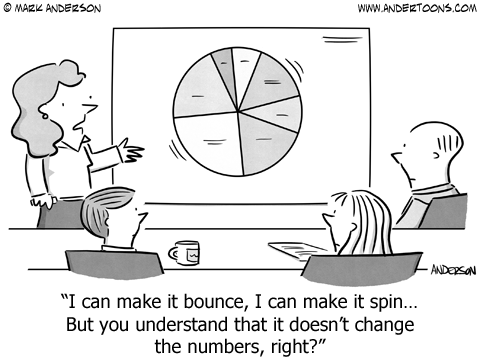
Bounce, Spin
by JOHN ADAMS •
Daily Bread
Daily Bread for 6.10.15
by JOHN ADAMS •
Good morning, Whitewater.
Midweek in Whitewater will be sunny with a high of eighty-four. Sunrise is 5:15 and sunset 8:32, for 15h 16m 54s of daytime. The moon is waning crescent with 40.8% of its visible disk illuminated.
On this day in 1692, Bridget Bishop becomes thew first person executed during the Salem witch trials:
Bishop was accused of bewitching five young women, Abigail Williams, Ann Putnam, Jr., Mercy Lewis, Mary Walcott, and Elizabeth Hubbard, on the date of her examination by the authorities, 19 April 1692.
A record was given of her trial by Cotton Mather in “The Wonders of the Invisible World.” In his book, Mather recorded that several people testified against Bishop, stating that the shape of Bishop would pinch, choke or bite them. The shape also threatened to drown one victim if she did not write her name in a certain book. During the trial, anytime Bishop would look upon one of those supposed to be tortured by her, they would be immediately struck down and only her touch would revive them. More allegations were made during the trial including that of a woman saying that the apparition of Bishop tore her coat, upon further examination her coat was found to be torn in the exact spot. Mather mentions that the truth of these many accusations carried too much suspicion, however.
William Stacy, a middle aged man in Salem Town, testified that Bishop had previously made statements to him that other people in the town considered her to be a witch. He confronted her with the allegation that she was using witchcraft to torment him, which she denied. Another local man, Samuel Shattuck, accused Bishop of bewitching his child and also of striking his son with a spade. He also testified that Bishop asked him to dye lace, which apparently was too small to be used on anything but a poppet (doll used in spell-casting). John and William Bly, father and son, testified about finding poppets in Bishop’s house and also about their pig that appeared to be bewitched, or poisoned, after a dispute with Bishop. Other victims of Bishop, as recorded by Mather, include Deliverance Hobbs, John Cook, Samuel Gray, Richard Coman, and John Louder.[citation needed]
During her sentencing, a jury of women found a third nipple upon Bishop (a sure sign of witchcraft) but upon a second examination the nipple was not found. In the end Mather states that the biggest thing that condemned Bishop was the gross amount of lying she committed in court. According to Mather, “there was little occasion to prove the witchcraft, it being evident and notorious to all beholders.” Bishop was sentenced to death and hanged.
Here’s Puzzability‘s Wednesday game:
|
This Week’s Game — June 8-12
|
|||||
|
Disappearing Acts
|
|||||
|
They’re all trick questions this week. For each day, we started with the name of a magic or mentalist act as it would be billed. We removed all the letters that appear more than once, leaving just the singly occurring letters. Each day’s clue gives the unique letters in order (with any spaces removed), along with the word lengths of the act’s name in parentheses.
|
|||||
|
Example:
|
|||||
|
AYOUDN (5,7)
|
|||||
|
Answer:
|
|||||
|
Harry Houdini
|
|||||
|
What to Submit:
|
|||||
|
Submit the name (as “Harry Houdini” in the example) for your answer.
|
|||||
|
|||||
|
Wednesday, June 10
|
|||||
|

Animals, Nature
Avalanche-Defying Rabbit
by JOHN ADAMS •
Avalanche! Run Rabbit Run! from HELIPRO on Vimeo.
City, Culture, Local Government, Marketing, Politics
Marketing Whitewater Over the Last Decade
by JOHN ADAMS •
Yesterday, I mentioned that I would share observations from a longtime resident about marketing efforts on behalf of Whitewater.
First the observations, then my remarks.
….Ten years ago I think all the rhetoric about a perfect Whitewater was meant to set the tone for those already living in and around the town. They wanted to make sure everyone believed the narrative.
The top-tier insiders already understood the game plan, which was mostly to make sure those moving into the area understood that their resources were kindly accepted, but their ideas were not. The idea was to give the impression that the place was perfect, and the perfect management team was already in place, watching over everything, and all newcomers need do was go along, support the status-quo and be happy they had arrived.
Today, I think the campaign is much quieter, and it’s more about attracting new people to the area. Same idea: it’s perfect here; just come. I hear and see less of it though. I think their energy level has decreased over time….
1. I think these observations are, generally, spot on. The more one considers how Whitewater’s insiders craft messages ostensibly for people outside the city, the more evident it becomes that these messages are effectually for people already in the city.
One comes to this conclusion in significant part because messages supposedly intended for newcomers are so awkward, smarmy, or self-serving of town notables that it’s almost impossible to believe local authors could possibly believe newcomers would be persuaded.
Whitewater is beautiful, with so much to recommend to others, but official messaging about the city is under-thought and over-done. It’s as though someone chose particular Hollywood scriptwriters as Whitewater’s public-relations team.
See, along these lines, The Failure of Marketing (and the Marketing of Failure).
2. Whitewater’s town squires – with a few striking exceptions – do look less energetic, and less creative, with each passing year. They’re running out of sham claims. (There are only so many times you can tell people you’ve built a flying car before they’ll stop believing.)
3. To the extent marketing about Whitewater is really about local self-promotion within the city of a few to many others also within the city, then it’s evidence of a myopic political culture.
One needs to look farther, and gazing outward, bring the best that one finds to local discussions. Starting and ending from what one sees close at hand is a less-advanced approach.
That narrow approach is easy, of course, so it suits the lazy, entitled, etc. Most people are very sharp; some, however, become complacent, and thereby underuse their abilities.
Years of prior error mean that even genuine efforts to speak to newcomers will be unpersuasive.
Under these conditions, insiders lose the ability not only to see what outsiders find attractive, but what outsiders find unattractive or embarrassing. This is why insiders are so often startled by outside criticism – they don’t adequately imagine what people outside their small circles think. By the time there’s outside criticism, it’s already too late.
The problem: looking only close at hand produces limited insight, and limited insight leads to looking no farther than close at hand.
Errors of this kind beget more, and perhaps even worse, errors of this kind.
Thereafter, what myopia does not conceal pride will insist is unimportant: one starts with not knowing, and later insists knowing is unimportant.
4. Acknowledging actual problems and flaws is more useful to this city and her residents than all the sugary tales one reads. See, How to Make Whitewater Hip and Prosperous.
This is why, every day, it’s better to begin anew, working hard, and living the life of a dark-horse underdog.
Film
Film: Trailer for The Martian
by JOHN ADAMS •
An exciting trailer, for what looks to be a promising film.
Daily Bread
Daily Bread for 6.9.15
by JOHN ADAMS •
Good morning, Whitewater.
We’ll have a sunny Tuesday in Whitewater with a high of eighty-six. Sunrise is 5:16 and sunset 8:32, for 15h 16m 11s of daytime. The moon is a waning gibbous with 52.1% of its visible disk illuminated.
Whitewater’s Parks & Rec Board meets at 5:30 PM this afternoon.
I’ve added a video to When Green Turns Brown, in response to a request, showing the principal discussion of Common Council on 6.2.15 regarding a public meeting about upgrades to Whitewater’s wastewater plant. The video is also available on the right sidebar of this page. (There’s a later discussion, toward the end of the 6.2.15 Council meeting, that’s worth posting and considering another time.) I’ve also updated yesterday’s post from the WGTB series to include the video.)
It’s worth mentioning again that When Green Turns Brown in a series about a small town’s digester energy project, based on the importation of waste from other cities into Whitewater. Other facility upgrades are not primarily a concern of this series, but are secondarily important only as they implicate managerial ability.
On this day in 1973, Secretariat became a Triple Crown winner by taking the Belmont Stakes. American Pharoah, of course, just won his own Triple Crown.
Here’s how the two horses ran the Belmont, with side by side video that the Wall Street Journal crafted:
On this date guitarist Les Paul (aka Lester Polfus) was born in Waukesha, Wisconsin. Best known for the guitar that bears his name, Les Paul was a country-music guitarist, jazz-pop musician and pioneer in music technology. In 1941, Paul built his first solid-body electric guitar and over the next decade he developed revolutionary engineering techniques such as close miking, echo delay, and multi-tracking. Paul was also well known for recording with his wife, singer Colleen Summers (a.k.a. Mary Ford).
Their biggest hits included “How High the Moon” (1951) and “Vaya Con Dios” (1953), both reaching #1. The recordings of Les Paul and Mary Ford were not only popular hits, they also showcased Paul’s pioneering use of overdubbing, or the layering of guitar parts one atop another. In 1952, Les Paul introduced the first eight-track tape recorder as well as the solid-body electric guitar he is known for. Built and marketed by Gibson, the Les Paul guitar has been used by such guitarists as Eric Clapton, Jeff Beck and Jimmy Page. [Source: Rock and Roll Hall of Fame]
Here’s Tuesday’s game from Puzzability:
|
This Week’s Game — June 8-12
|
|||||
|
Disappearing Acts
|
|||||
|
They’re all trick questions this week. For each day, we started with the name of a magic or mentalist act as it would be billed. We removed all the letters that appear more than once, leaving just the singly occurring letters. Each day’s clue gives the unique letters in order (with any spaces removed), along with the word lengths of the act’s name in parentheses.
|
|||||
|
Example:
|
|||||
|
AYOUDN (5,7)
|
|||||
|
Answer:
|
|||||
|
Harry Houdini
|
|||||
|
What to Submit:
|
|||||
|
Submit the name (as “Harry Houdini” in the example) for your answer.
|
|||||
|
|||||
|
Tuesday, June 9
|
|||||
|

Animation, Film, Nature
Skyglow
by JOHN ADAMS •
A simulation of the night sky without light pollution —
Business, City, Development, Economics, Economy, Health, Local Government, Planning, Politics, WGTB, WHEN GREEN TURNS BROWN
Meetings & Motivations
by JOHN ADAMS •
 Post 11 in a series.
This is series about a proposed digester energy project for Whitewater, one that would rely on importing other cities’ unwanted waste into Whitewater for processing.
A series like this is only indirectly about general wastewater upgrades, at whatever price. It’s about waste importation, and officials’ claims that importation would be clean and profitable. It’s necessarily and directly about the consequences of waste importation, fiscally, economically, environmentally, and as an expression of a city’s business and political culture.
Updated 6.9.15 with video.
Planning for a Public Meeting from John Adams on Vimeo.
During a recent Common Council meeting from June 2nd, at item C3, Common Council discussed a public presentation about upgrades to the wastewater facility. Part of that discussion implicates the digester proposal, but much concerns other matters.
During that discussion, at C3 and again later, City Manager Clapper expresses his confidence in the full project, including implicitly a plan to import waste into Whitewater (he’s not alone in that confidence, among those in attendance).
Part of City Manager Clapper’s confidence comes from a mild or positive reception that he’s received from selected stakeholder groups.
This raises two questions, not needing to be enumerated, but implicated in the entire project and this series.
First, why would anyone doubt that the response to city officials, from among selected audiences, would be other than mild or positive?
Second, does anyone at the 6.2.15 meeting actually believe that my questions are designed simply toward a political vote on the project?
Of the first, there are good examples from across America of waste-importation projects like this one, and how local government approves or rejects them. I’ve no idea what Whitewater’s various engineering firms have said about these votes (if anything), but then, it’s always better to do one’s own research. What Mr. Clapper is now seeing is common, almost predictable, in the short-term in these situations.
Of the second, I’m not interested solely in the short-term, of Whitewater getting or rejecting an importation plan. If City Manager Clapper wanted a vote on this project tomorrow, including importing as much waste into Whitewater as he could shovel, he’d receive easy political approval for that idea.
But looking at this project as a matter of approval or rejection isn’t looking at this project, it would be looking at approval or rejection of it.
Looking at an importation plan (and that’s what this series is about) has value far beyond Whitewater, as an examination of how communities consider, approve, and implement these supposedly green and supposedly energy-generating ideas. What matters most happens only after a program like this starts running.
There’s Whitewater’s importation plan, there are the longterm implications of Whitewater’s plan for Whitewater, and there are the implications of Whitewater’s plan generally, for any community, as a supposed digester-energy project.
These three aren’t the same.
I’ve a guess – and it’s just a guess – about why the obvious, long-term motivation of my series doesn’t (at least doesn’t seem) apparent to City Manager Clapper.
I’ll write about that tomorrow, using an observation a longtime resident sent me about marketing efforts for Whitewater.
Original Common Council Discussion, 6.2.15
Agenda: http://www.whitewater-wi.gov/images/stories/agendas/common_council/2015/ccagen_2015-0602.pdf
Video: https://vimeo.com/129697983
WHEN GREEN TURNS BROWN: Mondays @ 10 AM, here on FREE WHITEWATER.