FREE WHITEWATER

WEDC’s Development Gurus Fail Again

All Whitewater has heard Chancellor Telfer, City Manager Clapper, and CDA Chairman Knight tout money from the Wisconsin Economic Development Corporation as though it were manna from Heaven.  We were supposed to see this money as they meant us to see it, as blessing and providence. 

Meanwhile,  each time those officials flacked these public funds, local news outlets drooled over the receipt of this money as though a scientist had rung a buzzer

The agency they’ve touted for their own self-promotion (‘see what gifts we’ve brought you’) is a dishonest failure, taking the money of ordinary taxpayers, giving it mostly to insiders, and then proclaiming that taking as though it were sound policy. 

Yet again, one reads that the Wisconsin Economic Development Corporation has failed to keep track of taxpayer-funded loans for another entire year:

After saying repeatedly last year that they had shored up their shaky financial controls, officials at Wisconsin’s flagship jobs agency have disclosed that they again failed to follow state law and track how recipients of state loans and grants were spending tens of millions of dollars of taxpayers’ money.

The Wisconsin Economic Development Corp. sent reminders and past-due notices to award recipients in January 2014, but it did not follow up on them until more than a year later, according to a letter written by Hannah Renfro, WEDC’s top lawyer, to its board of directors late last month. The notices said recipients needed to provide schedules prepared by an accountant that detailed their expenditures.

WEDC discovered the delay in December during an internal review, said Mark Maley, a spokesman. The agency’s risk management staff “immediately began investigating to find the root of the problem and involved other staff to create a solution,” Maley said.

The staff presented “preliminary results” to agency management in late January, and 77 past-due notices regarding the expenditures were sent to 67 companies on Feb. 13, Maley said. The value of the loans and grants reflected in those notices was $43.3 million, Maley said….

See, Wisconsin Economic Development Corp. fails to track how companies used incentives: Jobs agency sent past-due notices to 67 companies.

I almost believe that if Messrs. Telfer, Knight, and Clapper had relied on an agency staffed by apes (chimpanzees, let’s say), they would have found partners at least as competent and honest as they ones they’ve found in the men and women of the WEDC. 

For prior posts @ FREE WHITEWATER on the WEDC, here’s a category link.

Daily Bread for 3.9.15

Good morning, Whitewater.

Our first second week of March begins with sunny skies and a high of forty-six. Sunrise is 7:15 and sunset 6:54, for 11h 38m 36s of daytime. The moon is a waning gibbous with 88.3% of its visible disk illuminated. (Update: It’s the second week of the month, of course. Too silly that I’ve let a whole week slip by.)

Whitewater’s Planning and Architectural Commission meets tonight at 6:30 PM.

On this day in 1862, the second day of a two-day naval battle near Hampton Roads raged:

The Battle of Hampton Roads, often referred to as either the Battle of the Monitor and Merrimack (or Virginia) or the Battle of Ironclads, was the most noted and arguably most important naval battle of the American Civil War from the standpoint of the development of navies. It was fought over two days, March 8–9, 1862, in Hampton Roads, a roadstead in Virginia where the Elizabeth and Nansemond Rivers meet the James River just before it enters Chesapeake Bay adjacent to the city of Norfolk. The battle was a part of the effort of the Confederacy to break the Union blockade, which had cut off Virginia’s largest cities, Norfolk and Richmond, from international trade.[1][2]

The major significance of the battle is that it was the first meeting in combat of ironclad warships, i.e. the USS Monitor and the CSS Virginia. The Confederate fleet consisted of the ironclad ram Virginia (built from the remnants of the USS Merrimack) and several supporting vessels. On the first day of battle, they were opposed by several conventional, wooden-hulled ships of the Union Navy. On that day, Virginia was able to destroy two ships of the Federal flotilla, USS Congress and USS Cumberland, and was about to attack a third, USS Minnesota, which had run aground. However, the action was halted by darkness and falling tide, so Virginia retired to take care of her few wounded — which included her captain, Flag Officer Franklin Buchanan — and repair her minimal battle damage.[3]

Determined to complete the destruction of the Minnesota, Catesby ap Roger Jones, acting as captain in Buchanan’s absence, returned the ship to the fray the next morning, March 9. During the night, however, the ironclad Monitor had arrived and had taken a position to defend Minnesota. When Virginia approached, Monitor intercepted her. The two ironclads fought for about three hours, with neither being able to inflict significant damage on the other. The duel ended indecisively, Virginia returning to her home at the Gosport Navy Yard for repairs and strengthening, and Monitor to her station defending Minnesota. The ships did not fight again, and the blockade remained in place.[4]

The battle received worldwide attention, and it had immediate effects on navies around the world. The preeminent naval powers, Great Britain and France, halted further construction of wooden-hulled ships, and others followed suit. A new type of warship was produced, the monitor, based on the principle of the original. The use of a small number of very heavy guns, mounted so that they could fire in all directions was first demonstrated by Monitor but soon became standard in warships of all types. Shipbuilders also incorporated rams into the designs of warship hulls for the rest of the century.[5]

Puzzability starts a new weekly series entitled, Miss Taken:

This Week’s Game — March 9-13
Miss Taken
Who are all the missing misses? For each day this week, we started with a name or word that can follow “Miss,” like “Congeniality” or “Hannigan.” Then we hid it in a sentence, with spaces added as necessary. The answer spans at least two words in the sentence and starts and ends in the middle of words. The day’s clue gives the sentence with a girl in place of the answer.
Example:
I think the creator of this strawberry rhubarb pie recimissieved the utmost in baking perfection.
Answer:
Peach (recipe achieved)
What to Submit:
Submit the name or word (as “Peach” in the example) for your answer.
Monday, March 9
The tablecloth outside on the veranmissellow, but I believe I’ll replace it with a green one for the afternoon social.

Daily Bread for 3.8.15

Good morning, Whitewater.

Sunday in the Whippet City will be partly sunny with a high of forty. Sunrise is 7:17 and sunset 6:53, for 11h 35m 42s of daytime. The moon is a waning gibbous with 93.2% of its visible disk illuminated.

Be_Your_Own_Goddess_art_bus_(1967_VW_Kombi)_IMG_0136 VWcampervan

Art Bus and Camper Bus via Wikipedia.

On Friday, the FW poll asked about a motorist in Pennsylvania accused of ordering automobile insurance after an accident. Over eighty percent of poll respondents thought that Michael Traveny committed an obvious fraud, with under twenty percent feeling that Traveny was simply confused about how auto insurance is meant to work.

On this day in 1950, Volkswagen begins production of the Volkswagen Type 2, known popularly as the VW Bus:

The concept for the Type 2 is credited to Dutch Volkswagen importer Ben Pon. (It has similarities in concept to the 1920s Rumpler Tropfenwagen and 1930s Dymaxion car by Buckminster Fuller, neither of which reached production.) Pon visited Wolfsburg in 1946, intending to purchase Type 1s for import to the Netherlands, where he saw an improvised parts-mover and realized something better was possible using the stock Type 1 pan.[12] He first sketched the van in a doodle dated April 23, 1947,[13] proposing a payload of 690 kg (1,520 lb) and placing the driver at the very front.[8] Production would have to wait, however, as the factory was at capacity producing the Type 1.[8]

When capacity freed up, a prototype known internally as the Type 29 was produced in a short three months.[13] The stock Type 1 pan proved to be too weak so the prototype used a ladder chassis with unit body construction.[8] Coincidentally the wheelbase was the same as the Type 1’s.[8] Engineers reused the reduction gear from the Type 81, enabling the 1.5 ton van to use a 25 hp (19 kW) flat four engine.[8]

Although the aerodynamics of the first prototypes were poor (with an initial drag coefficient of Cd=0.75),[8] engineers used the wind tunnel at the Technical University of Braunschweig to optimize the design. Simple changes such as splitting the windshield and roofline into a “vee” helped the production Type 2 achieve Cd=0.44, exceeding the Type 1’s Cd=0.48.[14] Volkswagen’s new chief executive officer Heinz Nordhoff (appointed 1 January 1948)[15] approved the van for production on 19 May 1949[8] and the first production model, now designated Type 2,[14] rolled off the assembly line to debut 12 November.[8] Only two models were offered: the Kombi (with two side windows and middle and rear seats that were easily removable by one person),[14] and the Commercial.[8] The Microbus was added in May 1950,[8] joined by the Deluxe Microbus in June 1951.[8] In all 9,541 Type 2s were produced in their first year of production.[14]….

On this day in 1862, Wisconsinites ready to defend the Union:

1862 – (Civil War) 1st Wisconsin Cavalry Mustered In
The 1st Wisconsin Cavalry mustered in at Camp Harvey, Kenosha, and left for for St. Louis, Missouri, a week later. It would go on to fight in the Battle of Chickamauga in 1863 and in the Atlanta Campaign the following year. It also helped capture Confederate President Jefferson Davis on May 10, 1865. The 1st Cavalry lost about half its men in three years: six officers and 67 enlisted men were killed in combat and seven officers and 321 enlisted men died from disease.

Daily Bread for 3.7.15

Good morning, Whitewater.

We’ll have patchy fog in town today, with a high of thirty-nine. Sunrise is 6:19 and sunset 5:52, for 11h 32m 54s of daytime.

On this day in 1876, Alexander Graham Bell patents the telephone:

Bell’s patent 174,465, was issued to Bell on March 7, 1876, by the U.S. Patent Office. Bell’s patent covered “the method of, and apparatus for, transmitting vocal or other sounds telegraphically … by causing electrical undulations, similar in form to the vibrations of the air accompanying the said vocal or other sound”[77] [N 17] Bell returned to Boston the same day and the next day resumed work, drawing in his notebook a diagram similar to that in [Elisha] Gray’s patent caveat.

On March 10, 1876, three days after his patent was issued, Bell succeeded in getting his telephone to work, using a liquid transmitter similar to Gray’s design. Vibration of the diaphragm caused a needle to vibrate in the water, varying the electrical resistance in the circuit. When Bell spoke the famous sentence “Mr. Watson—Come here—I want to see you” into the liquid transmitter,[78] Watson, listening at the receiving end in an adjoining room, heard the words clearly.[79]

Although Bell was, and still is, accused of stealing the telephone from Gray,[80] Bell used Gray’s water transmitter design only after Bell’s patent had been granted, and only as a proof of concept scientific experiment,[81] to prove to his own satisfaction that intelligible “articulate speech” (Bell’s words) could be electrically transmitted.[82] After March 1876, Bell focused on improving the electromagnetic telephone and never used Gray’s liquid transmitter in public demonstrations or commercial use.[83]

On this day in 1811, a noted naturalist is born:

1811 – Increase Allen Lapham Born
A pioneer naturalist and noted author, Increase Allen Lapham was instrumental in establishing the Milwaukee public high school program. He was one of the founders of Milwaukee Female Seminary in 1848 and served as president of the State Historical Society from 1862 to 1871. Lapham came to Milwaukee in 1836 to serve as chief engineer and secretary for the Rock River Canal Company. He was one of the first authors and map makers in Wisconsin. Among approximately 80 titles in his bibliography, most notable was his Antiquities of Wisconsin, the first book length investigation of Wisconsin’s Indian mounds. Lapham also served as chief geologist for Wisconsin from 1873 to 1875. He founded many educational, civic, and scientific organizations in Wisconsin. You can see many of his writings, letters, maps, and drawings, at Turning Points in Wisconsin History by typing “Lapham” into the search box. [Source: Dictionary of Wisconsin Biography, SHSW 1960, pg. 221]

Friday Poll: When to Buy Auto Insurance


Was a motorist committing an obvious fraud or simply confused about how accident insurance policies work?

In Pennsylvania, that state’s attorney general accuses motorist Michael Traveny of calling from an accident scene to buy auto insurance:

An Altoona man faces insurance fraud charges after he allegedly called to buy insurance from the scene of an accident that he was involved in.

The Pennsylvania State Attorney General’s Office contends Michael S. Traveny, 33, of 402 Sixth St., wrecked into the back of another driver at a red light at the intersection of Route 764 and Maple Hollow Road in Duncansville on Aug. 21.

Traveny is accused of then calling Safe Auto Insurance from the scene of the accident to buy insurance, then submitting a claim where Traveny lied about what time the accident occurred to make the insurance company believe he had bought insurance before he wrecked, according to investigators with the Attorney General’s insurance fraud section.

See, AG: Man tried buying insurance at scene of crash @ Altoona Mirror.

Daily Bread for 3.6.15

Good morning, Whitewater.

We’ll have mostly sunny skies and a high of twenty-eight today. Sunrise is 6:20 and sunset is 5:50, for 11h 29m 59s of daytime. It’s a full moon.

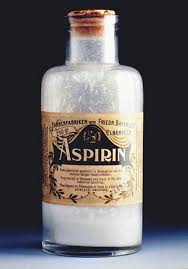
imgres

On this day in 1899, Bayer patents aspirin:

…the Imperial Patent Office in Berlin registers Aspirin, the brand name for acetylsalicylic acid, on behalf of the German pharmaceutical company Friedrich Bayer & Co.

Now the most common drug in household medicine cabinets, acetylsalicylic acid was originally made from a chemical found in the bark of willow trees. In its primitive form, the active ingredient, salicin, was used for centuries in folk medicine, beginning in ancient Greece when Hippocrates used it to relieve pain and fever. Known to doctors since the mid-19th century, it was used sparingly due to its unpleasant taste and tendency to damage the stomach.

In 1897, Bayer employee Felix Hoffman found a way to create a stable form of the drug that was easier and more pleasant to take. (Some evidence shows that Hoffman’s work was really done by a Jewish chemist, Arthur Eichengrun, whose contributions were covered up during the Nazi era.) After obtaining the patent rights, Bayer began distributing aspirin in powder form to physicians to give to their patients one gram at a time. The brand name came from “a” for acetyl, “spir” from the spirea plant (a source of salicin) and the suffix “in,” commonly used for medications. It quickly became the number-one drug worldwide.

Aspirin was made available in tablet form and without a prescription in 1915. Two years later, when Bayer’s patent expired during the First World War, the company lost the trademark rights to aspirin in various countries. After the United States entered the war against Germany in April 1917, the Alien Property Custodian, a government agency that administers foreign property, seized Bayer’s U.S. assets. Two years later, the Bayer company name and trademarks for the United States and Canada were auctioned off and purchased by Sterling Products Company, later Sterling Winthrop, for $5.3 million.

Bayer became part of IG Farben, the conglomerate of German chemical industries that formed the financial heart of the Nazi regime. After World War II, the Allies split apart IG Farben, and Bayer again emerged as an individual company. Its purchase of Miles Laboratories in 1978 gave it a product line including Alka-Seltzer and Flintstones and One-A-Day Vitamins. In 1994, Bayer bought Sterling Winthrop’s over-the-counter business, gaining back rights to the Bayer name and logo and allowing the company once again to profit from American sales of its most famous product.

Puzzability‘s Vegging In series ends today with Friday’s game:

This Week’s Game — March 2-6
Vegging In
We’re dishing up a healthy serving every day this week. For each day, we’ve taken the name of a vegetable, added a letter, and scrambled all the letters to get a new word. The answer phrase, described by each day’s clue, is the vegetable followed by the new word.
Example:
Deep-dish meal with a vegetable base
Answer:
Escarole casserole
What to Submit:
Submit the phrase, with the vegetable first (as “Escarole casserole” in the example), for your answer.
Friday, March 6
Classic two-story houses for a vegetable

If Universities Want Federal Money…

If universities want federal money (and they want as much as they can get), then it’s wrong for them to shirk federal legal standards for reporting assault and for proper treatment of those alleging assault. 

(Make no mistake: I’d contend that universities have a duty to manage campuses well and fairly even if there were no federal laws.  Ethical obligations of this kind are prior to law, and exist independently of it.)

Here, though, there’s a despicable hypocrisy: university officials gulp as much federal money as they can get, but of federal procedural standards for victims there may be not even a drop of support.

This libertarian has argued against any number of federal, state, or local governmental intrusions; I’ve argued against as many federal, state, and local expenditures. 

It’s impossible to respect university administrators who seek federal money while simultaneously concealing & mishandling assault claims, or trivializing federal or state standards about assault reporting.   

Administrators of that ilk want to promote themselves at taxpayers’ expense, and then hide their own misconduct from any and all. 

No, and no again: no one’s entitled to that. 

UW-Madison Now Joins UW-Whitewater Under Federal Title IX Investigation

In the Wisconsin State Journal this morning, one reads that a second Wisconsin school is under investigation for its handling of sexual assault complaints.  Dan Simmons writes that

UW-Madison is now the second university in the state to be included in a growing probe of possible violations of federal law over the handling of sexual violence and harassment complaints, according to the U.S. Department of Education.

The investigation now targets 101 schools, including UW-Madison and UW-Whitewater. The initial investigation was launched last May and included 55 schools, Whitewater among them.

See, in full, UW-Madison under federal investigation for handling of sexual violence complaints @ State Journal.

Investigations of this sort can involve either how a university reports incidents of sexual assault, or how it treats those who are trying to report allegations of sexual assault. 

One should be clear: federal law does not mandate – needless to say – that there will be no crimes on campus.  Federal law simply requires that, following allegations of sexual assault, universities that receive federal money will process complaints thoroughly and treat those involved in complaints fairly.

One would hope for campuses without violence; these present laws simply require that institutions taking federal public money should address allegations of assault to the high standards of which America is capable. 

There are thousands of four-year colleges in America; each one should be able to meet existing reporting and procedural requirements. 

That’s not asking too much; it’s asking only for the fundamental fairness and thoroughness our society deserves. 

Daily Bread for 3.5.15

Good morning, Whitewater.

Thursday in Whitewater will be sunny with a high of thirteen. Sunrise is 6:22 and sunset is 5:49, for 11h 27m 05s of daytime. We’ve a full moon today.

Whitewater’s Landmarks Commission meets today at 6:30 PM.

Google has a doodle today in honor of Momofuku Ando, inventor of instant noodles:

On this day 1946, Winston Churchill delivers his ‘Iron Curtain’ Speech at Westminster College in Fulton, Missouri. (Churchill had entitled the speech Sinews of Peace, but it’s his reference to an iron curtain that stuck.) The New York Times reported on the speech:

Fulton, Mo., March 5 – A fraternal association between the British Empire and the United States was advocated here today by Winston Churchill to stem “the expansive and proselytizing tendencies” of the Soviet Union.

Introduced by President Truman at Westminster College, Great Britain’s wartime Prime Minister asserted that a mere balance of power in the world today would be too narrow a margin and would only offer “temptations to a trial of strength.”

On the contrary, he added that the English-speaking peoples must maintain an overwhelming preponderance of power on their side until “the highroads of the future will be clear, not only for our time but for a century to come.”

Says Curtain Divides Europe

Mr. Churchill painted a dark picture of post-war Europe, on which “an iron curtain has descended across the Continent” from Stettin in the Baltic to Trieste in the Adriatic.

Warsaw, Berlin, Prague, Vienna, Budapest, Belgrade, Sofia and Bucharest are all being subjected to increasing pressure and control from Moscow, he said, adding:

“This is certainly not the liberated Europe we fought to build up. Nor is it, one which contains the essentials of permanent peace.”

See, full text of Churchill’s speech to Westminster College.

On this day in 1935, a silver magnate dies:

1935 – Elizabeth “Baby Doe” McCourt Dies
On this date, the controversial wife of Horace (H.A.W.) Tabor, silver mine owner during the 19th century Colorado gold and silver booms, died. Born Elizabeth Bondeul McCourt in Oshkosh, Wisconsin in 1854, she was first married to Harvey Doe, Jr. of Oshkosh but in 1880 divorced him on the grounds of adultery. She then moved to Colorado where she married Leadville’s silver king, Horace Tabor. Despite great wealth, she died penniless and alone in Leadville: she froze to death in a cabin near the famous Matchless mine, which in its heyday had produced $10,000 worth of silver ore per day. Elizabeth and Horace are the subject of an American opera, “The Ballad of Baby Doe”….

Here’s today’s game in Puzzability‘s Vegging in series:

This Week’s Game — March 2-6
Vegging In
We’re dishing up a healthy serving every day this week. For each day, we’ve taken the name of a vegetable, added a letter, and scrambled all the letters to get a new word. The answer phrase, described by each day’s clue, is the vegetable followed by the new word.
Example:
Deep-dish meal with a vegetable base
Answer:
Escarole casserole
What to Submit:
Submit the phrase, with the vegetable first (as “Escarole casserole” in the example), for your answer.
Thursday, March 5
One of a group of 17th-century Englishmen who were strictly religious about their choice of vegetable