FREE WHITEWATER

Daily Bread for 9.16.14

Good morning, Whitewater.

Tuesday will be sunny with a high of sixty-five.

Whitewater’s Alcohol Licensing Committee meets at 5:45 PM, and Common Council meets thereafter at 6:30 PM.

On this day in 1620, a ship leaves from England:

The Mayflower sails from Plymouth, England, bound for the New World with 102 passengers. The ship was headed for Virginia, where the colonists–half religious dissenters and half entrepreneurs–had been authorized to settle by the British crown. However, stormy weather and navigational errors forced the Mayflower off course, and on November 21 the “Pilgrims” reached Massachusetts, where they founded the first permanent European settlement in New England in late December.

Thirty-five of the Pilgrims were members of the radical English Separatist Church, who traveled to America to escape the jurisdiction of the Church of England, which they found corrupt. Ten years earlier, English persecution had led a group of Separatists to flee to Holland in search of religious freedom. However, many were dissatisfied with economic opportunities in the Netherlands, and under the direction of William Bradford they decided to immigrate to Virginia, where an English colony had been founded at Jamestown in 1607.

Google-a-Day asks a question about art:

What panel painting, with inscriptions from Martin Luther’s translation of the Bible, did Durer present to Nuremberg town officials?

How Rural Wisconsin Campuses Coerce Students into Becoming Drug Informants

Update: Here’s a post that I originally published this morning at a sister site, Daily Adams.

The first paragraph is a description of the city for readers who may not be familiar with Whitewater (so it will sound a bit awkward to those who live in town).

Thanks much to a sharp reader who pointed out that the post’s description of Whitewater needed an explanation for readers already familiar with our city – this post was intended for an audience both inside and outside the city (but I didn’t make that clear enough, initially).

Tomorrow, I will have a follow-up post on this topic, at FREE WHITEWATER, with some local political implications of the Wisconsin Center for Investigative Journalism’s stories about student drug informants.

Here’s the original post —

I live and blog from Whitewater, Wisconsin, a small rural town with a UW System campus. The city proper has a population of just under fifteen-thousand, and the campus is easily the largest institution in Whitewater (with about twelve-thousand students).  At sister site FREE WHITEWATER, I write about my town’s politics, economy, and culture. 

Over the years, I’ve criticized the Whitewater Police Department’s use of confidential informants: young people bear the risks of middle-aged drug warriors’ ambitions.  See, from 2010, about the City of Whitewater’s former police chief, Jim Coan, The Utter Foolishness of Jim Coan’s Prohibition

It’s with interest that I’ve awaited a story about the use of confidential college-student informants at UW-Whitewater.  There’s been talk about the story, and it’s now out, from the Wisconsin Center for Investigative Journalism. 

Sean Kirkby’s detailed story, Undercover students used in drug busts at some University of Wisconsin campuses, is thorough in its coverage, revealing in its reporting, and all of it well-written. 

I’d urge readers to review the entire story, as well as a companion story, Drug crime penalties are ‘huge’ for students.

A few highlights, below:

Use of informants is favored in Whitewater:

A member of the Walworth County Drug Unit, which arrested Butler, declined comment on whether the unit still uses students as informants. But UW-Whitewater Police Chief Matt Kiederlen says his department has used about 20 students as confidential informants during the past two years….

In all, the Wisconsin Center for Investigative Journalism communicated with 10 current and former UW-Whitewater students who were arrested by either the UW-Whitewater police or the Walworth County Drug Unit for selling drugs to confidential informants or possessing marijuana.

Nine were asked to become an informant. All but the unnamed student described earlier refused either because of safety concerns, not knowing other dealers or not wanting to turn in their friends.

A contradictory standard on students’ decision-making.  UW-Whitewater Police Chief Matt Kiederlen holds out a standard of decision-making that his own campus’s policies refute.  Here’s Kiederlen on students as adults:

“They’re no different from anyone else,” Kiederlen says. “Mom and dad tend to feel like they’re still in school, but the reality is that they’re adults and they’re making adult decisions. And there are adult consequences.”

Of course, they are still in school; someone should ask Kiederlen to look out his window. 

It’s obvious – from Kirkby’s story – that UW-Whitewater does treat students differently from older adults making adult decisions, as it uses game-like playing cards to explain policies to students:

Needless to say, that’s not a common way for middle-aged adults to receive information. 

Let’s be clear: Part of Kiederlen’s career rests on a middle-aged man intimidating much younger people into compliance with his drug-enforcement plans.  He’s not a middle-aged man among middle-aged men, working in an environment of equals. 

Kiederlen’s enforcement involves pressuring much younger and less experienced people. 

There’s risk in middle-aged men coercing much younger people into drug snares:

While becoming a confidential informant may help students avoid consequences, undercover operations can turn deadly.

Rachel Hoffman, a 23-year-old Florida State University graduate, was pressured in 2008 to be an informant after Tallahassee, Florida, police searched her apartment and found a small amount of marijuana and ecstasy. But the buy turned out to be an armed robbery, and the robbers killed Hoffman after discovering her recording device, says Lance Block, a Florida attorney.

Block, who represented Hoffman’s parents in a lawsuit following their daughter’s murder, authored a 2009 Florida law that regulates informant use, a practice he says contradicts law enforcement’s purpose.

“The police are supposed to protect us from harm, not subject us to harm,” Block says. “And when law enforcement intentionally expose untrained civilians into these highly dangerous operations, they’re not protecting them from harm … It’s one thing to get information from people secretly and confidentially. It’s another thing to throw them to the wolves, like they did with Rachel.”

If, after all, Kiederlen thinks he’s in the same adult position as, for example, a twenty-three-year-old woman, then he’s either obtuse or confused. 

‘Unknowns’.  Here’s Kiederlen on the risks:

“They [informants] are set up in such a way that if something is bad, they know what they can do to make themselves as safe as possible,” Kiederlen says. “We’re dealing with the drug world. It is unpredictable. We try with everything we have to predict putting them in the safest position we can, but there are always those unknowns.”

These ‘drug world’ risks are, after all, risks that Kiederlen and his force recreate.  It’s ‘safe as possible’ with the self-exculpatory, almost blithe observation that ‘there are always those unknowns.’

If Kiederlen wanted to sound shallow and indifferent, he’s succeeded. 

Kiederlen’s Presentation.  To get a sense of how Chief Kiederlen presents himself, embedded below is a clip from a City of Whitewater Council meeting where he spoke about his ‘personal philosophy.’ 

Readers will find this portion of the meeting from 7:10  to 13:00 on the video below. (UW-Whitewater Chancellor Richard Telfer introduces Kiederlen from 7:10 to 8:00, and Chief Kiederlen speaks from 8:00 to 13:00.)


Common Council Meeting 05/21/2013
from Whitewater Community TV
on Vimeo

Watching the segment yet again, I’m struck by how tense Chief Kiederlen’s presentation is; his manner appears about as tightly wound as anyone who’s spoken at a town meeting in years. 

And here we are, in rural America, where the drug war slowly, but too slowly, sputters out for lack of sense and reflection. 

Posted earlier @ Daily Adams.

Daily Bread for 9.15.14

Good morning, Whitewater.

Monday in Whitewater will be rainy with a high of fifty-six.

Whitewater’s Planning Commission and Community Development Authority meet jointly tonight at 6:30 PM.

2 In last Friday’s FW poll, readers could vote on whether they’d try a black hamburger from Burger King Japan. A majority said they’d decline the offer: 61.9% said no thanks, with 38.1% saying they’d try one.

On this day in 1950, American Marines land at Inchon:

During the Korean War, U.S. Marines land at Inchon on the west coast of Korea, 100 miles south of the 38th parallel and just 25 miles from Seoul. The location had been criticized as too risky, but U.N. Supreme Commander Douglas MacArthur insisted on carrying out the landing. By the early evening, the Marines had overcome moderate resistance and secured Inchon. The brilliant landing cut the North Korean forces in two, and the U.S.-led U.N. force pushed inland to recapture Seoul, the South Korean capital that had fallen to the communists in June. Allied forces then converged from the north and the south, devastating the North Korean army and taking 125,000 enemy troops prisoner.

On this day in 1832, the United States makes a treaty with the Ho-Chunk:

On this date a a treaty was signed between the Ho-Chunk and the United States that stipulated that the Ho-Chunk cede lands lying to the south and east of the Wisconsin river as well as lands around the Fox river of Green Bay. [Source:Oklahoma State University Library]

Google-a-Day asks a football question:

What NFL quarterback threw for over 3000 yards and got 21 touchdowns in the 2010 season, but still did not make it into the “Hall of Fame”?

Daily Bread for 9.14.14

Good morning, Whitewater.

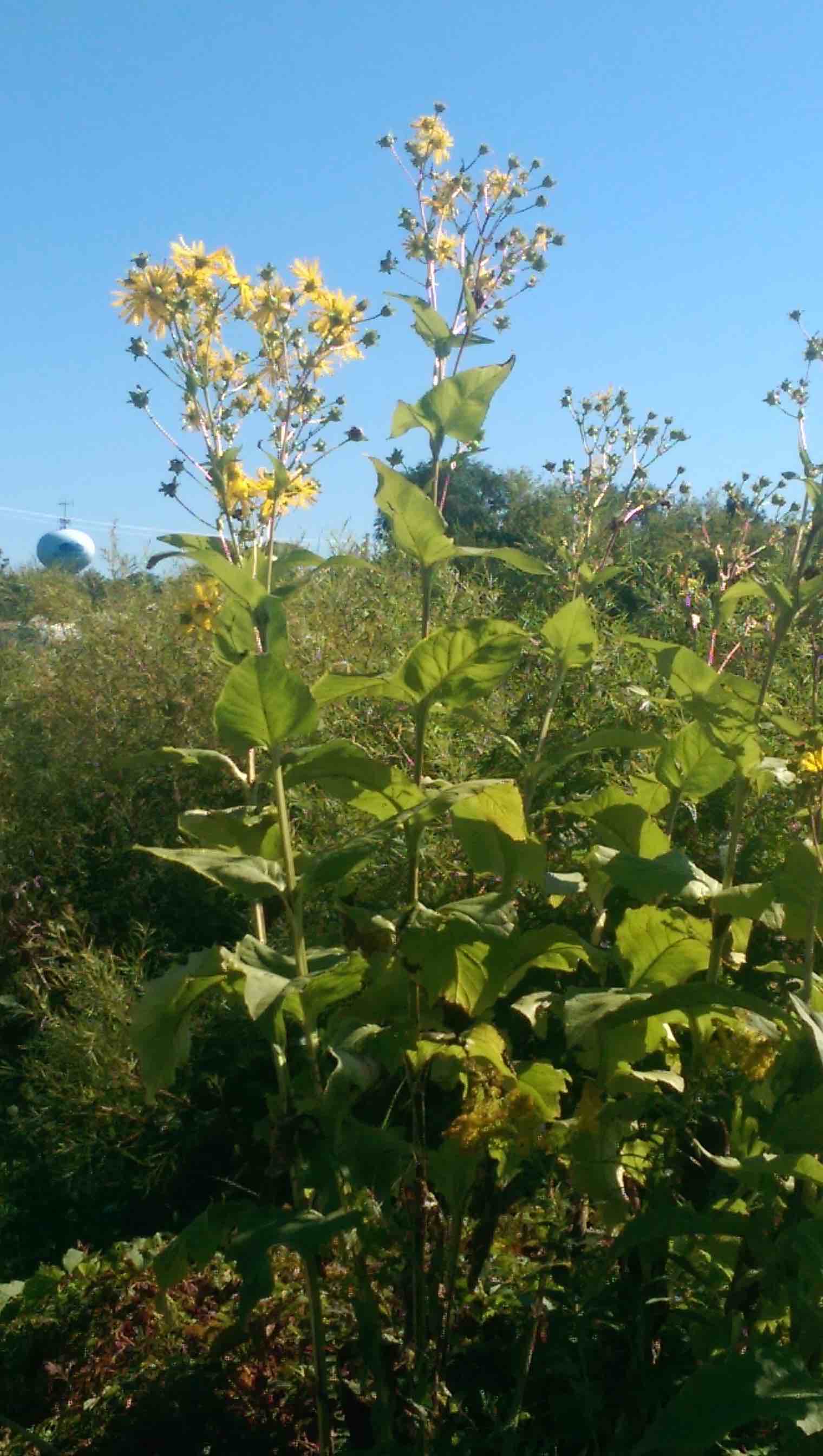
imag0104

Sunday in town will be sunny with a high of sixty-five.

On this day in 1812, Napoleon captures Moscow, but doesn’t find what he expected:

On September 14, 1812, Napoleon moved into the empty city that was stripped of all supplies by its governor, Feodor Rostopchin. Relying on classical rules of warfare aiming at capturing the enemy’s capital (even though Saint Petersburg was the political capital at that time, Moscow was the spiritual capital of Russia), Napoleon had expected Tsar Alexander I to offer his capitulation at the Poklonnaya Hill but the Russian command did not think of surrendering.

As Napoleon prepared to enter Moscow he was surprised to have received no delegation from the city. At the approach of a victorious general, the civil authorities customarily presented themselves at the gates of the city with the keys to the city in an attempt to safeguard the population and their property. As nobody received Napoleon he sent his aides into the city, seeking out officials with whom the arrangements for the occupation could be made. When none could be found, it became clear that the Russians had left the city unconditionally.[62]

In a normal surrender, the city officials would be forced to find billets and make arrangements for the feeding of the soldiers, but the situation caused a free-for-all in which every man was forced to find lodgings and sustenance for himself. Napoleon was secretly disappointed by the lack of custom as he felt it robbed him of a traditional victory over the Russians, especially in taking such a historically significant city.[62]

Before the order was received to evacuate Moscow, the city had a population of approximately 270,000 people. As much of the population pulled out, the remainder were burning or robbing the remaining stores of food, depriving the French of their use. As Napoleon entered the Kremlin, there still remained one-third of the original population, mainly consisting of foreign traders, servants and people who were unable or unwilling to flee. These, including the several hundred strong French colony, attempted to avoid the troops.

On this day in 1875, a Wisconsin scientist dies in the surroundings he studied and loved:

1875 – Increase Lapham Dies While Fishing
On this date Increase Lapham died of a heart attack while fishing in Oconomowoc. Lapham served Wisconsin as a geologist, meteorologist, historian, archivist, anthropologist, and scientist.He helped found the State Historical Society and served on its board for 22 years. He helped establish the National Weather Service and worked to preserve Native American burial mounds, as well as the forests and prairies of Wisconsin. He also helped establish hospitals for the blind, deaf, and mentally ill in Milwaukee and to start two women’s colleges, Carroll College and Milwaukee-Downer College. [Source: Badger Saints and Sinners; by Fred L. Holmes, p.330-344]

Daily Bread for 9.13.14

Good morning, Whitewater.

Saturday will be sunny and mild, with a high of fifty-nine. Sunrise today is 6:33 AM and sunset 7:08 PM. The moon is in a waning gibbous phase with 74% of its visible disk illuminated.

MV5BMTY3MTI5NjQ4Nl5BMl5BanBnXkFtZTcwOTU1OTU0OQ@@._V1_SY317_CR0,0,214,317_AL_

Pacific Rim was a big-budget film about building giant robots to fight giant monsters – kaiju – that were emerging from the ocean floor and terrorizing coastal communities. It was good fun, but then who’d imagine that kaiju might be (or once have been) real?

Over at the Washington Post, there’s an article about a now-extinct reptile, Spinosaurus, that might have been called a kaiju had anyone seen a living one in our time:

On this weekend in 1814, Francis Scott Key pens the words that later become America’s national anthem:

“The Star-Spangled Banner” is the national anthem of the United States. The lyrics come from “Defence of Fort M’Henry”,[1] a poem written in 1814 by the 35-year-old lawyer and amateur poet Francis Scott Key after witnessing the bombardment of Fort McHenry by British ships of the Royal Navy in the Chesapeake Bay during the Battle of Fort McHenry in the War of 1812.

The poem was set to the tune of a popular British song written by John Stafford Smith for the Anacreontic Society, a men’s social club in London. “The Anacreontic Song” (or “To Anacreon in Heaven”), with various lyrics, was already popular in the United States. Set to Key’s poem and renamed “The Star-Spangled Banner”, it would soon become a well-known American patriotic song. With a range of one octave and one fifth (a semitone more than an octave and a half), it is known for being difficult to sing. Although the poem has four stanzas, only the first is commonly sung today.

“The Star-Spangled Banner” was recognized for official use by the Navy in 1889, and by President Woodrow Wilson in 1916, and was made the national anthem by a congressional resolution on March 3, 1931 (46 Stat. 1508, codified at 36 U.S.C. § 301), which was signed by President Herbert Hoover.

Daily Bread for 9.12.14

Good morning, Whitewater.

Friday brings a probability of light rain with a high of fifty-one to the Whippet City.

On this day in 1940, French teenagers discover paleolithic drawings:

Lascaux2
Cave painting of a dun horse at Lascaux. Via Wikipedia.

Lascaux (Lascaux Caves)…is the setting of a complex of caves in southwestern France famous for its Paleolithic cave paintings. The original caves are located near the village of Montignac, in the department of Dordogne. They contain some of the best-known Upper Paleolithic art. These paintings are estimated to be 17,300 years old.[3][4] They primarily consist of images of large animals, most of which are known from fossil evidence to have lived in the area at the time. In 1979, Lascaux was added to the UNESCO World Heritage Sites list along with other prehistoric sites in the Vézère valley.[5]

==History since rediscovery==. On 12 September 1940, the entrance to Lascaux Cave was discovered by 18-year-old Marcel Ravidat. Ravidat returned to the scene with three friends, Jacques Marsal, Georges Agnel, and Simon Coencas, and entered the cave via a long shaft. The teenagers discovered that the cave walls were covered with depictions of animals.[6][7] The cave complex was opened to the public in 1948.[8] By 1955, the carbon dioxide, heat, humidity, and other contaminants produced by 1,200 visitors per day had visibly damaged the paintings and introduced lichen on the walls. The cave was closed to the public in 1963 to preserve the art. After the cave was closed, the paintings were restored to their original state and were monitored daily. Rooms in the cave include the Hall of the Bulls, the Passageway, the Shaft, the Nave, the Apse, and the Chamber of Felines.

Lascaux II, a replica of the Great Hall of the Bulls and the Painted Gallery located 200 meters away from the original, was opened in 1983 so that visitors may view the painted scenes without harming the originals.[7] Reproductions of other Lascaux artwork can be seen at the Centre of Prehistoric Art at Le Thot, France.

Since 1998 the cave has been beset with a fungus, variously blamed on a new air conditioning system that was installed in the caves, the use of high-powered lights, and the presence of too many visitors.[9] As of 2008, the cave contained black mold which scientists were and still are trying to keep away from the paintings. In January 2008, authorities closed the cave for three months even to scientists and preservationists. A single individual was allowed to enter the cave for 20 minutes once a week to monitor climatic conditions. Now only a few scientific experts are allowed to work inside the cave and just for a few days a month but the efforts to remove the mold have taken a toll, leaving dark patches and damaging the pigments on the walls.[10]

On 9.12.1892, UW-Madison adds some new schools:

1892 – UW-Madison Schools Open
On this date the School of Economics, Political Science and History at UW-Madison opened under the leadership of Professor Richard T. Ely. [Source: University of Wisconsin-Madison]

Google-a-Day asks about an author’s sustenance:

Who, along with his wife, gave Harper Lee the gift of a year’s wages so that she could quit her job “to write whatever you please”?

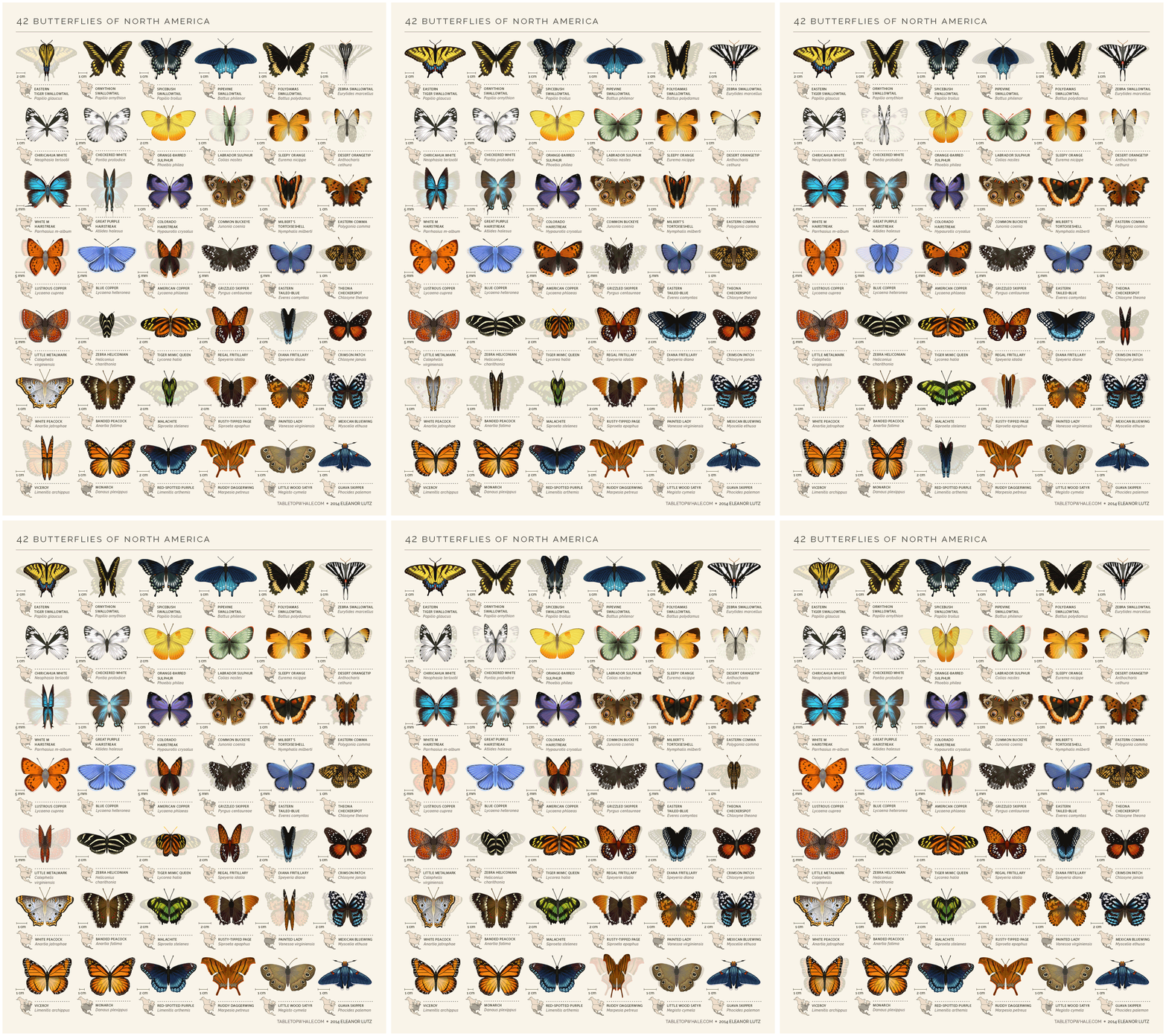
An Animated Chart of 42 North American Butterflies

08-27-14

From Eleanor Lutz @ Tabletop Whale, a beautiful, animated chart. Here’s how Ms. Lutz describes her creation:

I checked out six butterfly field guides from the library and picked out some of the species I thought were the most unique and beautiful.

It’s meant as a chart of decorative species illustrations rather than an educational infographic. So it doesn’t have as much information as my other posts, but I did draw everything as true to life as I could.

Sources
Brock JP and Kaufman K. 2003 Butterflies of North America Singapore: Houghton Mifflin Company

Readers who enjoy the animation can also get printed, poster versions of the butterfly chart, and other illustrations and infographics @ Artsider.

(Hat-tip to i09 for the link to Eleanor Lutz’s art.)