FREE WHITEWATER

The Middle Time

While Whitewater is in a time of transition, from one way of life to a more diverse and prosperous one, she is only at the ‘end of the beginning’ of that transition.  

It’s a middle time now, and if one were to think of this as chess, one would say we’re in the middle game.  As with chess, the boundaries of that middle time are often nebulous, and are hard to define.  

We may say that the beginning or opening is now over, as social media have pushed Whitewater from her former oligopoly of published information.  A fawning professional press that coddled the mediocre and dishonest no longer counts for much; there are dozens of media by which information in small towns may circulate.

The creation of a status-quo news website in Whitewater has been a mixed success. It offers much in the way of local, apolitical announcements, but any pretensions to political influence are undercut by substandard composition and an often poor level of analysis.  (All the silent editors in the world are still not enough.)  

In this middle time, one can expect two things.  

First, those few who have worked so hard, for so long, to assure that Whitewater will operate under business as usual likely believe that they can navigate a partly-changed terrain.  They’ve never wanted open government, transparent deals, market transactions, or even-handed enforcement and administration.  

They will never want these things, and they will not relent from pushing their own selfish & reactionary positions.   

Second, they’re mistaken to think that Whitewater has changed somewhat, but will change no more. The greatest changes are yet ahead, dwarfing those we’ve yet seen.  

A New Whitewater will be – and should be – a mix of ideologies, cultures, and generations.  

It should not be – and by force of change will not be – a place of cronyism, self-dealing, bias, or third-tier reasoning in politics or economics.  

People can get along well under any number of political differences (left, center, right, libertarian). The divide, however, between open and dark government, between fair deals and cronyism, between sound analysis and embarrassing error, is unbridgeable.  One is fundamentally fair and admirable, the other fundamentally unfair and unworthy.  There’s no room for a deal on these more fundamental matters.  

Whitewater is in that middle time now, one that will last for years.  It’s sure to be a period of twists and turns, an exciting and challenging time.  

There’s every reason, though, to look ahead energy and optimism.

Daily Bread for 3.4.14

Good morning.

It’s a snowy Shrove Tuesday morning in Whitewater, giving way to clouds and a high of twenty-two.

Common Council meets tonight at 6:30 PM.

On this day in 1789, a federal government under the Constitution begins:

The first session of the U.S. Congress is held in New York City as the U.S. Constitution takes effect. However, of the 22 senators and 59 representatives called to represent the 11 states who had ratified the document, only nine senators and 13 representatives showed up to begin negotiations for its amendment.

In 1786, defects in the Articles of Confederation became apparent, such as the lack of central authority over foreign and domestic commerce and the inability of Congress to levy taxes, leading Congress to endorse a plan to draft a new constitution. On September 17, 1787, at the conclusion of the Constitutional Convention in Philadelphia, the new U.S. Constitution, creating a strong federal government with an intricate system of checks and balances, was signed by 38 of 41 delegates to the convention.

As dictated by Article VII, the document would not become binding until it was ratified by nine of the 13 states. The Constitution was thus sent to the state legislatures, and beginning on December 7, five states– DelawarePennsylvaniaNew JerseyGeorgia, and Connecticut–ratified it in quick succession. However, other states, especially Massachusetts, opposed the document for its failure to reserve powers not delegated by the Constitution to the states and its lack of constitutional protection for such basic political rights as freedom of speech, religion, and the press, and the right to bear arms.

In February 1788, a compromise was reached in which Massachusetts and other states agreed to ratify the document with the assurance that amendments would immediately be adopted. The Constitution was thus narrowly ratified in Massachusetts, followed by Maryland and South Carolina. On June 21, 1788, New Hampshire became the ninth state to ratify the document, making it binding, and government under the U.S. Constitution was scheduled to begin on March 4, 1789.

On September 25, 1789, after several months of debate, the first Congress of the United States adopted 12 amendments to the U.S. Constitution–the Bill of Rights–and sent them to the states for ratification. This action led to the eventual ratification of the Constitution by the last of the 13 original colonies: North Carolina and Rhode Island.

Here’s Puzzability‘s Tuesday game, with a opera theme:

This Week’s Game — March 3-7
Opera Boxes
What opera, doc? For each day this week, we’ll give a three-by-three letter grid in which we’ve hidden the title of an opera. Each has 10 or more letters and any number of words. To find the title, start at any letter and move from letter to letter by traveling to any adjacent letter—across, up and down, or diagonally. You may come back to a letter you’ve used previously, but may not stay in the same spot twice in a row. You will not always need all nine letters in the grid.
Example:
BOV/RTA/EIL
Answer:
Il Trovatore
What to Submit:
Submit the opera’s title (as “Il Trovatore” in the example) for your answer.
Tuesday, March 4
NAP/GNV/IOD

Daily Bread for 3.3.14

Good morning.

Monday in Whitewater will be mostly sunny with a high of twelve degrees. Sunrise is 6:27 AM today, and sunset 5:47 PM. The moon is a waxing crescent with eight percent of its visible disk illuminated.

Alexander Graham Bell is born on this day in 1847.

On this day in 1823, a self-professed lost prince of France gets married:

1823 – Eleazar Williams Wedding Anniversary
On this date Eleazar Williams, who claimed he was the lost son of the beheaded Louis XVI and Marie Antoinette, married Madeline Jourdain, a young Menominee woman. Williams was a direct descendent of a Mohawk chief on his father’s side. He grew up with the St. Regis Indians and helped lead the effort to bring the Oneida Indians to the Fox River Valley in the 1820s. There is some evidence that he hoped to set himself up as the head of a large nation of Christian Indians in the west, and he did work as a Protestant missionary much of his life. Williams spent his last years searching for evidence that he was the “Lost Prince” fathered by Louis XVI and Marie Antoinette. He managed to persuade enough well-to-do Europeans that the story was true to provide his family with a modicum of support. Williams died on August 28, 1858, his last words concerning an elegant dress which hung on his wall as once being worn by his mother, Marie Antoinette. [Source: Badger Saints and Sinners, by Fred L. Holmes, 1939; pg 51-63]

Puzzability begins a new series this week, with titles of popular operas. Here’s Monday’s game:

This Week’s Game — March 3-7
Opera Boxes
What opera, doc? For each day this week, we’ll give a three-by-three letter grid in which we’ve hidden the title of an opera. Each has 10 or more letters and any number of words. To find the title, start at any letter and move from letter to letter by traveling to any adjacent letter—across, up and down, or diagonally. You may come back to a letter you’ve used previously, but may not stay in the same spot twice in a row. You will not always need all nine letters in the grid.
Example:
BOV/RTA/EIL
Answer:
Il Trovatore
What to Submit:
Submit the opera’s title (as “Il Trovatore” in the example) for your answer.
Monday, March 3
LIW/ALT/OME

Daily Bread for 3.2.14

Good morning.

It will be cold today, with partly sunny skies and a high of nine degrees.

Sunrise is 6:29 AM and sunset 5:46 PM. We had a new moon yesterday, so today only three percent of the moon’s visible disk is illuminated.

It’s Dr. Seuss’s birthday. He would have been one-hundred ten today.

On this day in 1967, students protea against Dow chemical:

1967 – Beloit Students and Faculty Protest Dow
On this date a group of Beloit College students and faculty staged a silent vigil, protesting Dow Chemical representatives recruiting prospective employees on the Beloit campus. Dow Chemical manufactured napalm, or jellied gasoline, used by the U.S. military in bombing raids during the Vietnam conflict. Dow was prominently protested the same year at the University of Wisconsin Madison campus. [Source: Janesville Gazette]

Daily Bread for 3.1.14

Good morning.

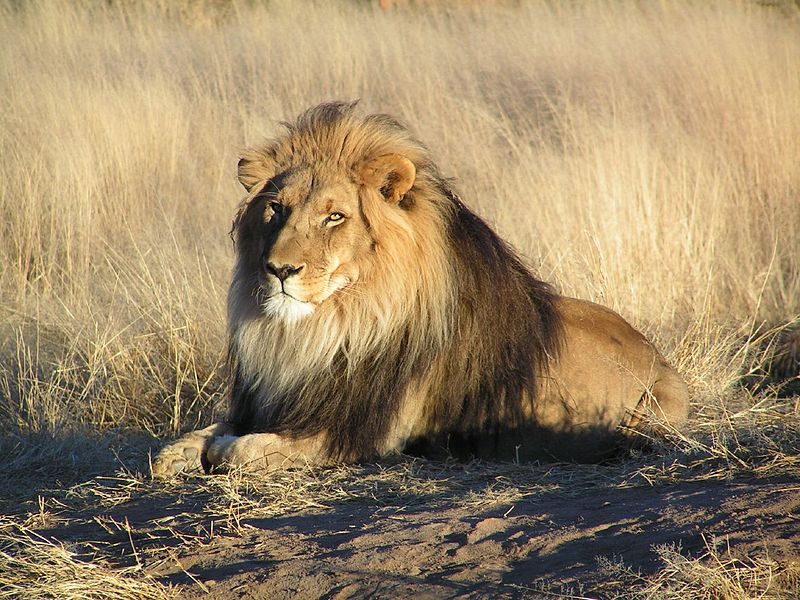
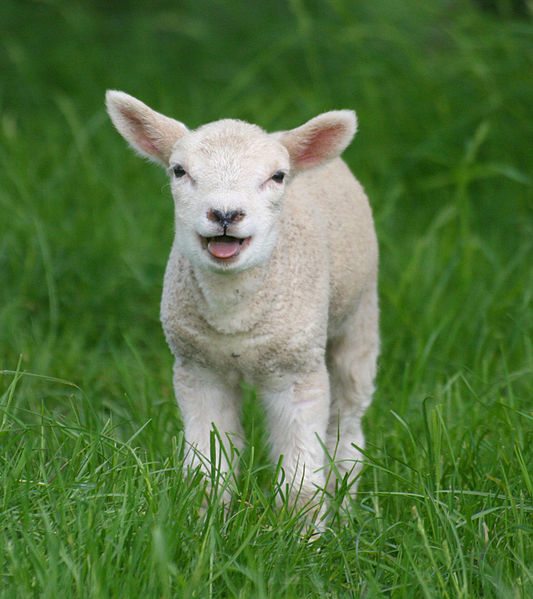
Lion_waiting_in_Namibia 533px-Sheep,_Stodmarsh_6

One often hears that March comes in like a lion and goes out like a lamb. We’ll see.

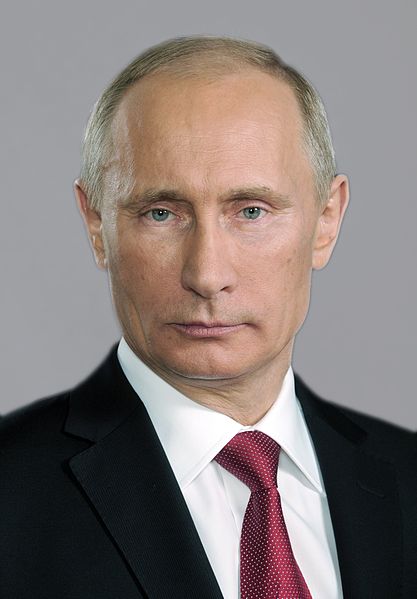
The results from yesterday’s poll about Vladimir Putin (Benign Statesman or Meddling Autocrat?) are in, and respondents delivered a decisive verdict: meddling autocrat, with 90.91% of the vote.

It’s the anniversary of the Peace Corps’ founding, from 3.1.1961, via Pres. Kennedy’s executive order.

On this day in 1985, Herb Kohl purchases the Milwaukee Bucks:

1985 – Kohl purchases Bucks
On this day in 1985 Milwaukee businessman and future United States Senator Herb Kohl purchased the Milwaukee Bucks for 18 million dollars.

Daily Bread for 2.28.14

Good morning.

Our week in Whitewater ends with mostly cloudy skies and a high of twenty-one. There’s high probability (about 80%) of about an inch of snow overnight tonight.

On this day in 1953, one of the most profound discoveries of biology:

Cambridge University scientists James D. Watson and Frances H.C. Crick announce that they have determined the double-helix structure of DNA, the molecule containing human genes.

Though DNA–short for deoxyribonucleic acid–was discovered in 1869, its crucial role in determining genetic inheritance wasn’t demonstrated until 1943. In the early 1950s, Watson and Crick were only two of many scientists working on figuring out the structure of DNA. California chemist Linus Pauling suggested an incorrect model at the beginning of 1953, prompting Watson and Crick to try and beat Pauling at his own game. On the morning of February 28, they determined that the structure of DNA was a double-helix polymer, or a spiral of two DNA strands, each containing a long chain of monomer nucleotides, wound around each other. According to their findings, DNA replicated itself by separating into individual strands, each of which became the template for a new double helix. In his best-selling book, The Double Helix (1968), Watson later claimed that Crick announced the discovery by walking into the nearby Eagle Pub and blurting out that “we had found the secret of life.” The truth wasn’t that far off, as Watson and Crick had solved a fundamental mystery of science–how it was possible for genetic instructions to be held inside organisms and passed from generation to generation.

Watson and Crick’s solution was formally announced on April 25, 1953, following its publication in that month’s issue of Nature magazine. The article revolutionized the study of biology and medicine. Among the developments that followed directly from it were pre-natal screening for disease genes; genetically engineered foods; the ability to identify human remains; the rational design of treatments for diseases such as AIDS; and the accurate testing of physical evidence in order to convict or exonerate criminals.

Crick and Watson later had a falling-out over Watson’s book, which Crick felt misrepresented their collaboration and betrayed their friendship. A larger controversy arose over the use Watson and Crick made of research done by another DNA researcher, Rosalind Franklin, whose colleague Maurice Wilkins showed her X-ray photographic work to Watson just before he and Crick made their famous discovery. When Crick and Watson won the Nobel Prize in 1962, they shared it with Wilkins. Franklin, who died in 1958 of ovarian cancer and was thus ineligible for the award, never learned of the role her photos played in the historic scientific breakthrough.

Google-a-Day poses a pop culture question dependent on a few links of association:

What furniture company is owned by the family of the husband of the actress who played the role of Lizzie McGuire?