
Bird World from Alastair Mccoll on Vimeo.
Daily Bread
Daily Bread for 3.18.14
by JOHN ADAMS •
Good morning.
Sunrise today is 7:02 AM and sunset 7:05 PM. The moon is in a washing gibbous phase with ninety-six percent of its visible disk illuminated. We’ll have a partly sunny day today with a high of forty-five.
Common Council and the Planning Commission meet jointly tonight at 6:30 PM on campus.
Yesterday, I kindly received some recommendations for music from the Celtic band The Pogues. I listed to, and liked, all of the recommended songs (Body of an American, Fairytale of New York, Misty Morning Albert Bridge, The Broad Majestic Shannon, Rainy Night in Soho, NW3).
Here’s The Body of an American —
On this day in 1953, the Braves announce that they’re moving to Wisconsin:
1953 – Braves Move to Milwaukee
On this date the Braves baseball team announced that they were moving from Boston to Milwaukee. [Source: The History Net]
Here’s Puzzability‘s Tuesday game:
|
This Week’s Game — March 17-21
|
|||||
|
Irish Stew
|
|||||
|
We’re going for brogue this St. Patrick’s Day week. For each day, we started with a word or phrase, added the seven letters in IRELAND, and rearranged all the letters to get the name of a famous person. Both pieces are described in each day’s clue, with the shorter one first.
|
|||||
|
Example:
|
|||||
|
Affirmative answer; Rescue Me star
|
|||||
|
Answer:
|
|||||
|
Yes; Denis Leary
|
|||||
|
What to Submit:
|
|||||
|
Submit both pieces, with the shorter one first (as “Yes; Denis Leary” in the example), for your answer.
|
|||||
 |
|||||
|
Tuesday, March 18
|
|||||
|


Music
Monday Music, Part 2: Pharrell Williams, Happy
by JOHN ADAMS •
A longtime reader wrote in this morning, and teased me over my post of the Cranberries’ Roses (on the theory that it was a melancholy song). I picked that song because Delores O’Riordan has a fine voice, and an Irish singer seemed fitting on St. Patrick’s Day.
Still, a sad song wasn’t meant to suggest that I’m sad. I’m not.
So, for someone who’d like something happier, here’s Pharrell Williams with Happy:
Music
Monday Music – The Cranberries, Roses
by JOHN ADAMS •
Dolores O’Riordan, back in 2012 after a six-year hiatus —
Daily Bread
Daily Bread for 3.17.14
by JOHN ADAMS •
Good morning.
St. Patrick’s Day in Whitewater will be mostly cloudy with a high of thirty-three.

In Chicago, residents dyed part of the Chicago River green for the holiday. Embedded below is a time-lapse video of their work:
On this day in 1941, Milwaukee’s airport gets its name:
1941 – General Mitchell Field Named
On this date Milwaukee’s airport was named to honor the city’s famous air-power pioneer, General William Mitchell. [Source: History Just Ahead: A Guide to Wisconsin’s Historical Markers edited by Sarah Davis McBride]
This week’s Puzzability series is called Irish Stew. Here’s Monday’s game:
|
This Week’s Game — March 17-21
|
|||||
|
Irish Stew
|
|||||
|
We’re going for brogue this St. Patrick’s Day week. For each day, we started with a word or phrase, added the seven letters in IRELAND, and rearranged all the letters to get the name of a famous person. Both pieces are described in each day’s clue, with the shorter one first.
|
|||||
|
Example:
|
|||||
|
Affirmative answer; Rescue Me star
|
|||||
|
Answer:
|
|||||
|
Yes; Denis Leary
|
|||||
|
What to Submit:
|
|||||
|
Submit both pieces, with the shorter one first (as “Yes; Denis Leary” in the example), for your answer.
|
|||||
|
|||||
|
Monday, March 17
|
|||||
|

Animation, Cartoons & Comics
Sunday Animation: Plumb
by JOHN ADAMS •
Plumb from caleb wood on Vimeo.
Daily Bread
Daily Bread for 3.16.14
by JOHN ADAMS •
Good morning.
Sunday will see gradually sunnier skies and a high of twenty=three in Whitewater.
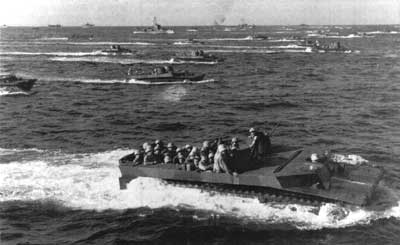
Via Wikipedia
On this day in 1945, fighting on Iwo Jima ends, assuring that the island was wholly in American hands:
…the west Pacific volcanic island of Iwo Jima is declared secured by the U.S. military after months of fiercely fighting its Japanese defenders.
The Americans began applying pressure to the Japanese defense of Iwo Jima in February 1944, when B-24 and B-25 bombers raided the island for 74 days straight. It was the longest pre-invasion bombardment of the war, necessary because of the extent to which the Japanese–21,000 strong–fortified the island, above and below ground, including a network of caves. Underwater demolition teams (“frogmen”) were dispatched by the Americans just before the actual invasion to clear the shores of mines and any other obstacles that could obstruct an invading force. In fact, the Japanese mistook the frogmen for an invasion force and killed 170 of them.
The amphibious landings of Marines began the morning of February 19, 1945, as the secretary of the Navy, James Forrestal, accompanied by journalists, surveyed the scene from a command ship offshore. The Marines made their way onto the island–and seven Japanese battalions opened fire, obliterating them. By that evening, more than 550 Marines were dead and more than 1,800 were wounded.
In the face of such fierce counterattack, the Americans reconciled themselves to the fact that Iwo Jima could be taken only one yard at a time. A key position on the island was Mt. Suribachi, the center of the Japanese defense. The 28th Marine Regiment closed in and around the base of the volcanic mountain at the rate of 400 yards per day, employing flamethrowers, grenades, and demolition charges against the Japanese that were hidden in caves and pillboxes (low concrete emplacements for machine-gun nests). Approximately 40 Marines finally began a climb up the volcanic ash mountain, which was smoking from the constant bombardment, and at 10 a.m. on February 23, a half-dozen Marines raised an American flag at its peak, using a pipe as a flag post. Two photographers caught a restaging of the flag raising for posterity, creating one of the most reproduced images of the war. With Mt. Suribachi claimed, one-third of Iwo Jima was under American control.
On March 16, with a U.S. Navy military government established, Iwo Jima was declared secured and the fighting over. When all was done, more than 6,000 Marines died fighting for the island, along with almost all the 21,000 Japanese soldiers trying to defend it.
Daily Bread
Daily Bread for 3.15.14
by JOHN ADAMS •
Good morning.
Sunrise this Saturday is 7:07 AM and sunset is 7:01 PM. The moon is in a waxing gibbous phase with 99% of its visible disk illuminated. Today’s high will be thirty-five.
Of Friday’s poll, over 80% of respondents thought that Rod Sommerville of Australia was sensible when he had a beer while waiting for medical assistance after receiving a snake bite.
We’re at the Ides of March, famous to us as an expression for a long-ago assassination:
“Beware the Ides of March,” the soothsayer urges Julius Caesar in Shakespeare’s Tragedy of Julius Caesar (act I, scene ii). Despite the forewarning, Caesar is stabbed in the back by his friend Marcus Brutus. Caesar falls and utters his famous last words, “Et tu, Brute?” (And you, Brutus?)
Shakespeare’s source for the play was Thomas North’s Lives of the Nobel Grecians and Romans, which detailed the murder of Caesar in 44 B.C. Caesar’s friends and associates feared his growing power and his recent self-comparison to Alexander the Great and felt he must die for the good of Rome. North’s work translated a French version of Plutarch, which itself had been translated from Latin. Shakespeare’s version was written about 1599 and performed at the newly built Globe Theater.
Ides, Kalends, Nones – simply terms of the Roman calendar that might have had no special meaning to us but for Shakespeare’s play about a certain act on a certain day.
On this day in 1862, more Wisconsinites do their part for the Union:
1862 – (Civil War) 17th and 18th Wisconsin Infantry Regiments Mustered In
The 17th and 18th Wisconsin Infantry regiments mustered in at Madison and Milwaukee, respectively. Both regiments would move from the lower Mississippi Valley into Tennessee and Georgia, participate in Sherman’s March to the Sea, and converge on Virginia at the end of the war. Before they mustered out, the 17th would lose 269 men and the 18th, 225.
Cats
Friday Catblogging: Bad Feline Edition
by JOHN ADAMS •
Here’s one belligerent cat –
Animals, Health, Poll
Friday Poll: Australian Has a Beer After a Snake Bite
by JOHN ADAMS •
One reads that a venomous snake bit an Australian man, and the man decided to have a beer while waiting for medial assistance:
What do you do when you’ve been bitten by one of the deadliest snakes in the world? Crack open a beer, of course.
That’s what Rod Sommerville, 54, of Australia, had in mind after he was nipped by a eastern brown snake in his backyard last month.
After the bite, the Queensland man said he went inside and called emergency services, according to local reports. He then apparently grabbed a beer from the fridge and sat down to enjoy the brew while he waited for the ambulance to arrive.
Sommerville reasoned that panicking would have made it worse.
“I said to myself, ‘if I’m going to [die], I’m going to have a beer,'” he told the Rockhampton Morning Bulletin….
The beer-drinking man was picked up by emergency services and treated with an anti-venom at a local hospital. Although he had an adverse reaction to the medication, Sommerville survived the incident.
So – sensible to open that beer can, or reckless? I wouldn’t normally advocate drinking after an injury, but in this case I think Sommerville’s actions helped him stay calm, and there’s a certain admirable defiance behind drinking that beer, there and then. For me, he’s sensible.
What do you think?

Daily Bread
Daily Bread for 3.14.14
by JOHN ADAMS •
Good morning.
Whitewater’s work week ends with partly sunny skies and a high of forty-seven.
It’s Albert Einstein’s birthday (born this day in 1879).
On this day in 1979, the Bucks set a team record:
1979 – Bucks Set Scoring Record
Milwaukee set a team scoring record for a regulation-length game with 158 points against New Orleans. [Source: Bucks.com, Official Site of the Milwaukee Bucks]

Puzzability‘s Easy as Pi series concludes today, on Pi Day:
|
This Week’s Game — March 10-14
|
|||||
|
Easy as Pi
|
|||||
|
This Friday is Pi Day: 3.14. For each day this week, we’re celebrating by starting with a word and adding the two-letter chunk PI (before, within, or after) to get a new word. The two-word answer phrase, described by each day’s clue, is the shorter word followed by the PI word.
|
|||||
|
Example:
|
|||||
|
Noisy bird that’s a sorcerer
|
|||||
|
Answer:
|
|||||
|
Mage magpie
|
|||||
|
What to Submit:
|
|||||
|
Submit the two-word phrase, with the PI word second (as “Mage magpie” in the example), for your answer.
|
|||||
|
|||||
|
Friday, March 14
|
|||||
|

Food, Technology
What happens when a supercomputer runs a food truck?
by JOHN ADAMS •
Food trucks are good for a community, but are they better when a supercomputer runs them? Let’s see:
We know Watson has some Jeopardy skills, but putting IBM’s supercomputer in the kitchen? That’s a little different. Here at SXSW, the company’s set up a “Cognitive Cooking” food truck in partnership with the Institute for Culinary Education (ICE). Using Watson’s recipe system, which combines three elements (ingredient, cuisine and type of dish) to create unconventional new fare, chefs here in Austin are churning out delicacies such as ceviche fish and chips and Vietnamese apple kebabs.
Via IBM puts Watson in charge of its SXSW food truck, we taste-test (video) @ Engadget.
Daily Bread
Daily Bread for 3.13.14
by JOHN ADAMS •
Good morning.
Sunrise today is 7:10 AM and sunset 6:59 PM. The moon is in a waxing gibbous phase with ninety-one percent of its visible disk illuminated. Thursday will be an increasingly cloudy day, with a high of thirty-seven.
Whitewater’s Fire & Rescue Task Force will meet at 6 PM tonight.

On this day in 1781, Herschel discovers a planet:
The German-born English astronomer William Hershel discovers Uranus, the seventh planet from the sun. Herschel’s discovery of a new planet was the first to be made in modern times, and also the first to be made by use of a telescope, which allowed Herschel to distinguish Uranus as a planet, not a star, as previous astronomers believed.
Herschel, who was later knighted for his historic discovery, named the planet Georgium Sidus, or the “Georgian Planet,” in honor of King George III of England. However, German astronomer Johann Bode proposed the name “Uranus” for the celestial body in order to conform to the classical mythology-derived names of other known planets. Uranus, the ancient Greek deity of the heavens, was a predecessor of the Olympian gods. By the mid-19th century, it was also the generally accepted name of the seventh planet from the sun.
The planet Uranus is a gas giant like Jupiter and Saturn and is made up of hydrogen, helium, and methane. The third largest planet, Uranus orbits the sun once every 84 earth years and is the only planet to spin perpendicular to its solar orbital plane. In January 1986, the unmanned U.S. spacecraft Voyager 2 visited the planet, discovering 10 additional moons to the five already known, and a system of faint rings around the gas giant.
Puzzability‘s Easy as Pi series continues with Thursday’s game:
|
This Week’s Game — March 10-14
|
|||||
|
Easy as Pi
|
|||||
|
This Friday is Pi Day: 3.14. For each day this week, we’re celebrating by starting with a word and adding the two-letter chunk PI (before, within, or after) to get a new word. The two-word answer phrase, described by each day’s clue, is the shorter word followed by the PI word.
|
|||||
|
Example:
|
|||||
|
Noisy bird that’s a sorcerer
|
|||||
|
Answer:
|
|||||
|
Mage magpie
|
|||||
|
What to Submit:
|
|||||
|
Submit the two-word phrase, with the PI word second (as “Mage magpie” in the example), for your answer.
|
|||||
|
|||||
|
Thursday, March 13
|
|||||
|

City, Liberty, New Whitewater
Why Whitewater?
by JOHN ADAMS •
This post is the third of a trilogy about Whitewater. Months ago, I posted the first two of this series. (See, How Many Rights for Whitewater? and What Standards for Whitewater?).
Those earlier posts may be summarized simply:
Of rights —
Of standards —
If rights matter (and they do) and standards matter (and they do), one question yet remains:
Why Whitewater?
Why write about this place, rather than another? Why contend over this small city’s future, rather than that of another place?
This, truly, is the easiest answer of all:
There’s no better place in which to write, contend, and live.
Not partial rights, not sham standards, but a full and genuine measure of both. No one should live that he or she is no more than an extra in someone else’s film, or an ornament for a vain man’s pride.
Someone once told me, by way of a supposed rebuke, that it was wrong to expect as much of officials in Whitewater, and for the residents of our city. She believed that one should settle for less from government, and expect less for residents, as this was a small town incapable of better.
To contend as she did is to contend falsely, to advance a dark and cynical view.
All around us, among many thousands, one finds talent and accomplishment. It is right to see as much, but even if one saw none of this, still it would be wrong to suggest that those who live here are deserving of less.
There are also residents here, as there are in every community, who are ill or disabled – but they also are entitled by nature to the rights and care owed to all others. Often, they are deserving of additional care and comfort.
People see as they’d like, and love as they’d like, but as for me, I see Whitewater, and love her, in this way: through an unshakable belief that people in our city merit rights and standards naturally and necessarily.
Here, as beautiful and as deserving as anywhere.