FREE WHITEWATER

The 2014 Wisconsin Spring Primary

Results from the Wisconsin Spring Primary are, mostly, now in.  

In Whitewater.  I’ve commented on this race in email and online. The unofficial results (Binnie 152, Yvarra 30, Meyer 26) in the top-two primary show a marked gap between the incumbent and his challengers. In a primary that awarded the race to a candidate with a majority from among all votes cast, the race would now be decided.  

That’s not our law, of course, and there will be a Spring General Election, about six weeks from now, on April 1st.  There are other uncontested council races on the ballot (incumbents Phil Frawley, Ken Kidd, and Stephanie Abbott) at that time.     

It will be well worth hearing from all these candidates at the March candidate’s forum.  

In Walworth County.  In Walworth County’s District 5, the primary vote (Staples 169, Redenius 126, Boss 112) pits challenger Charlene Fell Staples against incumbent Carl Redenius in April for a supervisor’s position.  

In Wisconsin.  These spring primary races were so local, with such sparse voting in some parts of the state, that they offer little indication of how statewide primaries or the November election will go.

Daily Bread for 2.19.14

Good morning.

Wednesday brings sunny skies and a balmy, forty-degree temperature.

On this day in 1945, America began the invasion of Iwo Jima, a notably intense, month-long battle against Japanese forces. The Associated Press reported the Marines’ landing:

Advanced Headquarters, Guam, Monday, Feb. 19 – American Marines, their path cleared by the most intensive neutralization campaign of the Pacific war, have landed on strategic little Iwo Island, one of the Volcano group, 750 statute miles south of Tokyo.

The landing was made this (Monday) morning. The Fourth and Fifth Marine Divisions made this first Marine Operation since the Palaus were invaded last September. [Lieut. Gen. Holland M. Smith, victor over the Japanese on Saipan, was in command of the Marines, The United Press said.]

Admiral Chester W. Nimitz announced in a special communique; today the momentous development in the fast-moving Pacific war which put American troops on the logical ocean stepping-stone to Tokyo.

Iwo is so close to Tokyo that it is administered by Tokyo prefecture.

1896

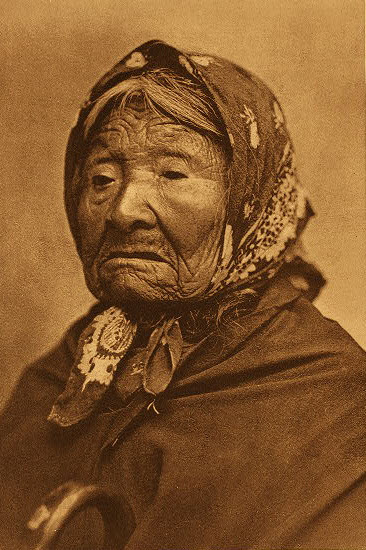
Kikisoblu (“Princess_Angeline”) of the Duwamish, 1896.

On February 19th, 1968, a noted photographer is born, near our city:

1868 – Photographer Edward S. Curtis Born
On this date Edward Sheriff Curtis was born near Whitewater. As a young boy, he taught himself photography. His family eventually moved to the Puget Sound area of Washington state. He settled in Seattle and opened a photography studio in 1897.

A chance meeting on Mount Rainier resulted in Curtis being appointed official photographer on railroad magnate E.H. Harriman’s expedition to Alaska. Curtis also accompanied George Bird Grinnell, editor of Field and Stream magazine, to Montana in 1900 to observe the Blackfoot Sun Dance.

After this, Curtis strove to comprehensively document American Indians through photography, a project that continued for over 30 years. Working primarily with 6 x 8-inch reflex camera, he created over 40,000 sepia-toned images. His work attracted national attention, most notably from Theodore Roosevelt and J. Pierpont Morgan, whose family contributed generously to his project.

His monumental work, The North American Indian, was eventually printed in 20 volumes with associated portfolios. Curtis’ work included portraits, scenes of daily life, ceremonies, architecture and artifacts, and landscapes. His photographs have recently been put online by the Library of Congress.[Source: Dictionary of Wisconsin Biography, SHSW 1960, pg. 892]

Puzzability‘s Wednesday game continues a sports-theme:

This Week’s Game — February 17-21
Cities of Gold
Here’s our inside track at the Olympics. For each day this week, we started with the name of a city in which the Winter Olympics have been held. Then we hid it in a sentence, with spaces added as necessary. The answer spans at least two words in the sentence and starts and ends in the middle of words. The day’s clue gives the sentence with a torch in place of the city name.
Example:
I didn’t qualify for the luge finals after my qualifying time was totorchw.
Answer:
Oslo (too slow)
What to Submit:
Submit the city (as “Oslo” in the example) for your answer.
Wednesday, February 19
If you want to check Olympics results on your phone, you should download either a sporttorchne that provides the latest news.

On Whitewater’s 4th District Council Race

One part of the city has an election in the spring primary today, for the city’s fourth council district. Incumbent Lynn Binnie is running for another term against challengers Greg Meyer and Paul Yvarra.

It wouldn’t have been my inclination to presume to endorse in the race, but more than a few readers have emailed, asking me about my views, or urging me toward one candidate or another. I’ve replied directly to those messages, and will summarize my thinking here.

I will spare the city the childish habit of posting their photographs and addresses. It doesn’t matter what they look like; one can assume they all live within the district. Whitewater’s politics are more than an online dating service or freshman yearbook.

One can fairly state that these three men are all sincere, love our small city, and want the best for it. I can fairly state that – so far as I’m aware – not one of them inclines toward my own politics.

That doesn’t matter, of course; our city is more than political parties, particular views, or tidy outcomes.

Those who have done the most damage to this city’s economy and prospects have never understood as much; on the contrary, they have sought – again and again – a single view, a single way, a rigid orthodoxy delivered in a cheery package.

I’ll not make their self-serving mistake; a good candidate needn’t hold one’s views. Very often, one finds that he or she holds very different views.

Lynn Binnie has served sincerely and diligently these several years. My disagreements with his particular opinions are no impediment to seeing as much.

There won’t likely come a time when I think that his willingness to regulate alcohol does any good to prevent alcoholism. Similarly, Whitewater will not achieve prosperity or fiscal prudence by favoring big projects over small, practical ideas.

But of his political generation, those gentlemen in their sixties who serve on Council or on committees, he has the best chance of any to see and help steer Whitewater toward better waters.

It’s a futile – but still an alluring – idea that the only choices before us are good ones, with no risks about which to be concerned. (The pressure to defend past mistakes and risk of similar, future ones is still potent in Whitewater.)

Now, I have teased about Mr. Binnie’s view that in politics one may go ‘above and beyond.’ I don’t think so – there’s only daily work, repeated again and again, without looking back to see if it’s been enough, or more than enough.

And yet I see, as I hope that Whitewater sees, that among those candidates on the ballot today, and among his generation in the city, Lynn Binnie is notable as industrious and thoughtful.

Ideological differences notwithstanding, he easily merits re-election to office.

Daily Bread for 2.18.14

Good morning.

We’ll have fog in the morning, clouds throughout the day, and a high of thirty-eight.

It’s the Spring Primary election in Whitewater, for candidates in the 4th Council District.

Whitewater’s Police and Fire Commission meets tonight at 6 PM.

On Japan’s Okunoshima Island (know as the ‘Rabbit Island’), wild rabbits are always on the lookout for a snack:

On this day in 1885, Mark Twain publishes The Adventures of Huckleberry Finn.

On February 18th, 1920, it became legal to bowl on Sunday in Janesville:

1920 – Billiards and Bowling Allowed on Sunday
On this date the Janesville city council voted to allow billiard halls and bowling alleys to open for limited hours on Sunday. Business proprietors were fined $15 each for staying open longer than allowed. [Source:Janesville Gazette]

Here’s Puzzability’s Tuesday Olympics-themed game:

This Week’s Game — February 17-21
Cities of Gold
Here’s our inside track at the Olympics. For each day this week, we started with the name of a city in which the Winter Olympics have been held. Then we hid it in a sentence, with spaces added as necessary. The answer spans at least two words in the sentence and starts and ends in the middle of words. The day’s clue gives the sentence with a torch in place of the city name.
Example:
I didn’t qualify for the luge finals after my qualifying time was totorchw.
Answer:
Oslo (too slow)
What to Submit:
Submit the city (as “Oslo” in the example) for your answer.
Tuesday, February 18
In my opinion Bob Costas is the best sports commentatorchlympicshistory.

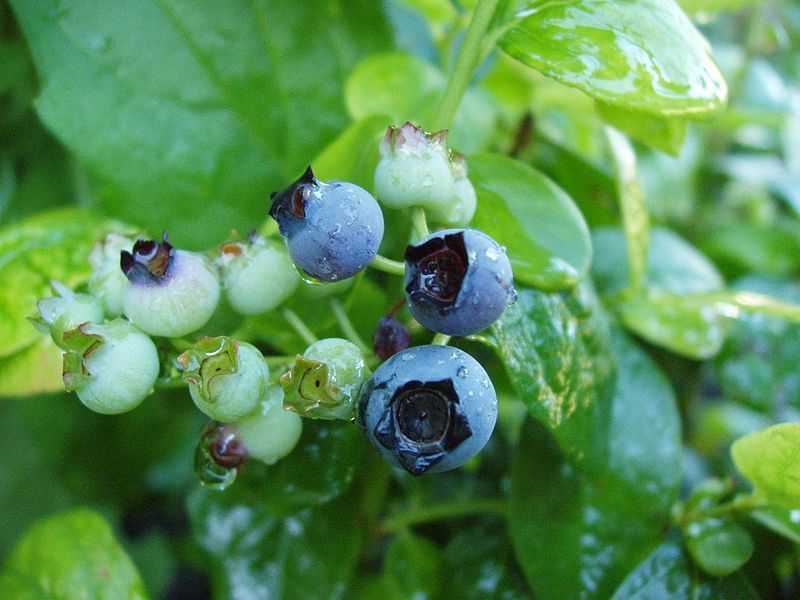
Blueberries, Raspberries, Rat Poison

800px-Maturing_blueberry 220px-Raspberries05 1000x1000

There’s more than one way to see the differences of policy and politics in Whitewater. 

By one way of thinking, these differences are merely of taste, like a preference for blueberries over raspberries.  Although one cannot be certain, this is probably how most officials see the decisions before government: a choice between simple preferences. 

And yet, some important local political choices are not merely between blueberries and raspberries, but between raspberries and rat poison.  

Grasping that some choices present a raspberry or rat-poison alternative is hard for many among Whitewater’s political class.  For the most part, they act and speak as though there were no meaningful risks to one kind of action over another.  They seek outcomes they might like (blueberries) over others (raspberries), but don’t believe that there’s a risk of an objectively bad outcome (ingesting rodenticide).

They’ll often ignore or deny the possibility of a raspberry – rat poison divide. When someone mentions that an issue here or there might be consequential in this way, they simply don’t believe it. For some, this is because they see no such risks; for others, it’s because they’re confident they can obscure and hide any poisonous consequences of failed policies.  

Significantly, and more precisely, in a climate in which officials see only a blueberry-raspberry choice, the small preferences they have between these alternatives become to them issues of real importance.  They’ll fight, sometimes tooth-and-nail, over their choice of berry as against someone else’s preference.  

If one looks at Whitewater’s now-retired political class in its seventies or eighties, one finds septuagenarians and octogenarians who either think local policy alternatives offer trivial risks, risks that they can trivialize, or consequences of whatever kind they can conceal.  

Among those a bit younger, in their sixties, there’s a similar view, but perhaps not as strongly held.  

In any event, Whitewater has more who would doubt or deny the meaningful consequences of policy than she deserves. 

Still, there is this reassurance: if one does believe in meaningful differences and the consequences from them, it’s possible to take a longer view of the city.  One needn’t scramble every day, to minimize, trivialize, or conceal. Actions and their consequences will prove, sometimes, too profound ignore or hide.

For those who believe – or want others to believe – that alternatives are always no more than between raspberries and blueberries, I’d guess that politics and policy are both exhausting and empty.  

So much the better – by contrast – to see an occasionally greater range of risk, in the advancement good policy and a sustaining focus on what matters most.

Daily Bread for 2.17.14

Good morning.

Whitewater will have heavy snow today, with an accumulation of about four to six inches. We’ll have a high temperature of twenty-five.

On this day in 1972, Nixon goes to China.

On this day, twelve years ago, a Wisconsinite strikes gold at Salt Lake City:

2002 – Wisconsin Skater Takes Gold
On this date West Allis native Chris Witty won a gold medal in speed skating’s 1000 meter at the Salt Lake City Olympic Winter Games. She broke the world record with a time of 1:13.82, even though she was recovering from mononucleosis. Before Witty competed in ice staking, she was a professional bicyclist. [Source: US Olympic Team]

Puzzability begins a new weekly series, with a Winter Olympics theme. Here’s Monday’s game:

This Week’s Game — February 17-21
Cities of Gold
Here’s our inside track at the Olympics. For each day this week, we started with the name of a city in which the Winter Olympics have been held. Then we hid it in a sentence, with spaces added as necessary. The answer spans at least two words in the sentence and starts and ends in the middle of words. The day’s clue gives the sentence with a torch in place of the city name.
Example:
I didn’t qualify for the luge finals after my qualifying time was totorchw.
Answer:
Oslo (too slow)
What to Submit:
Submit the city (as “Oslo” in the example) for your answer.
Monday, February 17
The Winter Games athletes are happy to sign autographs for not just grownups but altorchldren who look up to them.

2014 World Press Photo Contest Winners

The 2014 World Press Contest photos are now available online. A link to the winning photographs appears below. Some depict tragedy, others hope, and all of them are notable and evocative.

An international jury of photographers and editors has announced the results of the 57th World Press Photo Contest. The shot chosen as Photo of the Year, by John Stanmeyer for National Geographic, depicts African migrants on the shore of Djibouti City at night, raising their phones in an attempt to capture an inexpensive signal from neighboring Somalia. Other winning photos cover events from the fighting in Syria to South Africans’ reactions to the death of Nelson Mandela.

Daily Bread for 2.16.14

Good morning.

Sunday presents a chance of flurries and a high of twenty-two for Whitewater.

We’ve only one moon, but Jupiter has many, including the largest in the solar system, Ganymede. NASA Voyager probes and Galileo mission collectively filmed the surface of Ganymede (a satellite bigger even than the planet Mercury) to produce a map the Jovian satellite:

On February 16, 1804, the ‘most daring act of the age’:

During the First Barbary War, U.S. Lieutenant Stephen Decatur leads a military mission that famed British Admiral Horatio Nelson calls the “most daring act of the age.”

In June 1801, President Thomas Jefferson ordered U.S. Navy vessels to the Mediterranean Sea in protest of continuing raids against U.S. ships by pirates from the Barbary states–Morocco, Algeria, Tunis, and Tripolitania. American sailors were often abducted along with the captured booty and ransomed back to the United States at an exorbitant price. After two years of minor confrontations, sustained action began in June 1803 when a small U.S. expeditionary force attacked Tripoli harbor in present-day Libya.

In October 1803, the U.S. frigate Philadelphia ran aground near Tripoli and was captured by Tripolitan gunboats. The Americans feared that the well-constructed warship would be both a formidable addition to the Tripolitan navy and an innovative model for building future Tripolitan frigates. Hoping to prevent the Barbary pirates from gaining this military advantage, Lieutenant Stephen Decatur led a daring expedition into Tripoli harbor to destroy the captured American vessel on February 16, 1804.

After disguising himself and his men as Maltese sailors, Decatur’s force of 74 men, which included nine U.S. Marines, sailed into Tripoli harbor on a small two-mast ship. The Americans approached the USS Philadelphia without drawing fire from the Tripoli shore guns, boarded the ship, and attacked its Tripolitan crew, capturing or killing all but two. After setting fire to the frigate, Decatur and his men escaped without the loss of a single American. The Philadelphia subsequently exploded when its gunpowder reserve was lit by the spreading fire.

Six months later, Decatur returned to Tripoli Harbor as part of a larger American offensive and emerged as a hero again during the so-called “Battle of the Gunboats,” a naval battle that saw hand-to-hand combat between the Americans and the Tripolitans.

more >>

Daily Bread for 2.15.14

Good morning.

Saturday brings a high of twenty and late afternoon clouds to Whitewater. There’s a likelihood of snow this evening, with an accumulation of less than one inch.

On this day in 1898, the Maine explodes:

A massive explosion of unknown origin sinks the battleship USS Maine in Cuba’s Havana harbor, killing 260 of the fewer than 400 American crew members aboard. One of the first American battleships, the Maine weighed more than 6,000 tons and was built at a cost of more than $2 million. Ostensibly on a friendly visit, the Maine had been sent to Cuba to protect the interests of Americans there after a rebellion against Spanish rule broke out in Havana in January. An official U.S. Naval Court of Inquiry ruled in March that the ship was blown up by a mine, without directly placing the blame on Spain. Much of Congress and a majority of the American public expressed little doubt that Spain was responsible and called for a declaration of war.

Subsequent diplomatic failures to resolve the Maine matter, coupled with United States indignation over Spain’s brutal suppression of the Cuban rebellion and continued losses to American investment, led to the outbreak of the Spanish-American War in April 1898.

Within three months, the United States had decisively defeated Spanish forces on land and sea, and in August an armistice halted the fighting. On December 12, 1898, the Treaty of Paris was signed between the United States and Spain, officially ending the Spanish-American War and granting the United States its first overseas empire with the ceding of such former Spanish possessions as Puerto Rico, Guam, and the Philippines. In 1976, a team of American naval investigators concluded that the Maine explosion was likely caused by a fire that ignited its ammunition stocks, not by a Spanish mine or act of sabotage.

On this day in 1964, comedian Chris Farley is born:

1964 – Chris Farley Born
On this date comedian Christopher Crosby Farley was born in Madison. He studied theatre and communications at Marquette University. After finishing school Farley joined the cast of the Second City Theatre, where he was discovered by Saturday Night Live producer, Lorne Michaels. He died of an accidental drug overdose on December 17, 1997, in Chicago, Illinois. [Source: Oddball Wisconsin by Jerome Pohlen, p.139]