
City, Local Government, Planning
Old Whitewater Dreams of a Student Rez
by JOHN ADAMS •
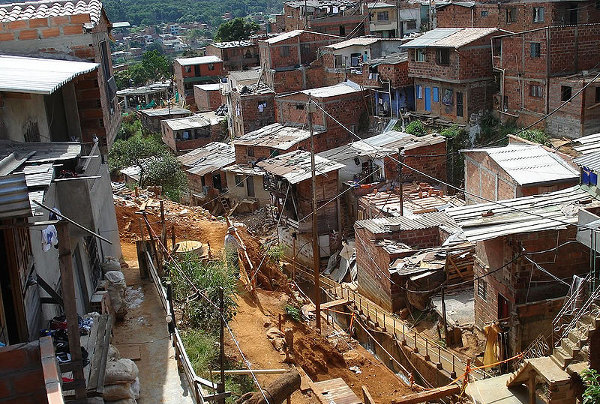
Old Whitewater – an outlook rather than an age, a group rather than an individual – is having the hardest time adjusting to a changing city. All these years, and all their many political champions, and still they’ve not solved even a single major problem facing the city. Residential harmony between town and gown is one those problems, and although not the worst, it’s still unremedied.
All their talk, all their task forces and ad hoc committees, all their manipulation of the levers of power and boundless sense of entitlement, and what’s their solution? It’s a student reservation on the northwest corner of the city.
Well, gentlemen, you’re years late and millions short on a scheme to insist that high density be located only on the edge of the city. You may point all you want to comprehensive plans that suggest this area for high density, but you’ve done too little, and it’s much too late, to make that scheme work now.
Having wasted millions on failed TIDs (and we have more than one in trouble), millions on a nearly-broke tech-park building, lies on supposed big-ticket development schemes, all the while 44% of the children in the area are economically disadvantaged, you’ve no credibility whatever on political or economic solutions.
The Old Whitewater faction ran this city for the last generation, and in only one direction: into the ground. Look around, and see the truth of their dishonest insistence that all is well: they’re reduced to last-minute whining that the Zoning Rewrite is part of some plot to increase density in the center of the city.
No, and no again: over the last decade, voluntary transactions between buyers and sellers in a free market have led to increases in density in parts of this city. These increases have not been from planning, but from free choices of ordinary people.
Here’s Old Whitewater’s predicament: hundreds and hundreds of other people, over a dozen years, have rejected their restrictive planning and proposed ghetto in favor of an integrated and diverse city. These many rejected that other narrow way, despite insistence from a reactionary few that they are so very important and matter so very much above other residents.
In the same way, the city has rejected Old Whitewater’s political candidates, time and again. They’ve no effective clout to drive their preferred national, state, or even local candidates to victory in Whitewater. When the whole town votes, when all residents with the franchise make a choice, that tired faction’s candidates lose.
They no longer command a political majority of Whitewater’s voters at any level of government. They’ve just a string of losses. Their endorsements are more a curse than a blessing.
In the marketplace, where people vote with their dollars and their feet, Old Whitewater has lost even more: no planner has made the center of the city a high density area; people voted with their money, time, and ingenuity to find a place within the city.
Let’s be clear: so many of Old Whitewater, who would call themselves proud conservatives, are truly little more than regulatory reactionaries – they talk free markets, but they truly want regulated markets that are to their peculiar liking.
It’s more than odd that men who spent a lifetime on the public payroll (that is, supping on the taxed wages of privately productive citizens), often in university positions, want to shunt students into one part of the city. They’ve profited from students’ tuition and Wisconsinites’ taxes, yet they’re among the leaders who seek to herd those very students into a narrow corridor.
How zoning in a particular neighborhood will go I cannot predict with certainty. Of the future of the city, however, one can be confident. Old Whitewater’s demographically doomed, and a New Whitewater – more energetic, productive, tolerant, and of broad-based prosperity – will supplant the complaining faction that now descends into its very own autumn.
Update – Coming tomorrow: a post on the university’s role in town-gown issues.
Agriculture, Film
Film: Farm
by JOHN ADAMS •
Farm from True Life Media on Vimeo.
Daily Bread
Daily Bread for 10.8.13
by JOHN ADAMS •
Good morning.
Tuesday in the Whippet City will be sunny with a high of seventy-three.
Tonight, as part of a years-long series, there will be a joint Common Council-Planning Commission meeting to discuss the Zoning Re-write Project, beginning at 5:30 PM. One can expect all the fuss in the world over this, from more than one politically unreconstructed resident, as though there never was and never will be a greater issue for Whitewater than this. (More on this topic later.)
On this day in 1871, the Chicago Fire begins:
…flames spark in the Chicago barn of Patrick and Catherine O’Leary, igniting a two-day blaze that kills between 200 and 300 people, destroys 17,450 buildings, leaves 100,000 homeless and causes an estimated $200 million (in 1871 dollars; $3 billion in 2007 dollars) in damages. Legend has it that a cow kicked over a lantern in the O’Leary barn and started the fire, but other theories hold that humans or even a comet may have been responsible for the event that left four square miles of the Windy City, including its business district, in ruins. Dry weather and an abundance of wooden buildings, streets and sidewalks made Chicago vulnerable to fire. The city averaged two fires per day in 1870; there were 20 fires throughout Chicago the week before the Great Fire of 1871….
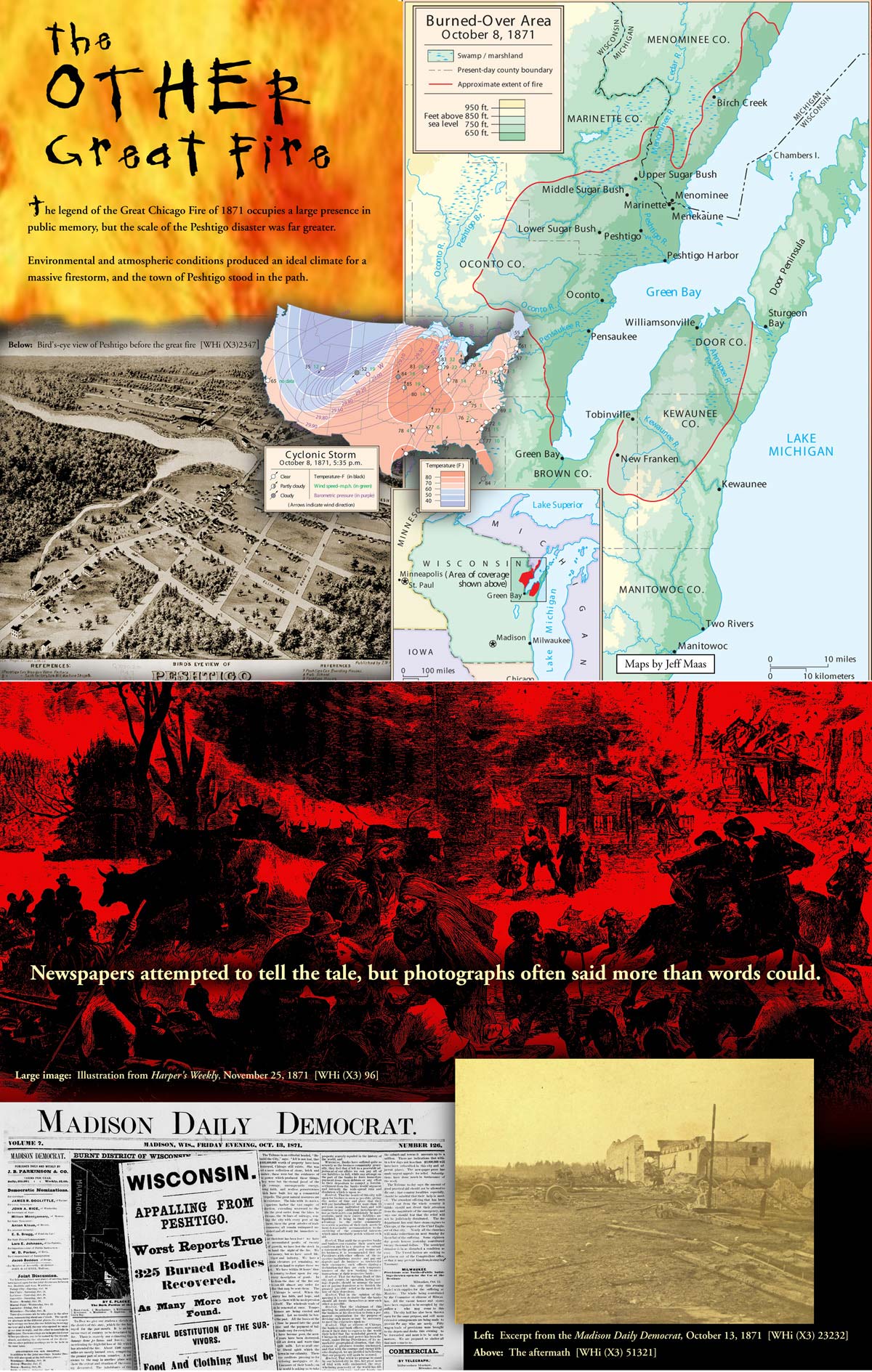
At the same time, in Wisconsin, a fire also strikes, and causes greater loss of life:
1871 – Peshtigo Fire
On this date Peshtigo, Wisconsin was devastated by a fire which took 1,200 lives. The fire caused over $2 million in damages and destroyed 1.25 million acres of forest. This was the greatest human loss due to fire in the history of the United States. The Peshtigo Fire was overshadowed by the Great Chicago fire which occurred on the same day, killing 250 people and lasting three days. While the Chicago fire is said to have started by a cow kicking over a lantern, it is uncertain how the Peshtigo fire began. [Source: Wisconsin Electronic Reader]
Scientific American‘s daily trivia question asks about basketballs. (Clicking on the question leads to its answer.)
Nature
Sunday @ Lake La Grange
by JOHN ADAMS •


Music
Monday Music: The Jazzifiers’ Cover of Metallica’s Enter Sandman & Metallica’s Original
by JOHN ADAMS •
And, of course, Metallica’s original —
Daily Bread
Daily Bread for 10.7.13
by JOHN ADAMS •
Good morning.
Monday will be mostly sunny, with a high of sixty-four, and west winds of 10 to 15 mph.
China, one reads, faces an insect threat:
The world’s biggest hornet is wreaking havoc in northwestern China, where 42 people have died after being swarmed and stung in Shaanxi Province, according to the Chinese news agency Xinhua.
Some 1,600 others have been injured since the outbreak of the Asian giant hornet (Vespa mandarinia) began in July, the regional health authority reported, and attacks continue even as local authorities take action, including destroying hundreds of hives and improving medical treatment for victims.
See, along these lines, Beware the Giant Hornets:
On this day in 1774, Wisconsin’s French flare becomes formal:
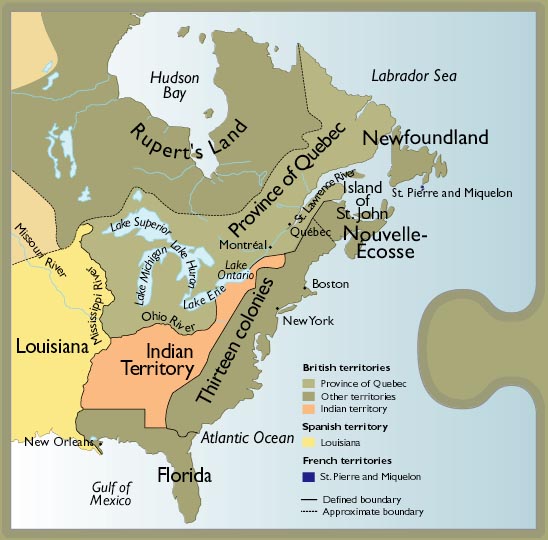
1774 – Wisconsin Becomes Part of Quebec
On this date Britain passed the Quebec Act, making Wisconsin part of the province of Quebec. Enacted by George III, the act restored the French form of civil law to the region. The Thirteen Colonies considered the Quebec Act as one of the “Intolerable Acts,” as it nullified Western claims of the coast colonies by extending the boundaries of the province of Quebec to the Ohio River on the south and to the Mississippi River on the west. [Source: Avalon Project at the Yale Law School]
Scientific American‘s daily trivia question asks about meteorites. (Clicking on the question leads to its answer.)
Where is the largest crater on earth produced by a crashing meteorite?
Public Meetings
Landmarks Commission
by JOHN ADAMS •
Public Meetings
Joint City Council-Planning Commission Meeting
by JOHN ADAMS •
Animation, Cartoons & Comics, Film
Sunday Cartoon: What Does the Fox Say?
by JOHN ADAMS •
What Does The Fox Say from Markus Vad Flaaten on Vimeo.
Daily Bread
Daily Bread for 10.6.13
by JOHN ADAMS •
Good morning.
Sunday brings a one-third chance of afternoon showers and a high of sixty.
A newspaper headline proclaims ‘These Robotic Blocks Can Automatically Combine Themselves To Build New Robots,’ and that’s pretty close to true (and spot on amazing):
Over at MIT, a student came up with an idea for modular robots – independent robots that can operate on their own or recombine with each other in various ways to create brand new robots made up of these smaller autonomous units.
It took some tinkering, but the idea came to fruition. They’re called M-Blocks – small cubes without moving parts, loaded up with electronics that help them roll and jump around a room.
And as you’ll see in the video below, they are smart enough to detect each other and figure out how to join up to create new devices.
For the Friday poll, asking about the believability of a supposed Bigfoot video, 69.23% of respondents said the video was poop, but 30.77% thought it was proof.
Daily Bread
Daily Bread for 10.5.13
by JOHN ADAMS •
Good morning.
We’ve a ninety-percent chance of afternoon thunderstorms, on a day with a high of seventy-five.
On this day in 1947, Pres. Truman delivers the first televised presidential speech, from the White House:
President Harry S. Truman and several cabinet members, including Secretary of State George C. Marshall, asked Americans to refrain from eating meat on Tuesdays, and poultry and eggs on Thursdays, to help stockpile grain for starving people in Europe.
The New York Times reported the next day that the goal was to create a surplus of grain which, instead of being used to feed animals, could provide emergency food relief to Europe: “Food from the United States,” Secretary Marshall said, “would deter the march of hunger, cold and collapse, not only enabling Europe to recover its economic stability, but also contributing to the resolution of a crisis that could mean the difference between the failure or attainment of world peace and security.”
As for food, of the kind many eat today, an evergreen question lingers: what the heck is inside a Chicken McNugget? Here’s what:

Recently, Mississippi researchers found out why: two nuggets they examined consisted of 50 percent or less chicken muscle tissue, the breast or thigh meat that comes to mind when a customer thinks of “chicken.”
The nuggets came from two national fast food chains in Jackson. The three researchers selected one nugget from each box, preserved, dissected and stained the nuggets, then looked at them under a microscope.
The first nugget was about half muscle, with the rest a mix of fat, blood vessels and nerves. Close inspection revealed cells that line the skin and internal organs of the bird, the authors write in the American Journal of Medicine.
The second nugget was only 40 percent muscle, and the remainder was fat, cartilage and pieces of bone.
“We all know white chicken meat to be one of the best sources of lean protein available and encourage our patients to eat it,” lead author Dr. Richard D. deShazo of the University of Mississippi Medical Center in Jackson, said.
“What has happened is that some companies have chosen to use an artificial mixture of chicken parts rather than low-fat chicken white meat, batter it up and fry it and still call it chicken,” deShazo told Reuters Health.
“It is really a chicken by-product high in calories, salt, sugar and fat that is a very unhealthy choice. Even worse, it tastes great and kids love it and it is marketed to them.”
Cats
Friday Cat Blogging: Hugging Lions
by JOHN ADAMS •
Closeup video (with a GoPro camera) of hugging lions.
Poll, Weird Tales
Friday Poll: Bigfoot Found at Last?
by JOHN ADAMS •
I’ll delve back into the world of cryptology today, and ask about Bigfoot: does a recent video clip prove that giant, ape-like creature’s existence?
For me, the answer is no. What do you think?