FREE WHITEWATER

Restaurant Review: Tokyo


View Larger Map

Tokyo is a family-run, Japanese-cuisine restaurant, of modest size, and a relaxed atmosphere. It’s situated on a prominent corner in downtown Whitewater, along Main Street. That first sentence establishes the perspective from which one should consider Tokyo: it’s a small, family-run Japanese restaurant. It’s a pleasant surprise, and happily recommended.

Across America, there are sushi bars and Japanese restaurants of a modern, steel and glass décor, impressive mostly in how austere – sterile, really — they are. Somehow, we’ve foolishly come to see that style as a standard by which we should view Japanese restaurants. It’s a mistake, as there’s more life and joy in a softer, soothing atmosphere like that of Tokyo.

I’ve never wanted to eat in a poorly-illuminated version of an Apple store, in any event. Tokyo is fortunately far from that prospect.

The décor is a bit aged, but pleasant. One enters to find a sushi bar directly ahead to one’s left, and a small number of tables to one’s right. A hostess & waitress seats patrons, and one has a choice of sushi, appetizers, main dishes of Japanese or Chinese cuisine, and tea, sake, beer, or wine.

The tuna and salmon sushi were both properly cooked an presented. They were the right texture, flavor, and like all the food served, presented nicely on matching white plates.

I kept to the Japanese cuisine, with main dishes including chicken and scallop teriyaki. The sauce for the teriyaki was light, flavorful but unobtrusive. Of appetizers, the fried calamari was good, but a portion of seaweed even better.

Sake is often considered rice wine, other times more like beer (I’d say it’s closer to the latter). It’s served hot — although it can be served cold — and was at the right temperature, with a mild, pleasing aroma. A sake bottle (a small carafe) and cup are suitable for one person, or two sharing. Although one sometimes hears that sake is very strong, it’s not overpowering, and nicely accompanies either fish or meat (but especially fish).

The green tea is agreeably mild, and just hot enough to enjoy with one’s meal. Water, sake, and green tea: the three will serve patrons well through any selection on the menu.

Tokyo is not a formal place, but it is an attentive one. Although one may begin with one server and end with another (from among the same family), the service is friendly and relaxed throughout.

Toward the end of my meal, our waiter offered some ice cream. That’s less common than it used to be: older diners will remember when one received something mildly sweet to end a meal. Those items may be on a menu, but are seldom offered without asking.

One would be mistaken to dismiss the gesture as overly quaint, etc. On the contrary, I think it was generous, and almost sweet.

Both visits were enjoyable; more than I might have expected. Go, open to a family-run establishment in a leisurely atmosphere, and you’ll find well-prepared and presented food. I think you’ll enjoy yourself.

Easily recommended.

Enjoy.

LOCATION: 161 W Main St, Whitewater, WI 53190 (262) 473-3000. See, Google Map directions linked at the beginning of this review.

OPEN: Daily until 10 PM (Fri & Sat to 10:30 PM).

PRICES: Sake, sushi selection, and main entrée for under $20.

RESERVATIONS: Unnecessary.

DRINKS & WINE: Sake, wine, beer.

SOUND: Moderate volume of background music – selections are soothing without being dull.

SERVICE: Friendly, attentive, at a leisurely, relaxed pace.

VISITS: Two (dinner).

RATING: Recommended.
GoldStarGoldStarGoldStarGoldStar1

RATING SCALE: From one to four stars, representing the full experience of food, atmosphere, service, and pricing.

INDEPENDENCE: This review is delivered without financial or other connection to the establishment or its owner. The dining experience was that of an ordinary patron, without notice to the staff or requests for special consideration.
Daily Bread for 2.27.13

Good morning.

Snow today, with additional accumulations of one to two inches, and a high of thirty-five.

On this day in 1991, Pres. Bush suspends combat operations against Iraq, declaring that “Kuwait is liberated, Iraq’s army is defeated.”

On 2.27.1904, a fire in Madison:

1904 – Second State Capitol Burns

On this date fire destroyed the second State Capitol building in Madison. On the evening of the 26th, the generator was turned off for the night. The only lights visible were two gas jets serving the night watchman. At approximately 2 a.m., night watchman Nat Crampton smelled smoke and followed the odor to a recently varnished ceiling, already in flames. A second watchman arrived to assist, but there was no water pressure with which to operate a hose. The fire department encountered a similar situation upon arrival. Governor Robert M. La Follette telegraphed fire departments in Janesville and Milwaukee for assistance. La Follette was at the capitol, directing efforts to douse the fire and entering the burning building to retrieve valuable papers. The fire was completly extinguished by 10 p.m. the next day. Losses were estimated to be close to $1 million.

Google-a-Day serves a tennis question: “The longest tennis match in history was played over three days and included how many strokes by the American born player?”

City Leaders’ Residency

Whitewater’s 2.21.13 Common Council meeting included a discussion – and change – to the city’s standing requirement that key leaders of the city live within the city limits. After consideration, Common Council voted to establish the area of the Whitewater Unified School District as the area in which principal municipal leaders must live.

Quick thoughts:

1. Ambivalence. Although I’ve previously advocated a residency requirement for leaders, I understand and respect the counter-argument that no one should be told where to live. In fact, some of the sternest emails I’ve ever received have been from libertarians who think it’s wrong to argue in favor of a residency requirement.

I’ve previously advocated in favor of a requirement – to bind leaders closely to the city residents that pay them — but it’s an ill-fitting advocacy for a libertarian.

If the requirement goes away, I’ll not shed any tears. (I’m not lachrymose by nature, anyway.)

2. Culture. The unwillingness of leaders to reside within the city limits belies the ceaseless claims that Whitewater has had a successful, full-time managerial culture this last decade. ‘Coaching this’ and ‘vision that,’ but no one has been able to persuade all other leaders to live within the city limits.

For every time someone’s flacked how well our full-time administration has functioned, here’s a rebuttal: not well enough these last years to entice – rather than compel – leaders to live in town.

But in the end, if living here is so terribly hard for leaders that they have to be compelled to live in the city, Whitewater might as well junk the requirement altogether.

One will know when Whitewater is living up to even half the claims of its political boosters when leaders voluntarily pick homes and apartments within the city proper.

3. Partiality. Whitewater’s problem isn’t consistency, really, but partiality. Her difficulty isn’t simply doing things the same way (although that has been a definite problem), but rather doing things different ways for biased reasons.

It’s partiality that’s a problem in a small town that favors personality over principle. Feeling entitled to special treatment is not a principle – it’s (lamentable) pride.

Select access to favors and deals, the narcissism that undergirds an overweening sense of entitlement, topped with lies to prop up one’s false claims: it’s low and crude and embarrassing.

If there’s no requirement – or at least if there will be a more generous one — there’ll be one less restriction someone will try to circumvent, on the theory that he or she is entitled to do so.

This lessening of restrictions will, in this case, also free Whitewater’s police chief from her contractual obligation to live within the city limits. There’s a certain practicality there: it’s quicker to lift a requirement than wait forever while it remains unfulfilled.

4. Wisconsin. Gov. Walker proposes, and the legislature is almost certain to approve, an end to local government residency requirements in Wisconsin. As the GOP has a majority in both chambers, an adopted budget containing a ban on residency requirements is likely to come in June. Lifting of residency requirements will come quickly thereafter, if not immediately upon the new budget going into effect.

Best guess: they’ll be no local-government residency requirements in this state, soon enough.

After requirements, this municipal administration’s need to persuade leaders to live within the city whose residents employ them will still remain.

Daily Bread for 2.26.13

Good morning.

Tuesday will be a snowy day, with a high of thirty-six, and a few inches of total accumulation.

Whitewater’s Tourism Council meets today at 9 AM, and her Urban Forestry Commission at 4:30 PM.

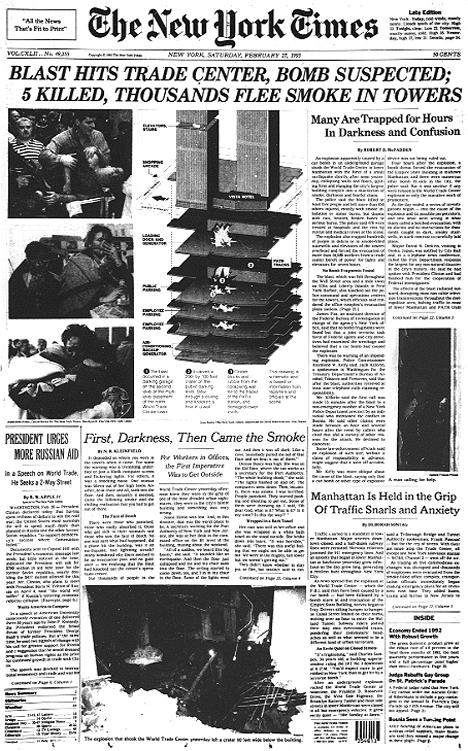
On this day in 1993, a bomb explodes at the World Trade Center, killing six, and wounding many others:

0226_big

An explosion apparently caused by a car bomb in an underground garage shook the World Trade Center in lower Manhattan with the force of a small earthquake shortly after noon yesterday, collapsing walls and floors, igniting fires and plunging the city’s largest building complex into a maelstrom of smoke, darkness and fearful chaos.

The police said the blast killed at least five people and left more than 650 others injured, mostly with smoke inhalation or minor burns, but dozens with cuts, bruises, broken bones or serious burns. The police said 476 were treated at hospitals and the rest by rescue and medical crews at the scene.

The explosion also trapped hundreds of people in debris or in smoke-filled stairwells and elevators of the towers overhead and forced the evacuation of more than 50,000 workers from a trade center bereft of power for lights and elevators for seven hours.

Google-a-Day poses a history question: “Who was the former municipal judge that became the source of criminal allegations against the 42nd U.S. President?”

Monday Music: Film Scores

The 2013 Academy Awards presentation is now over, but here’s a fan’s (Tim De Decker’s) collection of the thirty most famous film scores.

One’s bound to agree with his selection of quite a few of them, and recognize almost all of them.

Enjoy.

Daily Bread for 2.25.12

Good morning.

Monday brings partly sunny skies and a high of thirty-nine to Whitewater.

Downtown Whitewater’s Design Committee meets at 8 AM, and the Community Development Authority at 4:30 PM.

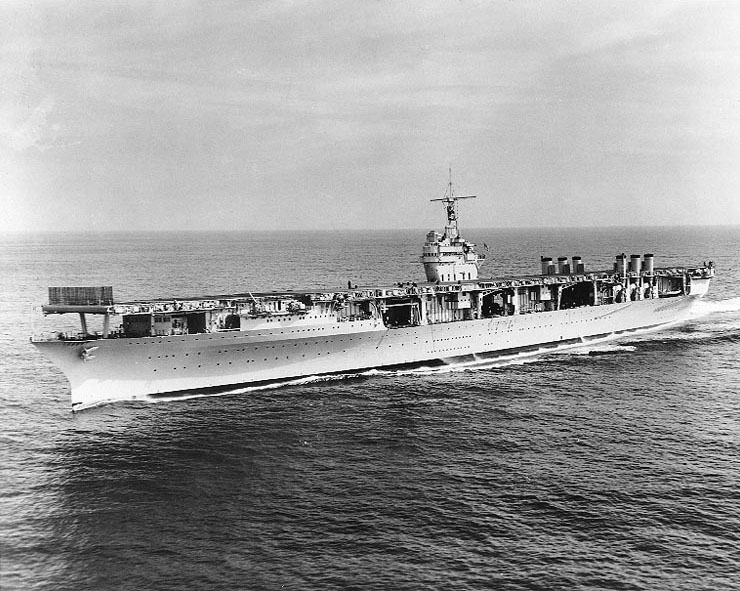
On this day in 1933, America launches her first ship built initially and expressly as an aircraft carrier:

USS_Ranger_CV-4

Ranger was laid down on 26 September 1931 by the Newport News Shipbuilding & Drydock Co., Newport News, Virginia, launched on 25 February 1933, sponsored by Lou Henry Hoover (the wife of the President of the United States), and commissioned at the Norfolk Navy Yard on 4 June 1934, with Captain Arthur L. Bristol in command.

CNN dishes up a rhino at play:

Google-a-Day, meanwhile, asks about sea creatures: “What do scientists call the ‘aliens’ and odd organisms that live below the bottom of the ocean?”

Recent Tweets, 2.17 to 2.23

Daily Bread for 2.24.13

Good morning.

It’s a lovely Sunday for us: mostly sunny, a high of thirty-three, and light west winds.

On this day in 1917, America learns of a German promise to split part of the United States should America and Germany go to war:

During World War I, British authorities give Walter H. Page, the U.S. ambassador to Britain, a copy of the “Zimmermann Note,” a coded message from Arthur Zimmermann, the German foreign secretary, to Count Johann von Bernstorff, the German ambassador to Mexico. In the telegram, intercepted and deciphered by British intelligence in late January, Zimmermann stated that in the event of war with the United States, Mexico should be asked to enter the conflict as a German ally. In return, Germany promised to restore to Mexico the lost territories of TexasNew Mexico, and Arizona.

After receiving the telegram, Page promptly sent a copy to U.S. President Woodrow Wilson, who in early March allowed the U.S. State Department to publish the note. The press initially treated the telegram as a hoax, but Arthur Zimmermann himself confirmed its authenticity. The Zimmermann Note helped turn U.S. public opinion, already severely strained by repeated German attacks on U.S. ships, firmly against Germany. On April 2, President Wilson, who had initially sought a peaceful resolution to end World War I, urged the immediate U.S. entrance into the war. Four days later, Congress formally declared war against Germany.

Zimmerman’s admission – intended to intimidate America – had the opposite effect.  Coupled with a sober Mexican military analysis that concluded German promises of aid would prove wholly inadequate, and that a war for territory could not be won, the note’s an example of German ignorance of conditions in the Americas.

Google-a-Day asks about tennis: “The 2010 tennis match that lasted 11 hours and 5 minutes beat the previous record for the longest match by how many hours?”

Daily Bread for 2.23.13

Saturday in the Whippet City brings flurries, and a high of twenty-eight. 10h 56m of sunlight and 11h 53m of daylight await us.

On this day in 1954, not so long ago really, results confirm the effectiveness of Jonas Salk’s vaccination for polio. The news appeared in the New York Times a few weeks later:

New Orleans, March 11 — The latest tests on children with the anti-polio vaccine have revealed that the vaccine provides the body with lasting defensive powers against the three types of viruses causing the disease, it was reported tonight.

This was described as the long-sought answer to a vital question, making it practically certain not only that the vaccine will produce effective immunity against all three types of polio but also that the immunity will be of the lasting type, possibly for the individual’s lifetime.

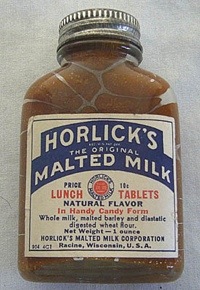
On this day in 1846, a malted-milk magnate is born:

20130223-084948.jpg

1846 – William Horlick Born
On this date William Horlick was born in Ruardean, Gloucestershire, England. A noted food manufacturer and philanthopist, Horlick arrived in the U.S. in 1869 and settled in Racine. In 1872 he moved to Chicago with his brother and began to manufacture food products. In 1876 his company moved to Racine where he began to experiment with creating a dried milk product.

In 1887 he trademarked Malted Milk. In 1889 he opened a company branch in New York City and another in England the following year. He constructed additional plants in Racine in 1902 and 1905. The company name was changed to Horlick’s Malted Milk Co. in 1906.

This success enabled Horlick to achieve a widespread reputation as a philanthropist in Racine. He also helped fund the first Byrd expedition to the South Pole and the Amundsen expedition to the North Pole. After his death in 1936, control of the company passed to his son, Ander James Horlick. [Source: Dictionary of Wisconsin Biography, SHSW 1960, pg. 177]

Google-a-Day asks about film: “What kind of parent does a dad describe himself as in the 2012 Academy Award-nominated movie set in Hawaii?”