FREE WHITEWATER

NASA Adds Dream Chaser to Transportation Roster

For those hoping that America would re-introduce a space plane to her roster of civilian transportation options, there’s good news:

The Dream Chaser space plane that lands on a runway like an aeroplane and launches with the help of a rocket will join the duo of privately operated space capsules – SpaceX’s reusable Dragon and Orbital ATK’s disposable Cygnus.

NASA awarded contracts valued at several billion dollars Jan. 14 to three companies, including one newcomer, for commercial cargo deliveries to the International Space Station through 2024.

See, Dream Chaser space plane to fly to ISS (Video) @ Canada Journal.

There’s also significant support among our European allies for the Dream Chaser.  See, from the BBC, Europe excited by Dream Chaser mini-shuttle.

Winged craft don’t simply look sharp – they allow (among other things) runway landings that permit rapid return of biomedical experiments to terrestrial laboratories.

NASA made the right decision when she encouraged multiple, private companies to compete for transportation contracts. Out of that competition, America will have more than one good vehicle (where each of those options will be at the forefront of contemporary engineering).

Daily Bread for 1.16.16

Good morning, Whitewater.

Saturday will bring increasing sunshine and a high of twenty-two to town. Sunrise is 7:21 and sunset 4:47, for 9h 25m 52s of daytime. The moon is a waxing crescent with 45.8% of its visible disk illuminated.

What are the secrets of World Championship Whistling? Four-time national and international whistling champion Christopher Ullman offers some techniques for success:

On this day in 1786, the Virginia General Assembly enacts the Virginia Statute for Religious Freedom into state law:

The Virginia Statute for Religious Freedom was drafted in 1777 (however it was not first introduced into the Virginia General Assembly until 1779)[1] byThomas Jefferson in the city of Fredericksburg, Virginia. On January 16, 1786, the Assembly enacted the statute into the state’s law. The statute disestablished the Church of England in Virginia and guaranteed freedom of religion to people of all religious faiths, including Catholics and Jews as well as members of allProtestant denominations.[2] The statute was a notable precursor of the Establishment Clause and Free Exercise Clause of the First Amendment to the United States Constitution.

The Statute for Religious Freedom is one of only three accomplishments Jefferson instructed be put in his epitaph.[3]

Wisconsin Foodie, A Taste of Local

Wisconsin Foodie is a favorite program of mine. In the episode below, “Kyle [Cherek] visits the Michael Fields Agricultural Institute in East Troy, touring the grounds and sitting down to a white-linen dinner prepared by Tyler Sailsbery of the Black Sheep. This episode also profiles Dan O’Leary, who has been caring for the bees of Michael Fields for 15 years.”

The Value of Sports

Whitewater has had athletic successes in our district and on campus. Our high school and local university have witnessed impressive state & national accomplishments. Few cities have done so well. It’s been my pleasure to attend and cheer for Whitewater’s high school and college teams. I was graduated from another school, but like so many residents (college and non-college), the success of UW-Whitewater’s athletes and coaches is admirable to me.

For those on campus: to you who have competed, and to those who have coached you, belong first and foremost those efforts and those accomplishments. Others (as I do) may wish you well and cheer you on, but these achievements are yours, enduringly and incorruptibly.

Not long ago, UW-Whitewater produced a supposed assessment of the economic value to the community of the university’s athletic programs. (See, from 11.18.15, http://www.uww.edu/news/archive/2015-11-athletics.) It’s not much of a study, really, and its problem is not in the method (although that hardly seems strong), but in the very concept the report advances. (Conceptual failure is a deeper failing than method, by far.)

The brief summary, described as a report, isn’t written like a report at all – it’s written with an introduction that’s more press release than anything else:

With more than 550 participating athletes and fourteen national championships in the last ten years, the University of Wisconsin-Whitewater is a pinnacle of NCAA Division collegiate athletics. These athletic events bring an average of 54,910 people to the area every year, which has a profound economic impact on the immediate area….

So what’s wrong with the report? Conceptually, it’s flawed, even on its own terms: the economic value of athletic programs to the community is what the programs bring into Whitewater absent their presence. That is, the economic value is their incremental addition to the community.

This study fallaciously assumes that absent the presence of these programs, there would be no alternative economic activity to replace the programs under consideration. Economic activity is not a choice merely between a given impact from athletics and, let’s say, the alternative of no activity (as in, for example, a community afflicted with catatonia).

Understand what I’m saying: I support these programs, but this report fails to determine the right number for their value to the community. It’s just a flimsy analysis.

Since the study comes from a university, that’s a troubling thing.

The report was, however, certainly convenient, as it allowed UW-Whitewater’s Media Relations director Sara Kuhl to cite the study in reply to a Gannett Media investigative report on how UW-Whitewater has been giving out championship rings to non-athletes and non-coaches. See, from Gannett, UW school pays $112,000 for sports rings @ USA Today Network – Wisconsin.  For my own assessment of this – that rings are deserved for athletes and coaches, but not administrators, etc. – see, At UW-Whitewater, Far More Championship Rings Than Actual Athletes & Coaches.
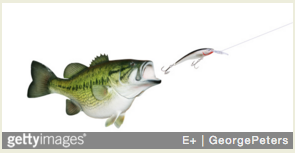
fishlure

(There is something, however, that this report does prove, conclusively, I think.  This report proves that there are versions of fishing lures that work on humans.  Just as fish will bite on any shiny thing that comes along, so both the Daily Union and Banner bit on Ms. Kuhl’s press release without question or reflection.

For the Banner, this was actually a top story of the year.  Next up, one guesses: Whitewater Cow Jumps Over the Moon, Innovation Center Patents Leaches as Medical Cure, and Cloning the Same Resident Fifteen-Thousand Times Will Fix Everything.)

For athletes and coaches: you don’t need this flimsy study to prove your worth to our community.  In your honest efforts on the court and on the field – win or lose – you already prove that worth, every single day.

Friday Poll: NFL Games on Sat 1.16 & Sun 1.17


There are four playoff games this weekend.  The table below lists them, from Oddsshark (times adjusted to Central). Which teams do you like? (Multiple selections are possible.) Let’s see who rises to the top.

TEAMS VIEW ALL NFL ODDS
Kansas City
New England
Gillette Stadium Jan 16@
3:35 PM CT
Green Bay
Arizona
University of Phoenix Stadium Jan 16@
7:15 PM CT
Seattle
Carolina
Bank of America Stadium Jan 17@
12:05 PM CT
Pittsburgh
Denver
Sports Authority Field at Mile High Jan 17@
3:40 PM CT

Daily Bread for 1.15.16

Good morning, Whitewater.

Our week ends with clouds and a high of thirty-six. Sunrise is 7:22 and sunset is 4:46, for 9h 24m 08s of daytime. The moon is a waxing crescent with 33.8% of its visible disk illuminated.

On this day in 1967, the Packers win:

1967 – Green Bay Packers Win First Super Bowl

On this date the Green Bay Packers defeated the Kansas City Chiefs in the first Superbowl championship. The game was held at Memorial Coliseum in Los Angeles, with 61,946 sports fans in attendance. The final score was 35 to 10. For their victory, the Packers collected $15,000 per player and the Chiefs $7,500 per player – the largest single-game shares in the history of team sports at that time. [Source:Packers.com]

Tonight, the NFL Network [Plans] To Re-Air Super Bowl I For The First Time Since Game Day:

Here’s the final game in this week’s Band Mates series from Puzzability:

This Week’s Game — January 11-15
Band Mates
Glad you’ve joined us for this week’s musical pieces. For each day, we started with the name of a famous rock band that contains at least one repeated letter. Each day’s clue is the chunk of letters between such a pair, with any spaces removed.
Example:
GSTO
Answer:
The Rolling Stones
What to Submit:
Submit the band’s name (as “The Rolling Stones” in the example) for your answer.
Friday, January 15
USBR

Brief Remarks on Downtown Whitewater, Inc.

I promised a post on Downtown Whitewater, Inc.’s search for a new, full-time leader.  They’ve a committee that drafted a job description.  Of that committee, there are truly impressive members : smart, talented people.

How their search will turn out I do not know – one hopes for a good outcome.

I do know, however, that Whitewater’s success doesn’t depend principally on secondary organizations, but on successful, direct, daily transactions between Whitewater’s businesses and her consumers.

We have seen the rise of new restaurants & merchants in town (in all parts of it), and the continuing success of others, that have compelling offerings.  These businesses offer much through the hard work of their owners.  Their success is the consequence of their labors.

I’ll now return an expression someone many years ago delivered to me:

One should not confuse the map for the terrain.  

I’ll not confuse business organizations for free markets of private businesses and consumers.

My best wishes to all for many prosperous years ahead.

Institute for Justice Fights Anti-Competitive Ban on Baked Goods

Wisconsin is lousy with anti-competitive statutes, designed to protect incumbents from free-market competition. One would prefer that private parties did not have to file lawsuits to protect their economic rights.  Unfortunately, some laws (and some official actions) compel private citizens to seek redress from the courts to protect their liberties.  Fortunately, the Institute for Justice is willing to file suit to make Wisconsin’s markets a bit freer:

Anyone with an oven and a recipe should be able to have a baking business—but that is not the case in Wisconsin, where selling baked goods made in your home kitchen is punishable by up to $1,000 in fines or six months in jail. Wisconsin is one of only two states (the other being New Jersey) to ban the sale of home-baked goods.

Wisconsin’s home-baked-good ban has nothing to do with safety. The state bans home bakers from selling even food the government deems to be “not potentially hazardous” such as cookies, muffins and breads. The state also allows the sale of homemade foods like raw apple cider, maple syrup and popcorn, as well as canned goods such as jams and pickles. In addition, the state allows nonprofit organizations to sell any type of homemade food goods at events up to 12 days a year.

The ban is purely political. Commercial food producers like the Wisconsin Bakers Association are lobbying against a “Cookie Bill”—which would allow the limited sale of home baked goods—in order to protect themselves from competition. Assembly Speaker Robin Vos, who owns his own commercial food business, even refused to allow the Assembly to vote on a Cookie Bill last session, despite bipartisan support.

That’s why on January 13, 2016, three Wisconsin farmers joined with the Institute for Justice in filing a constitutional lawsuit in state court against Wisconsin’s State Department of Agriculture. The lawsuit will ask the court to strike down this arbitrary home-baked-good ban and allow home bakers to sell home-baked goods—like muffins, cookies and breads—directly to their friends, neighbors and other consumers.

Via Wisconsin Baked Goods Ban: Wisconsin Farmers Challenge State Ban on Selling Home-Baked Goods @ Institute for Justice.

See, also, a copy of the plaintiffs’ complaint, embedded below:

Daily Bread for 1.14.16

Good morning, Whitewater.

Thursday will become increasingly sunny, and reach a daytime high of thirty-eight.  Sunrise is 7:22 and sunset 4:45, for 9h 22m 29s of daytime.  The moon is a waxing crescent with 23.6% of its visible disk illuminated.

It’s Benedict Arnold‘s birthday.  History.com has an article about Arnold, entitled, 9 Things You May Not Know About Benedict Arnold.

One of my favorite political cartoons is from 1865, in which the cartoonist depicts Benedict Arnold and Jefferson Davis being welcomed into Hell.  One should be properly reluctant to opine on the theological soundness of that assessment (being as it is a divine judgment), but as a political matter the cartoonist’s characterization seems about right.


Here’s today’s Puzzability game in their current series, Band Mates:

This Week’s Game — January 11-15
Band Mates
Glad you’ve joined us for this week’s musical pieces. For each day, we started with the name of a famous rock band that contains at least one repeated letter. Each day’s clue is the chunk of letters between such a pair, with any spaces removed.
Example:
GSTO
Answer:
The Rolling Stones
What to Submit:
Submit the band’s name (as “The Rolling Stones” in the example) for your answer.
Thursday, January 14
LLIC

About That Accreditation at UW-Whitewater…

Last week, UW-Whitewater’s administration announced, in oddly grand terms, the results of an accreditation review from the HLC.  (That would be the ‘Higher Learning Commission,’ one of dozens of self-designated accrediting organizations of the same ilk.)  One reads that the accreditation was ‘a weighty stamp of approval’ of our campus administration’s actions. The accreditation was nothing of the kind. Much of it relies on supposed ‘evidence’ of good conduct that is, in fact, evidence of nothing truly happening on campus. Nothing.

For sexual assault survivors, in particular, the HLC accreditation is a dishonest fig leaf.

Consider how the HLC report finds ‘evidence’ of ethical conduct:

2 – Integrity: Ethical and Responsible Conduct

The institution acts with integrity; its conduct is ethical and responsible.

2.A – Core Component 2.A

The institution operates with integrity in its financial, academic, personnel, and auxiliary functions; it establishes and follows policies and processes for fair and ethical behavior on the part of its governing board, administration, faculty, and staff.

Rating

Met

Evidence

The University of Wisconsin – Whitewater maintains a deep commitment to integrity and ethical conduct as evidenced by a number of documents including those related to a long history of shared governance, inclusive decision making, equal opportunities, and personnel rules for UW-W faculty and staff. Meetings with deans, other academic leaders, faculty and staff confirm the commitment.

Board of Regents policies further support a high standard of integrity as outlined in Board of Regents Measures to Eliminate Racism, Consensual Relationships, Gender Discrimination, Harassment & Retaliation and a variety statutes listed in Chapter 19 of the Wisconsin Statutes.

Emphasis mine.

For the HLC, evidence of proper local conduct is a document or – honest to goodness, wait for it – a state statute.

No, and no again: only actual ethical conduct is evidence of actual ethical conduct.  Documents and statutes are no evidence whatever of how local administrators or others are behaving.  Only how they behave is evidence of how they’re behaving.

Imagine, for example, that Martians visited the United States in 1925, and wanted to learn about the behavior of Americans from that time.

Mars_23_aug_2003_hubbleLet’s suppose that the leader of the Martian expedition sent field workers across America to learn about how residents of the United States lived in 1925. Out the extraterrestrial field workers went, to explore this country.

Upon their return to the Martian spacecraft, an elderly Martian asks the field workers a few questions, among them a question about Americans’ drinking habits.

“Do Americans consume alcoholic beverages?’ the Martian leader asks.

“No,” replies one of the Red Planet’s investigators. “No one in America drinks any alcoholic beverages.”

“How do you know this?” asks the elderly Martian. “What evidence have you found?”

“Well,” say the younger ones, “we checked, and these Americans have a constitutional amendment1 that forbids consumption of alcohol, so we know that there is no drinking of alcohol among them.”

No one who values learning and reasoning would settle for the young Martians’ supposed evidence about alcohol; no one who values learning and reasoning should settle for this feeble claim of good-conduct-because-the-rules-say-so.   This administration’s proffer of evidence is an embarrassment to higher learning, and unworthy of so many deserving students and faculty.

Sadly, there’s even worse in the HLC report, on page 54 (page 7 of the ‘Compliance Team Template’):

As is the trend nationwide, there appears to be a concern about the number of unwanted sexual advances.

These bland words are simultaneously despicable and false.  They’re false because they describe concern about ‘unwanted sexual advances’ when the actual concern is about rape and about administrative handling of rape cases.  They’re despicable because the brief mention of the subject does all it can to minimize the seriousness of injury to people, and also the seriousness to those who are accused, too (‘appears to be a concern,’ ‘as is the trend nationwide’ and the euphemism ‘unwanted sexual advances’).

Hundreds of millions are spent at this public institution, including sums for poorly-written press releases.  A career in feeble, mendacious excuse-making is an unworthy one.

UW-Whitewater’s students, faculty, and Whitewater’s residents deserve a better administration than this.

1. In fact, the Martians would have been wrong even about what the Eighteenth Amendment, on its face, required.  That now-repealed provision actually restricted only the ‘manufacture, sale, or transportation of intoxicating liquors,’ rather than their consumption.  Not only would they have been wrong to rely on the Eighteen Amendment as evidence that Americans didn’t drink, but they also would have read the Amendment incorrectly.