
I’ve never dressed an animal in doll’s clothing, but after reading Vintage Photos Reveal Century-Long Obession with Dressing Up Pets @ io9, one learns that people have been doing this for at least a hundred years. (More photos at the link.)
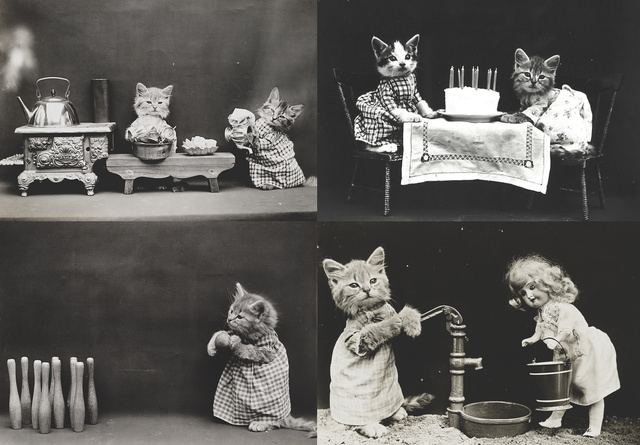

I’ve never dressed an animal in doll’s clothing, but after reading Vintage Photos Reveal Century-Long Obession with Dressing Up Pets @ io9, one learns that people have been doing this for at least a hundred years. (More photos at the link.)
Here’s a new, third-annual version for 2013-14 of a poll I’ve published since 2011.
When will Whitewater see her first appreciable snowfall? (Let’s say that an appreciable snowfall is at least one inch.) Comments are available, including for those outside the city who’d like to predict for their own communities.
My guess for Whitewater: December 4th.
What do you think?
Good morning.
We’ll have a good chance of morning snow today (no accumulation expected), with a high of thirty-five.
It’s the fiftieth anniversary of Pres. Kenendy’s assassination. Here’s how the New York Times reported the tragic events of that day:
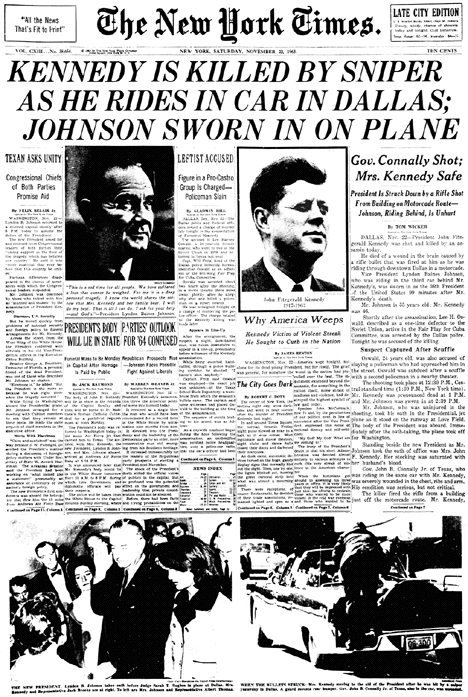
Dallas, Nov. 22–President John Fitzgerald Kennedy was shot and killed by an assassin today.
He died of a wound in the brain caused by a rifle bullet that was fired at him as he was riding through downtown Dallas in a motorcade.
Vice President Lyndon Baines Johnson, who was riding in the third car behind Mr. Kennedy’s, was sworn in as the 36th President of the United States 99 minutes after Mr. Kennedy’s death.
Mr. Johnson is 55 years old; Mr. Kennedy was 46.
Shortly after the assassination, Lee H. Oswald, who once defected to the Soviet Union and who has been active in the Fair Play for Cuba Committee, was arrested by the Dallas police. Tonight he was accused of the killing.
Suspect Captured After Scuffle
Oswald, 24 years old, was also accused of slaying a policeman who had approached him in the street. Oswald was subdued after a scuffle with a second policeman in a nearby theater…
Here’s Puzzability‘s Friday puzzle:
|
This Week’s Game — November 18-22
|
|||||
|
First Editions
|
|||||
|
This week, we’re summarizing books in just one word. Each day’s answer is a book title whose initial letters spell a three- or four-letter word. The day’s clue includes information about the book and a clue to the word.
|
|||||
|
Example:
|
|||||
|
Joseph Heller novel about a professor who has a chance to be the first Jewish Secretary of State, if he can just get that bandanna out of his mouth
|
|||||
|
Answer:
|
|||||
|
Good as Gold (GAG)
|
|||||
|
What to Submit:
|
|||||
|
Submit the book title (as “Good as Gold” in the example) for your answer.
|
|||||
 |
|||||
|
Friday, November 22
|
|||||
|
Good morning.
We’ll have a one-third chance of rain today with a high of forty-five.
On this day in 1783, a balloon flight over Paris:
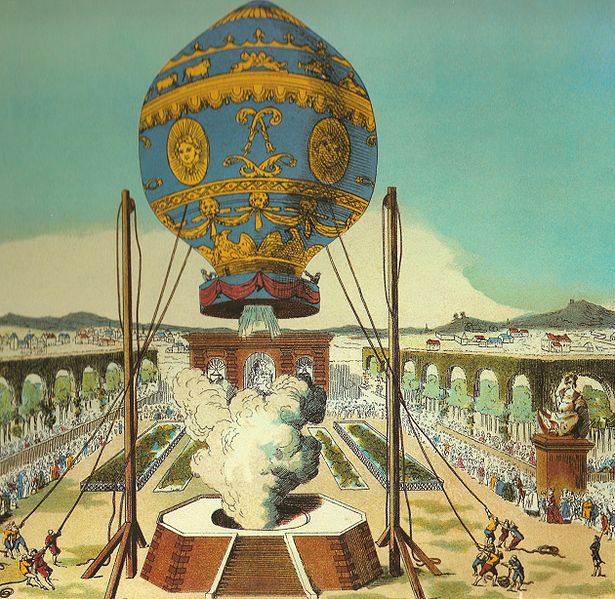
French physician Jean-François Pilatre de Rozier and François Laurent, the marquis d’ Arlandes, make the first untethered hot-air balloon flight, flying 5.5 miles over Paris in about 25 minutes. Their cloth balloon was crafted by French papermaking brothers Jacques-Étienne and Joseph-Michel Montgolfier, inventors of the world’s first successful hot-air balloons.
Here’s Puzzability‘s entry for today:
|
This Week’s Game — November 18-22
|
|||||
|
First Editions
|
|||||
|
This week, we’re summarizing books in just one word. Each day’s answer is a book title whose initial letters spell a three- or four-letter word. The day’s clue includes information about the book and a clue to the word.
|
|||||
|
Example:
|
|||||
|
Joseph Heller novel about a professor who has a chance to be the first Jewish Secretary of State, if he can just get that bandanna out of his mouth
|
|||||
|
Answer:
|
|||||
|
Good as Gold (GAG)
|
|||||
|
What to Submit:
|
|||||
|
Submit the book title (as “Good as Gold” in the example) for your answer.
|
|||||
|
|||||
|
Thursday, November 21
|
|||||
|
It was Gov. Romney, I think, whose presidential campaign slogan was ‘Believe in America.’ I’m not a Republican (I’m Libertarian), but I did like the slogan. America is worth believing in.
I believe in Whitewater, too. Not how she’s been depicted, entirely, but how she truly is, and in the good things that lie ahead for us, here. Our city, now and in the years ahead, offers and will offer so much to so many.
Consider the Council session last night – the vote over the bus did not go my way, as a vote. And yet, and yet, it very much went a good way as a discussion – the level of discourse among Council is far better than even a few years ago. The quality of reasoning matters fundamentally.
That’s a real gain – it’s not enough to say ‘I want this,’ or ‘I want that’ – there should be meaningful explanations of why one believes something. We have that sort of discussion a bit more each year.
Watch a Council discussion on video from a few years ago and compare it with one more recently – we are developing a better politics. Better than we had, and also likely better than other towns nearby. Not Left or Right, simply better. There’s a good distance to go, but we can clear that distance if only we’d keep pushing harder.
There’s every now reason to keep working for that higher standard. I know I’ll do my level best – there’s no better place to be.
(I’d guess that Janesville’s visiting officials really don’t see that we expect more of officials here than is probably expected of them in their own city. The gap between that city’s officials and our representatives is notable; we’ve a higher standard.)
We don’t have to settle and I don’t think we will.
Update, 2 PM: A reader wrote today, asking why I seem relatively unconcerned about this vote (as a practical matter). That’s my omission: in the discussion last night, it’s clear that Generac plans to reduce funding in the future. Advocates of this project will have to find other corporate sponsors and make it work with the existing transportation management. The first is hard; the second is even harder. No one who voted for this project will have any personal ability to get more money for it, and all will have to rely on existing management from Janesville. They’ve only postponed the inevitable.
There are times when simply listening to advocates talk about a program undermines its long-term value. Last night, during the discussion of Janesville Transit’s bus to Whitewater, was one of those times. In the end, Common Council reduced funding from the request (but, as a someone commenting noted), funded even over what this year’s funding was.
Still, given the choice between supporting or opposing a mediocre project, I’d rather oppose on principle than accede on supposed expediency
There was, really, much confirmation through the discussion that the whole project has descended into a shambles, a mediocre and incompetently run effort. There’s value in seeing that – this is what happens when a project begins with too little foresight, and is trusted to dodgy data and fumbling bureaucrats.
There’s not the slightest chance that I’d change my position on this project after last night’s discussion – on the contrary – one may be at least grateful to stand far away from a gaggle of mediocre bureaucrats who are flacking this proposal.
Generac’s Role. Generac certainly bears a responsibility for each dollar of public money that subsidizes its private business. No one stuffed tax money in that company’s pockets – they took subsidies from state and federal and local public sources to advance their private corporate interests. That’s needless and wrong.
Oops! Generac’s Not Paying $47,830, They’re Only Paying $18,000. Hard to believe, but true – the financial documents that Janesville’s Dave Mumma gave Whitewater only two weeks ago were unconfirmed, speculative junk: turns out Generac wasn’t agreeing to $47,830 for the next year, they were agreeing to only $18,000 (yes, really).
Tim Hearden, vice president of operations for Generac, told Council last night that:
Generac never committed to any forty-seven-thousand-dollar number. That I certainly can tell you.
So, how did that larger figure come about?
Wait for it – that wasn’t from pledges of support or commitments at all – it was just a list of unconfirmed cost breakdowns. Needless to say, that’s not how that higher figure was presented at the last Council meeting.
Generac hadn’t agreed – Janesville’s transit director just left Whitewater to assume that they had.
Hard to believe, but true.
The Origin of the Program. Oddly, Generac’s corporate representative and public officials are at odds over how this program even started. That’s both strange and revealing – in a successful program, the participants would be rushing to claim credit. Not here.
Public officials claim this was all Generac’s idea, but Generac’s vice president of operations flatly disputes those claims.
Last night, Janesville’s Jennifer Petruzzello, Neighborhood Services Director (and supervisor of Dave Mumma) contended that
Two years ago, the City of Janesville was approached by Generac and the City of Whitewater regarding the possibility of a regional transit system…”
(Video not yet online).
But that’s not what Generac’s Tim Hearden, vice president of operations for Generac, recalls:
This was not a Generac approaching Janesville like we heard earlier, the Janesville Transit Department, along with the City of Whitewater, approached Generac, saying that they had tried to do this bus service for quite a few years and were looking for some seed sponsorship to be able to start a program that they thought was beneficial to these geographically distant communities…
(Video not yet online).
So, who’s right? Was this Generac’s idea, or Whitewater’s? That is, where did this bad idea originate?
Although I believe that Generac should pay far more for this program than they are paying, a review of State of Wisconsin Supplemental Rural Transportation Assistance Program documents fundamentally corroborates Generac’s account.
As early as 2009, Dave Mumma was listed as project applicant and recipient for a STRAP grant:
Conduct a feasibility study for: 1) establishing commuter service between Janesville, Milton, and Whitewater and the rural areas in between these areas, 2) establishing an internal transit service within Milton, and 3) reviewing and upgrading the shared-ride taxi service in Whitewter [sic].
Again, Mumma received another grant for 2010:
Establish commuter service between Janesville, Milton and Whitewater to address the lack of public transportation available in the corridor. At this time only citizens with private vehicles can travel to these destinations for education, employment, health care, shopping, community services and access to the regional transportation network.
Generac’s hiring needs didn’t begin until November 2011 (see, http://gazettextra.com/news/2011/nov/30/300-positions-open-generac/).
I’ve no water to carry for Generac – and think they should pay for all they receive – but this looks like an ongoing Janesville transportation scheme in search of a justification.
That matters, because it says that Janesville’s Mumma had years of public money to plan this project and still made a hash of it.
Going Forward. A few suggestions:
1. Council decided last night to consider this issue again in August, not next November. That makes sense – waiting to the last minute makes careful consideration too difficult.
2. After years of presentations before our Council – and years of trying to make this program work – it’s clear that Janesville’s Dave Mumma is fundamentally unable to make this a success.
The more he speaks, the worse the case for the bus becomes.
3. For City Manager Clapper – One hopes the best for your career here, and a key to success is avoiding these supposed partners from Janesville who are credibility- and competency-challenged. No one in Whitewater owes these out-of-town bureaucrats their mediocrity.
We can do better than they’re doing, on much better projects than this ramshackle one (that’s an understatement).
Overall, though, the bus discussion is what one might call a teachable moment – what not do do, how not to plan, and how important it is to turn away from yesterday’s lack of good sense.
Good morning.
A quick note about a post later today —
Last night, Whitewater’s Common Council voted 4-2 for reduced funding for the now-renamed ‘Janesville-Milton-Whitewater’ bus for 2014. I’ve argued against any funding, but reduced funding is still a gain for better policy. In a city that’s now overcoming some truly debilitating past mistakes, movement in the right direction is welcome.
Update: You’ll see in the comments below that someone notes that 2014 comes in at higher funding than 2013. That’s right. I’m referring above to reduced funding compared with the requested amount. Candidly, even a reduction over a request is hard for some on Council to make. The pressure to yield to proposals from institutional advocates is huge for some – they’re more comfortable saying no to less established requests.
One takes one what one can get (or not get), having limited confidence that a bad idea from a big institution will ever be rejected.
And yet, I’ll be the first to say that last night’s discussion was revealing in ways that I did not expect. Captivating, almost, but really in the uncomfortable and morbid way that an accident scene is captivating. Indeed, part of the discussion last night concerned the implicit charge that public officials in Janesville lied to Whitewater’s Common Council about the origins and intentions of the bus program. I’ll address that charge, and other topics about the bus, in an upcoming post.
Wednesday will bring a forty-percent chance of rain tonight, with a high of forty-three.
On this day in 1859, a sports first for Milwaukee:
1859 – First Baseball Game in Milwaukee
An impromptu game of base ball , as it was spelled in the early years, was played by two teams of seven at the Milwaukee Fair Ground. The game was organized by Rufus King, publisher of the Milwaukee Sentinel, and is believed to have been the first baseball game played in Milwaukee. In spite of cold weather, two more games were played in December, and by April 1860 the Milwaukee Base Ball Club was organized. View early baseball photographs at Wisconsin Historical Images, and read about baseball’s first decades in Wisconsin at Turning Points in Wisconsin.
Here’s Puzzability‘s latest daily puzzle:
|
This Week’s Game — November 18-22
|
|||||
|
First Editions
|
|||||
|
This week, we’re summarizing books in just one word. Each day’s answer is a book title whose initial letters spell a three- or four-letter word. The day’s clue includes information about the book and a clue to the word.
|
|||||
|
Example:
|
|||||
|
Joseph Heller novel about a professor who has a chance to be the first Jewish Secretary of State, if he can just get that bandanna out of his mouth
|
|||||
|
Answer:
|
|||||
|
Good as Gold (GAG)
|
|||||
|
What to Submit:
|
|||||
|
Submit the book title (as “Good as Gold” in the example) for your answer.
|
|||||
|
|||||
|
Wednesday, November 20
|
|||||
|
Abduckted from Seth Boyden on Vimeo.
As I write – these last eighteen months now offering ample evidence – Janesville Transit’s bus to Whitewater has been a failure. It’s been used too seldom, at considerable public expense, mostly for a vast corporation that could easily pay its own way. And yet, and yet, conditions might be even worse were the bus to achieve the goals of its out-of-town backers:
Under the very marketing plan that Janesville Transit’s director has repeatedly praised, and now proudly declares he is implementing, the bus is designed to entice Whitewater residents to shop and dine in Janesville. The stated long-range plan for the bus – as one can see in the marketing study that Janesville Transit commissioned – expressly calls for taking customers out of Whitewater and delivering them to merchants and restaurateurs in Janesville or other cities outside our city.
The Integrated Marketing Plan concedes the common-sense problem the bus presents to local merchants:
The larger community as a whole has concerns with public transportation, such as the JMW Bus, because the bus system could take potential business to other cities. This is a huge concern when it comes to the livelihood of Whitewater.
The plan plays on the false notion that people are ‘stuck’ in Whitewater:
The most prominent opportunity to [sic] the JMW bus is the large number of students who do not own cars. Without cars, these students are generally stuck in Whitewater (or so they feel) because they do not have a vehicle of their own.
The plan is designed to take residents out of the city to shop elsewhere:
Sarah is a 19-year-old sophomore who lives at UW-Whitewater, She lives in the dorms and does not own a car. On the weekends she stays in Whitewater, and often wishes there was more to do.
A proposed radio spot for the Janesville bus directly encourages residents to ‘leave town’ for visits that supposedly ‘open the door to new possibilities’ out of Whitewater, including a ‘huge selection of events and activities’:
The JMW Bus opens a new world of possibilities…
SFX [Sound effects]: Bus STOPPING AND DOORS OPENING.
MALE 1: Some people think that just because we live in Whitewater, public transportation isn’t an option,.
MALE 2: What they don’t know is that public transportation is an excellent option! The JMW Bus picks up all over Whitewater and Milton.
MALE 1: And it goes to Janesville, which has a huge selection of events and activities….
ANNCR [Announcer]: The JMW bus is the most cost-friendly, convenient was to get around. Next time you plan on leaving town, think JMW bus and open the door to new possibilities.
Every member of our local government who supports this project should honestly tell Whitewater’s merchants that it’s a plan designed to take customers to Janesville. We talk about what it means to BUY LOCAL, but this is a plan to SHOP JANESVILLE. Whitewater should support an emerging business culture of local shops and restaurants – this transportation scheme directly undermines our own efforts.
What good does it do to place a city manager or council member on a local business board or at the Community Development Authority if the marketing for the bus boosts out-of-town businesses and development in other cities?
It’s much better to be in Whitewater – this is the place that appointed and elected officials should be supporting. Our city, our merchants, building Whitewater together.
The Bus Mostly Benefits (Now) One Big Company. By proponents’ own admission, this bus still benefits Generac more than anyone else.
Generac Pays a Tiny Fraction of the Cost. The projected cost for 2014 would be $394,646, but Generac would pay $47,830, or only 12.1%. In 2013, Generac paid $46,000 toward the bus, and in 2014 it would be just slightly more at $47,830. By contrast, Whitewater’s share would rise by 80%, from $10,000 to $18,000.
Wasted Gas – It’s Not Green, It’s Brown. Janesville Transit admits that they cannot right-size the bus based on ridership, and that full or empty the bus travels 300 miles a day in total miles. It will cost – mostly in public money – $1,287 per weekday to operate, $773 per Saturday, and $515 per Sunday (operating whether full or empty).
Ridership Numbers Are Admittedly Confusing and Inflated. Passenger boarding figures count riders twice: If one boards in Janesville, gets off at Generac, he’s counted two times – for Janesville and Generac, yet still one person was riding. See, Council Session of 11.5.13 Video Link: http://vimeo.com/78821732 at 2:27:16.
Advertising Has Been Misleading. All that print advertising around town and yet it relies on bold claims of riders that actually double-count passengers.
Policy. Watching how this started, under a former municipal administration, one sees that there was little foresight and understanding about the deal. That’s been a huge problem for our city in the past, and getting beyond short-term or contradictory thinking is essential to our success. It’s patently false to contend – as Milton’s mayor has done – that this is a forward-thinking project. No, it’s yesterday’s crony-capitalism, wrapped up in today’s empty jargon about being forward-thinking. There’s nothing progressive about this plan – it’s a regression to bad ideas and a lack of good planning,
Politics. Opposition to this deal is non-partisan, neither Left nor Right, Republican nor Democratic. It’s a plan that undermines our city; the only reason it survives is because powerful corporate interests and out-of-town politicians pressure and cajole to keep it going.
I’d guess there’s no one – no one – in the municipal government who would sign onto this program if it were first proposed today.
The political and policy problems from this idea will, however, only grow worse for Whitewater as it goes forward. If it fails totally Whitewater’s saddled with a wasted cost; if it grows Whitewater still bears that cost, but also a loss of local, independent business.
It’s an utter mess with which we’ve been saddled.
I truly hope that our current municipal administration and our city manager are a success – we could very much use good years after so many disappointing ones. Turning away from this very bad idea is prudent, and also will help preserve the many emerging good ideas within, and for, Whitewater.
I promised earlier a summary of principal arguments made about a (mostly) publicly-funded transit bus that benefits (mostly) one multi-billion-dollar corporation. Here’s that post, with a summary of points about the project at Whitewater’s Common Council sessions of 3.20.12, 11.20.12, and 11.5.13.
For each date, I’ve included a link to a Vimeo page with a video recording of that council session. (Each point listed includes a reference by time to the moment on the respective recording when someone made that point.) The left-hand column of the table offers points made; the right-hand column my remarks about that point.
| Points Made | Comments |
|---|---|
| Generac seeing interest in employees commuting from their homes in Janesville/Beloit area. City Mgr. Brunner facilitating meeting with Janesville transit to establish commuter line – Whitewater public financing in future if line is successful. [4:50] | Public financing in the future? That future turned out to the very same year – 2012. City Mgr. Brunner must have meant the near future. |
| Over half the initial cost borne by state and federal government, about one-fifth from fares, and about three-tenths from ‘local sponsorship’ (that is, funds local governments or businesses) [5:50] | It’s mostly taxpayer-subsidized, although one big corporation gets most of the benefits for its employees. |
| Generac is very interested in starting this fairly quickly [6:05] | Of course they are – it’s their gain on others’ tab. |
| City Mgr. Brunner ‘at this time’ doesn’t think an agreement would require a financial commitment, but that’s ‘still to be negotiated’ [6:30] | Oh, brother – @ 4:50 in the video Cty. Mgr. Brunner claims public funding was in the future, but @ 6:30 he contends a financial commitment was ‘still to be negotiated’ One supposes he when he said ‘in the future’ meant one minute, forty seconds later. |
| University has gone on record saying they will support it and put money into the system [6:40] | Now, however, one sees that they’ll only support the project if WW does – it’s conditional, contingent, and provisional support only – tepid and hardly an affirmation at all |
| Points Made | Comments | |
|---|---|---|
| Generac contends it has to go outside of Whitewater for workers [0:20] | We have many unemployed here, too | |
| Generac does not consider itself in the bus business [0:25] | No, of course not – they want taxpayers to be in the bus business for them – they want you to be in the bus business | |
| Generac will hold big job fair in WW within next week [0:50] | And yet, a year later, they’re still bringing in out-of-city workers | |
| Generac employees eat lunch in WW [1:10] | They don’t leave the Generac campus and everyone in town knows as much | |
| Generac’s commitment will be similar to prior year at $26,000 [1:38] | A three-billion-dollar company offers .0007% of its total wealth to to the project. | |
| Generac seeks entry-level workers [2:30] | We have workers like that here, but they’re hiring and busing workers from out of town | |
| Generac partners with high-school drop-outs in a second chance program [3:15] | It’s a small effort that ignores the larger pool of local laborers | |
| Generac brings food vendors to its building [3:43] | There’s Generac’s idea of community partnership – their campus, their terms, even assuming they do this regularly (and they offered no data whatever) | |
| Eric Levitt, (then) City Manager of Janesville contends it takes courage to support the program [5:00] | Yes, because it’s bad for Whitewater. Why would a good program of obvious benefit require courage? It only required courage to ask Whitewater’s Council to benefit Levitt’s city over our own | |
| The bus is called an ‘Innovation Express’ because it’s an innovation in tight times [5:15] | There’s nothing innovative about a bigger city (Janesville) fleecing a smaller but more vibrant one (Whitewater) | |
| Economic development is a regional effort [5:45] | Only if by regional Levitt meant a bigger city (Janesville) fleecing a smaller but more vibrant one (Whitewater) Levitt, by the way, was so committed to our area’s regional development that he took a much higher-paying job in affluent Simi Valley, California | |
| The bus will capitalize by leveraging some pubic money to get a larger amount in state & federal money. | That is, it was a grant grab at taxpayers’ expense | |
| Jnsvl City Manager Levitt admits its a ‘difficult decision in a difficult time.’ [7:34] | Why yes, bad ideas do make difficult decisions | |
| Jnsvl Transportation Director Mumma lists 2013 federal/state cost at $245,000 [8:26] | A quarter of a million even without local public money | |
| Generac will contribute $26,000 [8:54] | A tiny fraction | |
| 2009 study about bus concerned primarily students not general public [9:20] | A years’ old study that ignored much of the community | |
| 2009 study finds that half of students would use bus ‘at some point’ [9:40] | ‘At some point’ may be found between the ’12th of Never’ and ‘I’ll call you sometime’ | |
| In 2009 study, 27% of those who would use bus ‘at some point’ would ride ‘a couple of times a week’ | A minority of an indeterminate number | |
| The study found a ‘very small number’ that would use it on a daily basis | Well, there you are | |
| Jnsvl transportation director observes that ‘What we have here is an opportunity to say: Does this concept work?’ | It only works if by working one means few riders now and more riders to Janesville stores later | |
| 10% of student body was part of 2009 survey [11:15] | A small slice of only a slice of the whole city | |
| State/federal money covers 80% of the bus’s operating deficit (that is, what fares don’t cover), and local sponsors (WW, UWW, or Generac) ay the rest [11:45] | Most funding is taxpayer money | |
| Riders in 2012 pay about $2.75 per ride in fares [13:40] | And yet, most funding is taxpayer money | |
| The bus will need 20,000-25,000 passengers in 2013 [13:47] | 25,000 | |
| Of 2012 passengers, 5,000 were from Generac [13:50] | That number would mean most were from Generac; a year later, it’s still predominantly Generac riders | |
| For 2012, one will not see a lot of riders other than Generac based on how the schedule is constructed [14:52] | A year later, it’s still predominantly Generac riders | |
| Jnsvl transportation director claims 5-10 inquiry calls per day about the bus [15:13] | There’s no way to confirm any of this | |
| Bus will not operate at full potential until it operates at a time that’s more convenient for more people [15:20] | It’s still often empty, so convenience must still be an issue | |
| More trips will be added in 2013 [16:00] | It’s still often empty, so more trips aren’t working out so well | |
| Trips in 2012 align with Generac’s shift schedule [16:35] | Of course | |
| Very difficult to estimate the actual number of riders. “It sounded to me like you worked backward from your estimate of how many dollars you need to the number of riders, instead of the other way around. Am I wrong about that, I hope?” [17:11] | That is exactly what the Janesville transportation director did | |
| Survey data admittedly four years old, and don’t take into account anyone other than students [17:25] | So, why use old data? | |
| An expanded bus schedule for 2013 will focus on university class schedules, businesses in the tech park, although not all have a schedule like Generac [18:33] | It’s still often empty, so convenience must still be an issue; It’s still often empty, so more trips aren’t working out so well | |
| Discussions will include the City of Milton [20:00] | Of course they will | |
| Jnsvl Transit Director Dave Mumma declares that “Mumma is not going to pull the schedule out of his hat, I can tell you that much.” [20:17] | I agree; I’d guess Director Mumma pulled this idea from out of somewhere else | |
| Jnsvl Transit will go to employers and to the university to develop transit schedule plan [20:38] | It’s still often empty, so convenience must still be an issue; It’s still often empty, so more trips aren’t working out so well | |
| Milton City Council will consider on 11/27/12 [21:36] | Their needs are different from ours | |
| Vice Chancellor of Student Affairs Jeff Arnold pledges that university will commit to support the project with local government, and says money will not come from student fees [22:40] | Why not support the project independently from the city? It’s because the university doesn’t care enough | |
| Then-Director of Innovation Center Robert Young claims ten months of discussions about the bus [23:30] | But very little public discussion at that point | |
| Director Young claims that Generac’s CEO supports the Innovation Center [24:30] | If the Generac CEO supported WW, he’d (1) pay for all of the bus, (2) help the Innovation Center with its ongoing struggle to make payments to WW in lieu of taxes | |
| Cameron Clapper: Funding would be for 2013, not a long-term commitment: “It’s kind of wait and see before we would even think about committing any farther down the road.” [26:40] | And yet, here we are, with more schemes to make municipal funding possible | |
| A proposal appears before Council to reduce the amount of 2013 funding from $10,000 to $5,000. | It fails | |
| A council member suggests the university should contribute more than the city based on ridership; Chancellor Telfer reportedly contends that there’s insufficient ridership information to justify different levels of funding. [28:10] | UW-W students use the bus more than other city residents | |
| Chancellor Telfer reportedly contends that 2013 ridership estimates are mere projections. [28:20] | Ridership is still disproportionately for Generac and UW-W | |
| An anecdote about an election worker and rider with cerebral palsy. {28:50, 29:41] | There are existing transportation alternatives that even the bus’s own marketing plan acknowledges as ‘competitive threats’ (Brown Cab, Rock County Specialized Transit, Walworth County Health and Human Services Transportation) | |
| One should think about those who don’t have much money. [31:00] | I do; I write about poverty publicly more than anyone else in our city. This is no anti-poverty program – it’s a big corporation looking to take public money to subsidize its own business model and Janesville hoping to lure Whitewater’s consumers | |
| Council member hopes for better numbers in 2013. [31.27] | Ridership is still disproportionately for Generac and UW-W. One should be careful about those things for which one wishes – if ridership goes up, consumers go to Janesvile. | |
| Motion for reduction to $5,000 in funding fails for want of a second vote. [31:56] | Hard to resist an ill-considered idea | |
| A council member expresses concern about going from 5,000 to 25,000 for ridership [32:36] |
|
| Points Made | Comments |
|---|---|
| Additional documents received for Council: Marketing Communication Plan, Memo on Proposed Fares, 2014 Projections on Cost (increased costs, reduced state/federal funding). Cost of about $400K total, $112 for local groups, of which 42.6% from Generac, 24.6% is from Milton, and 32.8% from WW (50% WW and 50% UWW) UWW will match WW funding, Ridership figures for Sep & Oct [2:22:28] | Many docs supplied late – Janesville’s officials don’t respect our processes. It’s not an equal partnership. |
| Janesville’s in-kind contribution document [2:25:32] | They use an existing, old bus while Whitewater pays cash |
| October 2013 ridership numbers Generac 541, UWW 139, all others 89 [2:26:39] | A year later: Ridership is still disproportionately for Generac and UW-W |
| Claim of 150% of last year’s ridership [2:27:10] | Hardly five-times as much – as had been promised |
| Passenger boarding figures count riders twice: Board in Janesville, get off at Generac, counted two times – for Janesville and Generac, yet still one person [2:27:16] | Amazing – an admission that after a year of ads and touted figures that the so called passenger numbers count the same riders twice |
| Municipal administration offers no funding for bus in proposed budget for 2014 [2:28:20] | Sensibly so, but the administration needs to stand up to outsiders’ pressure |
| Possible ways to fund the bus: delay into two parts an employee wage increase, or reduce amount to building repair fund [2:28:53] | Not one of these ways of taking money from others is fair or sensible |
| Generac representative doesn’t attend the meeting, although WW city manager was notified and promised someone would attend [2:31:40] | Generac simply doesn’t care about or respect Whitewater’s municipal administration |
| Jnsvl Transit’s Dave Mumma tells Council and City Manager that Generac’s representative told him that she would instead attend event in Oshkosh where Generac recently bought another company [2:32:35] | Generac simply doesn’t care about Whitewater’s municipal administration; when they have something to say, they say it to someone from Janesville – then that Janesville bureaucrat tells Council after the meeting has already started. |
Good morning.
Tuesday will be sunny with a high of forty-two. We’ll have light winds from the south at 5 to 10 mph. Sunrise is 6:52 AM and sunset will be 4:28 PM.
Common Council meets tonight at 6:30 PM.
On this day in 1863, Pres. Lincoln delivers the Gettysburg Address:
On November 19, 1863, at the dedication of a military cemetery at Gettysburg, Pennsylvania, during the American Civil War, President Abraham Lincoln delivers one of the most memorable speeches in American history. In just 272 words, Lincoln brilliantly and movingly reminded a war-weary public why the Union had to fight, and win, the Civil War.
The Battle of Gettysburg, fought some four months earlier, was the single bloodiest battle of the Civil War. Over the course of three days, more than 45,000 men were killed, injured, captured or went missing. The battle also proved to be the turning point of the war: General Robert E. Lee‘s defeat and retreat from Gettysburg marked the last Confederate invasion of Northern territory and the beginning of the Southern army’s ultimate decline.
Charged by Pennsylvania’s governor, Andrew Curtin, to care for the Gettysburg dead, an attorney named David Wills bought 17 acres of pasture to turn into a cemetery for the more than 7,500 who fell in battle. Wills invited Edward Everett, one of the most famous orators of the day, to deliver a speech at the cemetery’s dedication. Almost as an afterthought, Wills also sent a letter to Lincoln—just two weeks before the ceremony—requesting “a few appropriate remarks” to consecrate the grounds.
At the dedication, the crowd listened for two hours to Everett before Lincoln spoke. Lincoln’s address lasted just two or three minutes. The speech reflected his redefined belief that the Civil War was not just a fight to save the Union, but a struggle for freedom and equality for all, an idea Lincoln had not championed in the years leading up to the war. This was his stirring conclusion: “The world will little note, nor long remember what we say here, but it can never forget what they did here. It is for us the living, rather, to be dedicated here to the unfinished work which they who fought here have thus far so nobly advanced. It is rather for us to be here dedicated to the great task remaining before us—that from these honored dead we take increased devotion to that cause for which they gave the last full measure of devotion—that we here highly resolve that these dead shall not have died in vain—that this nation, under God, shall have a new birth of freedom—and that government of the people, by the people, for the people, shall not perish from the earth.”
Reception of Lincoln’s Gettysburg Address was initially mixed, divided strictly along partisan lines. Nevertheless, the “little speech,” as he later called it, is thought by many today to be the most eloquent articulation of the democratic vision ever written.
The full text is readily available online.
Here’s Puzzability‘s series called First Editions:
|
This Week’s Game — November 18-22
|
|||||
|
First Editions
|
|||||
|
This week, we’re summarizing books in just one word. Each day’s answer is a book title whose initial letters spell a three- or four-letter word. The day’s clue includes information about the book and a clue to the word.
|
|||||
|
Example:
|
|||||
|
Joseph Heller novel about a professor who has a chance to be the first Jewish Secretary of State, if he can just get that bandanna out of his mouth
|
|||||
|
Answer:
|
|||||
|
Good as Gold (GAG)
|
|||||
|
What to Submit:
|
|||||
|
Submit the book title (as “Good as Gold” in the example) for your answer.
|
|||||
|
|||||
|
Tuesday, November 19
|
|||||
|


