FREE WHITEWATER

Monthly Archives: September 2010

U.S. Senate Candidate Ron Johnson: Republican or Libertarian?

The Milwaukee Journal Sentinel‘s All Politics Blog asks: Johnson: Republican or Libertarian?

So, which is it? Is Ron Johnson, United States Senate candidate from Wisconsin, a Republican or a libertarian?

He’s a Republican. Johnson apparently quotes from Ayn Rand occasionally, but that doesn’t make him a libertarian. It makes him someone who quotes from Ayn Rand occasionally.

(By the way, Rand’s often the writer people quote when they want to sound sympathetic to libertarians. Anyone who grew up in the movement knows well that Rand had, to put it mildly, both intellectual and personal limitations. A liberty-oriented view of the world neither begins, nor ends, with Rand. There have been countless great men and women who have argued for liberty-oriented principles.)

I’d say that John McAdams, a professor at Marquette University quoted in the post, has it just right — that Johnson would probably vote as other Republicans vote, and that it’s most accurate simply to “call him a conservative.”

Cato Institute’s 2010 Fiscal Policy Report Card on America’s Governors

The Cato Institute has released its 2010 Fiscal Policy Report Card on America’s Governors, and Wisconsin fares poorly in the report. I’ve be a sometime critic of the outgoing Doyle Administration’s policies, but candidly, his Republican predecessors (Thompson, McCallum) left the state’s finances in poor condition, too. The return of a Republican to the governor’s mansion would offer no assurance of meaningful improvement. See, Milwaukee Journal Sentinel: Next Wisconsin Governor Faces Big Deficit.

Cato describes Wisconsin’s predicament as among the worst in America. A Wisconsin problem is an acute local problem for any small town that depends heavily, as Whitewater does, on state support.

The full document appears below.


Fiscal Policy Report Card on America’s Governors: 2010, Cato Policy Analysis No. 668
more >>

Second Amendment Rights (and implicitly First Amendment rights, too)

Earlier this month, Madison police cited two men (of a group of five) for obstruction of justice for failing to identify themselves to officers at a Culver’s restaurant. The men were openly carrying firearms, as Wisconsin law allows.

(One can’t openly carry a gun anywhere, but it’s lawful to carry one in a Culver’s, for example. Carrying a concealed weapon, by contrast, is not generally allowed in Wisconsin.) See, Obstruction charges to be dropped in gun case but all five men will be cited.

(Note: I certainly think it’s odd to want to carry openly a gun in a Culver’s restaurant. It’s not something I would ever do. Nonetheless, open carrying is, and should be, lawful apart from someone’s mere opinion on the matter.)

Madison’s Police Chief, Noble Wray, was right to instruct his office to withdraw the obstruction of justice charges — the refusal of the men to identify themselves in these circumstances was no crime under Wisconsin law. Unfortunately, he instead directed his office to charge all five men with disorderly conduct, on the (impossible) theory that

….Wray said that after further investigation all five men, who are members of the gun-rights group Wisconsin Carry, would be cited for disorderly conduct because the caller, a 62-year-old woman, along with a second patron interviewed this week told police they were disturbed by the armed men.

Predictably, the City of Madison is now being sued for violations of citizens’ federal constitutional rights. See, Gun rights group files federal lawsuit over Culver’s incident.

Wray has made the City of Madison’s position worse, not better — the city’s new theory leads to the conclusion that a citizen commits disorderly conduct anytime someone finds his lawful actions or lawful words unsettling. There’s a federal trial court case that seems to support the City of Madison’s position (concerning open-carrying of guns in a Walmart), but it’s not likely to survive appeal. (One can see that the City of Madison suspects its position is weak, as the city attorney will have no comment on the merits.)

Disorderly conduct requires more than the peaceful exercise of rights; citing the citizens at Culver’s on this basis will allow gun-rights advocates to contest these charges in federal court, and spur them further to seek appeal of any adverse trial-court ruling.

A charge of disorderly — allowed to stand — would implicate rights beyond Second Amendment gun rights. Is a person’s First Amendment right to speech, for example, subject to criminal prosecution when another person feels that the speech is unsettling, rude, disturbing, odd, etc.? One need not, after all, even speak audibly to exercise a first amendment right — a sign, banner, button, or bumper sticker carrying a political or message is speech under the First Amendment, too. Can government charge you with a crime because another person is, simply, offended because of your yard sign, button, or bumper sticker?

The answer’s no, and must be no, in a free society. I’d guess, soon enough, we’ll hear a similar answer concerning the disorderly conduct charges in the Culver’s open-carrying case.

Daily Bread for Whitewater, Wisconsin: September 30, 2010

Good morning,

Today’s forecast for Whitewater calls for a sunny day with a high temperature of sixty-nine degrees.

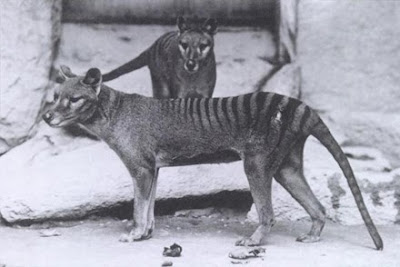
Over at Wired, there’s a hopeful story entitled, “Third of ‘Extinct’ Mammals May Still Be Alive.” Mammals supposed extinct from habitat loss are more likely to have survived than mammals presumed extinct due to invasive species or hunting. Brian Switek writes that

Categorizing a mammal species as extinct has rested upon two criteria: It has not been seen for more than 50 years, or an exhaustive search has come up empty….

In order to determine how often extinct species had been rediscovered, University of Queensland scientists Diana Fisher and Simon Blomberg created a dataset of 187 mammal species that have been reported extinct, extinct in the wild, or probably extinct since 1500, as well as those which have been rediscovered. They also looked at historical data on the threats that caused species to become extinct — or brought them close to it — including habitat loss, introduced species and overkill by humans.

It turns out that rumors of the extinction of more than a third of these species have turned out to be premature, the scientists report in Proceedings of the Royal Society B Sept. 29. At least 67 species — a little more than a third of those presumed to be extinct — were later found again. And in most cases, these were animals that had been hardest hit by habitat loss.


Tasmanian Tigers — Still Presumed Extinct

Tom Rachman’s The Imperfectionists

I’ve read Tom Rachman’s The Imperfectionists twice — once in hardcover, and once on the Kindle. (A particularly astute recommendation brought the book to my attention.) While thinking about the book, I decided to search for information on the author, and came across a review in the New York Times. It surprised me, a bit, to see that the reviewer, a professional author and reviewer, had also read the book twice. Rachman’s first novel is worth reading a second time, both for serious authors and for small-town bloggers.

Many of the books that I read these days are straightforward, often inartful, works of non-fiction: histories, politics, topics in science, etc. That’s a reading list common to many, with too little fiction in the diet.

The Imperfectionists breaks that poor habit, and in a powerful way: it’s a fine story of life at an English-language newspaper in Rome. The story proceeds as each chapter describes a member of the paper’s staff, characters carefully presented in all their eccentricities. The novel presents them subtlely, as credibly eccentric, with an insight and tenderness that makes descriptions of them memorable.

Publisher, editor-in-chief, reporter, copy editor, financial officer — one-and-all are intriguing, often sad, characters. The novel first chapter begins with has-been reporter Lloyd Burko, facing professional, personal, and financial decline. Burko manages all three with a mixture of waning ability and waxing desperation. (He puts one of his adult children, from one of many marriages, into a terrible predicament just to get a story and paycheck. The episode comes near the beginning of the book, and the account of Burko’s conniving is an enticement to read on, reluctant to put the book down.)

I’ll write no more about the story, except to say how very enjoyable — clever and touching by turns — The Imperfectionists was.

(I’ve a new book I’m now reading about — of all things — French cooking. I’ve tried to learn a bit of cooking, and someone recommended Edouard de Pomiane’s book to me, as it’s easy for anyone to understand. We’ll see.)

Whitewater’s Innovation Center from the Perspective of the New Deal

I posted yesterday about Whitewater’s Innovation Center, in a post entitled, Whitewater’s Innovation Center: Grants and Bonds.

The more one looks at the project, the emptier it seems. Attempts to justify the multi-million dollar public expenditure — on their own, apart from any other consideration — are exercises in embarrassing hyperbole. Attempts to answer objections to the project are particularly absurd, and only highlight how weak is the case in its favor.

There’s a greater problem than the project’s emptiness — it’s the inability to see clearly the city in which the project is taking so much time and money. Whitewater, Wisconsin, now population 14,454, is a struggling rural town, with large numbers of poor children.

Although I am a critic of much public spending, when I think of a model of public spending that at least properly considered actual conditions, I often think of Franklin Roosevelt. (For a critique of Roosevelt’s New Deal, one should consider Amity Shlaes’s excellent Forgotten Man.)

Much is made of Roosevelt’s sunny temperament, but that’s not why he’s admirable. He’s admirable because no matter how dubious Roosevelt’s spending (to my mind), he and his administration never lost sight of common and poor people. His efforts to control utilities were misguided, for example, but they had a clear and admirable aim: to provide electrification for common people. Roosevelt cared for the condition of ordinary Americans.

The contrast with current city projects, ones that Whitewater has backed over the last decade, is astonishing. When one looks at a project like the Whitewater Innovation Center, it’s of utterly no value to the many poor people in our small city. Not only does it have no chance to achieve the stated goal of the funding — it also has no chance of addressing the actual and difficult conditions that real people in our real town face.

No chance at all.

If Roosevelt’s committed and serious team were to see projects like the Innovation Center, I think they’d be astounded at how unsuited it is to the problems our town faces. This project offers no balm to prior economic or natural calamity. Looking around at poverty, unemployment, and economic uncertainty, the New Dealers would have been more far more practical, and (I think) outraged at this kind of spending.

One may hear that, since the money was offered (more, in fact, than our city administration asked), we should take what we can, because otherwise someone else would.

It was selfish to take money better suited to more realistic projects, merely because we could. Much of America’s fiscal predicament begins with states and local governments taking whatever they can, and figuring out what to make of it later. (Funds unused would not be lost to America, but could be reallocated to other initiatives more suited to these difficult times.)

That is, though, a fiscal problem. The greater problem is one of principled leadership — that men should not take for themselves what would (in other places) help other people, more fittingly and truly.

Daily Bread for Whitewater, Wisconsin: 9-29-10

Good morning,

The forecast for Whitewater, now officially having a population of 14,454, is for a sunny day with a high temperature of seventy-three degrees.

Whitewater’s Urban Forestry Commission meets tonight, at 5 p.m. The meeting agenda is available online.

President Obama was in Madison yesterday, at the University of Wisconsin-Madison for a speech, and the Capital Times has a link to a video of the scene, with parts of his speech. I’m not sure how the speech was covered in other parts of the country, but it was a notable event here.

Pres. Obama has his share of critics (on spending, particularly), but I have neither understood nor joined in the harsh rhetoric directed against him. Watching his remarks, I find others’ apparent personal dislike for him puzzling; he’s both formidable and personable, I think.


Video: Scott Walker’s Good Friend (Update 22 in a Series)

One sometimes hears that all political ads are exaggerations. Not all of them — sadly, this one from the Barrett Campaign about Republican Scott Walker’s failure to clean house after abuses at the MIlwaukee County Mental Health Complex is true. (H/t to the Journal Sentinel.)


Link: http://www.youtube.com/watch?v=-tK2RgmPhg4

I’ve posted about Chianelli’s policy, and the tragedy that is conduct at the MHC, before. See, A Milwaukee County Bureaucrat’s Immoral Utilitarianism, Update: A Milwaukee County Bureaucrat’s Immoral Utilitarianism, Update 2, Update 3, Update 4, Update 5, Update 6, Update 7, Update 8, Update 9, Update 10, Update 11, Update 12, Update 13, Update 14, Update 15, Update 16, Update 17, Update 18, Update 19, Update 20, and Update 21 more >>

Georgia Politician: Boring Names Will Stop Sign Theft

McIntosh County has a problem – costing thousands of dollars each year – of people stealing street signs. County Commissioner Mark Douglas has a solution – make the names of the signs boring.

It’s a clever idea, although it would mean a change of street names, and the end of any clever or whimsical choices. Yet, boring – rather than repulsive – may be the way to go.

See, Georgia Politician: Boring Names Will Stop Sign Theft.

Whitewater’s Innovation Center: Grants and Bonds

Whitewater’s planned Innovation Center and Tech Park rest on a multi-million dollar federal grant and millions in federally-subsidized bonds. The grant is for $4.7 million, and here is how a page from the Economic Development Administration described the purpose for those millions:

September 7-September 11, 2009

….$4,740,809 to the Whitewater Community Development Authority, the University of Wisconsin Whitewater, and the City of Whitewater, Wisconsin, to fund construction of the new Innovation Center and infrastructure to serve the technology industrial park, including a road linking the project with the University of Wisconsin’s Whitewater campus. The goal of the project is to create jobs to replace those lost in the floods of 2008 and those lost from recent automotive plant closures. The Innovation Center will serve as both a training center and technology business incubator and will be constructed to meet Leadership in Energy and Environmental Design (LEED) green building certification standards. A portion of the project’s cost will be funded through EDA’s Global Climate Change Mitigation Incentive Fund. This investment is part of an $11,051,728 project which grantees estimate will help create 1,000 jobs and generate $60 million in private investment.

Every part of this description of the grant’s goals is astonishingly inapplicable to the use and value (such as it is) of the Innovation Center that Whitewater is actually building.

The EDA states that “the goal of the project is to create jobs to replace those lost in the floods of 2008 and those lost from recent automotive plant closures.”

Although I have been a critic of the project, there’s no greater criticism possible than the gap between the goal of these millions and the use to which they’re being put.

These millions came from some taxpayers, to create jobs in our community to alleviate suffering from natural disaster and industrial decline.

Instead, resources from taxpayers were taken for this project, thus they have been denied to needy people who might have made proper use of them. They’ve been squandered on an empty project that depends on shuffling publicly-paid employees from one suffering community to another, or airy speculation about video games, etc.

Millions are out of work, across America, and our own community is afflicted with plant closures, high unemployment, and high child poverty. Other communities in the Midwest have those same problems.

It was wrong, and selfish, to take this money and use it so poorly. What we have wasted others might have used for a better and truer purpose.

In all the time that I’ve read of this project, I cannot recall anyone ever stating plainly the intended goal of the grant. When Whitewater’s City Manager Kevin Brunner mentioned the grant in one of his Weekly Report posts, he mentioned the amount, but not the federal goal of the grant. See, Weekly Report for 12-18-09.

There have been reports stating plainly the goals of other grants, including a similar one that UW-Whitewater and other schools received for $5.9 million. (That grant, involving job-retraining in conjunction with other nearby universities, apparently has a goal similar or identical to the one that the Innovation Center plainly isn’t meeting.)

Considering the Economic Development Administration’s stated project goal, it’s easy to see why those backing the project would want to omit mention of the grant’s intended, specified purpose.

No matter what one thinks of federal spending, that money should be put to good use in pursuit of the stated and specified federal goal. That’s not happening in this project.

There’s more to write about the gap between the goals of the grant and the sad use to which it is being wasted.

And yet, it’s not merely the grant that’s so ill-fitting. As I noted last January, a press release for the bonds used to supplement the eleven-million-dollar project’s cost didn’t accurately mention the poor condition of one of our tax incremental districts. Instead, that press release from Moody’s gave an unrealistically sunny description of our TIDs (“successful use of tax increment districts (TIDs), including five additional TIDs established in 2007”).

This description is both shocking and risible, as months earlier, in preparation for the city budget, Brunner mentioned the possibility of distressed status for TID 4. (The legislation for distressed TID status in Wisconsin was not yet enacted, but was then only pending.)

(See, from January 21, 2010, On Whitewater, Wisconsin’s Recent Bond Rating.)

This project wrongly relies on a grant used in ways stretched beyond all fair and reasonable meaning, and millions in bond debt for a city with an already-ailing tax incremental district.

Daily Bread for Whitewater, Wisconsin: 9-28-10

Good morning,

Whitewater’s forecast for today is for a mostly cloudy day with a high temperature of sixty-four degrees.

The Wisconsin Historical Society recalls the birth on this day in 1925 of one one Wisconsin’s — and America’s — greatest inventors: Seymour Cray.

1925 – Seymour R. Cray Born

On this date Seymour R. Cray was born in Chippewa Falls. Cray received a BS in Electrical Engineering from the University of Minnesota. He established himself in the field of large-scale computer design through his work for Engineering Associates, Remington Rand, UNIVAC, and Control Data Corporation. In 1957 Cray built the first computer to use radio transistors instead of vacuum tubes. This allowed for the miniaturization of components which enhanced the performance of desktop computers. In the 1960s he designed the world’s first supercomputer at Control Data. In 1972 he founded Cray Research in his hometown of Chippewa Falls where he established the standard for supercomputers with CRAY-1 (1976) and CRAY-2 (1985). He resigned from the company in 1981 to devote himself to computer design in the areas of vector register technology and cooling systems. Cray died in a automobile accident on October 5, 1996. [Source: MIT and Cray Company]


Cray-2